Cordoba, Andalusia, Spain. 23rd October 2018.
(Recent Posts, Top Posts, Subscribe and Search at bottom of page. Clicking image doubles size. Trip summary and links to posts.)
.
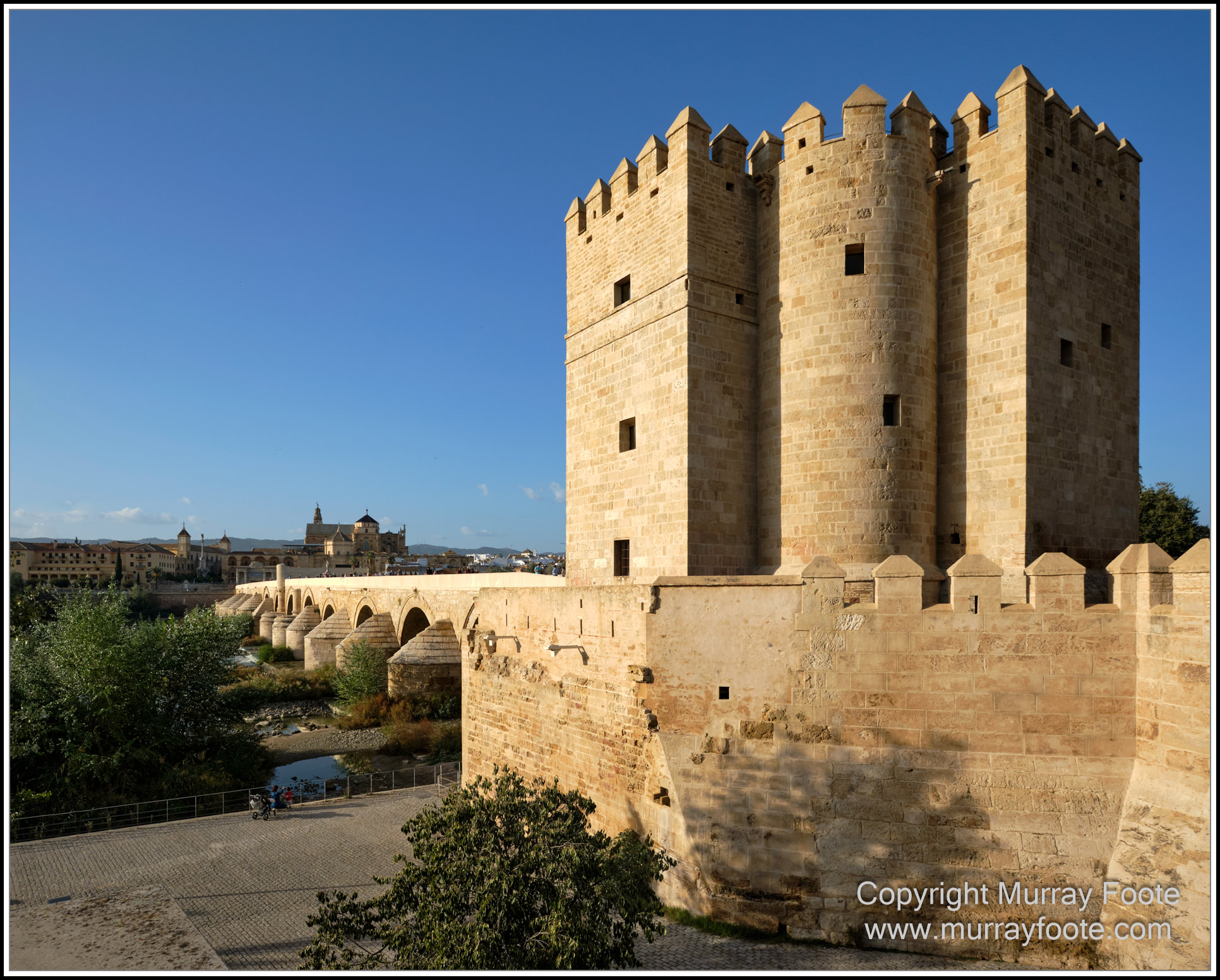
Calahorra Tower, Roman Bridge and the Mezquita.
Our hotel was on the opposite side of the road from the old city, so we walked past the Calhorra Tower, over the Roman Bridge and to the Mezquita on the other side.
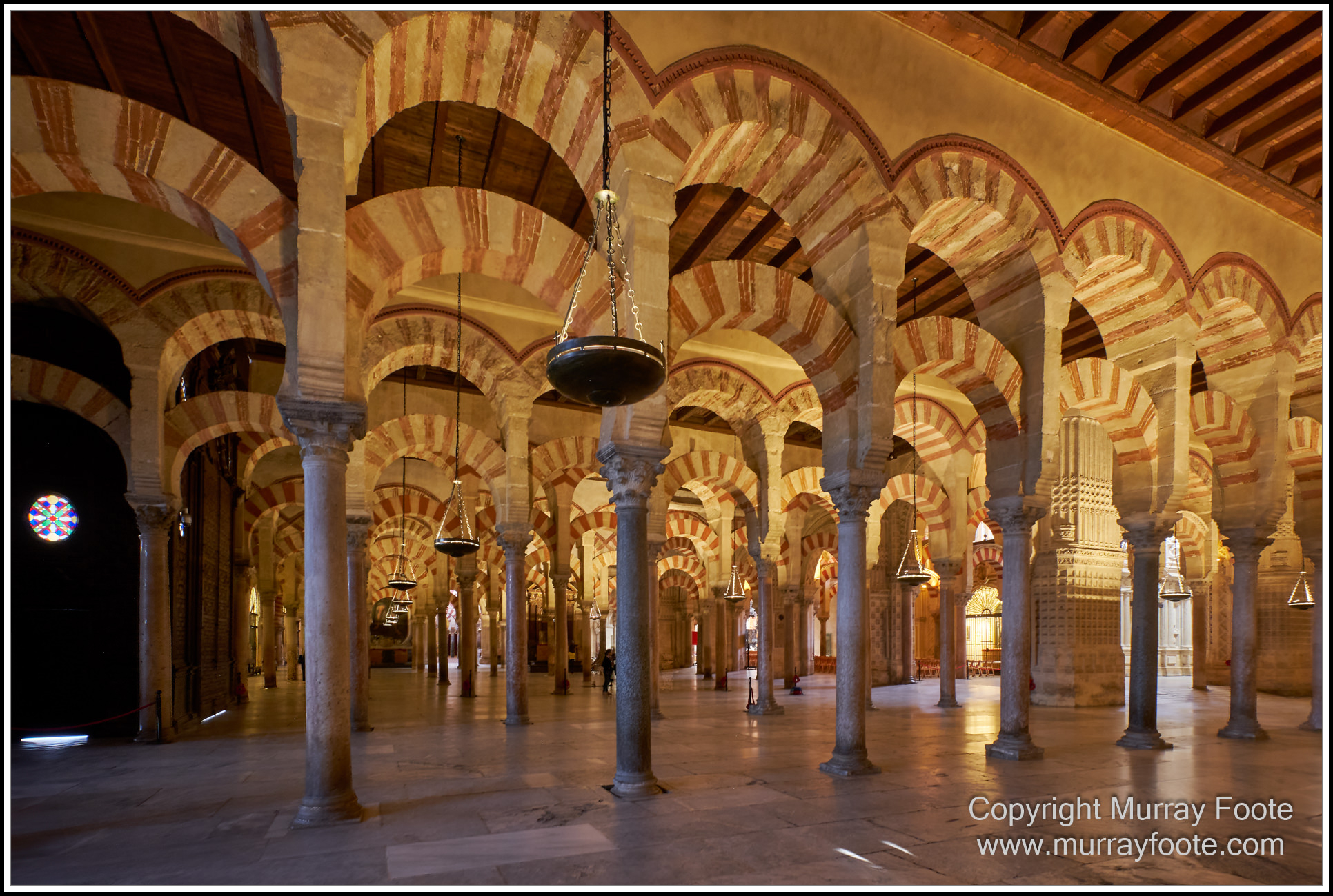
And here we are, inside the Mezquita.
Also the Grand Mosque of Cordoba, it was built in 784-786. Famous throughout the World for its architecture, it as incorporates elements of Roman and Visigoth architecture
The Neanderthals were here 40,000 years ago (Well, not in the Mezquita). We didn’t see any but maybe they’re hard to spot if wearing a suit. The Carthaginians had a settlement here before the Romans took over in 206BC. It was conquered by the Visigoths in the late sixth century and by the Moors in 711 or 712.
.
.
.
. 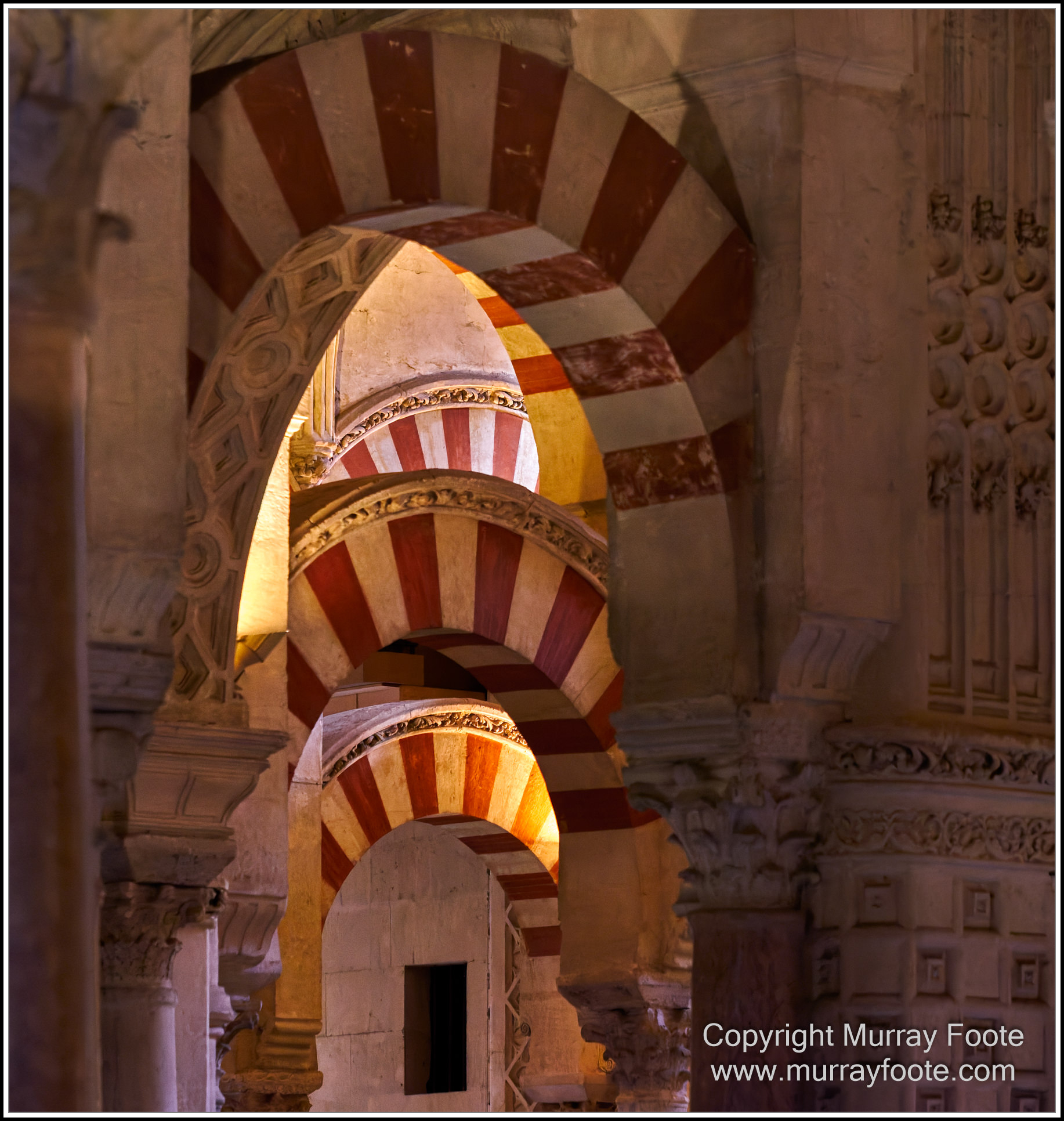
The arches and architectural element can combine like a three-dimensional puzzle.
.
.
.
. 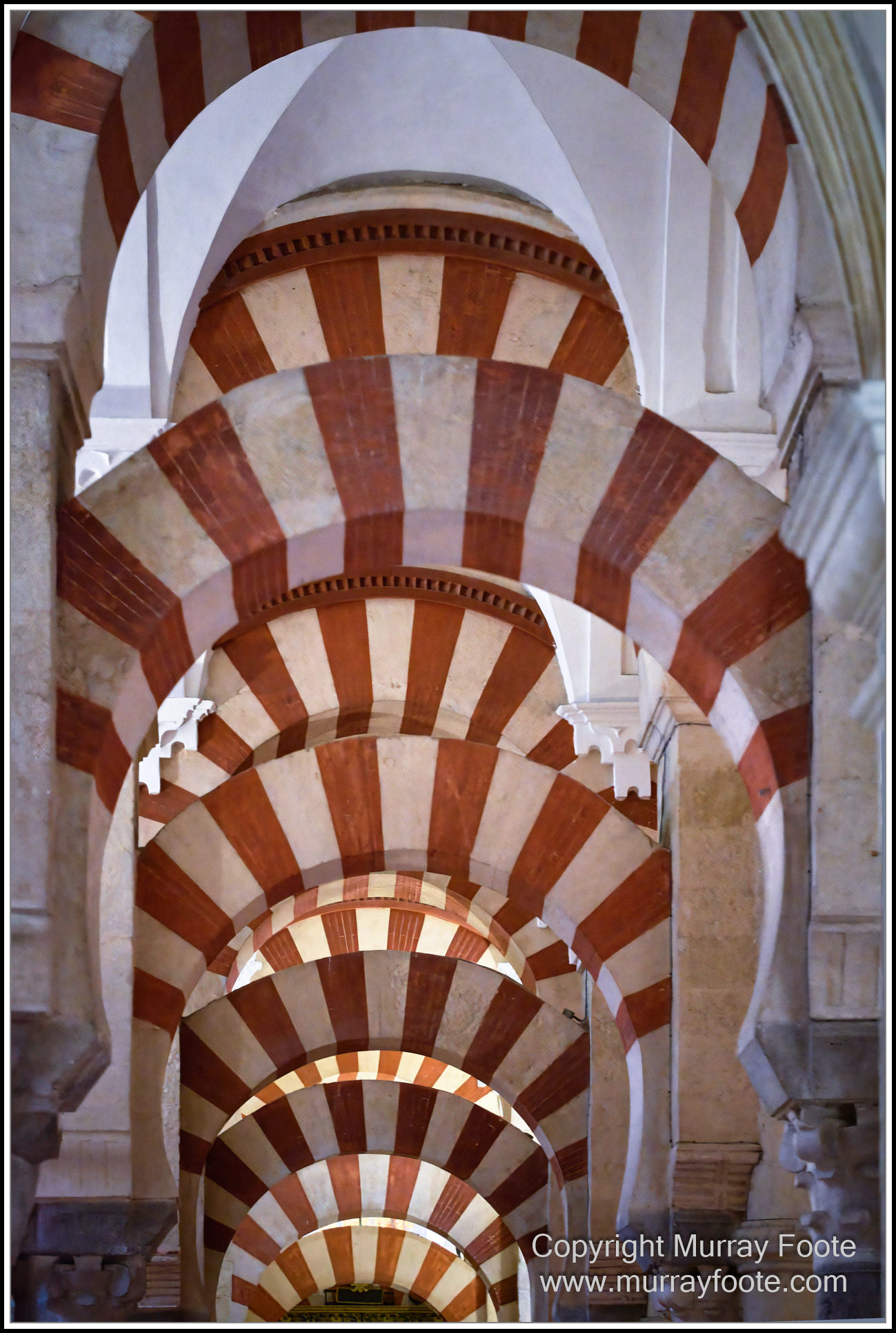
The simplicity and elegance of their architectural design remains compelling.
.
.
.
. 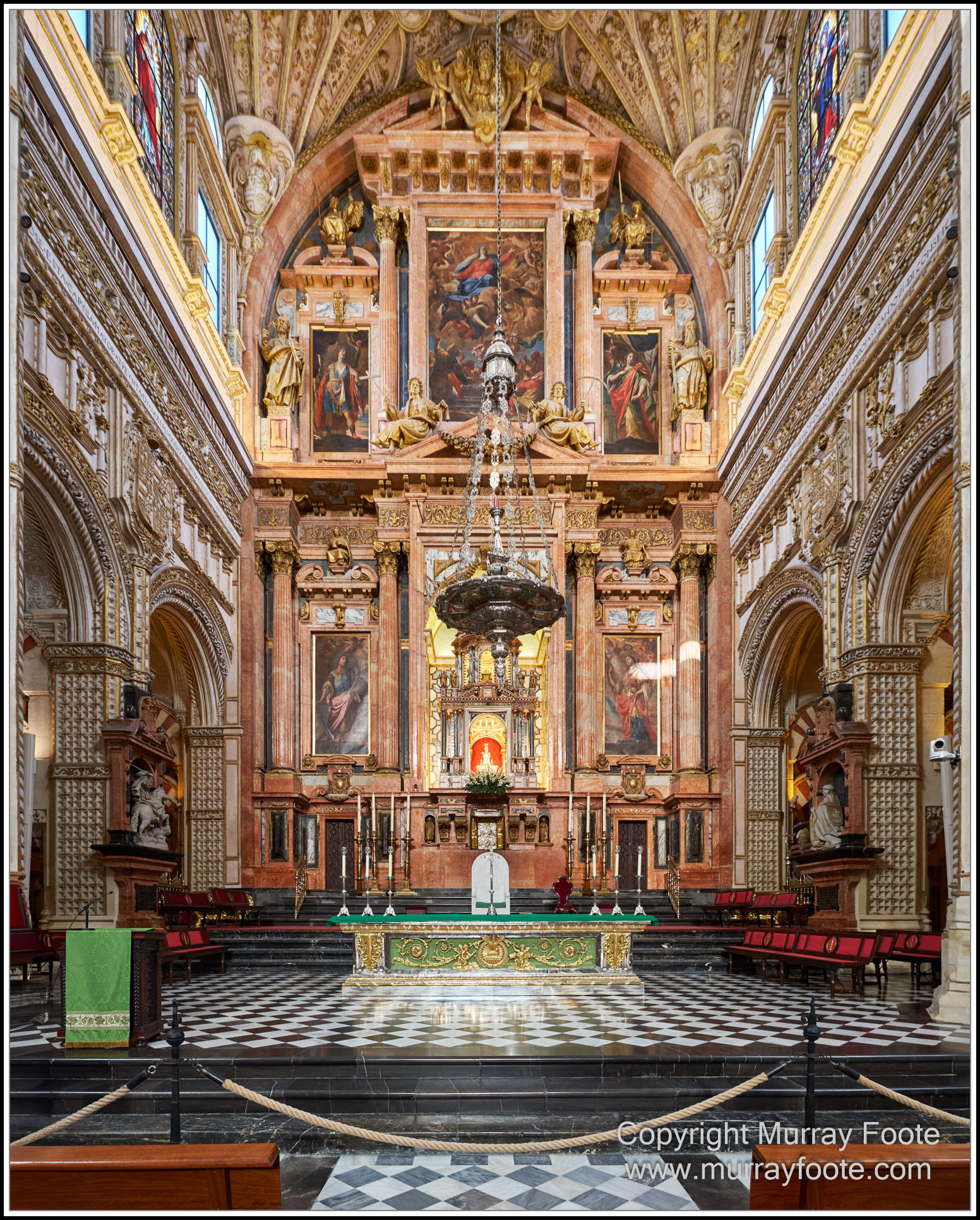
There is a Cathedral in the middle of the Mezquita. It was conmverted to a cathedral in 1236 after the Reconquista but what you see must be mainly from the major building project in the 16th century. Of course the Spanish couldn’t leave it as a mosque but at least they didn’t completely destroy it. Some may think the Cathedral is wonderful but I don’t have much sympathy with such late Mediæval church architecture. Compared to the elegance and simplicity of the mosque, it seems to me like overblown florid kitsch and an overbearing expression of power.
.
.
.
. 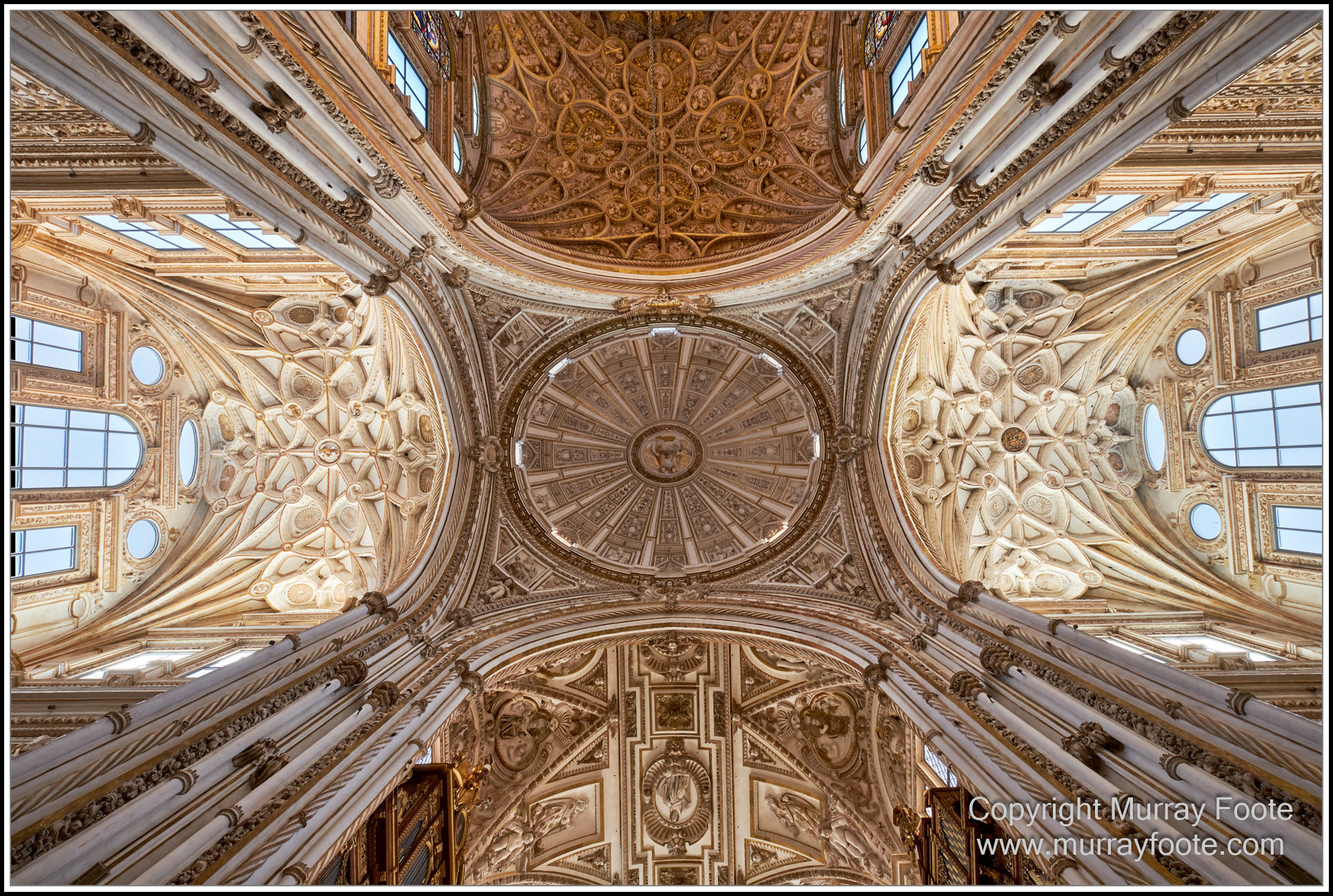
Looking up is more elegant.
This is the ceilings of the Renaissance nave and transept, completed by Juan de Ochoa in 1607.
.
.
.
. 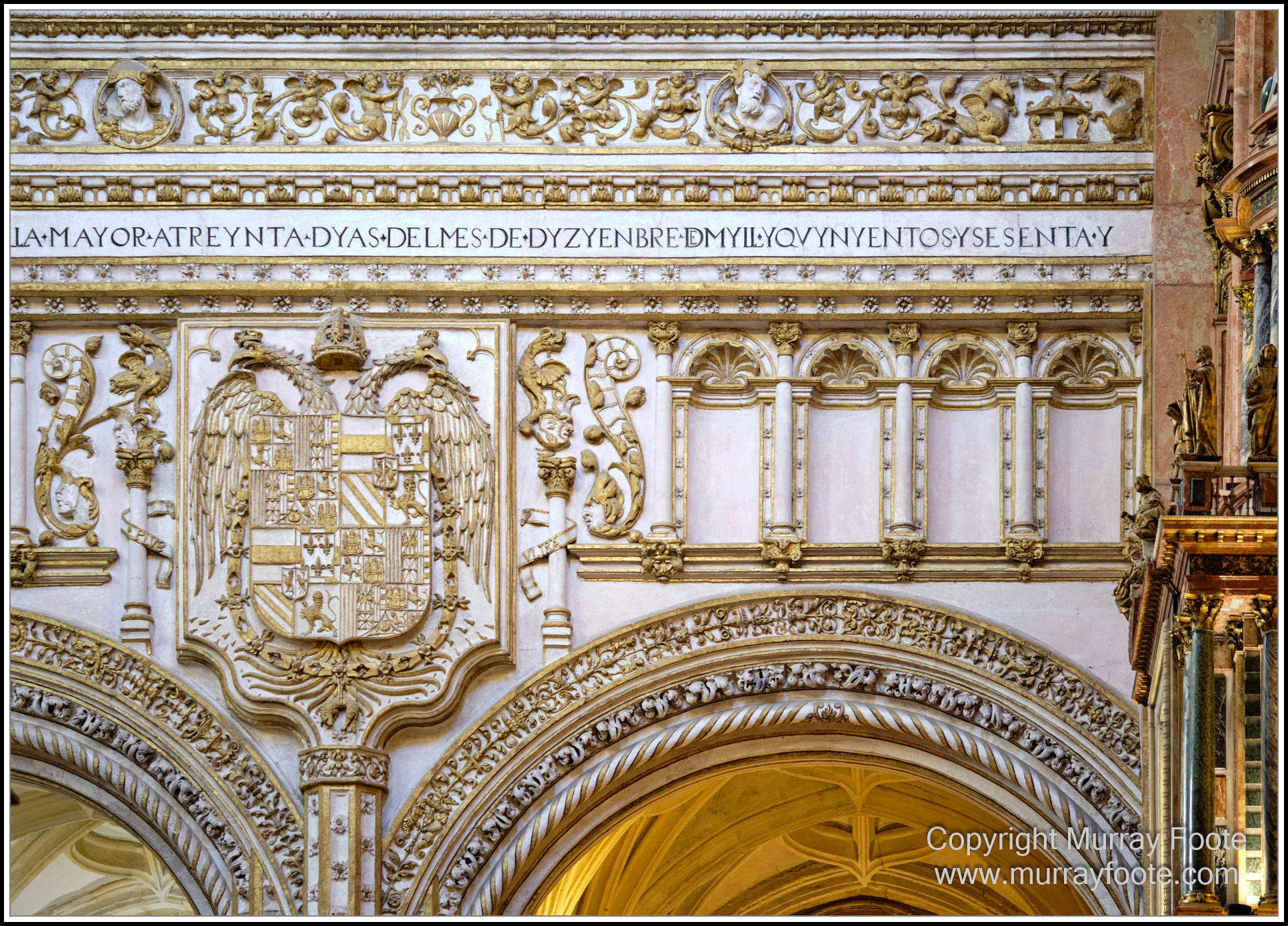
Here’s a curious little corner expressing Aragon & Castile imperial power. The first and fourth quarters are the combined coats of arms of Aragon and Castile; I don’t know about the second and third quarters. The inscription has something to do with the 30th December in some year.
.
.
.
. 
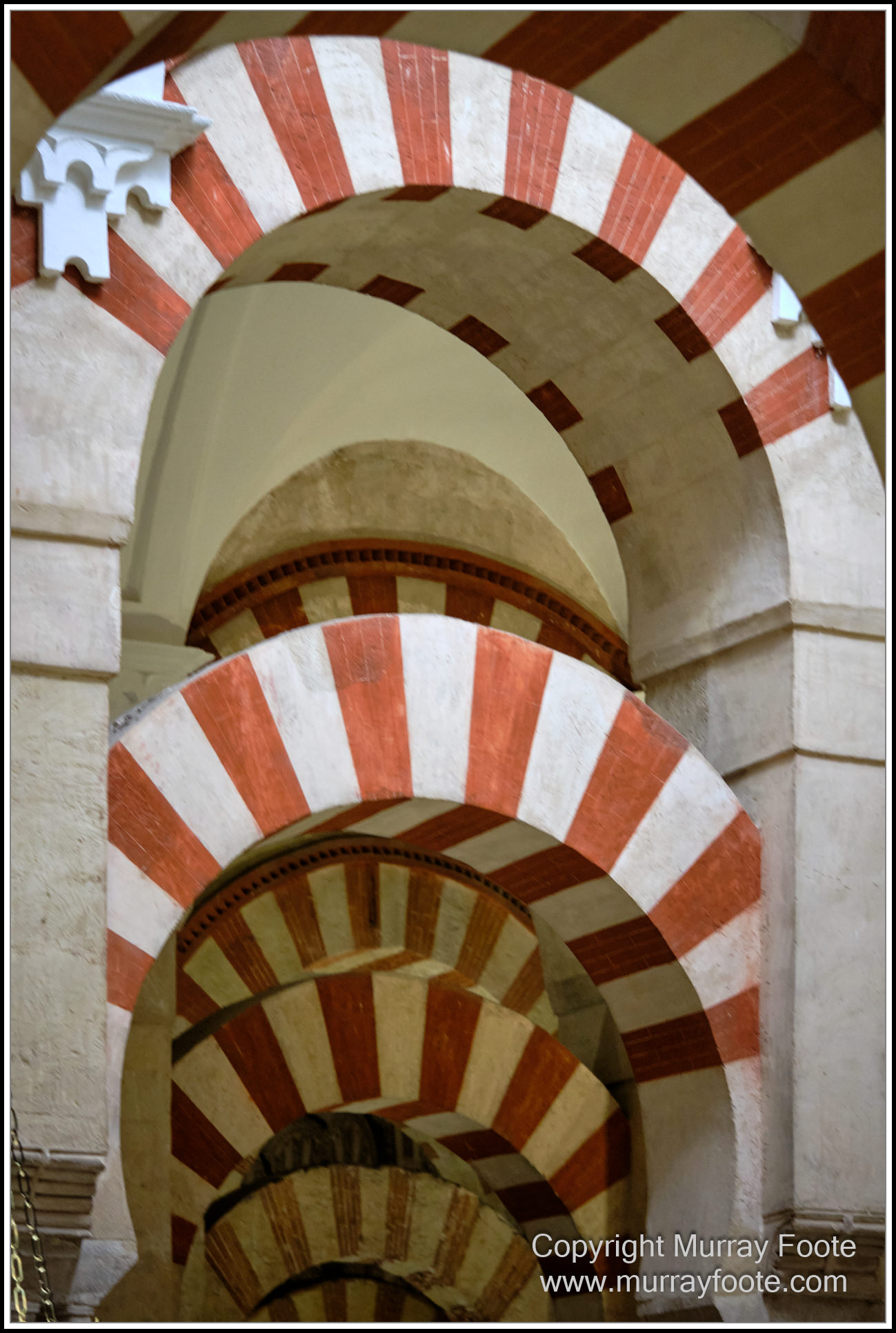
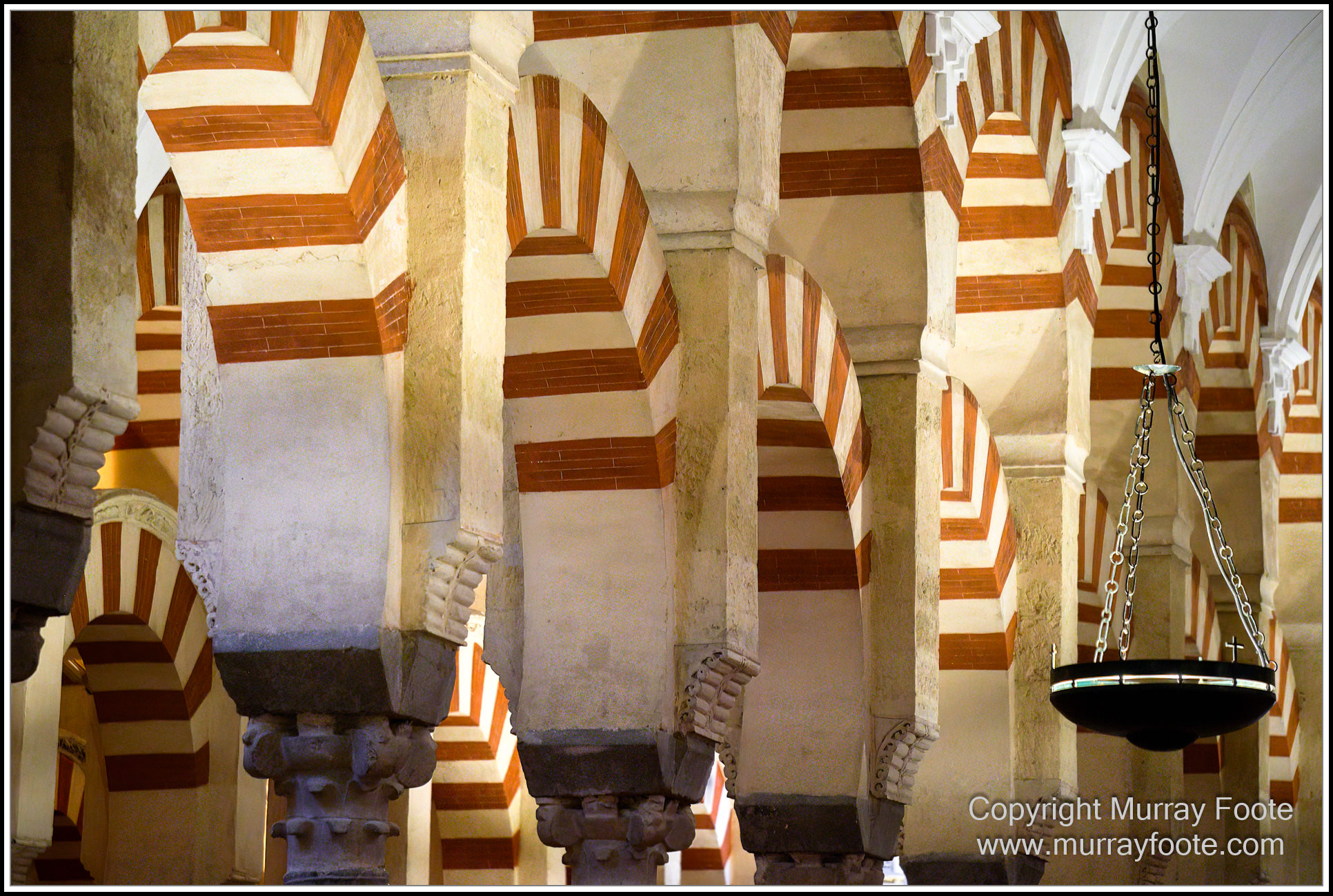
Back to the arches of the Mezquita.
.
.
.
.  .
.
.
.
.  .
.
.
.
. 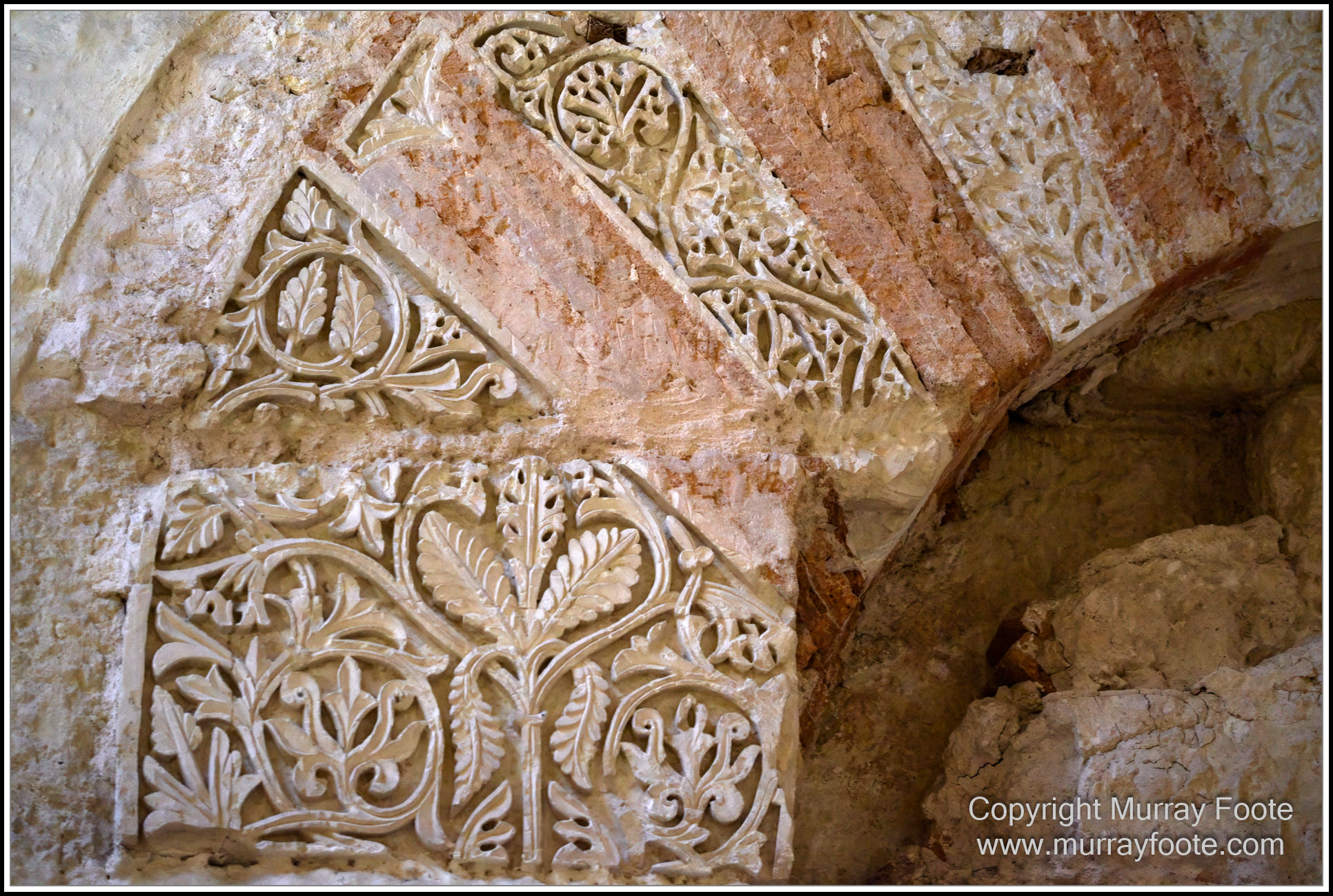
Remains of a arch with special decoration in a dark corner of the Mezquita. Perhaps a remnant of an early era.
.
.
.
. 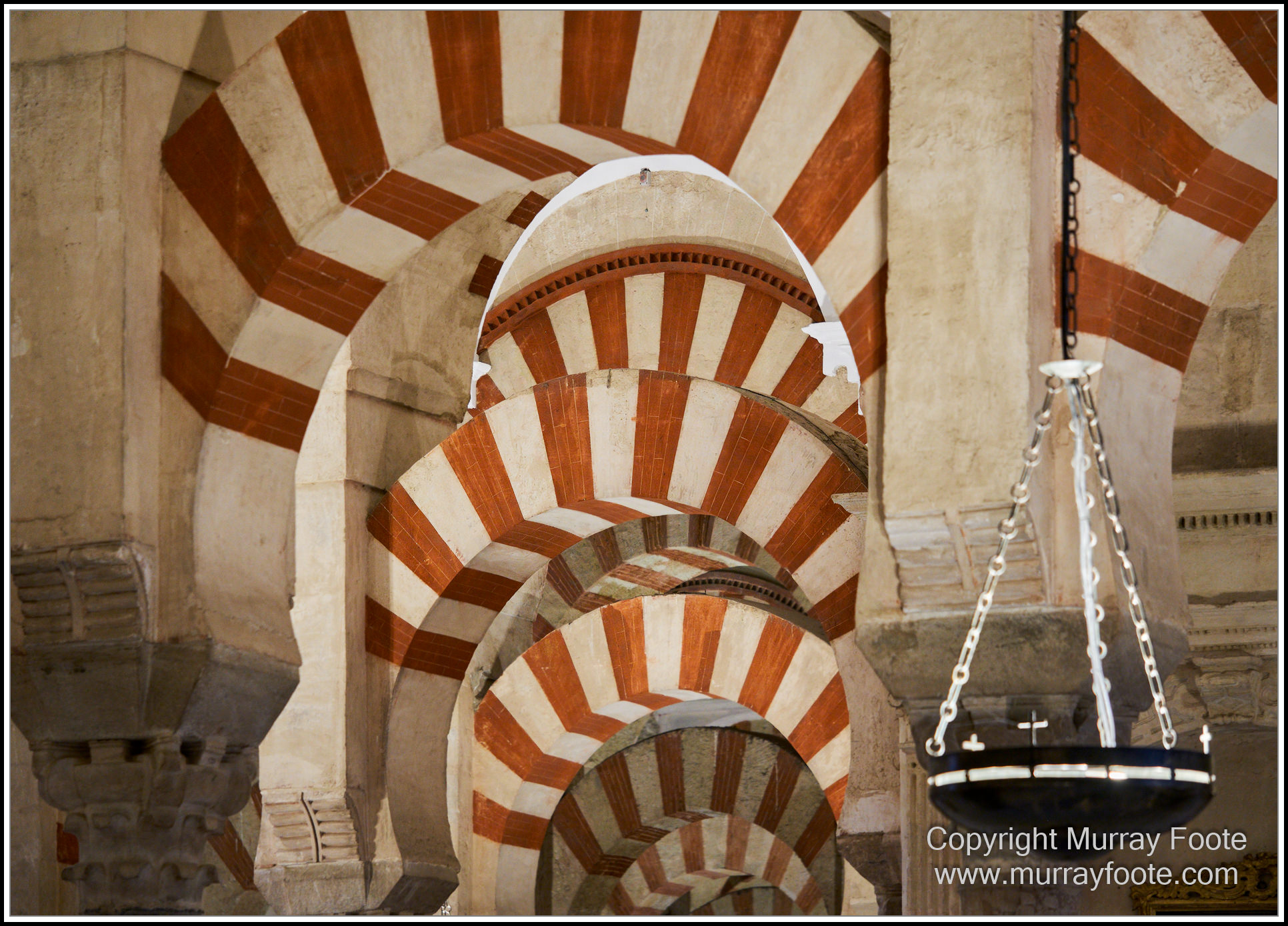
Arches and a lamp.
.
.
.
.
.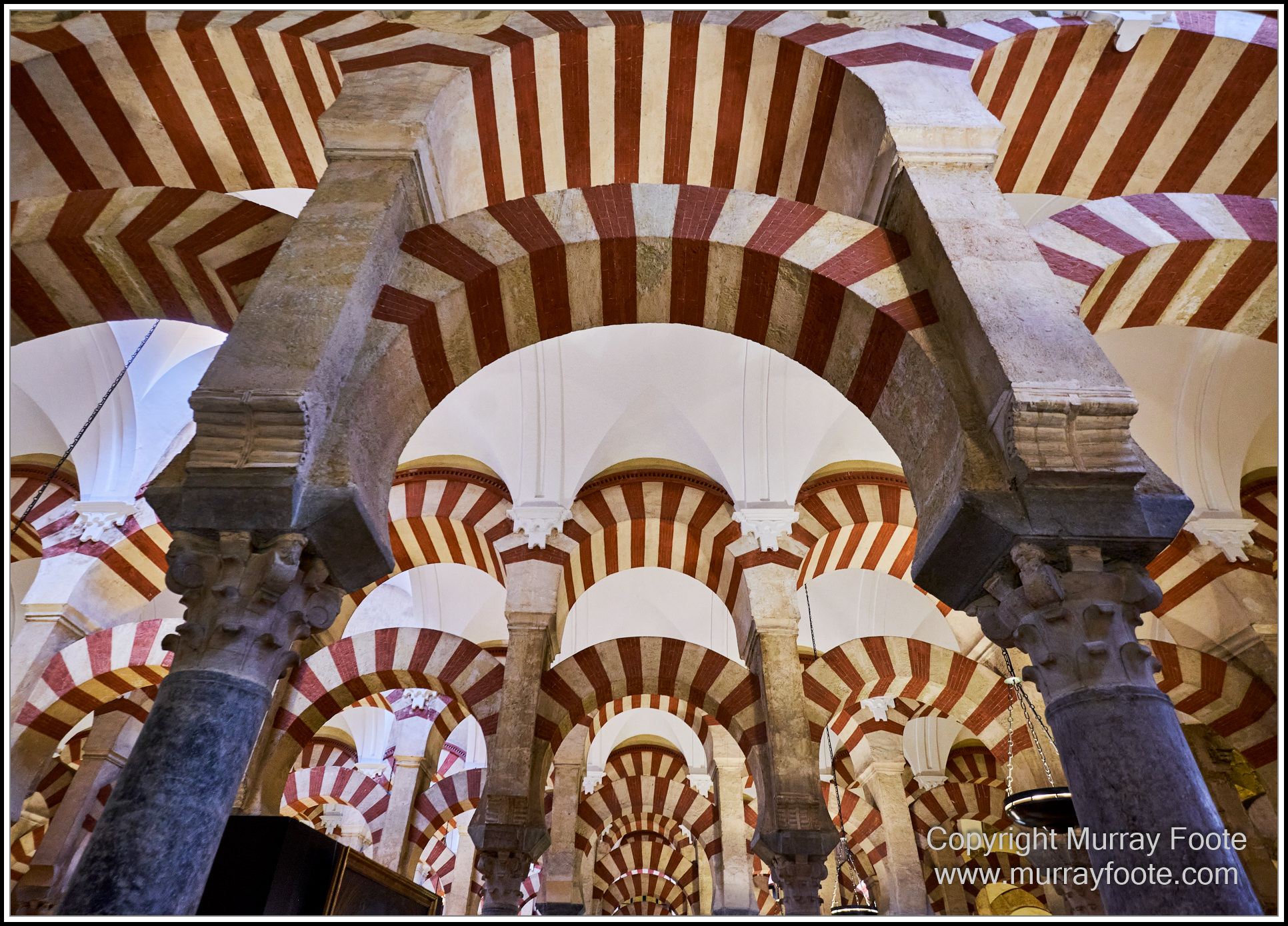
Arches upon arches.
.
.
.
. 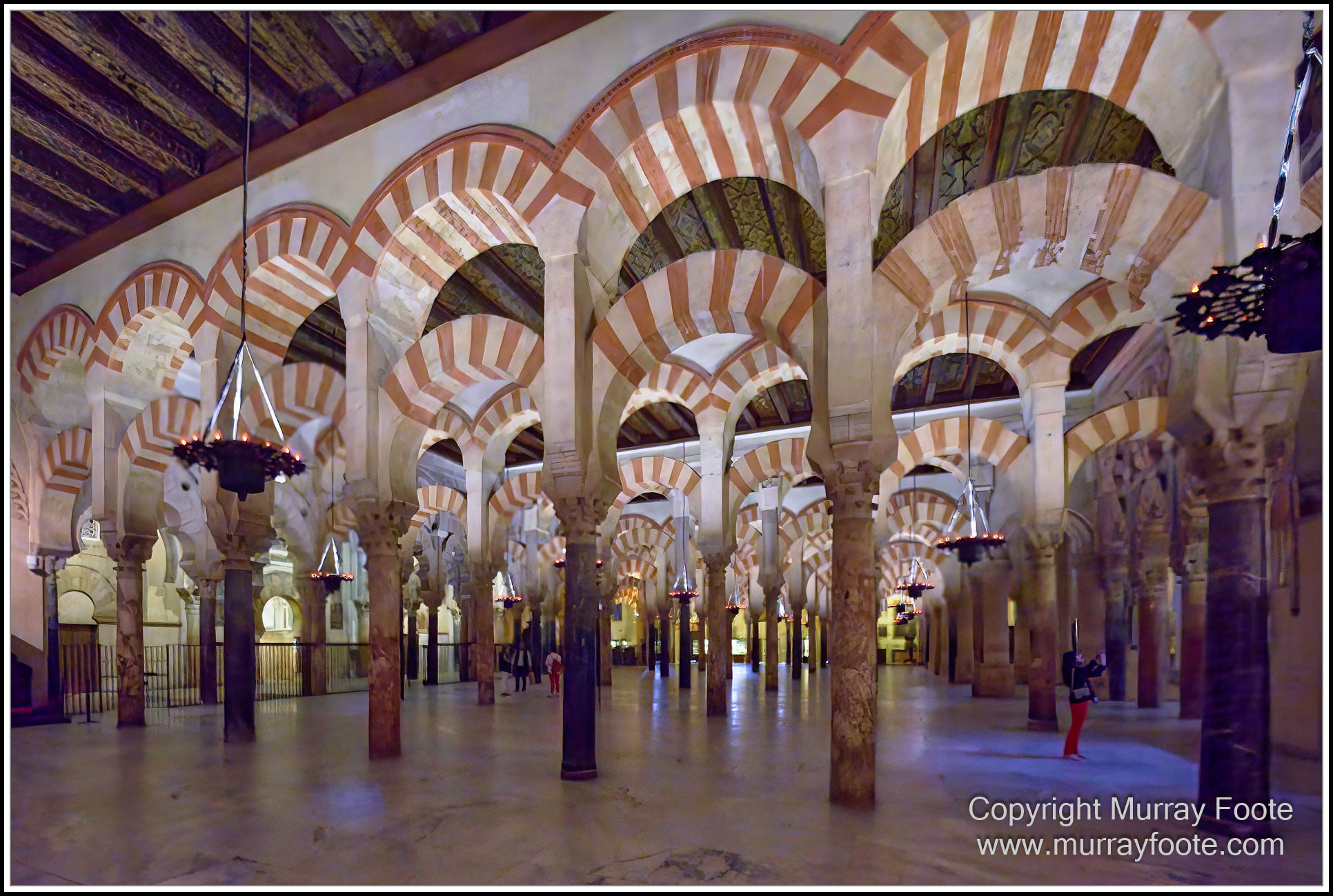
The Hipostyle Hall, with its two-tiered arches.
This was originally the main prayer hall from 785 in the time of Abd al-Rahman I, also used for teaching and sharia law cases.
.
.
.
.
. 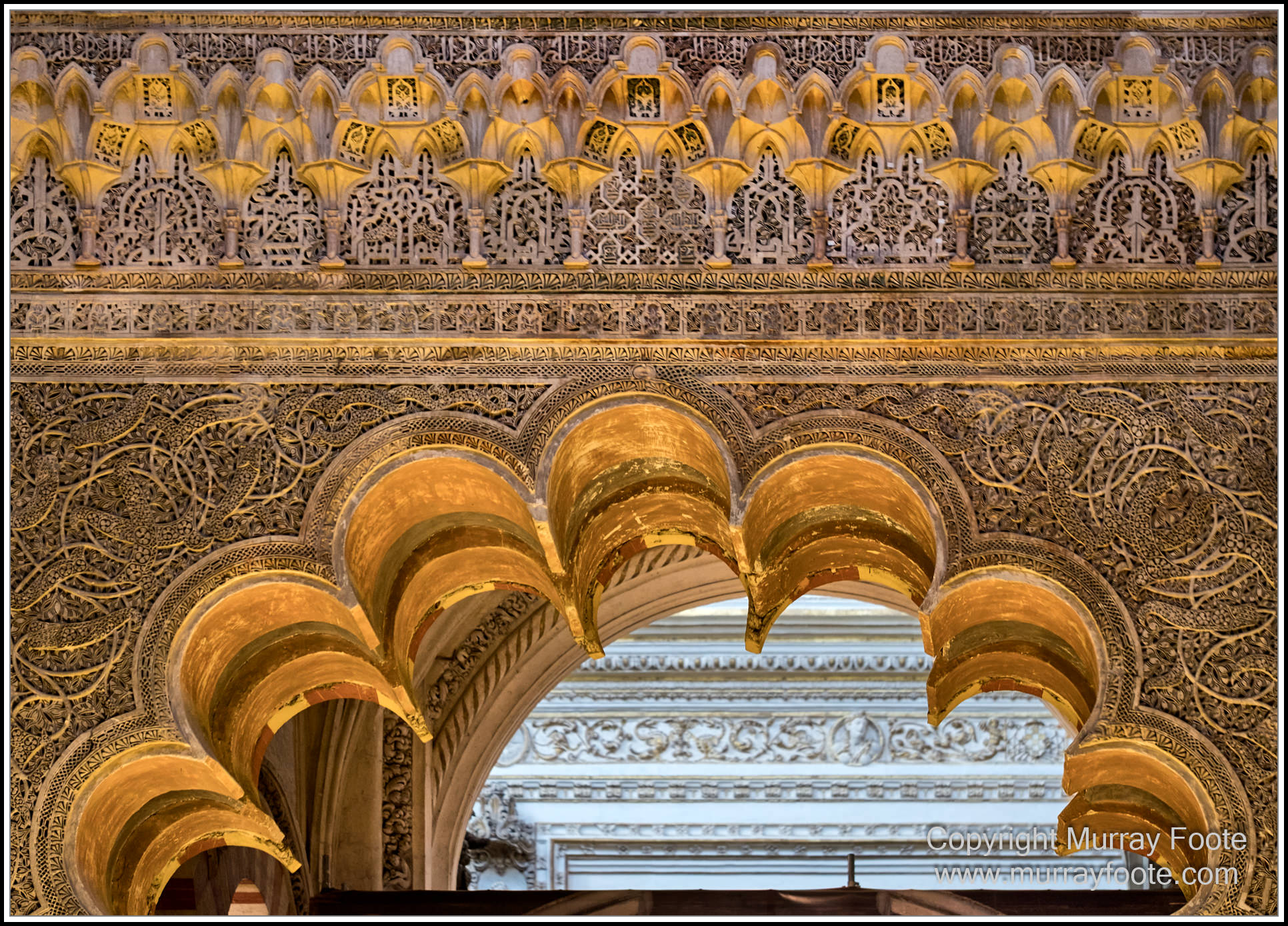
Foreground architectural details reminiscent of Uzbekistan. The background decoration is Castilian.
This is a detail of the Mudéjar-style Capilla Real (Royal Chapel), finished in 1371 and once containing the tombs of Ferdinand IV and Alfonso XI.
.
.
.
. 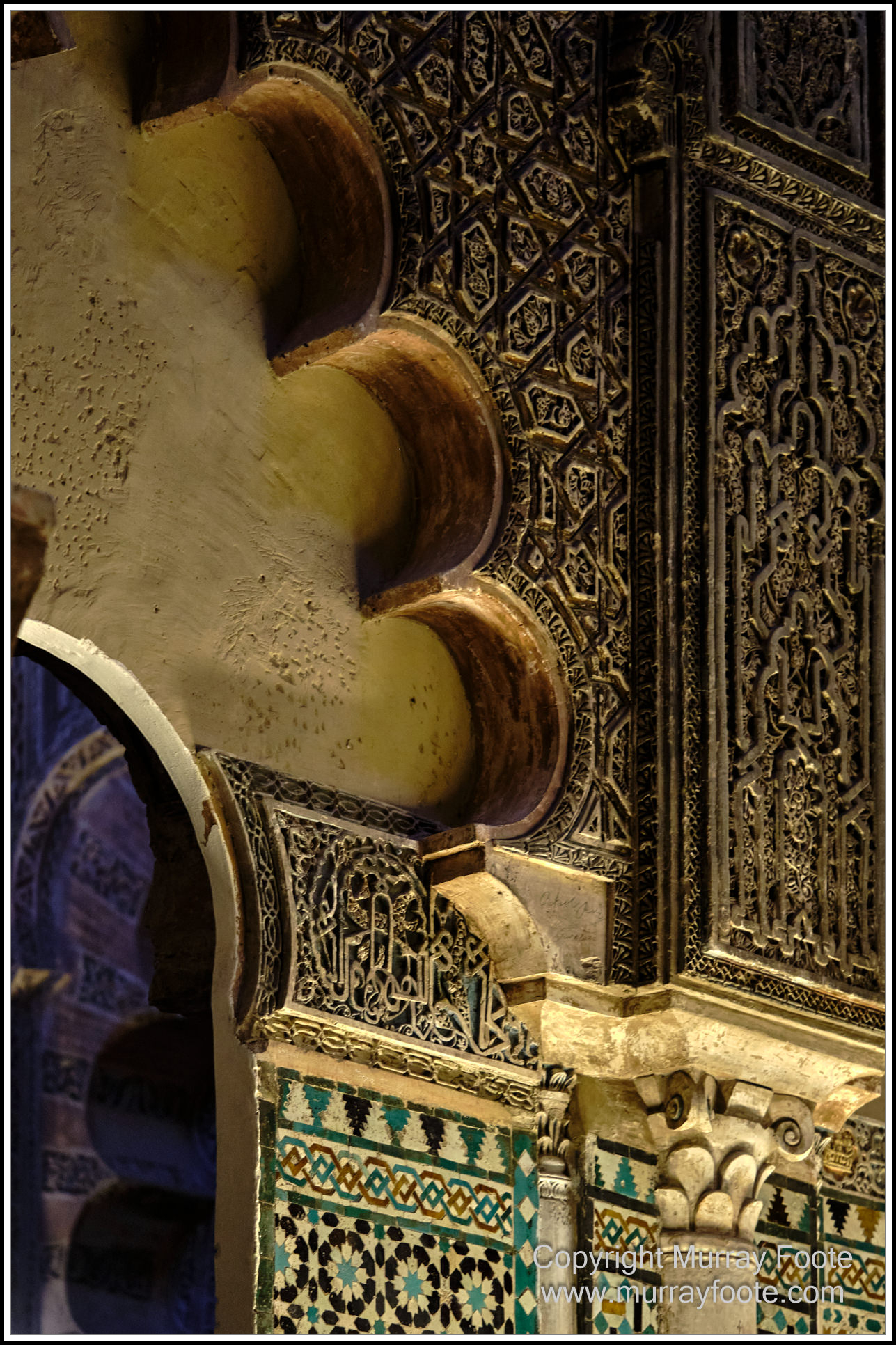
A detail at or very near the Capilla Real.
.
.
.
. 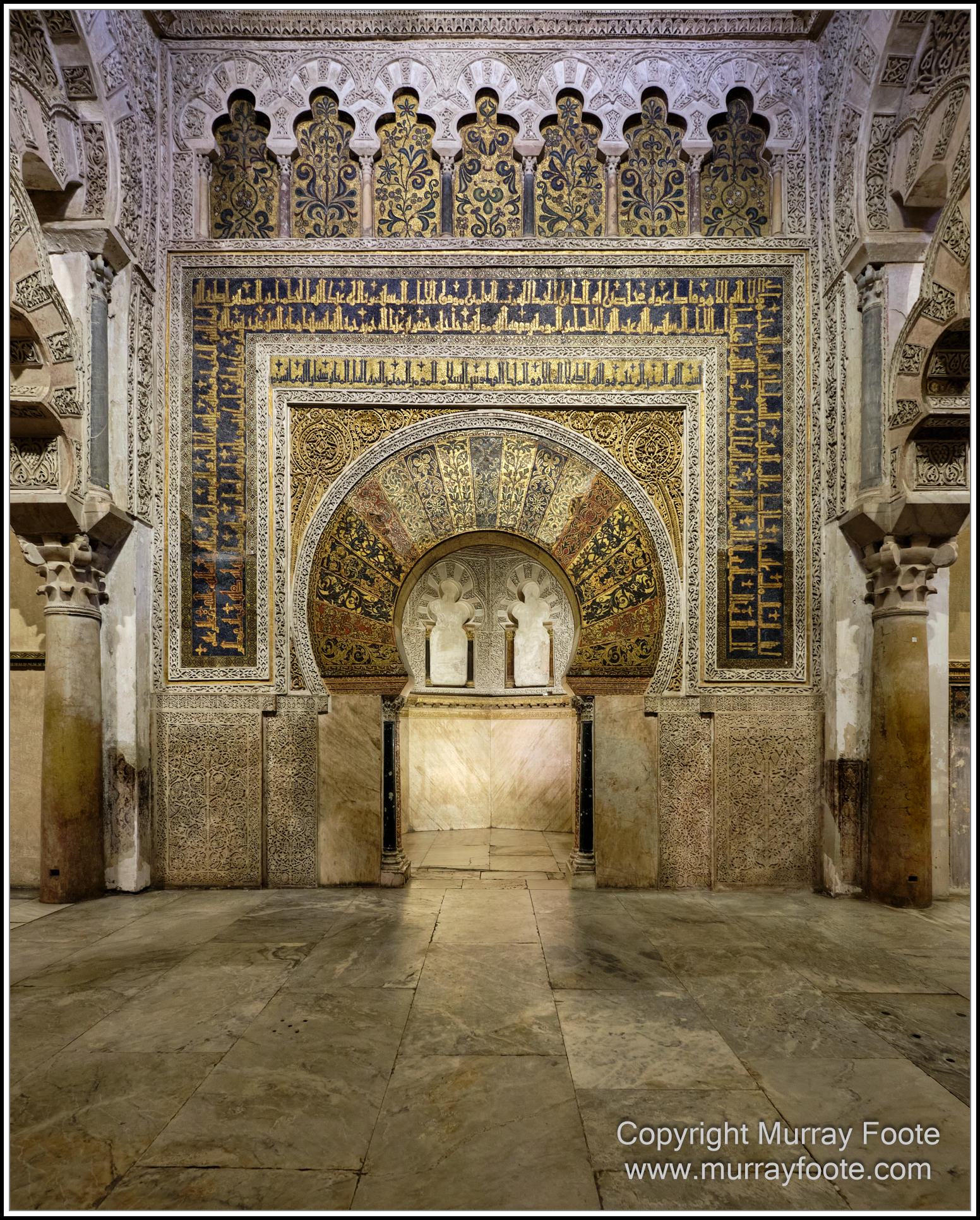
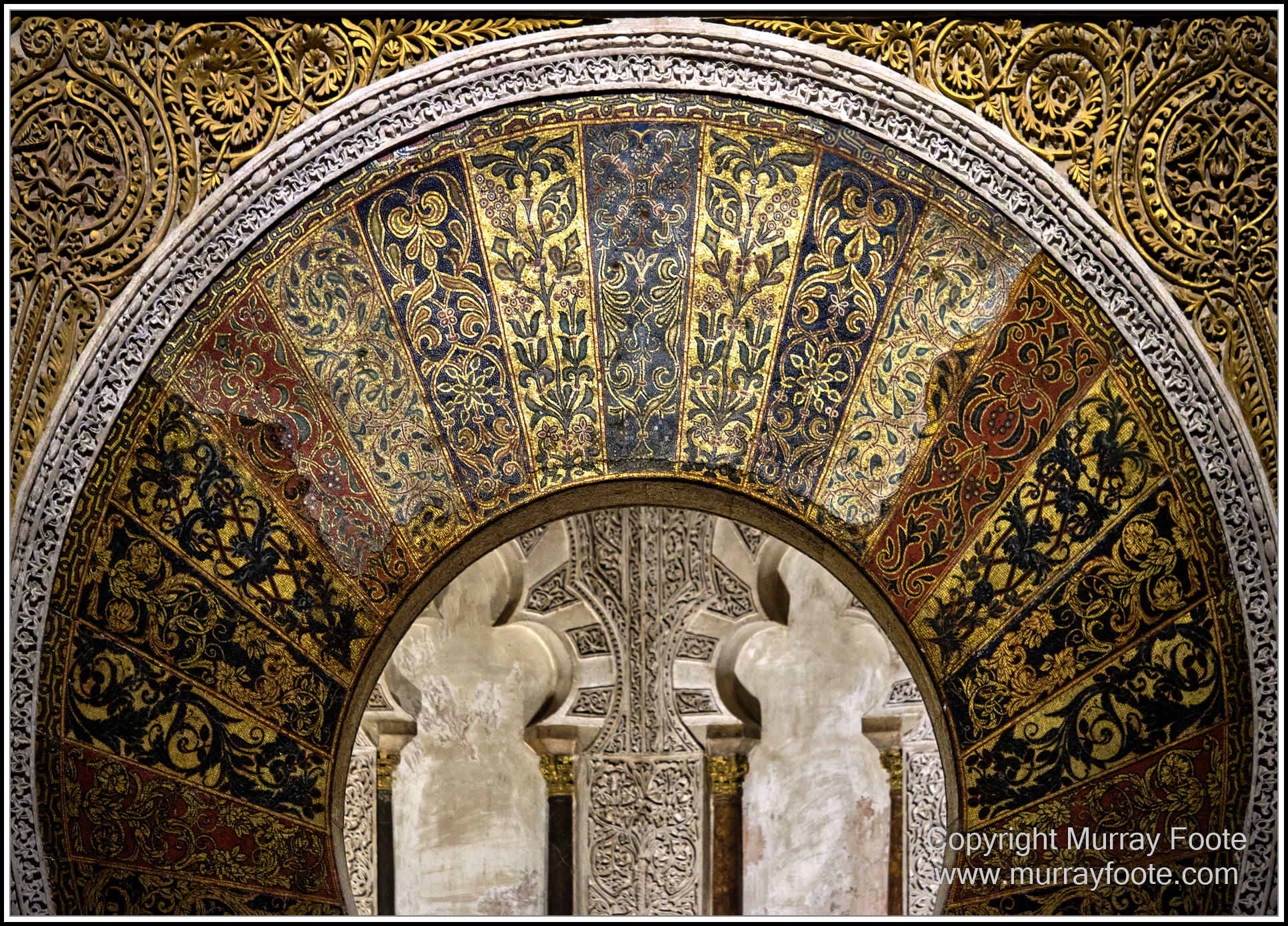
The Mihrab (“pulpit”) from 971.
This features rich Byzantine-inspired mosaics by a master craftsman sent from Constantinople at the request of the Caliph.
.
.
.
. 
Closer view.
.
.
.
. 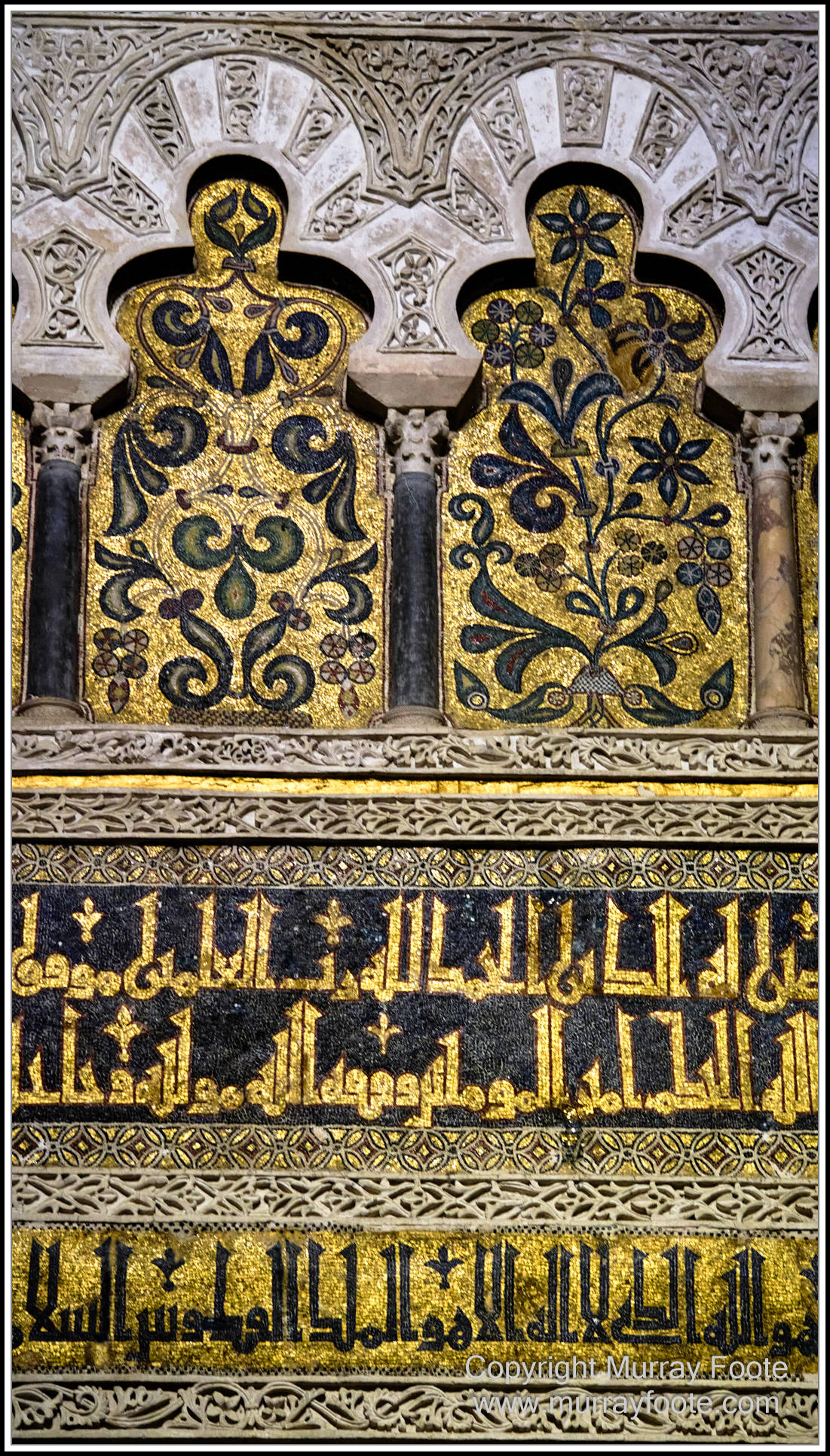
Detail of the calligraphy above the Mihrab.
.
.
.
. 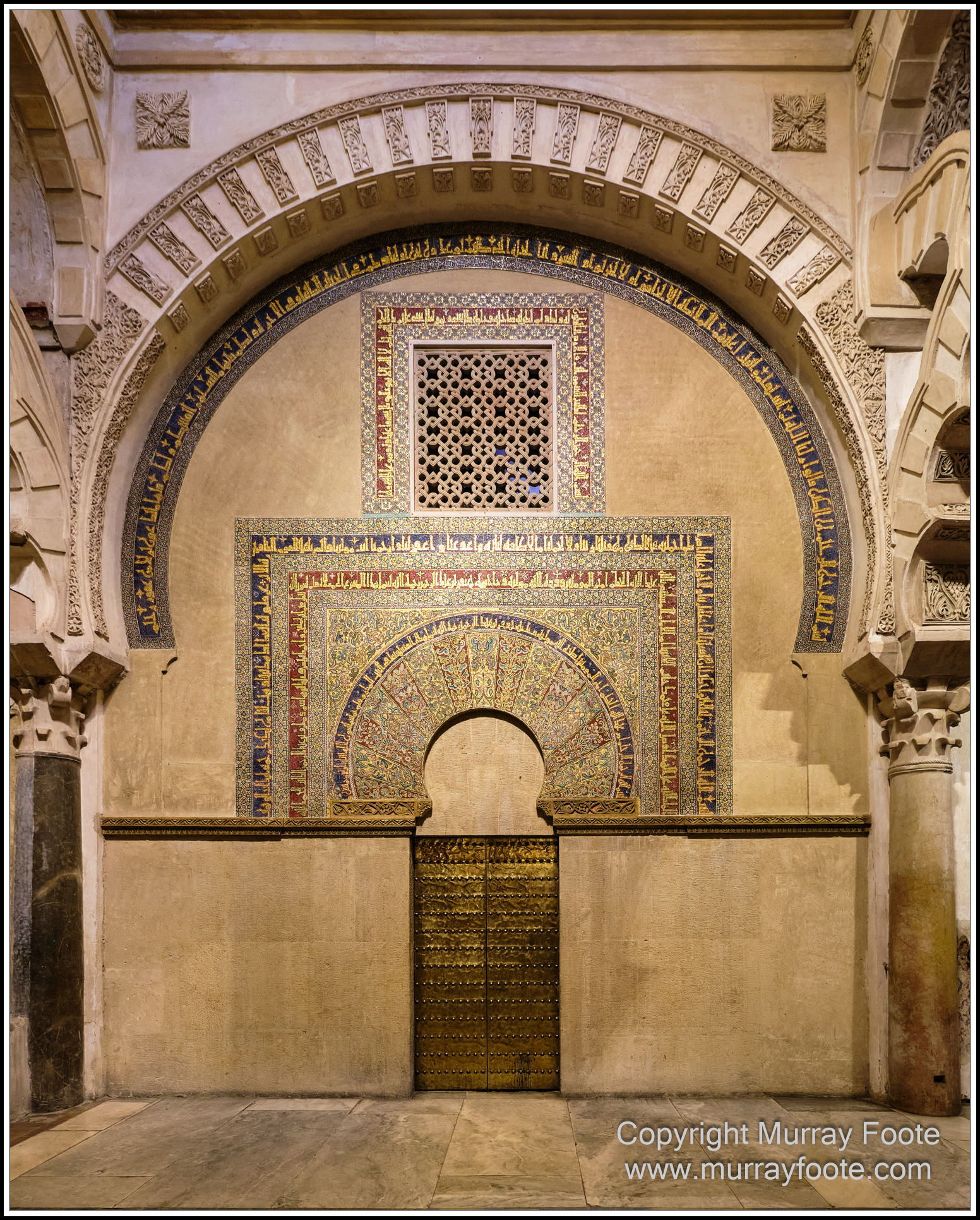
Bab Bayt al-Mal, to the left of the mihrab, the door that led to the mosque’s treasury.
.
.
.
.
. 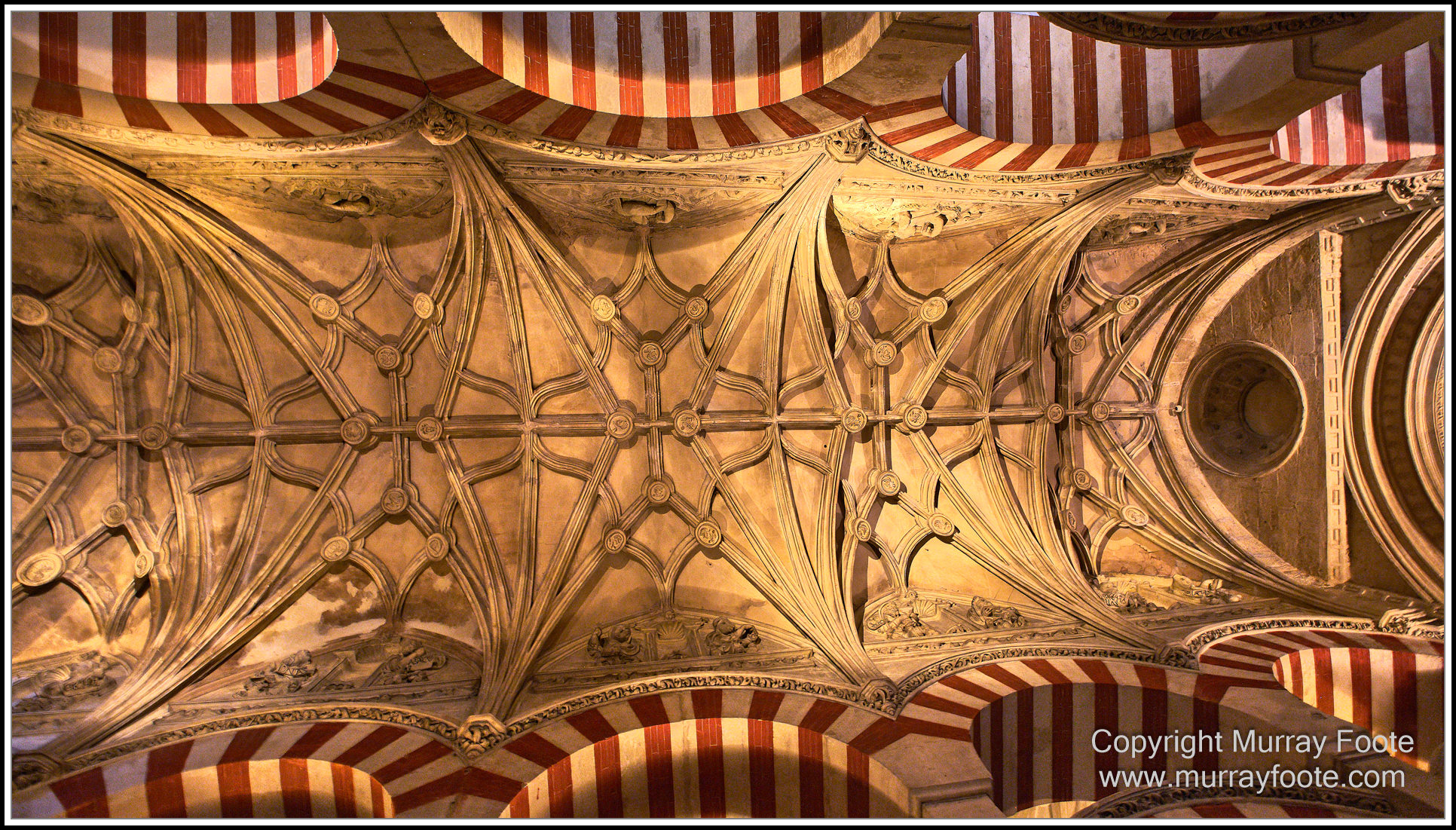
Looking up.
.
.
. 
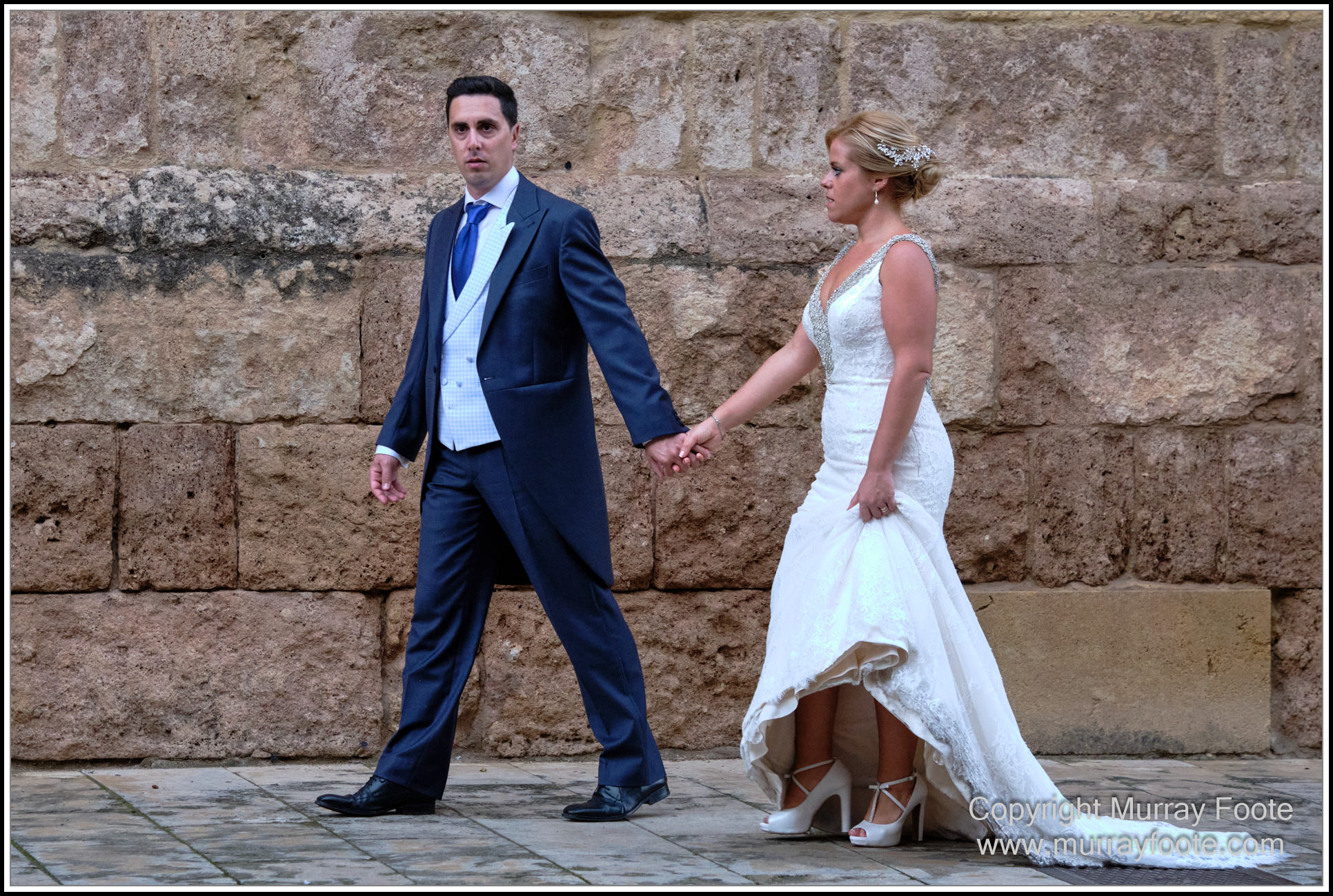
Outside on the west facade, wedding photography was happening.
There are twenty people in this photo, perhaps worth clicking on for a larger view. There is also a clue, a bit further behind the couple, of where this ritual may lead.
.
.
.
.  .
.
.
.
. 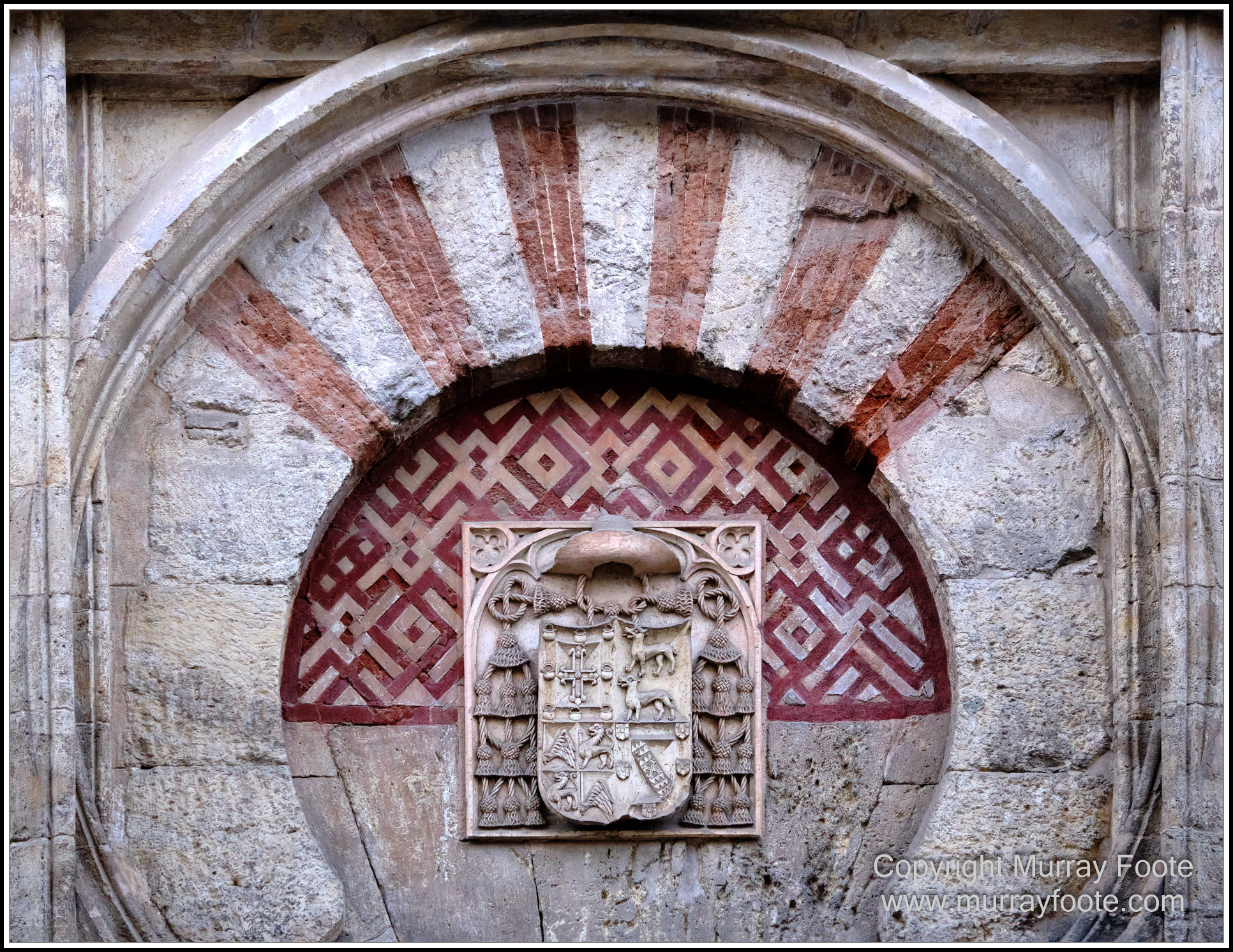
The art continues on the outside of the Mezquita, above the Puerta de San Miguel. Here a Spanish coat of arms has been overlaid on top of an Almohad design.
.
.
.
.
 .
.
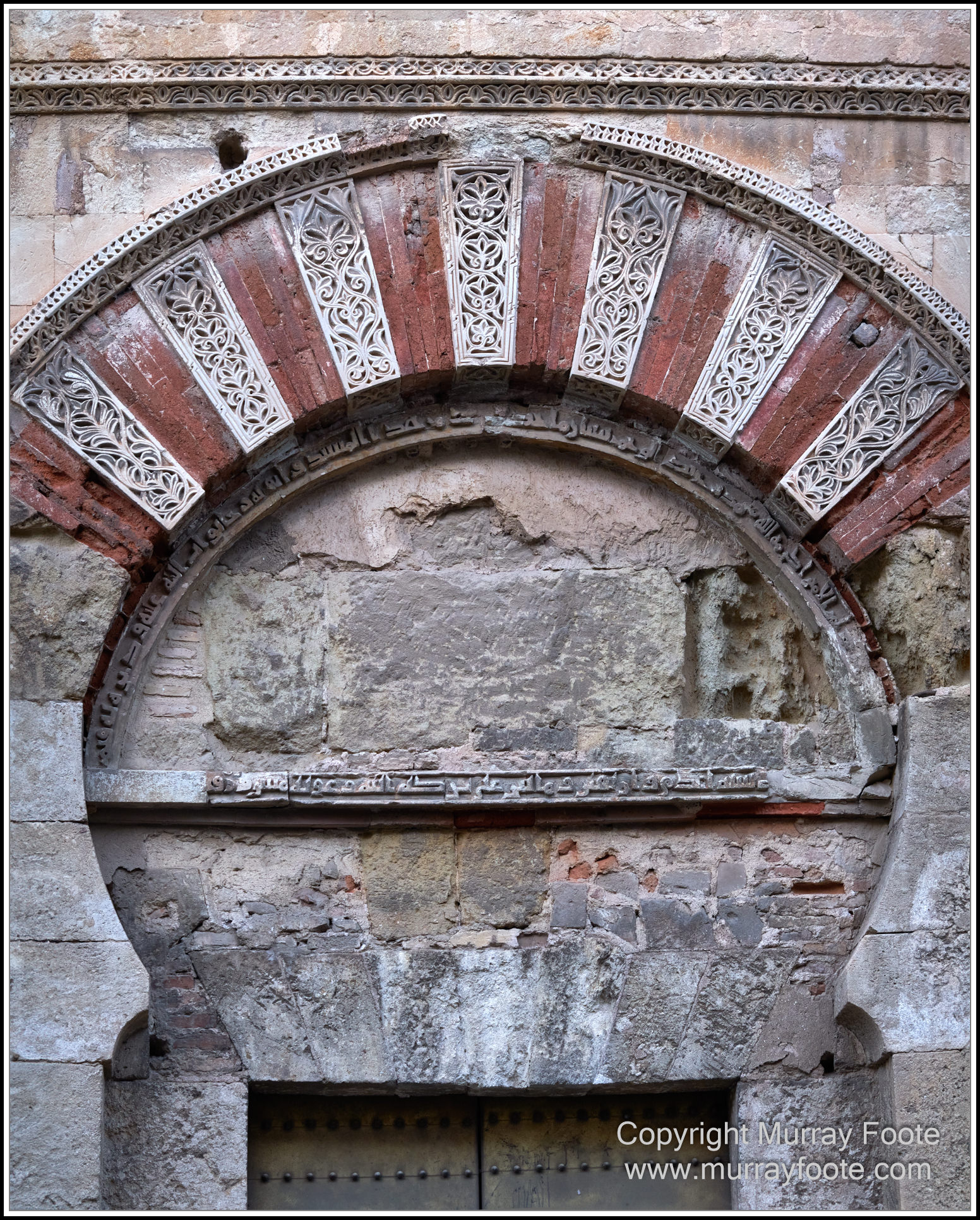
Upper part of the Vizier’s Gate (or Puerta de San Estaban), one of the oldest gates of the mosque. Its decoration dates from 855.
.
.
.
. 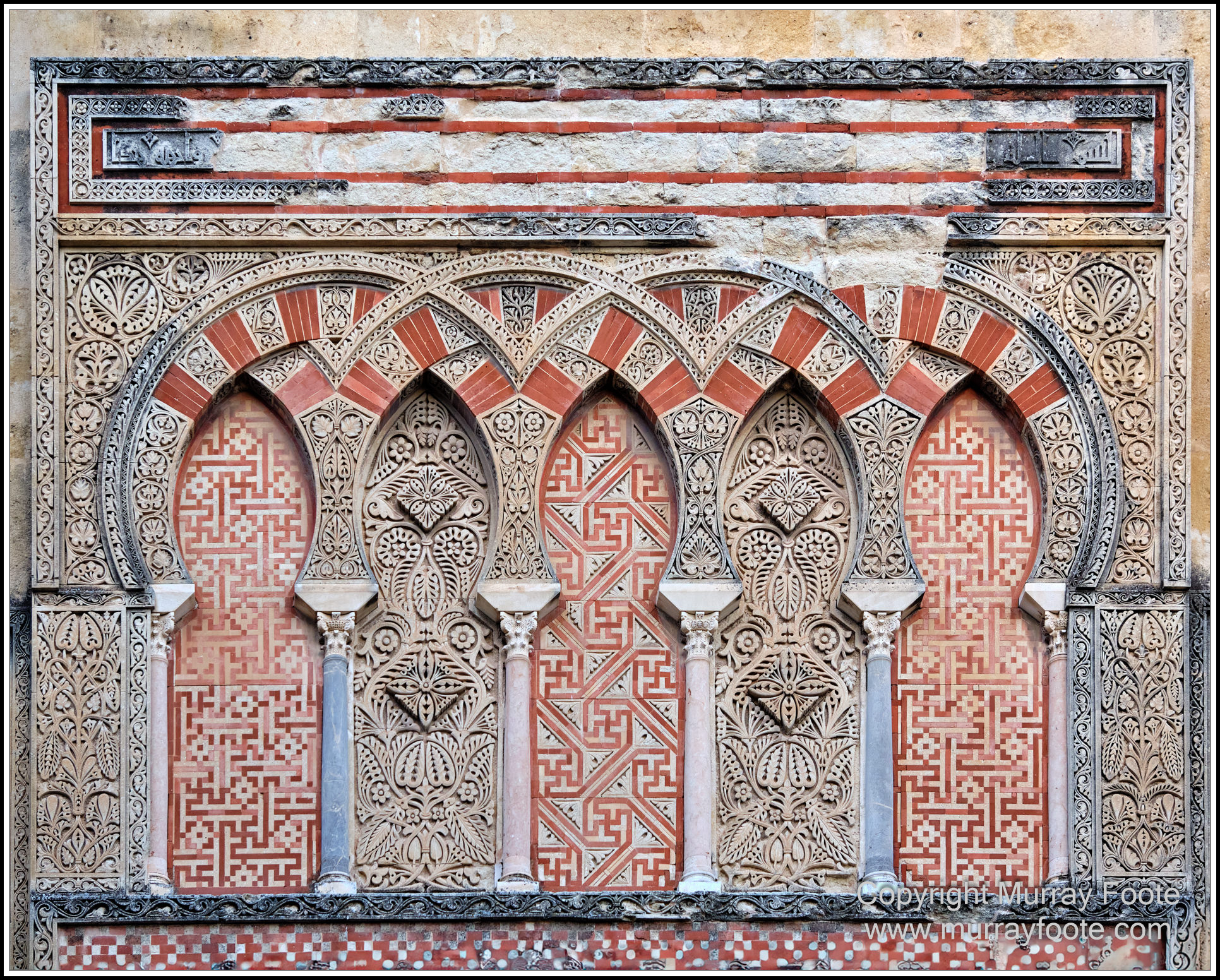
It looks like a wall that stands by itself. As you will see in the next image, it is actually a detail of a wall.
.
.
.
. 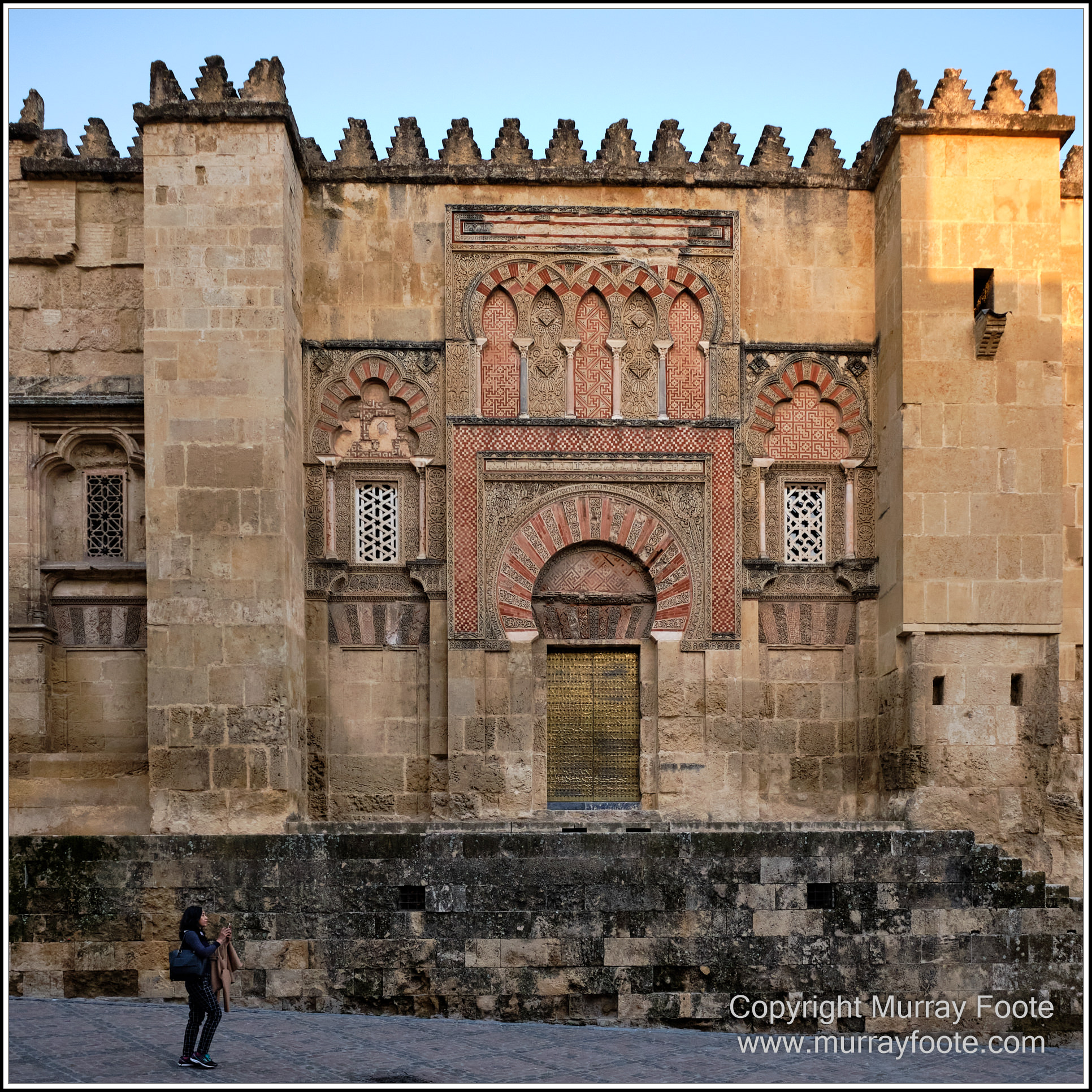
Puerta de San Ildefonso.
.
.
.
. 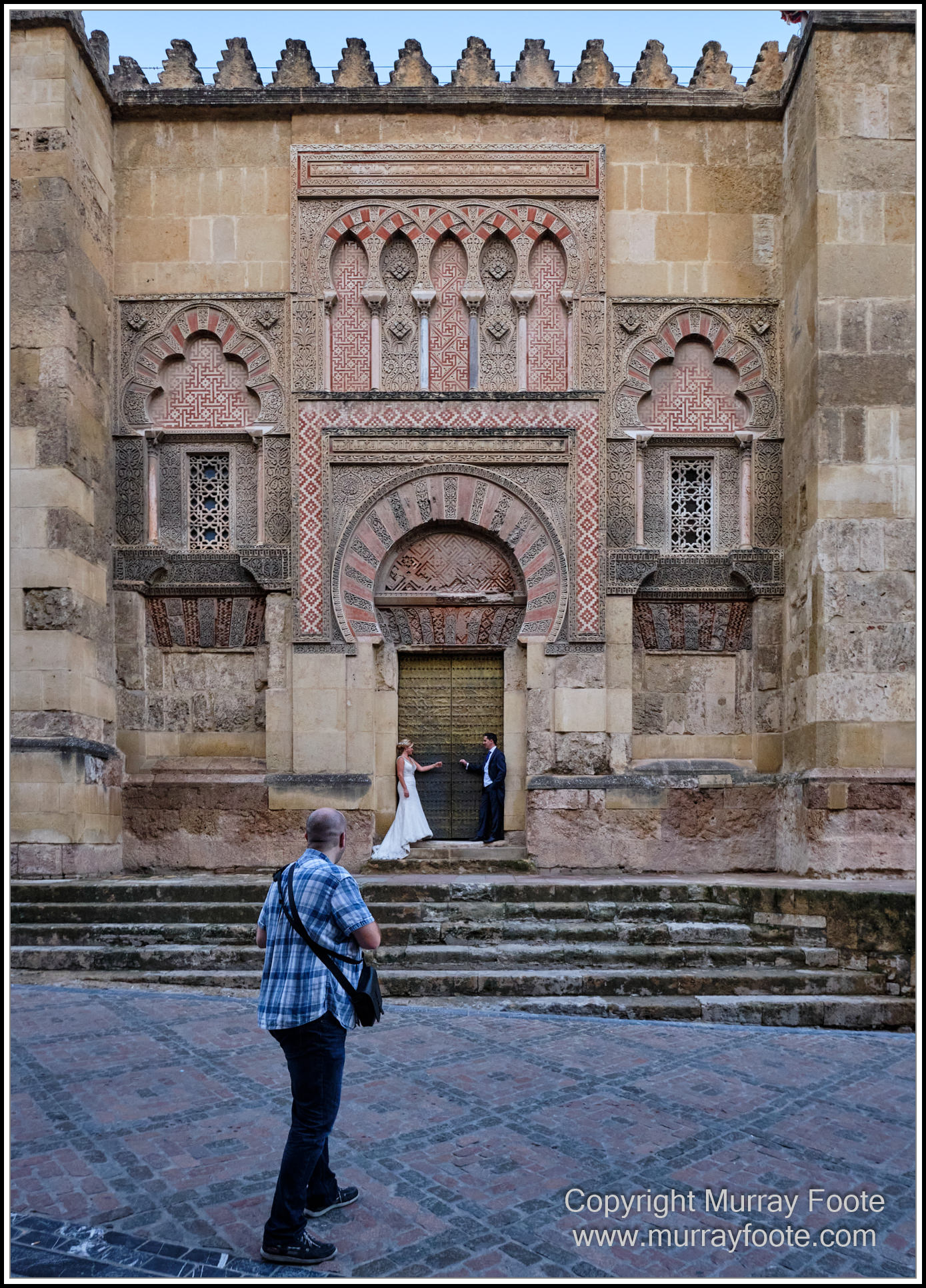
The wedding photography continues (different wall).
(Puerta del Esperito Santo).
.
.
.
. 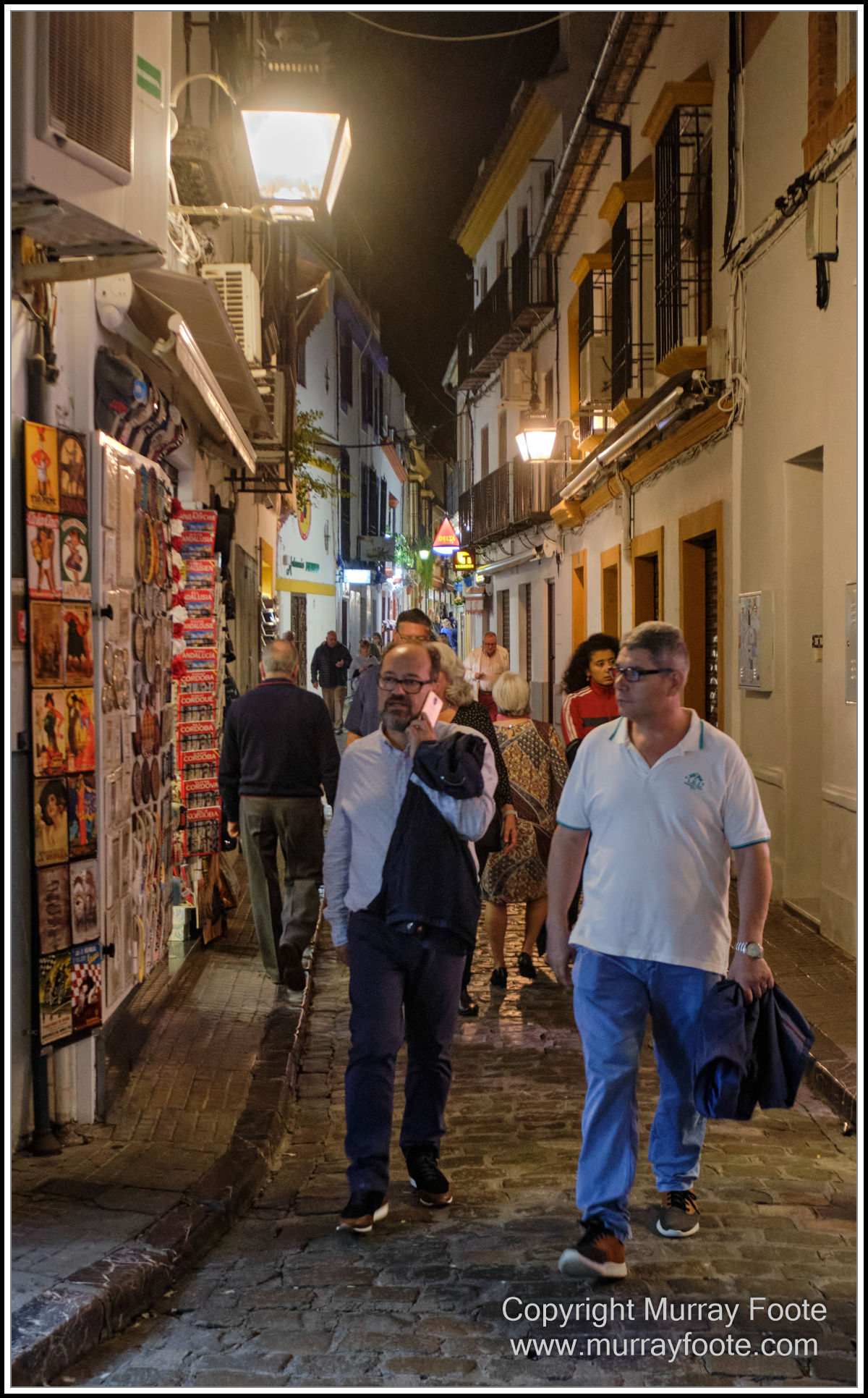
On the streets of Cordoba.
(The only image in this post not showing an historic building).
.
.
.
. 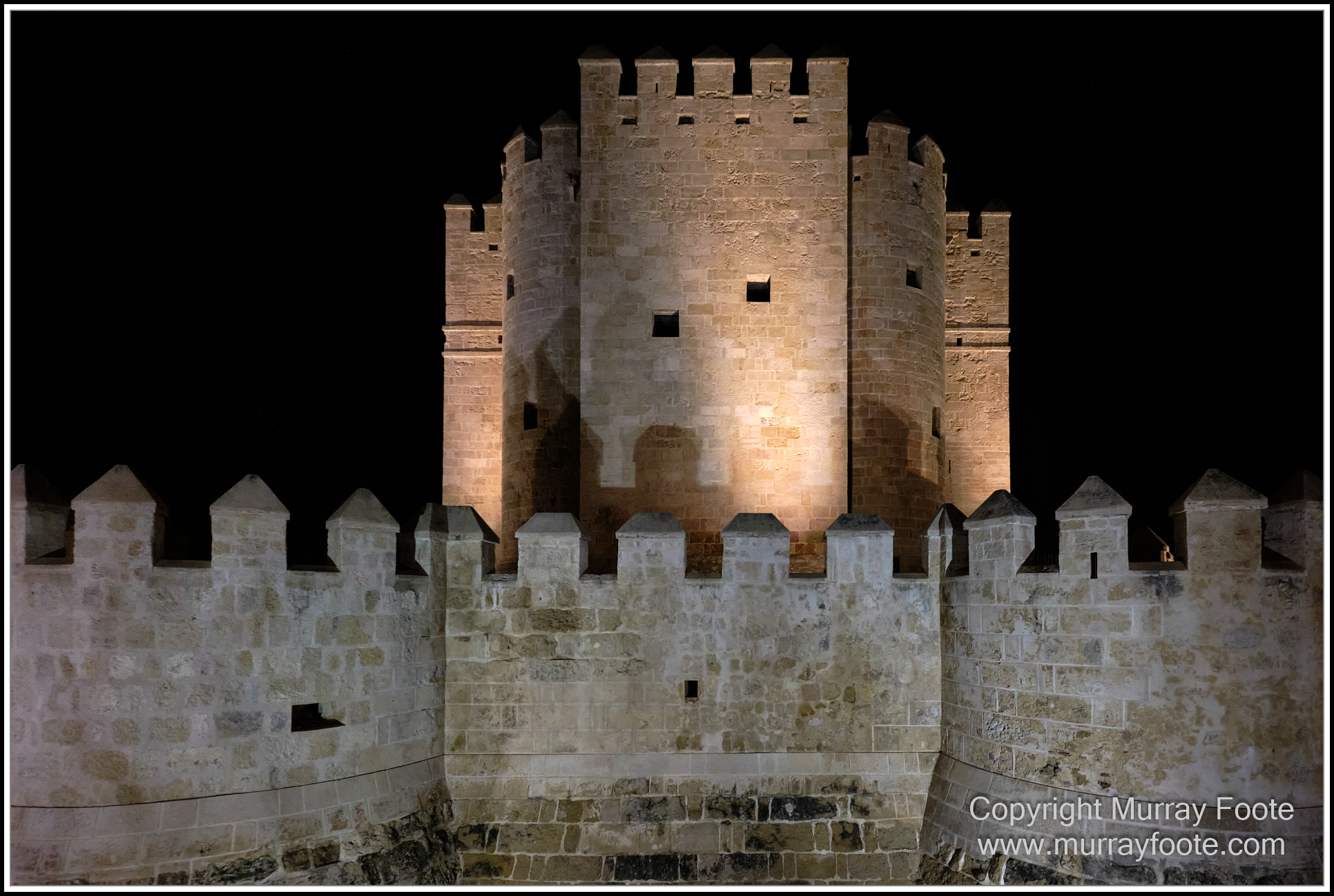
The Calahorra Tower, as we head back to our hotel.
The Calahorra Tower was built in 1333 to protect access to the Roman Bridge, the only access to Cordoba across the river at that time.
.
.
.
. 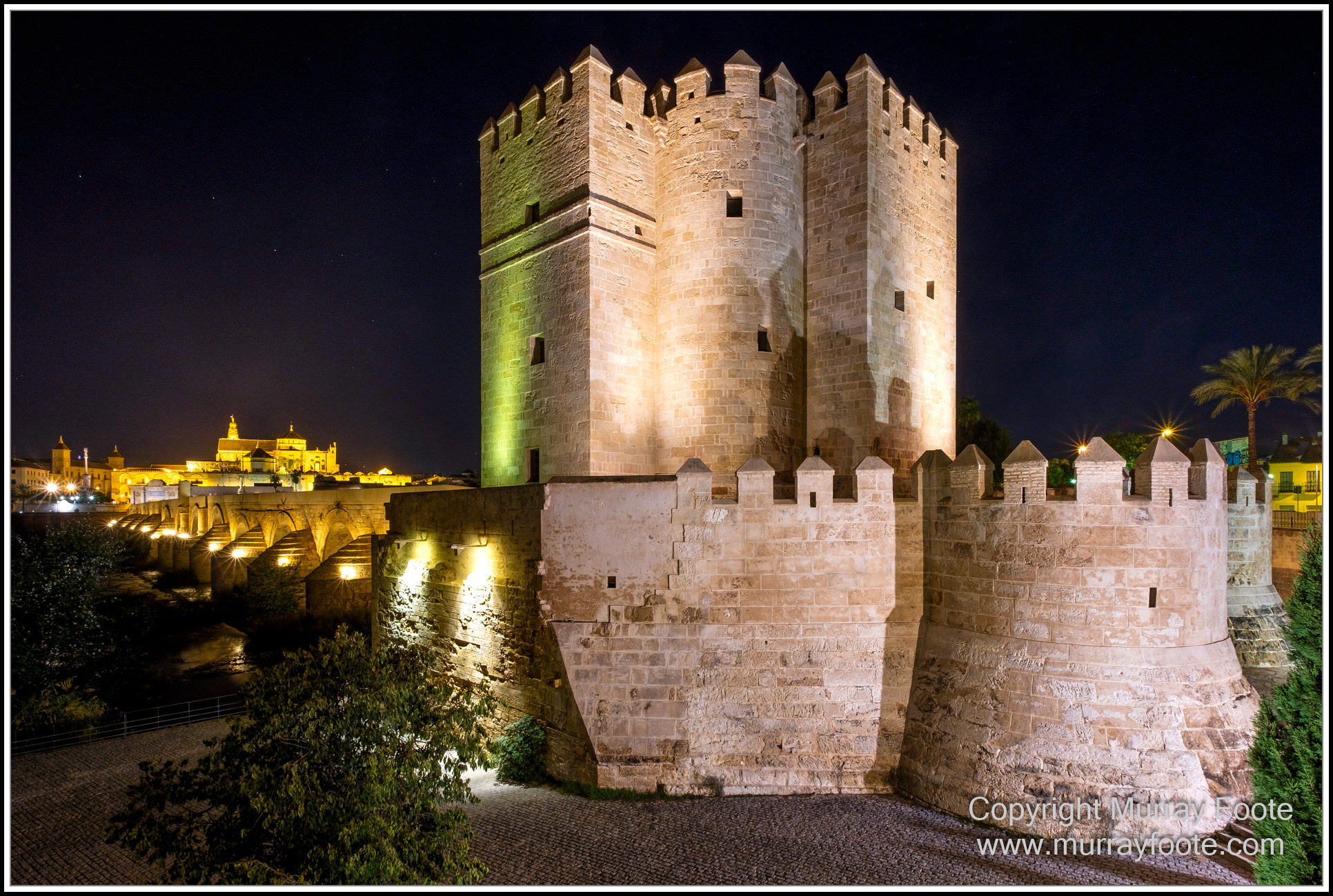
Back where we began in the first image, The Calahorra Tower and the view across the Roman Bridge to the Mezquita in the distance.
.
.
.
. 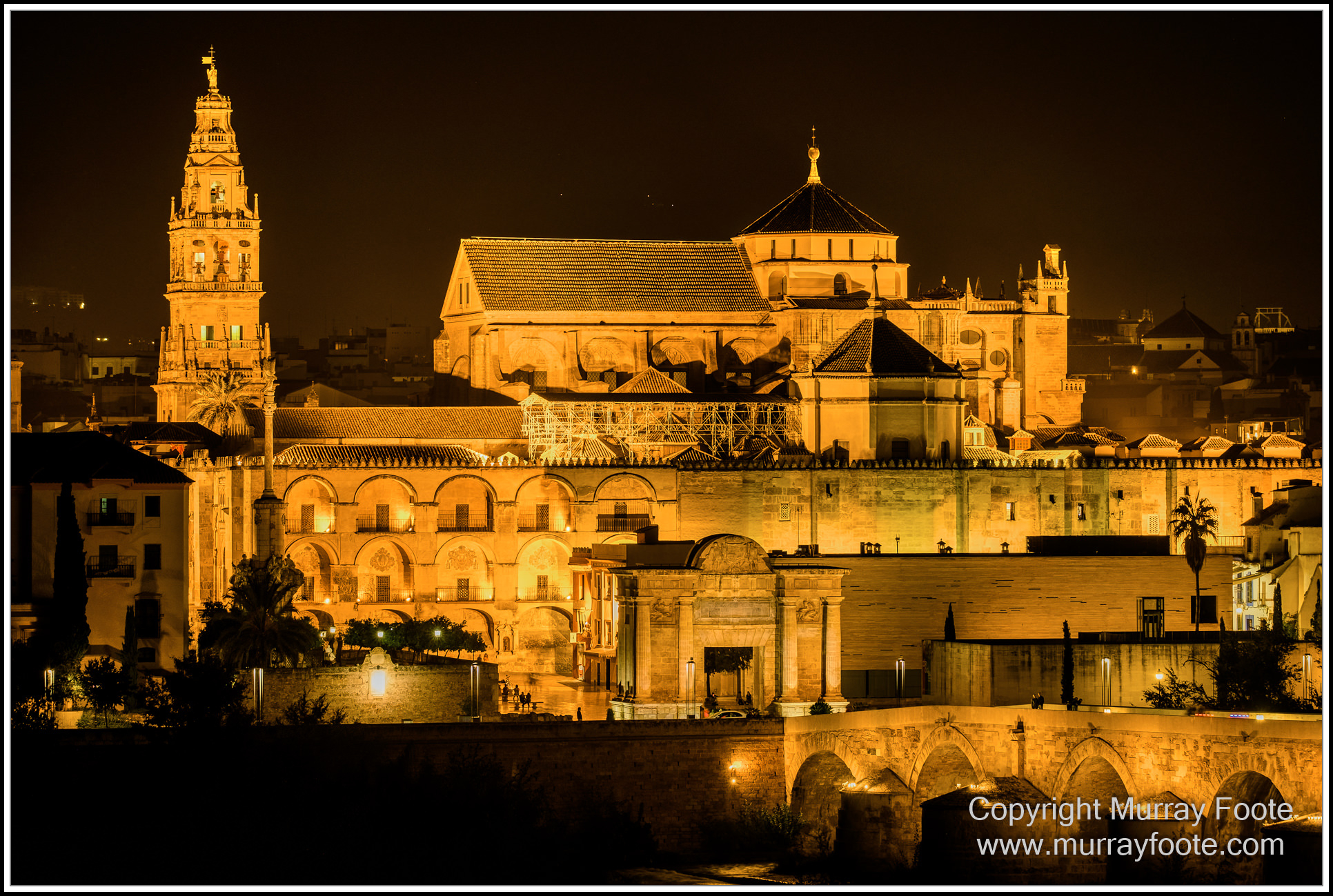
The Mezquita.
You can see the end of the Roman Bridge at bottom right. The small building immediately past it with four columns is the Tourist Office. The big building behind that is the Mezquita. That includes the Cathedral which rises up in the middle of it and the bell tower at the back corner, converted from a minaret.
.
.
.
. 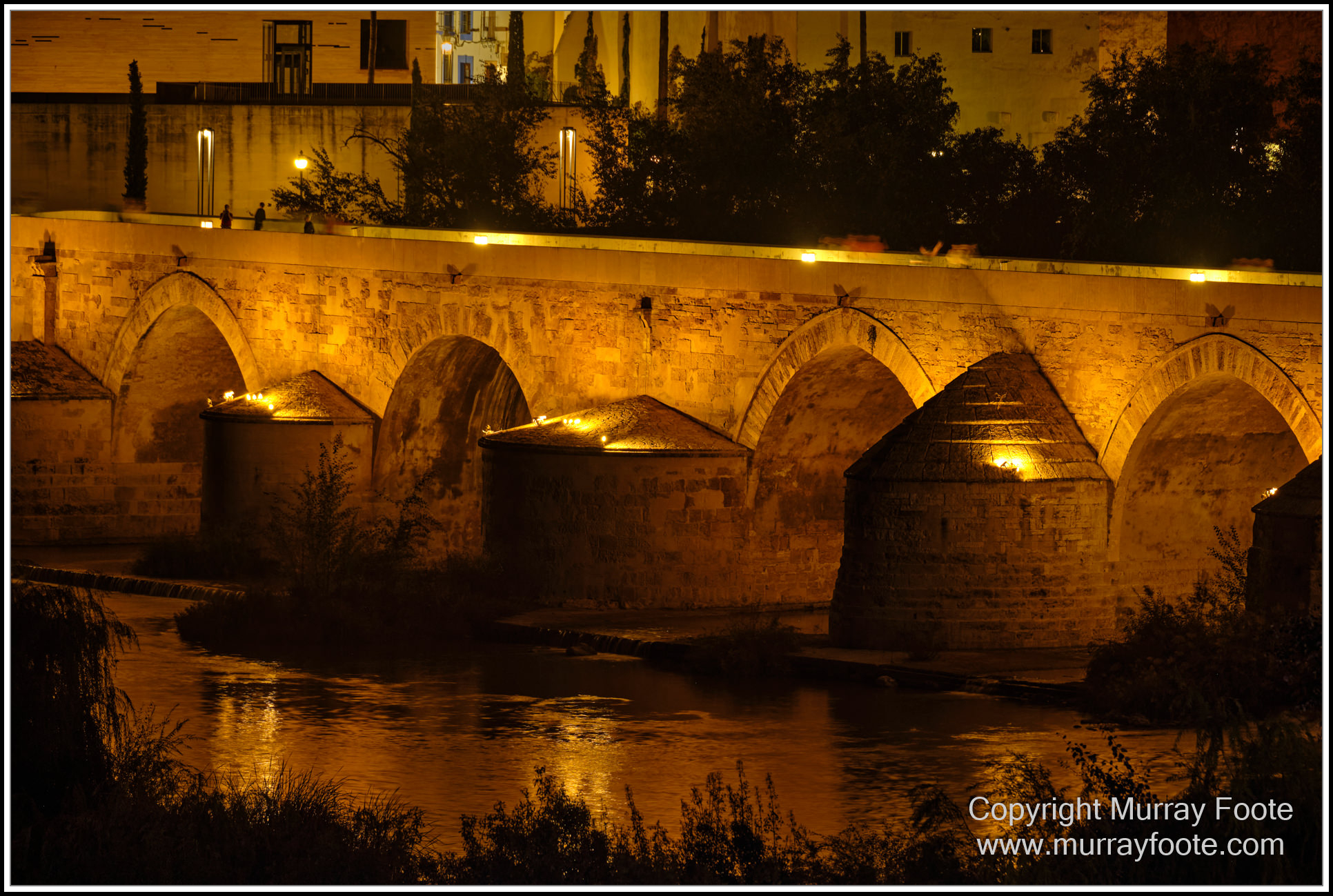
The Roman Bridge.
This was originally built in the early first century BC, possibly replacing an earlier wooden bridge. It has been reconstructed several times, especially by the Umayyad Dynasty in the eighth century. Only two of the arches are original. Until the mid-twentieth century, it was the only bridge into the city.
.
.
.
. 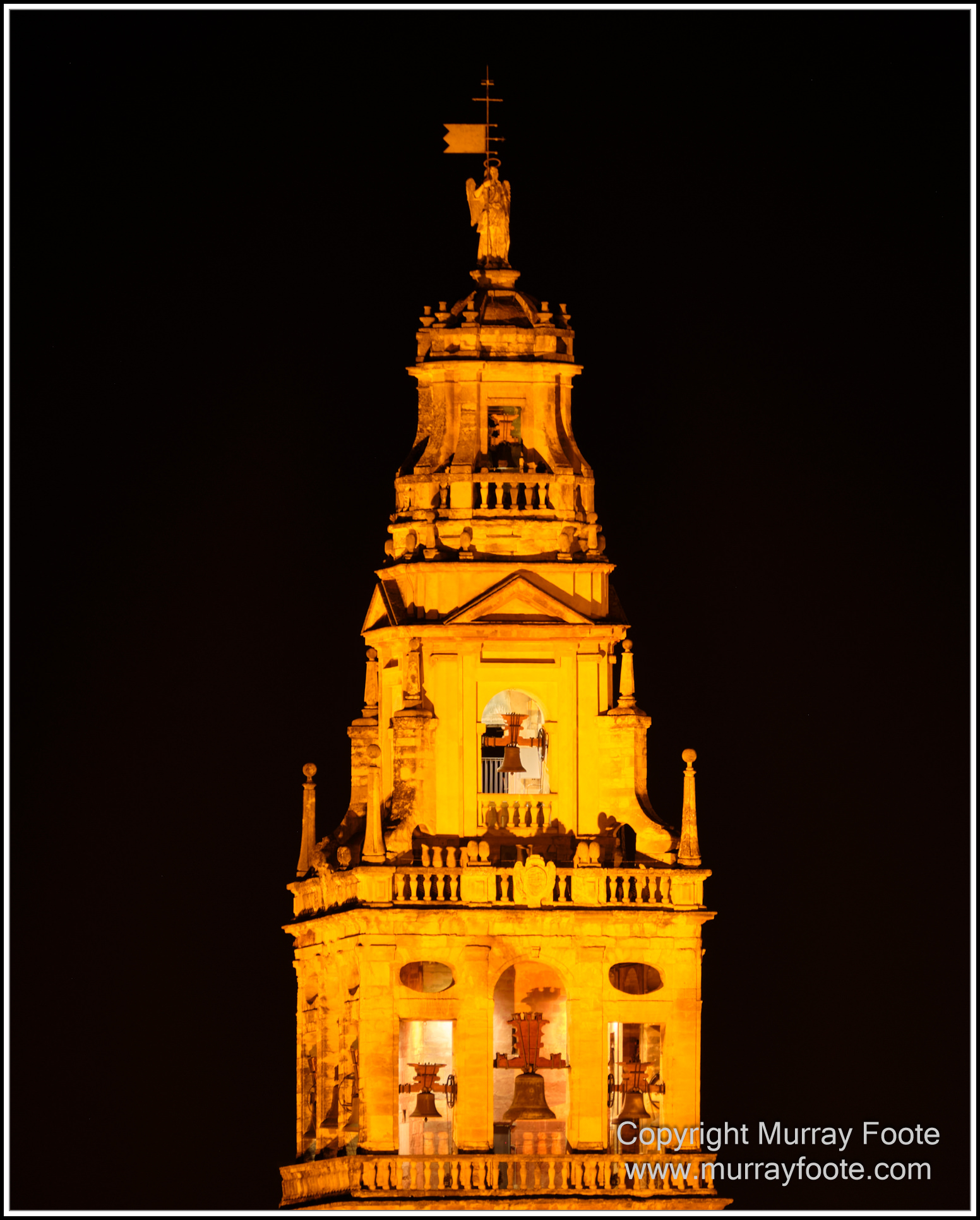
The Bell Tower, previously the Minaret.
.
.
.
.
 Murray Foote
Thanks for sharing these wonderful memories. We visited in 2009. At least the cathedral meant the mosque survived.
LikeLike
It is a wonderful place. God point about the cathedral.
LikeLiked by 1 person
Gorgeous photos!
LikeLiked by 1 person
Thanks very much Anna!
LikeLike
Did your hotel have a swimming pool on the roof? and roof top bar? if so we stayed in this hotel when my nephew got married in the Cathedral in 2016
LikeLike
Could be. It was then the Hotel NH Córdoba Guadalquivir and is now the Hotel Hesperia Cordoba. It does have a rooftop swimming pool and bar. We didn’t think to go up on the roof though.
LikeLike