Hobart, Tasmania, Friday 13 October 2023
.
Click an image to see it nearly twice as large (on a computer at least).
Subscribers! Click the Post Title in the email to go to the Blog post with larger images.
.
From Mount Wellington and the Organ Pipes Trail, we next headed to the Shot Tower.
.
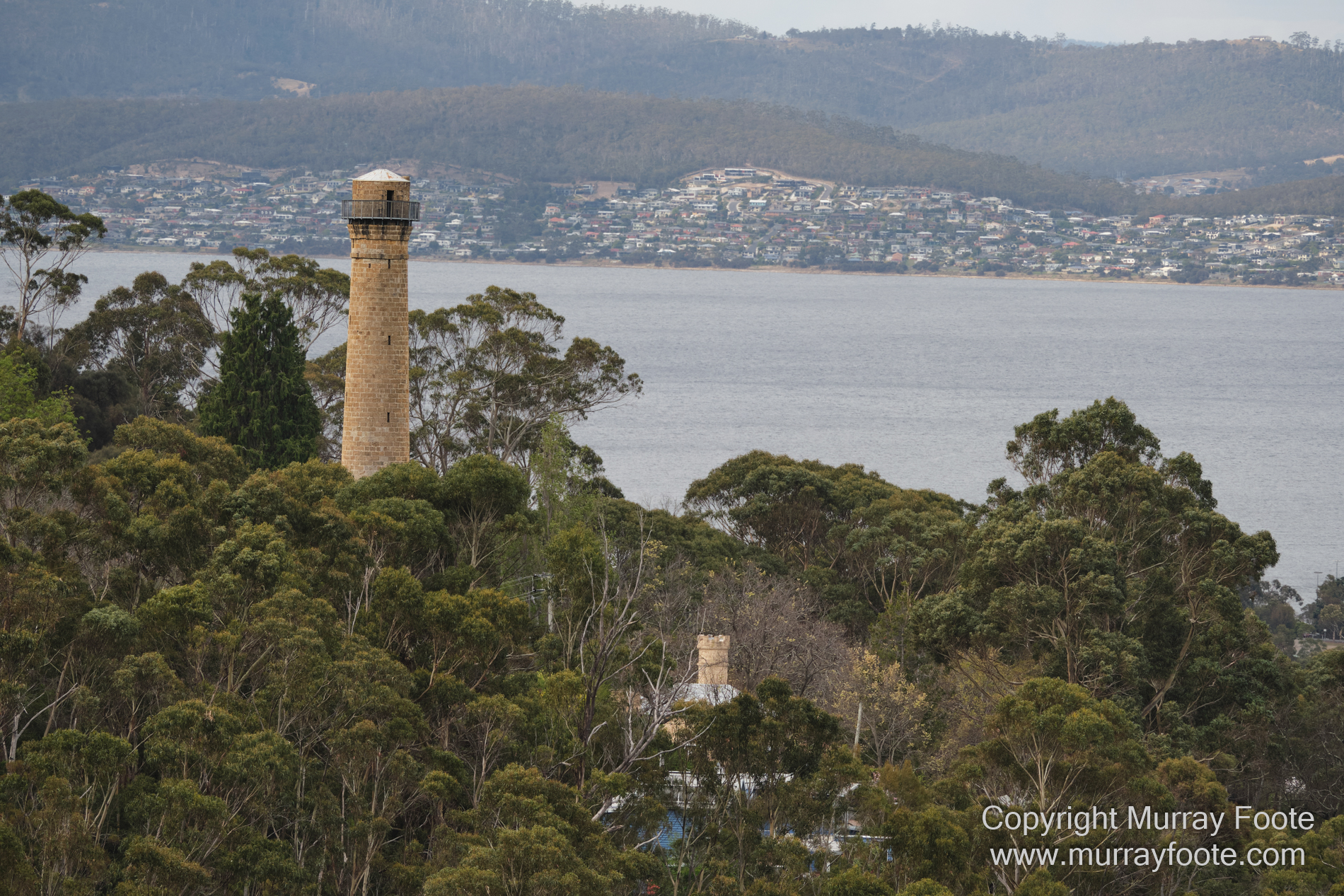
The Shot Tower.
.
.
. 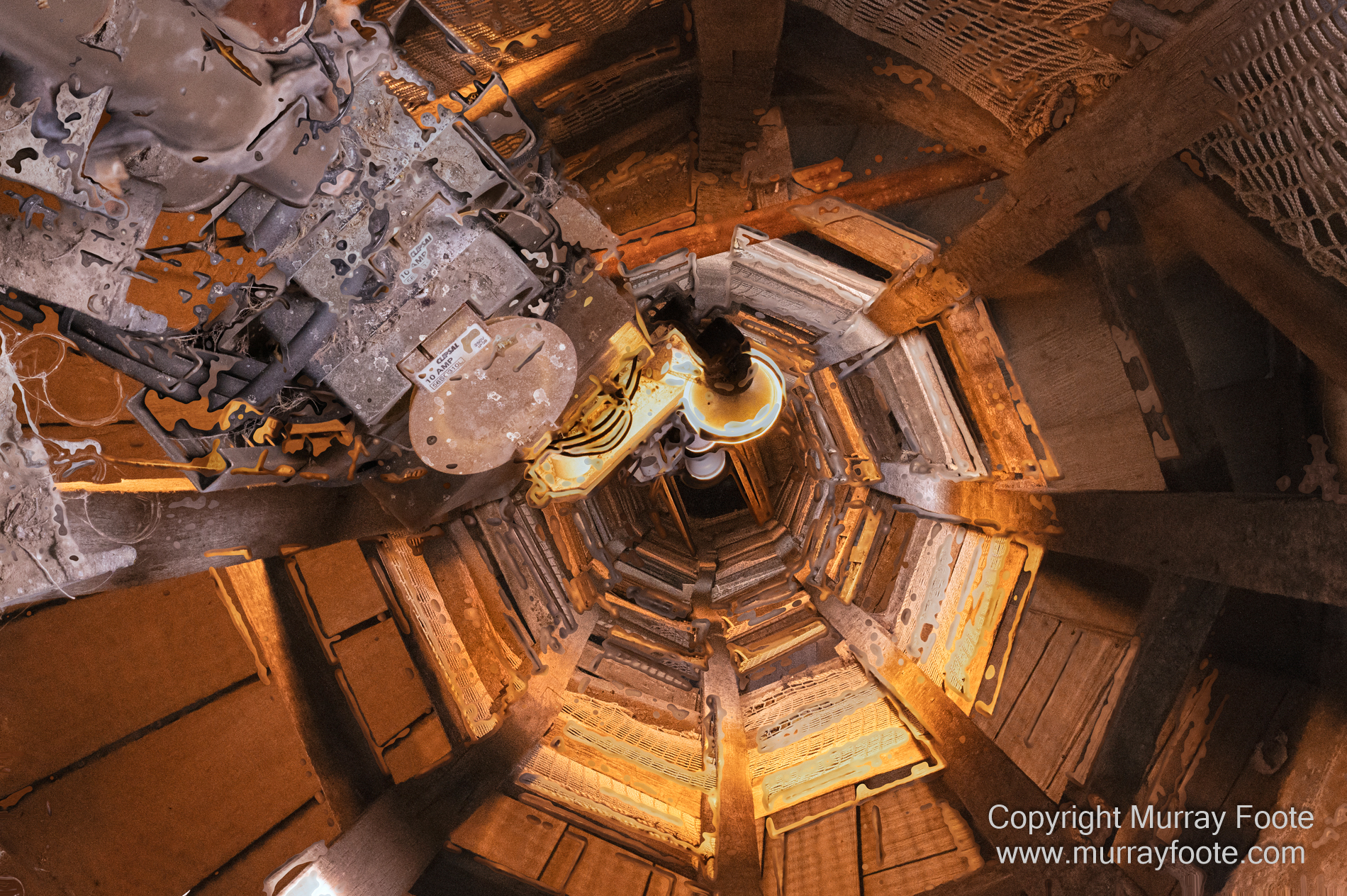
Looking down the Shot Tower.
It is 58 metres tall and was built of sandstone in 1870 to manufacture lead shot for “sporting purposes” in the smooth-bore muzzle-loading muskets of the time. This required melting lead at the top of the tower which also produced hazardous fumes, particularly because arsenic was added to lower the surface tension of the lead and antimony to make the shot harder when fired from a gun. The molten lead was poured through a colander and formed spheres while falling down the tower to a vat of water below.
.
.
. 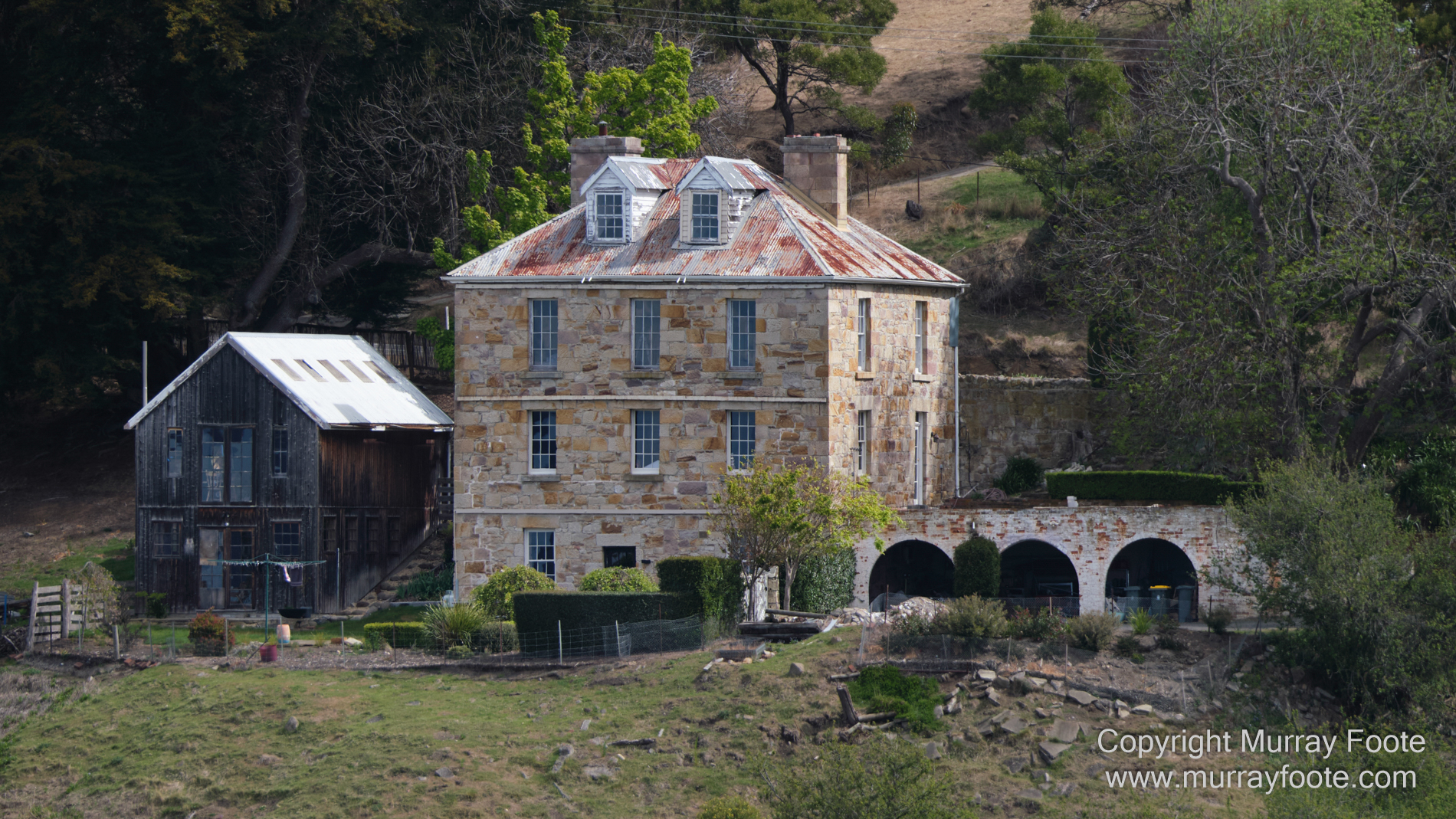
An old building from the top of the Shot Tower.
.
.
. 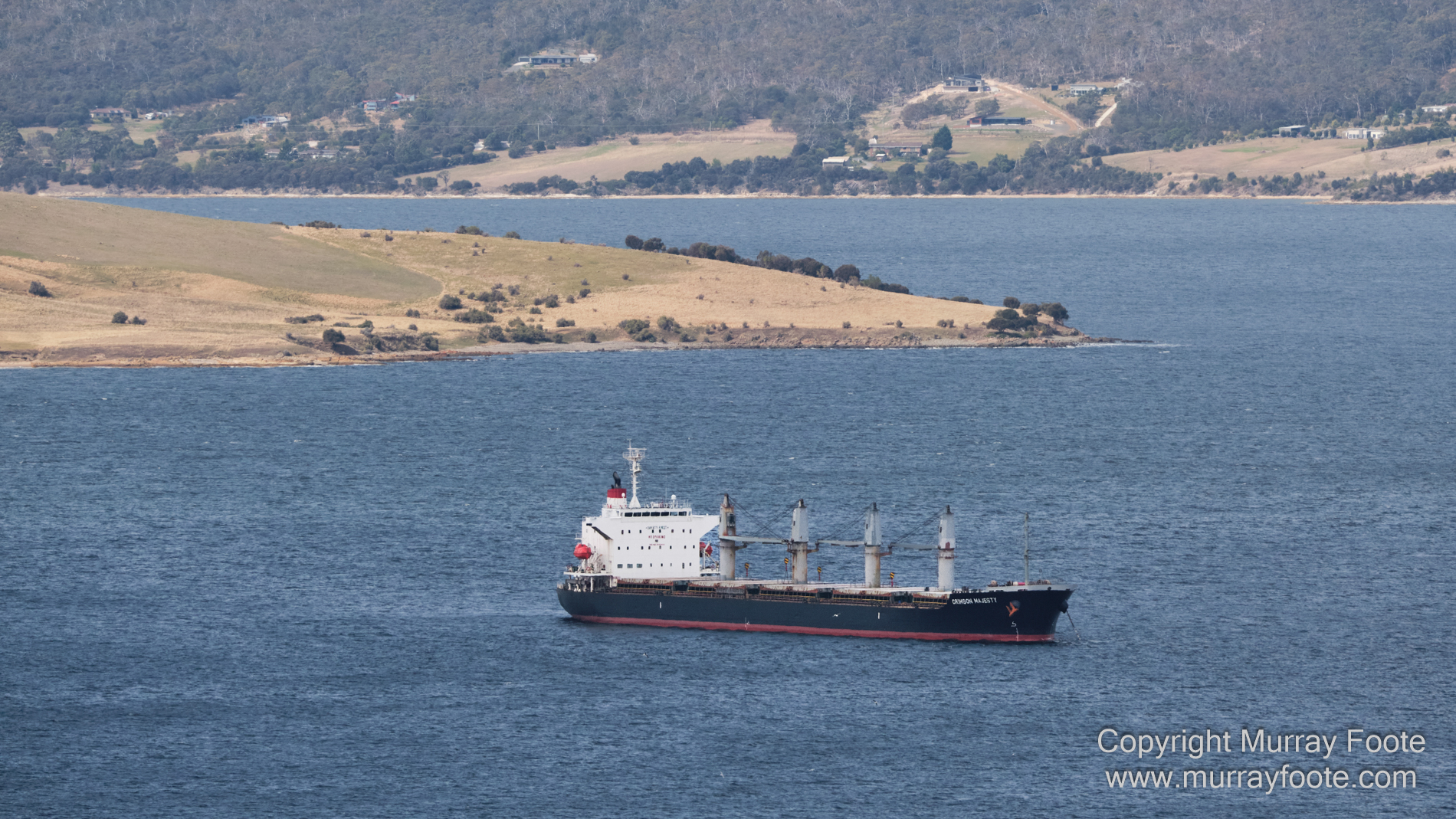
A freighter in the Derwent, also from the top of the Shot Tower.
.
.
. 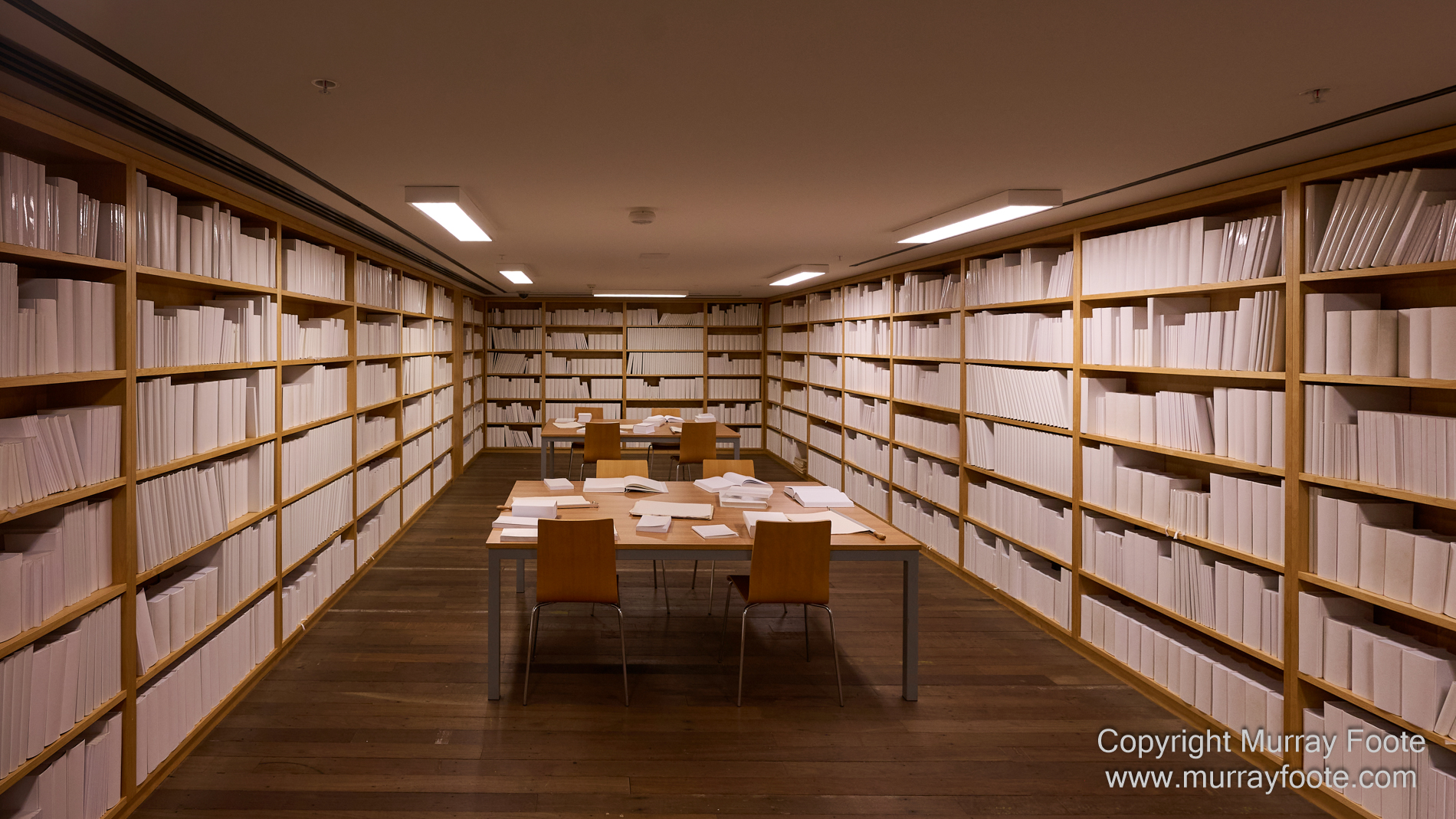
A library of blank books.
This is perhaps particularly appropriate for the emerging generations who see the world through their phones. We are now in MoNA, the Museum of Old and New Art, with adventurous displays quite unlike any other museum I have visited.
.
.
. 
Mayan sculpture with fish.
I presume it’s a Mayan sculpture, we didn’t bother with the audio guide for descriptions of all the exhibits in a kind of guided tour. The sculpture is immersed in a tank of water, perhaps because it’s easier to have the fish swimming around it that way. Maybe it was even discovered undxerwater such as in a cenote.
.
.
. 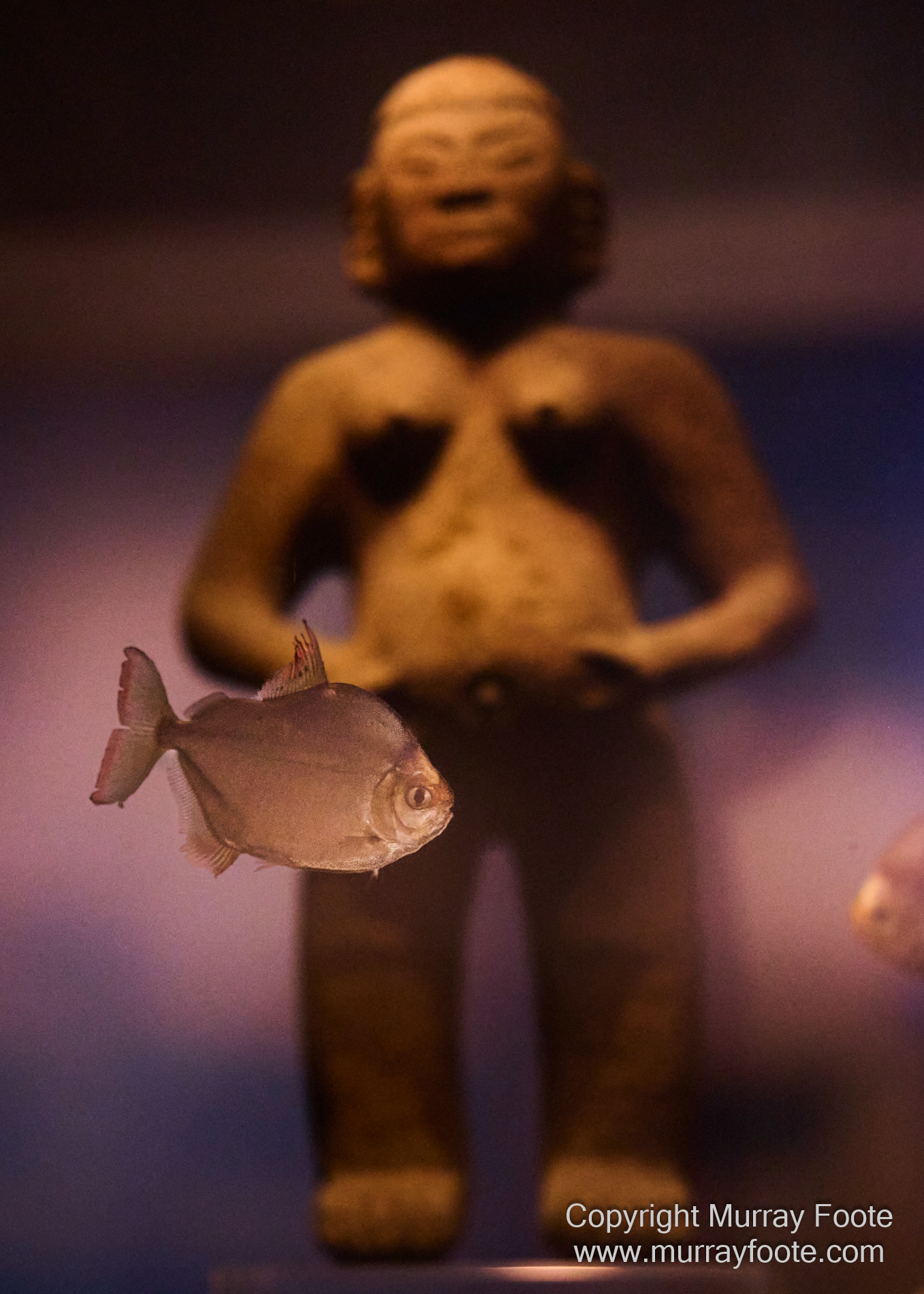
Fish with Mayan sculpture.
.
.
. 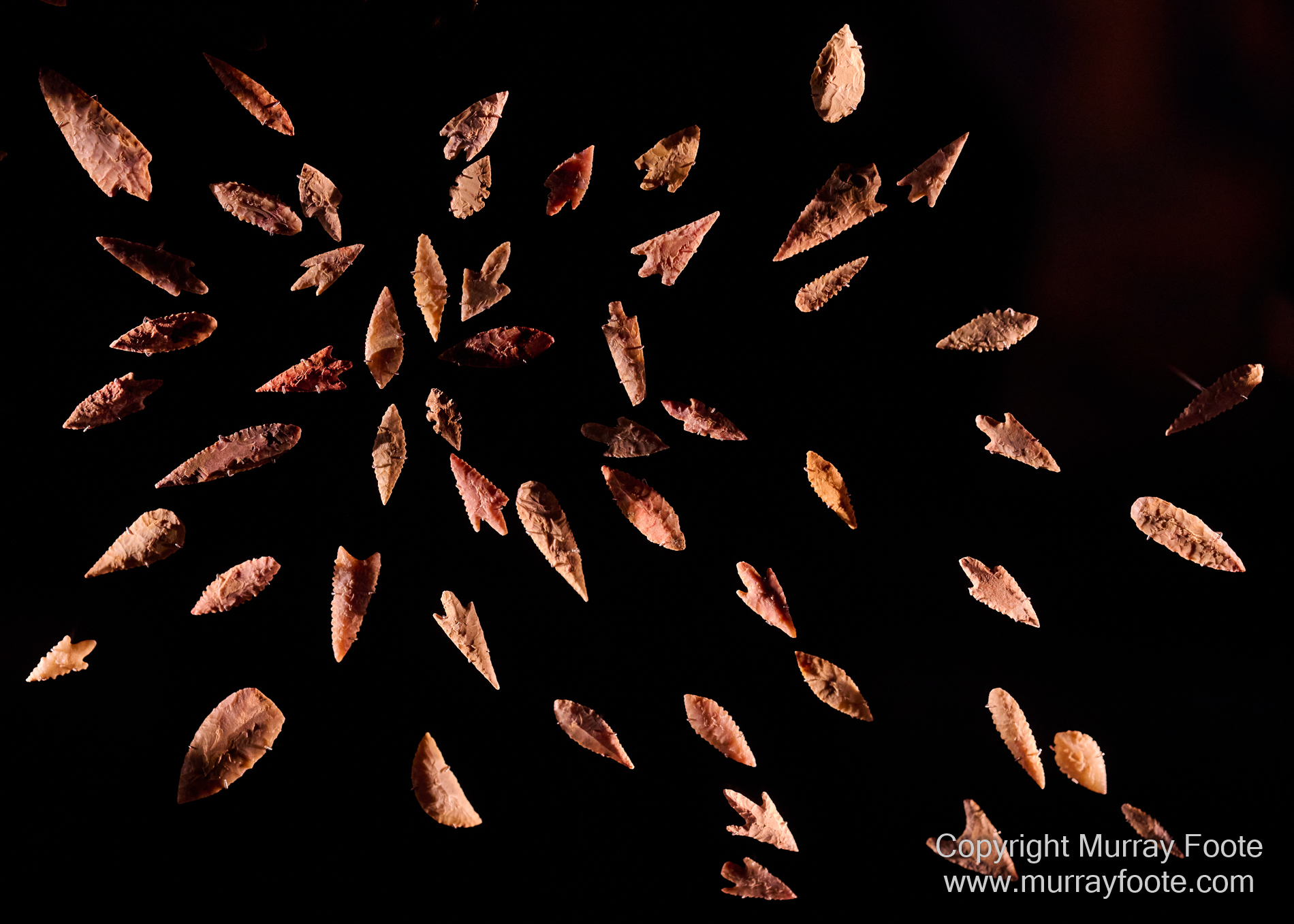
Neolithic arrowheads.
.
.
.
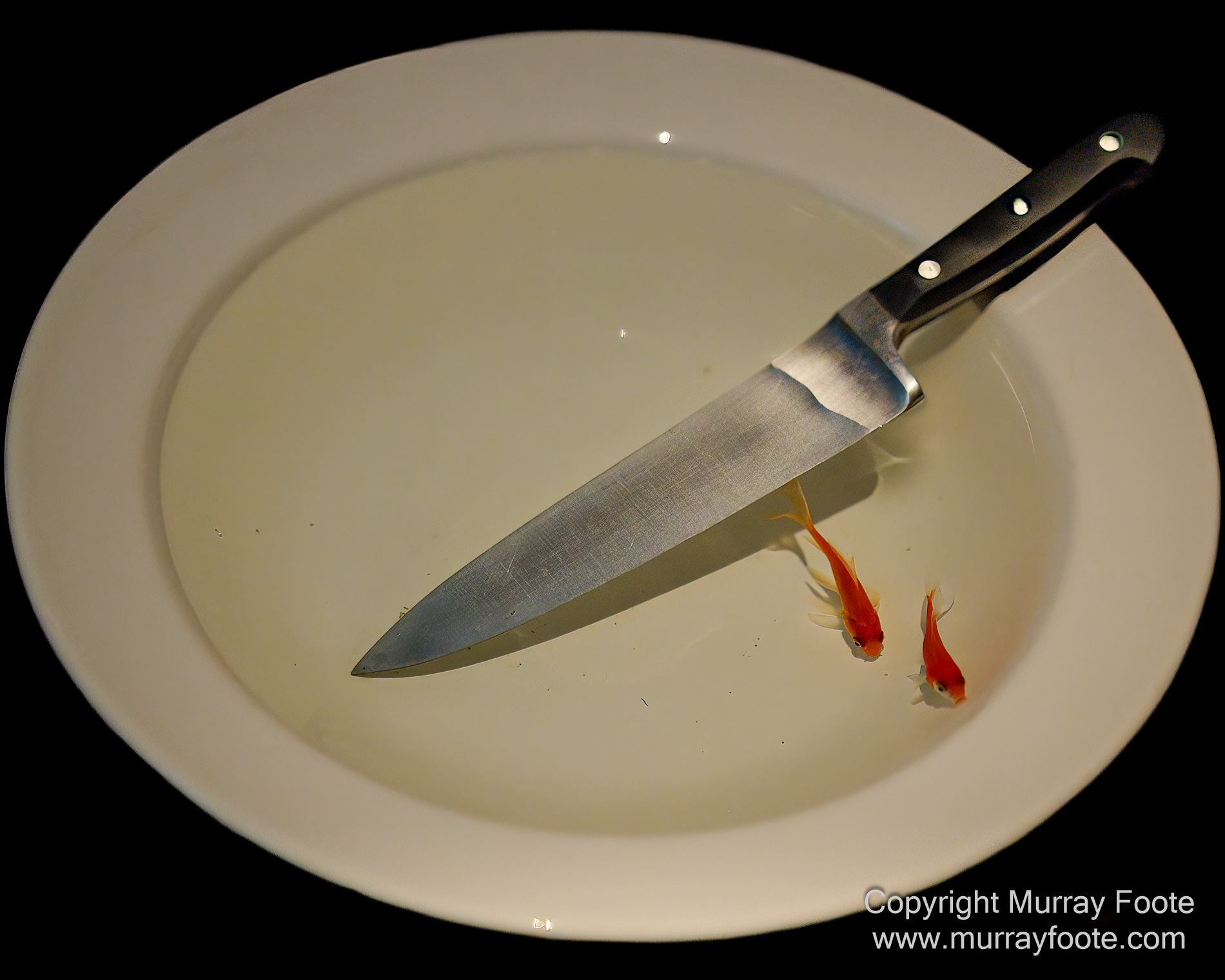
Fish again, this time with a knife on a plate.
.
.
.
.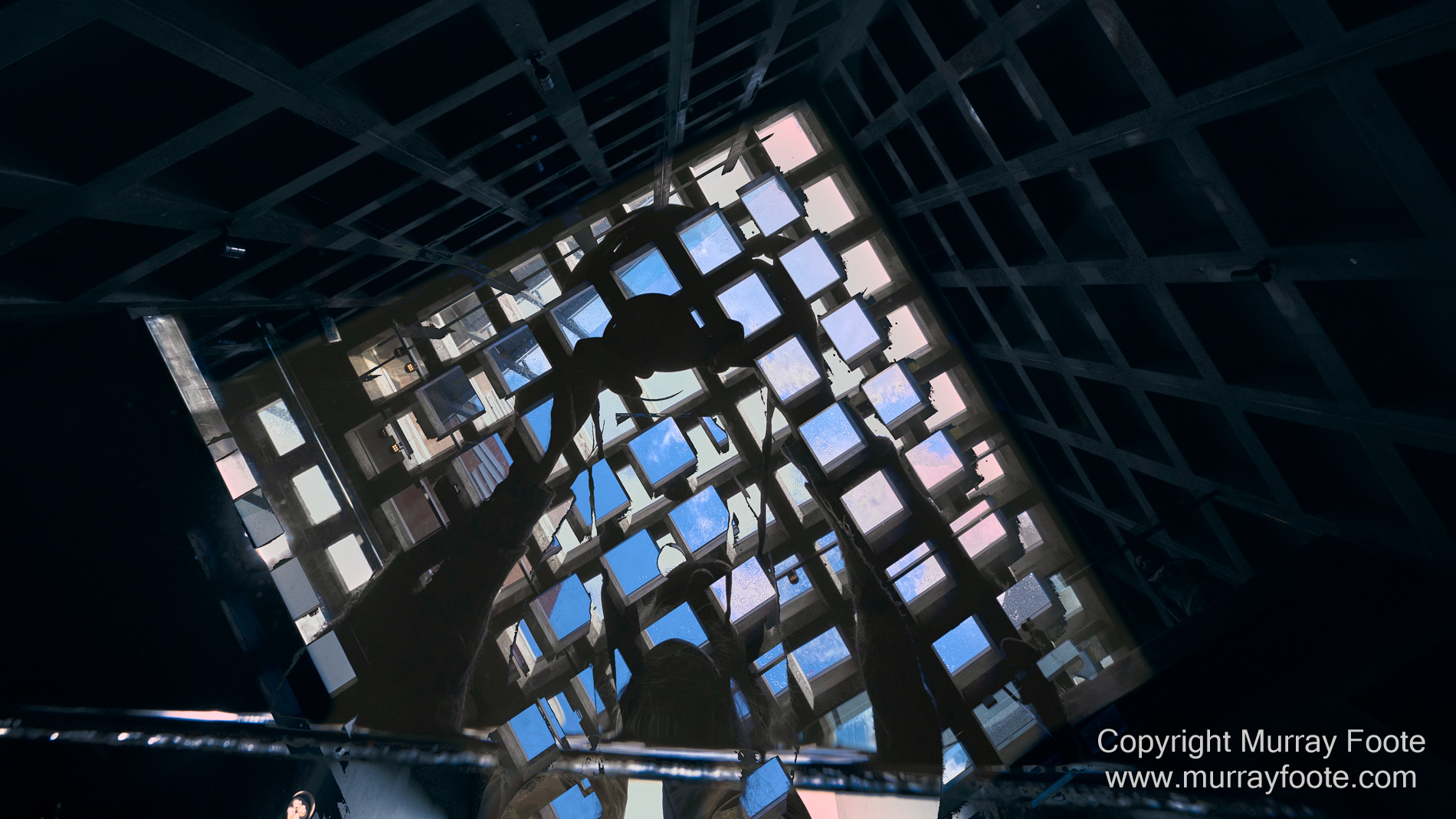
Reflection and reflection on abstraction.
I took a number of images here at different exposures due to the extreme range of light from light to dark. I tried a number of ways of combining them and in this one some of the images are accidentally combined out of phase to give an abstract effect that seemed particularly in tune with the subject matter.
.
.
.
.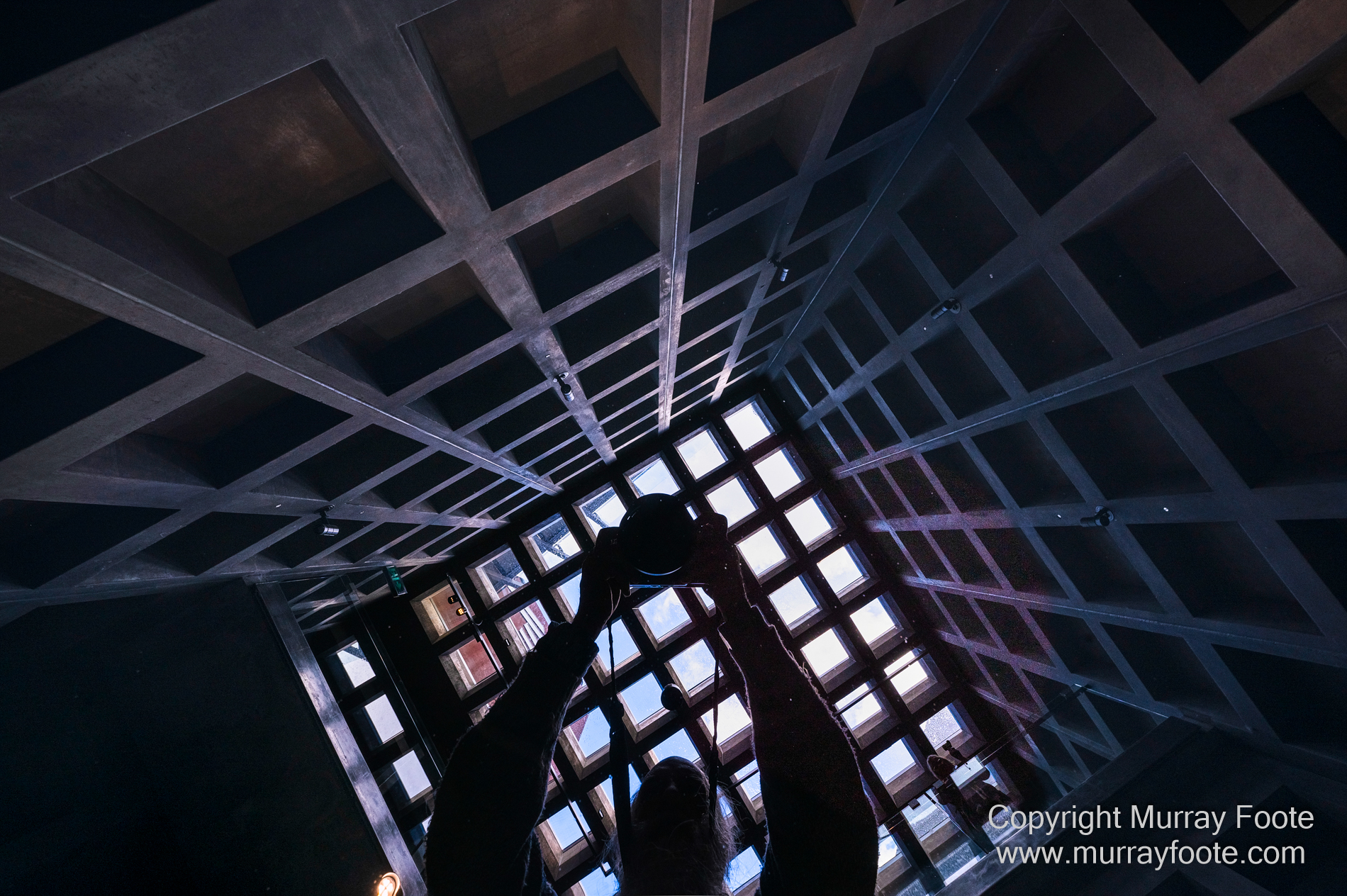
Here is a more realistic view.
There is a walkway into a dark zone and I am photographing the view looking down. It takes a few moments to realise this is a reflection of the tower above, not some disconcerting depths lit from below. On the edges of the hand rails there is a liquid, probably water, reflecting the view above. In the previous images, which combines the constituent images in a different way, you can also see the edge of the hand rail.
.
.
. 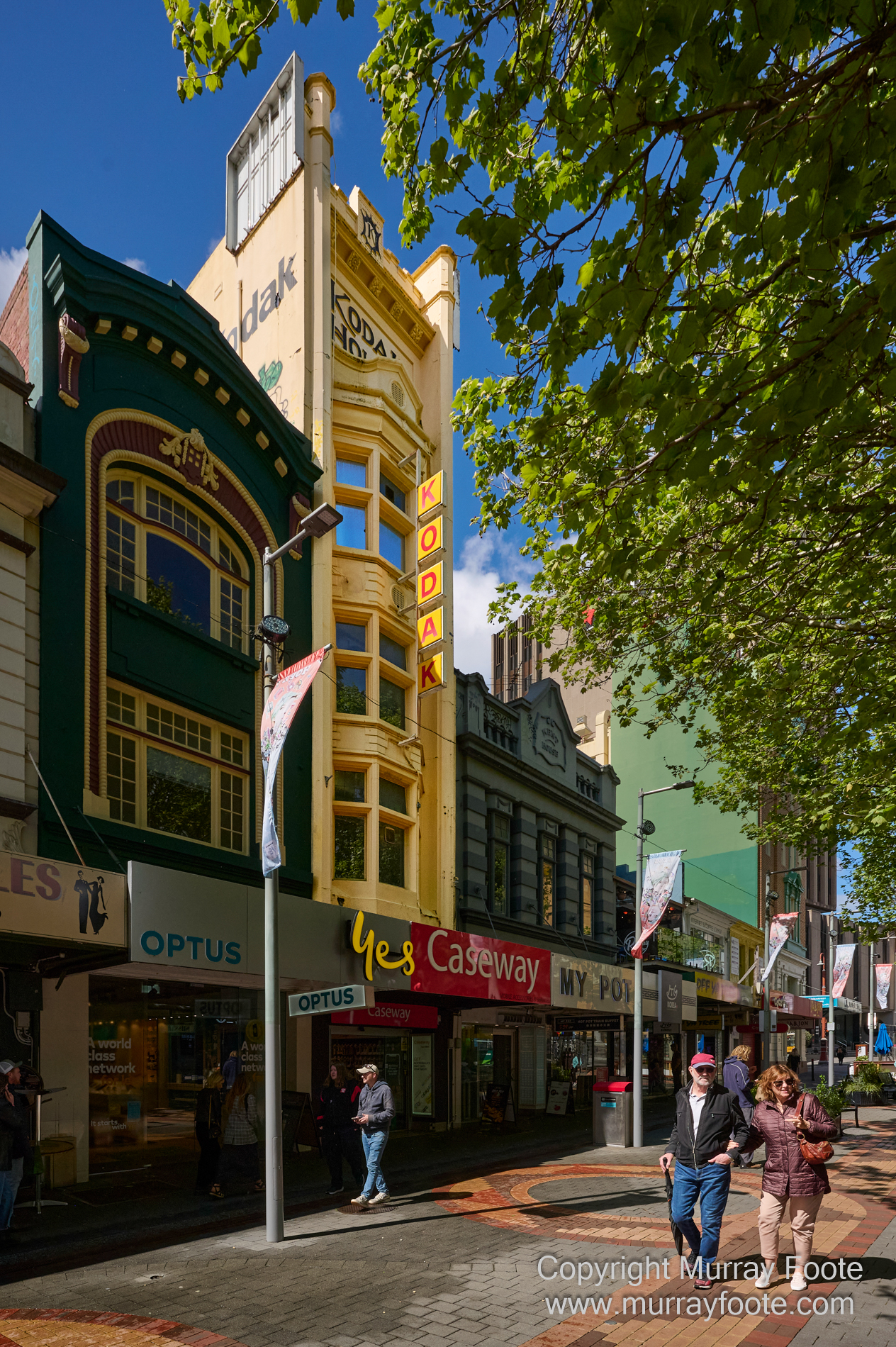
How are the mighty fallen.
This was just round the corner from where we were staying, in the centre of Hobart.
.
.
. 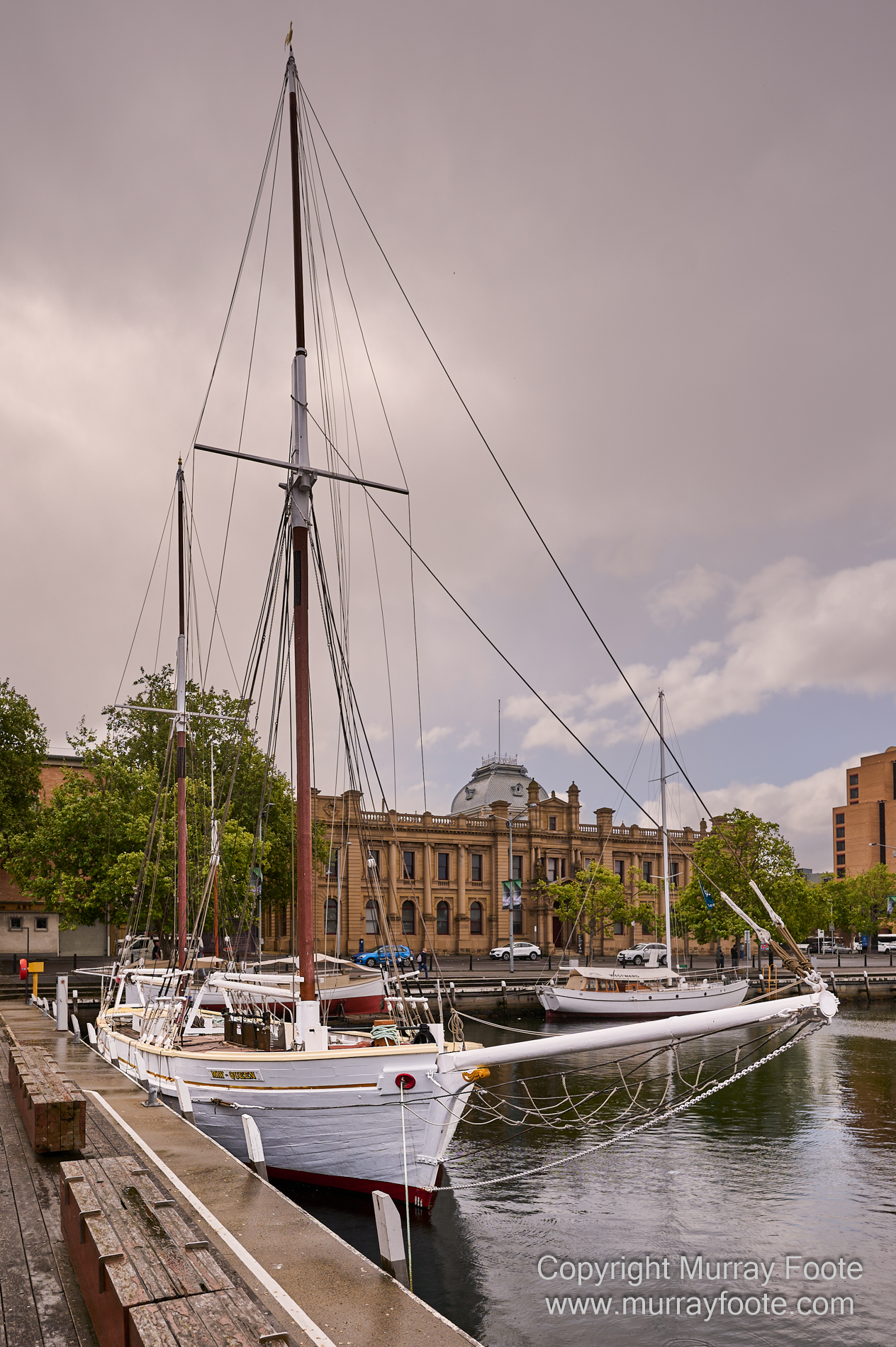
The May Queen
In the late afternoon and accompanied by intermittent rain, we wandered around Hobart’s old dock area. This is the May Queen, 21 metres long and built in 1867 with the hull of Tasmanian blue gum and stringy bark, the deck of Tasmanian celery top pine and the spars of imported oregon. It carried timber and supplies around south-east Tasmania for 106 years. It competed with great success in the Royal Hobart Regatta Trading Ketch Race from 1868 until when the last race was run in 1954.
The yacht in the background is the cutter Westward, the only yacht to win the Sydney Hobart Yacht Race twice on handicap, in 1947 and 1948.
.
.
. 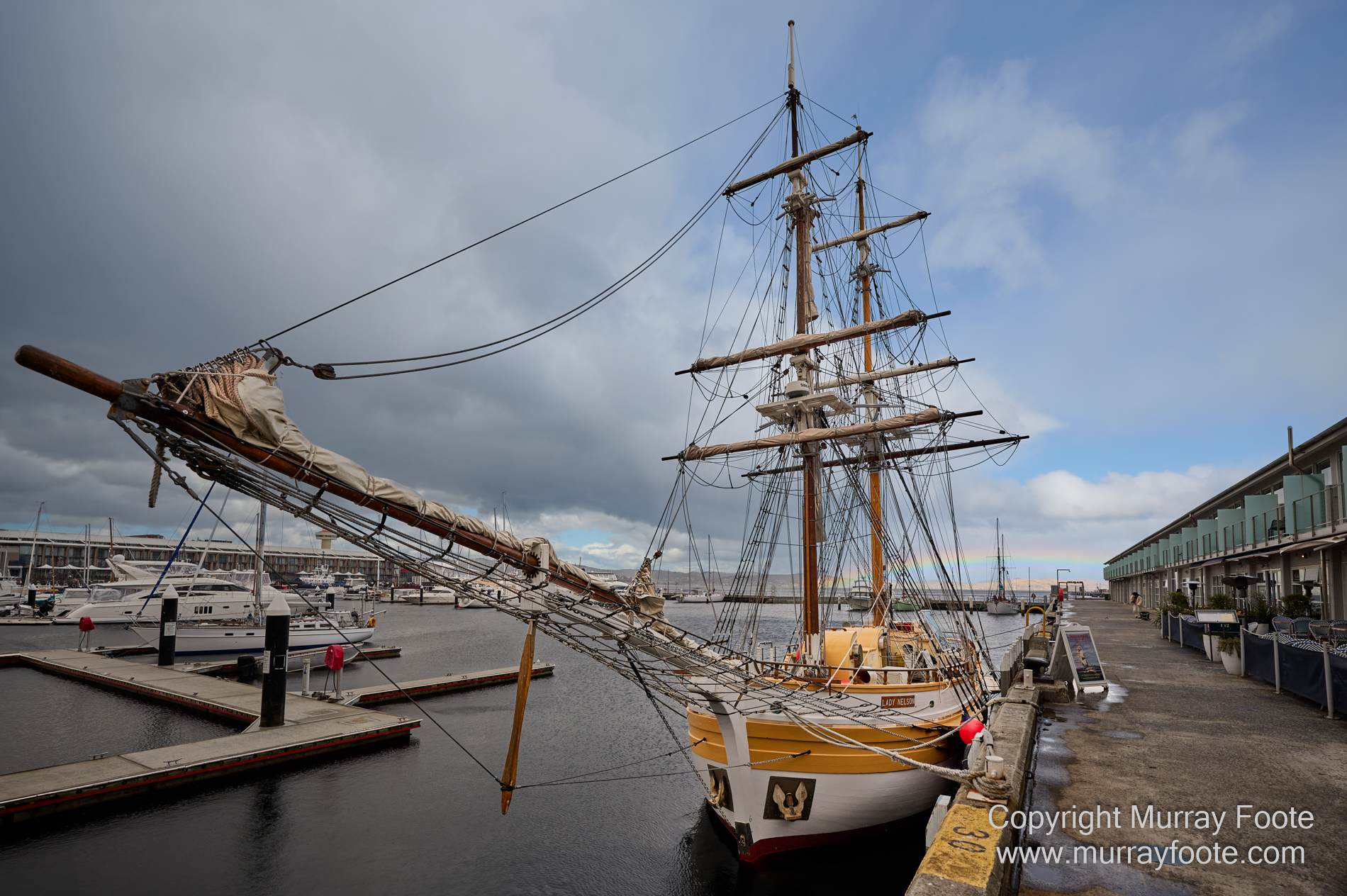
Lady Nelson.
This is a 17 metre brigantine, built locally in 1988 as a full-sized replica of the ship that brought the original settlers to Hobart in 1803. You can pay $45 to go for a 90 minute cruise on it, or for longer cruises at greater expense. (My great grandfather sailed from Newfoundland to New Zealand in a 28 metre brigantine, which he owned, in 1865).
The original Lady Nelson was built in 1799 to survey the coast of Australia and because there was a shortage of ships in the new colony. She had an unusual feature of three sliding keels or centre-boards that the crew could raise or lower individually, allowing passage in shallower seas. She was the first ship to sail through Bass Strait and also discovered Port Phillip Bay, the harbour for Melbourne. She fulfilled many tasks around Australia as well as sailing to places like New Zealand and Norfolk Island, until in 1825 she was captured by pirates from the island of Babar, to the east of Timor, and all the crew was killed.
There is also another full-size but non-sailing replica of the Lady Elizabeth in Mount Gambier in South Australia, built in 1986 to commemorate the 150th anniversary of the proclamation of the Colony of South Australia.
.
.
.
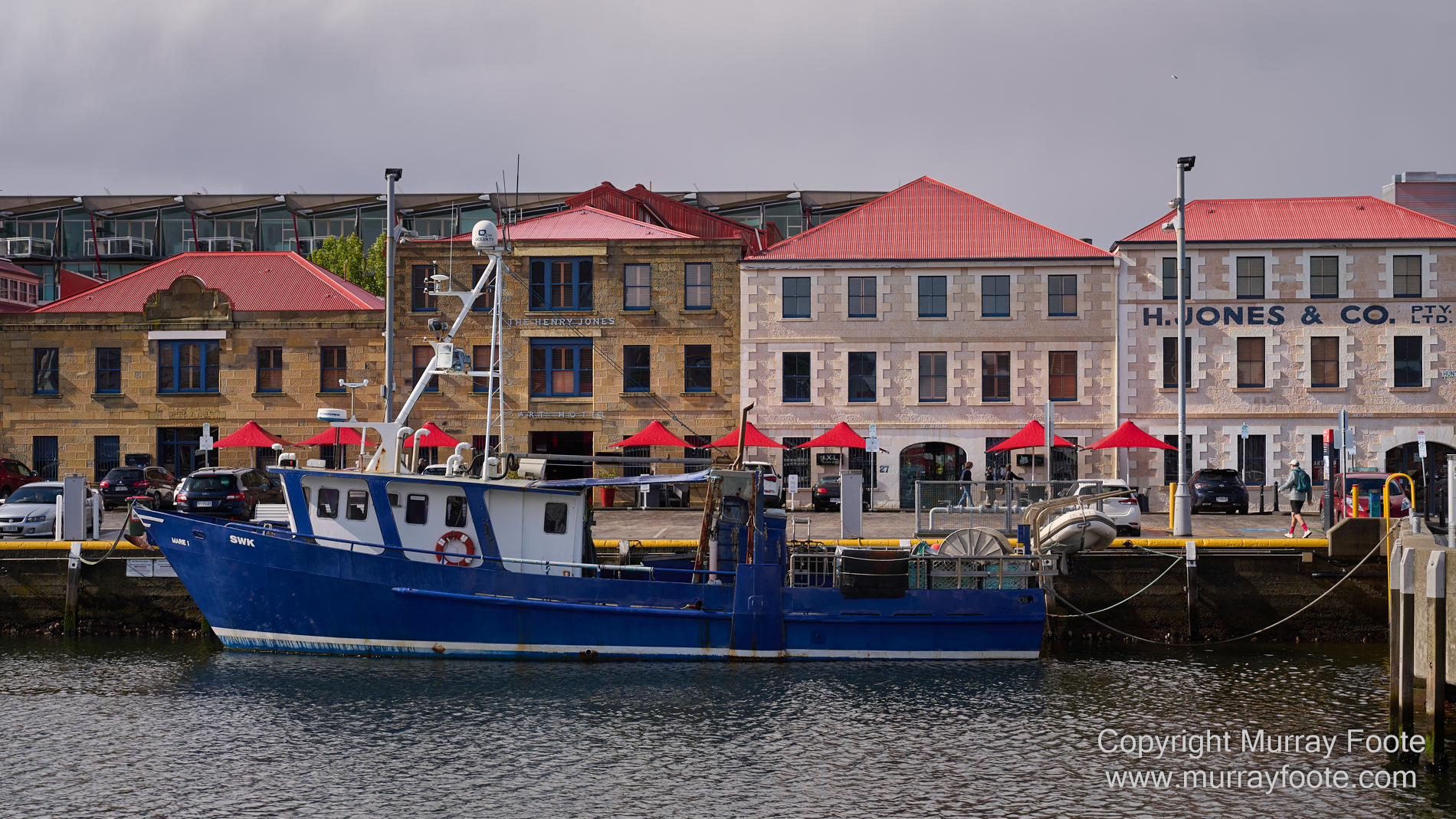
Hobart waterfront.
The Marie 1 appears to be a rock lobster boat. However, the subject of the photograph is really the buildings. Hobart dates from 1803 and they may be close to that time. There was also a wonderful Gallery of Aboriginal Art in one of them.
.
.
. 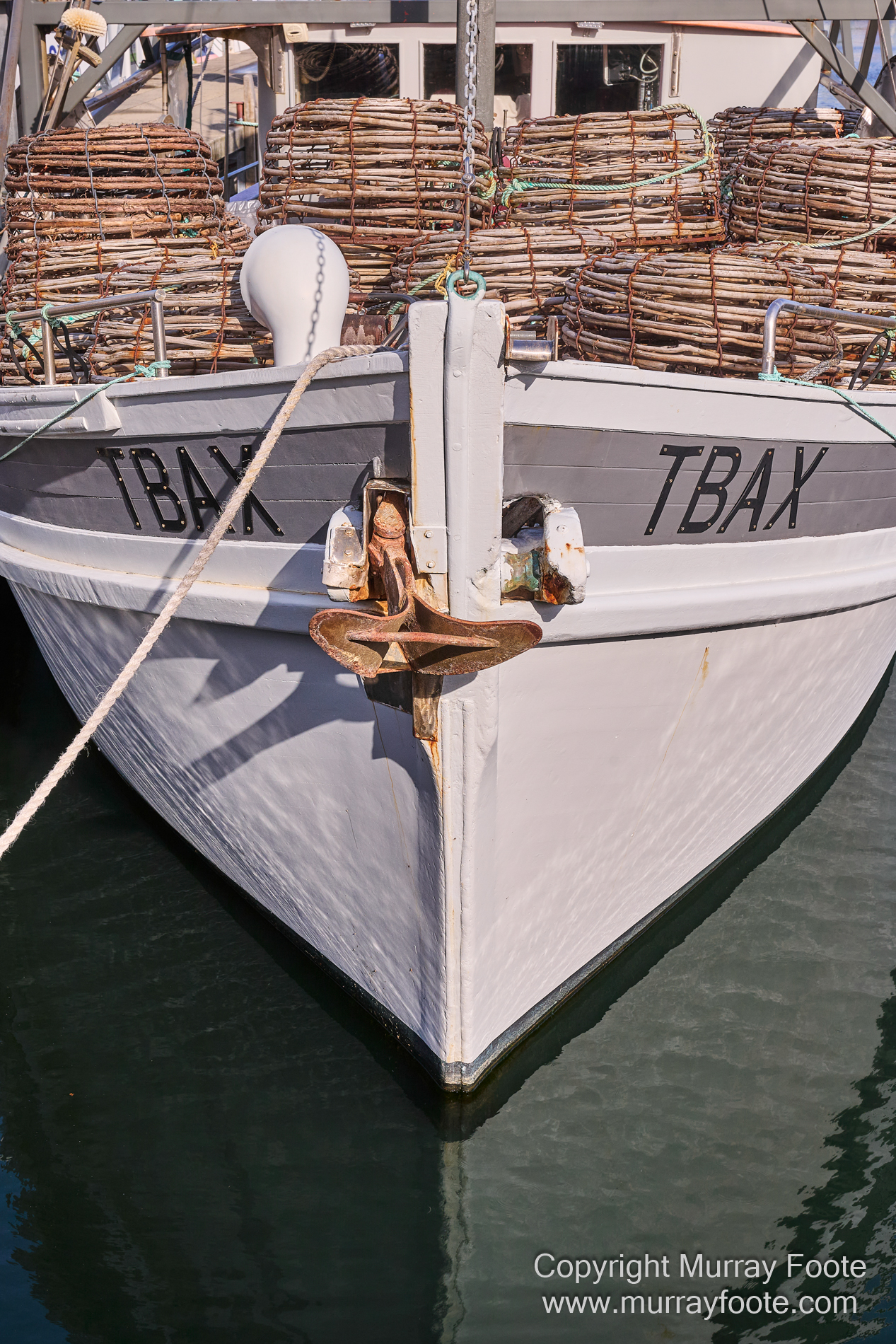
Clearly another rock lobster fishing boat from the lobster pots.
.
.
.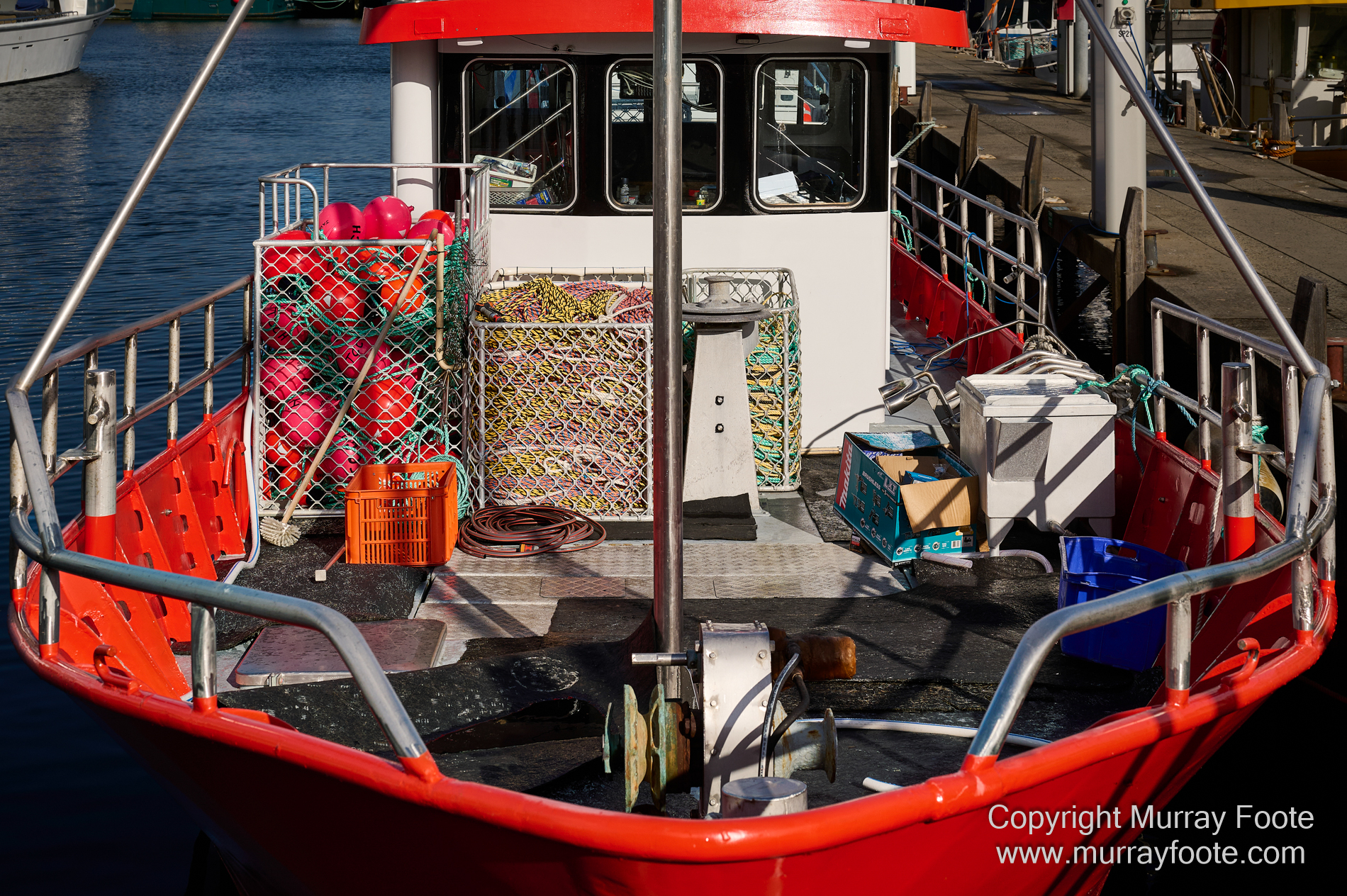
Another fishing boat, presumably more modern with a metal hull.
.
.
.
 Murray Foote
Pingback: Mount Wellington Monochromes | Murray Foote
Pingback: Tasmania Itinerary 2023 | Murray Foote
Fascinating story about the use of the shot tower !!
LikeLike
Yes. Something I’d never known about. Perhaps they missed an opportunity by not having it on a headland and doubling as a lighthouse.
LikeLike