Kangaroo Island, South Australia, 5, 6, 7 and 9 July 2024.
(Recent Posts, Top Posts, Subscribe and Search at bottom of page. Clicking image doubles size. Trip summary and links to posts. )
.
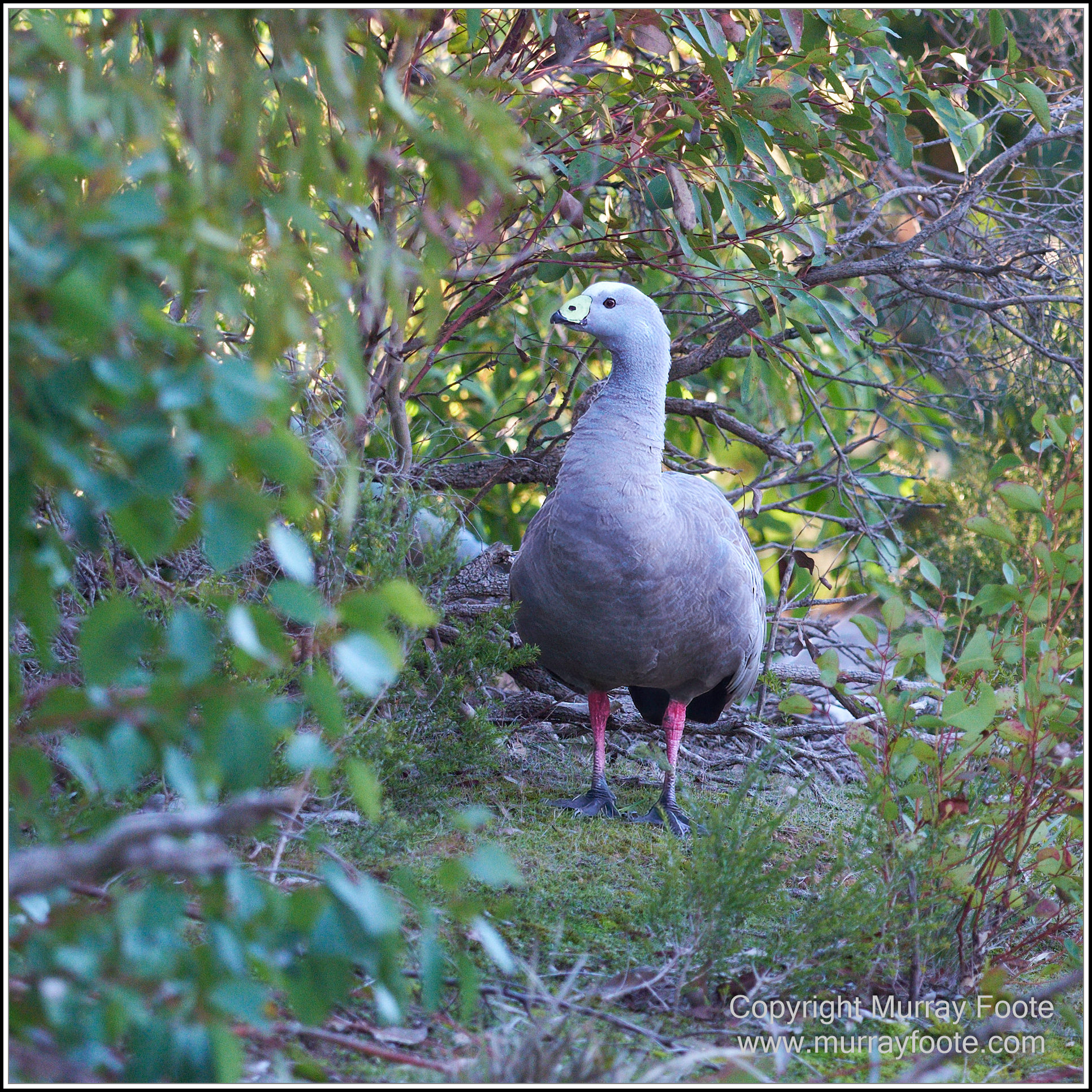
Cape Barren Goose.
Cape Barren Geese are endemic to Kangaroo Island and also various areas on the southern coast of Australia. Every time we drove out from our accommodation at Cape du Couedic to the rest of the island, we encountered a group of them, maybe ten to twenty, at a grassy area near the old Rocky River Temporary Visitors’ Centre. This is just a lazy shot out of the window of a temporarily stationary car.
.
.
.
. 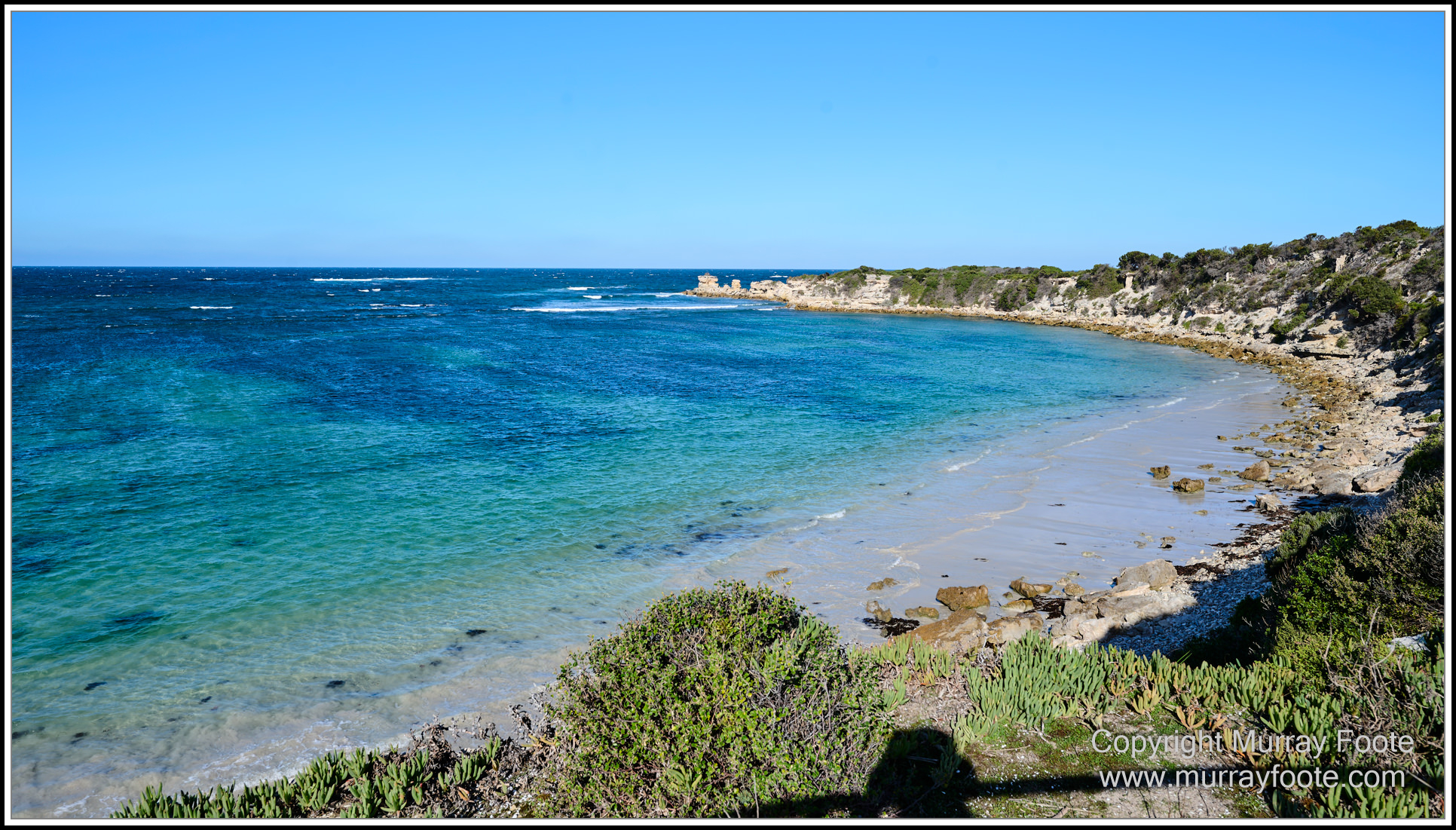
Usually the images are in chronological order. This time they are grouped geographically and were taken on different days.
This image and the next two are not from around Cape Du Coeudic though, due to a misfiled image I overlooked. I estimate from Google Earth that the distance to the end of that headland is about 200 metres (660 feet). There was more there than I saw at the time.
.
.
.
. 
The first image is a wide angle shot, this one is a telephoto going closer in. I was struck by the shape of the pale rocks and their contrast against the sea. I also noticed the cormorants. There are nineteen pied cormorants visible if you look closely enough (maybe click on the image).
.
.
.
. 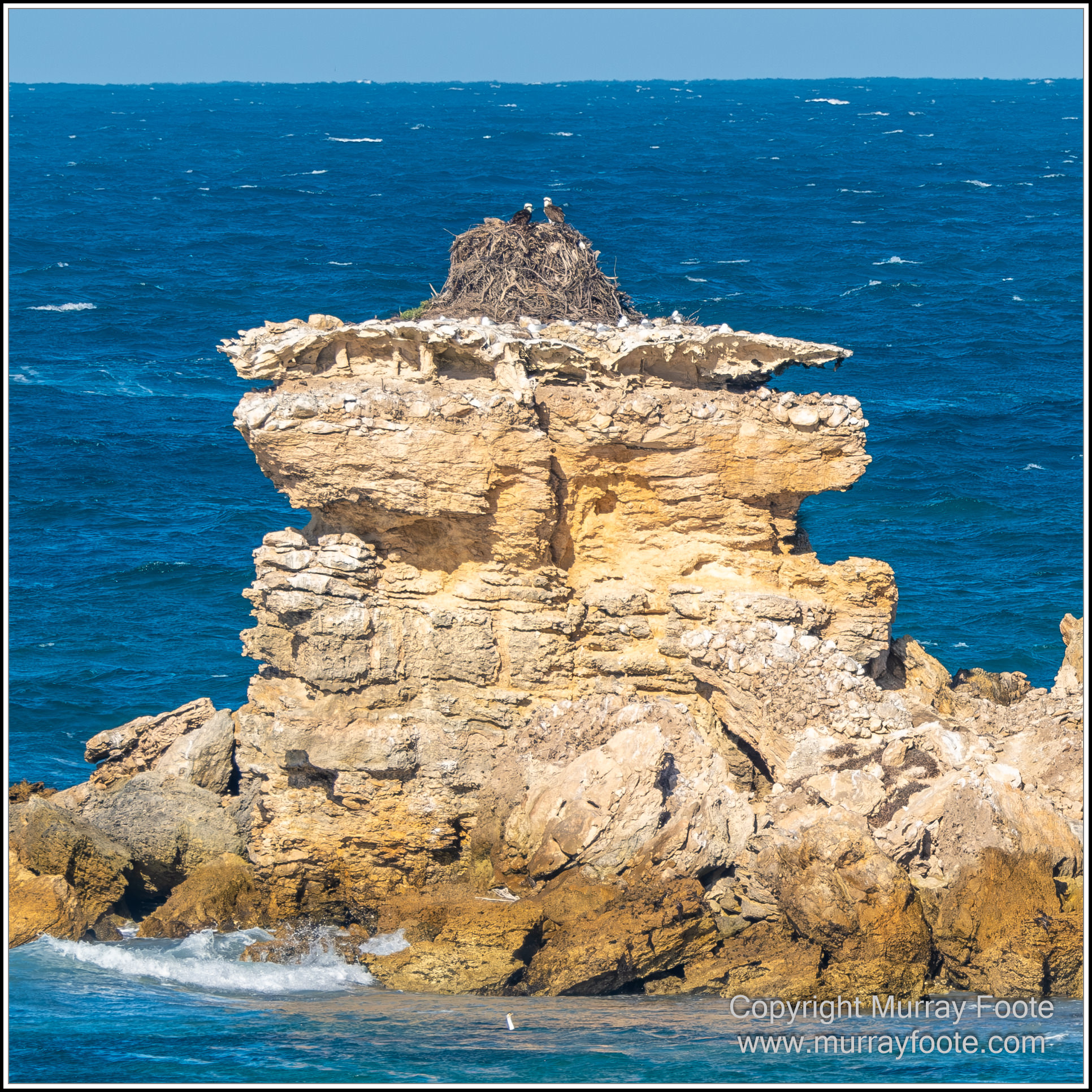
What I didn’t notice at the time was the huge sea eagles’ nest at the end of the headland. Had I done so I could have got a view four times more magnified and also waited round for a while to see whether they took flight. However, another remarkable aspect is the silver gulls around the base of the nest. There are nine visible and probably more. Evidently they are not threatened by the eagles and by camping there, the eagles will protect them from other predators such as skuas.
.
.
.
. 
Warehouse at Weir’s Cove, as it looked in 1987
Weir’s Cove is just a three minute drive or twenty minute walk from the lighthouse cottages and was where all supplies came to the lighthouse before there was a road.
.
.
.
. 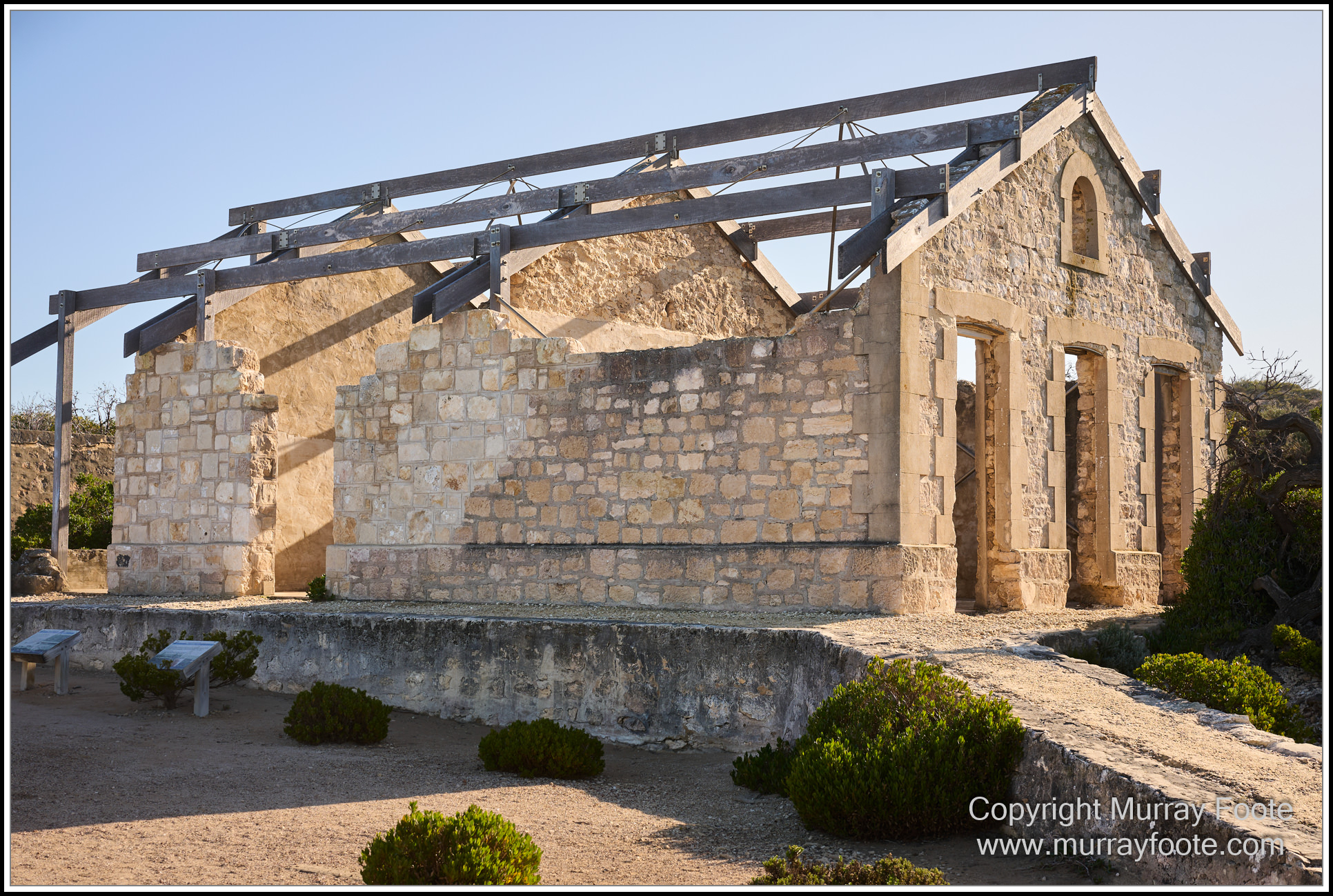
Warehouse at Weir’s Cove, 2004 (from the other side).
Clearly, the warehouse is now in the process of being restored. A roof must be due and the left part of the visible wall must have crumbled away and been rebuilt.
.
.
.
. 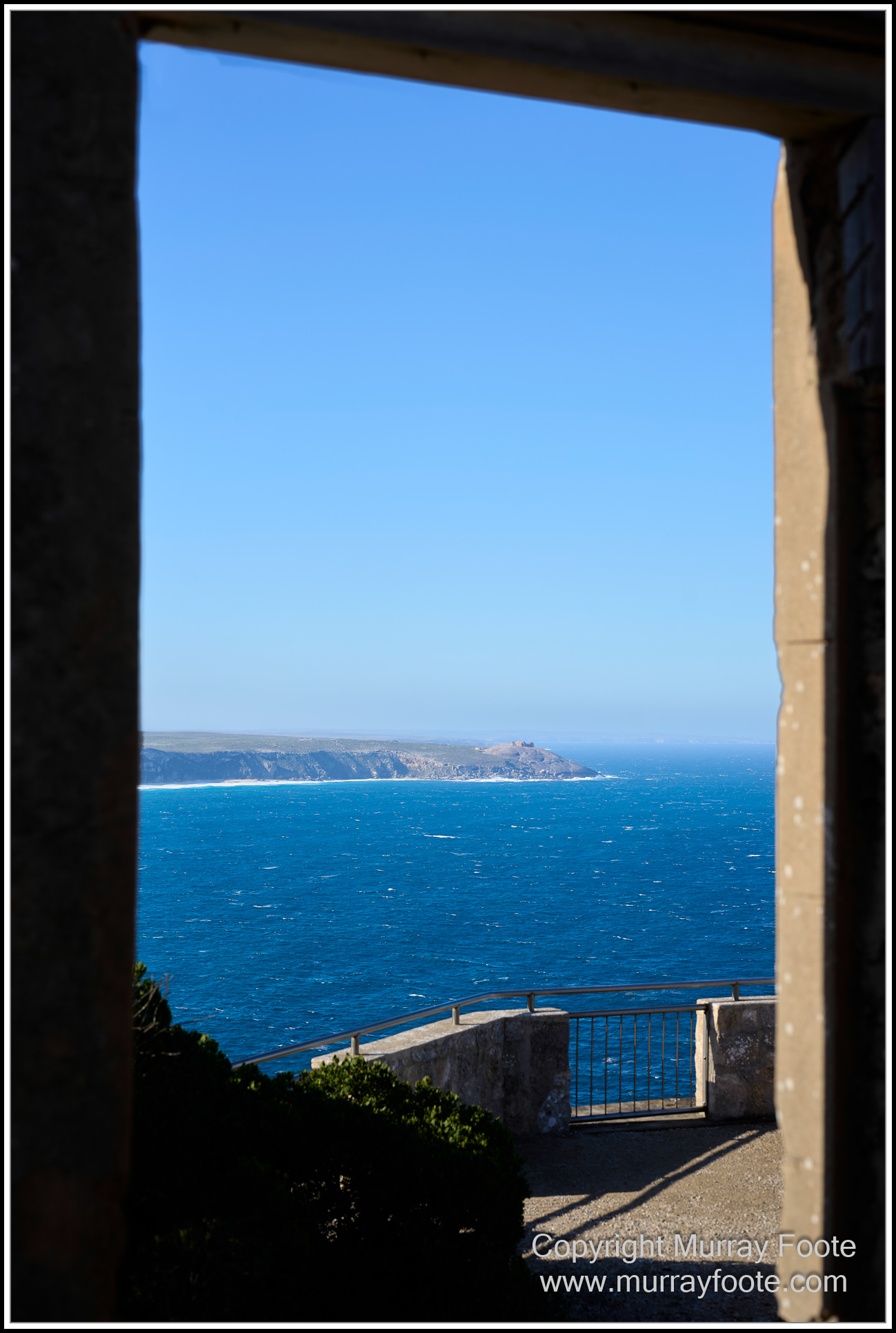
View to Remarkable Rocks.
.
.
.
. 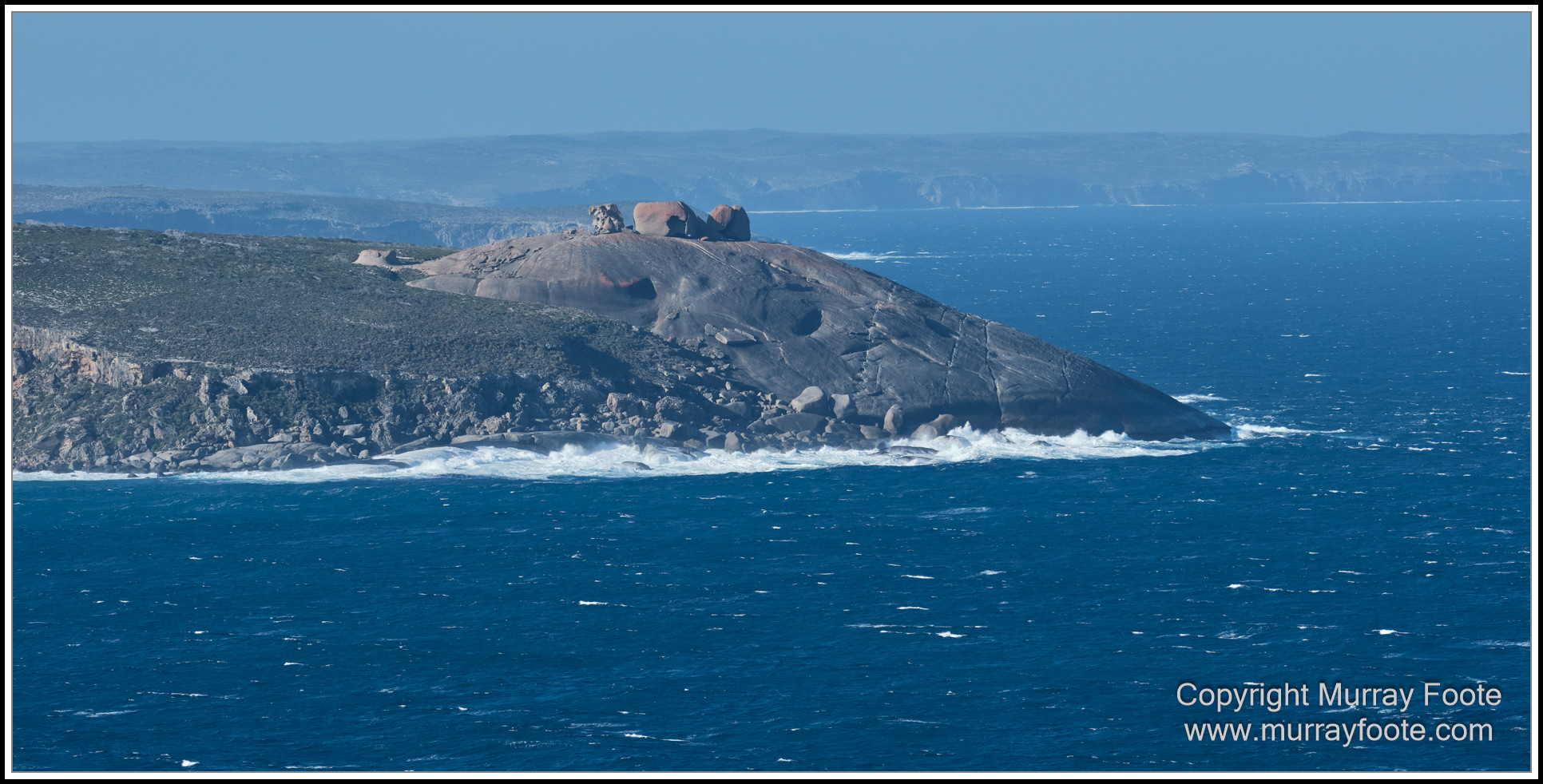
Closer view of Remarkable Rocks.
.
.
.
. 
The Jetty.
It’s ninety metres down (300 feet) and in the early years of the lighthouse all supplies landed there and were then laboriously hauled up the cliff. It looks as though the jetty was originally longer but part has been washed away by storms. Imagine the difficulty of building it in the first place.
.
.
.
.
. 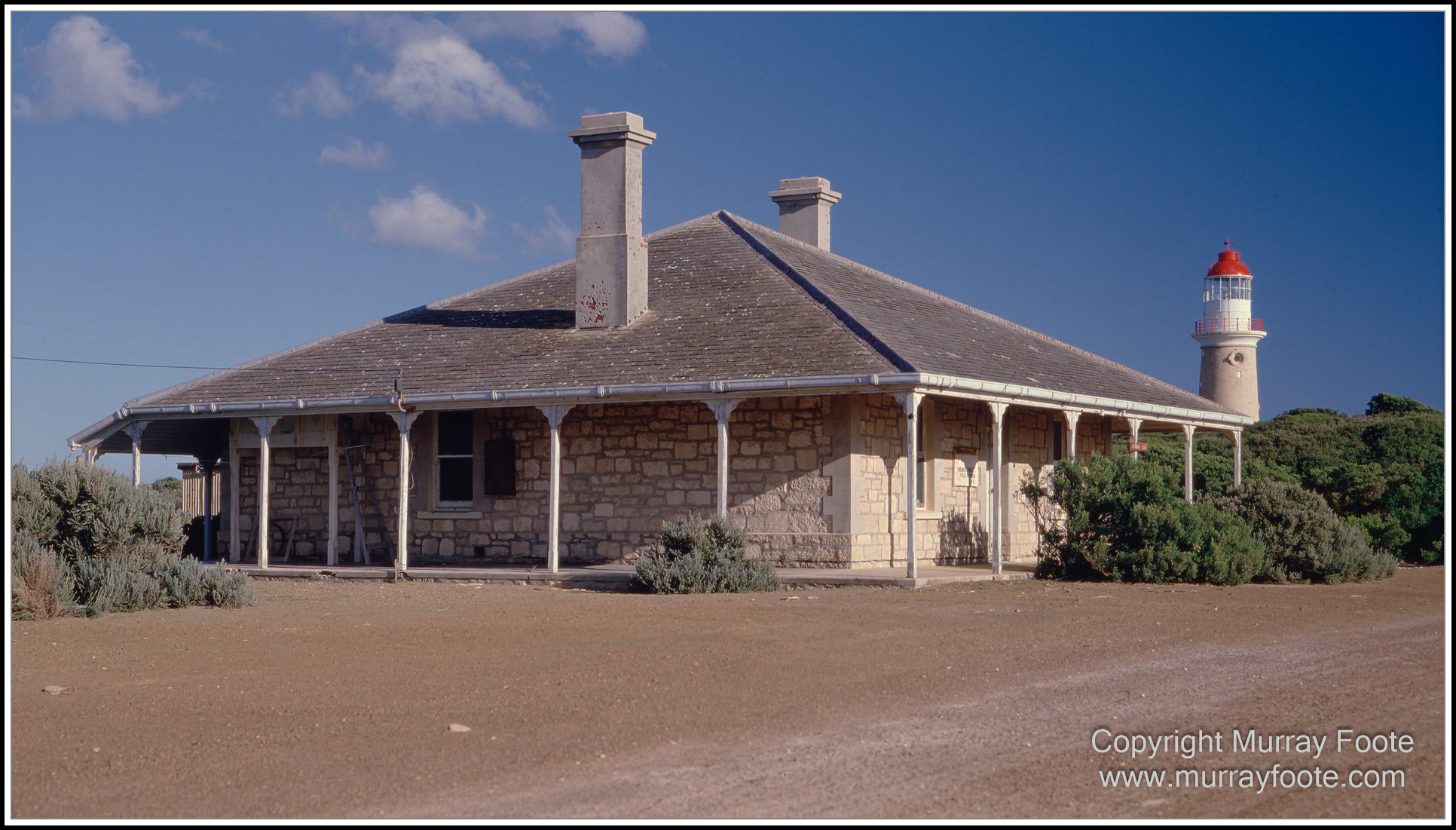
Lighthouse cottage, 1987.
This is one of the cottages we stayed in, little changed from the outside though recently renovated. It looks as though the road went through there in those days and the area may not have been open to the public. These days, the road to the cottages is a cul de sac and the public are discouraged from driving in.
.
.
.
. 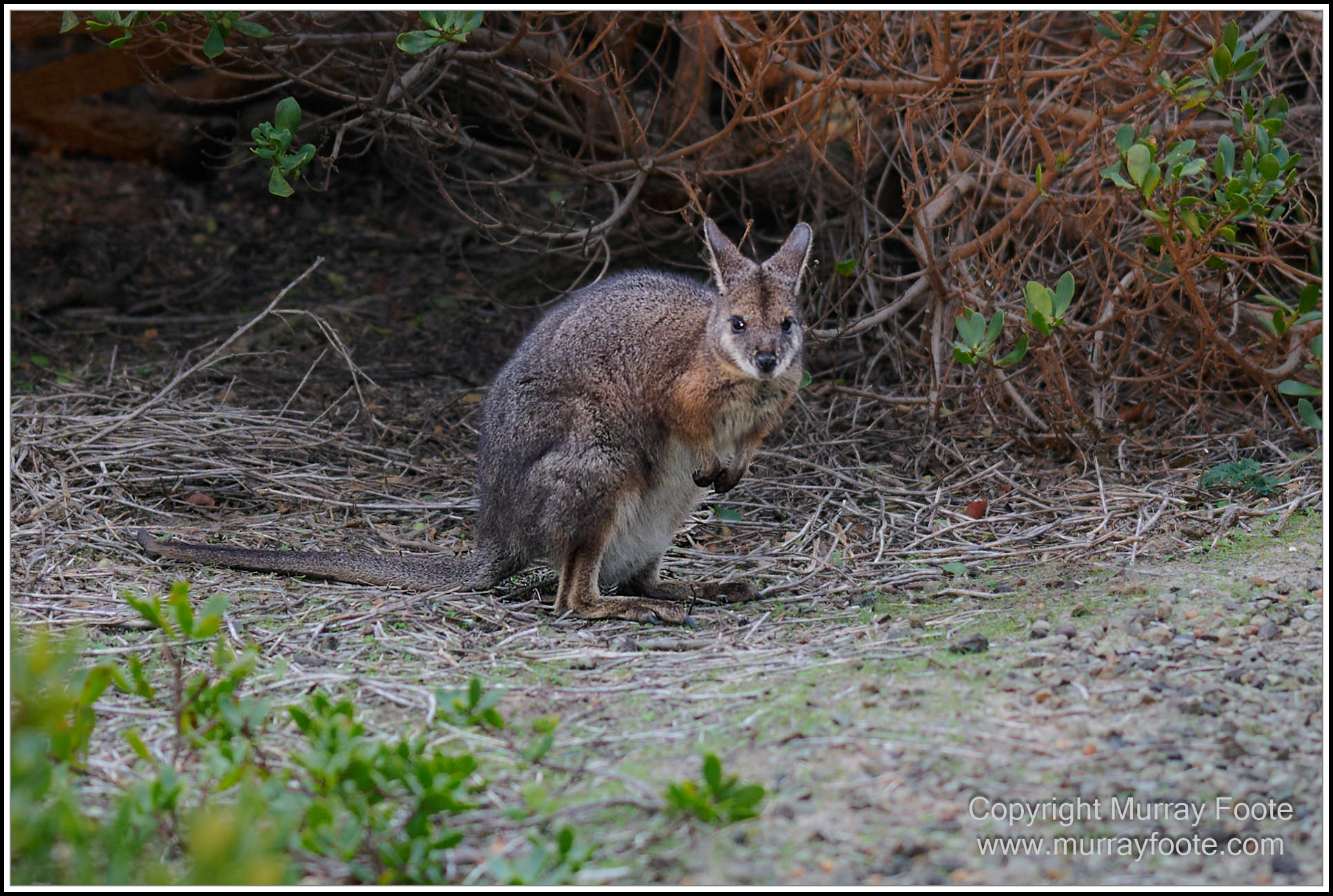
Tammar wallaby just outside the cottage.
.
.
.
. 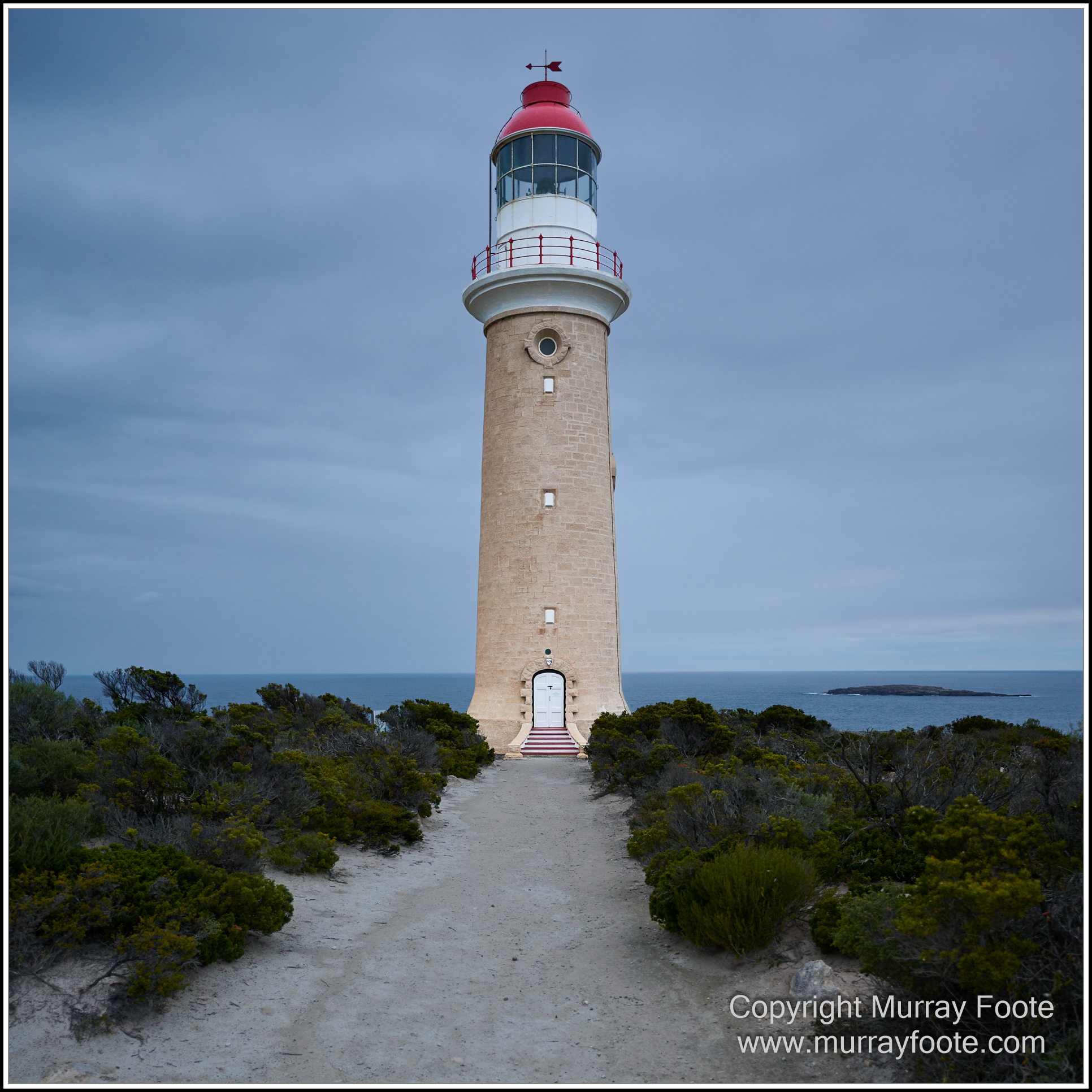
Cape du Couedic Lighthouse.
.
.
.
. 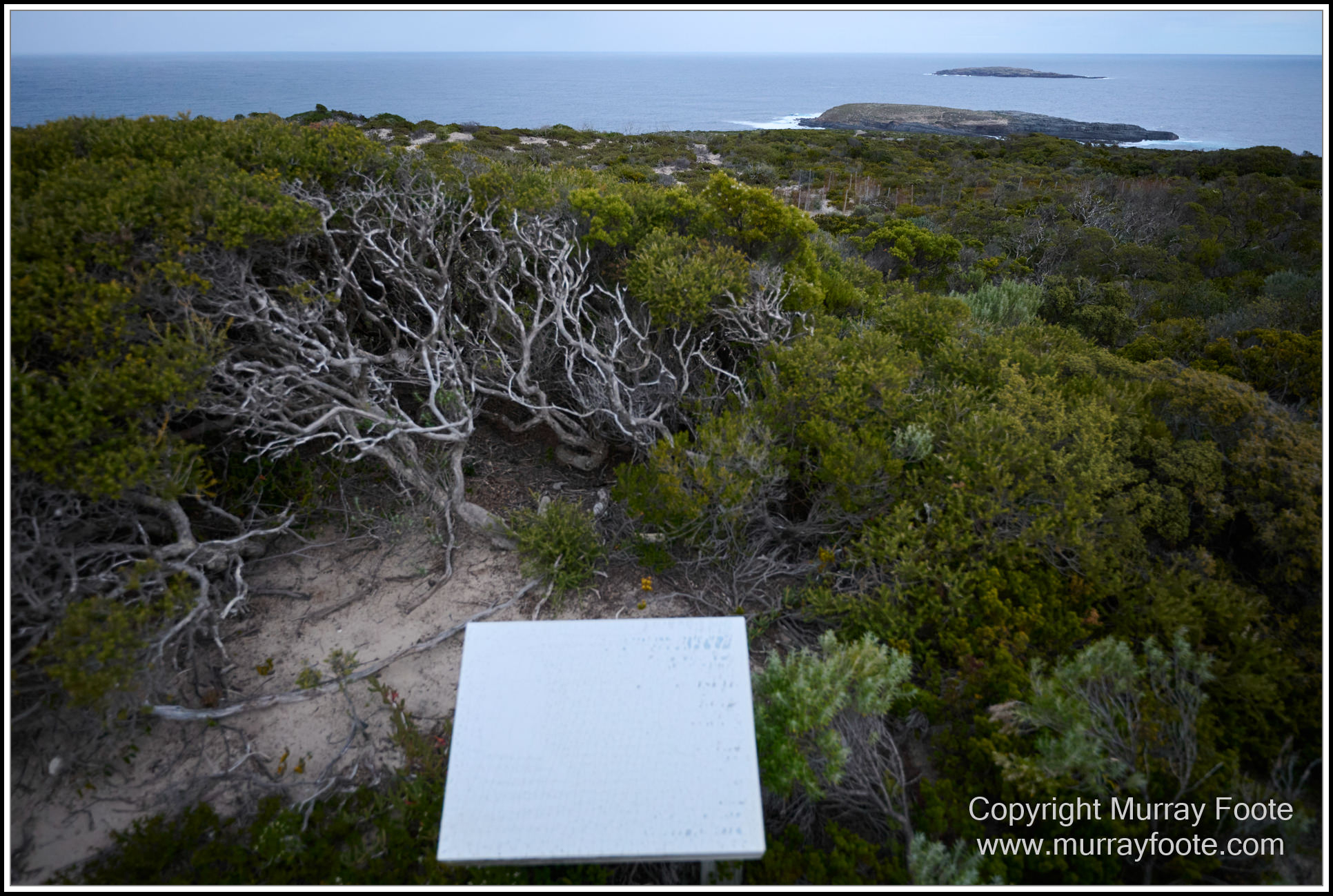
View beyond the lighthouse, towards the cape.
You can see the rugged wind-swept vegetation and you can read all you need to know about that on the board. The board is not over-exposed, you can see here all the information it has to offer.
.
.
.
. 
Cape du Couedic, Casuarina Islet (North) and Casuarina Islet (South).
You can see the walkway, going to a vantage point. To the left of the vantage point you can look down on seals, to the right steps take you down to Admiral’s Arch.
This can be a wild and exposed location. The nearest land directly south is Antarctica and the nearest land directly west is South America, just south of Buenos Aeres. Two months after we stayed here, a huge storm blew over. That night, winds were up to 120kph (75mph), waves were 15 or 20 metres (50 to 65 feet; I’ve lost the references for that to check the figure) and there was a freak wave at 45 metres (150 feet)! The lighthouse and cottages are set well back and protected but you wouldn’t have wanted to be in this photograph then.
.
.
.
. 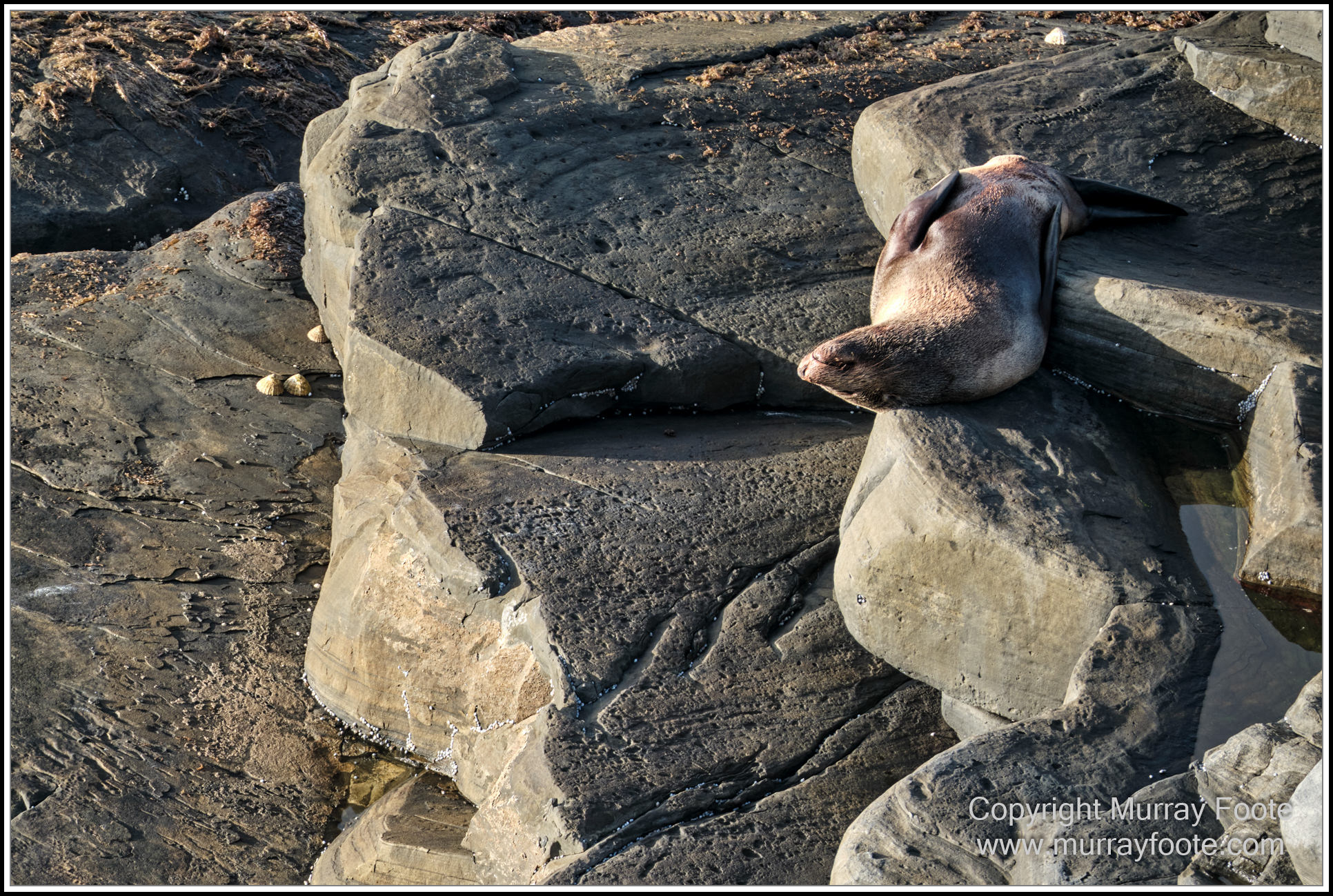
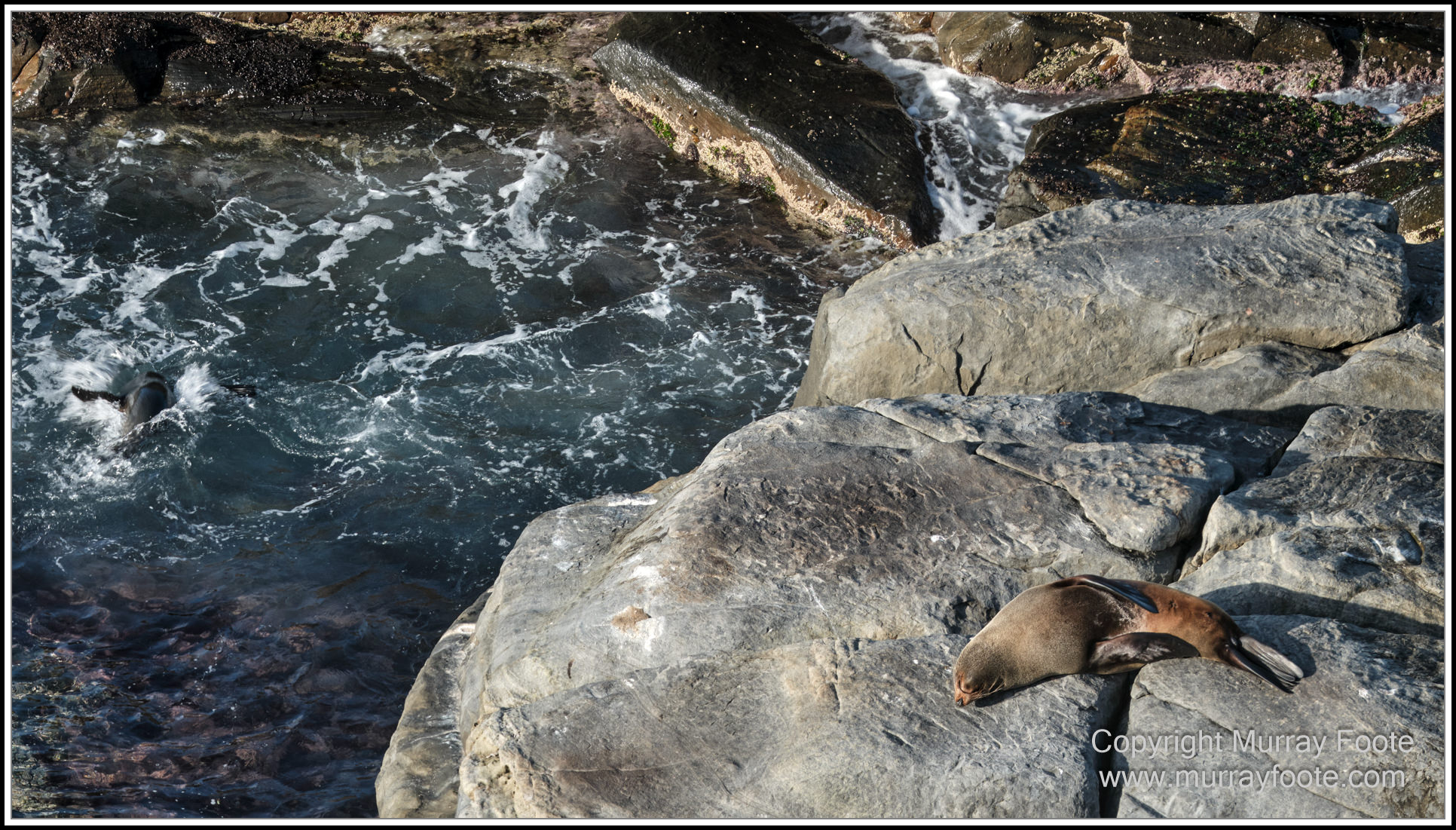
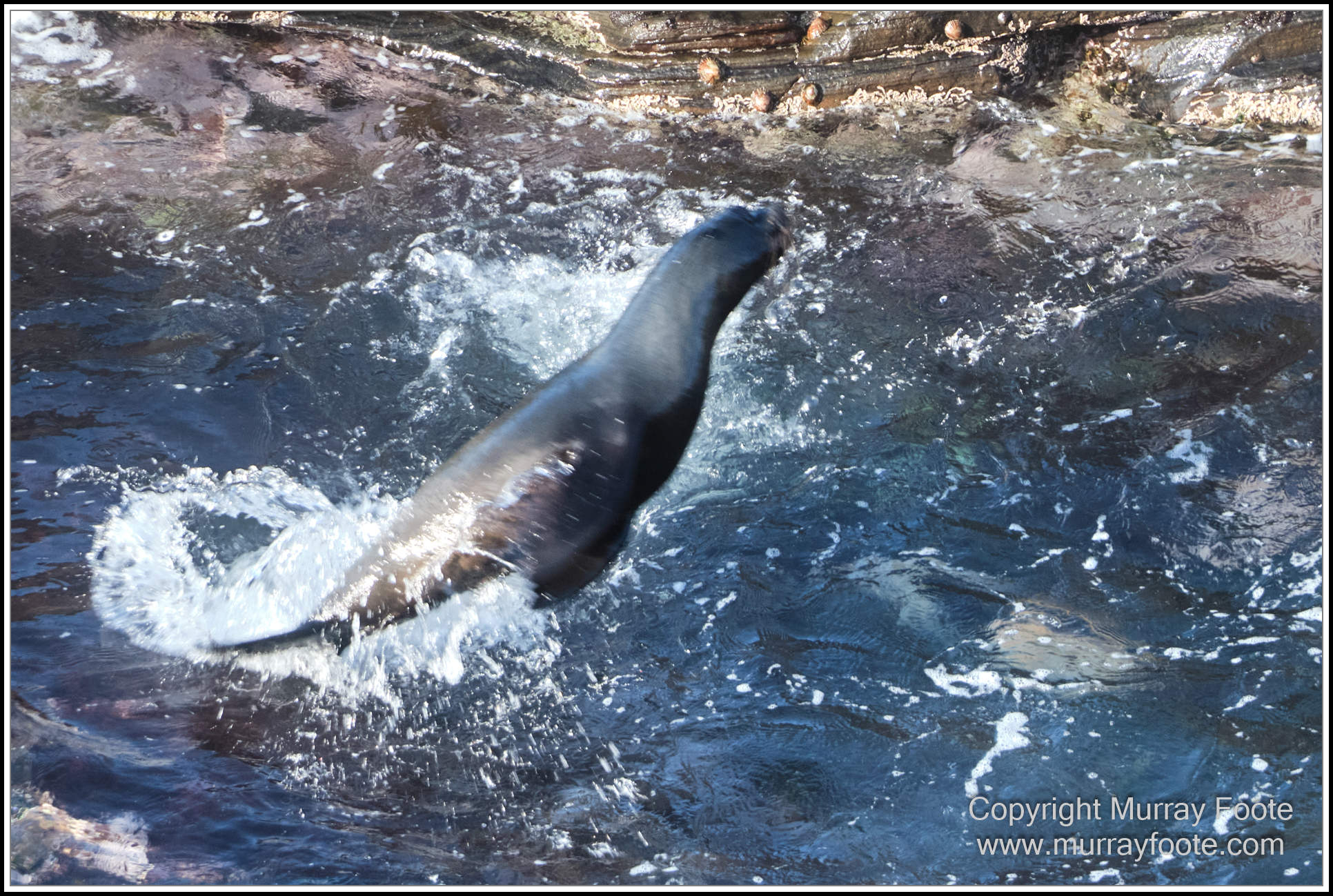
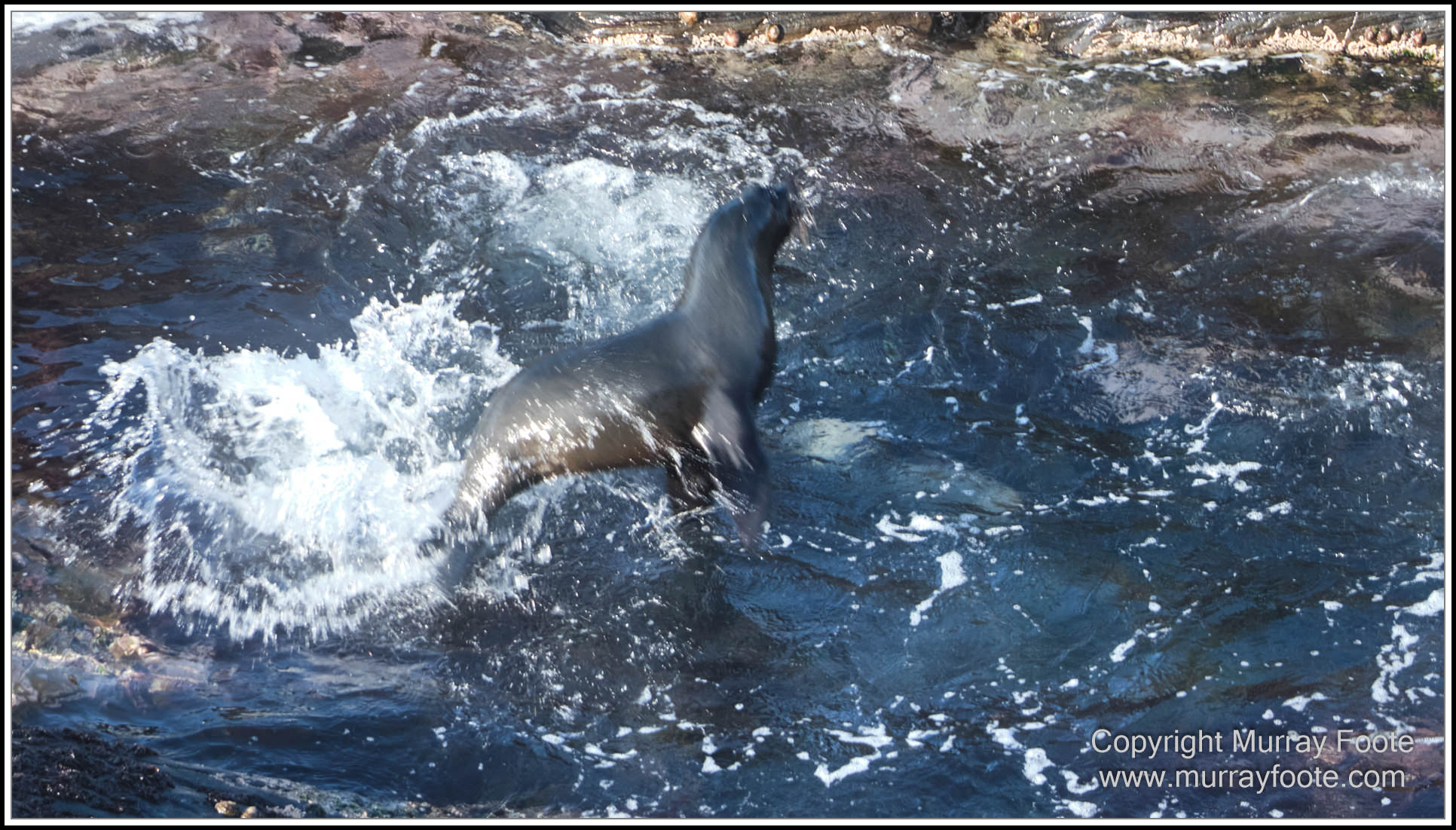
It can be a strenuous life being a fur seal.
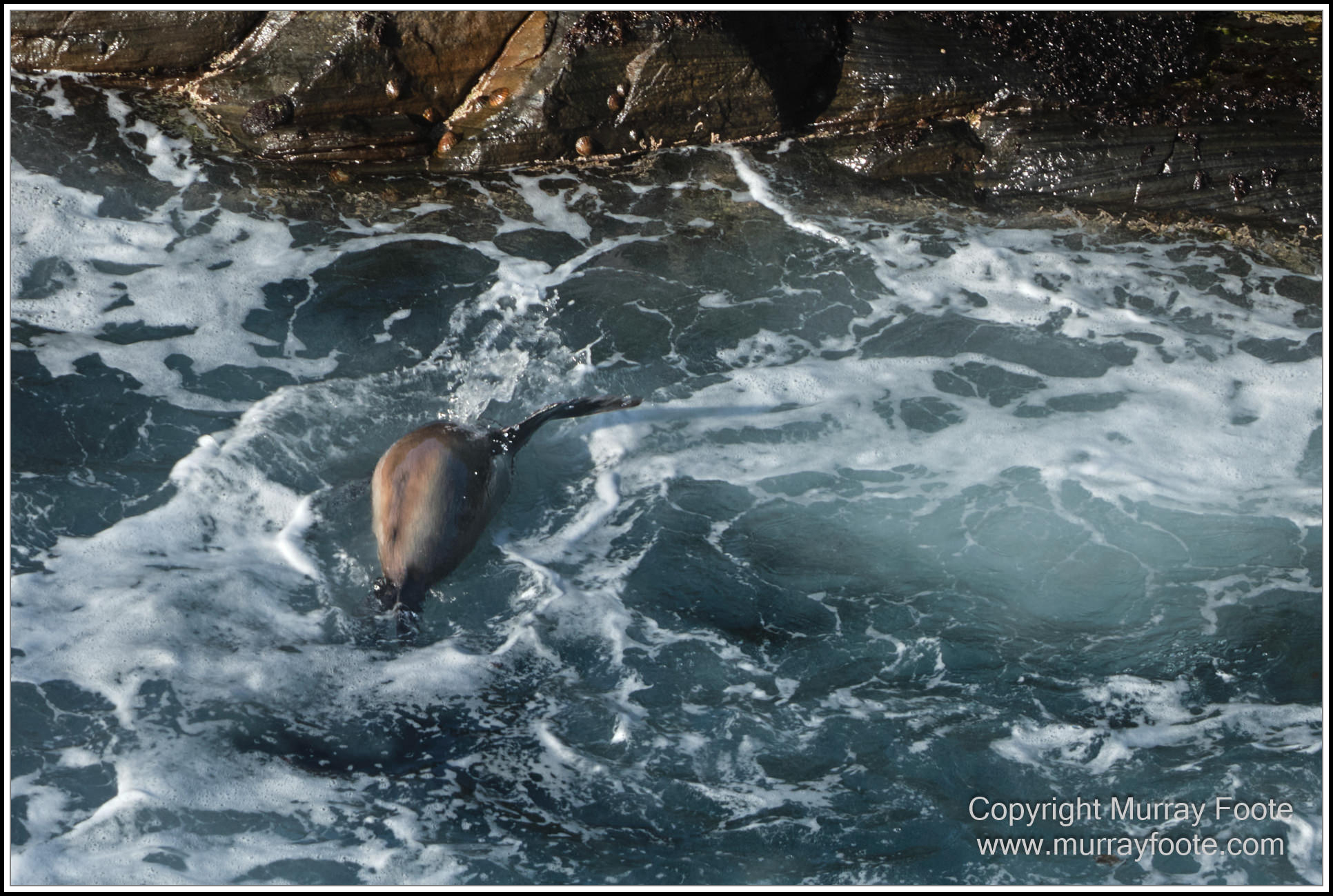
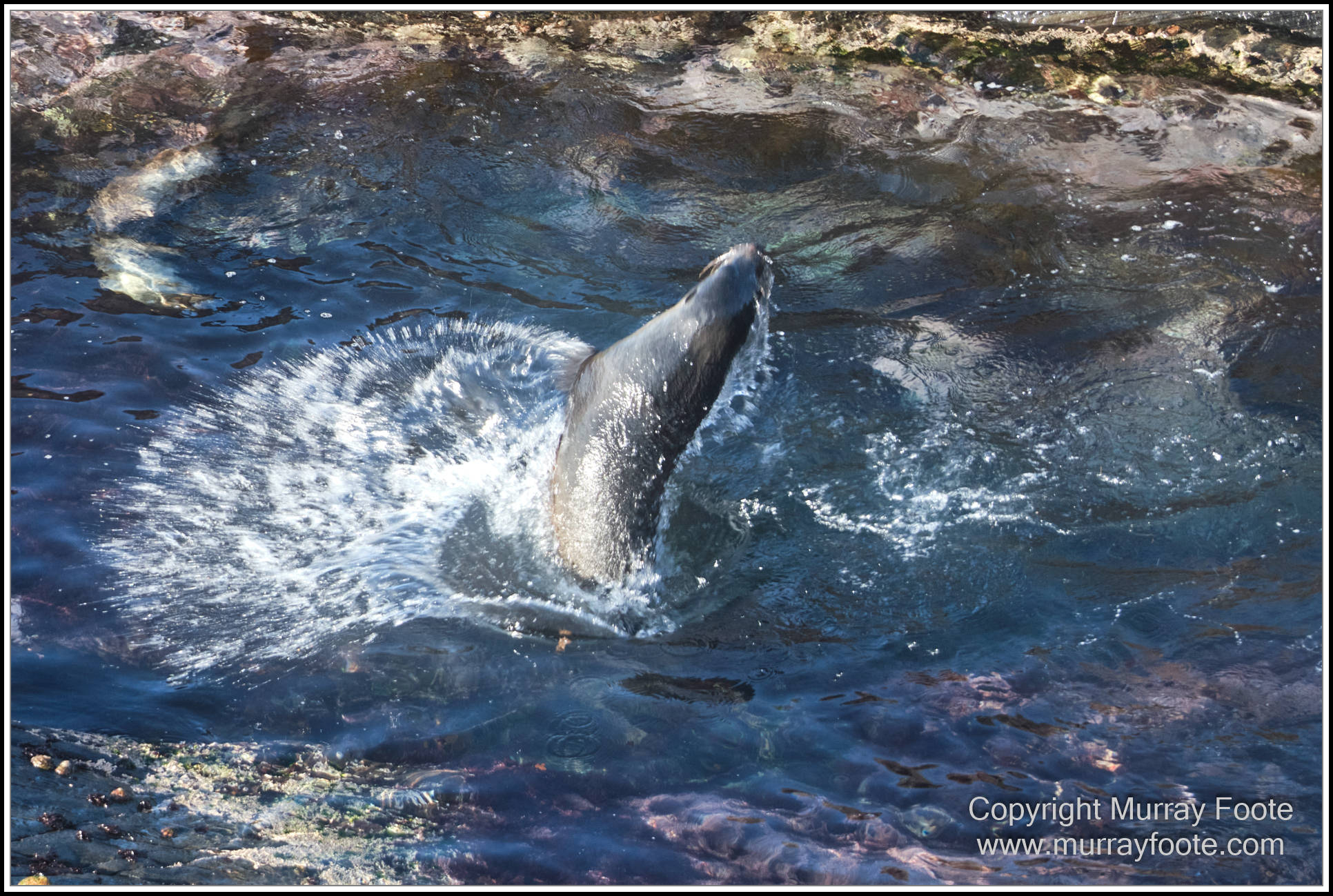
This and following images show New Zealand Fur Seals, endemic to Cape du Couedic and also to the South Island of New Zealand, New Zealand sub-Antarctic Islands and the south coast of Australia from Kangaroo Island to the south-west cape of Western Australia (Cape Leeuwin). They can be as large as 160kg and two metres long and can dive for up to 15 minutes and 380 metres deep. Like the sea lions at misnamed Seal Bay, they are not true seals and can “walk” on their flippers.
.
.
.
.
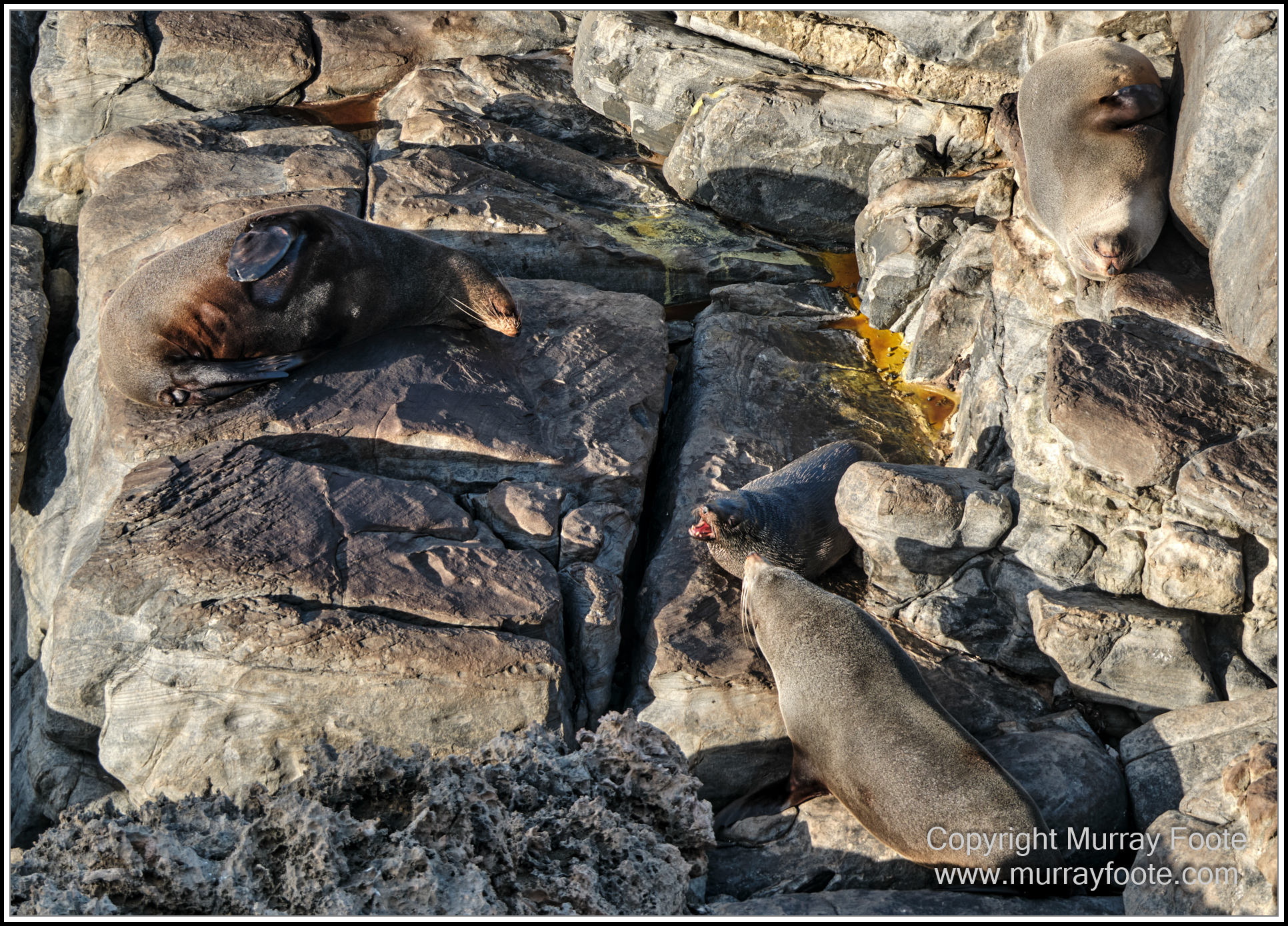
How the one at top right got to be upside down on a narrow ledge is an interesting question.
.
.
.
.  .
.
.
.
.
. 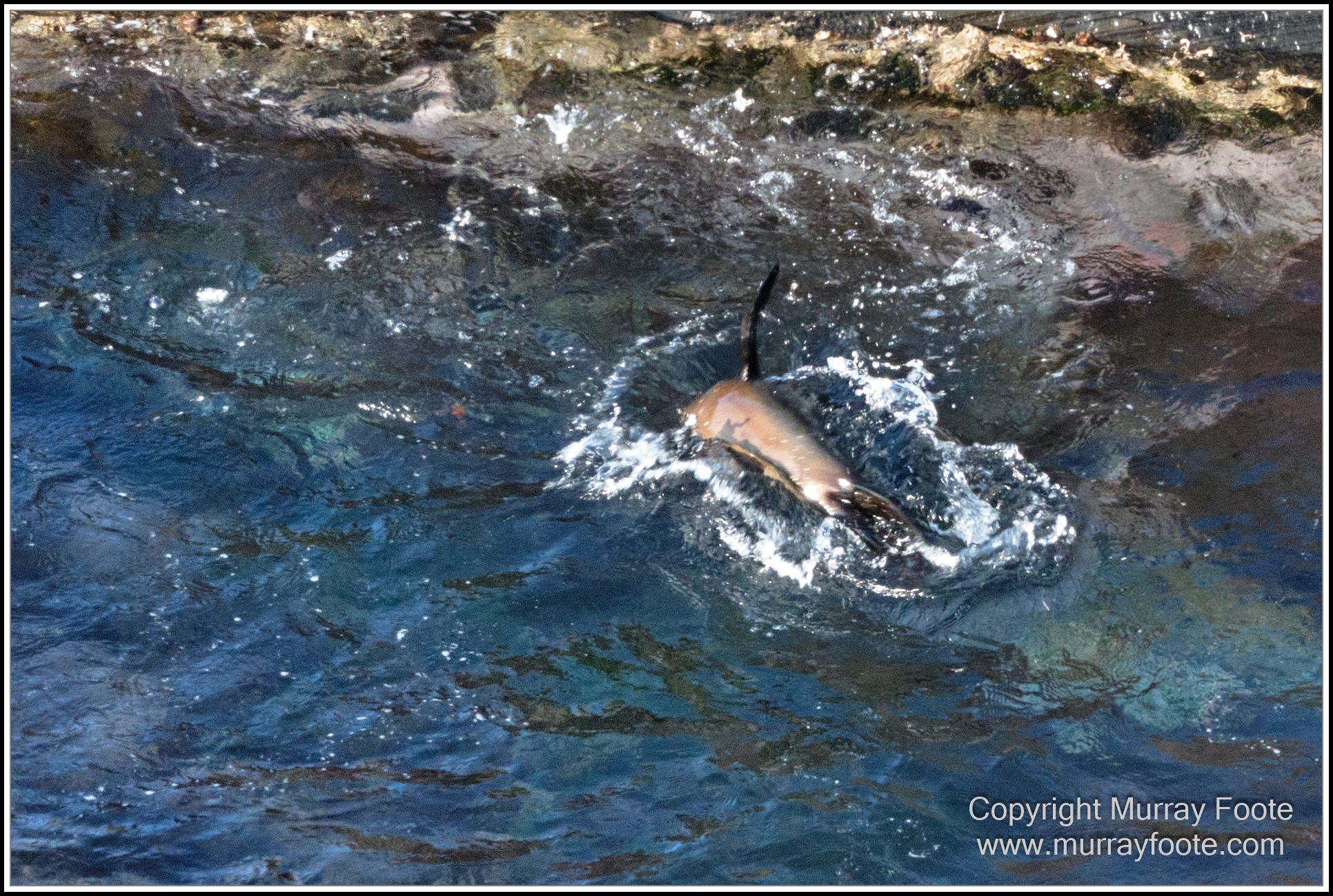
There was a small cove down below where young seals were able to frolic, perhaps free from fear of leopard seals.
.
.
.
.  .
.
.
.
.
.  .
.
.
.
.
.  .
.
.
.
. .
.
.
.
.
.  .
.
.
.
.
. 
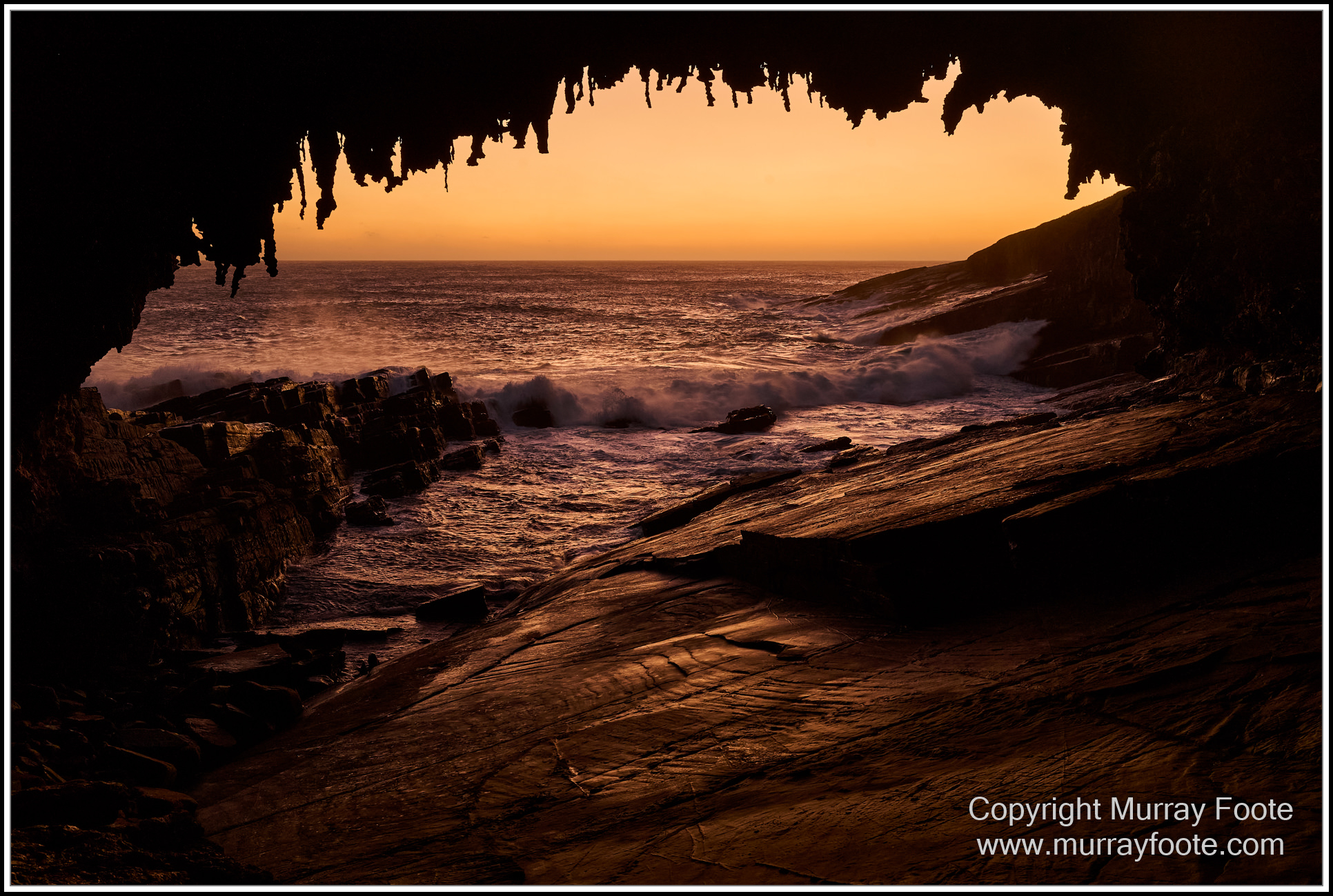
Admiral’s Arch.
Further on from the seal viewpoint and down the steps, we are at Admiral’s Arch exactly at sunset. These two images were actually taken on the first evening.
.
.
.
. 
Twenty minutes later, and the sun has gone down.
.
.
.
. 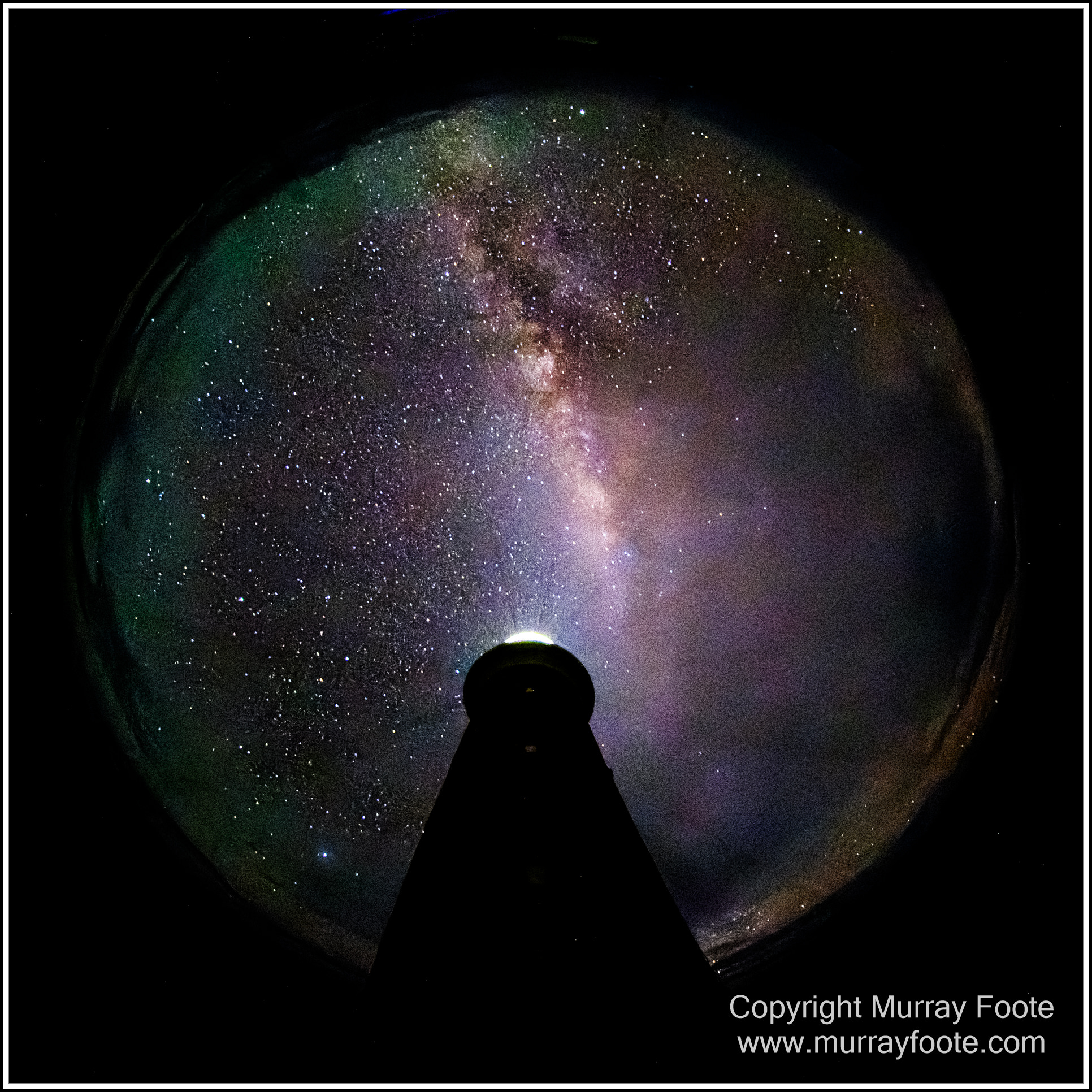
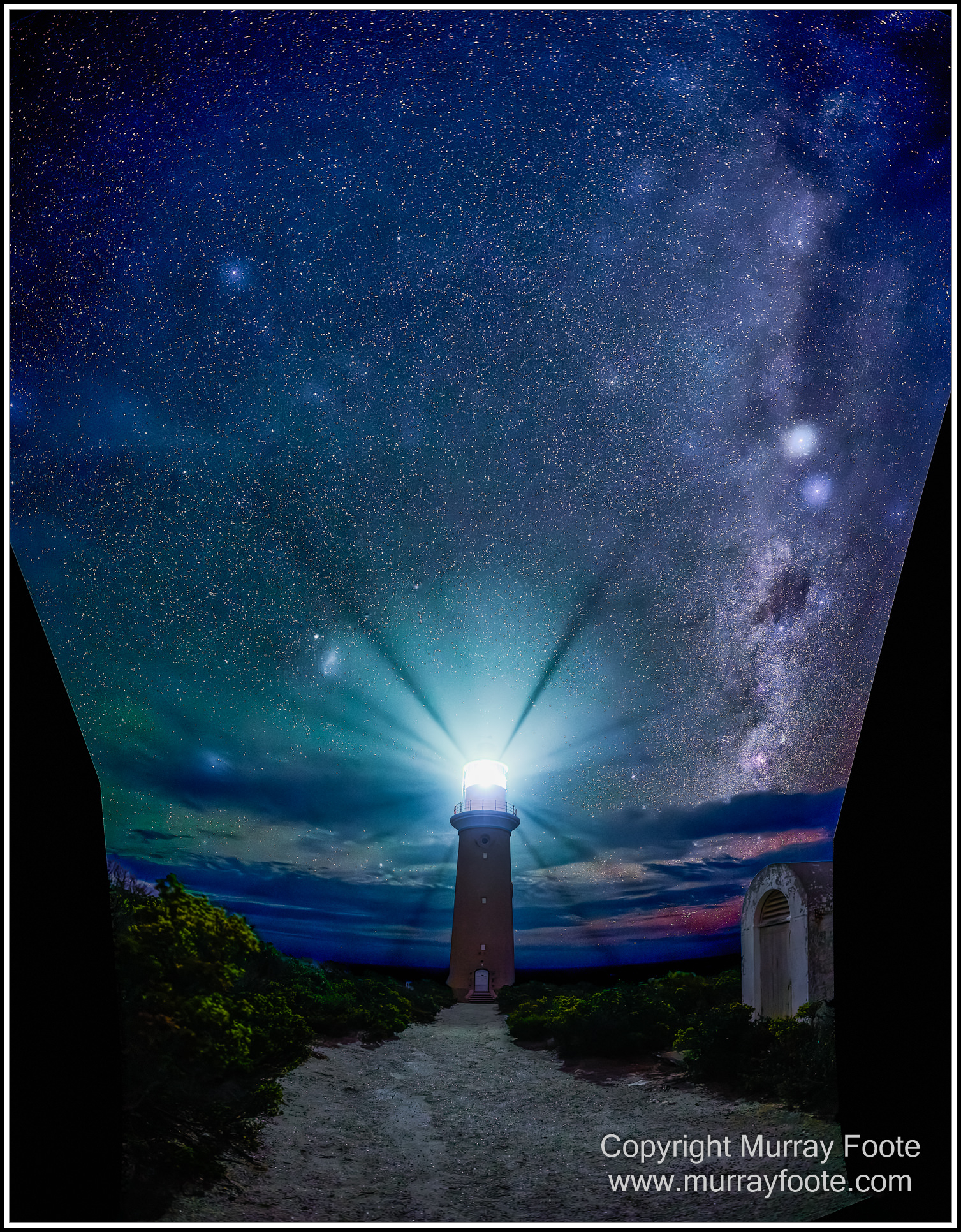
Lighthouse and Milky Way.
Taken with a circular fisheye lens, I’m not sure why there is a lack of detail on the right side. It was still and seemingly dry but perhaps there was perhaps condensation on the lens from a sea breeze.
.
.
.
. 
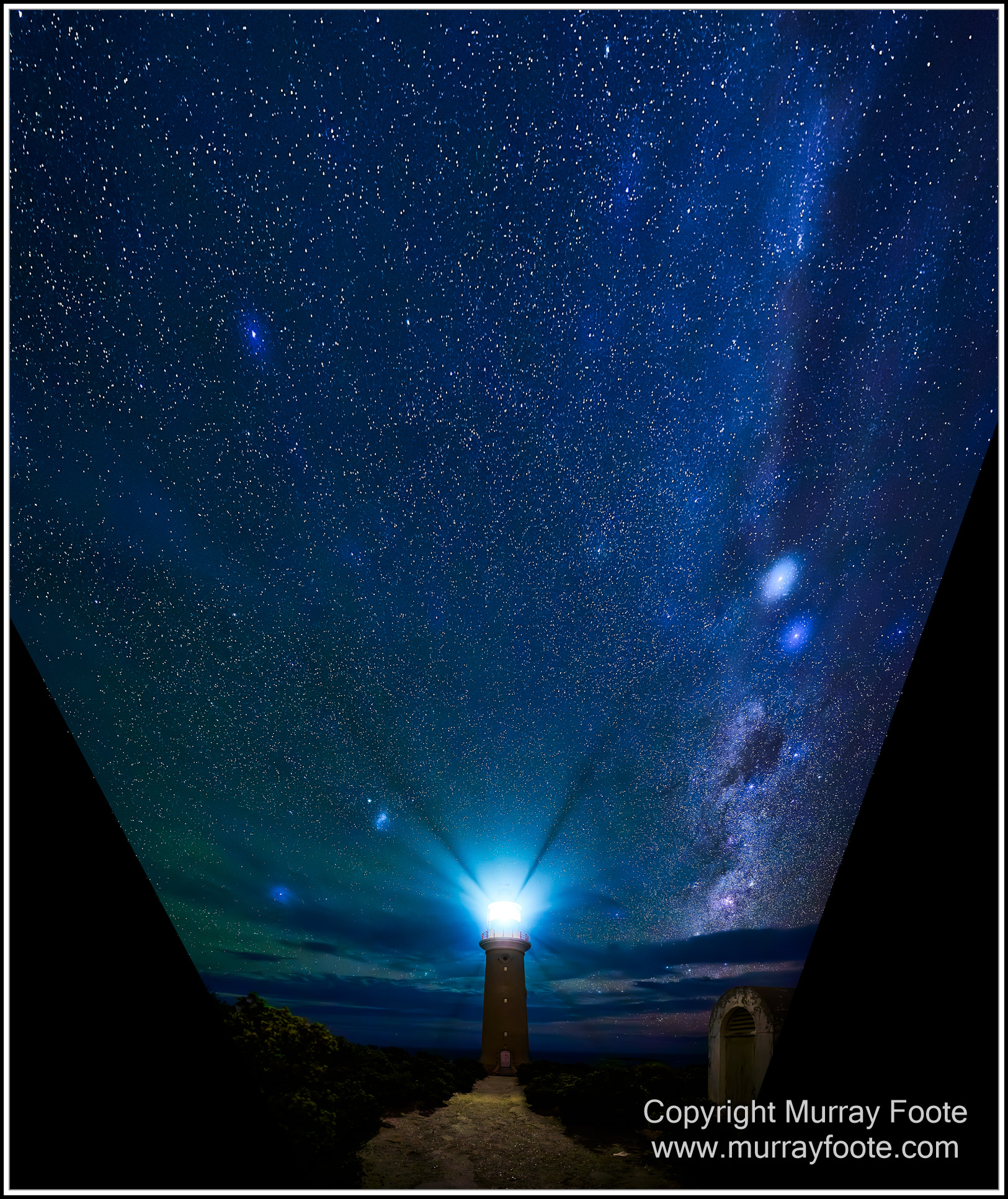
This is a two image panorama.
.
.
.
. 
This is taken with a wide angle lens, somewhat pointing up and the corrected for perspective.
.
.
.
. 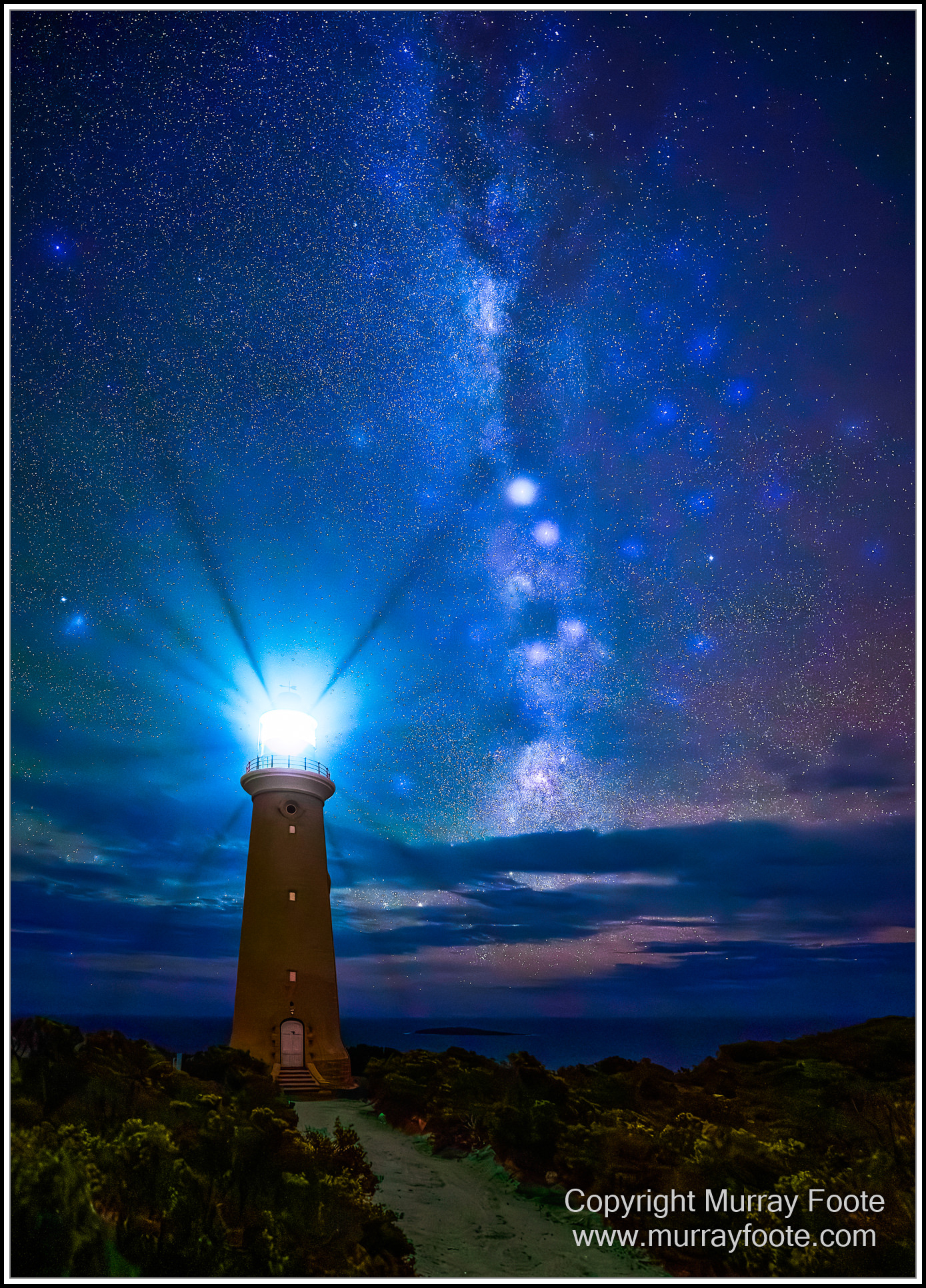
I had timed our visit for the new moon. Dark skies are ideal for Milky Way photography. We only got clear skies on the second night however.
.
.
.
. 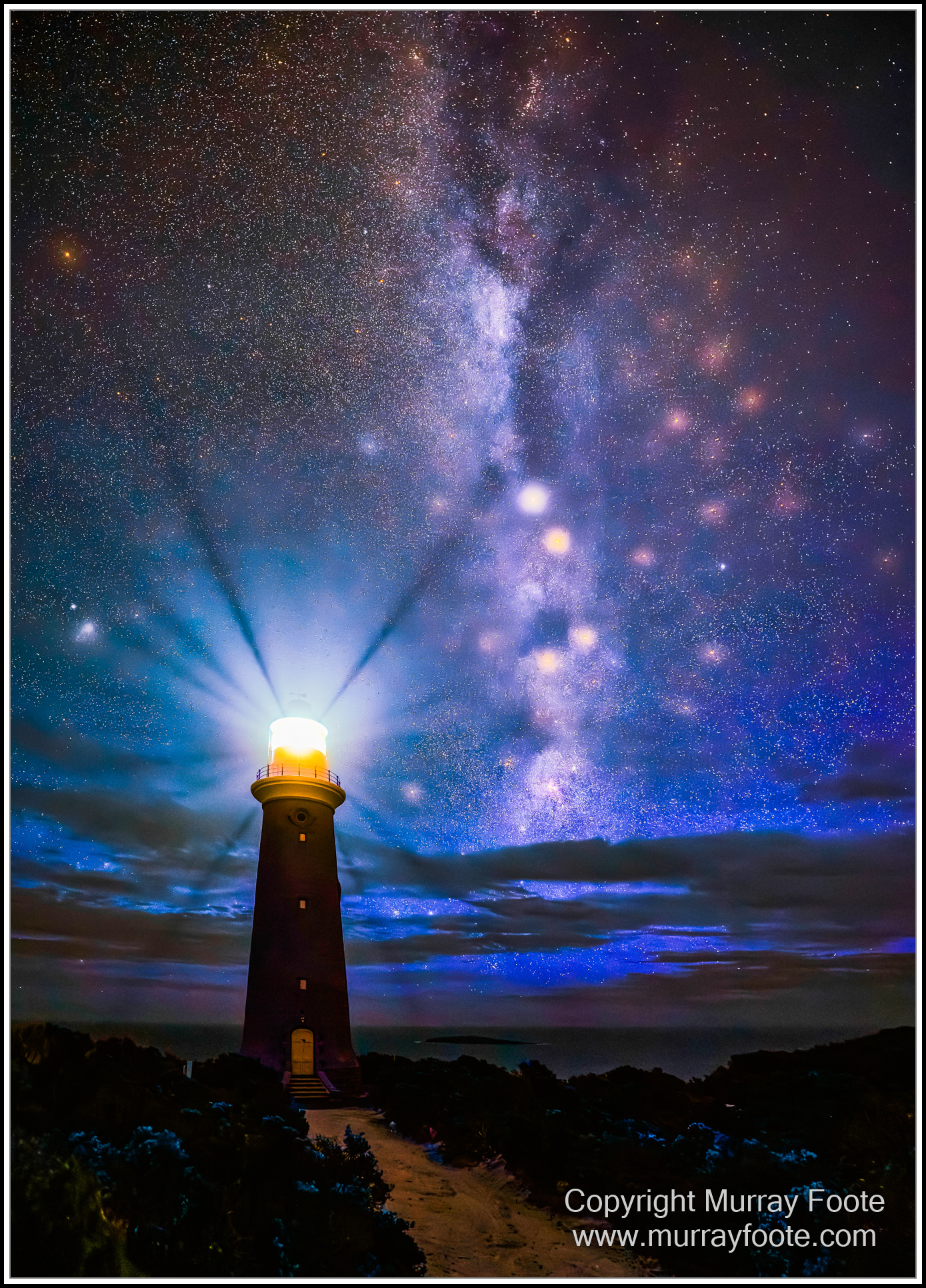
This is the same as the previous image but processed differently. Our eyes don’t see as well in the dark (using rods instead of cones) yet night light is objectively the same as daylight. The conventional approach to processing Milky Way images is to use Photoshop to accentuate colour differentials and increase drama. If you did that with a daylight image it would look garish and unreal. Sometimes I don’t push it as far for a perhaps more realistic feel but in the case of this last image I decided to push colour separation even further using techniques I use in some of my infrared processing.
(This is my last “regular” post for Kangaroo Island. There will still be an infrared post and probably a couple of mono posts. And then the trip continues).
.
.
.
.
 Murray Foote
I hope Tourism Kangaroo Island makes use of your amazing pics.
LikeLike
Thanks very much Peggy. Perhaps i should let them know. Still one IR and a couple of mono posts of KI to come though.
LikeLiked by 1 person
The first lighthouse and milky way pic taken with a circular fisheye lens is a prize winner.
LikeLike
Thanks very much Mick!
LikeLike