Mount Wellington, Hobart, Tasmania, Friday 13 Ocober 2023
.
Click an image to see it nearly twice as large (on a computer at least).
Profiled monitor? Colour will probably be inaccurate if your monitor is not profiled. An unprofiled monitor may be too bright, too saturated, too contrasty and may have a colour caste. If it has a colour caste, your eye will adjust to it and it will seem normal but images will have an opposite caste. This apples to all images but may particularly apply to the IR images below.
Subscribers! Click the Post Title in the email to go to the Blog post with larger images.
.
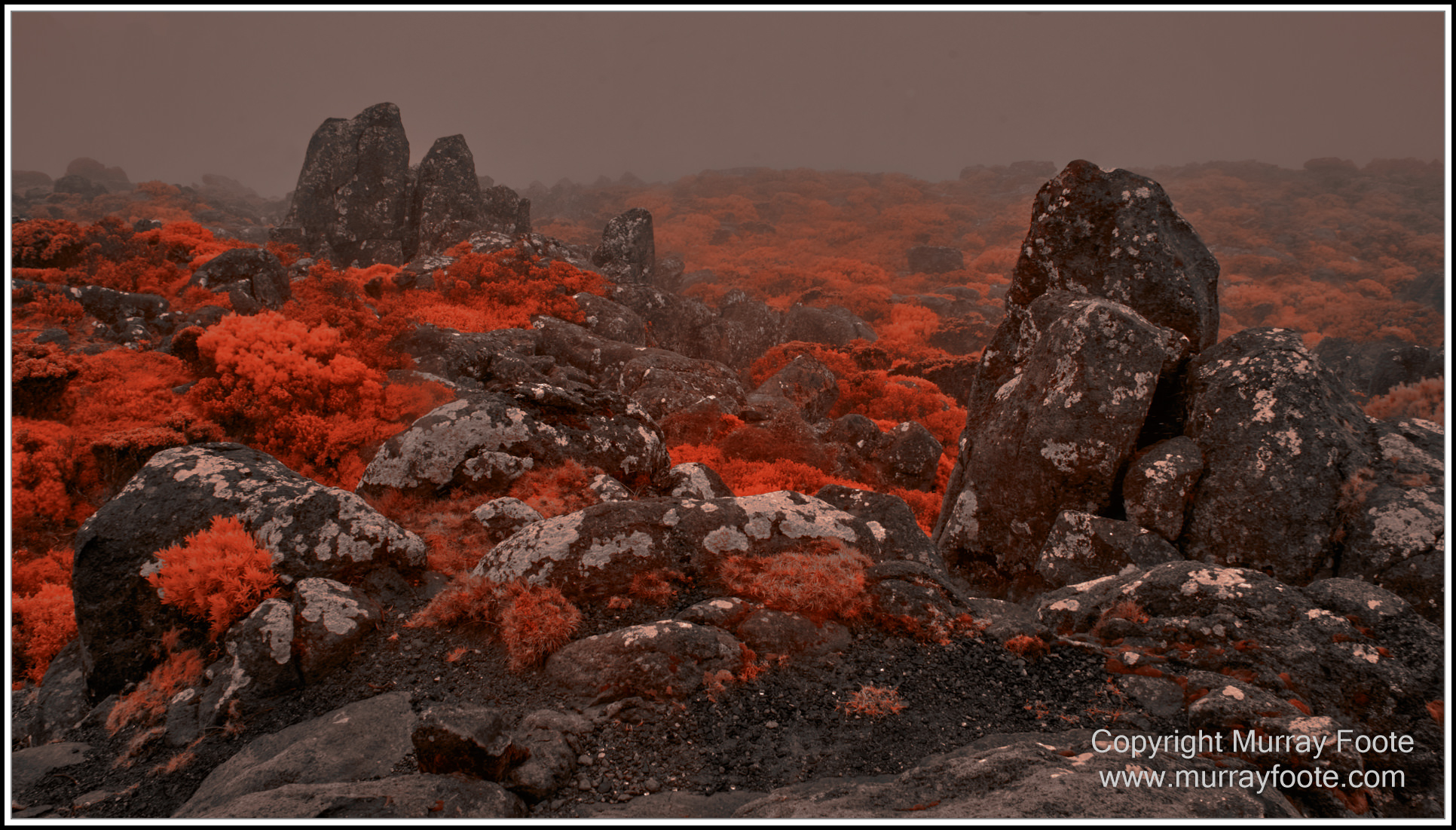
We had been at the top of Mount Wellington, above Hobart, and it was cold and windy with rain andsleet and we were in fog or cloud. (See earlier post).
We got back in the TARDIS, flipped a few levers and got out again.
I couldn’t quite put my finger on it, but somehow it all looked different.
Rather than being transported to the idyllic peaceful serenity of a subtropical beach on the coast of Gaza, we were in the same place. The TARDIS had disappeared. Time was slowly flipping backwards and forwards, mainly forwards, and though the weather was unchanged, we were mainly in the future worlds that Humanity would create.
Had the TARDIS taken over the World or had the World been swallowed by the TARDIS? Were we in a Butterfly Dream? (“I dreamed I was a butterfly, flitting around in the sky; then I awoke. Now I wonder: Am I a man who dreamt of being a butterfly, or am I a butterfly dreaming that I am a man?”)
.
. 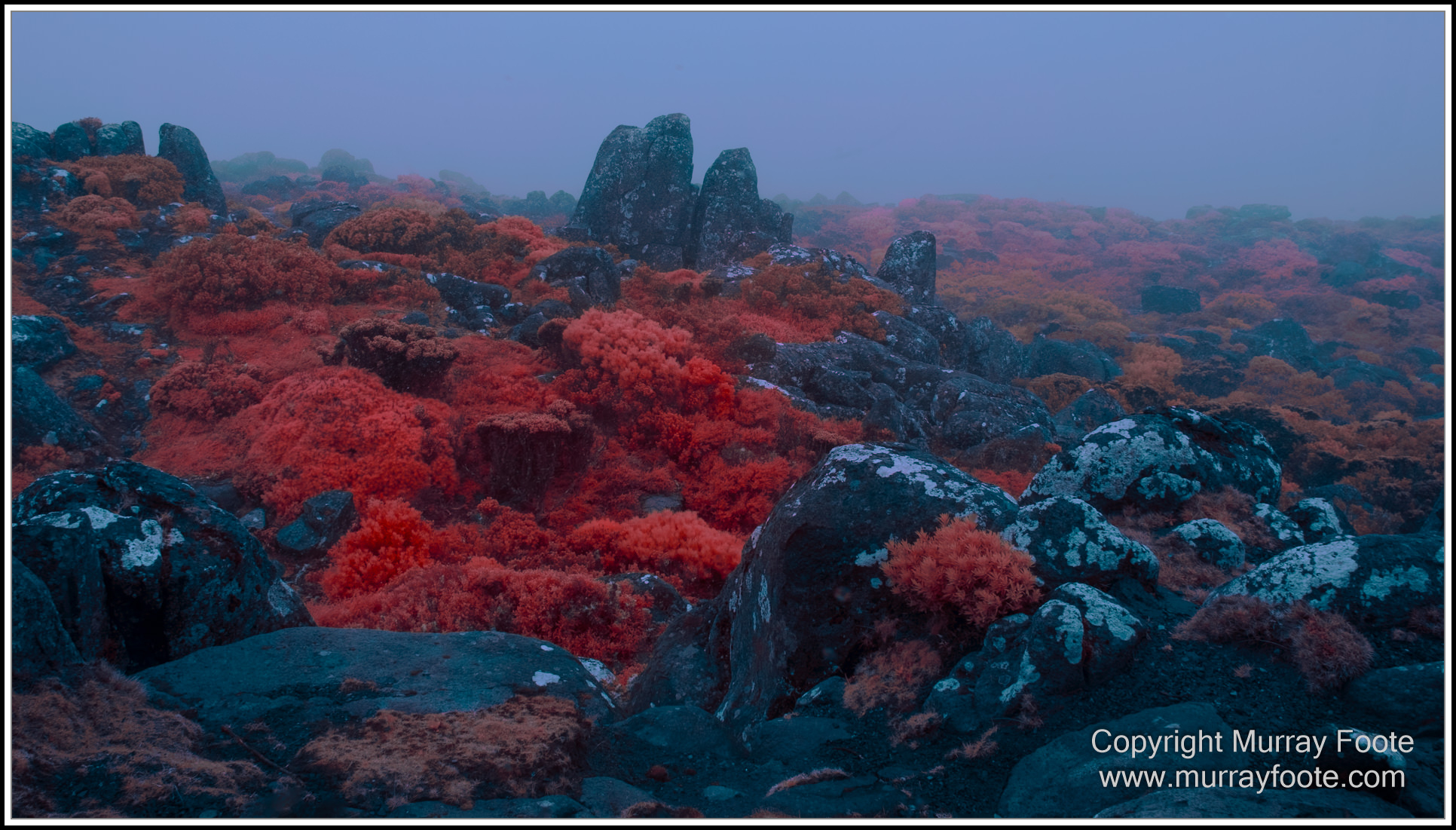
… and it kept looking different from minute to minute.
.
.
. 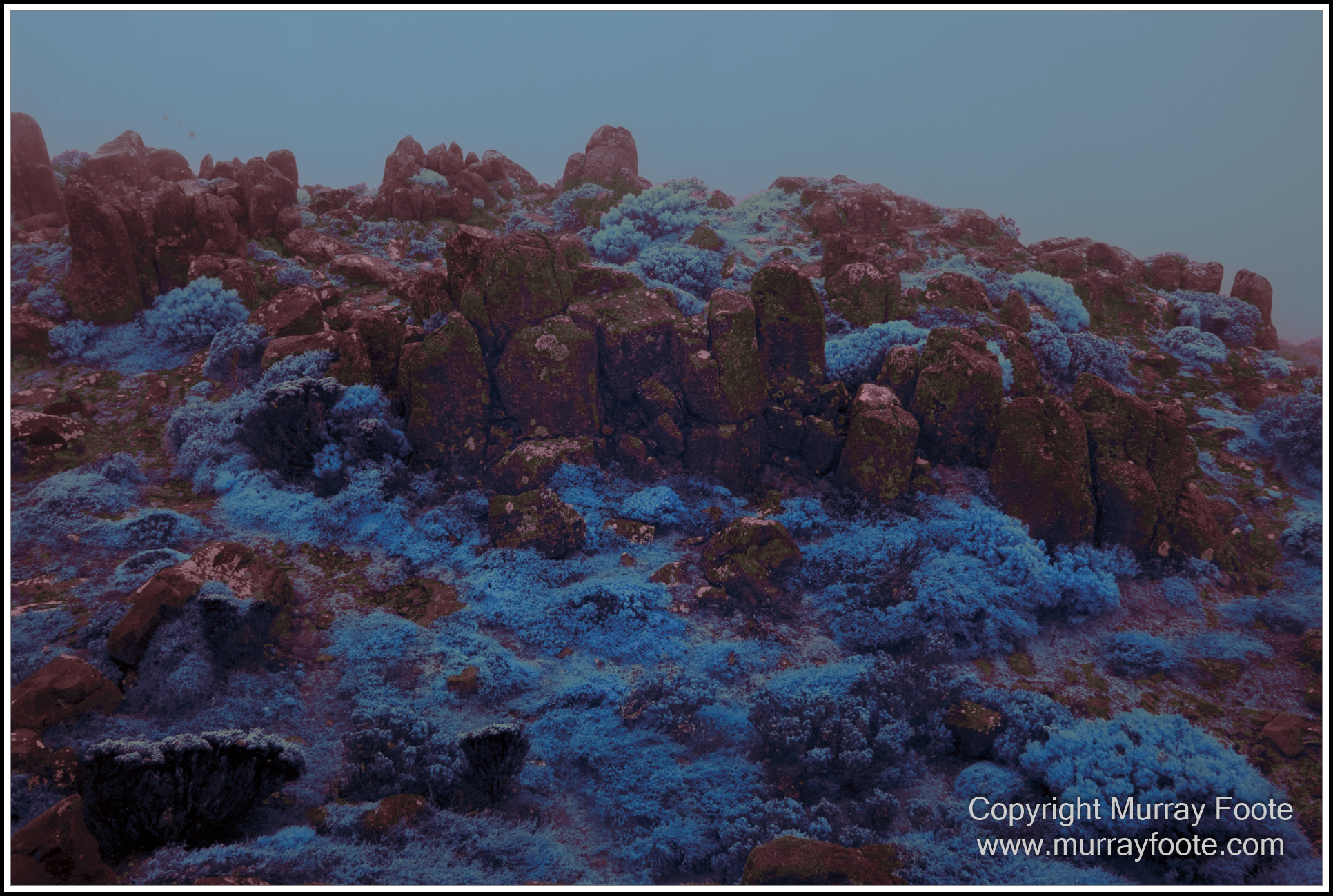
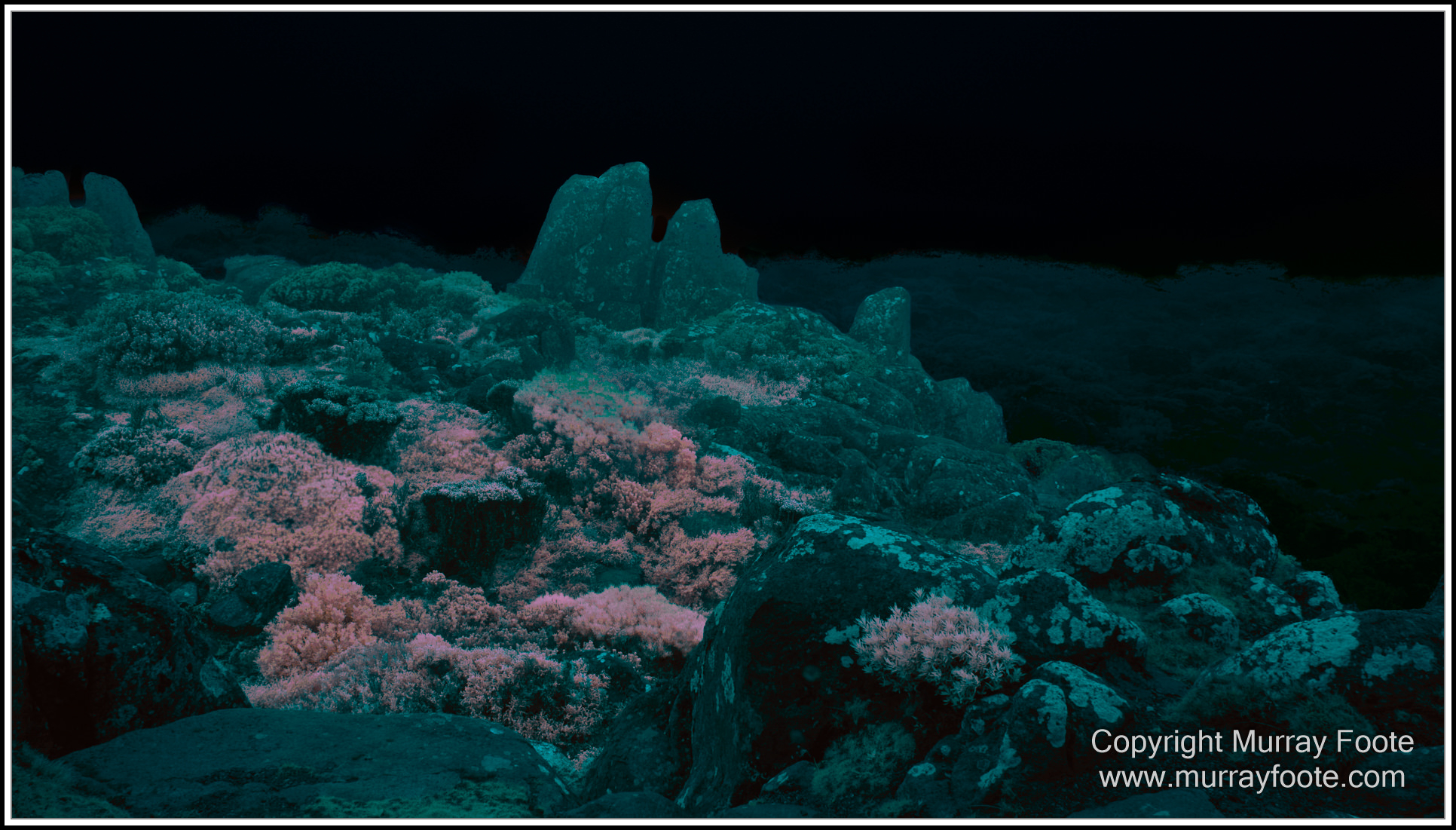
Then it seemed as though we were underwater.
The whole of the east coast of Australia was once underwater, though it was before my time and I’m not sure about Tasmania. The rocks in Tasmania are older than those in the east coast of Australia and the western two-thirds of Tasmania has a different origin to the eastern third. Curiously, the western two thirds was once joined to North America.
.
.
. 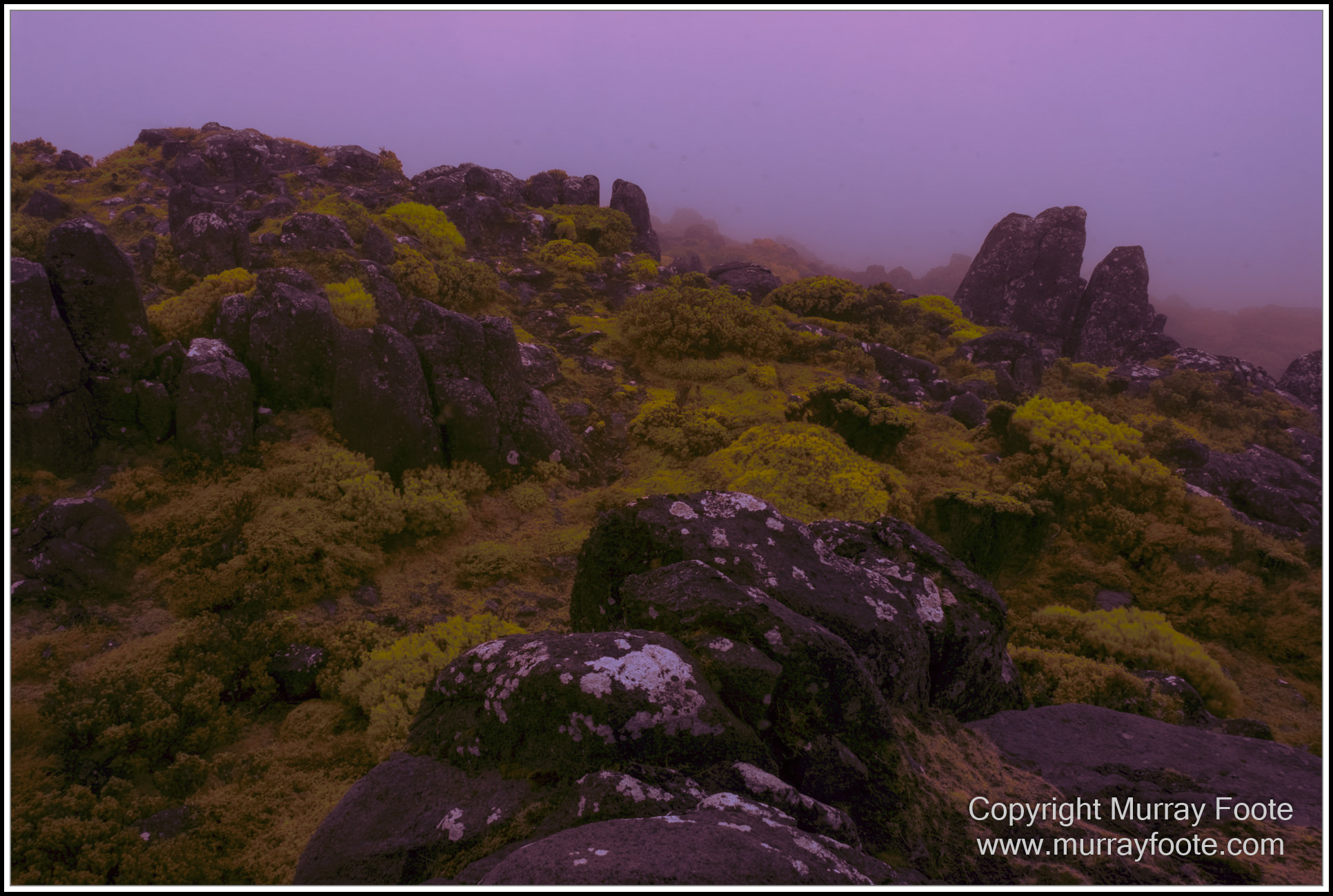
We might be underwater or we might not.
.
.
. 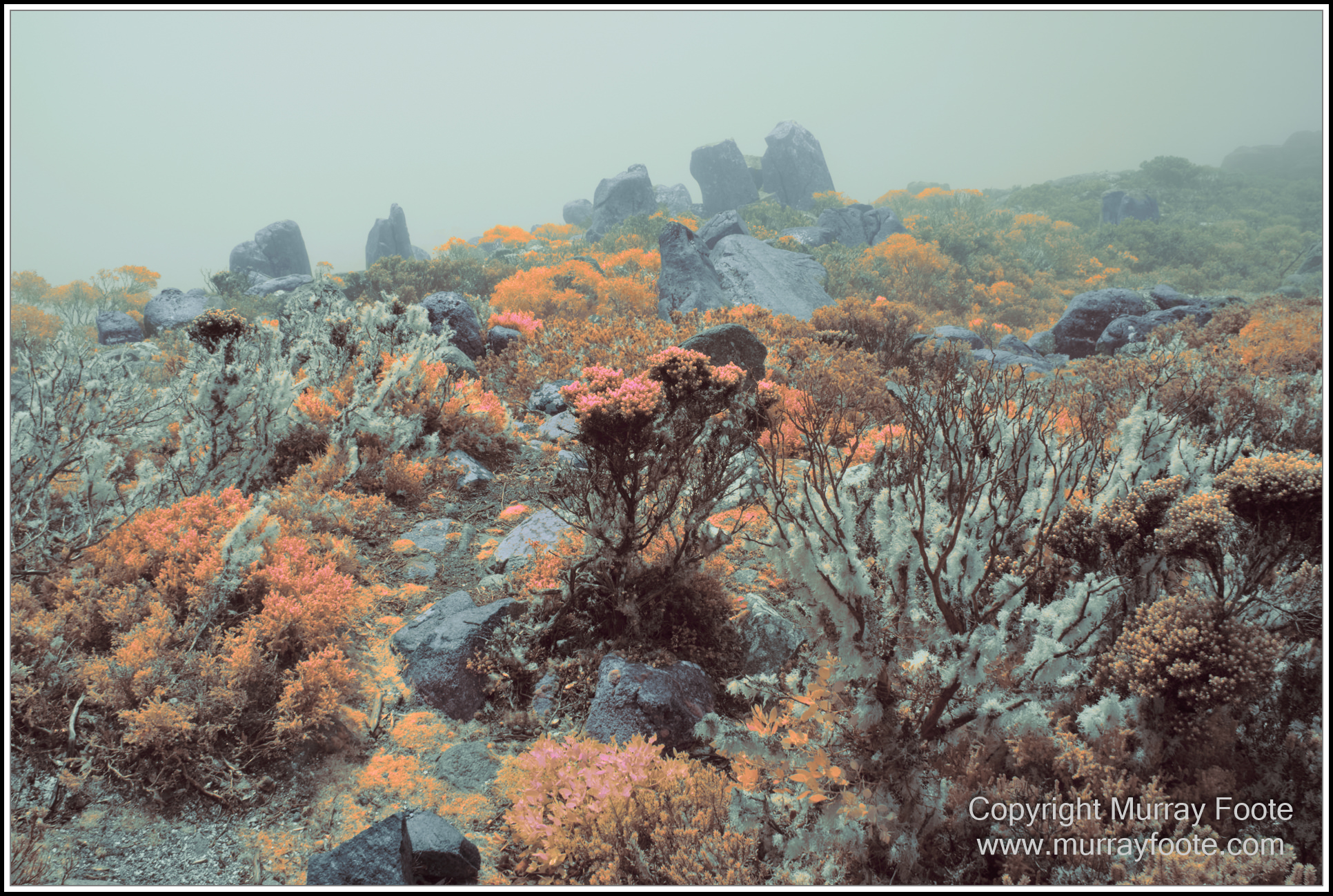
… but life was starting to pick up….
.
.
. 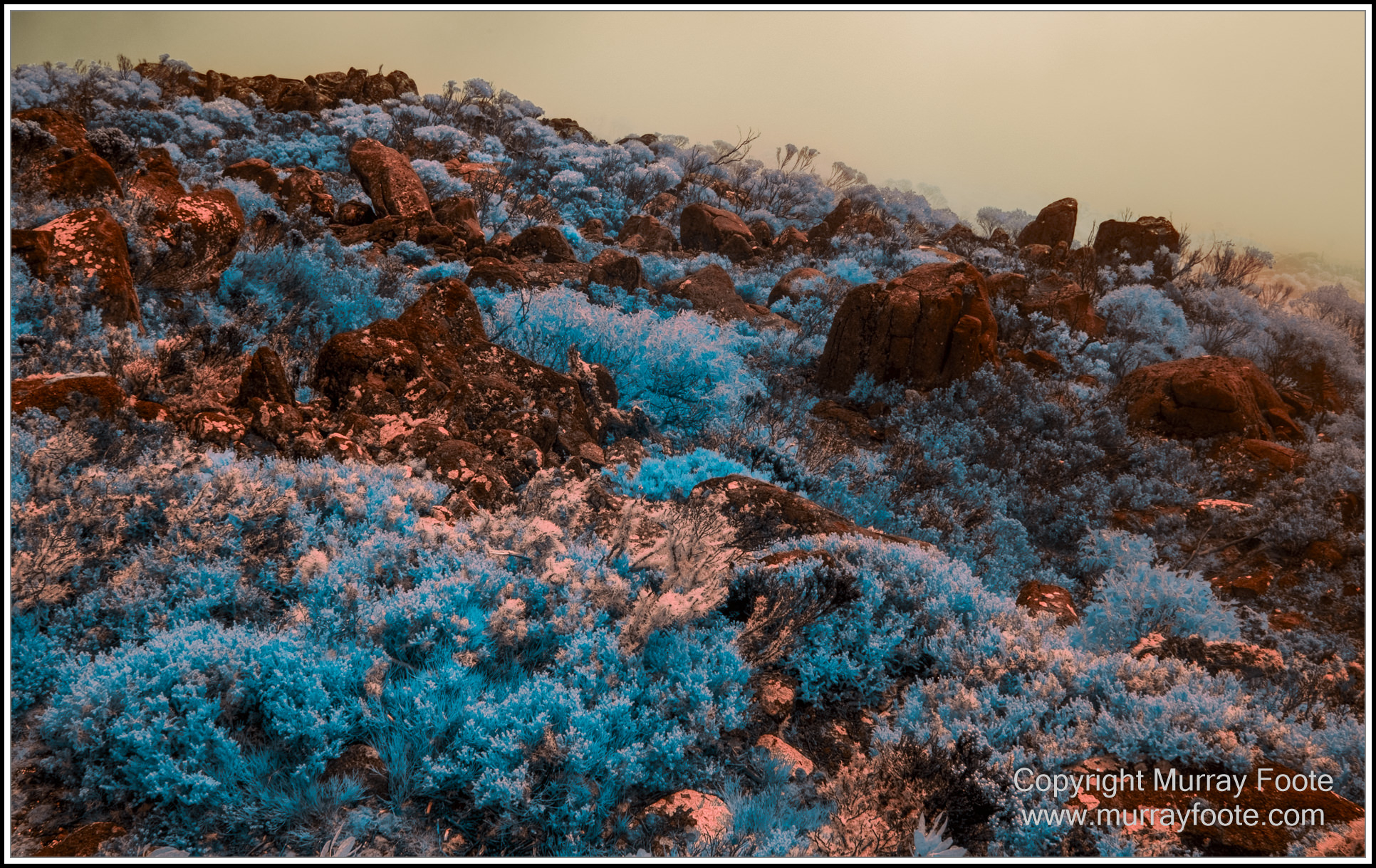
Definitely above water again now, though still rather damp.
.
.
. 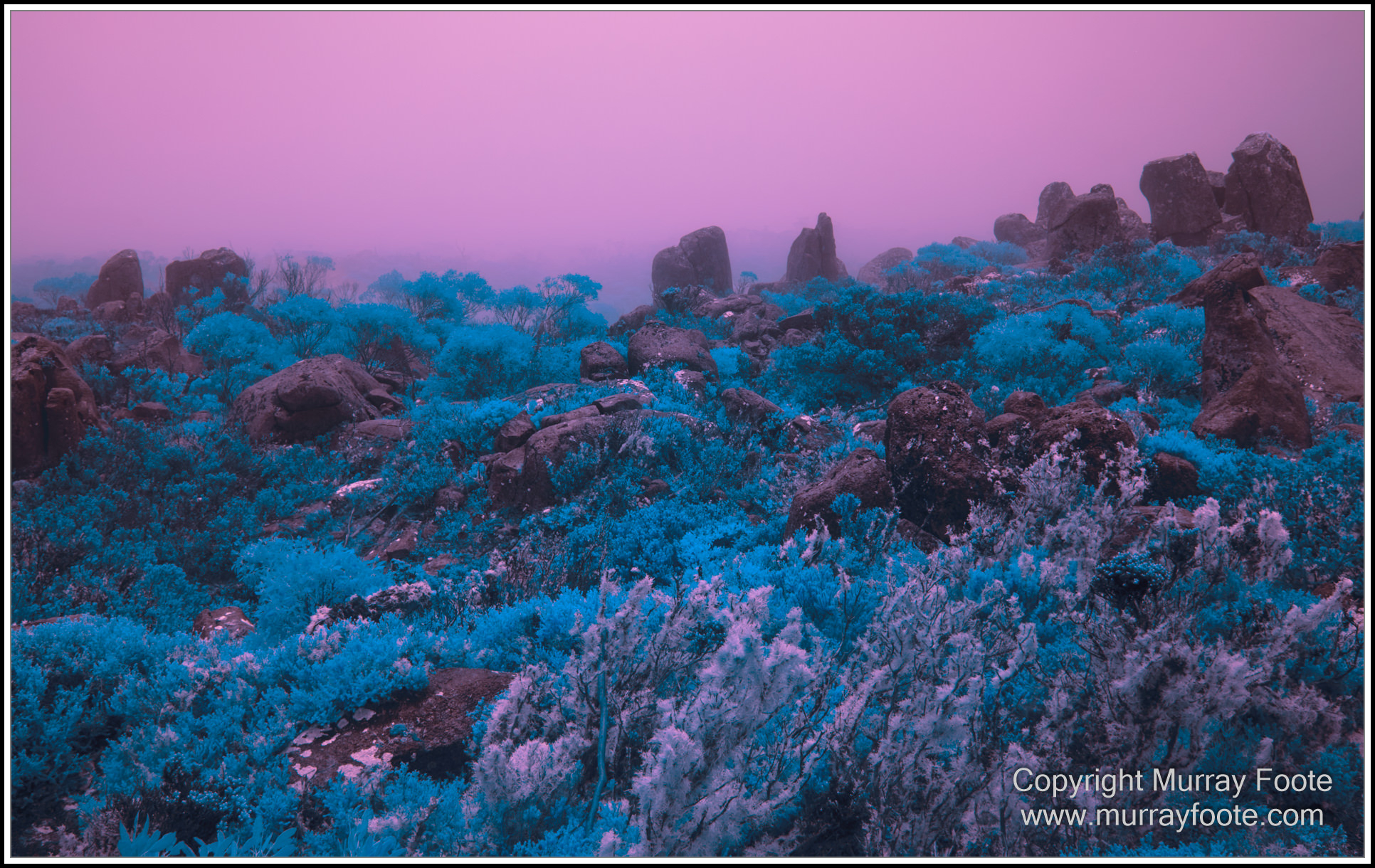
Is that a distant sunset or the remains of a nuclear afterburn?
.
.
. 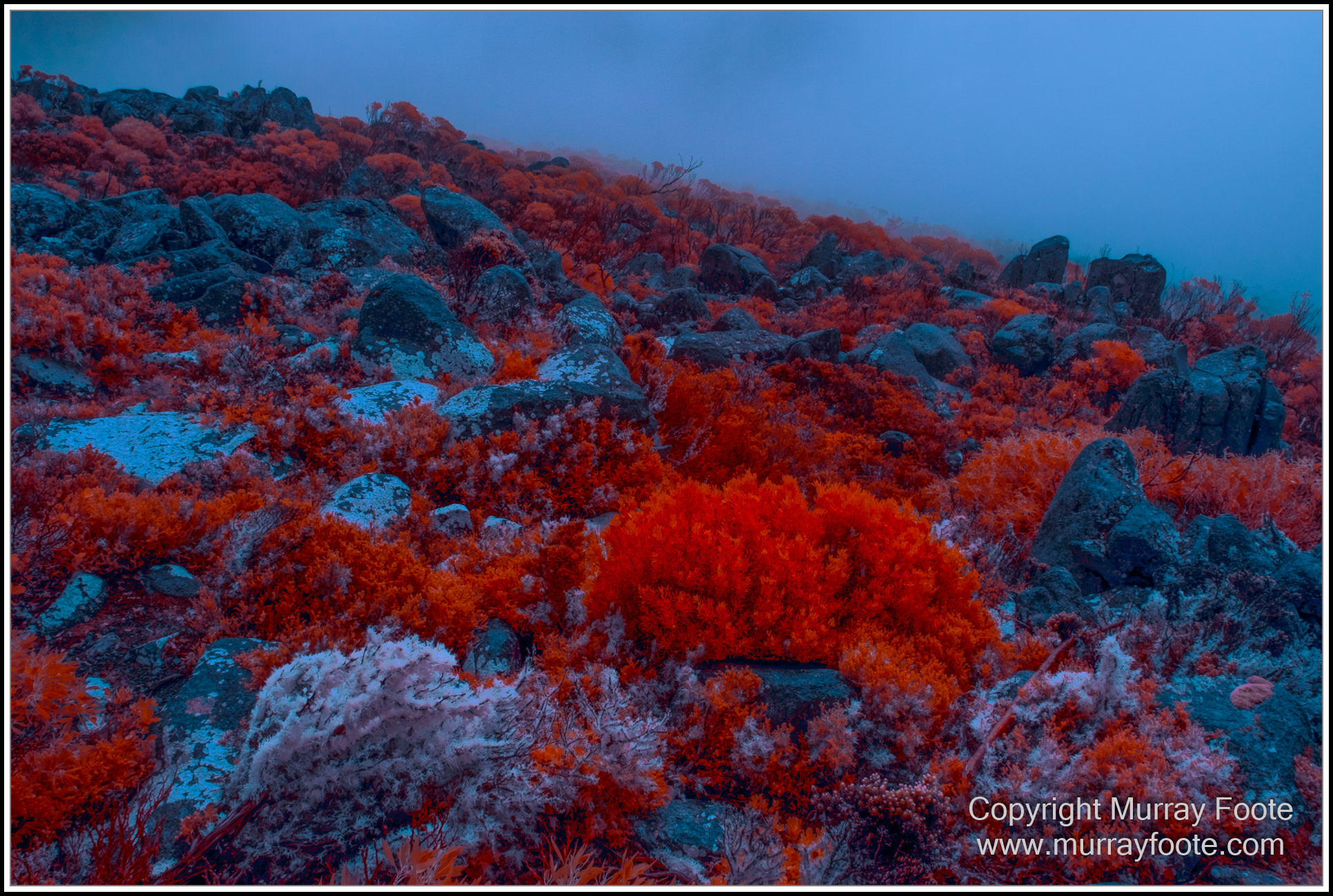
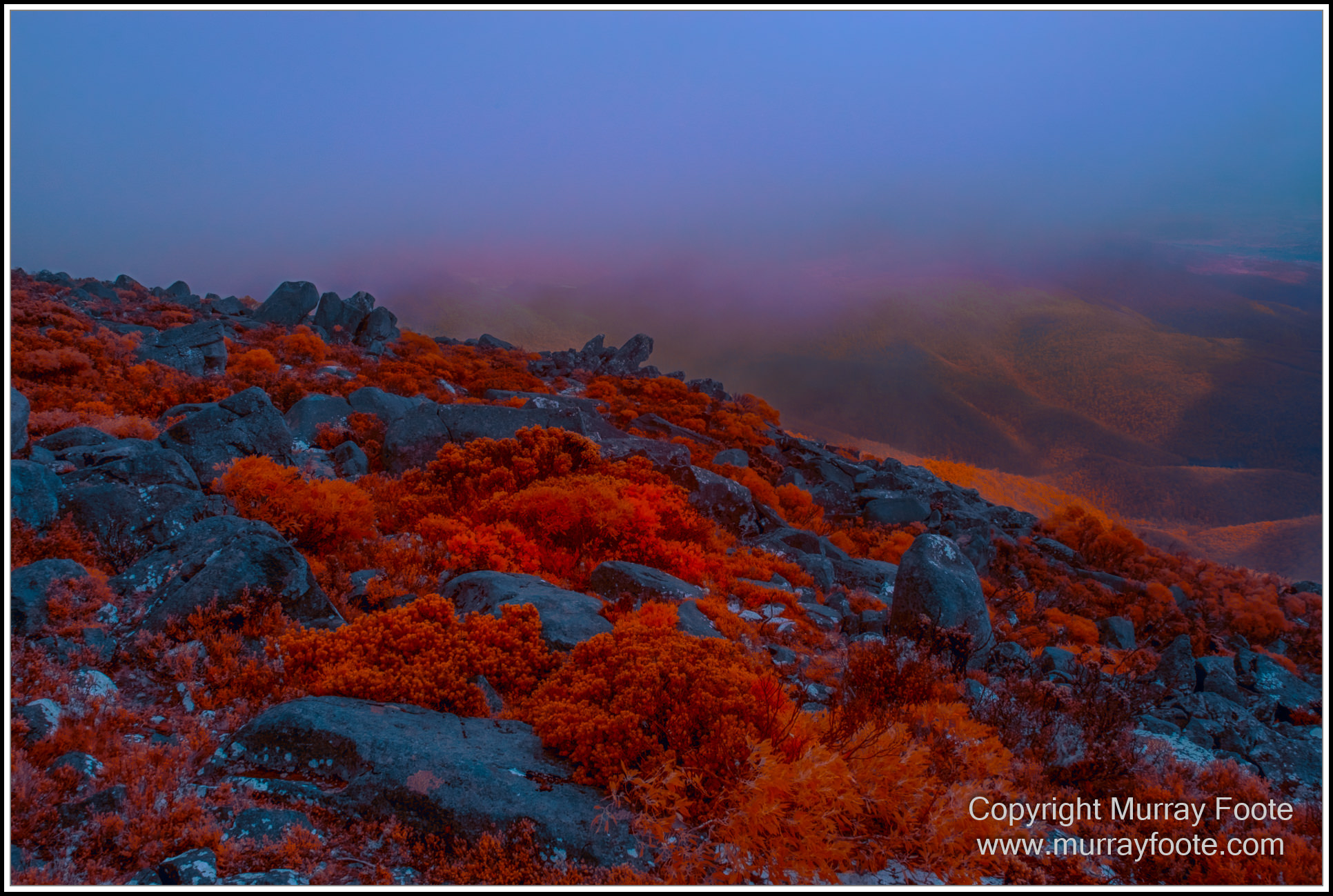
The plants glowed but the fog was still heavy.
.
.
. 
Ah, the fog was starting to shift.
.
.
. 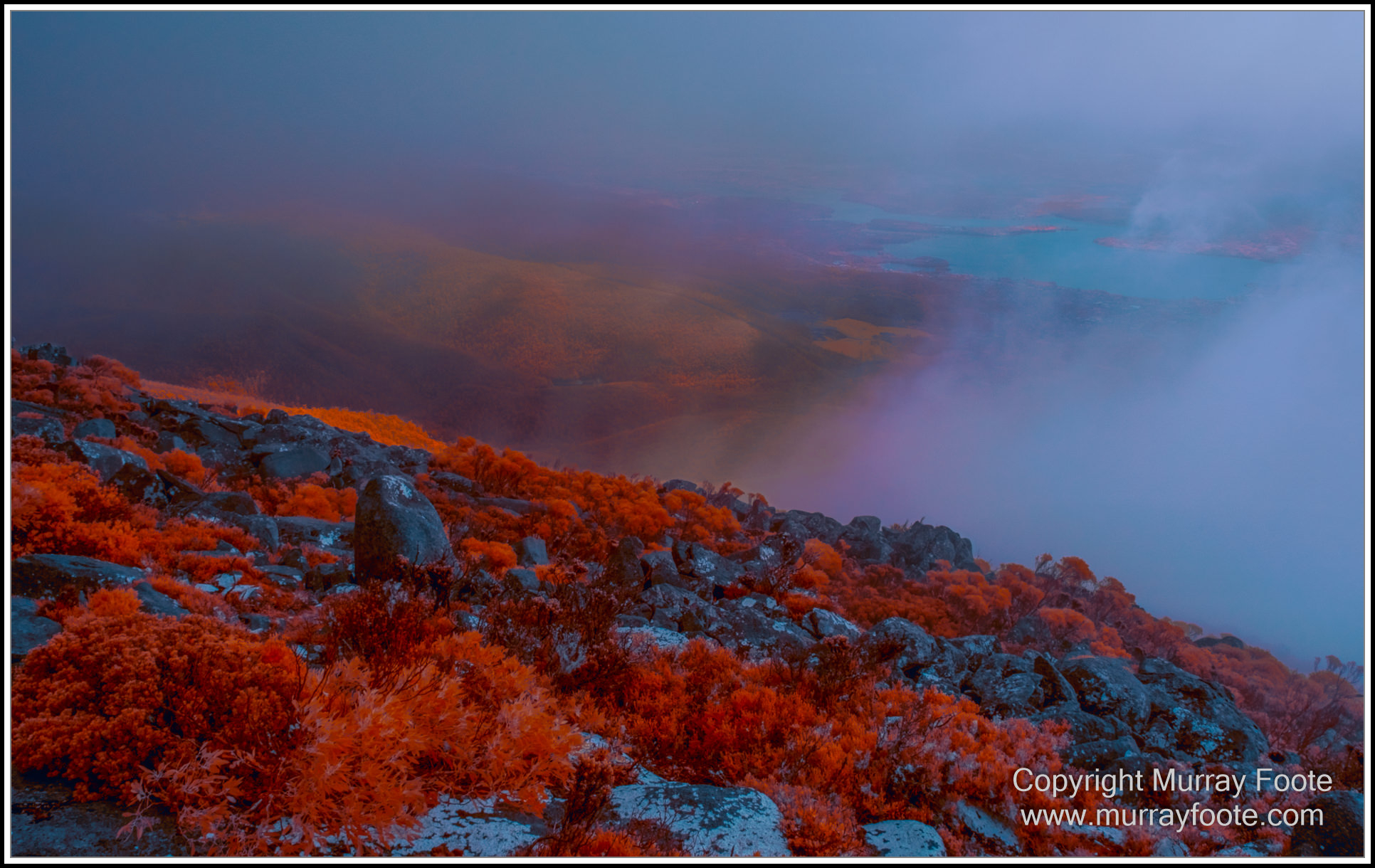
Slowly more was revealed.
.
.
. 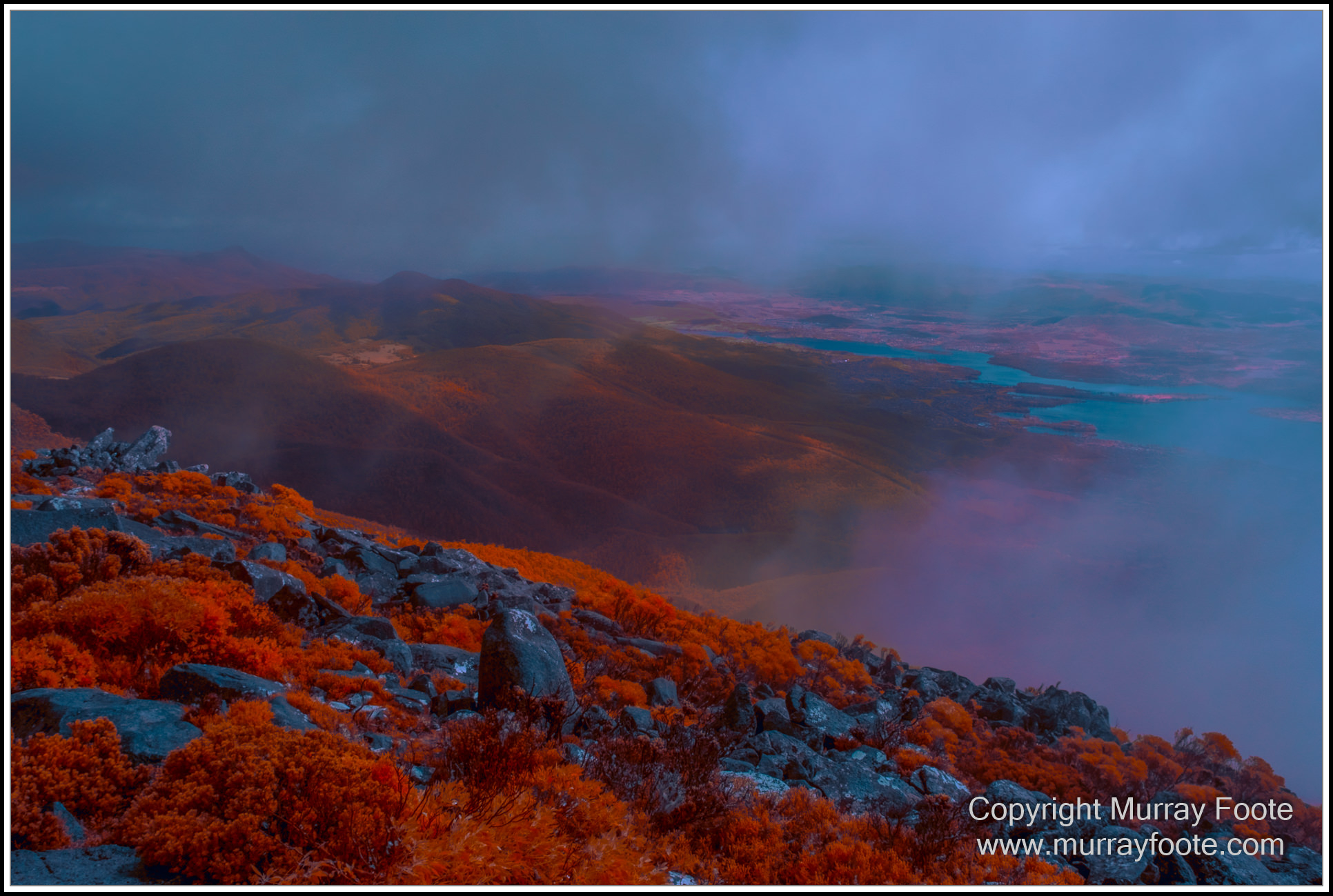
… until we could see the distant estuary where Hobart once had been.
.
.
. 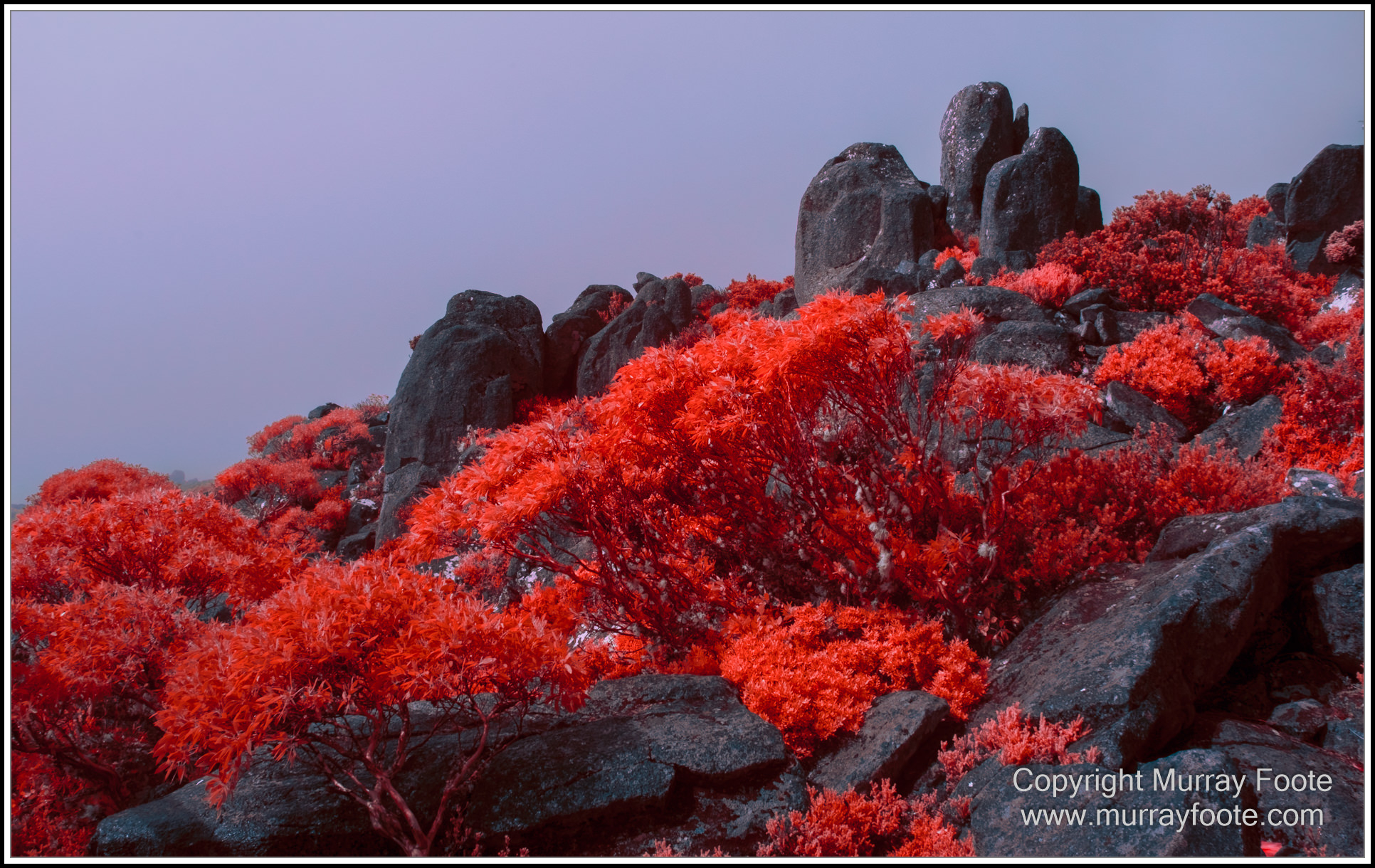
Everything was clearer for a while.
.
.
. 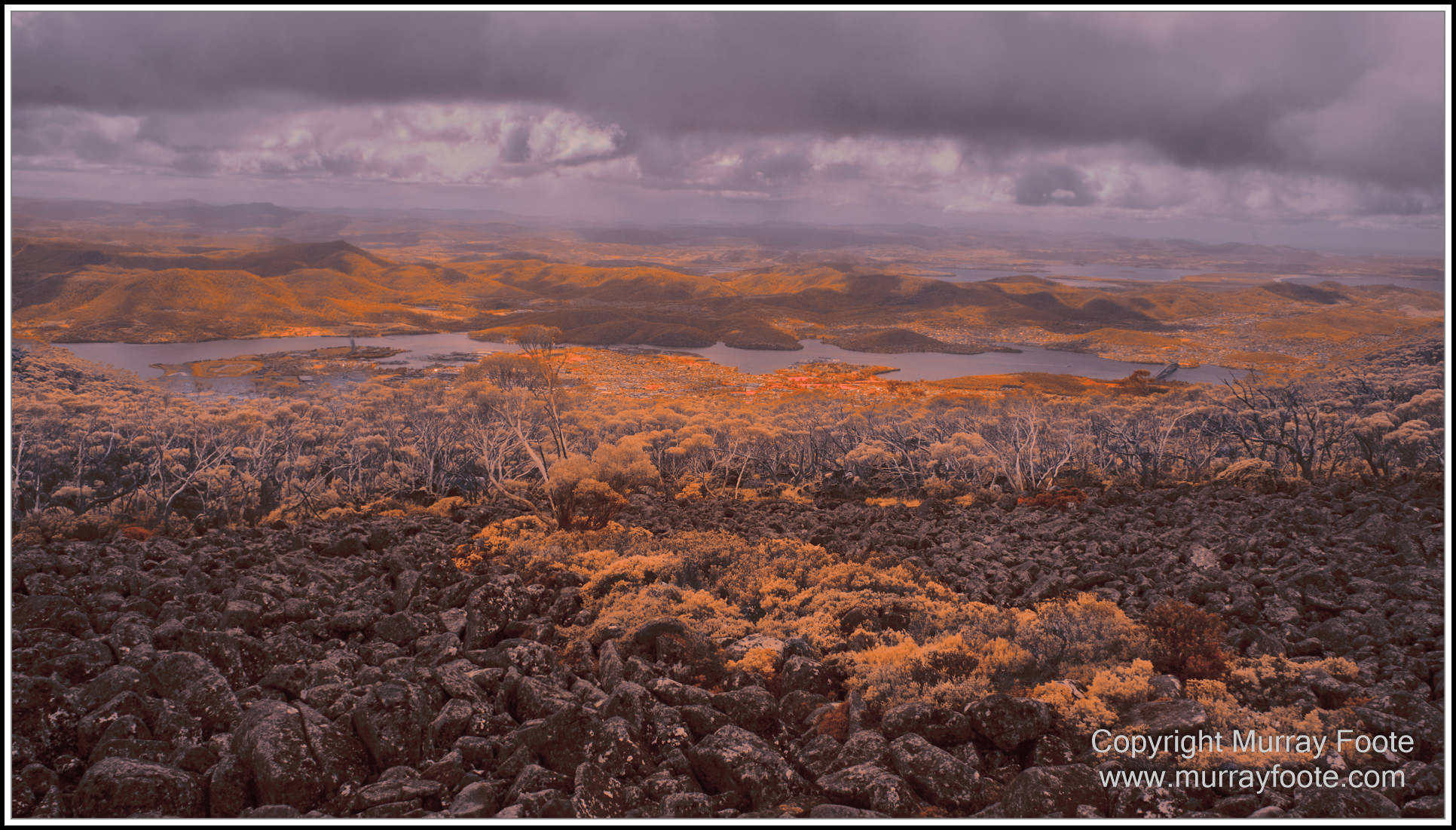
And we could see all the eucalypts in their full autumn colours of October.
(Things are a bit different in post apocalypse times).
.
.
. 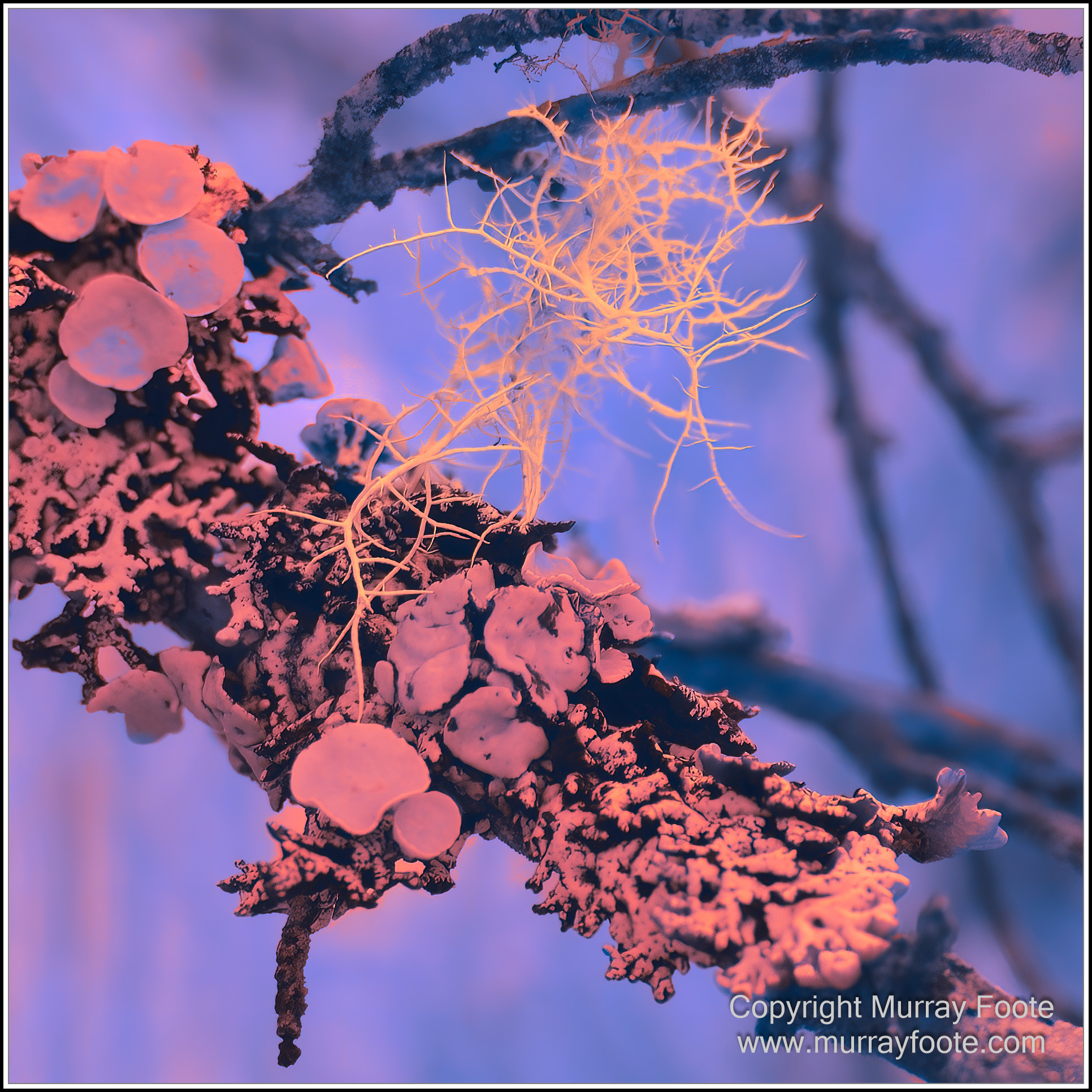
Then a baby triffid reared out of the branch of a tree.
This was not a good sign.
.
.
. 
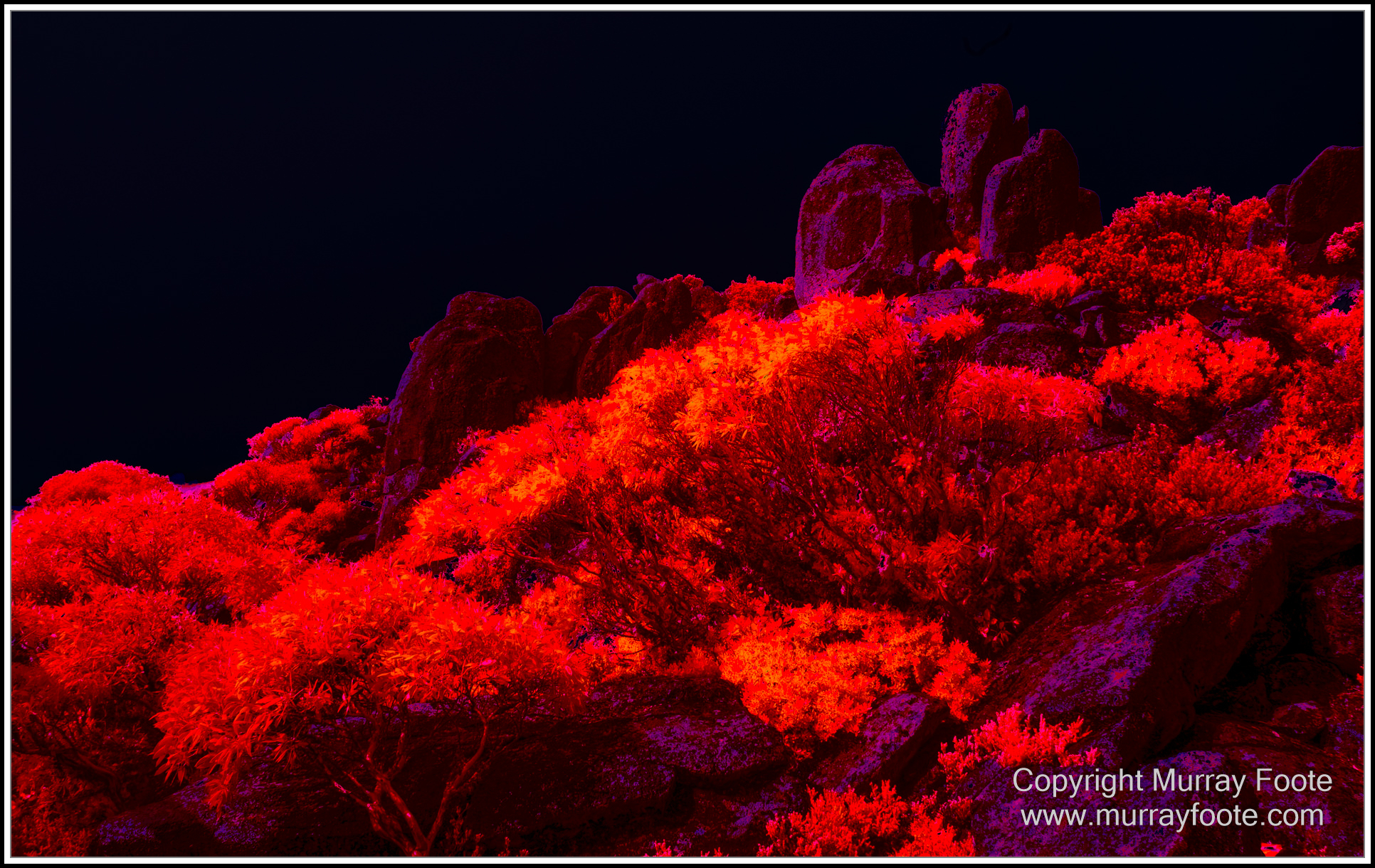
A reality bubble burst.
Suddenly the apocalypse seemed a lot closer.
.
.
. 
… and the world had changed again.
.
.
. 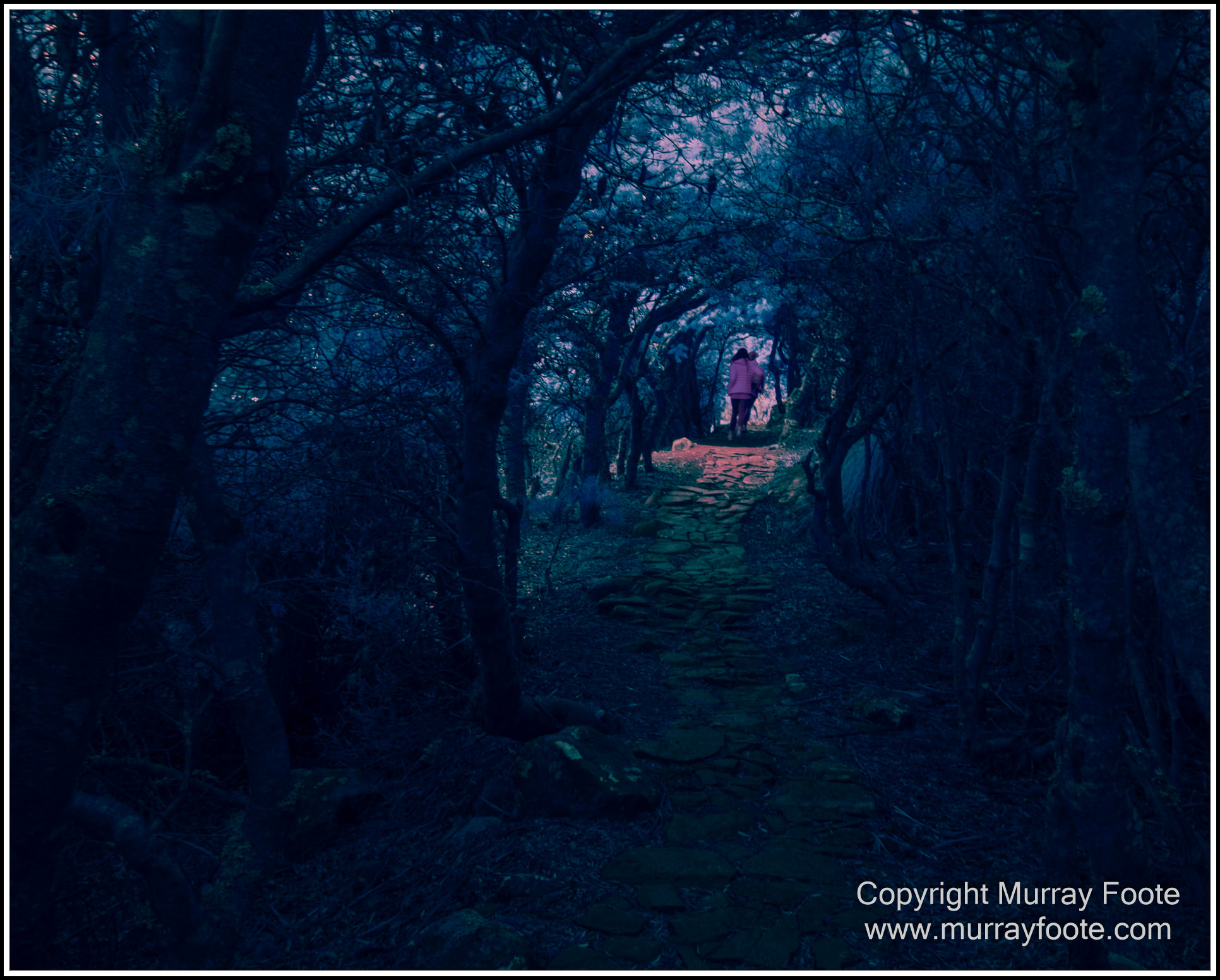
There was a way out. Some people were showing us the way.
.
.
. 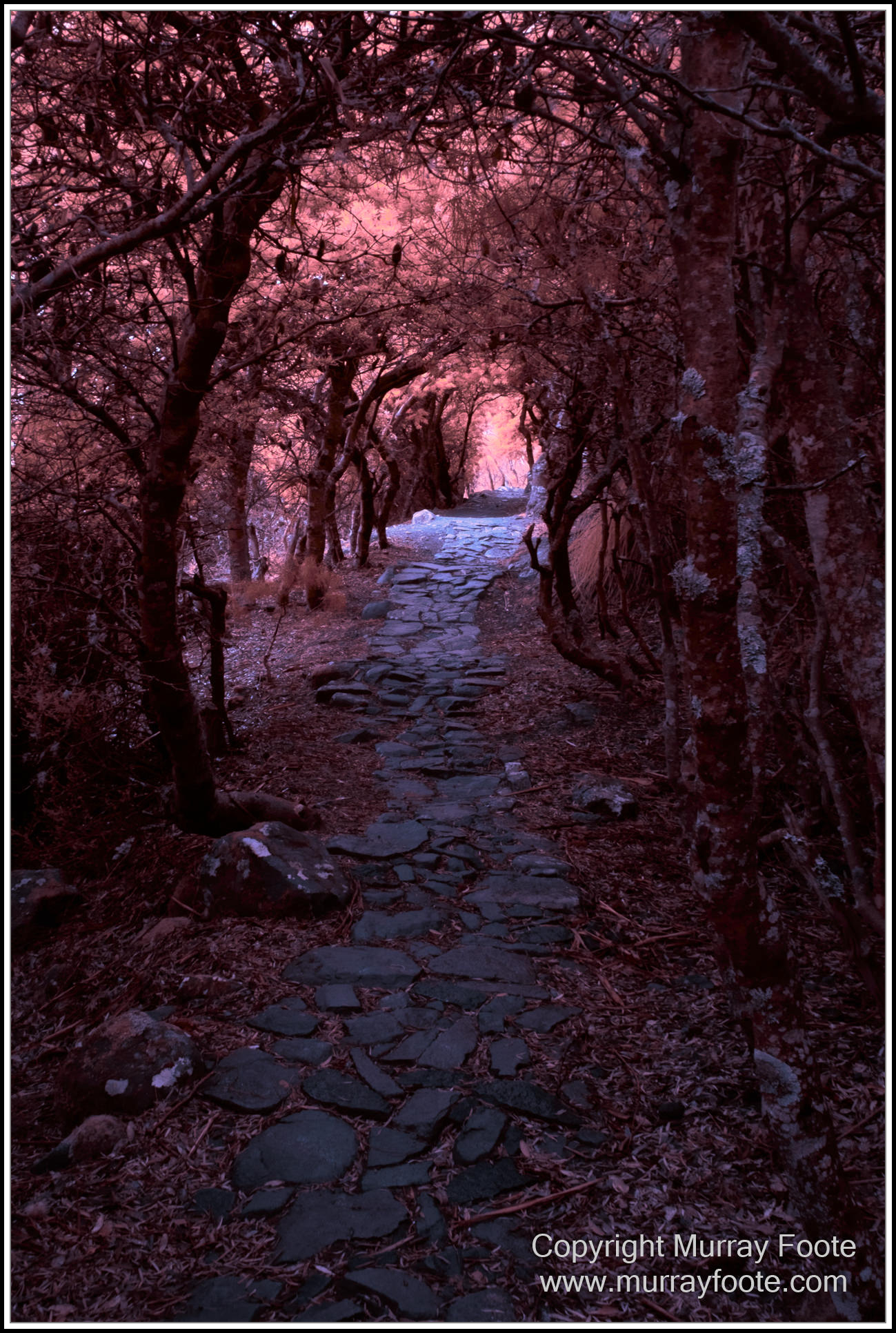
There was a light at the end of the tunnel (fortunately it was not an oncoming express train).
.
.
. 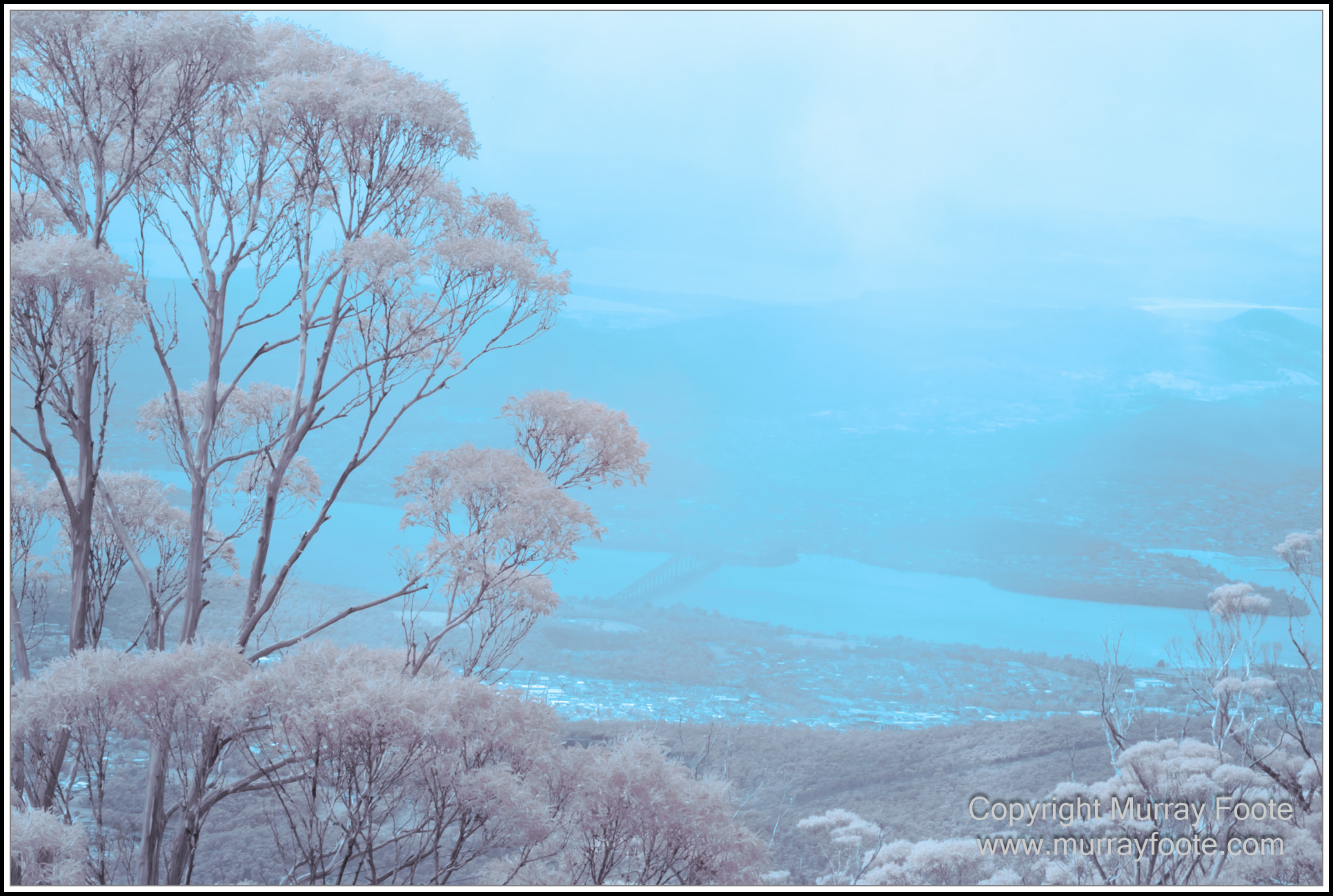
And then we emerged in a new, bright, peaceful and very different world.
.
.
. 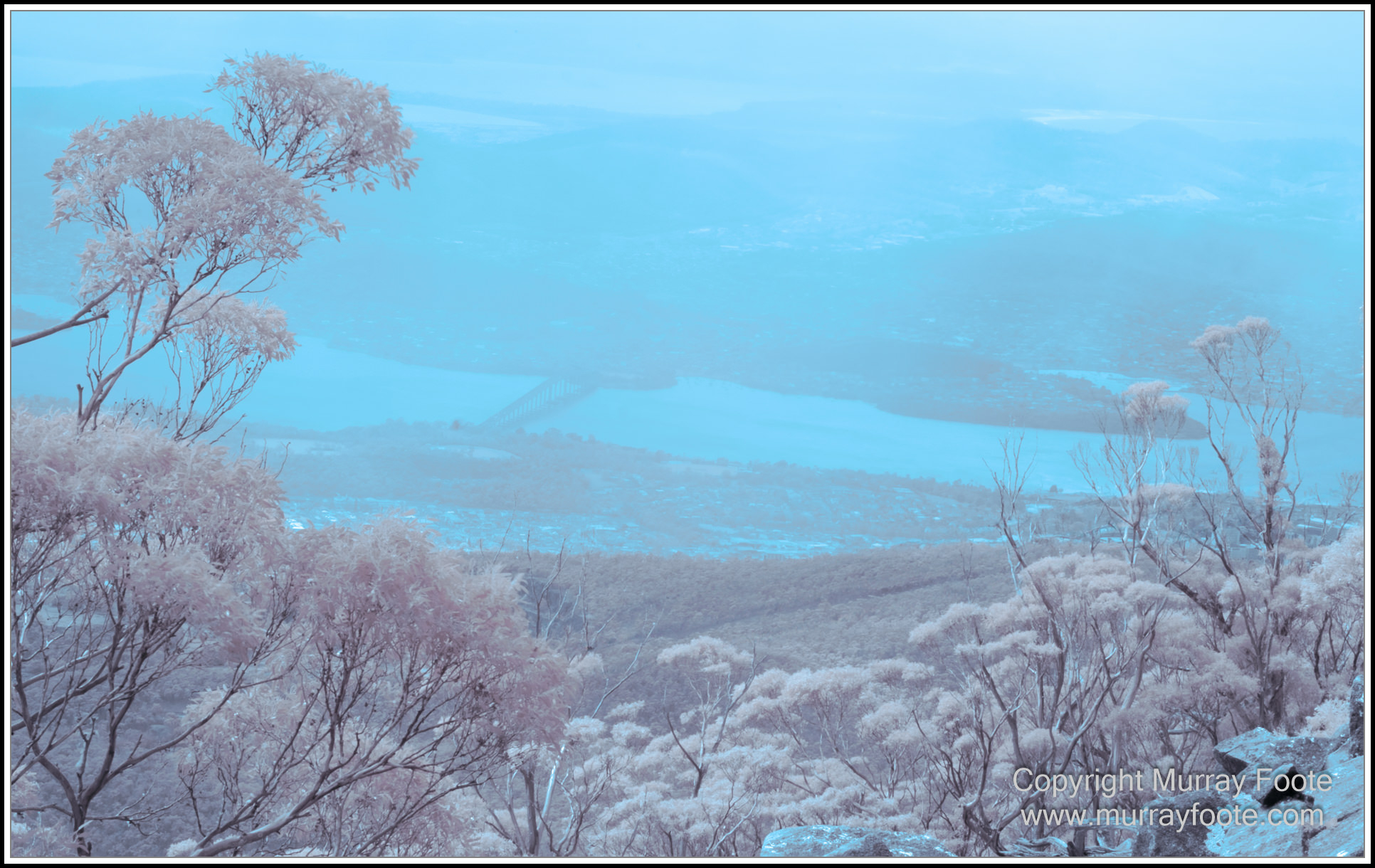
…and Hobart was still there after all.
And everything was completely normal.
.
.
.
A few notes on my approach
My objective here is not to show the World in a different way but to create new Worlds.
We assume the world is as we see it but we cannot be sure we see the same way as others. And there is more than we can see. If you look into the mirror and happen to notice you are a goldfish, well congratulations. As well as “normal” vision, you have both infrared vision and ultraviolet vision. Or if you happen to know a goldfish, you can ask them exactly what they see. They may not say anything though..
I first started experimenting with colour infrared imagery forty-three years ago, at a time when the pyramids were still standing in Egypt and the oceans had not boiled dry. At that time it was of course film, slide film using an even then obselete E4 process. Then as now, most people experimenting with infrared did so in black and white, though I focused on colour.
Digital colour infrared behaves quite differently from colour infrared film. In both cases, the range of possibilities depends on the filter you use and in digital it can be either on the lens or inside the camera. in film, you take the image, send it off for processing and a slide (or a print of it) is your final image. There was little or no reason to process the film yourself. There can be exceptions but colour IR digital generally requires post-processing and it can get complex.
My out-of-camera image starts off as a kind of amorphous yellow-orange. You can create an in-camera white balance which gives you some colour separation but that doesn’t satisfy me and I’m going to process it anyway, so I don’t bother. I generate a custom white balance for each image at the start of processing. I use various combinations of Lightroom, Photoshop, 3D LUT Creator and Capture One. I don’t believe in recipes, I don’t seek to emulate what others may do and my methods keep evolving. I may write them up one day though.
With film, you had three colours to play with, corresponding to the three layers of the film. You can find many colour infrared images on the Web and they are usually combinations of two colours. That’s the way they come out with little processing or with basic transforms such as “channel swapping” (eg swapping red and blue channels in Photoshop). I often look for more that than and may process for subtlety or for drama (or, hopefully, both). Processing can be a slow process and I often clear my mind to visualise what I may want to create and then may process only one image per day. It’s not all technique either. Conjuring up an aesthetic wonderland (as i might at least aspire to) in both taking the image and processing it goes well beyond technique.
.
.
.
(See here for the previous post on Mount Wellington, in “normal” colour.)
.
 Murray Foote
Pingback: Mount Wellington Monochromes | Murray Foote
Pingback: Tasmania Itinerary 2023 | Murray Foote