After spending some time in the lower garden around the Hisagoike Pond, I ventured to the upper level. Here there were a great number of people though you might not think so from most of the images.
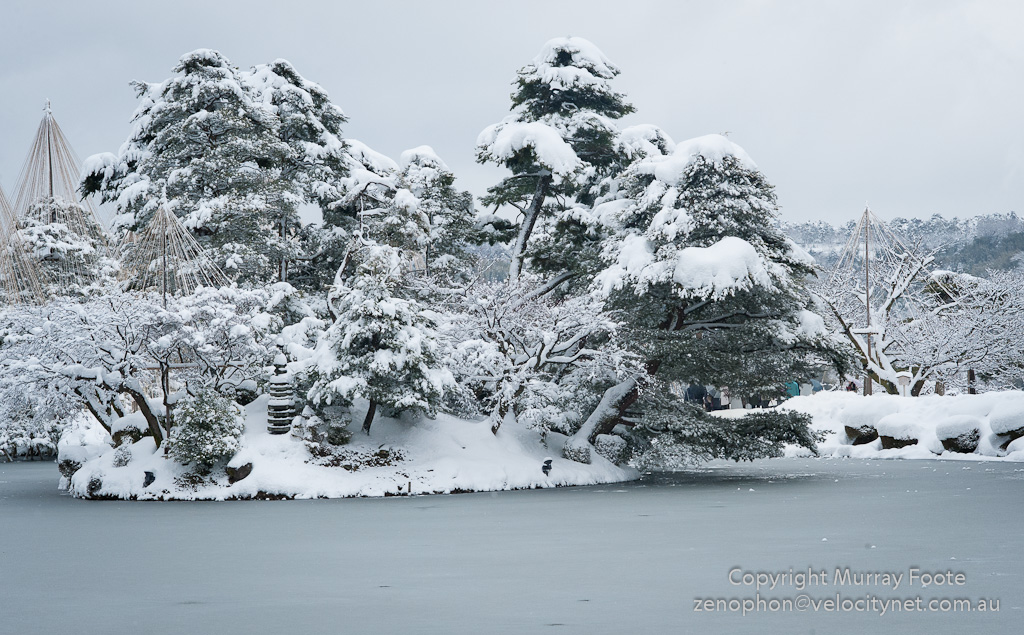
Kasumagaike Pond and Horaijima Island

Worker knocking snow from upper branches
There were now many workers knocking snow from the branches of the trees and some paths were closed off where that had not been done.
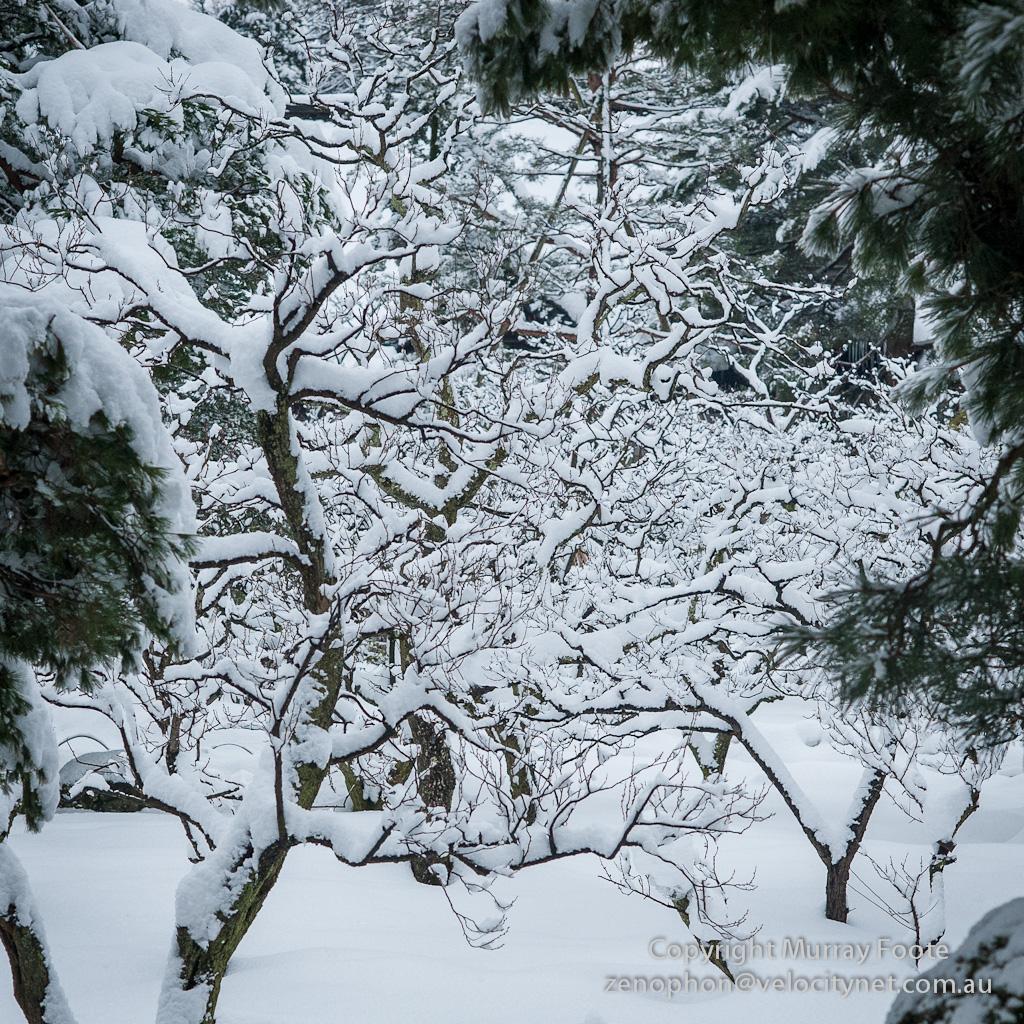
Patterns with branches and snow
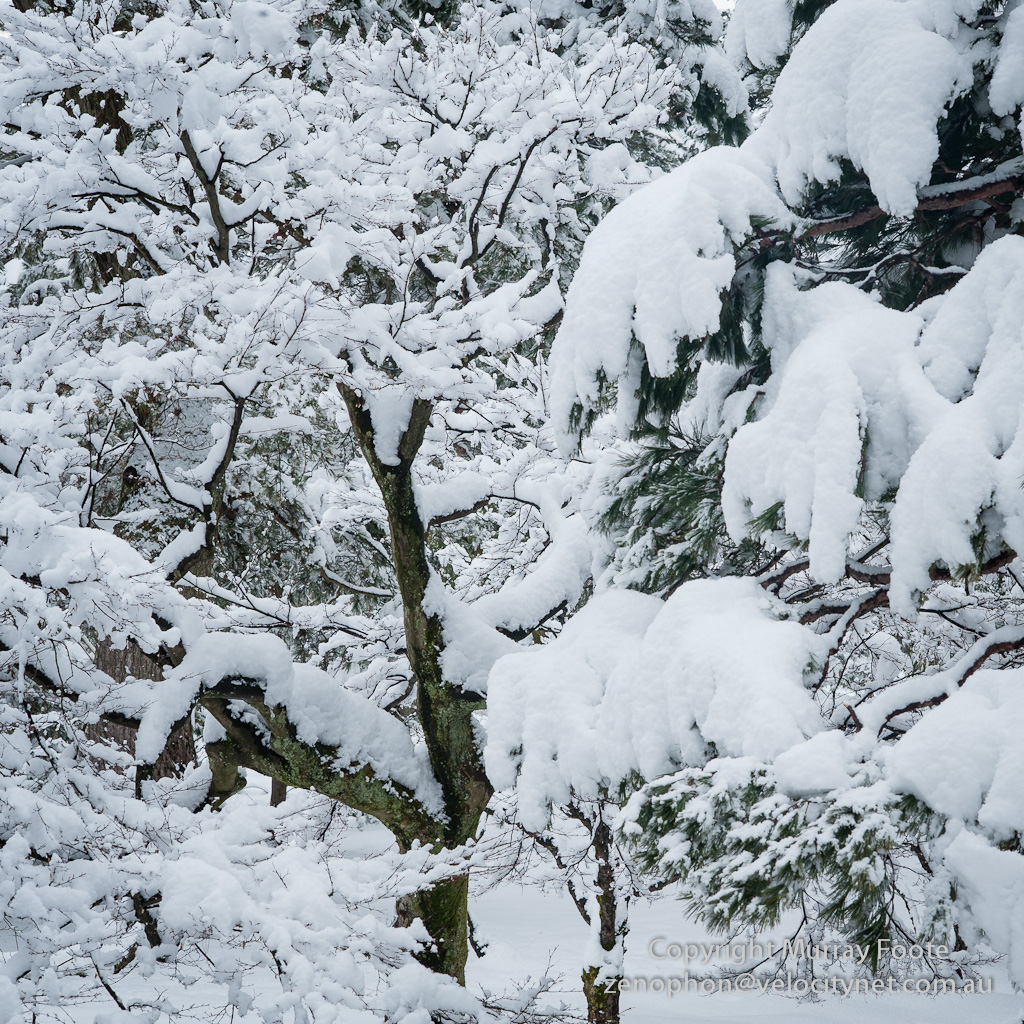
Patterns with branches and snow
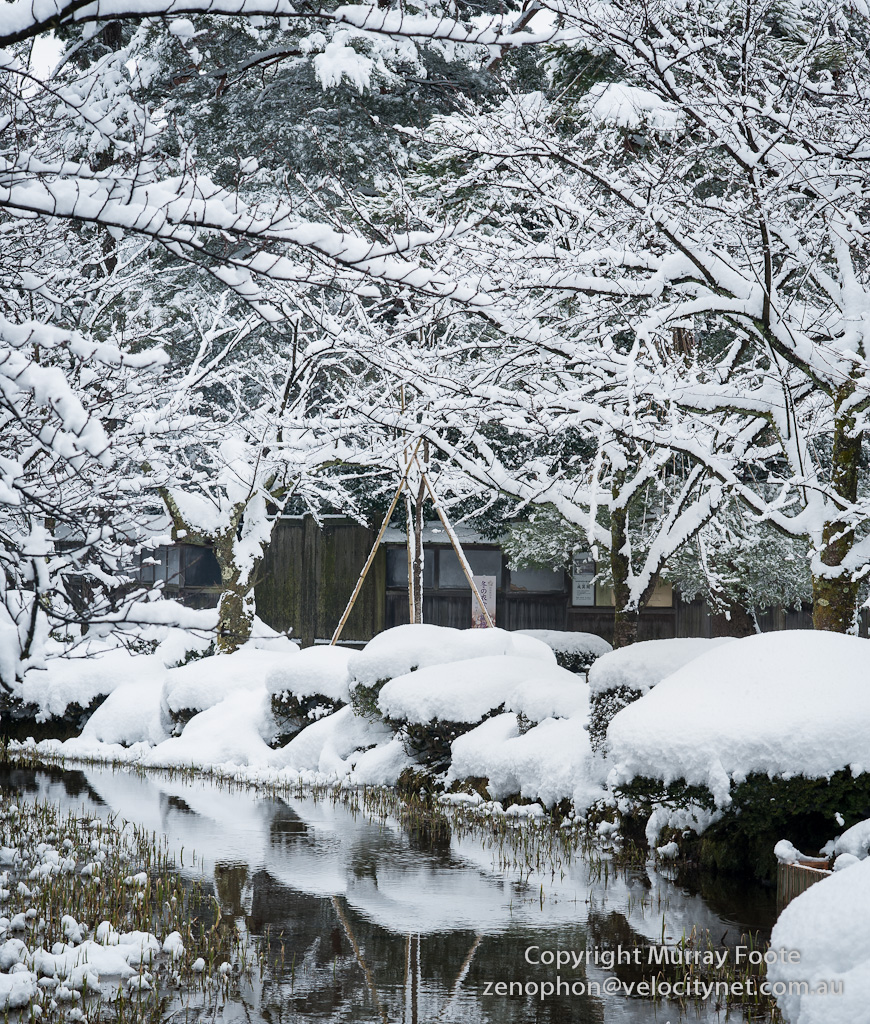
Looking across the stream, not far from the Kamisaka entrance.

View from Yukumibashi Bridge
Kenrokuen was developed from the 1620s to the 1840s by the Maeda clan, originally as the outer garden of Kanazawa Castle. Much of it was destroyed by fire in 1759 and reconstruction started in 1774. It was not open to the public until 1874, following the Meiji Restoration.
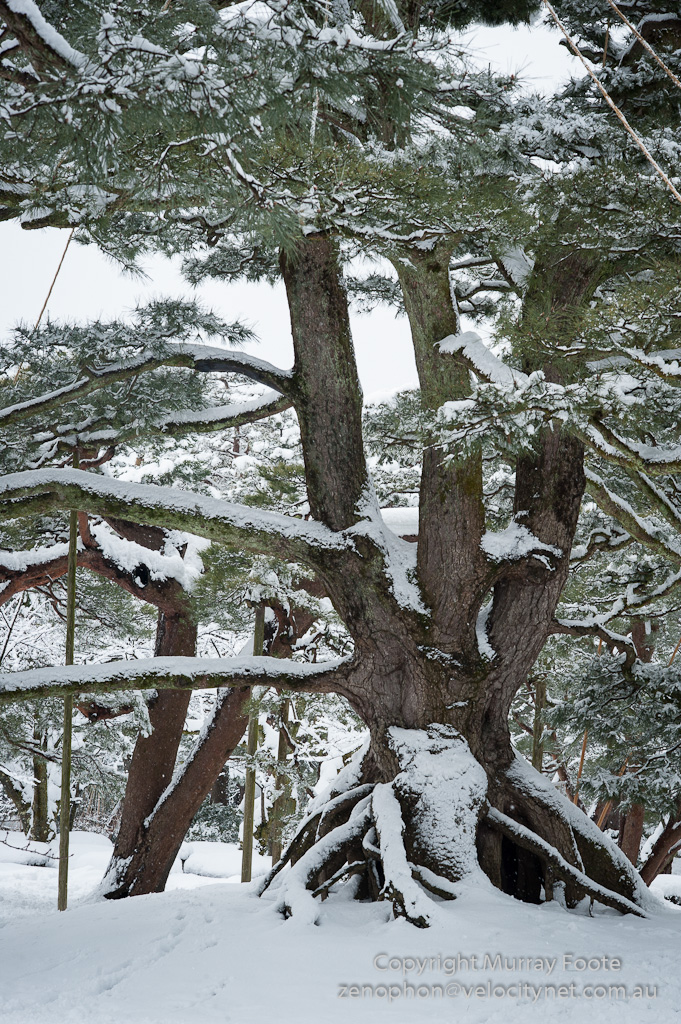
Neagarinomatsu or Raised-Root Pine
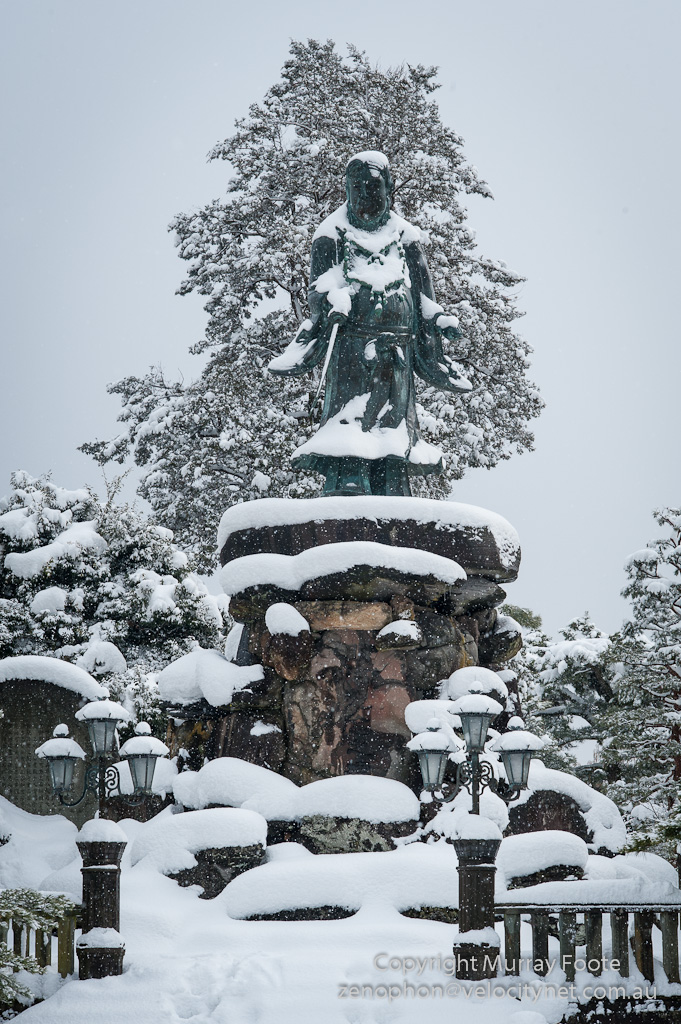
Statue of Yamato Takeru
Yamato Takeru was a legendary prince from around the second century AD who greatly expanded the Yamato realm. The Yamato were at this time more like regional war lords but came to be the Japanese royal dynasty. Takeru was said to have killed some enemies after cross-dressing as a female servant at a dinner party though whether he really existed is a matter of conjecture. The ancient accounts of his life differ greatly in detail.
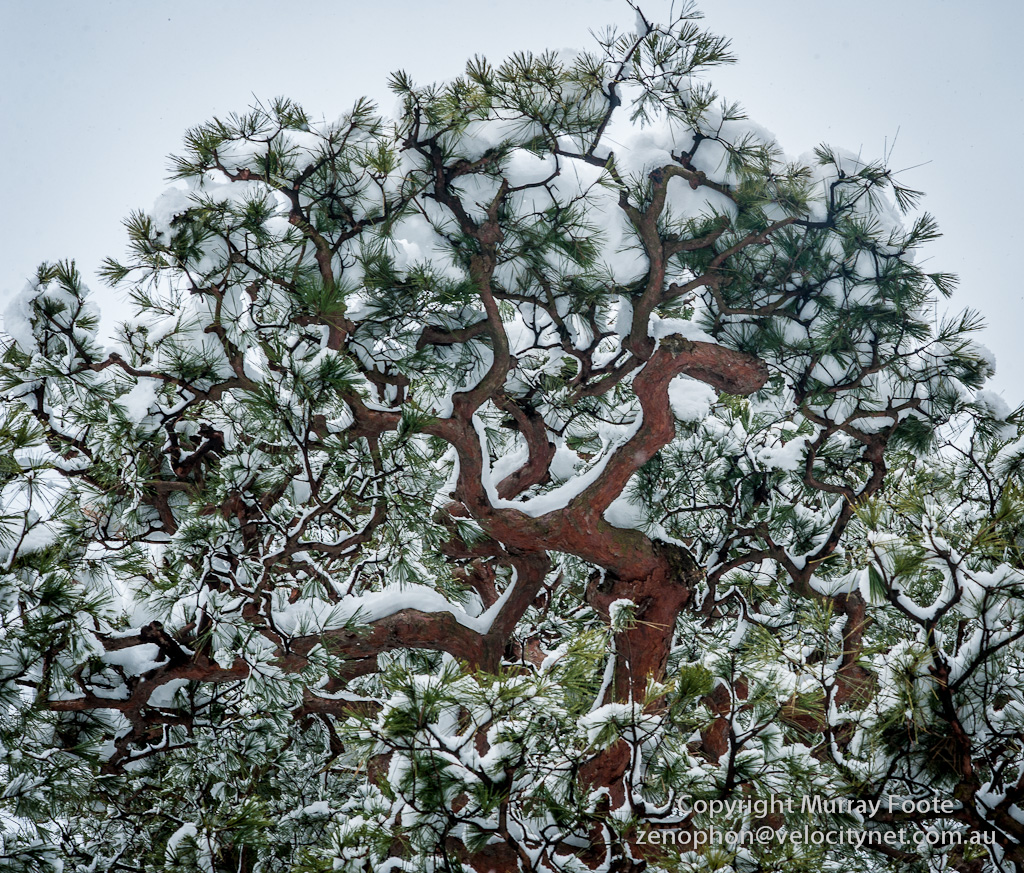
Branches carrying snow
The snow stacked high in some of the branches and led to interesting contrasts of shapes and colours. Here, some of the branches make a shape resembling a swastika. Although now notorious in the West due to the Nazi association, the swastika was a sacred symbol in the ancient Hrappa civilisation of Pakistan and Northern India, and is widely used in Hinduism and Buddhism. In Japan, the word for swastika is manji and temples are commonly denoted on maps by left-facing manji.
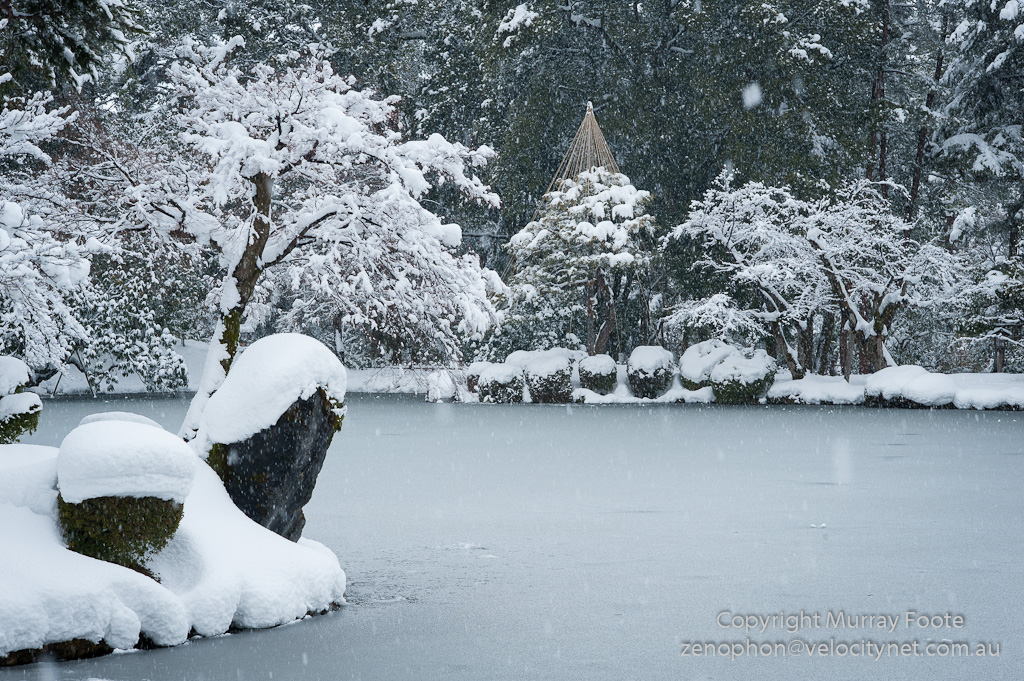
Kasumigaike Pond, with a corner of Horajima Island
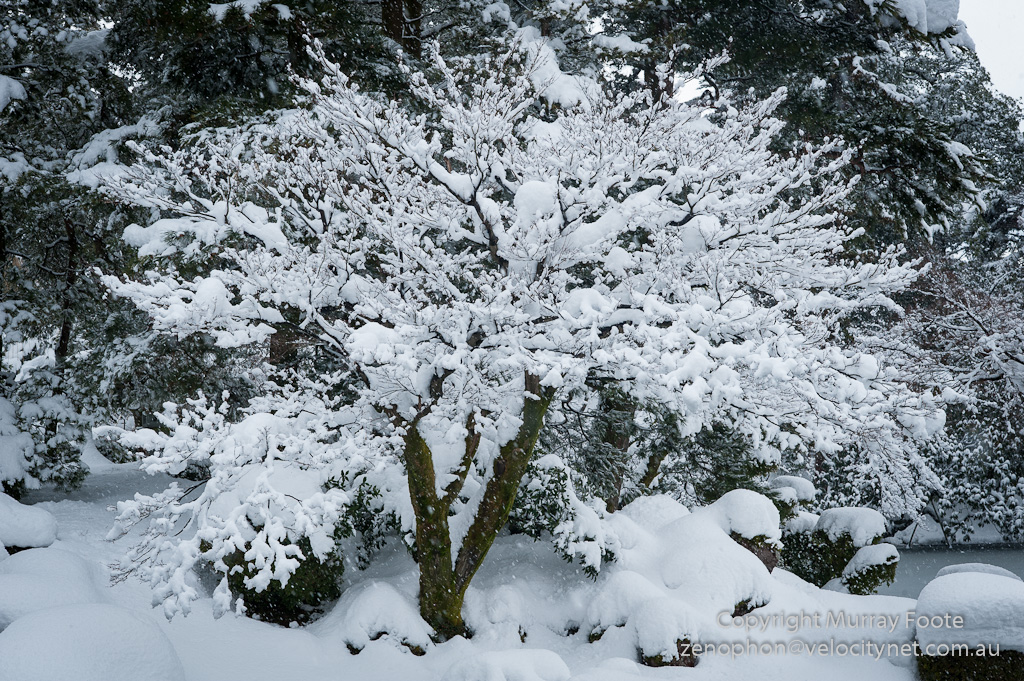
Cherry tree in snow
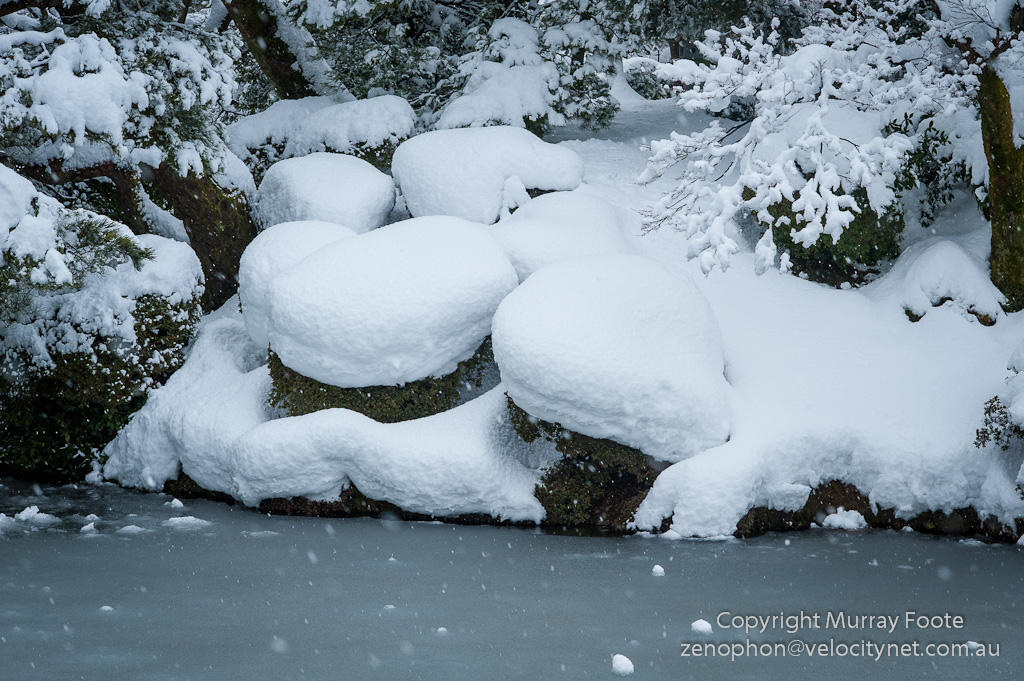
An edge of Horajima Island
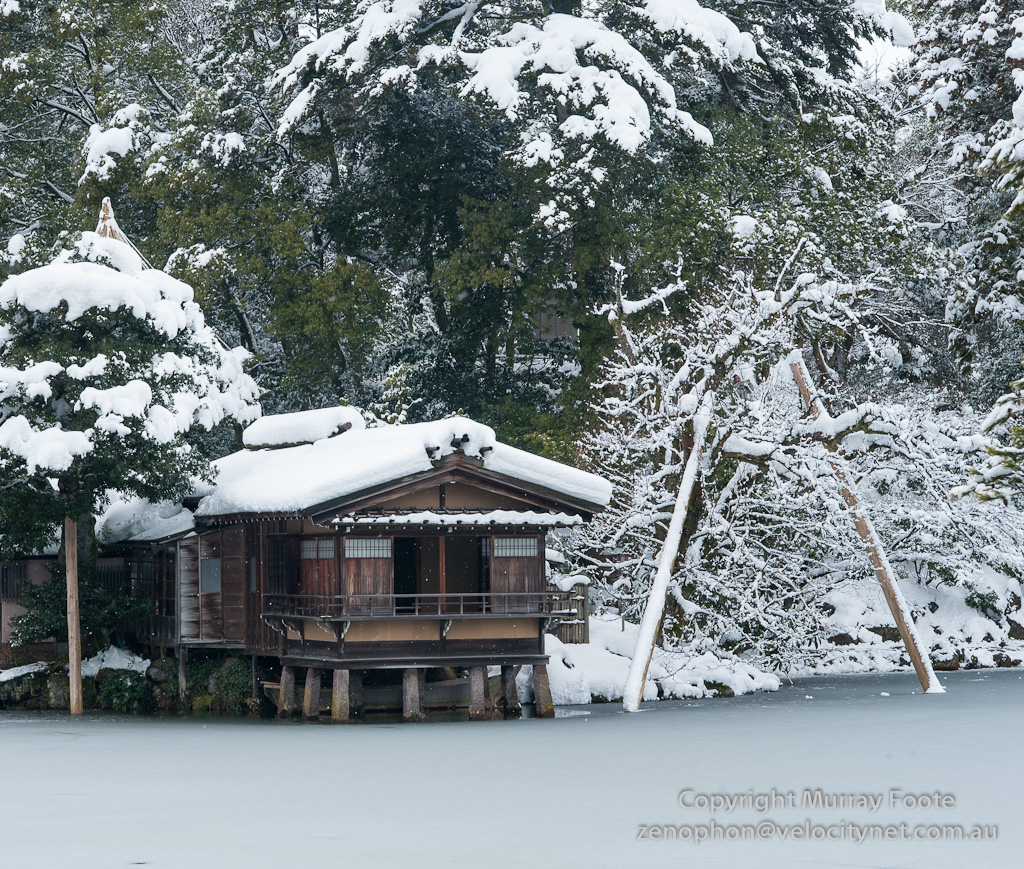
Uchihasitei Tea House, Kasumigaike Pond
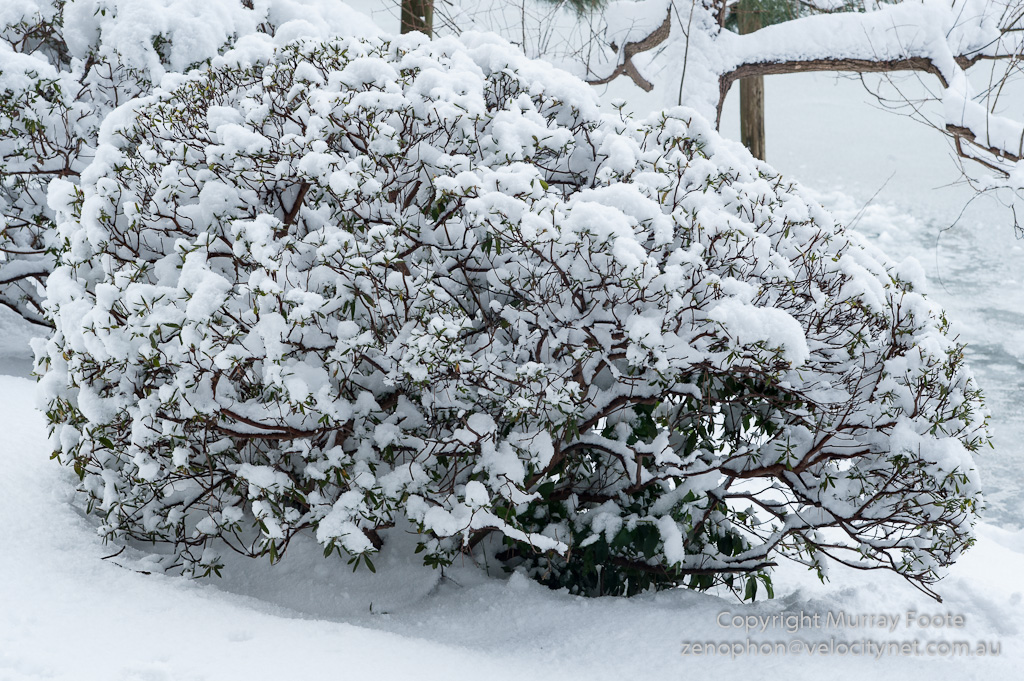
Azalea in snow
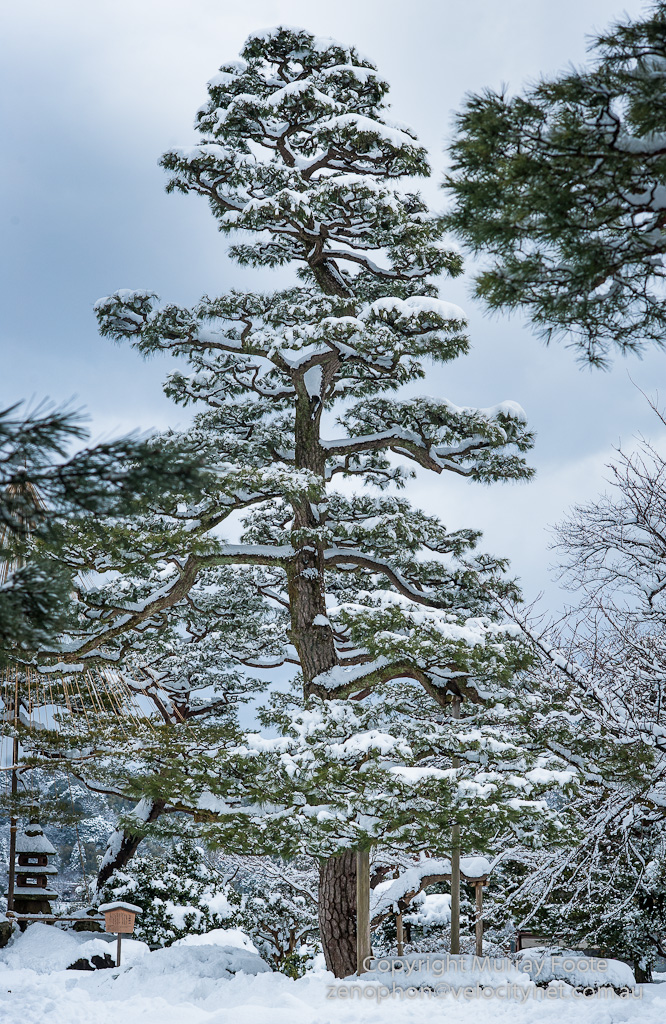
Japanese pine tree in snow

Two people very carefully crossing a bridge, not far from the Neagarinomatsu pine.

Japanese plum trees
 Murray Foote
Absolutely superb captures. Snow works wonders in images!
LikeLike
Thanks very much, Kurt. It was very special. I don’t see too much snow where i live in Australia but I expect to see quite a bit more in the next couple of weeks.
LikeLike
Pingback: Itinerary of Journey to Japan | Murray Foote
Pingback: Kanazawa – Kenrokuen Gardens – Upper Level (Update) | Murray Foote