Sapporo holds a snow festival every year in early February, as it has done since 1950. Obviously, it needs to be cold so the sculptures do not melt. The average temperature while I was there was -7.3˚C and it was usually snowing.
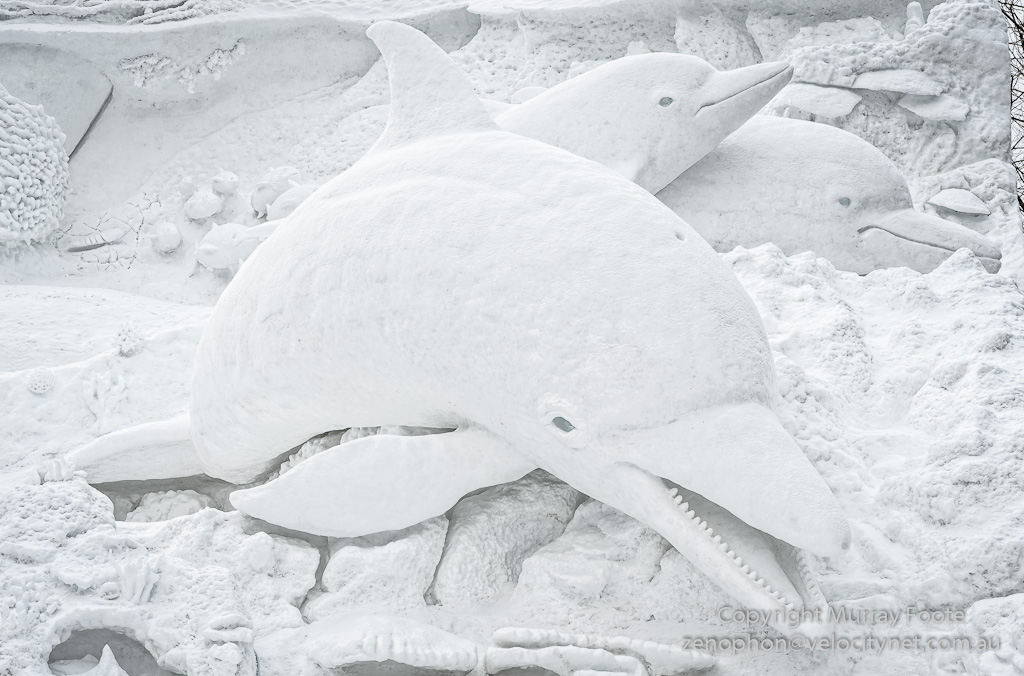
Snow Aquarium ~ Gift from the Sea
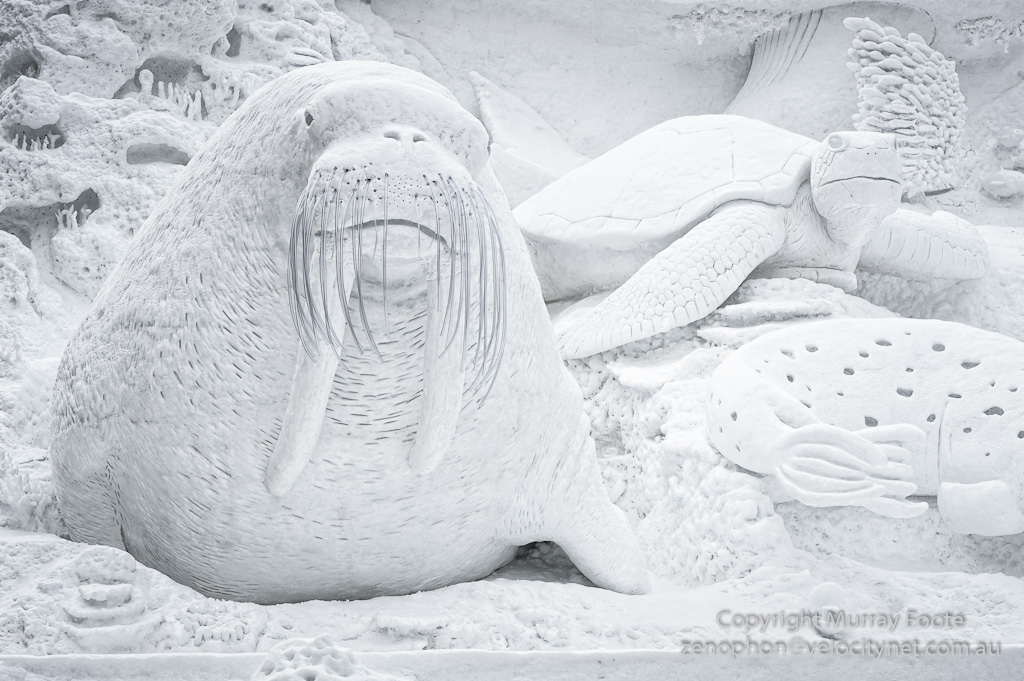
Snow Aquarium ~ Gift from the Sea
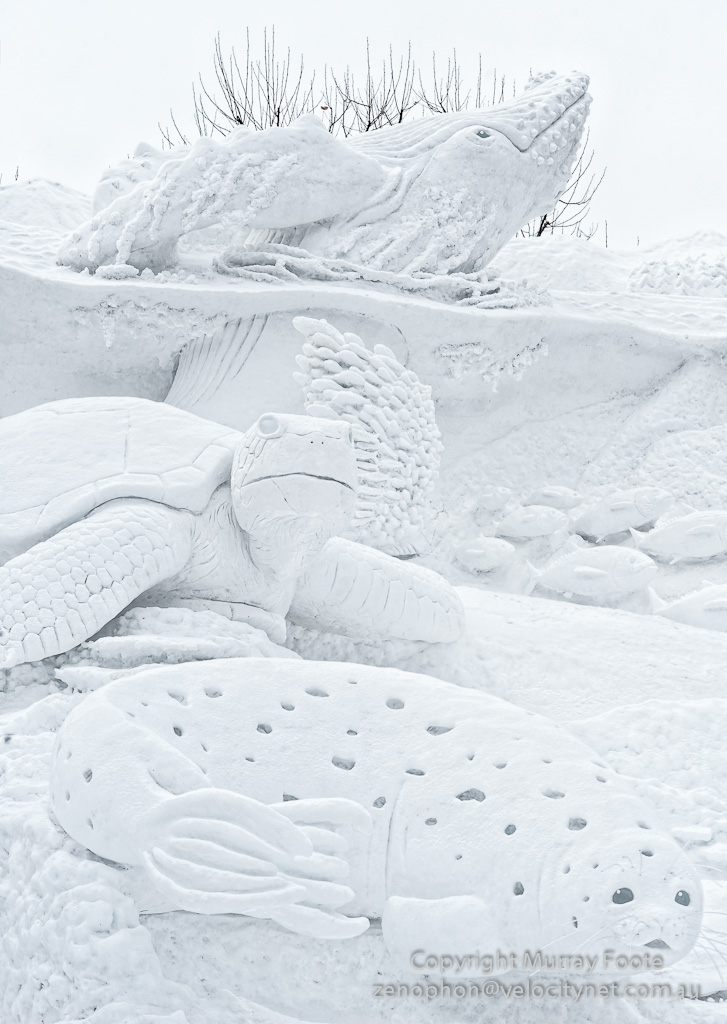
Snow Aquarium ~ Gift from the Sea
The three images above are part of a large tableau called Snow Aquarium ~ Gift from the Sea. This is one of the large sculptures created by the Self Defence Forces (Japanese Army).
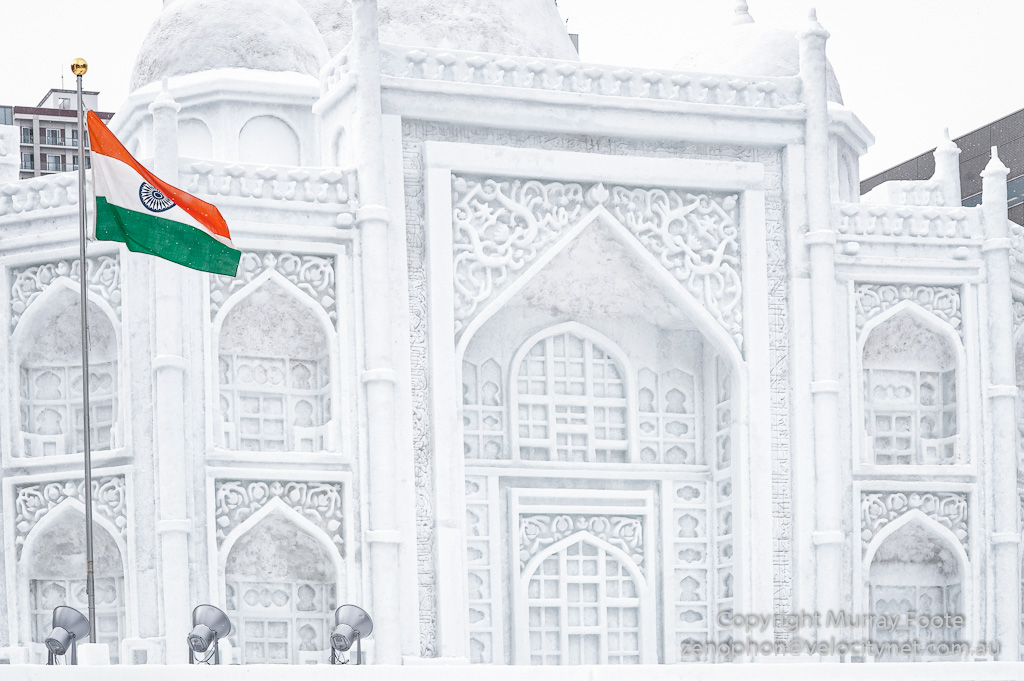
Taj Mahal
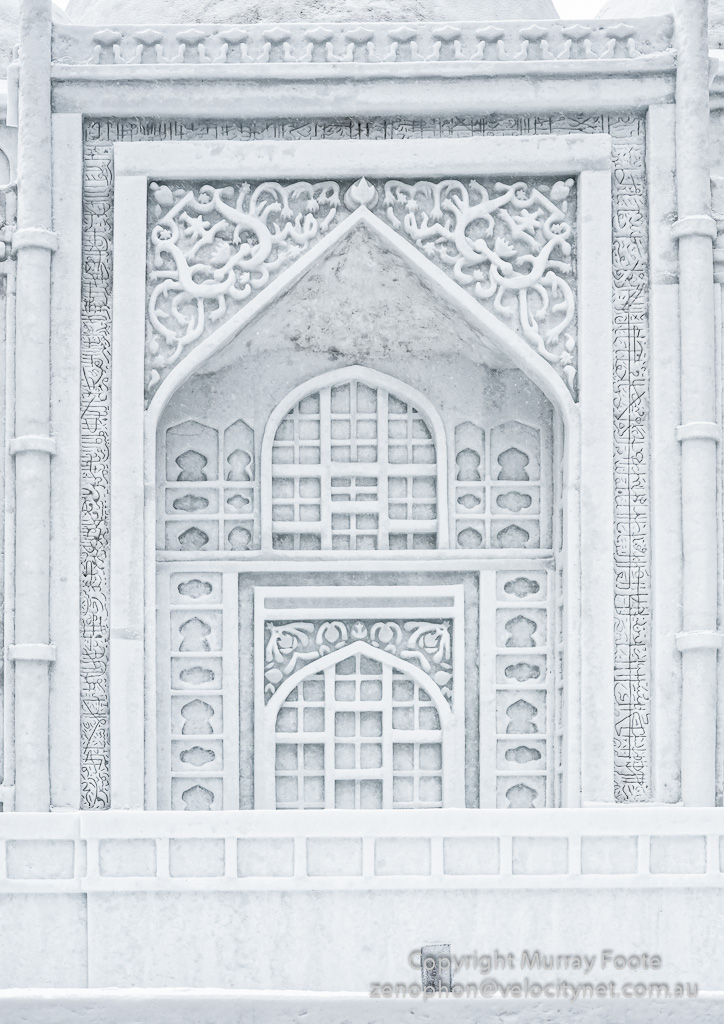
Taj Mahal
This is another huge sculpture created by the Self Defence Forces, presumably with the active support of the Government of India.
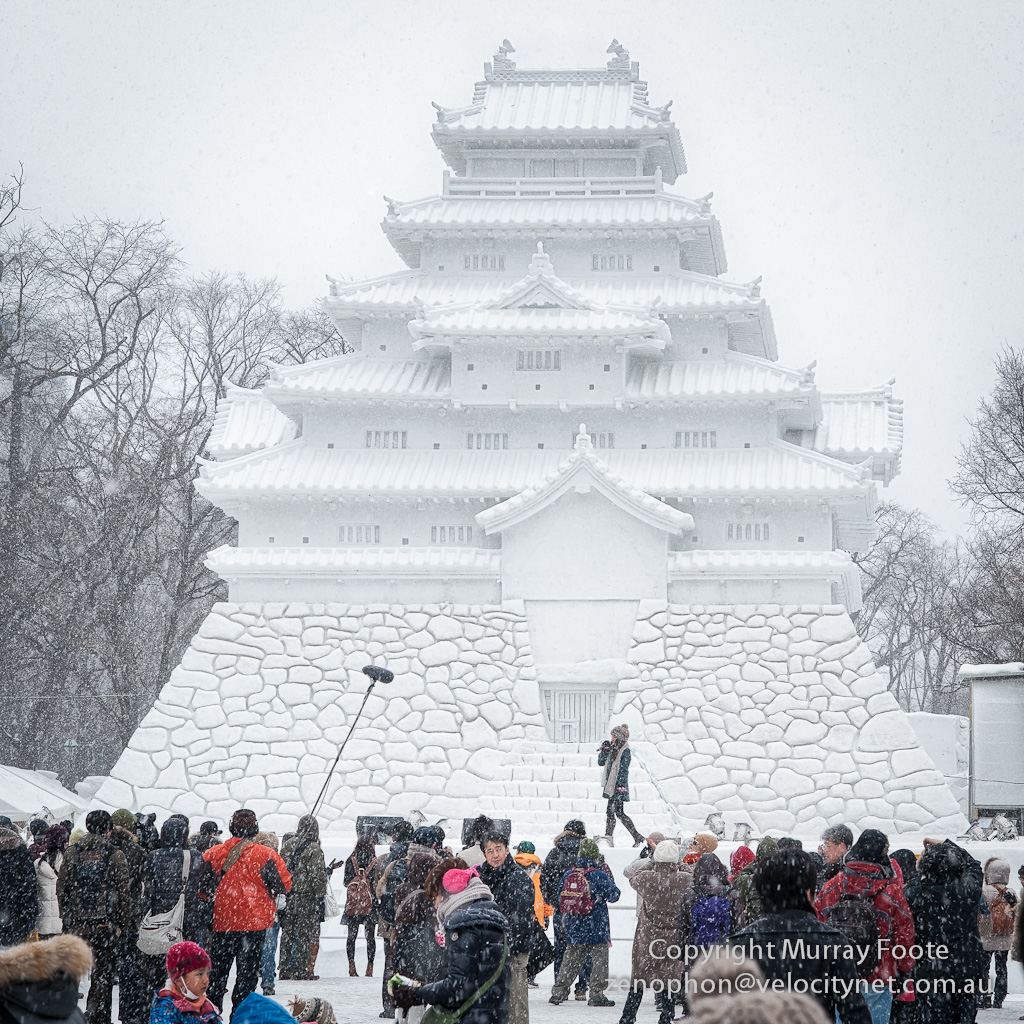
Tsuruga Castle
Another is this one-third size replica of Tsuruga Castle, also known as Aizuwakamatsu Castle (from the town where it is located in north central Honshu). The castle was built in 1384. Local warlord Date Masamune captured it in 1589 but then had to give it up to Toyotomi Hideoshi in 1590, who after all now controlled all of Japan (apart from the Ainu far north) and was not a man to be trifled with.
In 1868, the castle was the last major Tokugawa holdout in Honshu until it fell after being besieged for a month. During the siege, twenty teenaged samurai belonging to Byakkotai or the White Tiger Company committed seppuku (spoken form: hara-kiri) on a hill overlooking the castle. They mistakenly thought the castle had fallen but smoke was from the town burning in front of the castle walls. One survived, rescued by a peasant.
The castle was demolished in 1874 due to damage from the siege bombardment. It was replaced in 1965 by a replica built in concrete.
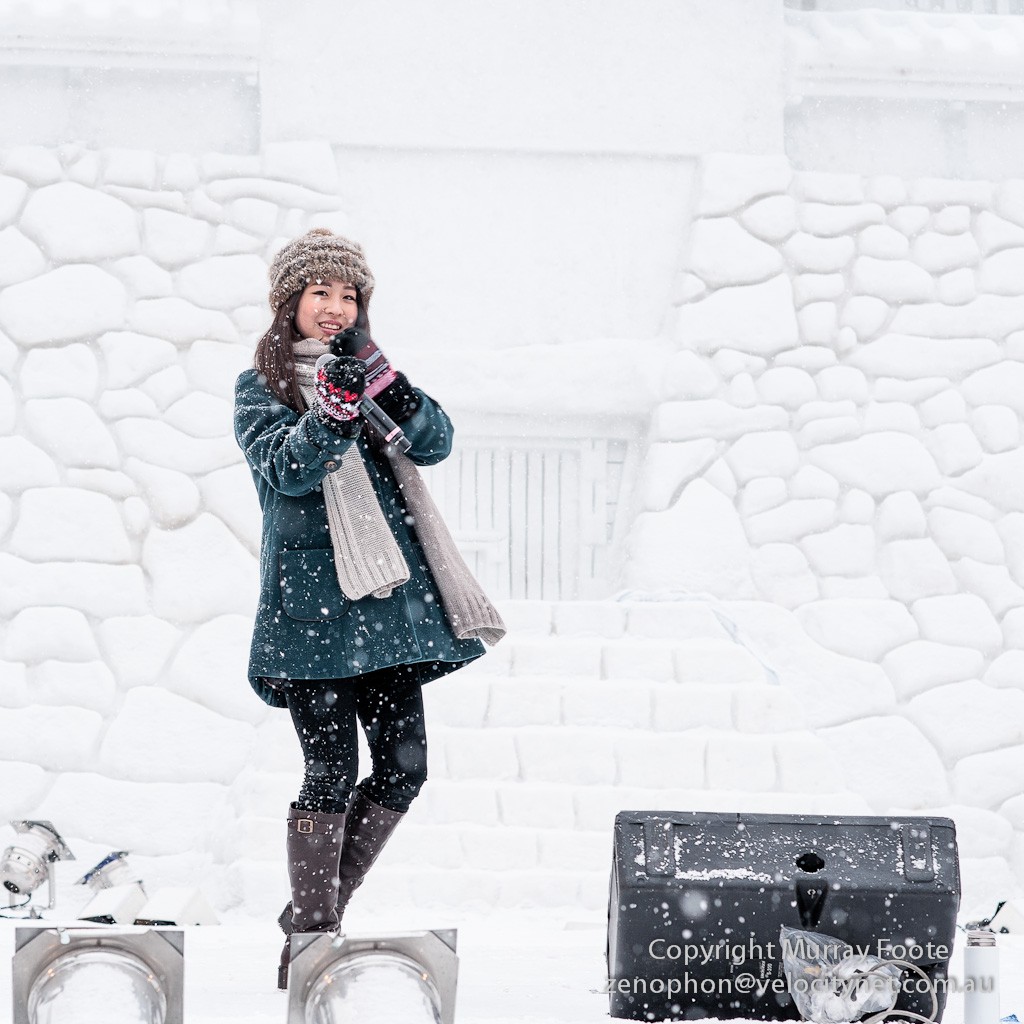
Tsuruga Castle
Performing in front of the snow castle was a Japanese pop singer with a very good voice.
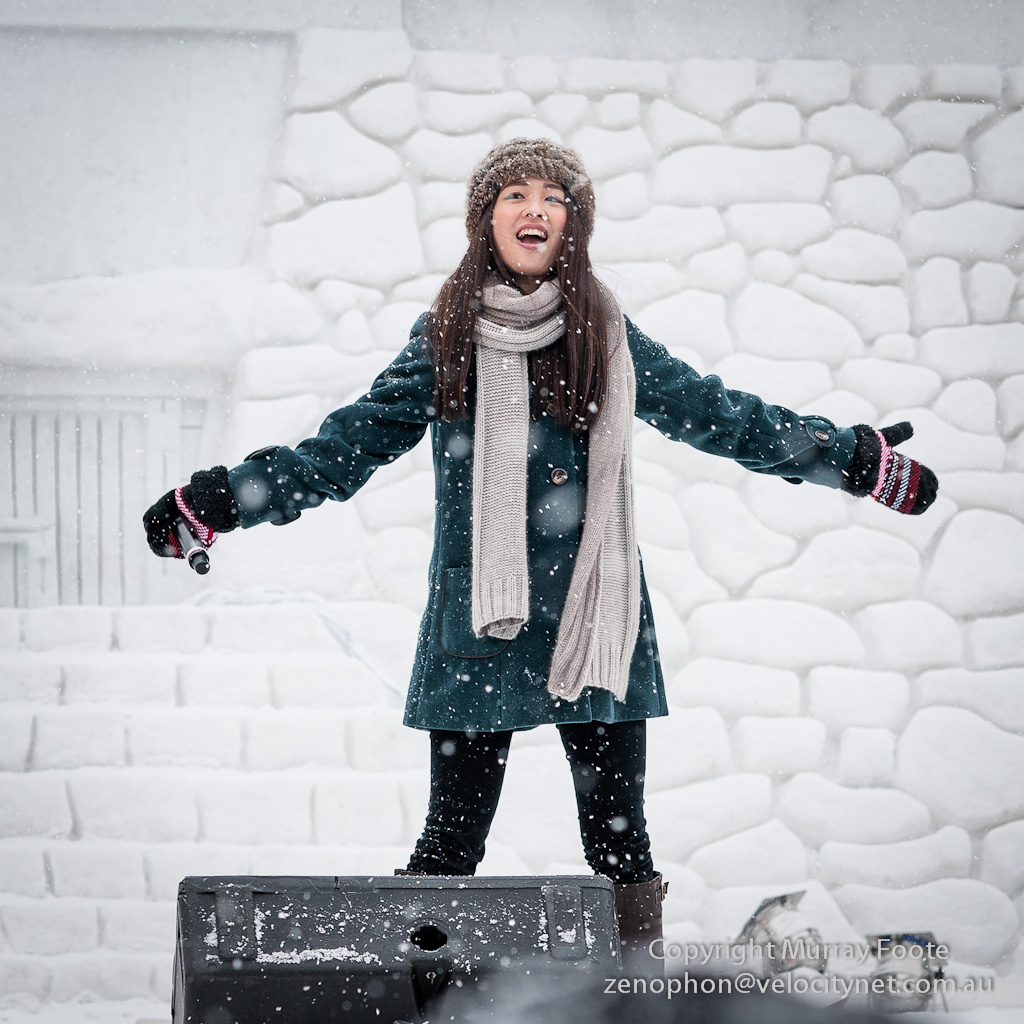
Tsuruga Castle

Tsuruga Castle
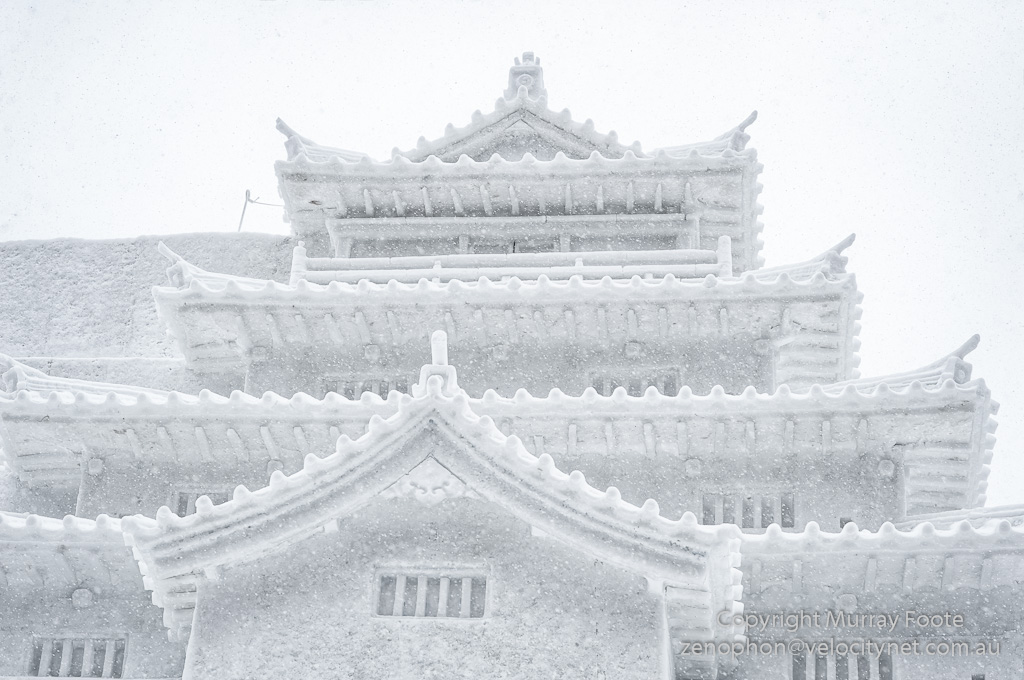
Tsuruga Castle

Shark
There were also smaller sculptures that were part of an international competition. This shark is one.
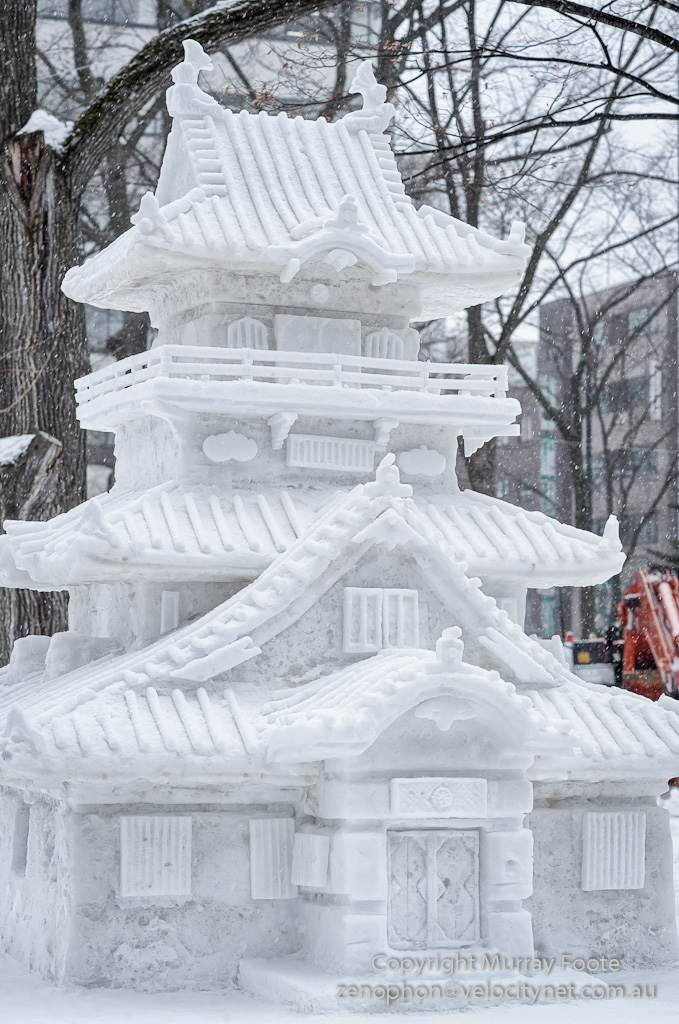
...
There were sixteen competition teams in all, from Chile, Finland, Hong Kong, India, Indonesia, Lithuania, Malaysia, New Zealand, Russia (Novosibirsk ), Singapore, South Korea (Daejeon), Sweden, Thailand, Taiwan, and USA (Hawaii and Portland).
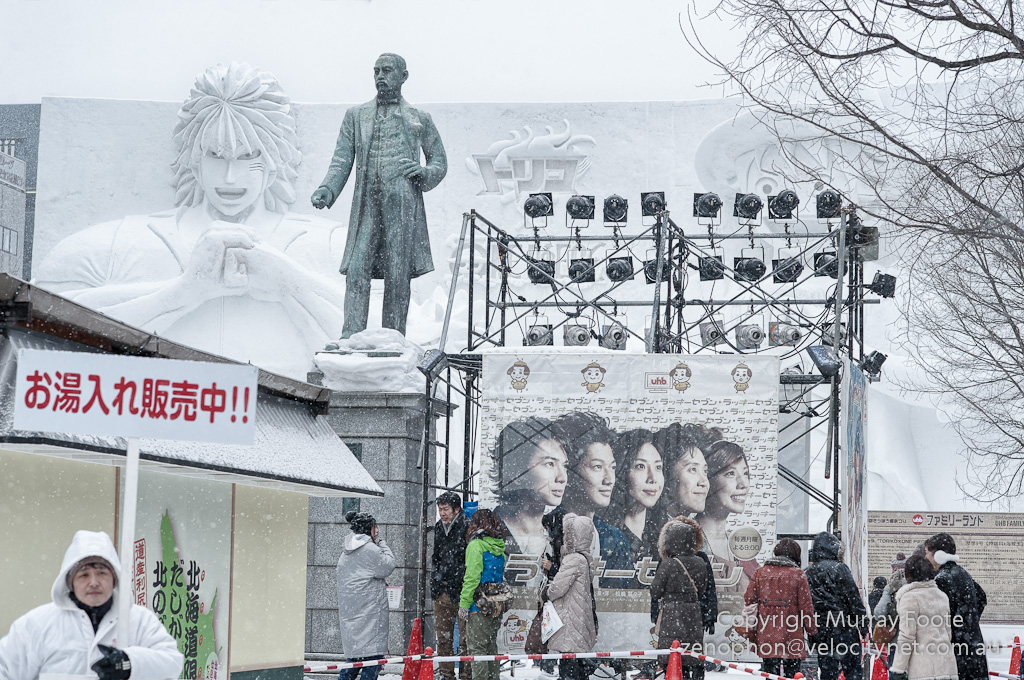
Dream 9, Toriko x One Piece
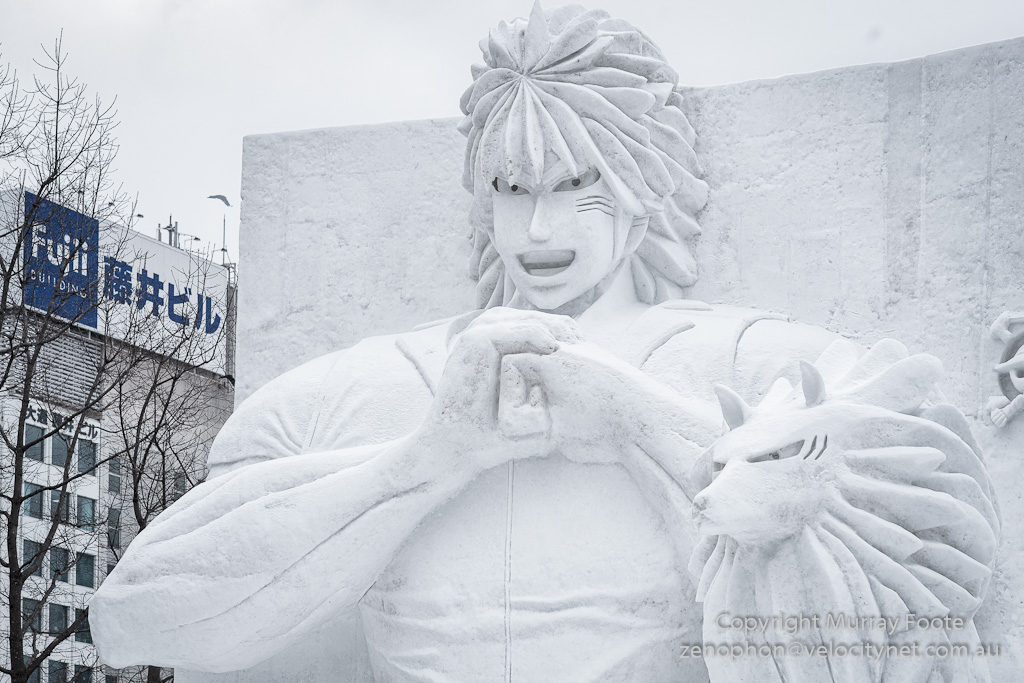
Dream 9, Toriko x One Piece
This is part of another massive snow tableau that refers to television mangas Toriko and One Piece. In the preceding image (with the same snow tableau in the background), people are queuing to pay money to take a photo from an elevated platform. I think the statue is of Horace Capron, an American who in 1870-71 helped found Sapporo and assisted in the development of Hokkaido, at the invitation of the Japanese Government.
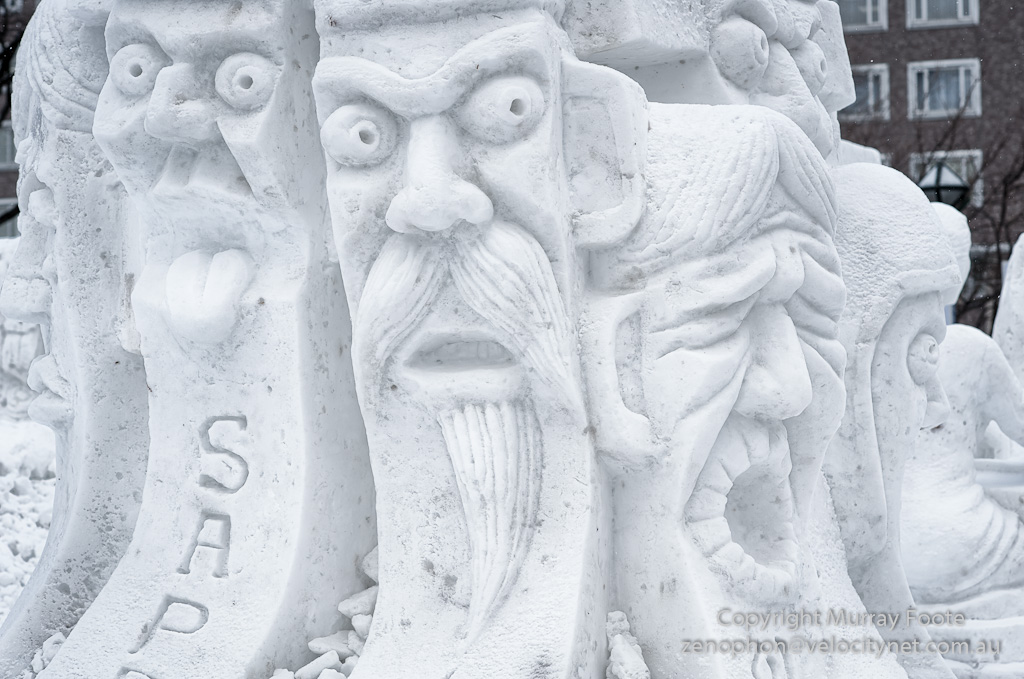
Jangseung (Korea)
Representing traditional Korean poles usually found at entrances to villages or temples or at the side of the road, Jangseung usually come in pairs, one male and one female.
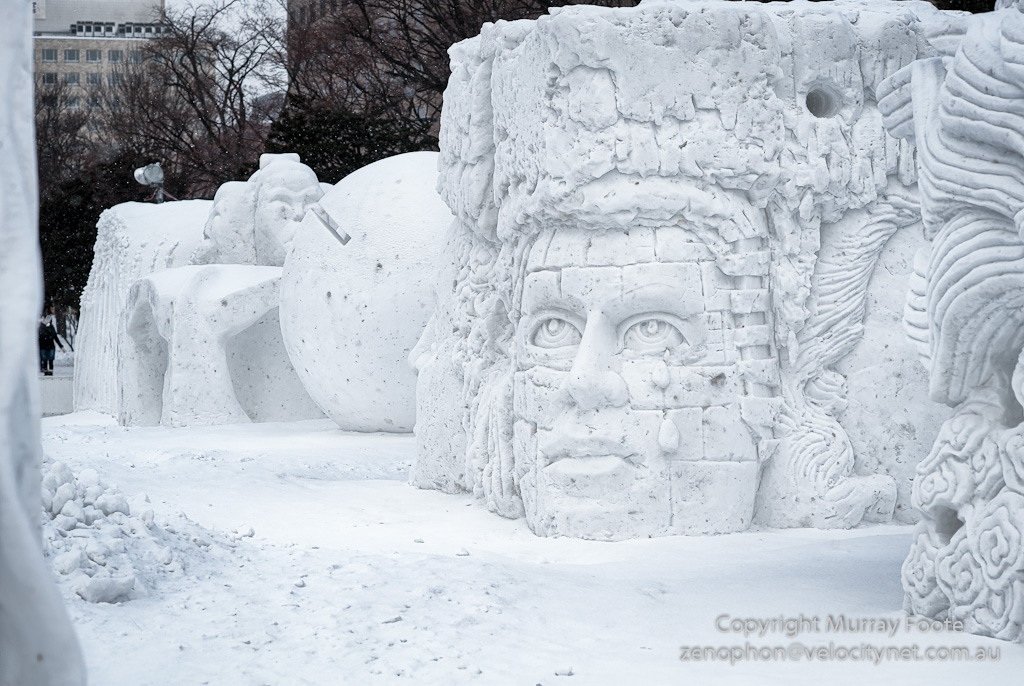
"Climate Change" (from India)
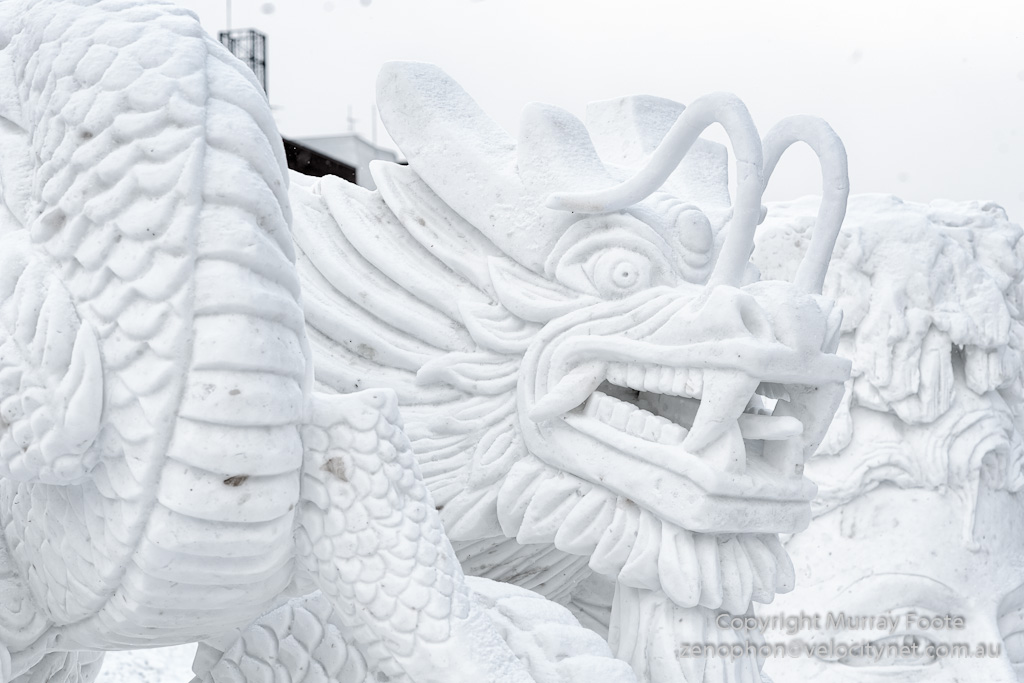
The Leaping Dragon (Hong Kong), Competition Winner
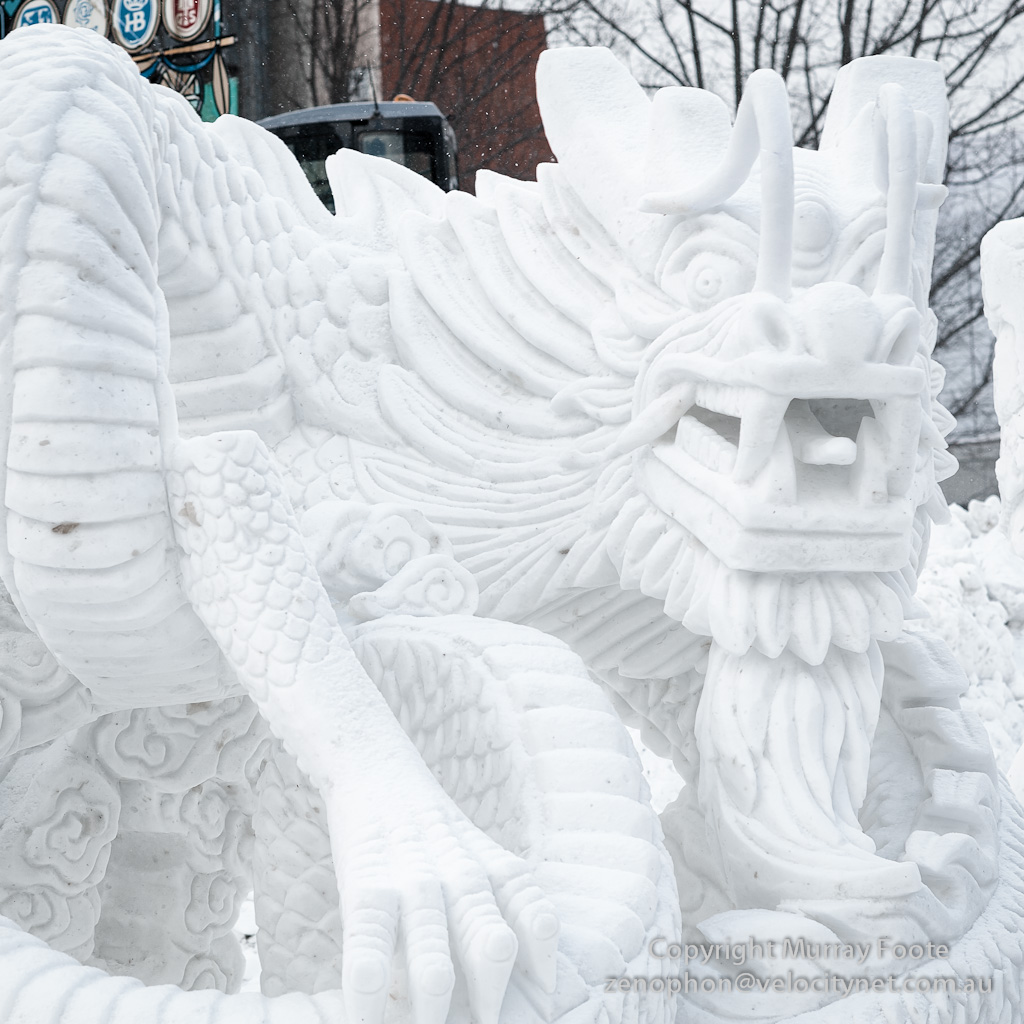
The Leaping Dragon (Hong Kong), Competition Winner
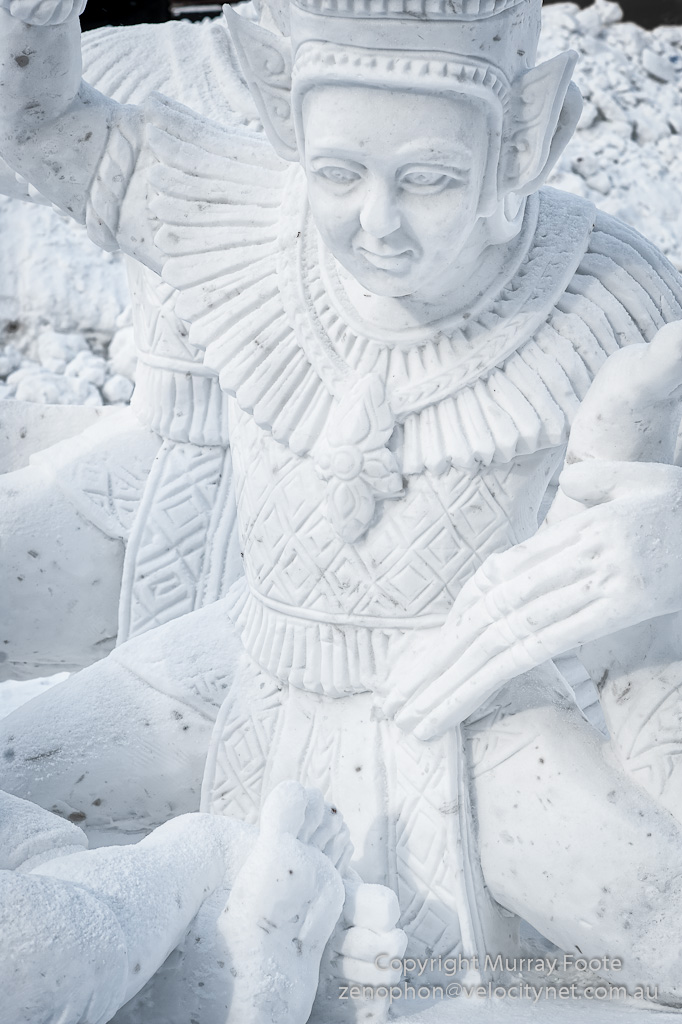
Manohra (Thailand), Fourth Prize
A gentle dance posture from Southern Thailand.

Snow man in front of the Town Hall
 Murray Foote