Though staying in Nara, I caught the train to Kyoto and visited Nijo Castle.
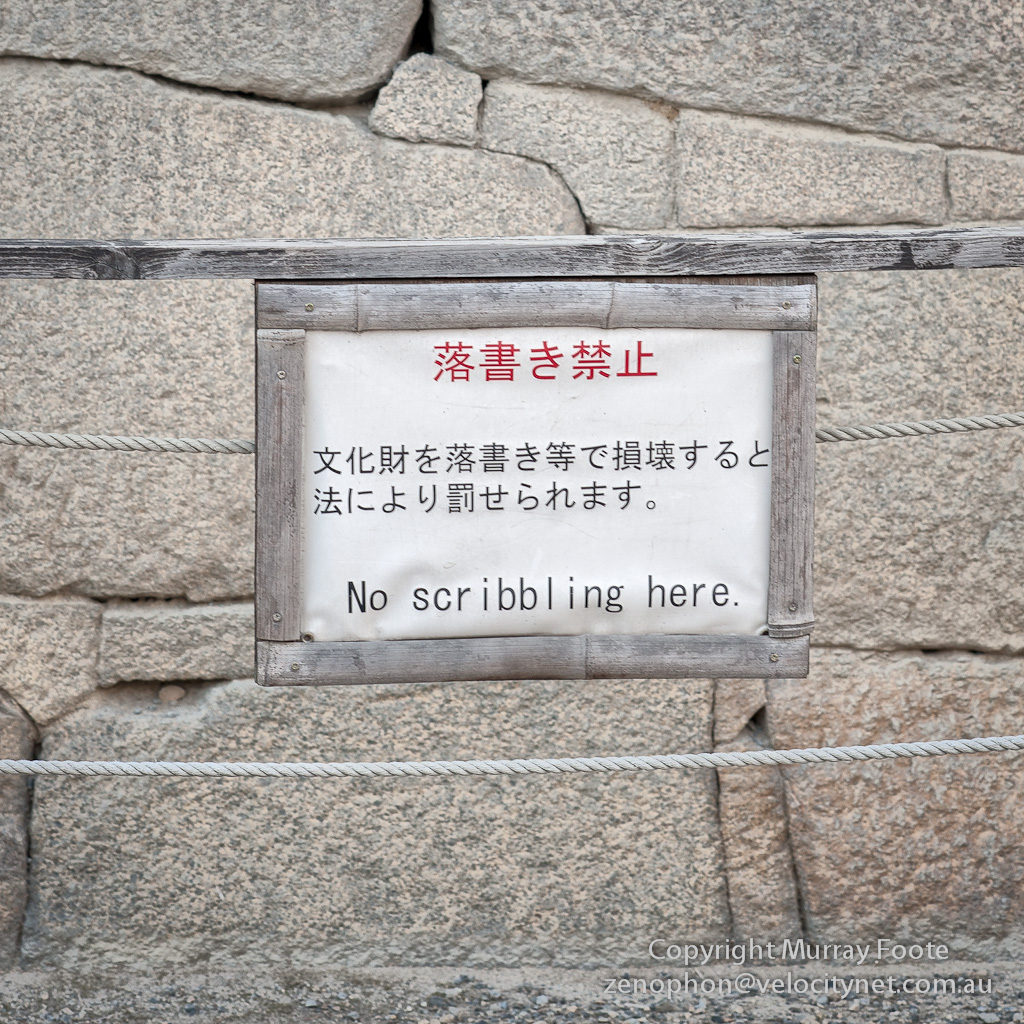
No scribbling!
It’s important to pay attention to the signs. Poets and students who might suddenly sit down on the road with their notepads to finish an essay should beware.
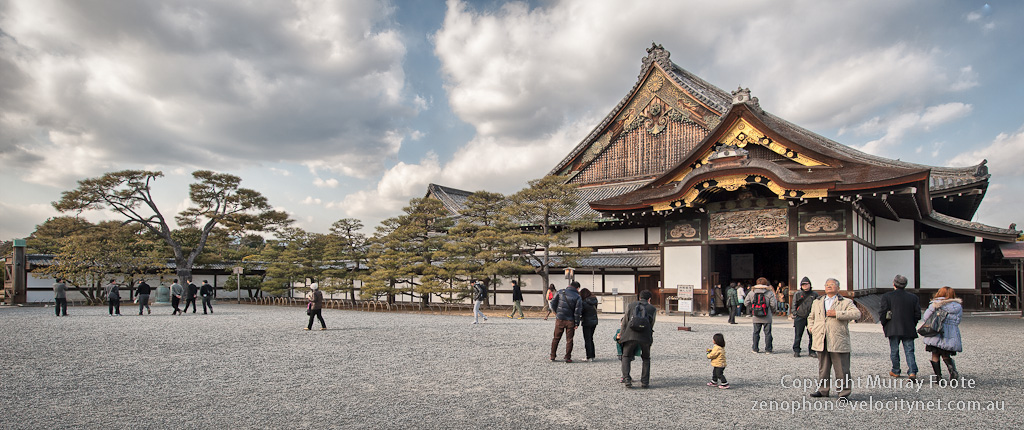
Ninomaru Palace
Nijo Castle was the Tokugawa residence in Kyoto and includes both Ninomaru Palace and Honmaru Palace. Tokugawa Ieyasu commenced construction in 1601 and Tokugawa Iemistu completed it in 1624. This is Ninomaru Palace which includes elegant rooms and impressive wall paintings.
Oh, the No scribbling sign? If the penny hasn’t dropped, it really means “No graffiti please on this ancient wall”.
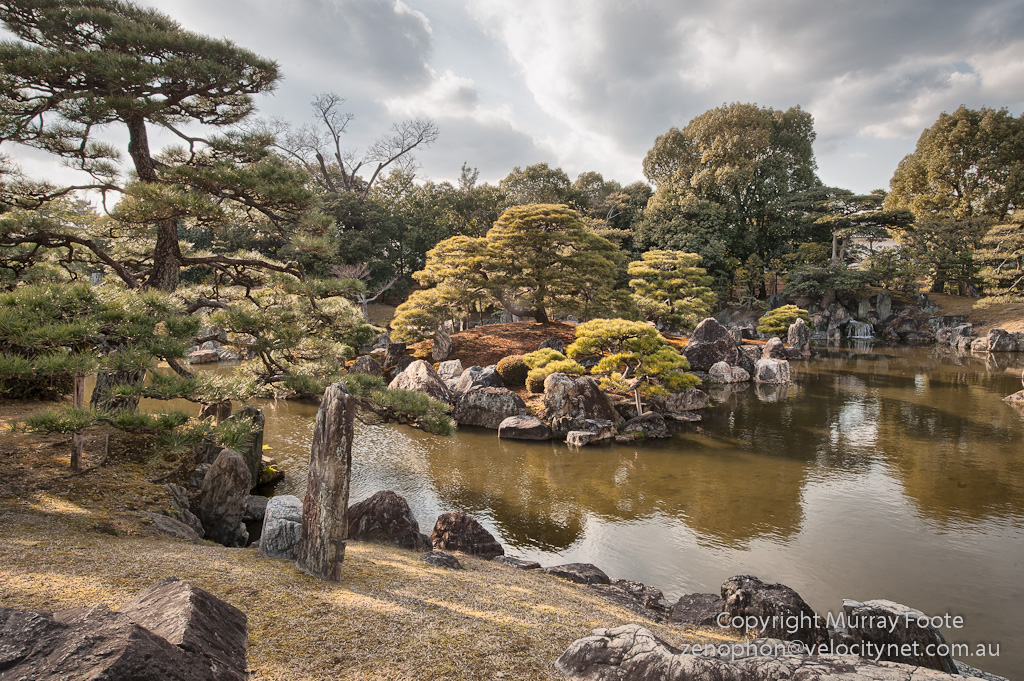
Ninomaru Garden Pond
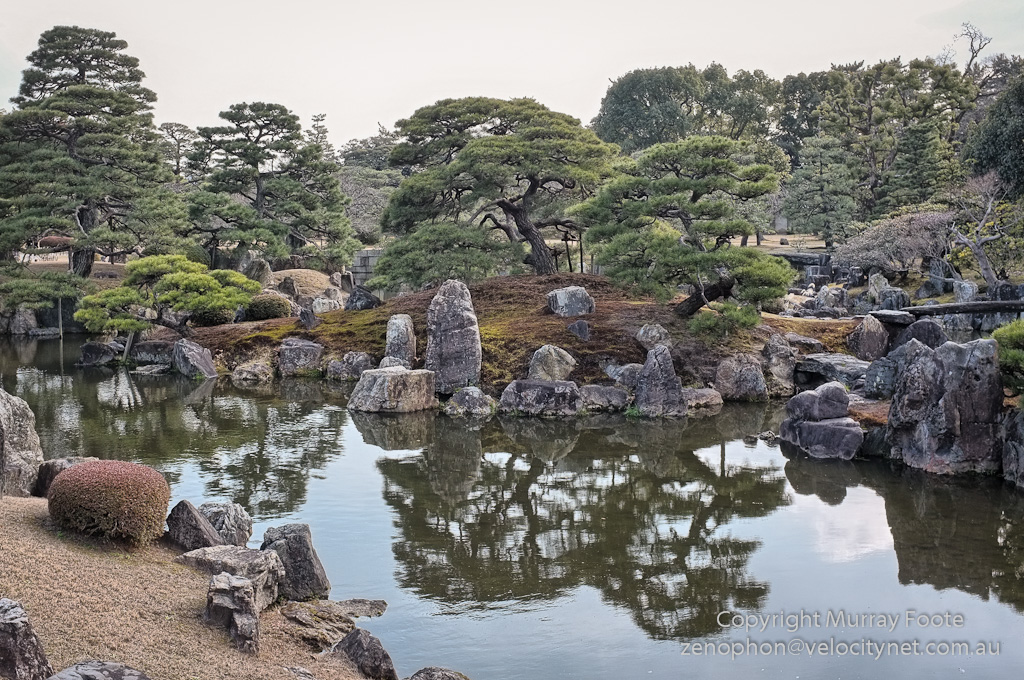
Ninomaru Garden Pond
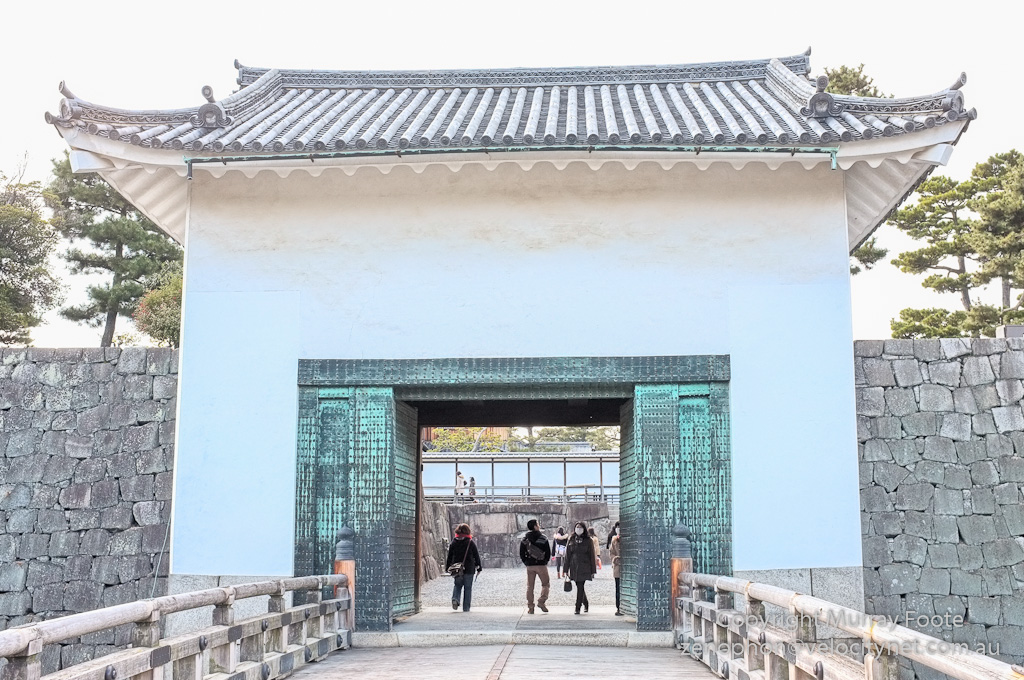
Eastern Gate to Honmaru Palace
Ninomaru Palace is inside the outer walls of Nijo Castle. Also inside the outer walls is a moat and another set of castle walls and inside that is Honmaru Palace, not open for visiting at this time. This is a gate through the inner walls and a bridge over the moat.
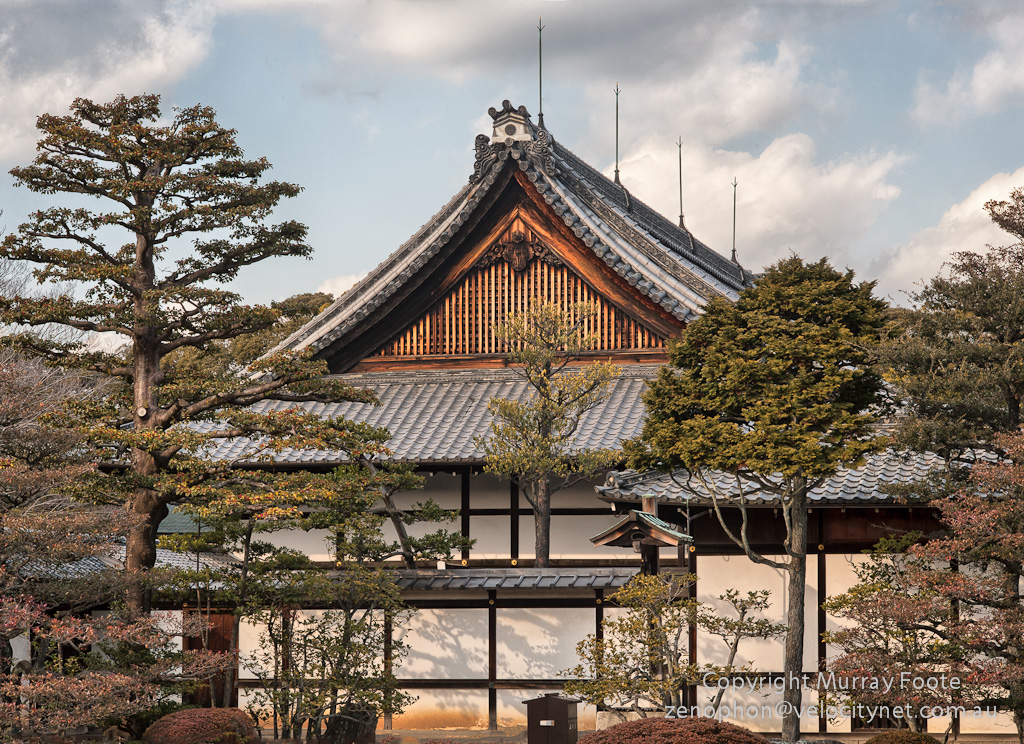
Part of Honmaru Palace
Nijo Castle is famed for its “nightingale floors” which squeak as you walk on them and were designed to prevent anyone trying to sneak up on the Shogun. I didn’t experience that at Ninomaru Palace and I don’t think it is specific to Honmaru Palace, so I assume it’s not a property of the public walkways.
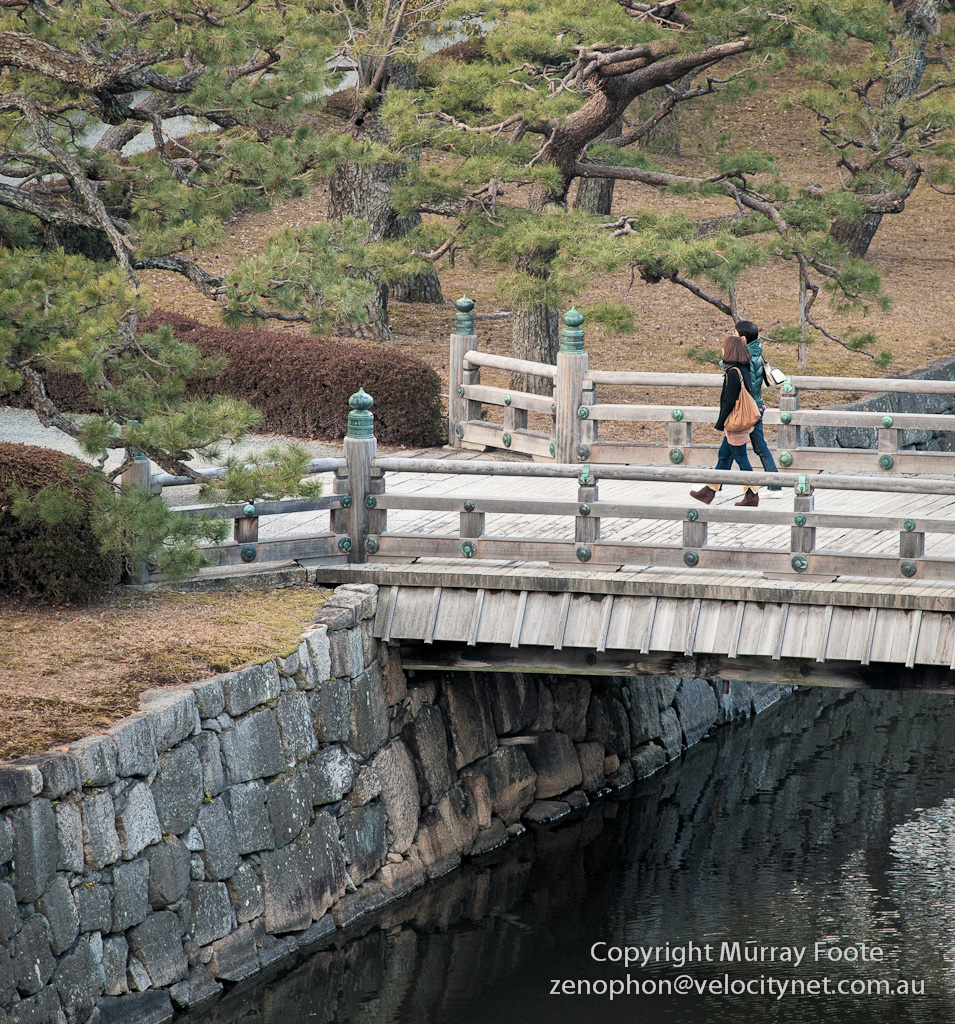
Western Bridge to Honmaru Palace over the Inner Moat
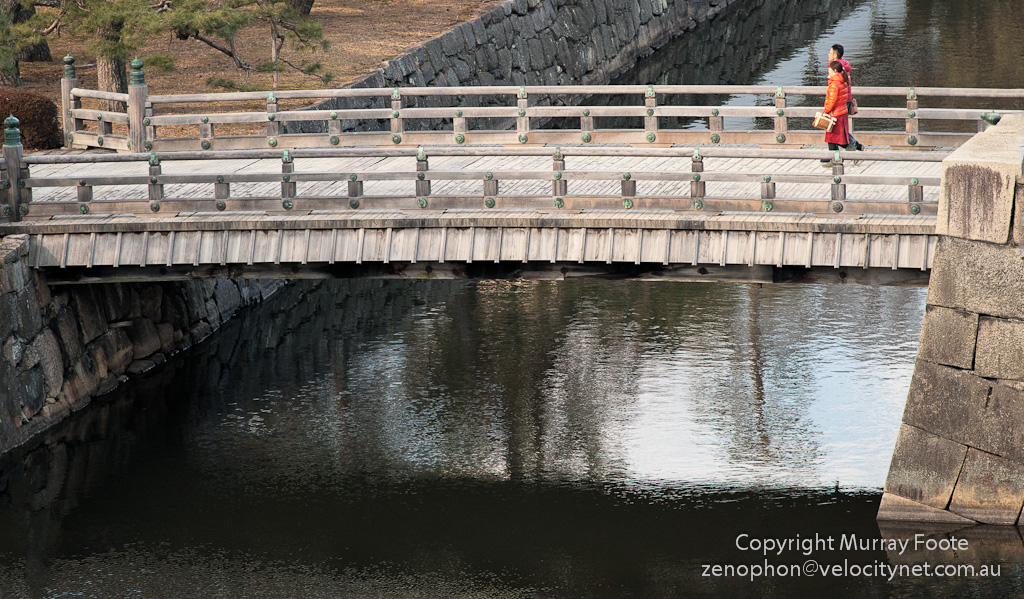
Western Bridge to Honmaru Palace over the Inner Moat
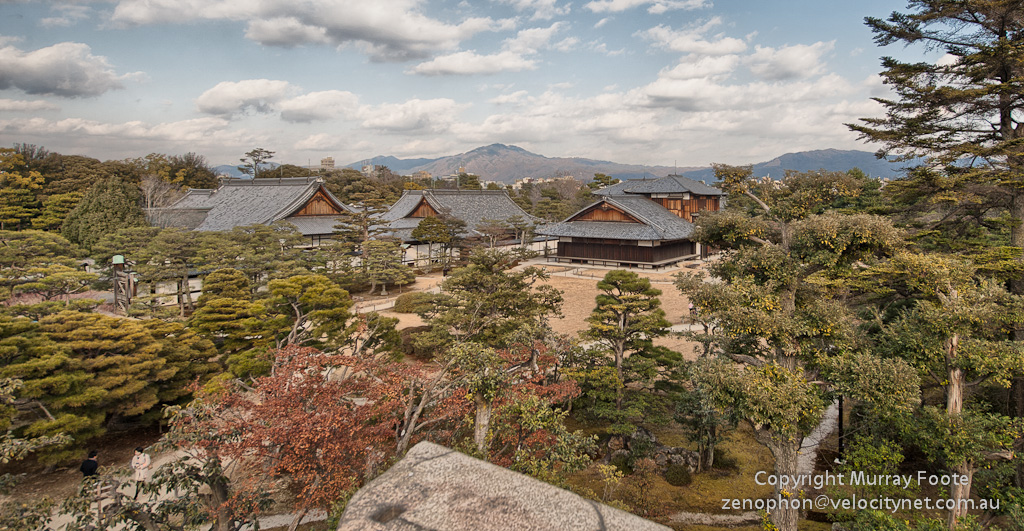
Honmaru Palace from the Donjon (a large stone tower at a corner of the inner castle wall)
Ironically, since the Tokugawa shoguns based themselves in Edo (now called Tokyo), they spent little time in this castle – just a few times at the beginning of the Tokugawa period and a few times at the end, with a gap of more than 220 years in the middle.
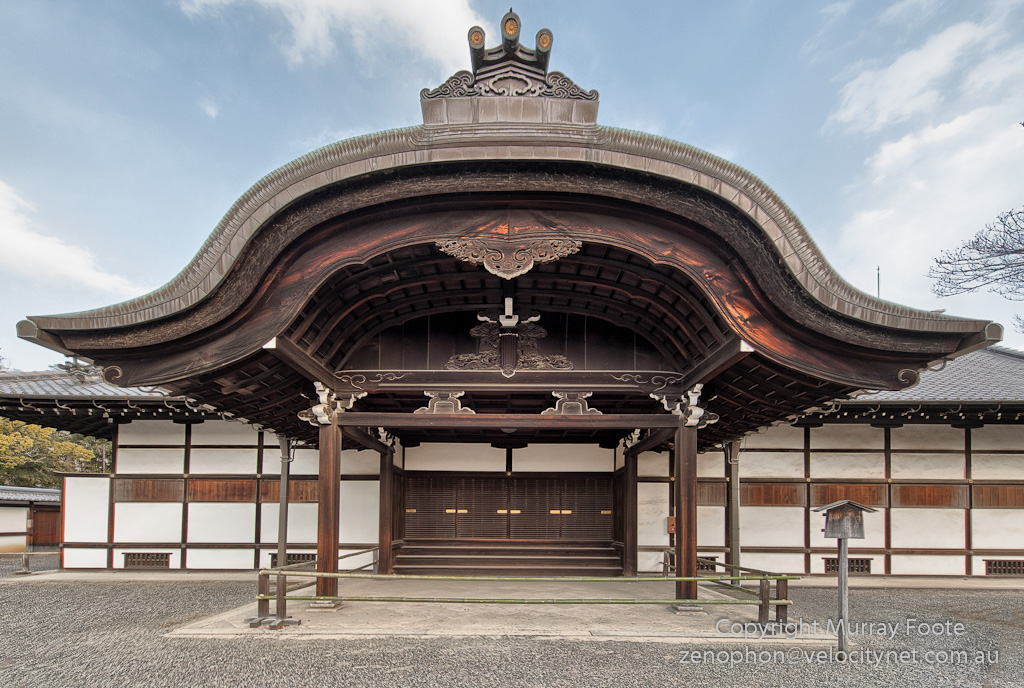
Doorway at Honmaru Palace
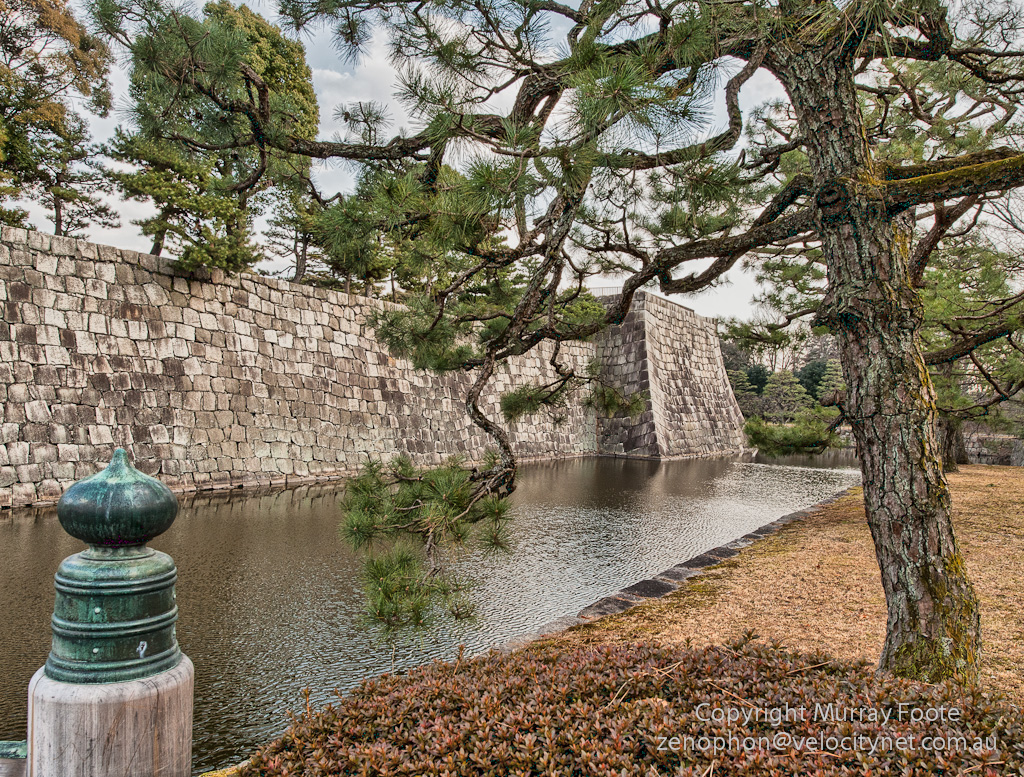
Western wall and inner moat around Honmaru Palace

Western wall and inner moat around Honmaru Palace
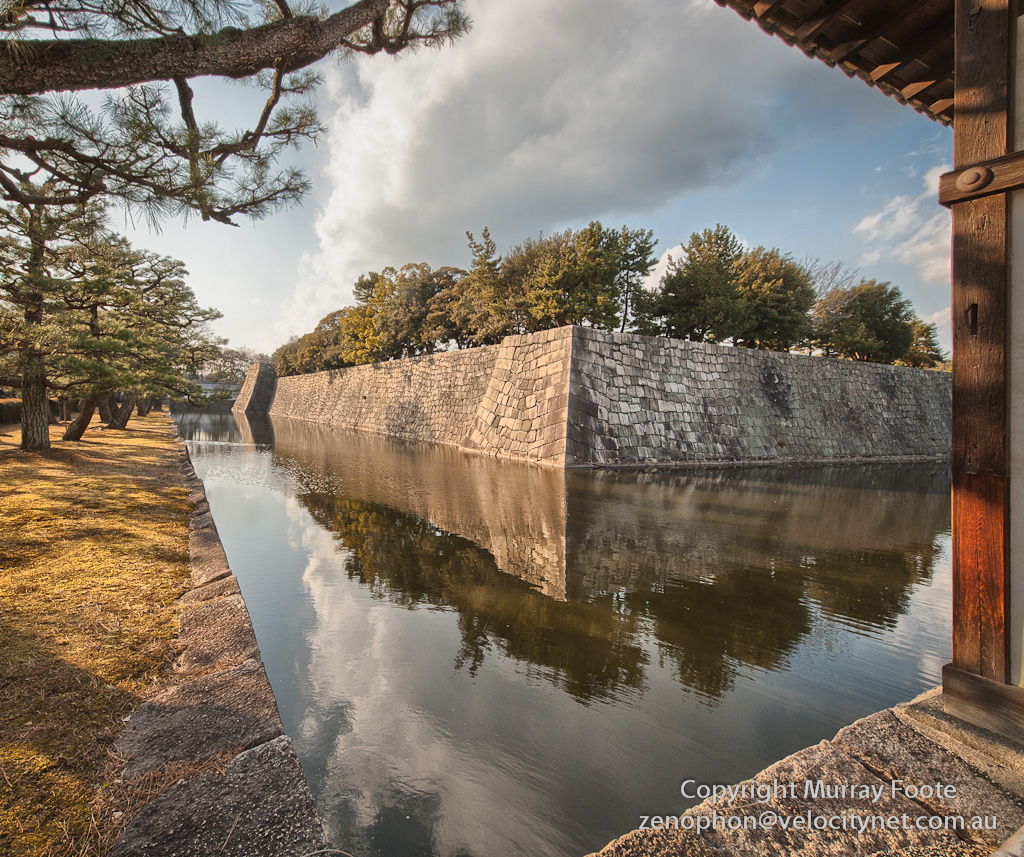
South-west corner of inner moat
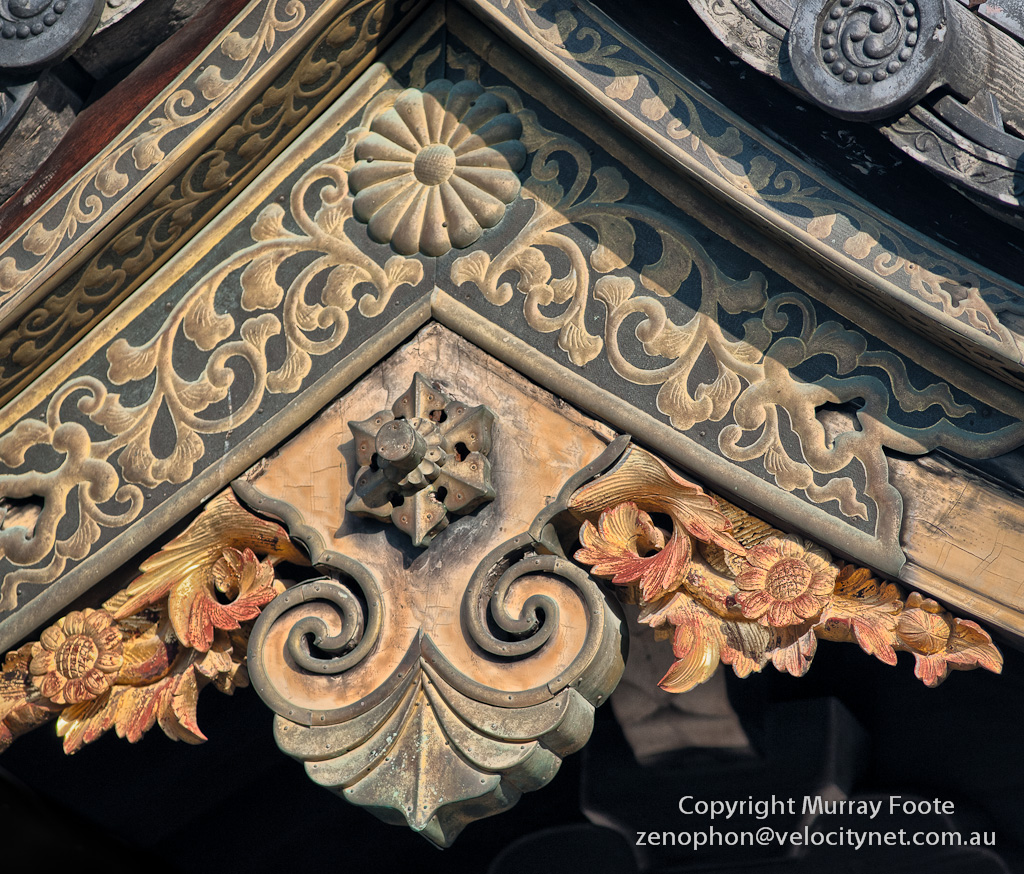
Gable decorations at Ninomaru Palace
 Murray Foote