St Kilda, Outer Hebrides, Scotland. Day 18 , 16th July.
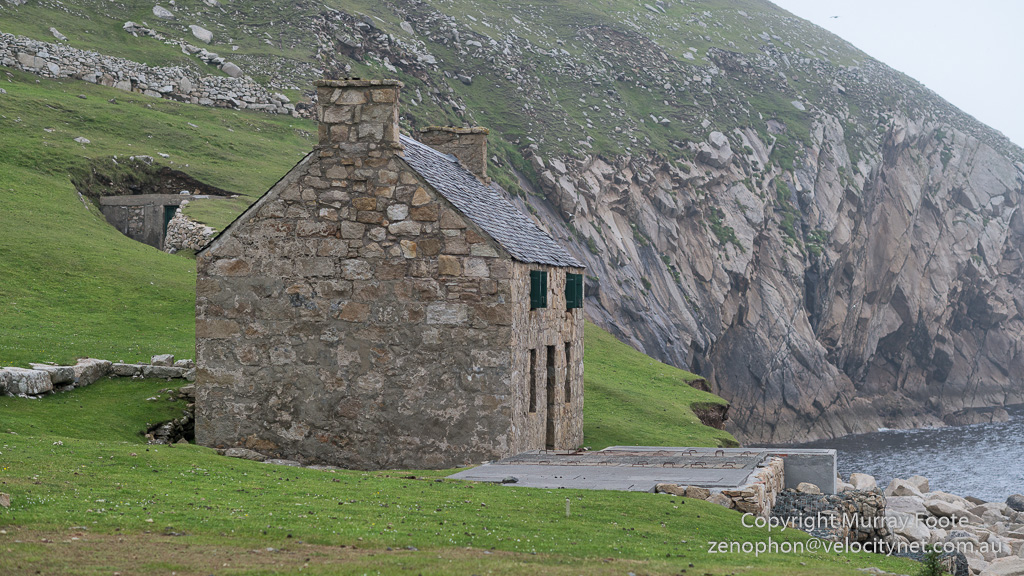
Later that evening we landed on St Kilda. This is the “Feather Store”, where the locals used to store the produce that they submitted annually to the Factor to send to the Laird. For centuries before 1779, the McLeod Lairds from Dunvegan Castle on Skye owned St Kilda along with Lewis and Harris. Decades of wild spending and gambling forced the sale of St Kilda (along with Harris). The new Laird was a retired sea captain also called McLeod, who built the Feather Store in the 1780s.
Behind the store is what must be an ammunition store for the gun that we see in the next image.
.
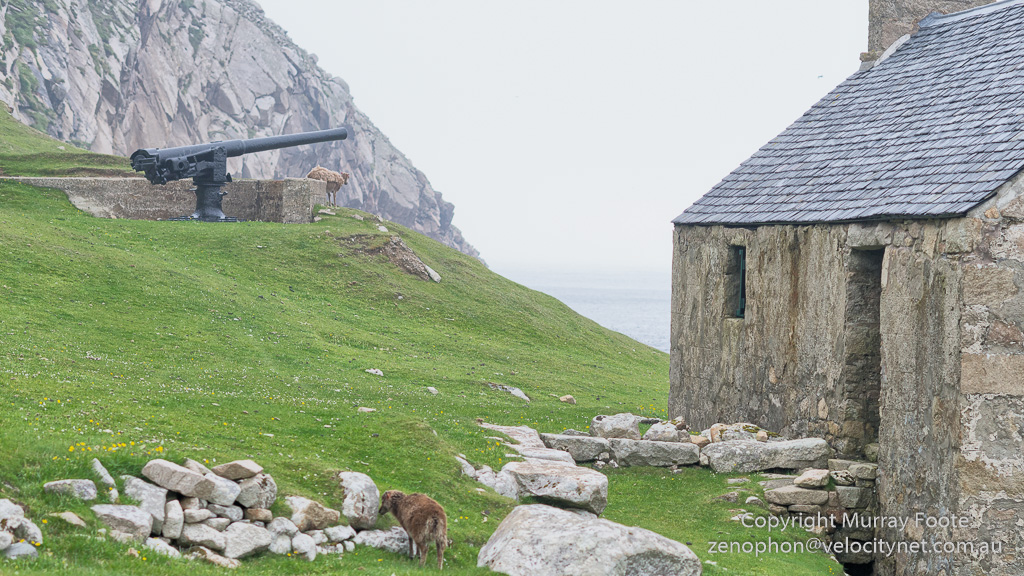
In 1915, a German U-Boat shelled a radio station in the village but was careful to try to avoid shelling the villagers’ houses. A few were still damaged and their owners received no compensation from the British Government. The gun was installed later to deter a recurrence of this event.
.
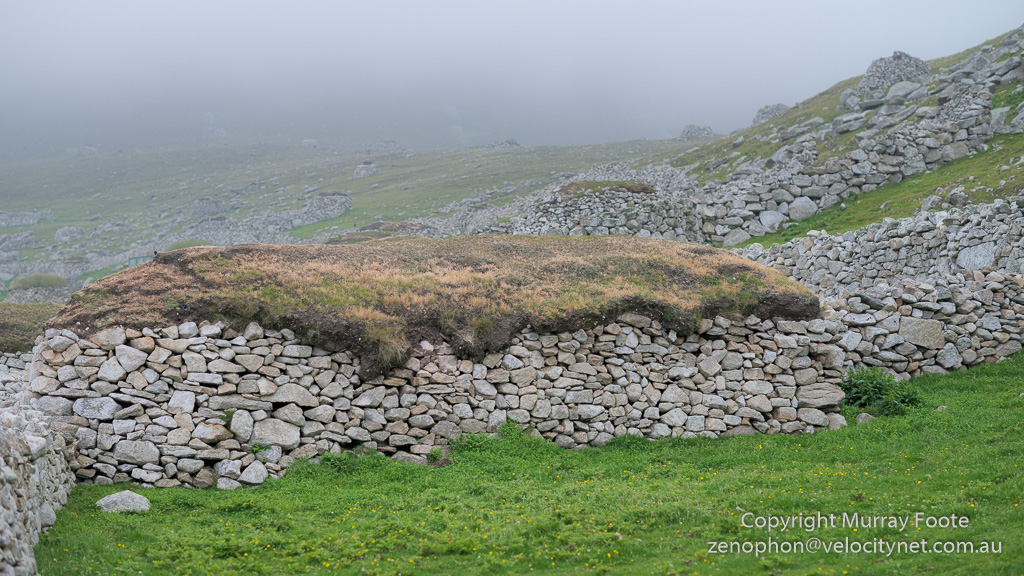
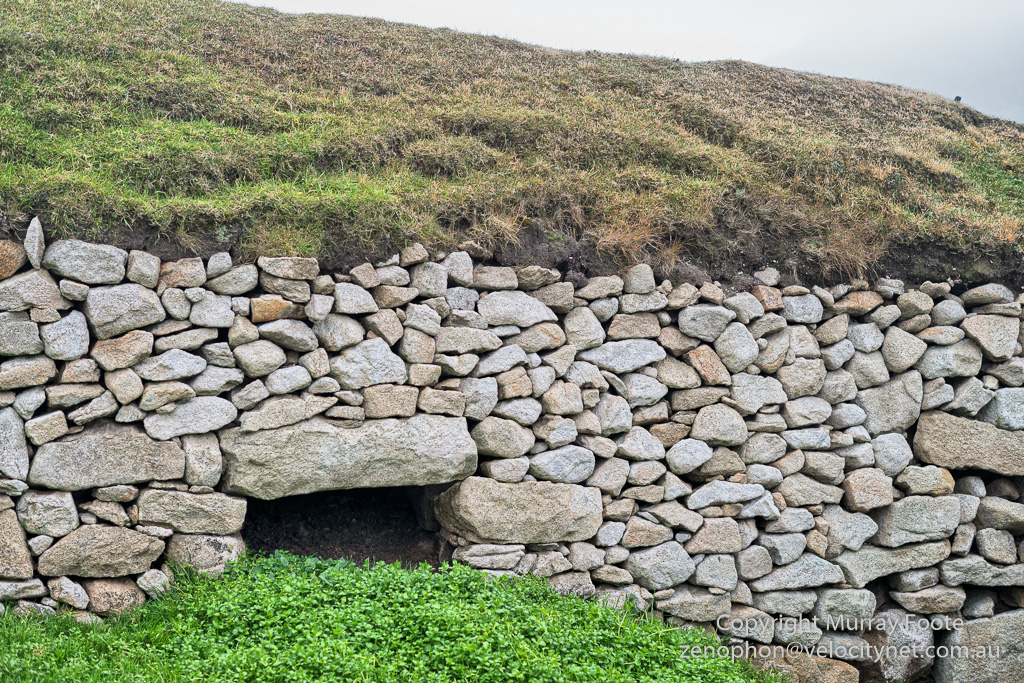
This is the “coffin cleit”, not far from the jetty. We will see as lot of cleits in the next few posts. They are storage sheds and drying rooms. This one is unusual because it is quite long and has two entrances, one at each end. It was used for storing wood. There are no trees on Hirta, the St Kildans made use of whatever driftwood came their way.
.
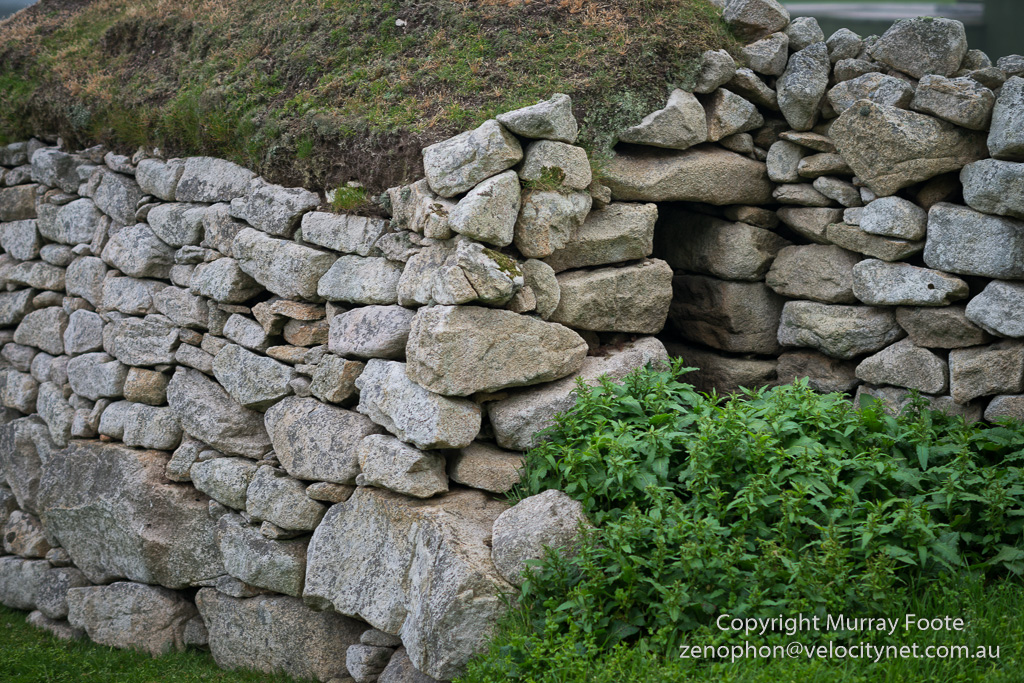
This image and the next one are also the “coffin cleit”.
.
 .
.
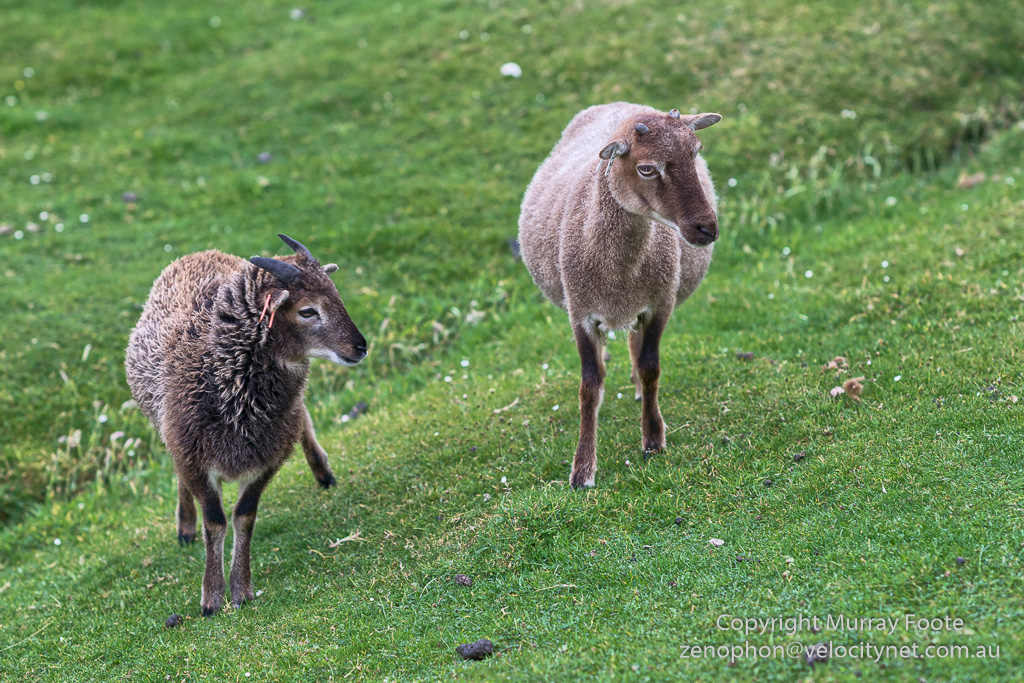
These are Soay Sheep, an ancient breed of sheep that used to live only on the island of Soay. The islanders on Hirta had the black faced sheep more common in the Highlands (and that we have seen earlier in this trip). When the islanders finally left in 1930, they took their black-faced sheep with them. Soay sheep were then introduced to Hirta, where they had not previously lived. The breed is said to be six million years old and to be similar to the wild ancestors of domestic sheep. It is self-shearing, so that wool comes off by itself, as we shall see in some images in the next posts. There is another ancient breed of sheep on the island of Boreray, which is I think not usually open to visitors.
.
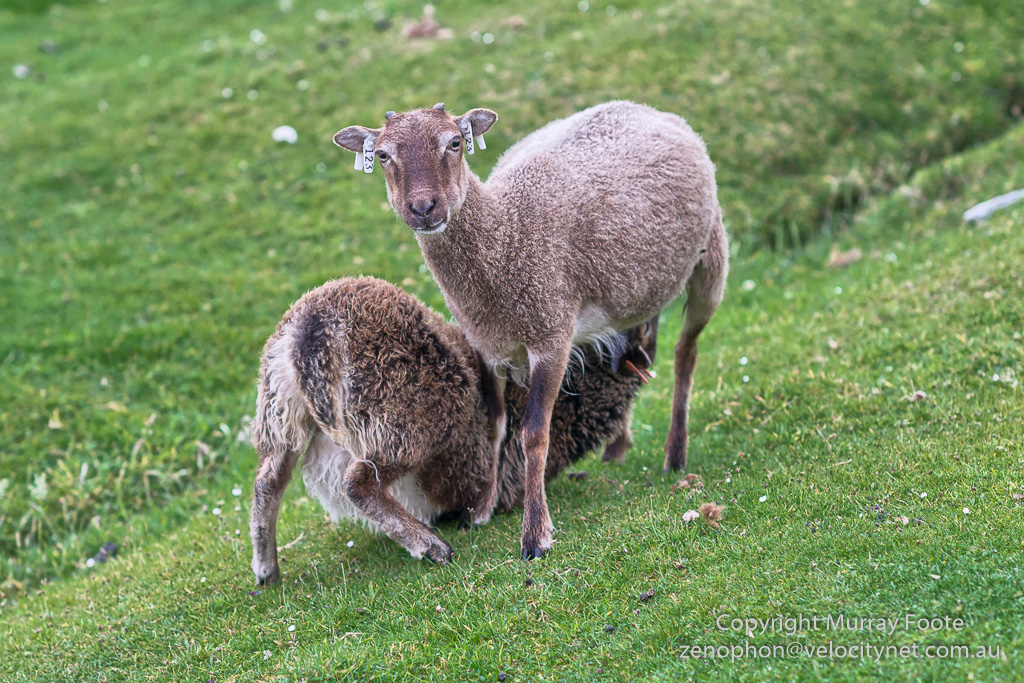
Obviously, the one with the horns is somewhat younger.
The Soay sheep belonged to the Laird and were probably always feral. Conversely. the Boreray sheep were farmed by the residents and were also on Hirta in the eighteenth century.
.
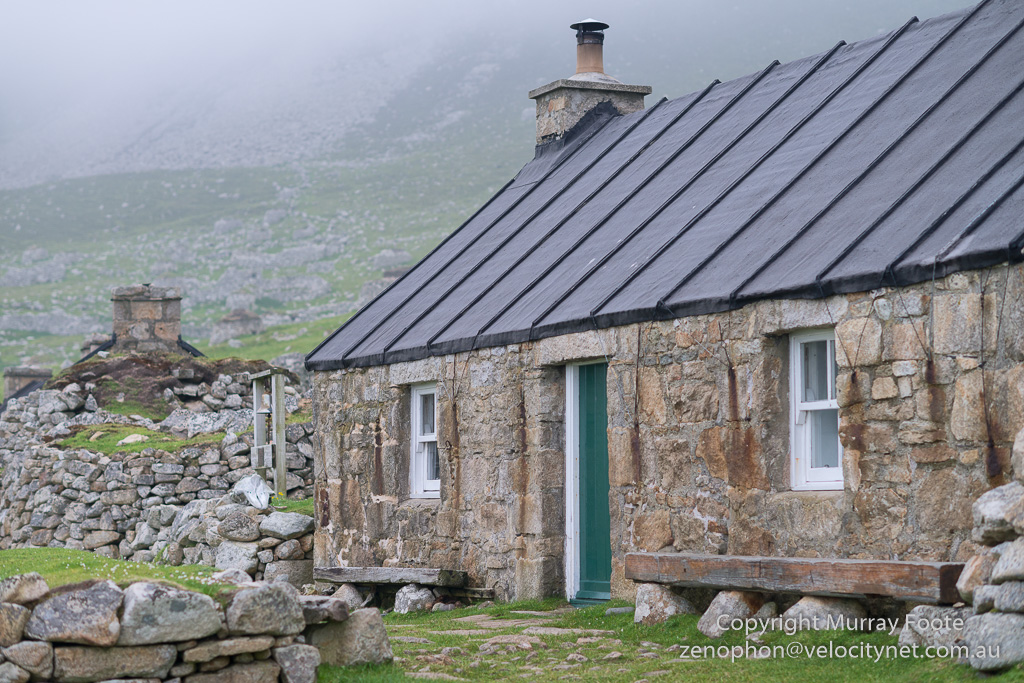
This is one of the “modern” houses, dating to 1861 or 1862. I don’t think it has an original zinc roof, but I could be wrong on that.
.
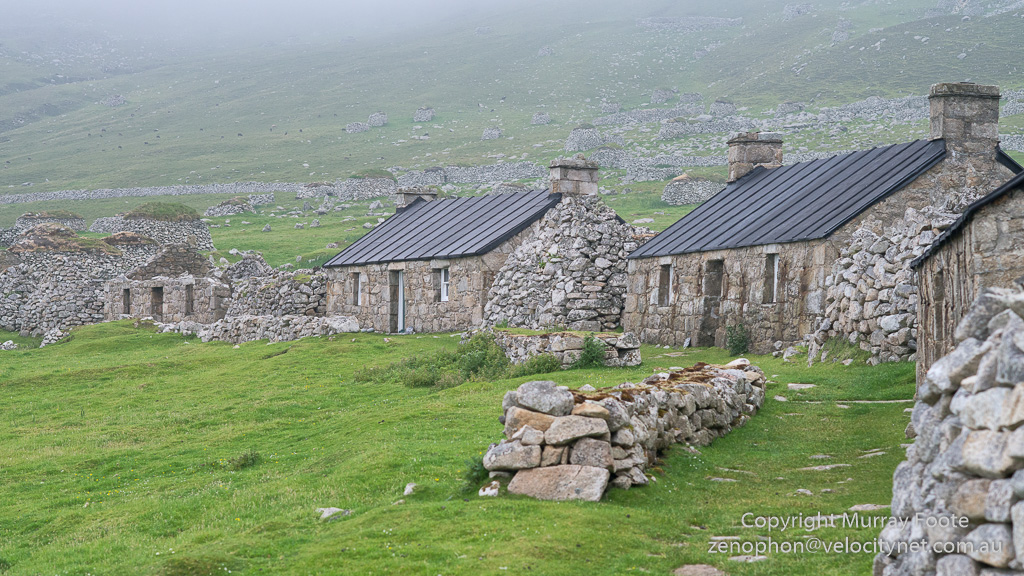
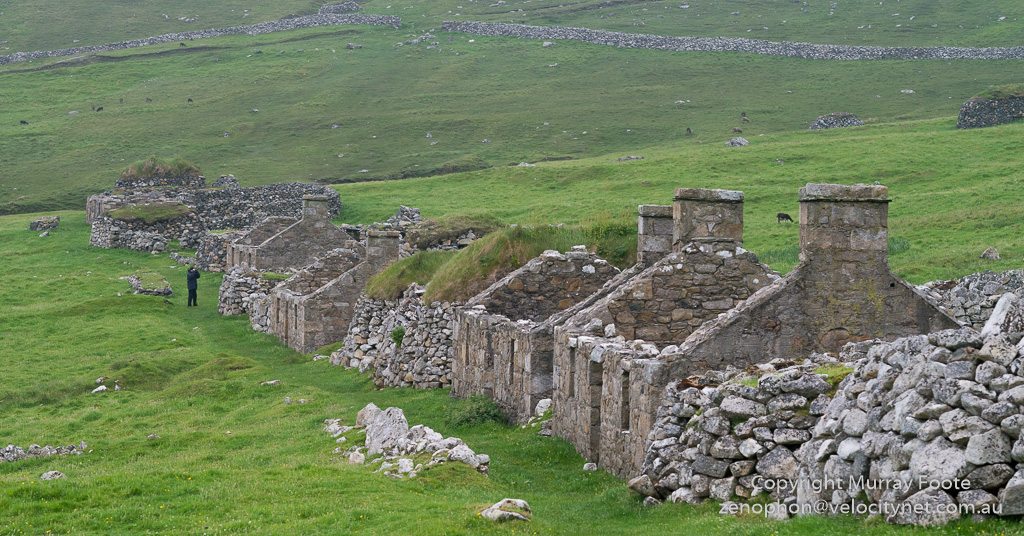
Looking along the “street”, the more modern houses alternate with older houses from the 1830s, dry stone constructions perpendicular to the more recent ones.
.
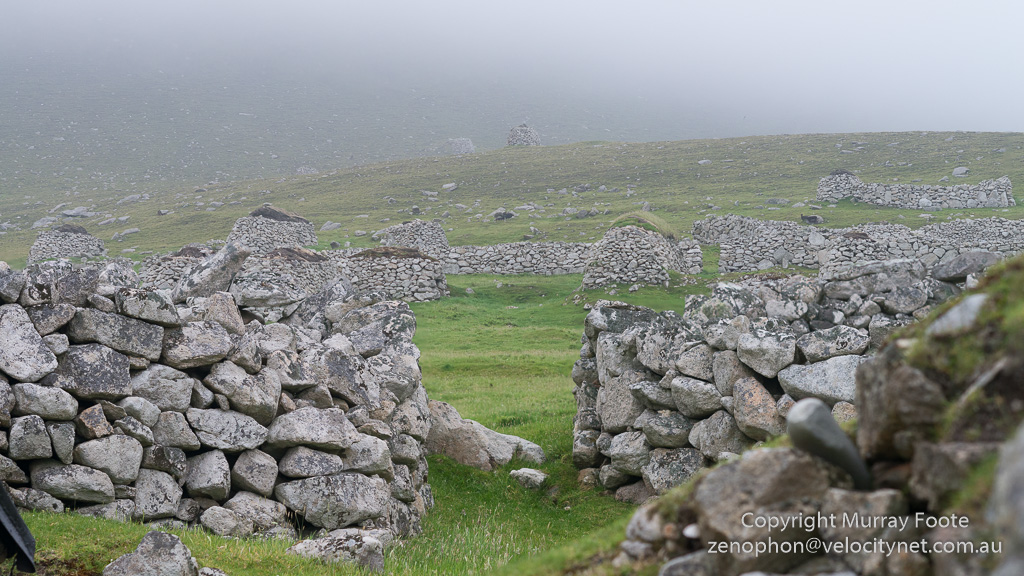
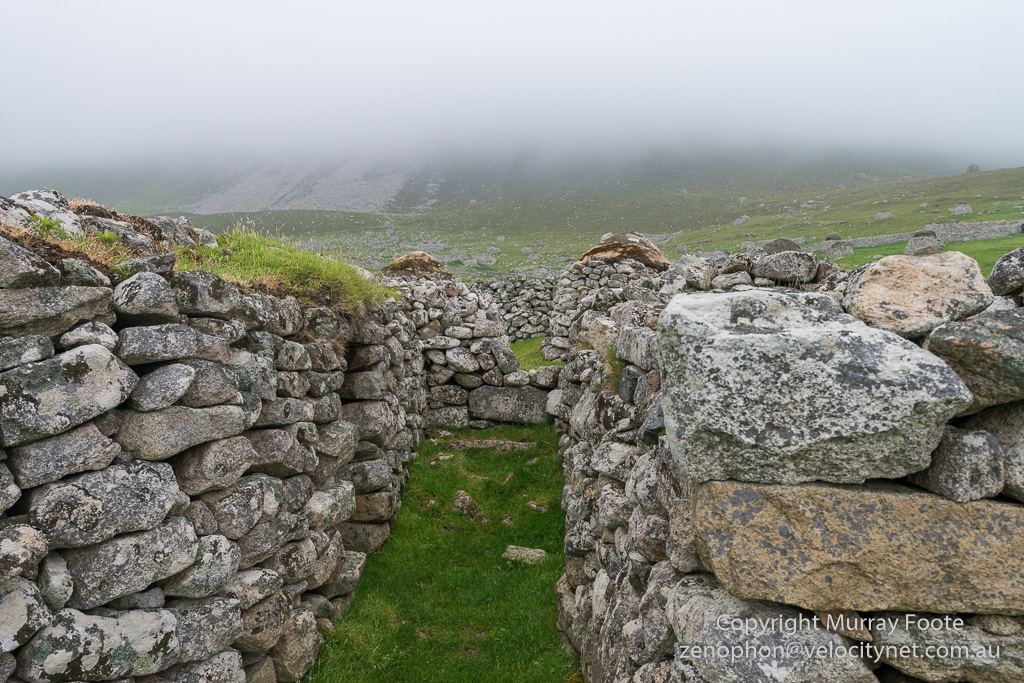
Looking through beyond one of the newer houses. The small rounded structures are cleits. There must be hundreds of them on the island.
.
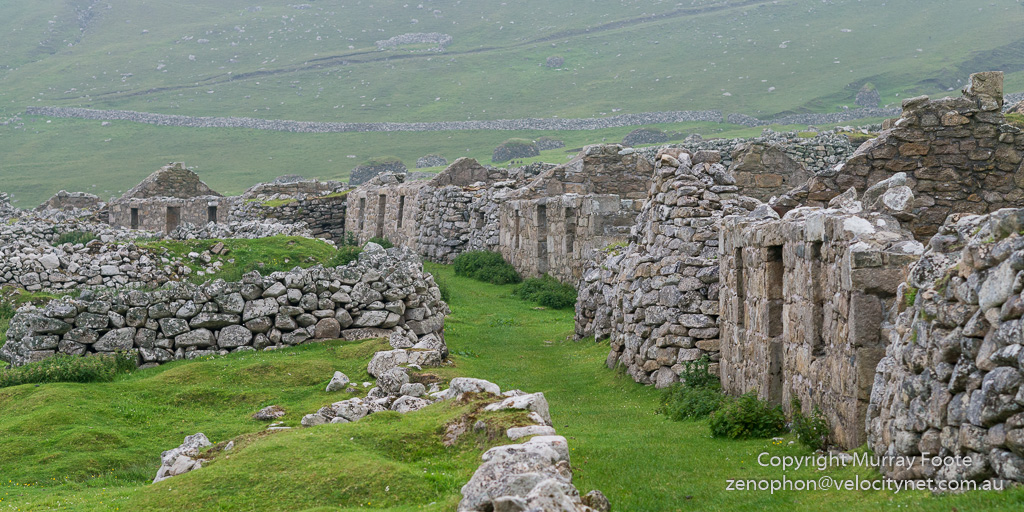
Further along the street….
.
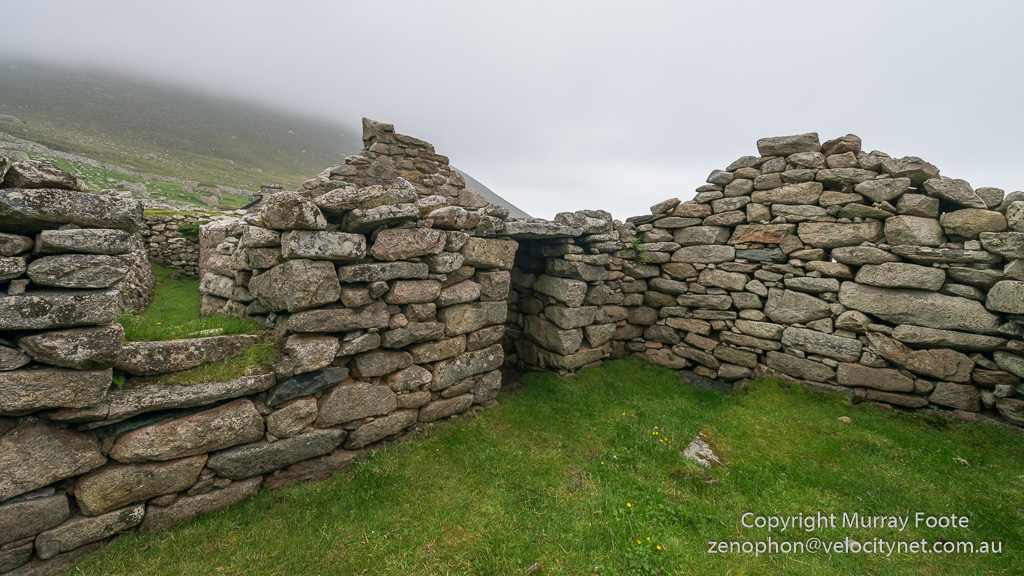
Inside a ruined drystone house.
.
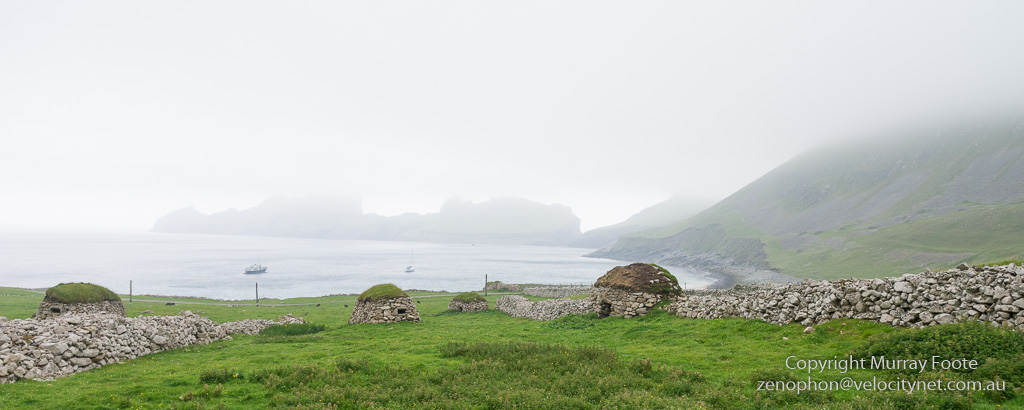
Walls and cleits at the far end of the road with Dun in the background.
.
 .
.
 .
.
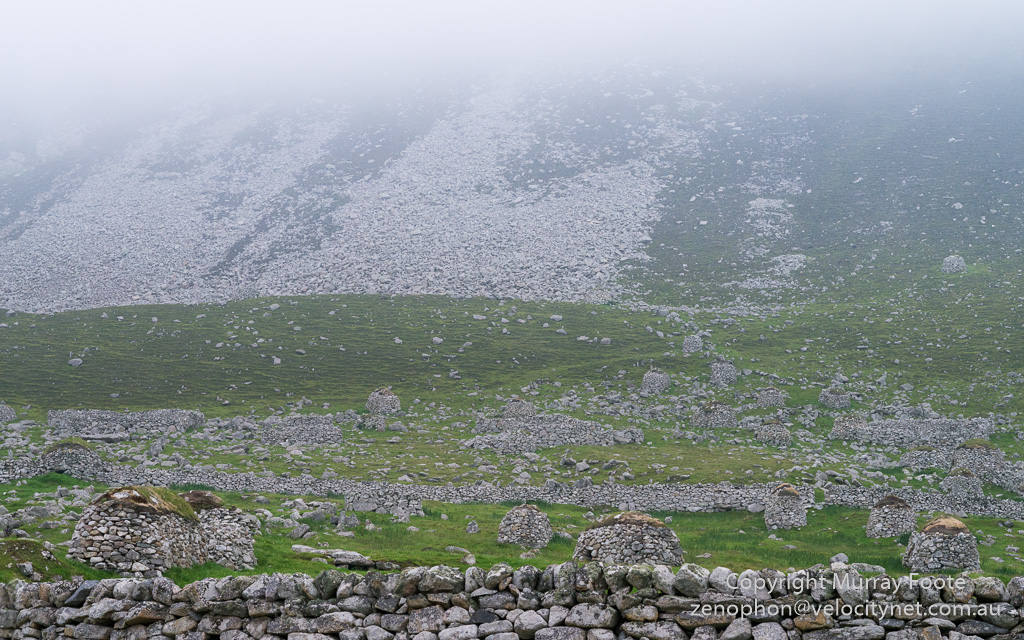
It’s not a place where stones are scarce.
.
 Murray Foote