2 September 2017, Bruny Island, Tasmania
.
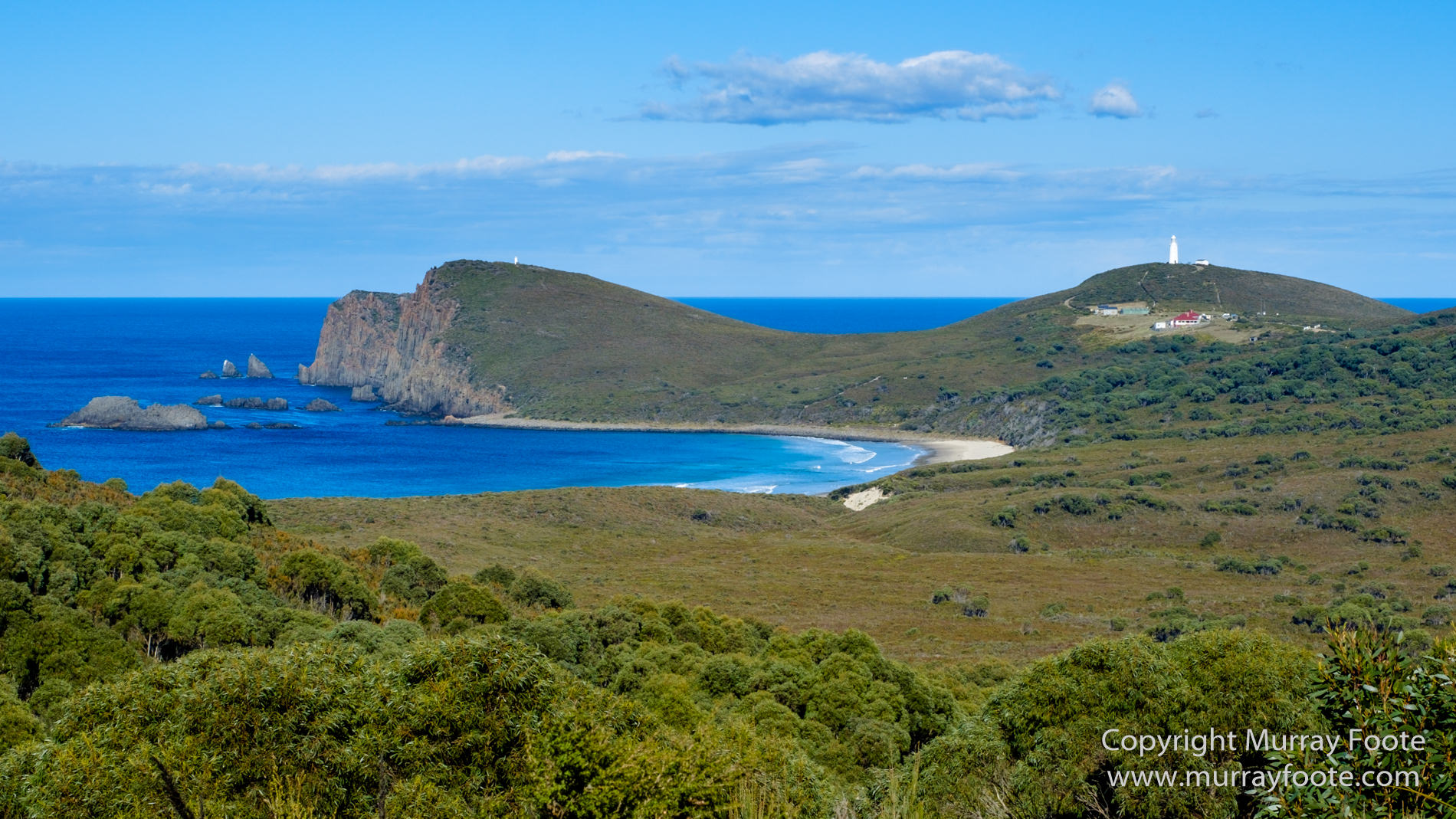
The last time I was in Bruny Island was when I photographed it in 1987 using large format film equipment for the Bicentennial history From Dusk Till Dawn.
.
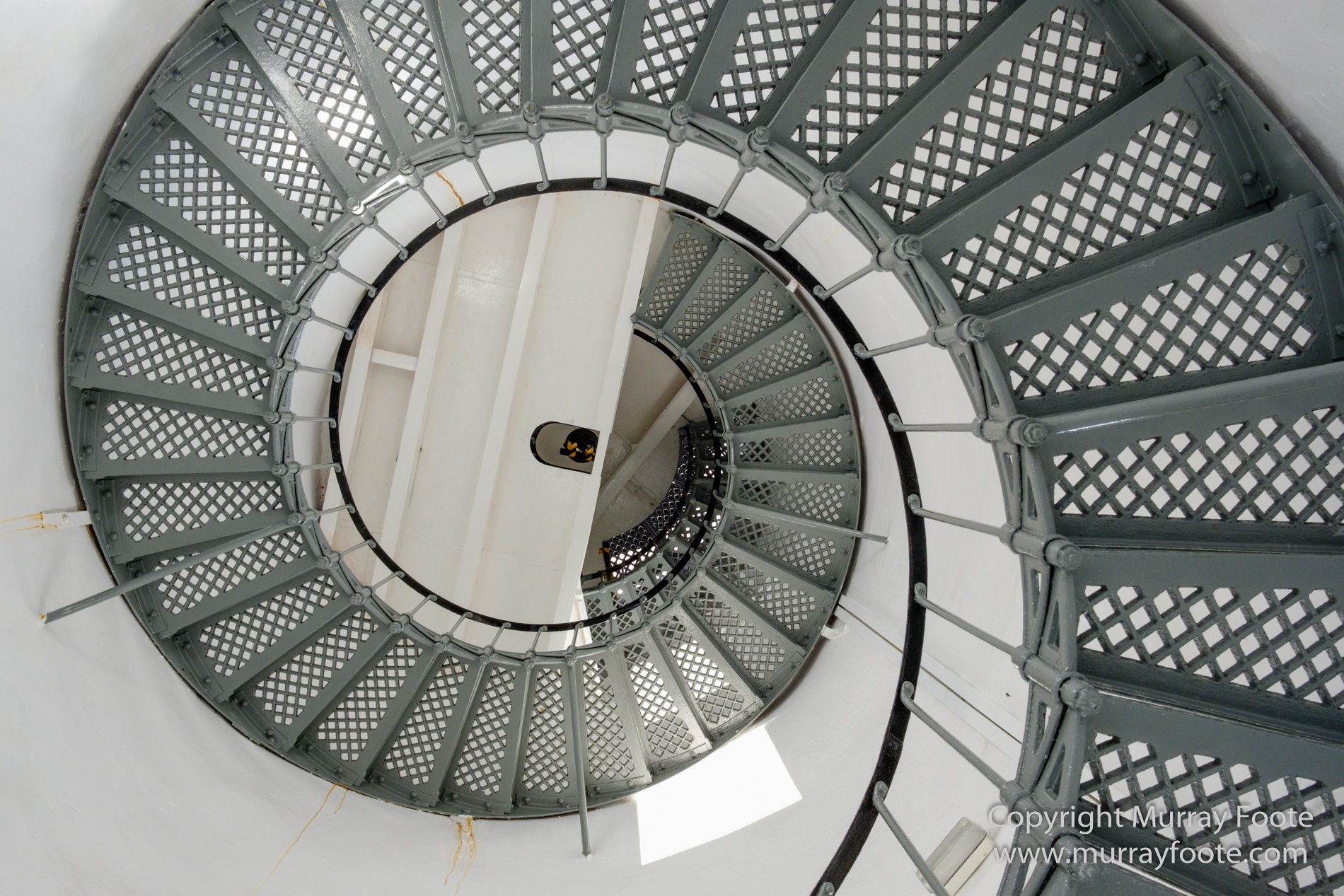
I took a similar photography in 1987, using a tripod but also lying on my back on the floor.
.
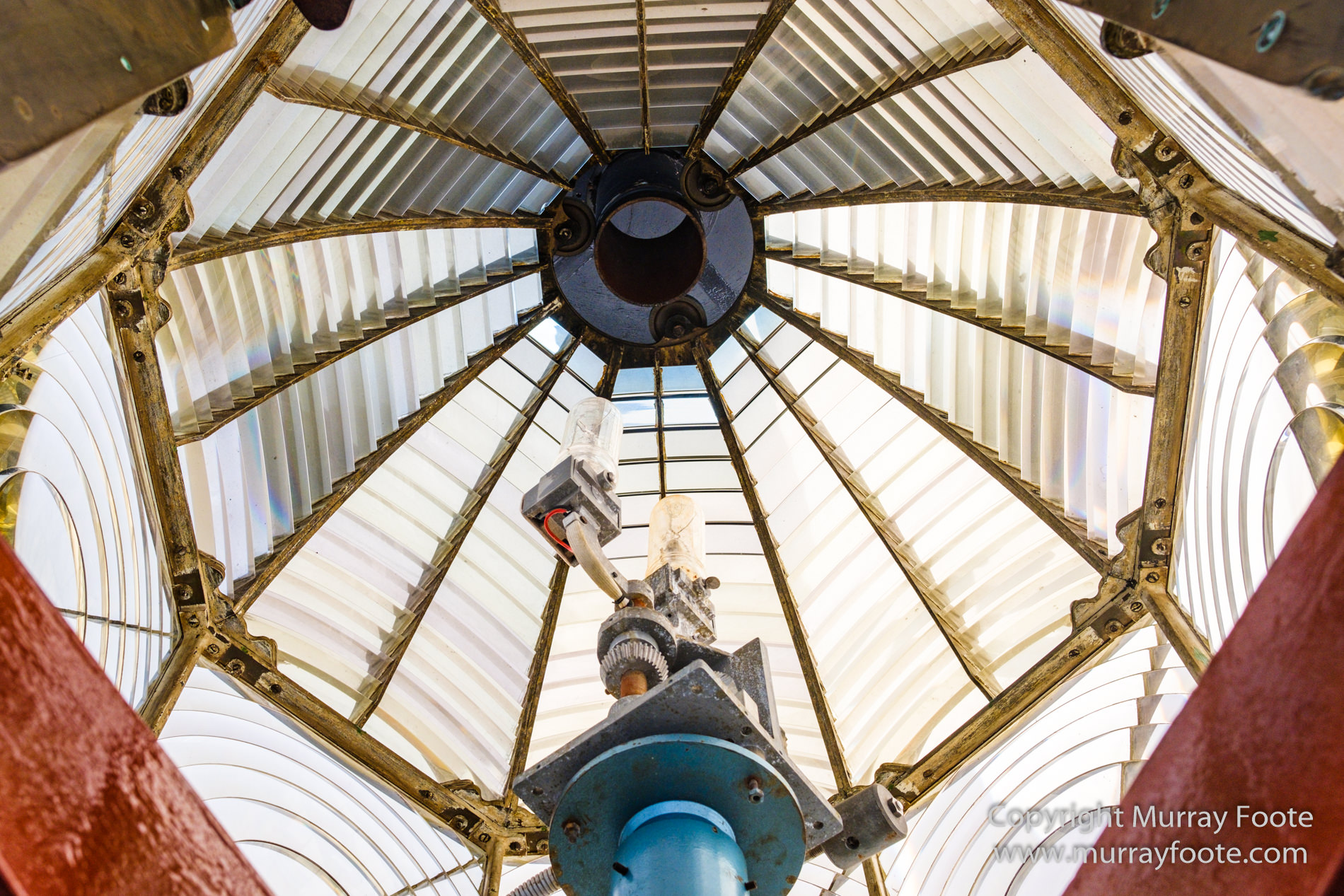
Cape Bruny lighthouse commenced service in 1838, the third lighthouse in Tasmania and the fourth in Australia. This followed the nearby wreck of the convict ship George III in 1835, which hit an uncharted rock in D’Entrecasteau Channel and 133 died out of 292.
.
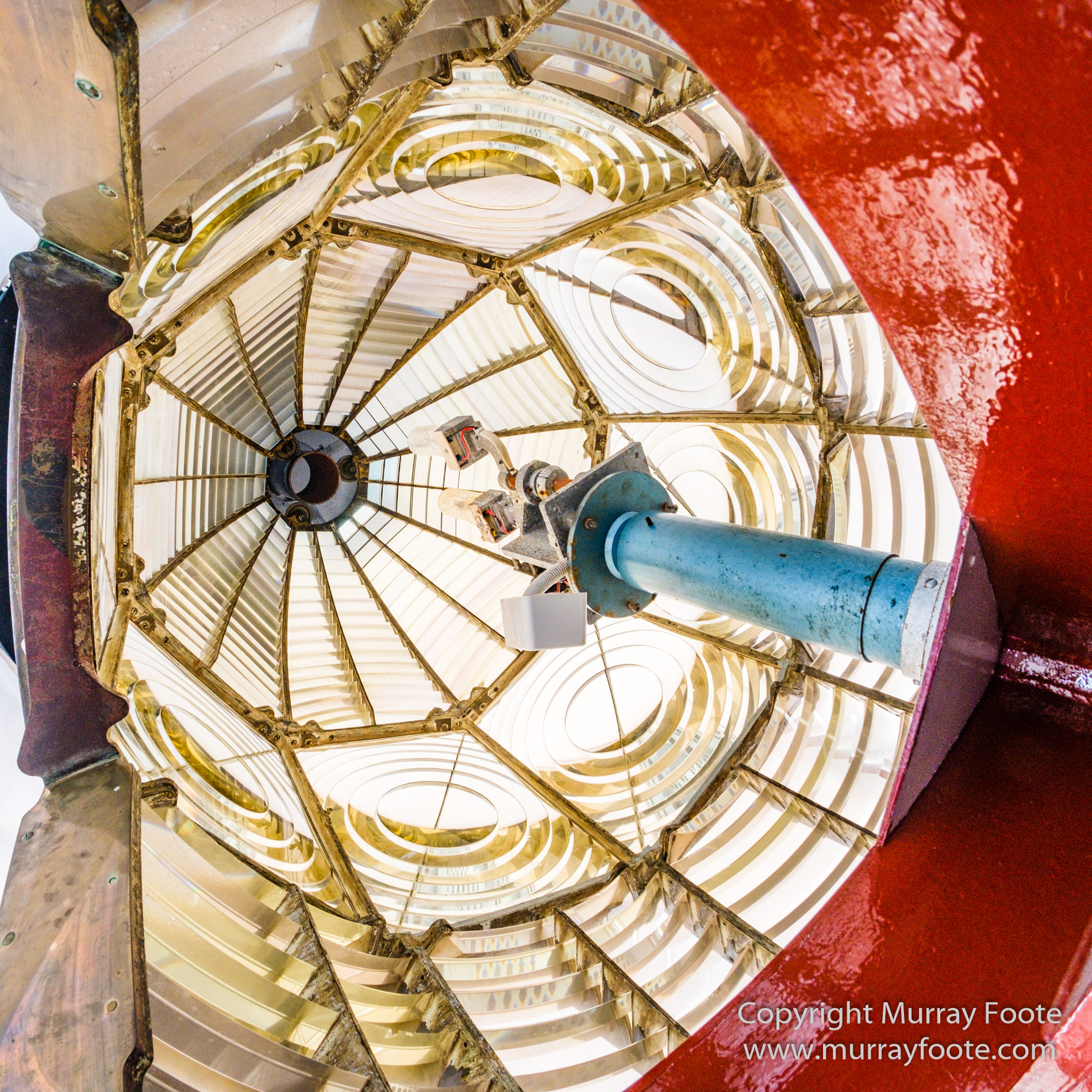
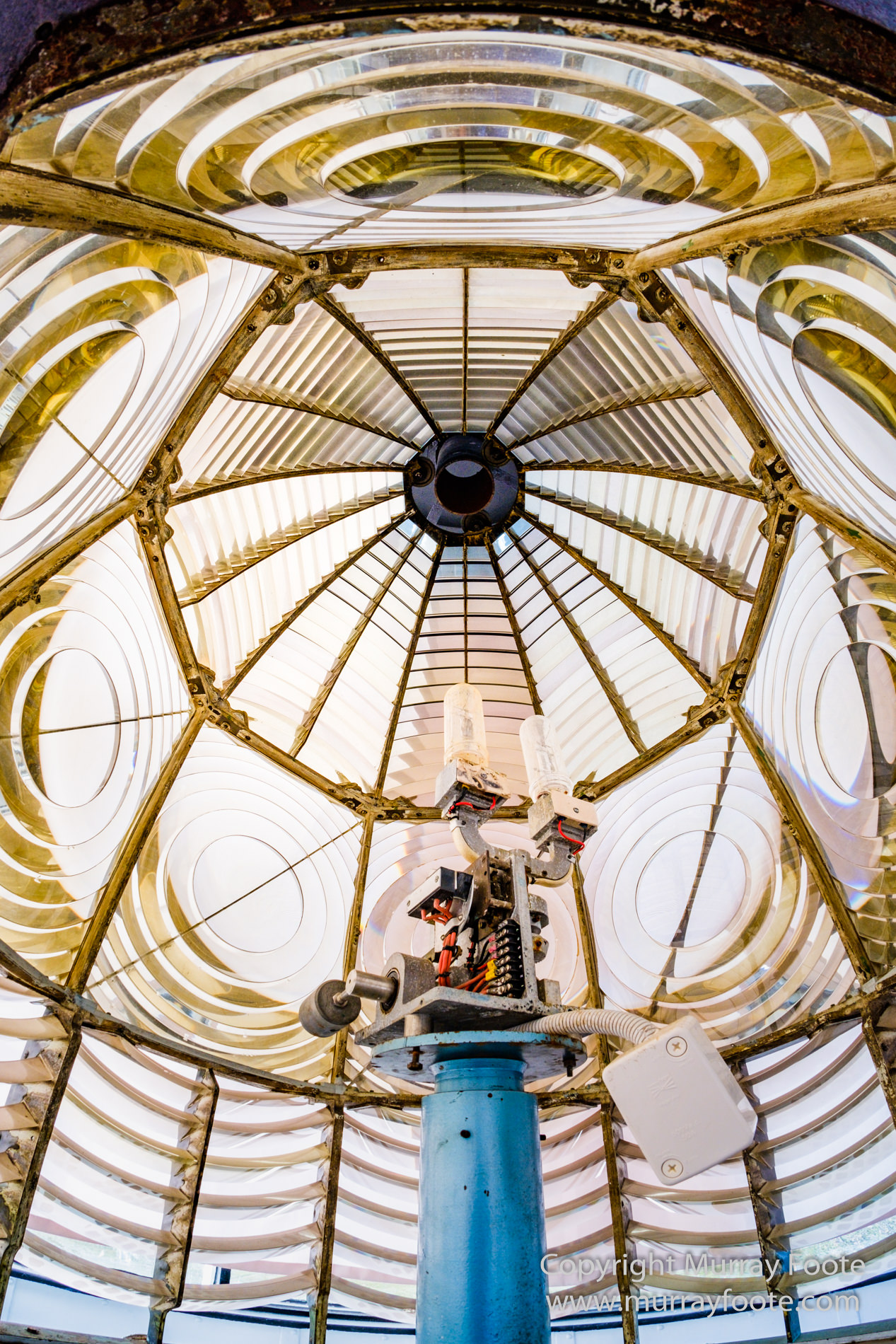
The light mechanism you see features Chance Brothers turntable and lenses which replaced the original mechanism in 1901 to 1903.
.
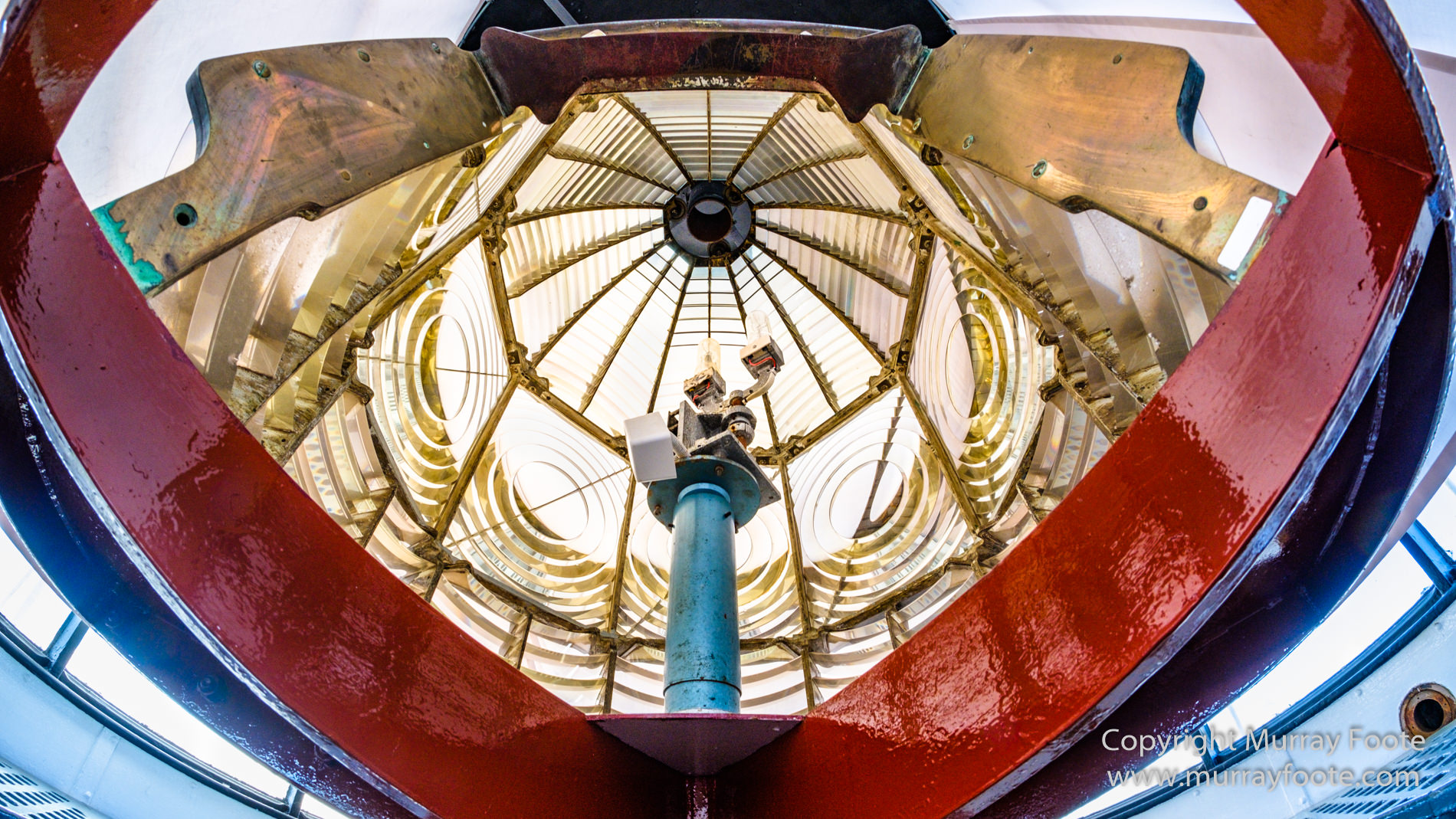
In 1901-03 the light came from kerosene lamps. There were replaced with electric lights in 1959.
.
.
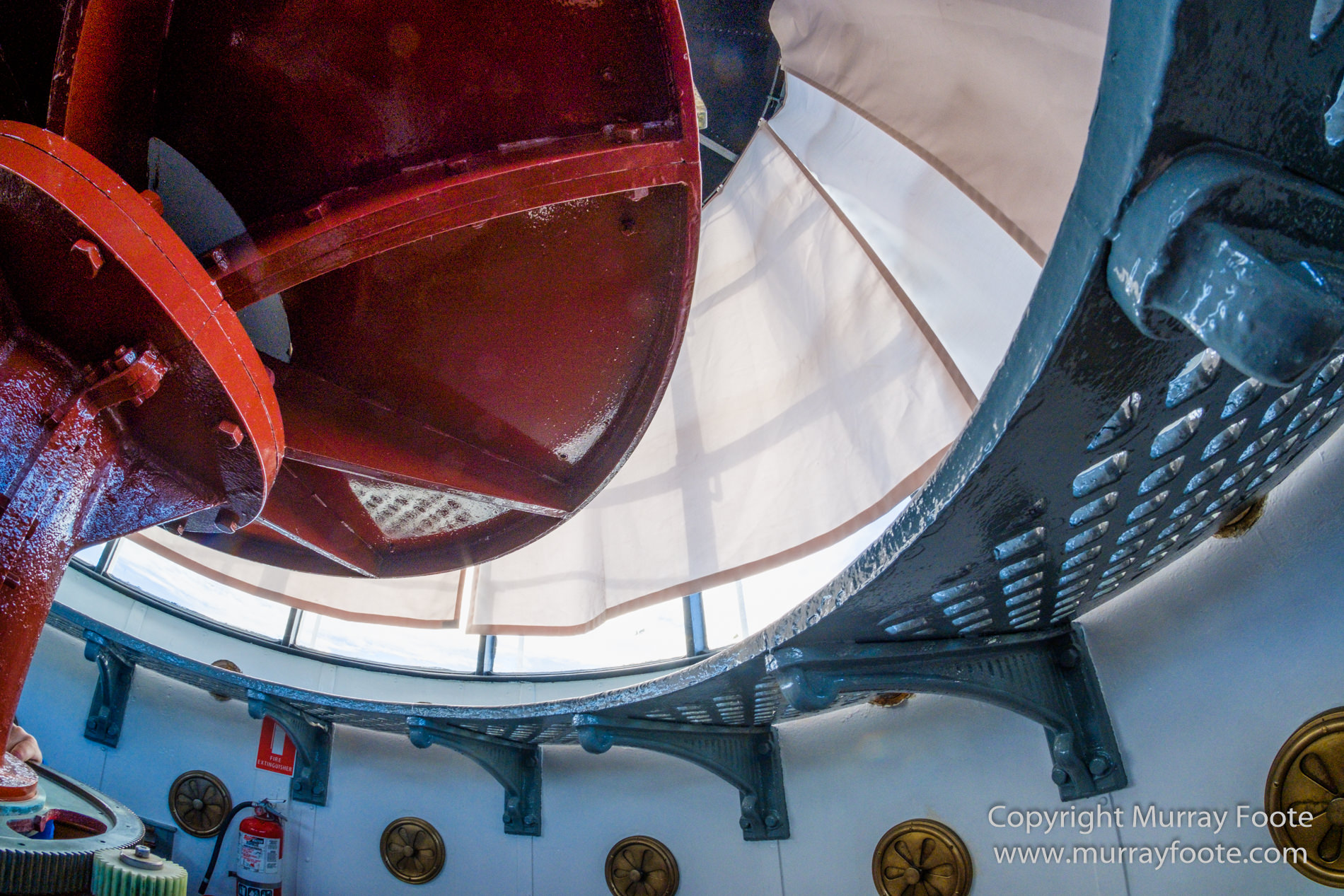
The brass vents on the wall under the walkway were to regulate the breeze so that the kerosene lamp operated optimally and did not go out. The turntable would have been driven by a clockwork mechanism such as at Double Island Point (last image). A weight would have slowly descended the tower and then needed to be wound back up.
.
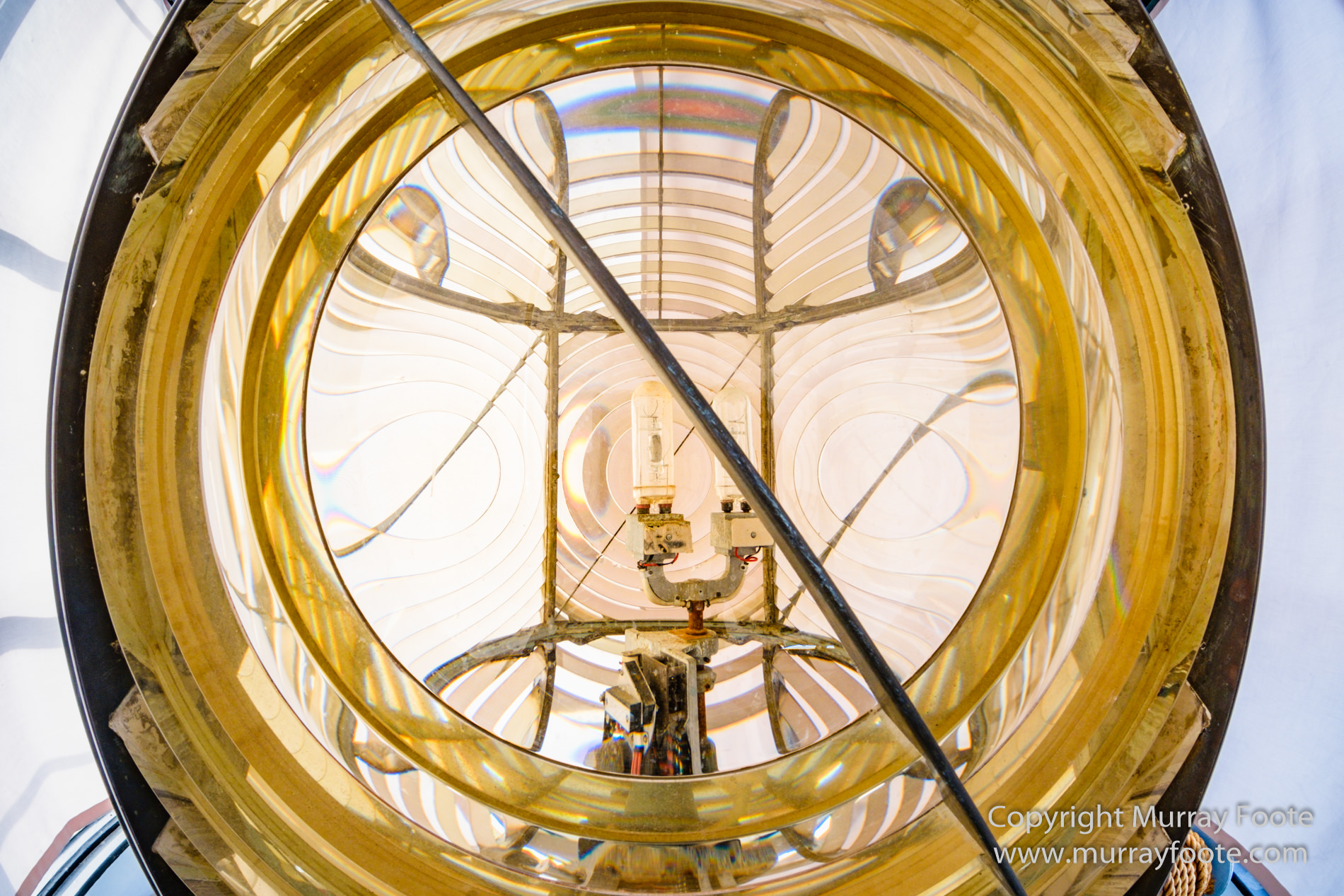
The original lights in 1838 burned sperm whale oil. This was expensive and each lamp burned 600ml per hour. There were fifteen of these lamps and the light was focused with mirrors rather than lenses.
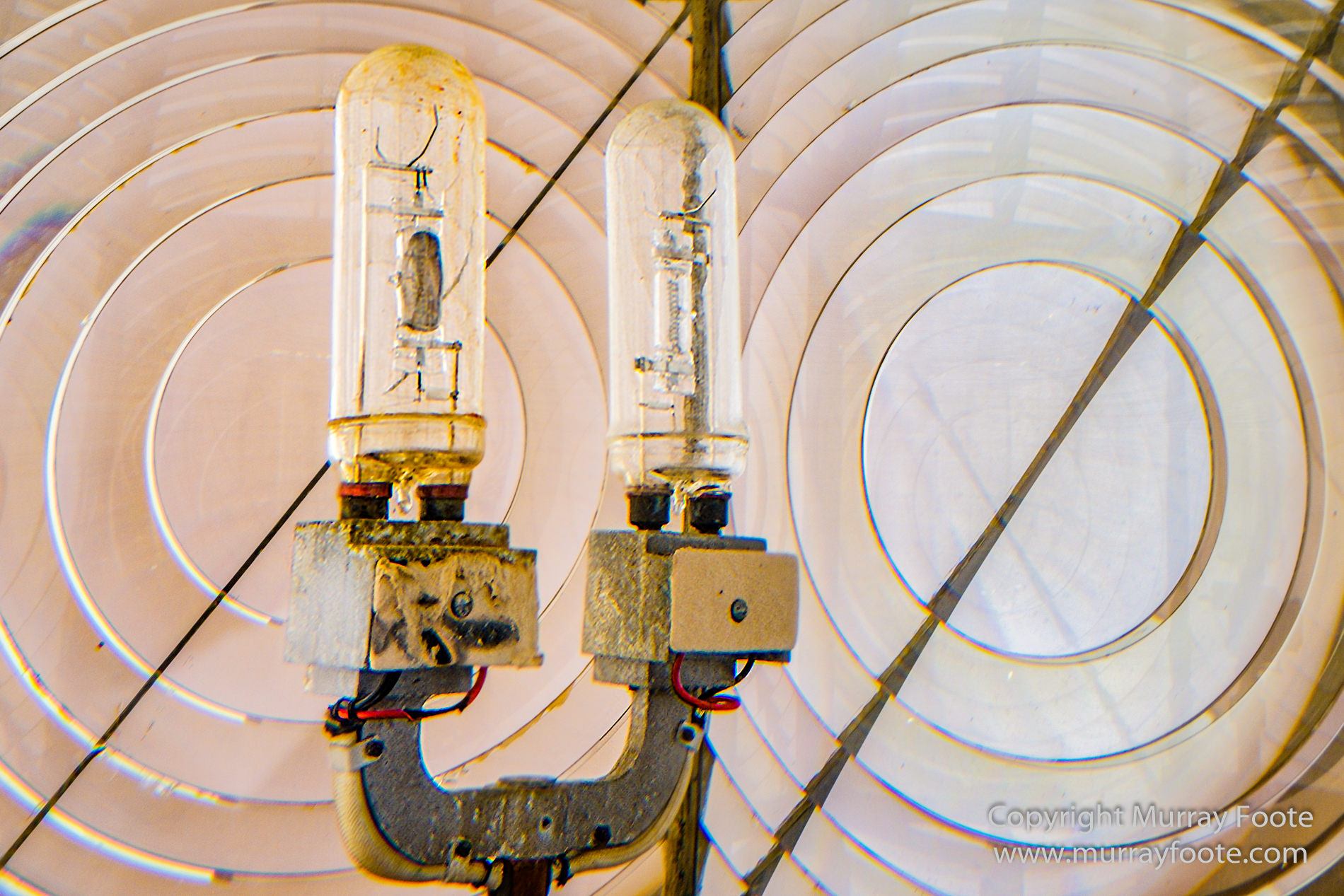
The original lamps were very fragile and needed to be replaced every three days. There are two of the electric bulbs here just to provide a spare.
.
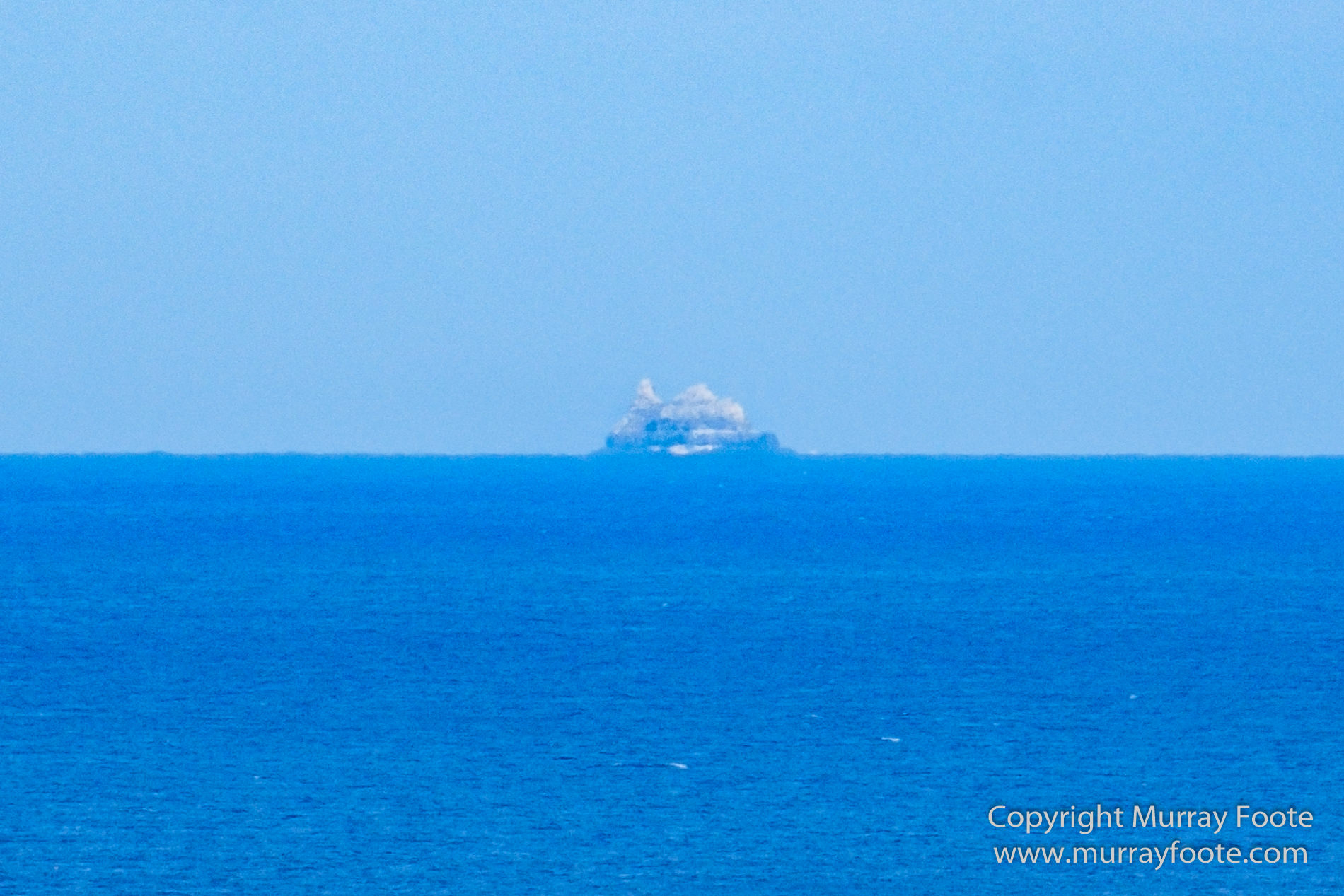
Far out on the distant horizon and barely visible to the naked eye is Pedra Branca Rock. This is rock is 250 metres long, 100 metres wide and 60 metres high. In 2003 a scientific team visited here as part of a program to preserve the endemic Pedra Branca skink and conserve the habitat of birds, especially albatrosses. The weather deteriorated so that they could not leave the rock and a freak wave washed away a young oceanographer, Hamish Saunders, who was at the time 45 metres above sea level. His body was never recovered.
.
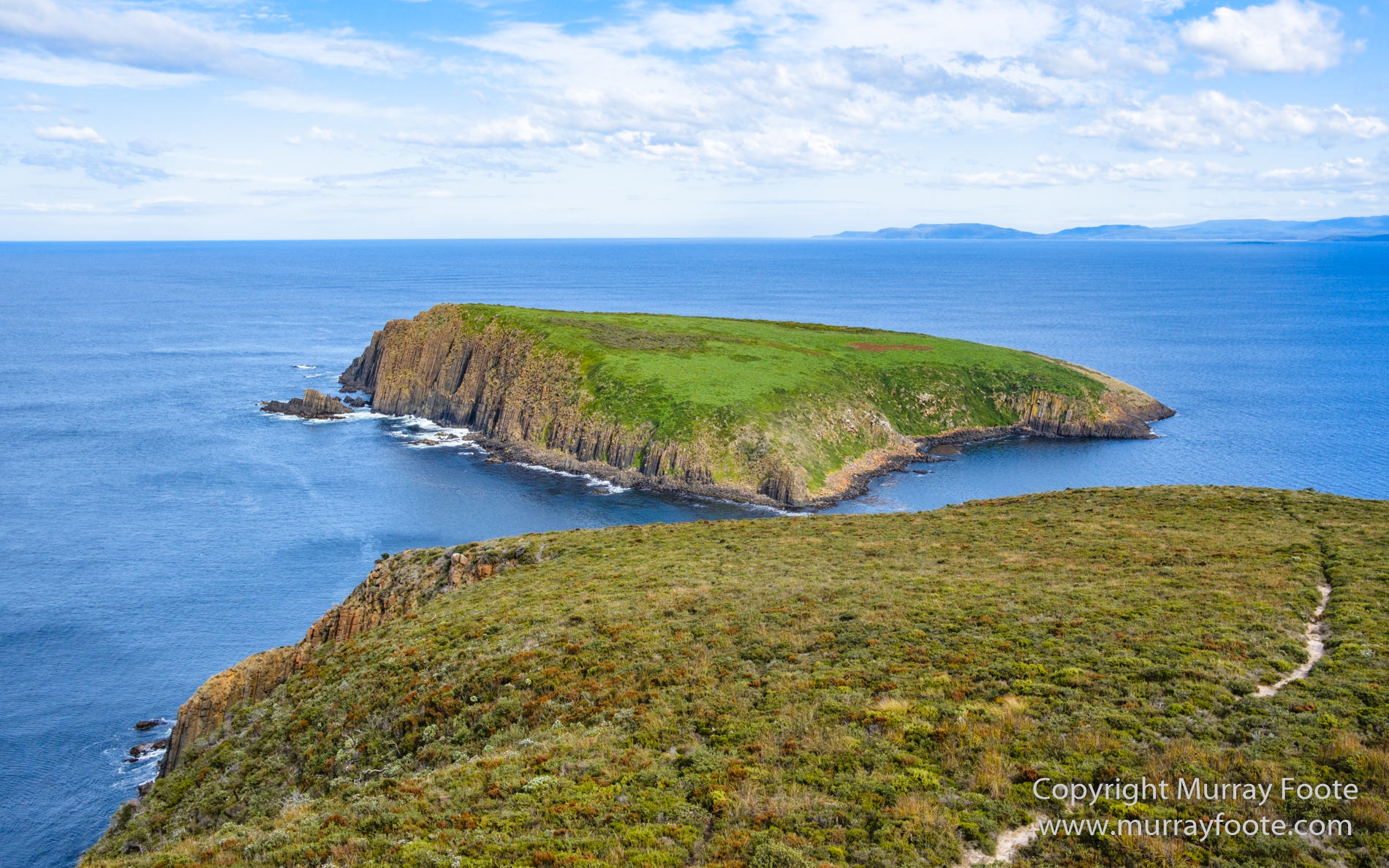
Coutts Island, below the lighthouse.
.
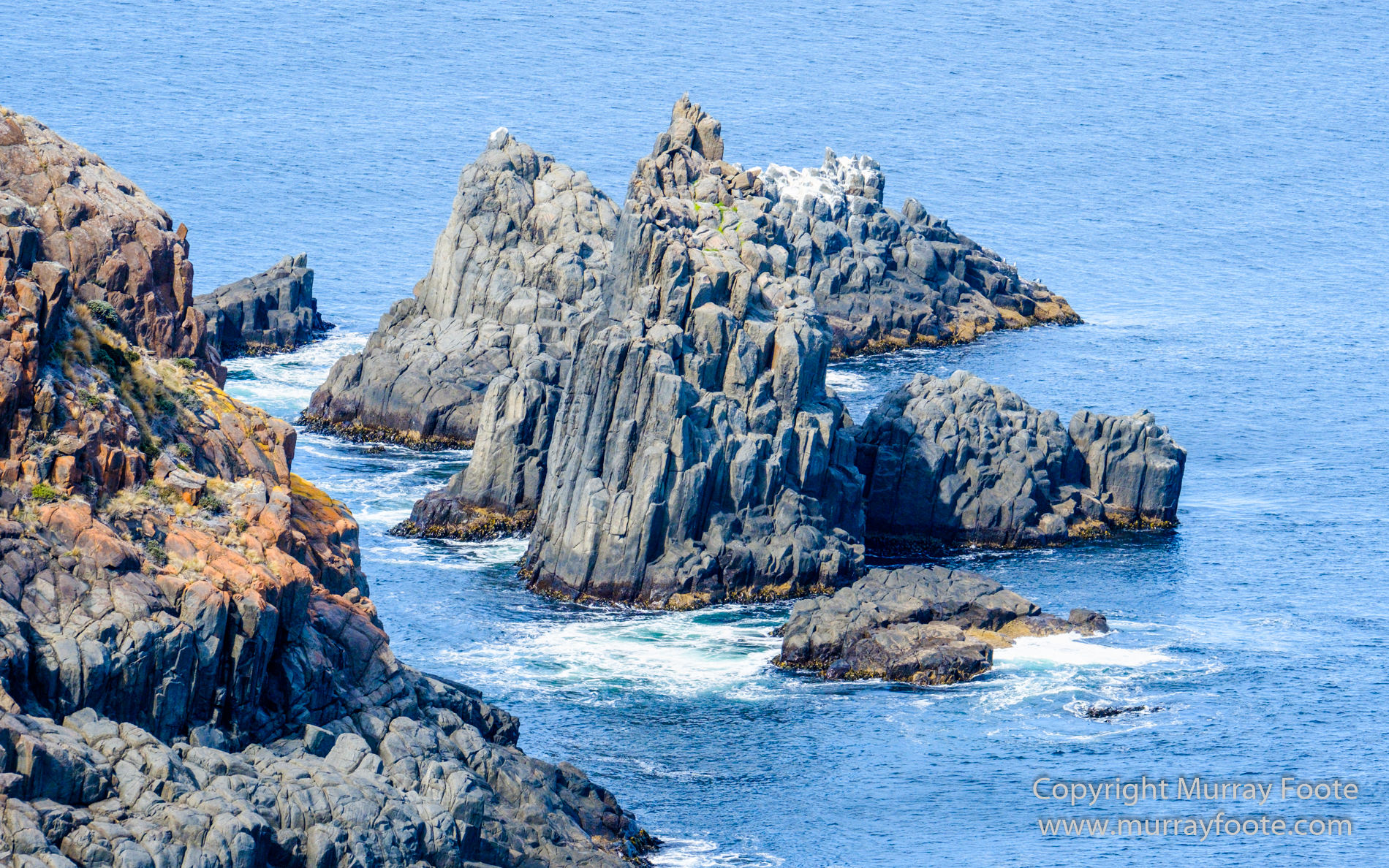
Rocks below the lighthouse, evidently favoured by seabirds.
.
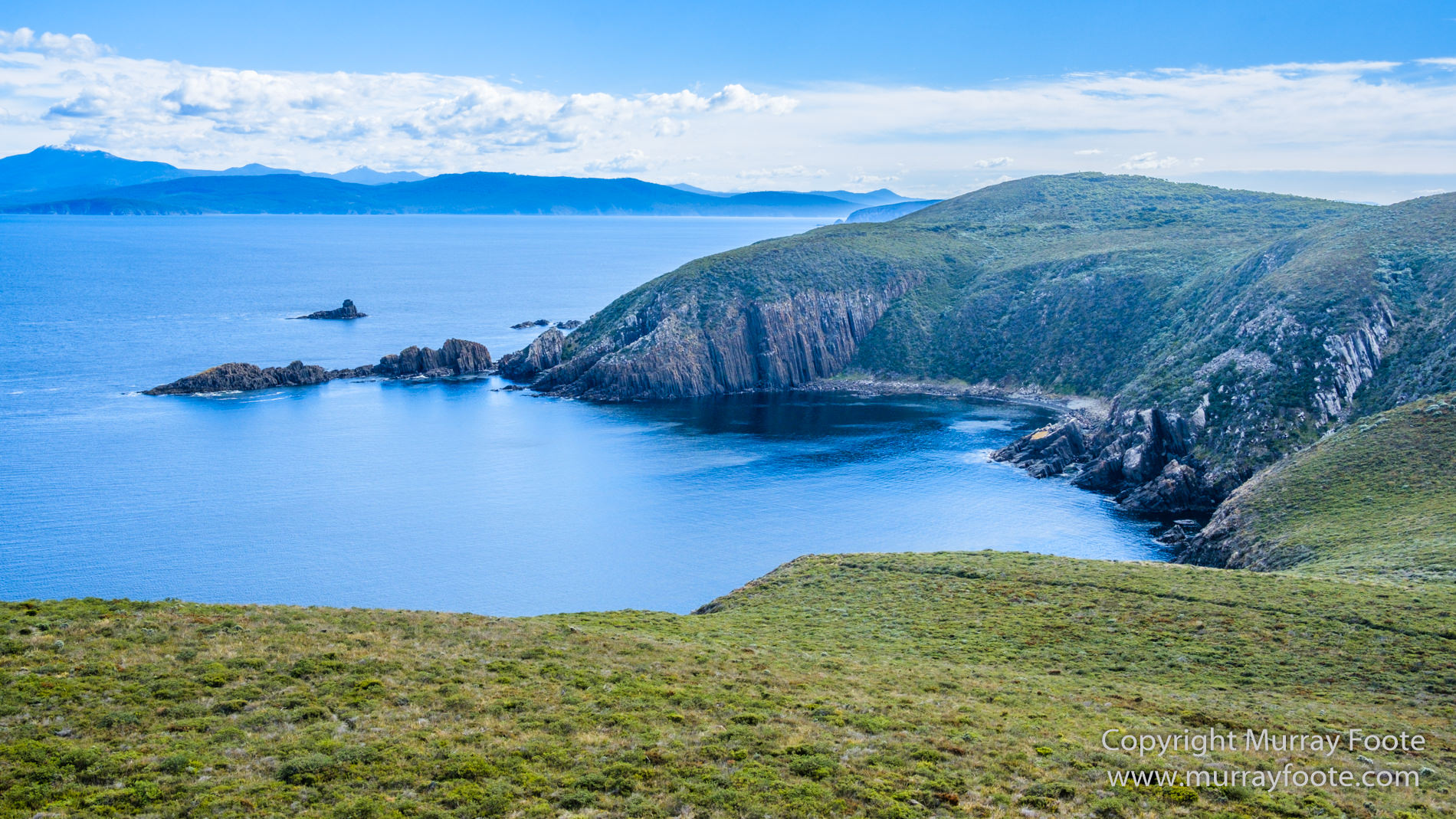
Looking across D’Entrecasteau Channel to the Tasmanian mainland.
.
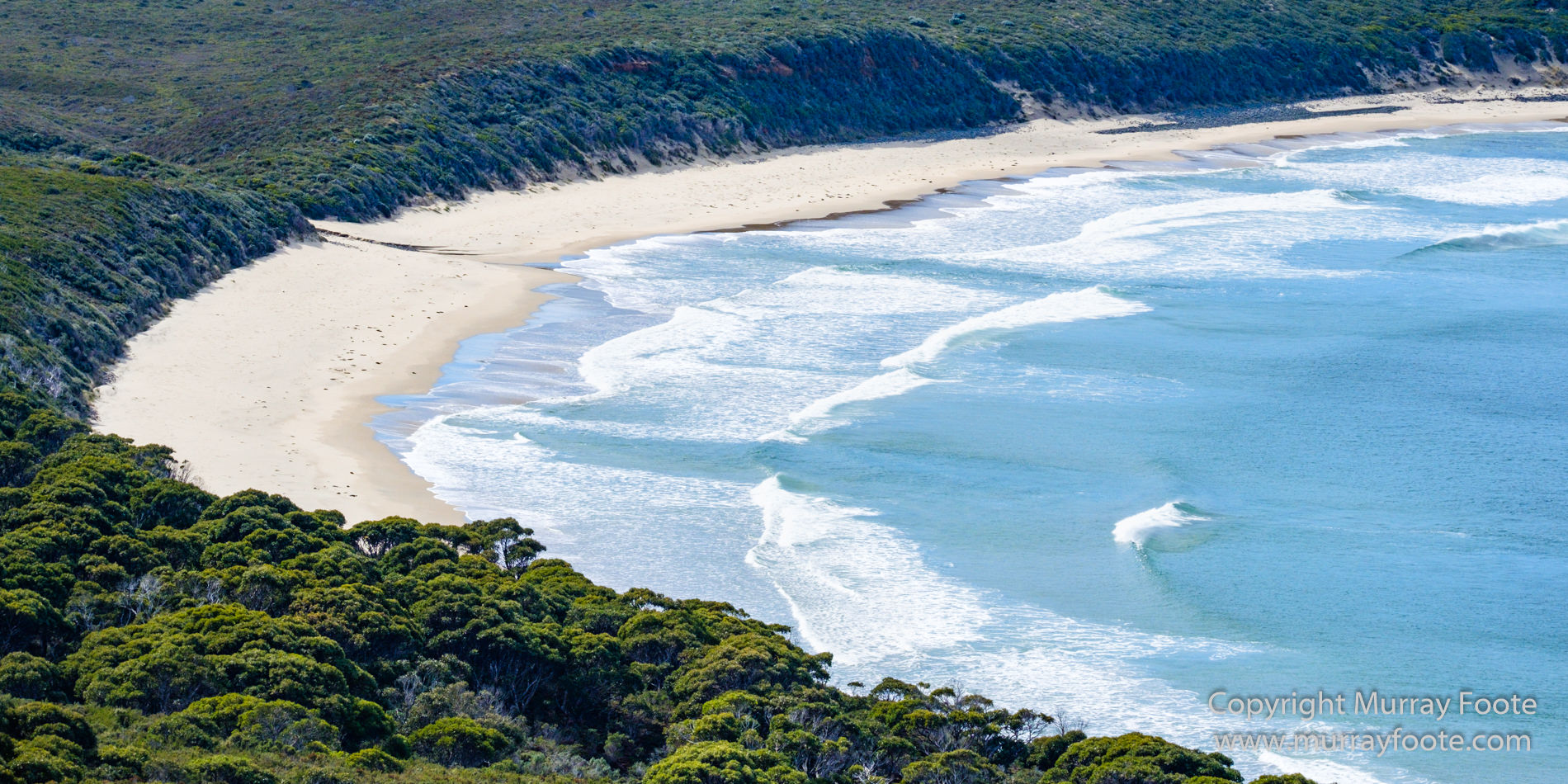 Beach to the north of the lighthouse, near the cottages.
.
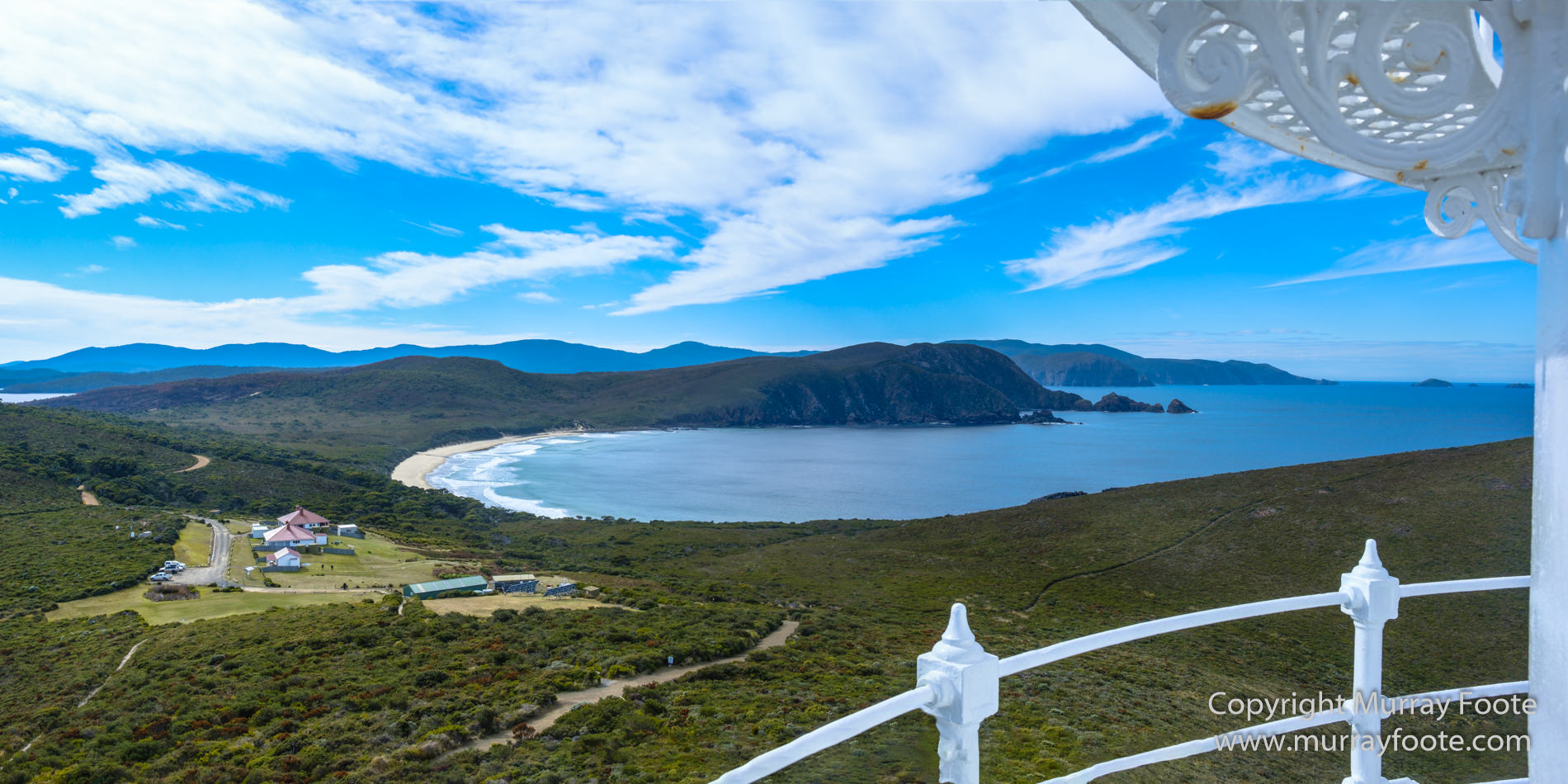
A view from the lighthouse balcony showing the cottages, beach and coastline. Families were permitted after 1878. There then would have been three cottages for three keepers working eight hour shifts.
.
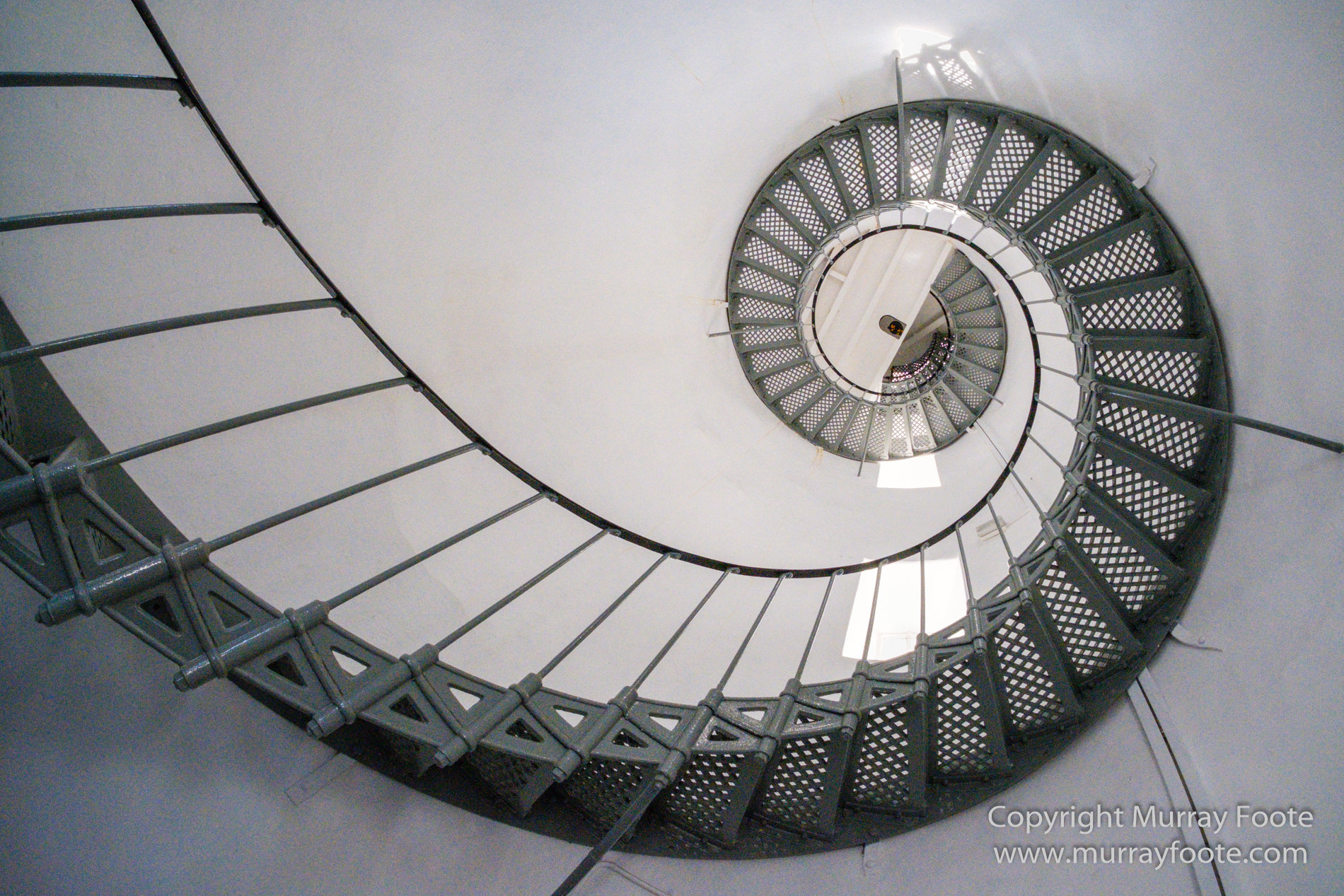
Another view looking up as I leave the lighthouse.
.
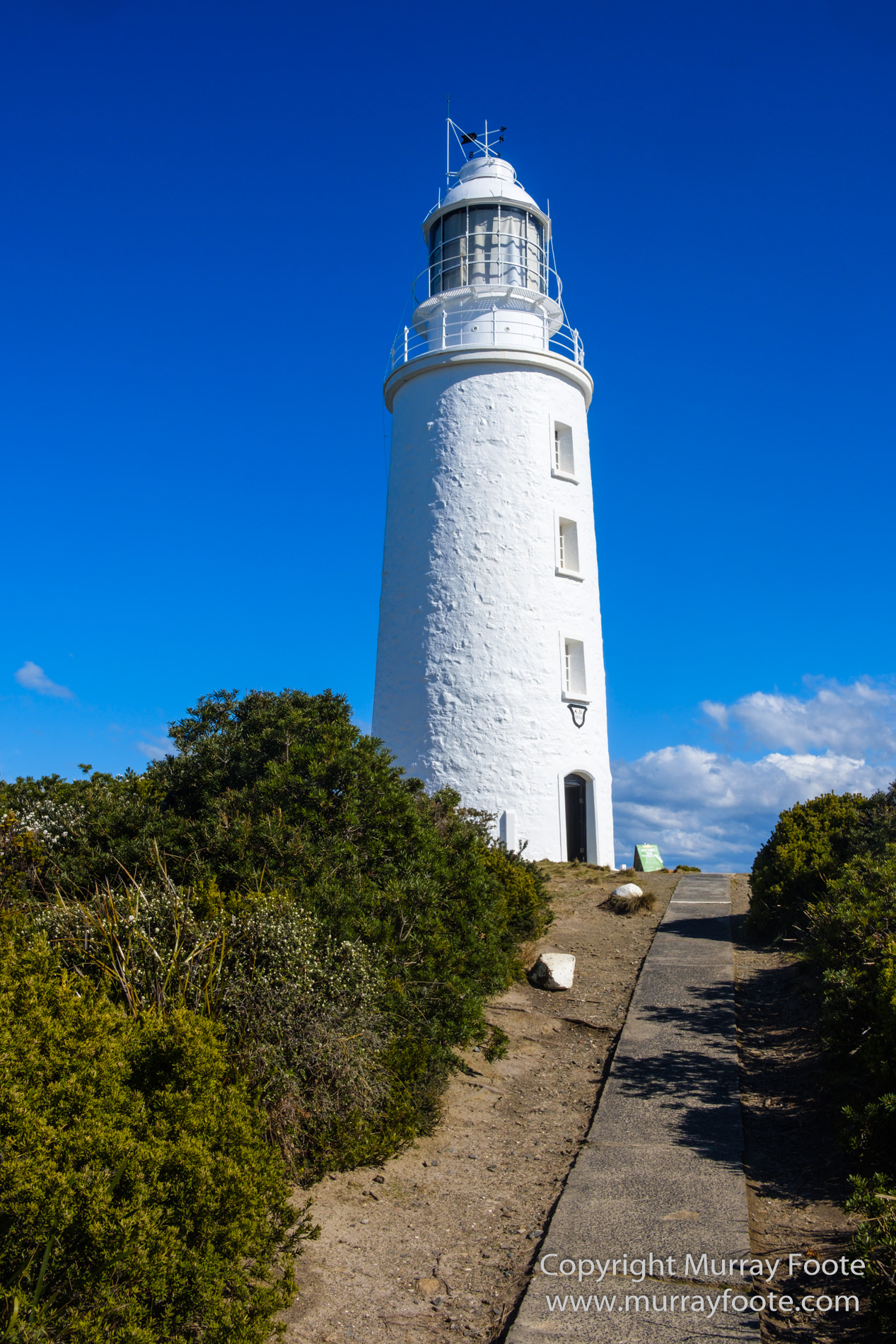
The original keeper in 1838 had three convict assistants and relations between the keeper and the convicts were very formal.
.
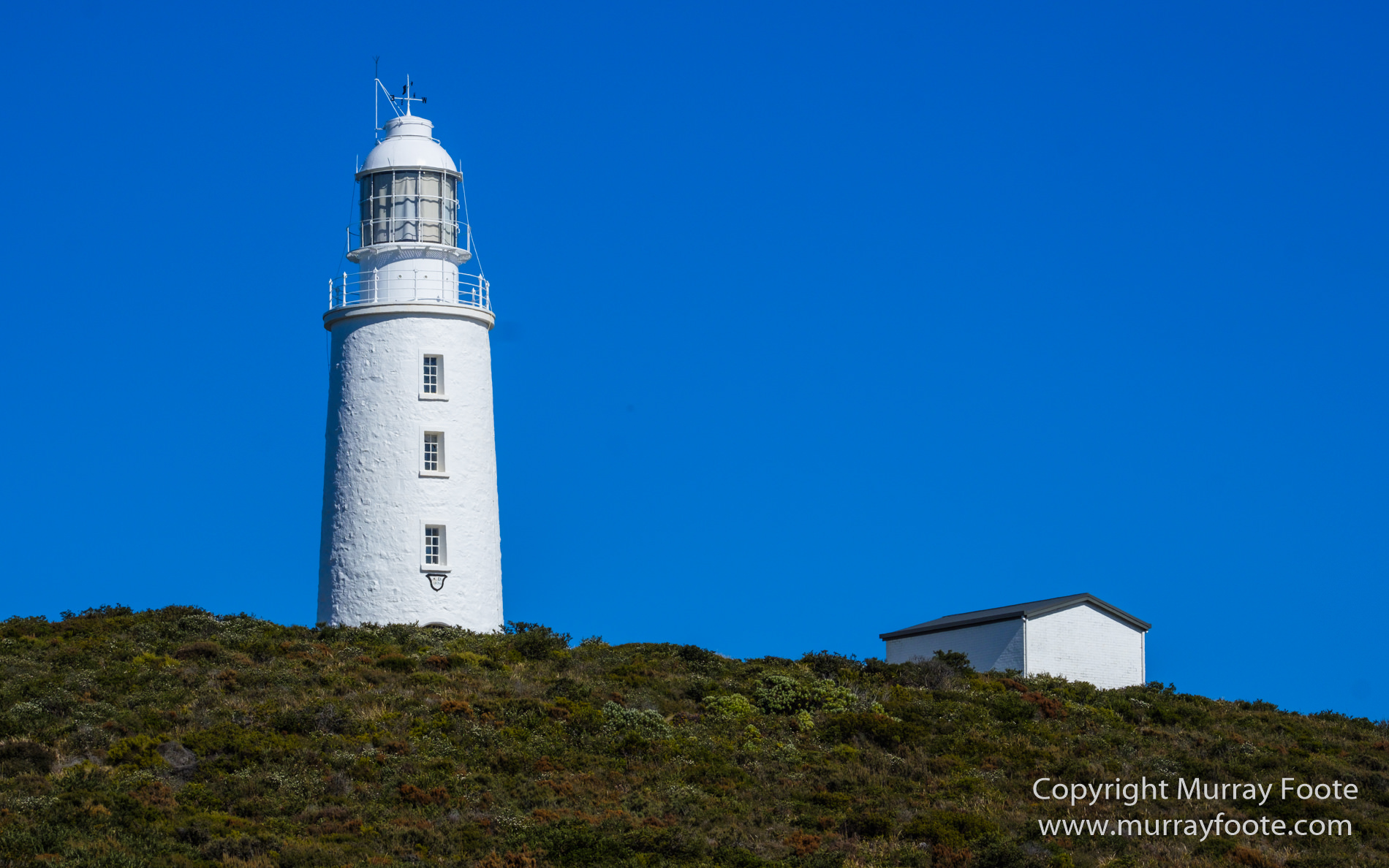
These days radar and GPS has replaced the need for lighthouses except for small vessels such as fishing boats. The lights are in any case automated and the keepers gone. The light here was replaced by a smaller one further out on the point and the lighthouse has not been turned on since 1996.
.
 Murray Foote