Kangaroo Island, South Australia, 8 July 2024.
(Recent Posts, Top Posts, Subscribe and Search at bottom of page. Clicking image doubles size (on PC). Trip summary and posts . . . . ..)
.
Following the koala walk in the previous post, we attended a display at the Raptor Domain. These are trained captive birds on display for tourists and provide good opportunities for capturing birds in flight, albeit not in a wild setting.
.
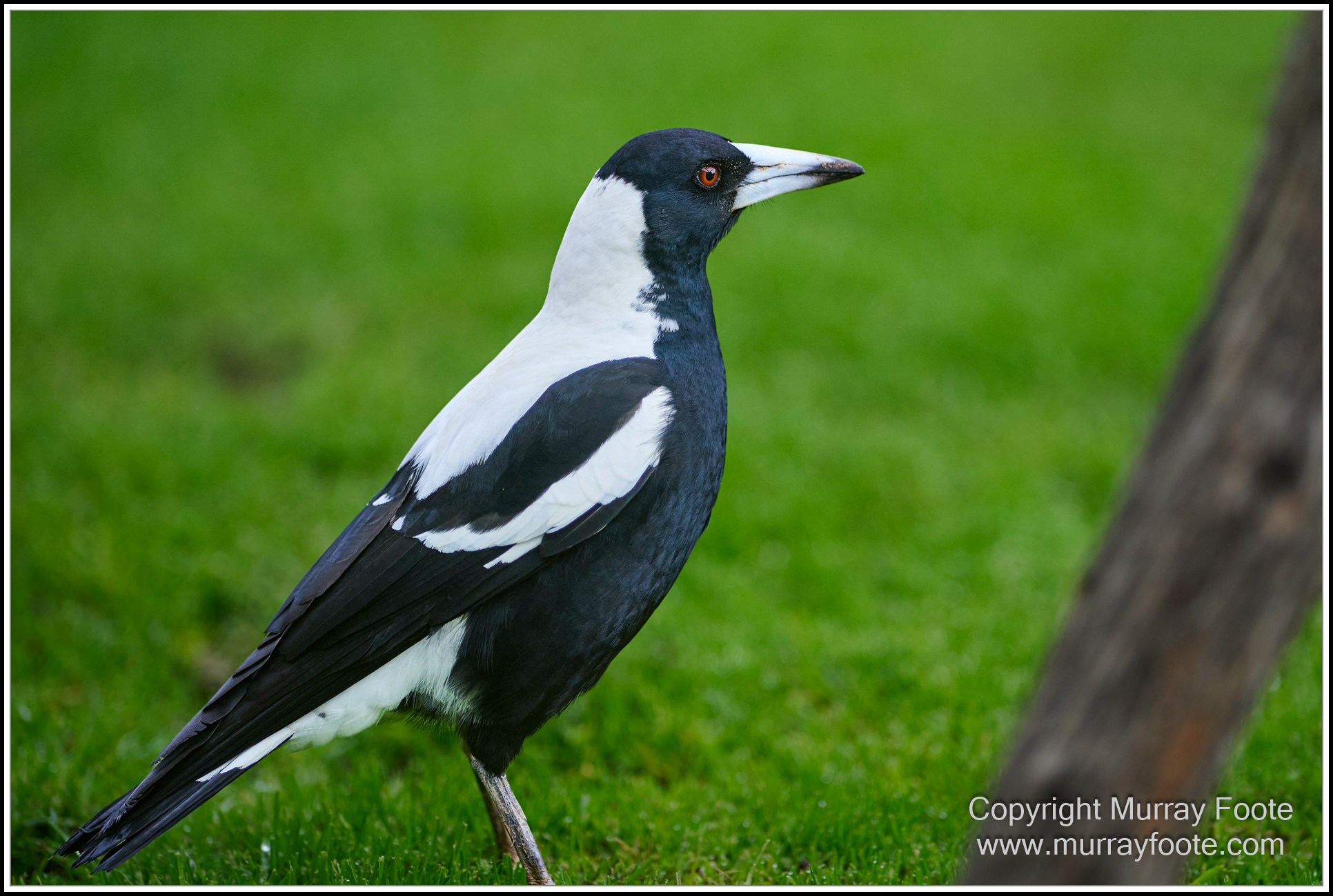
White-backed Magpie.
In Canberra, Sydney and Queensland most common is the Black-backed Magpie. The Australian Magpie is not related to the Eurasian Magpie.
.
.
.
. 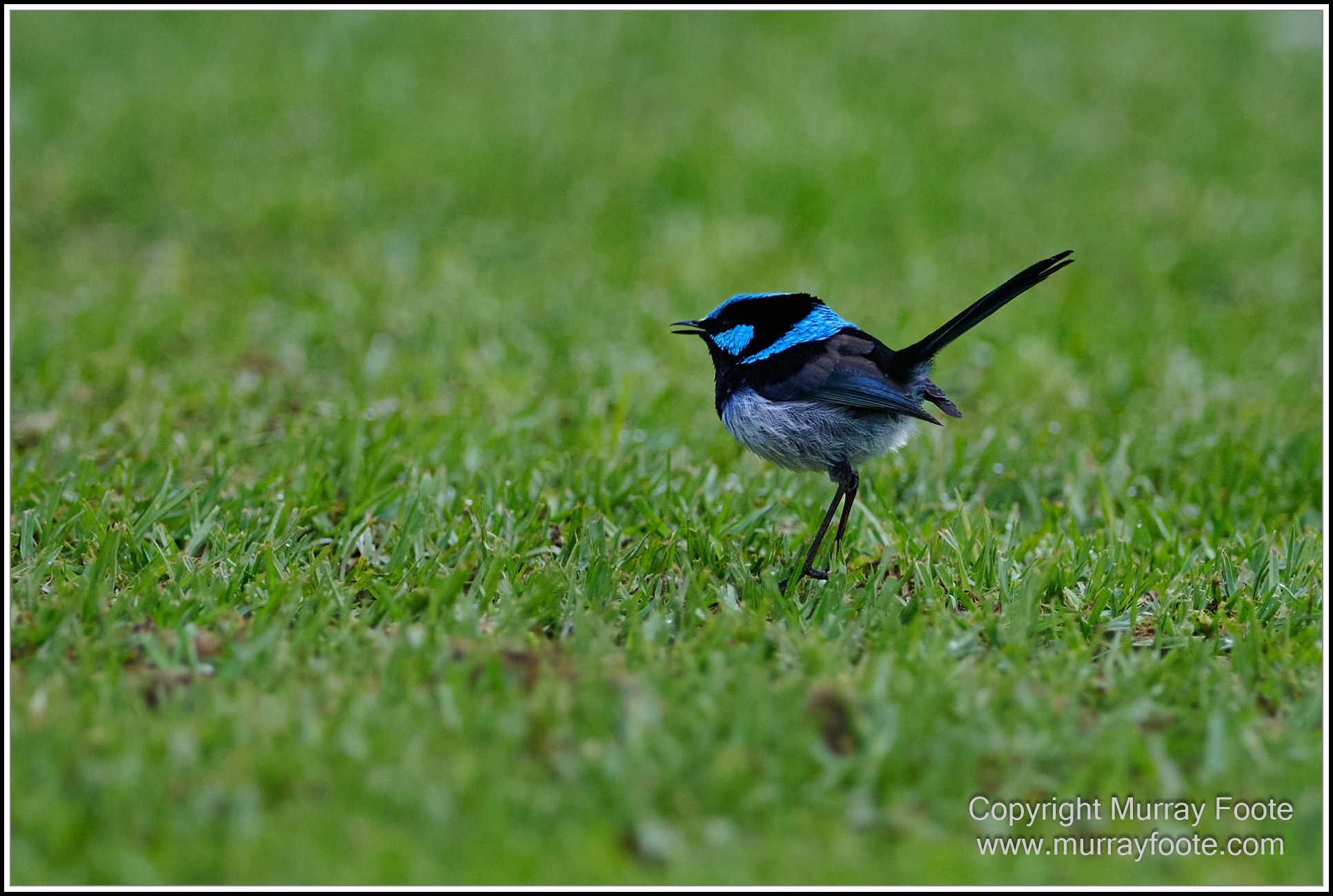
Superb Blue Wren.
.
.
.
.
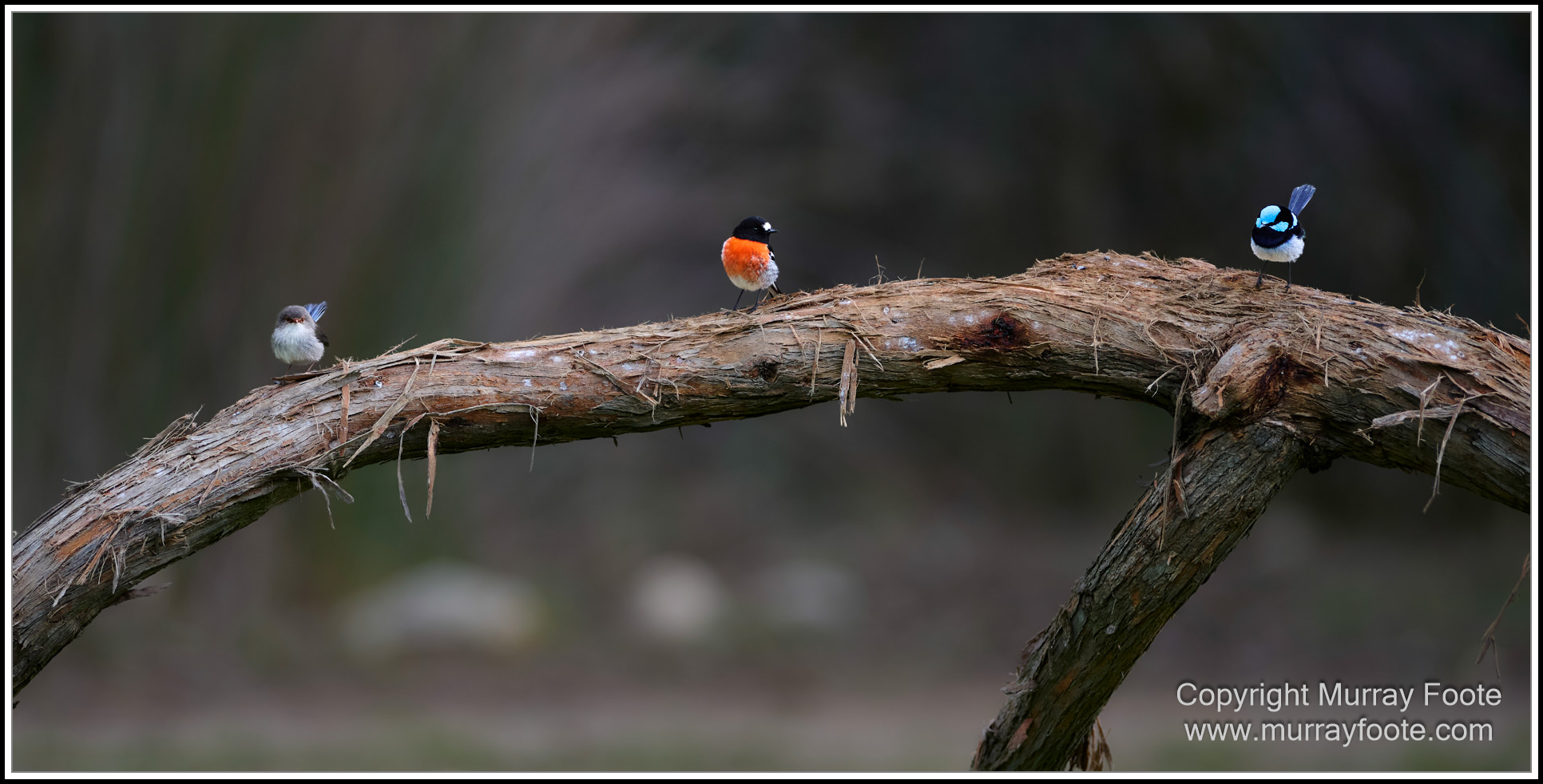
Jenny Wren (female blue wren), Scarlet Robin, Superb Blue Wren (male).
.
.
.
.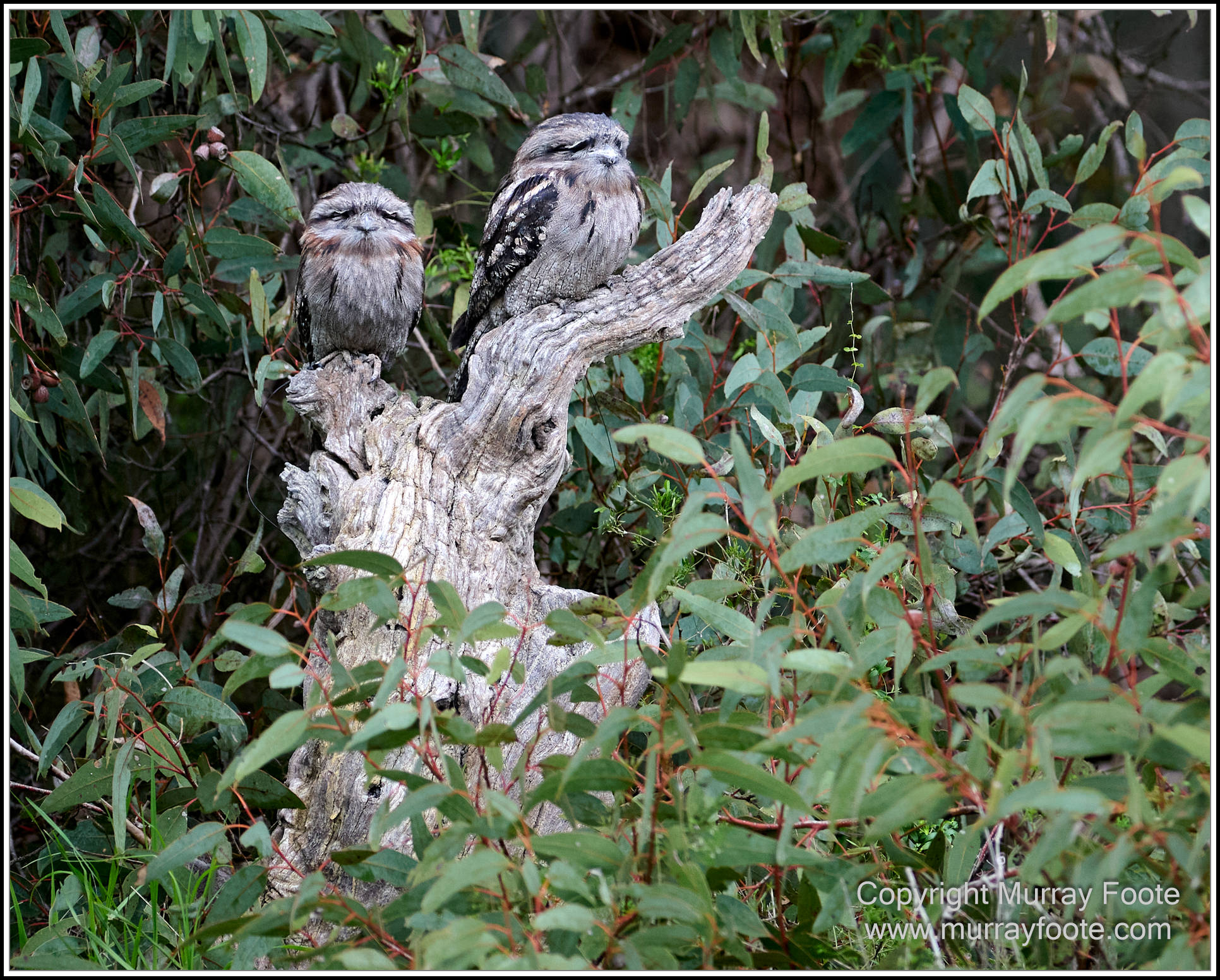
Tawny Frogmouths.
They camouflage well against the bark of large trees and are not related to owls.
.
.
.
.
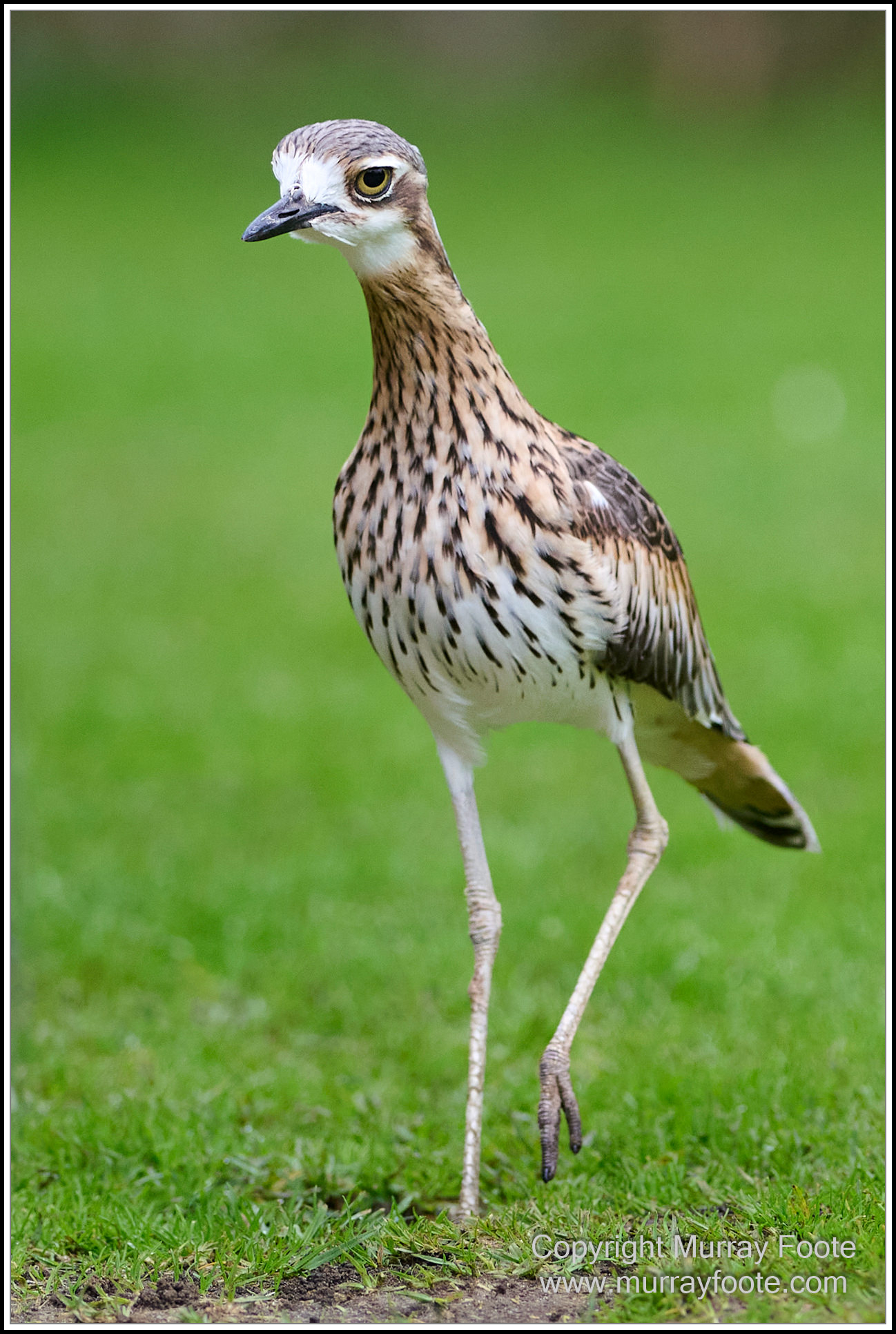
Bush stone-curlew.
Formerly common throughout Australia (except Tasmania), these ground-dwelling birds have declined in numbers due to predation by foxes and feral cats.
.
.
.
. 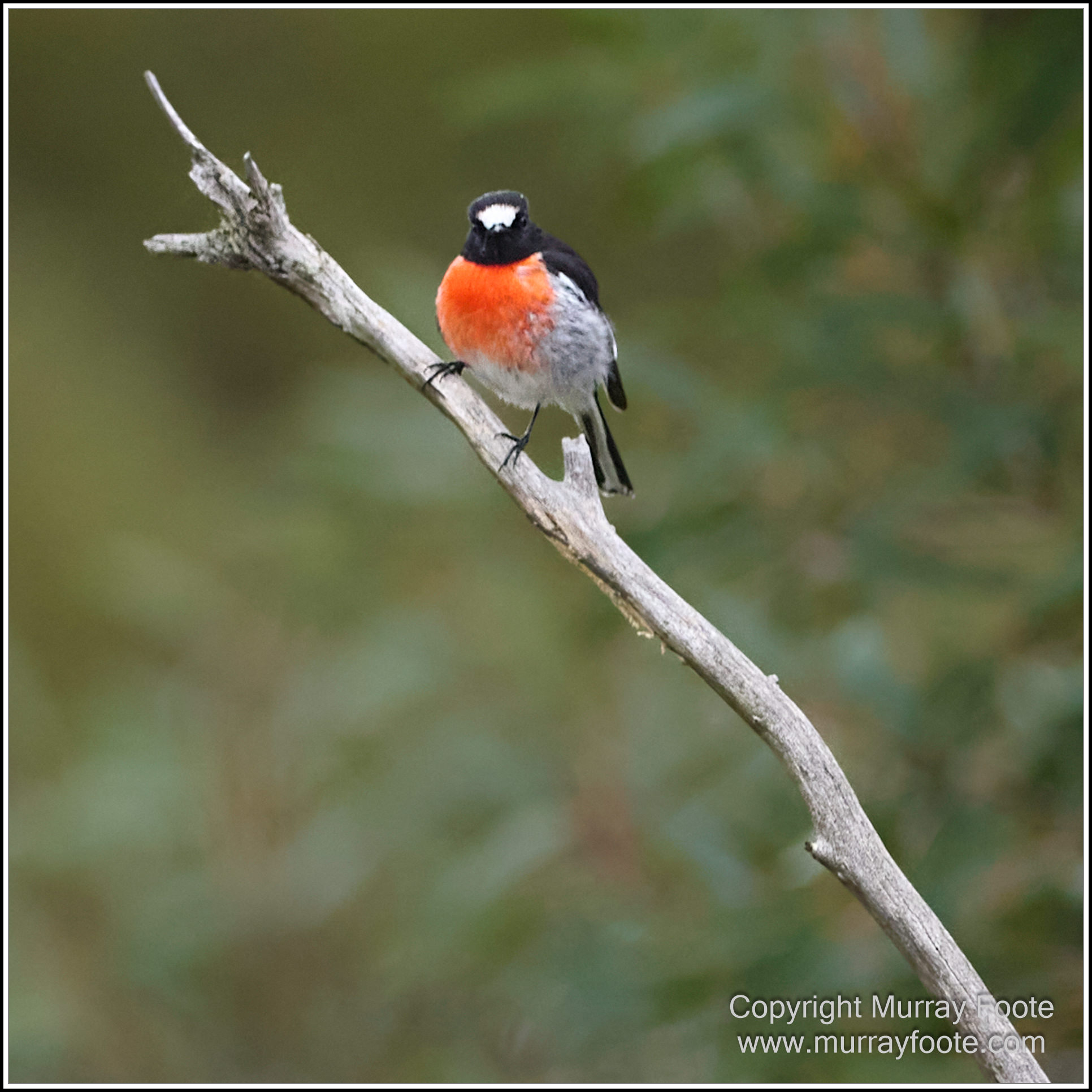
Scarlet Robin.
.
.
.
. 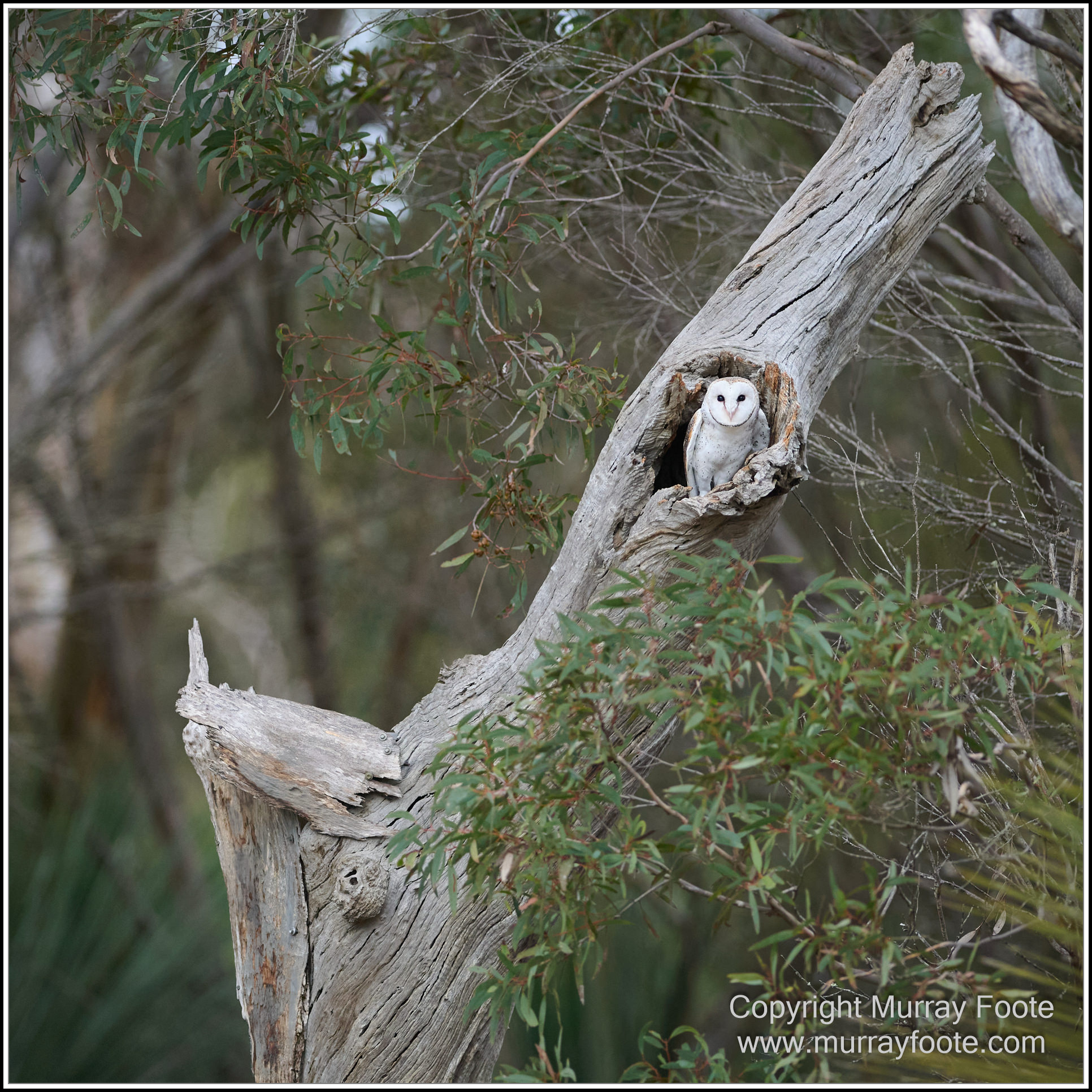
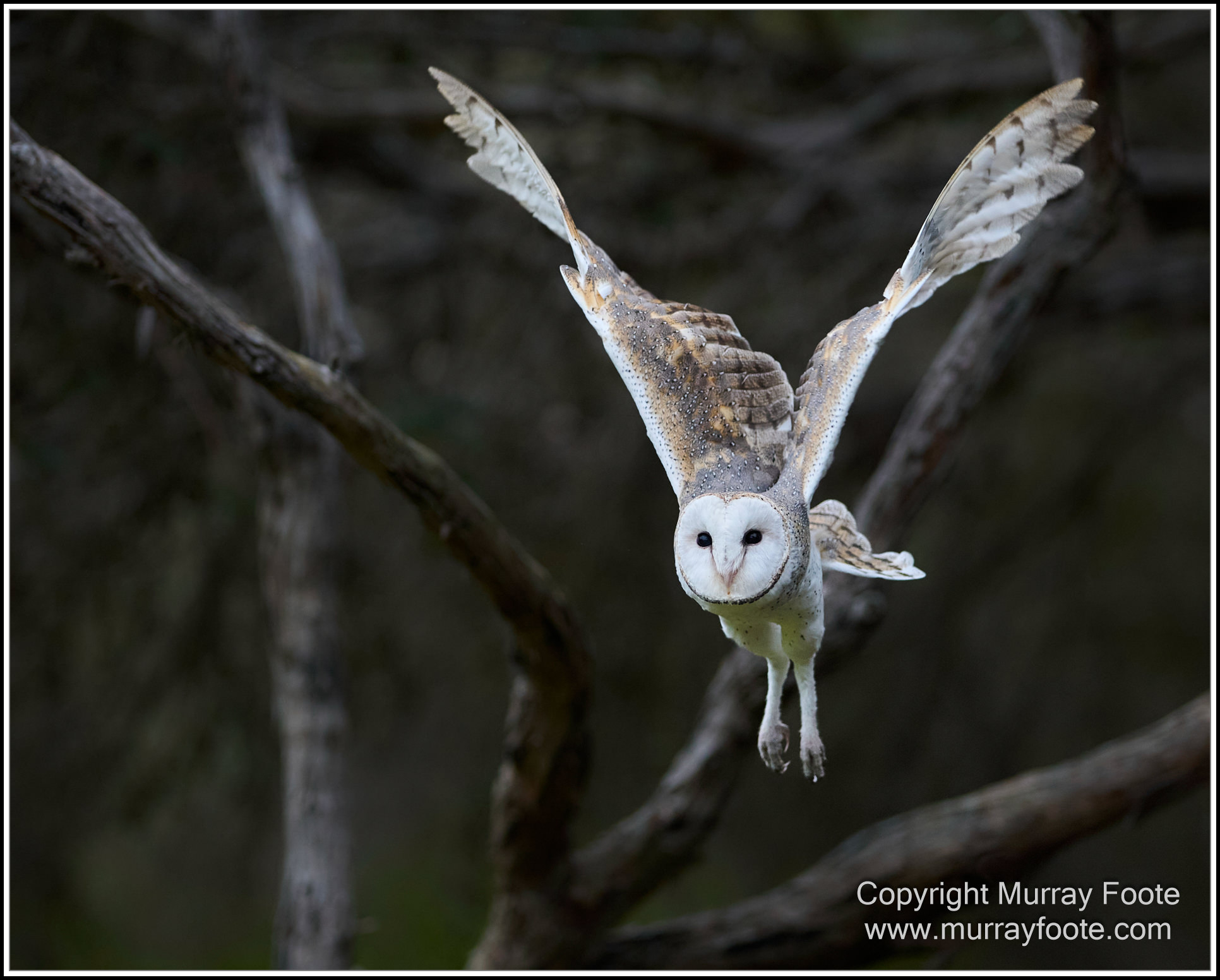
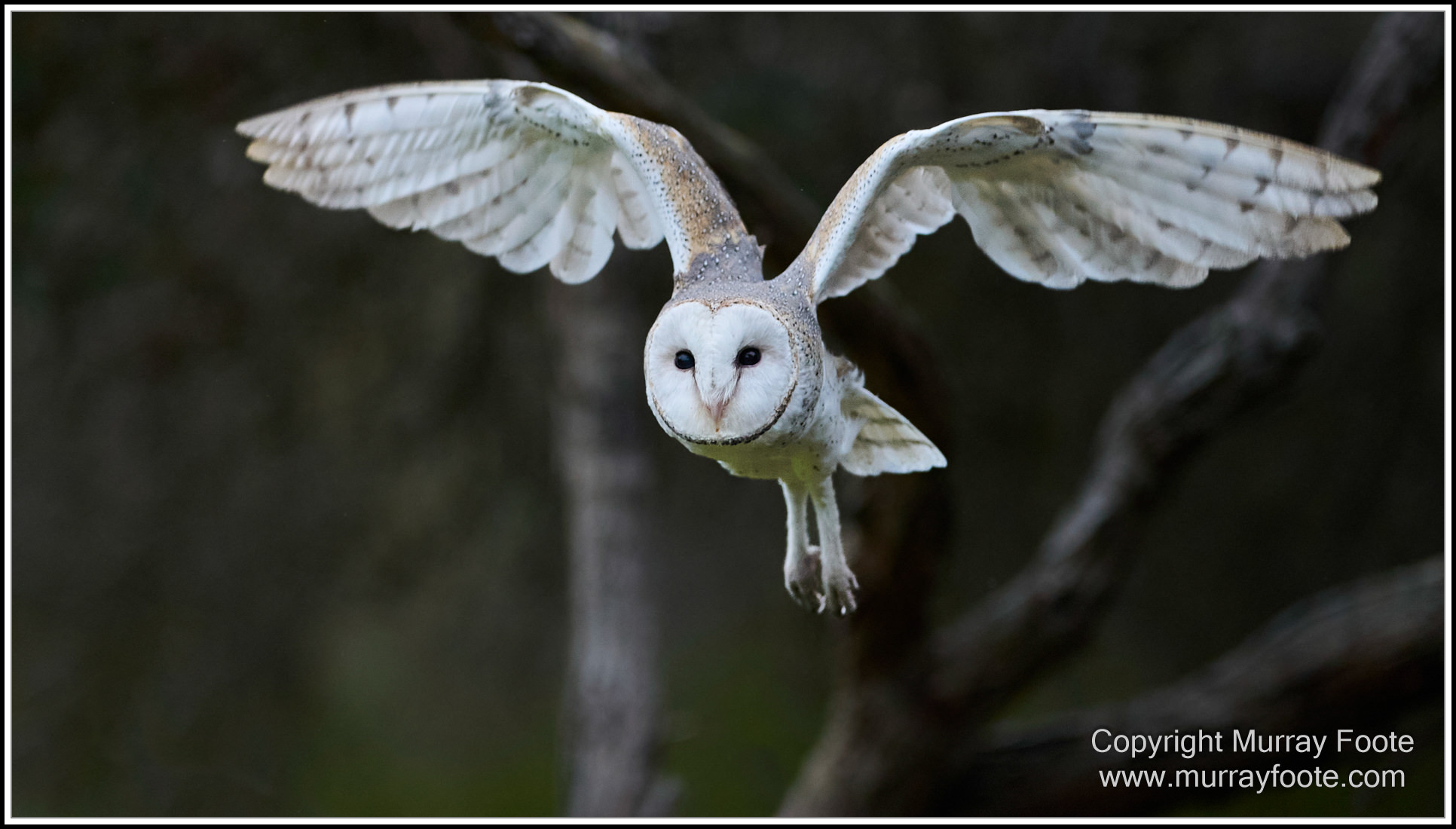
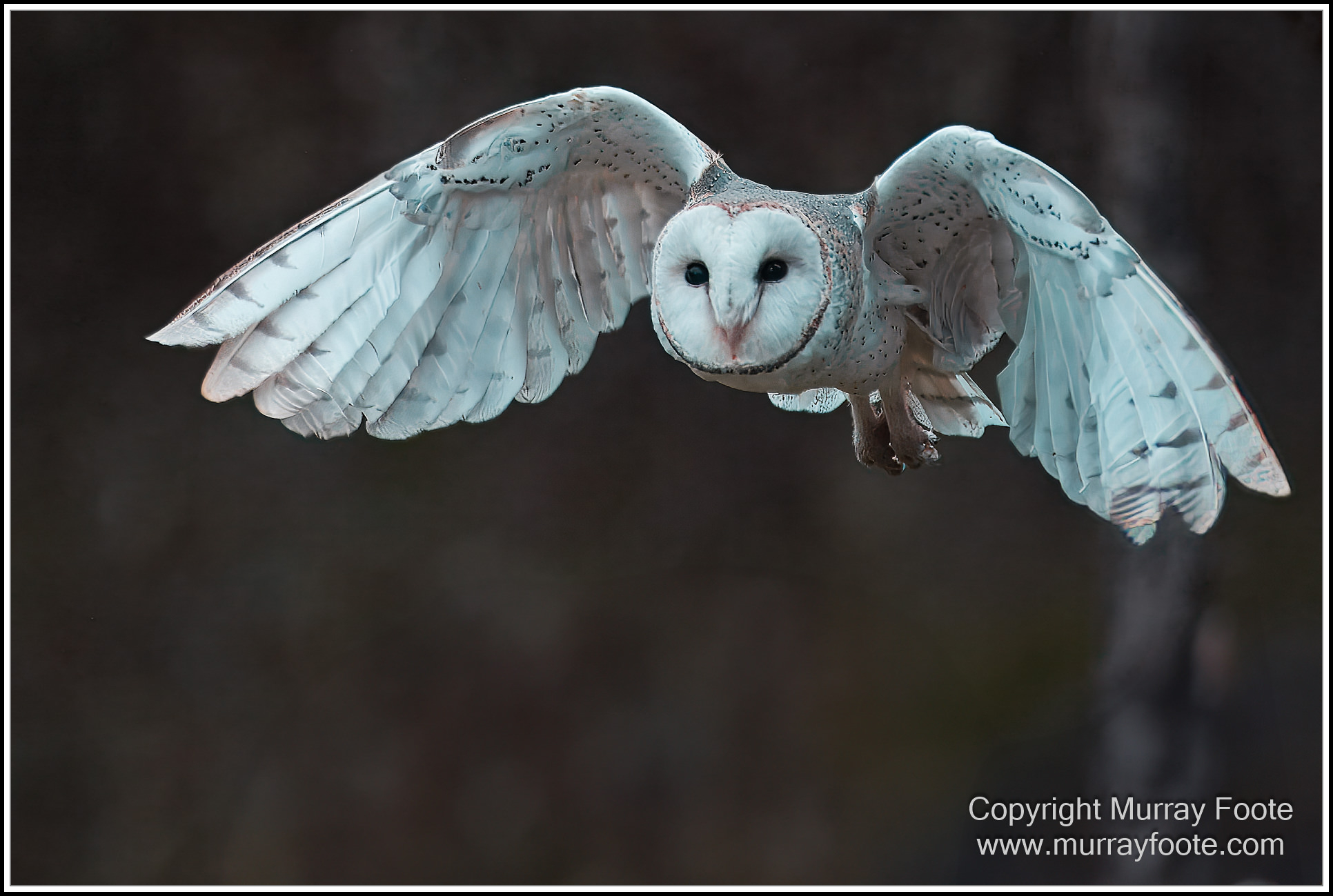
Australian Masked Owl (tyto novaehollandiae).
This is the Australian subspecies of the Barn Owl which overall is the World’s most common owl.
The owl was hidden in the cavity in the wood and emerged when the presenter got the crowd to call out to it.
.
.
. 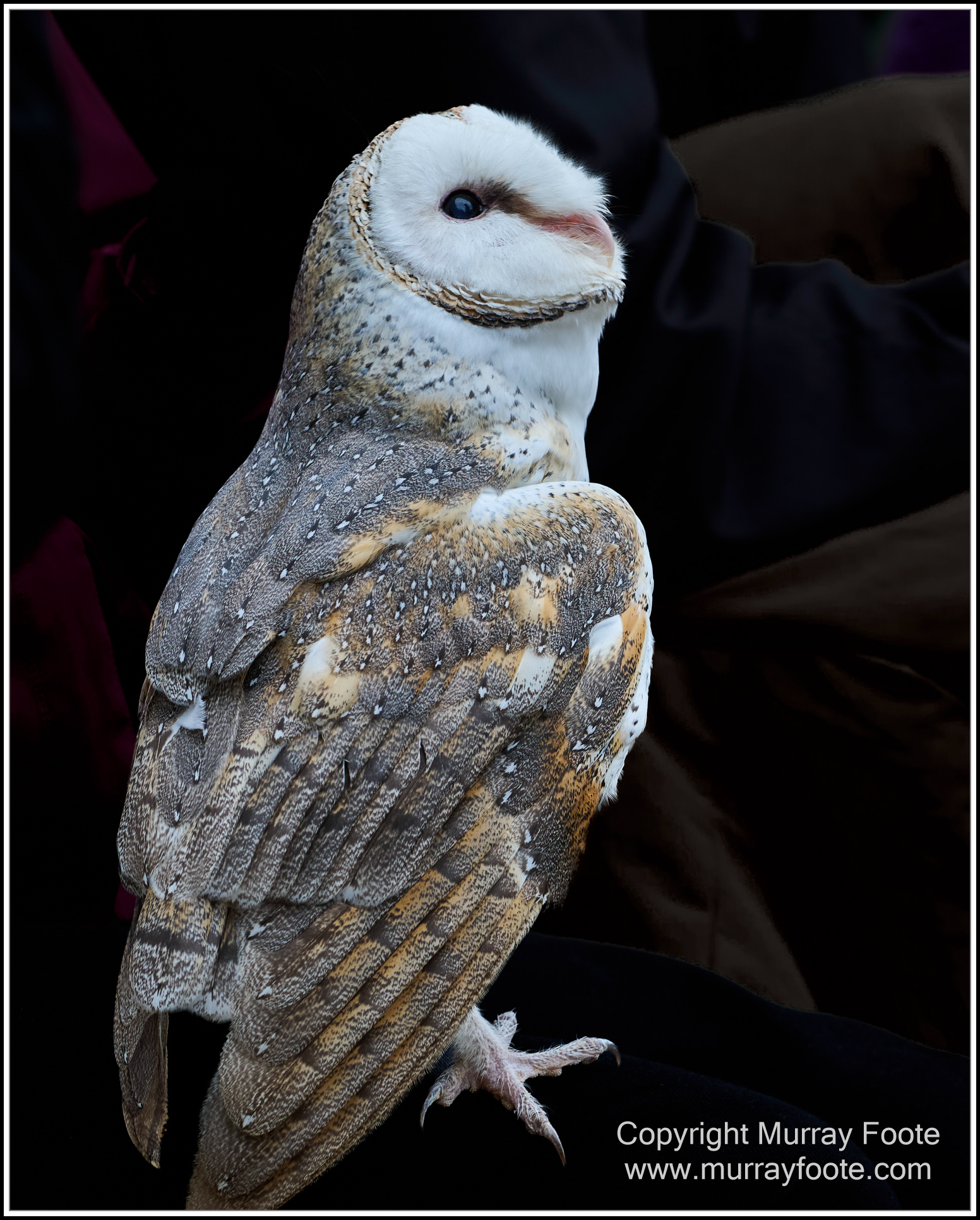
The owl is sitting on someone’s leg and I darkened the distracting background to help you see the colours and detail of the plumage.
.
.
.
. 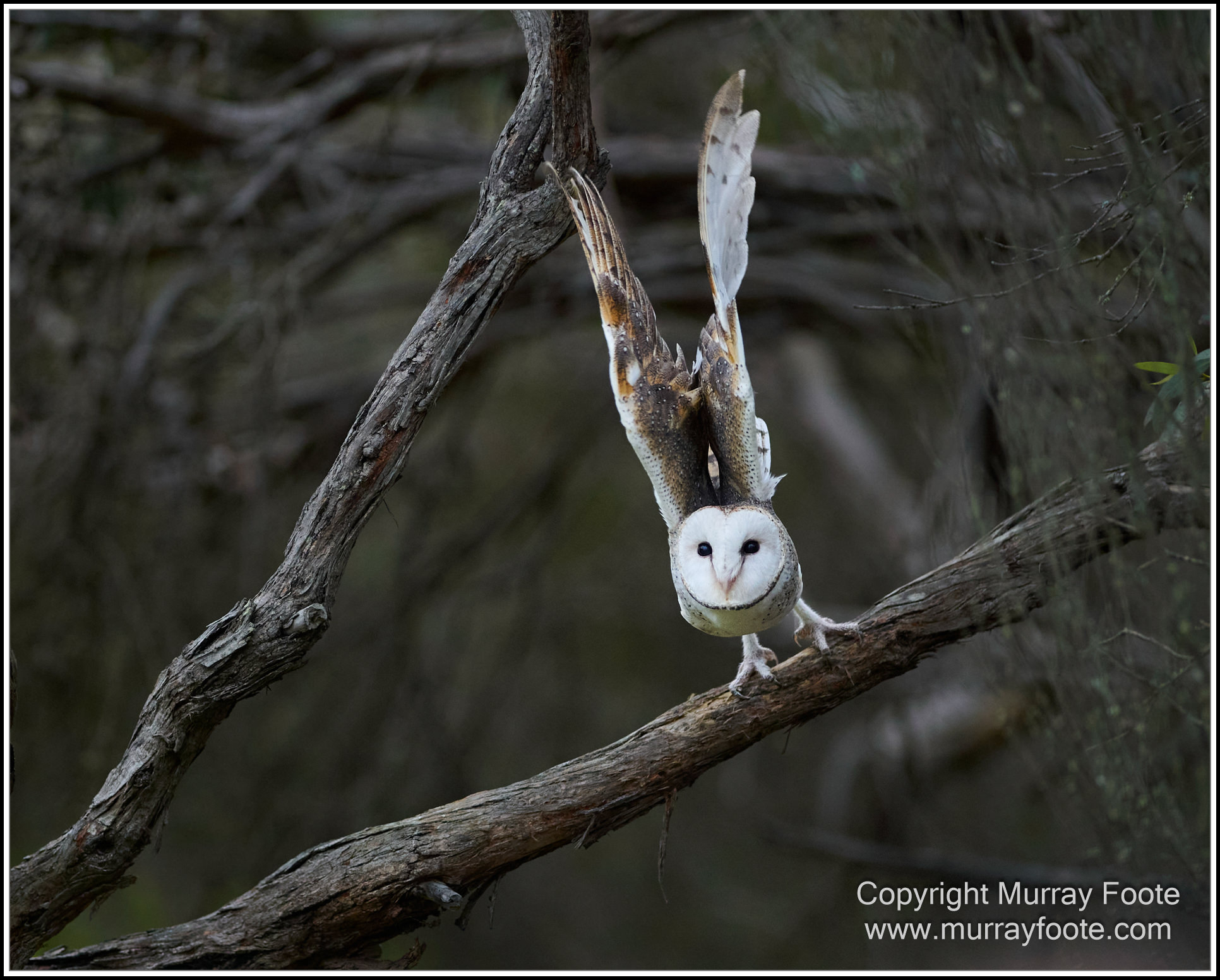
Taking off from a tree branch.
.
.
.
. 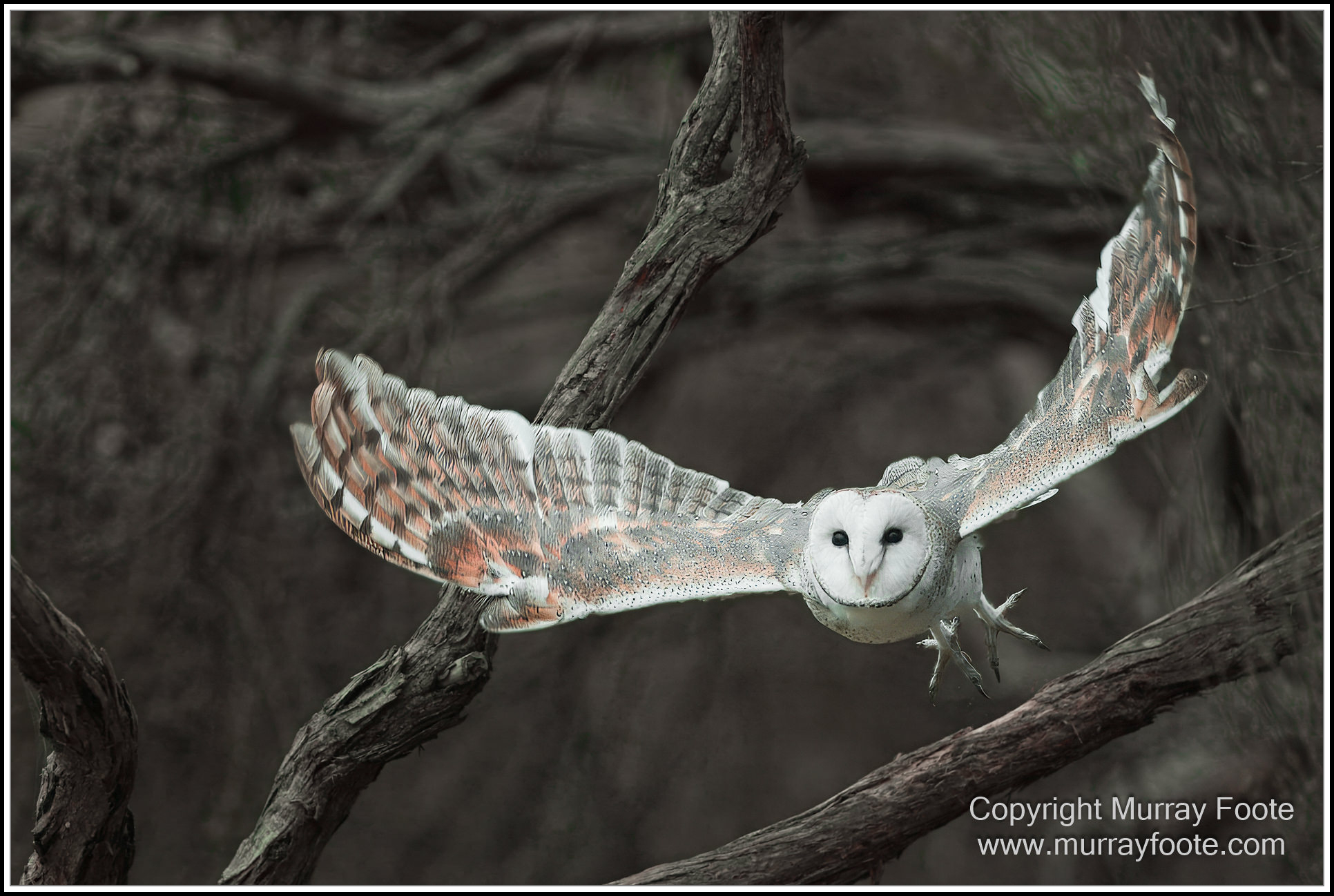
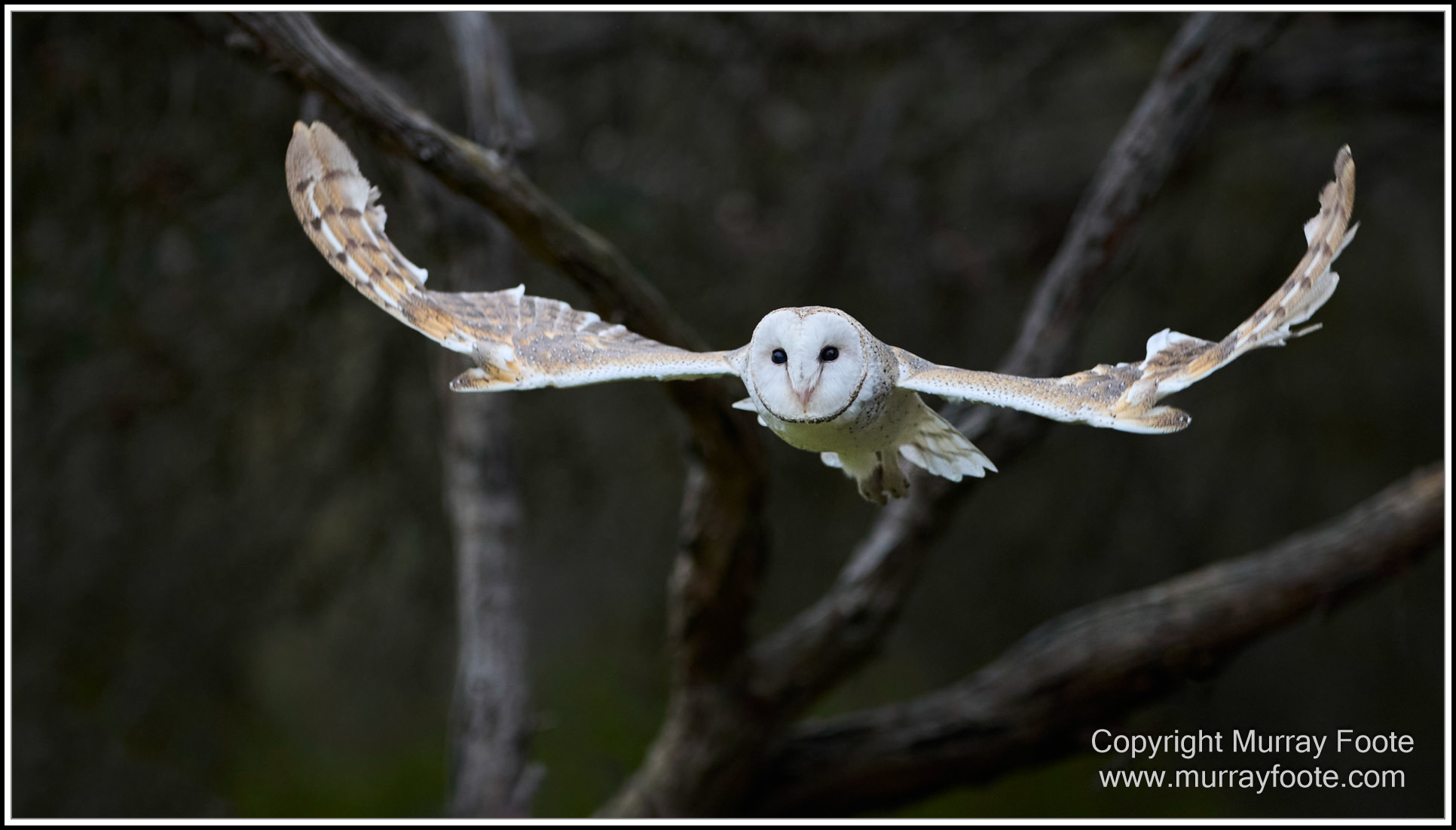
This image and the next five are from a single flight sequence. Almost every one was in sharp focus and the few that weren’t were only just out.
.
.
.
.  .
.
.
.
.  .
.
.
.
. 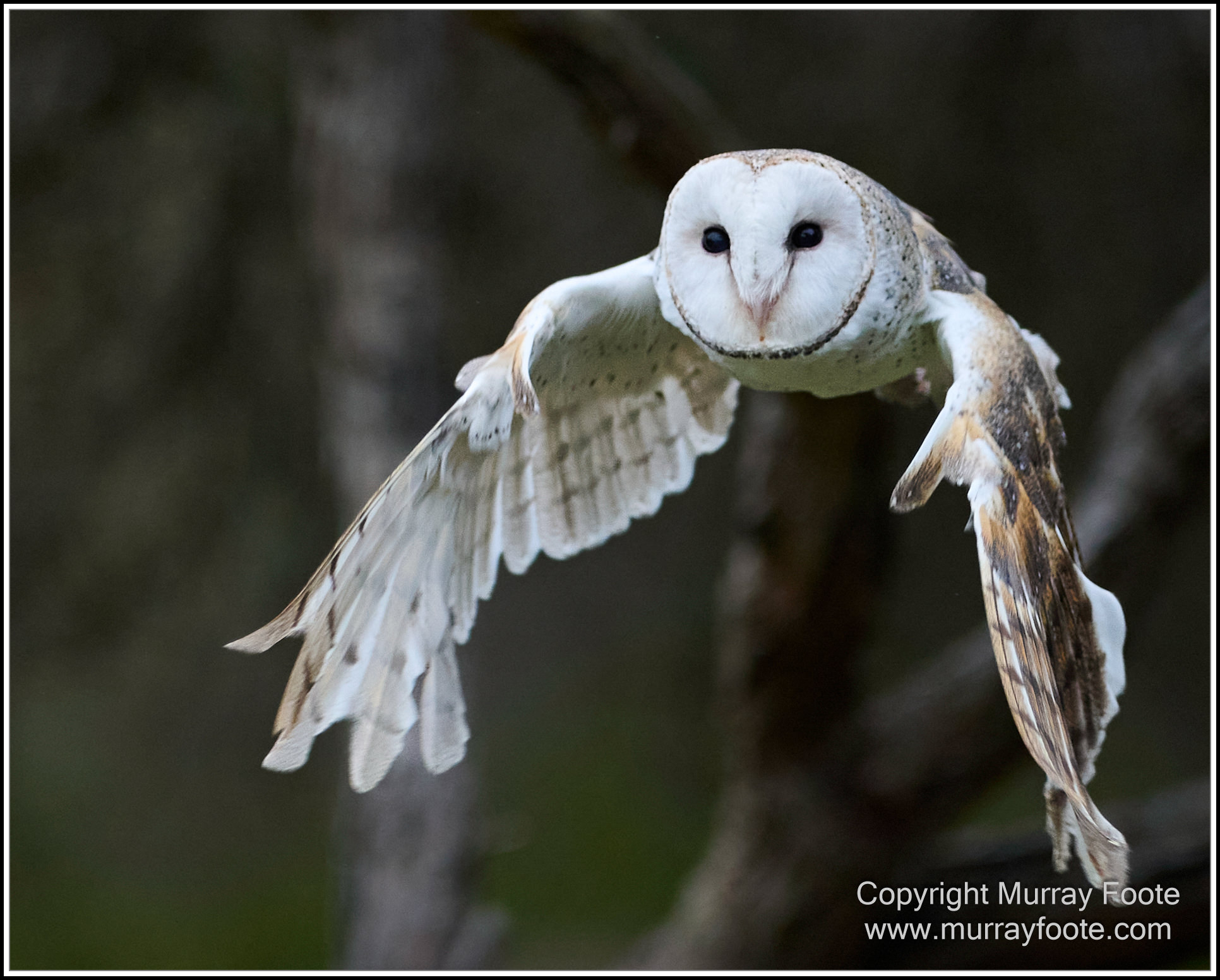
You have to compose loosely for these type of shots or the bird will fly out of the frame. So most of them are cropped and this one in particular was cropped 85% and still pretty sharp.
.
.
.
.  .
.
.
.
.  .
.
.
.
.  .
.
.
.
. 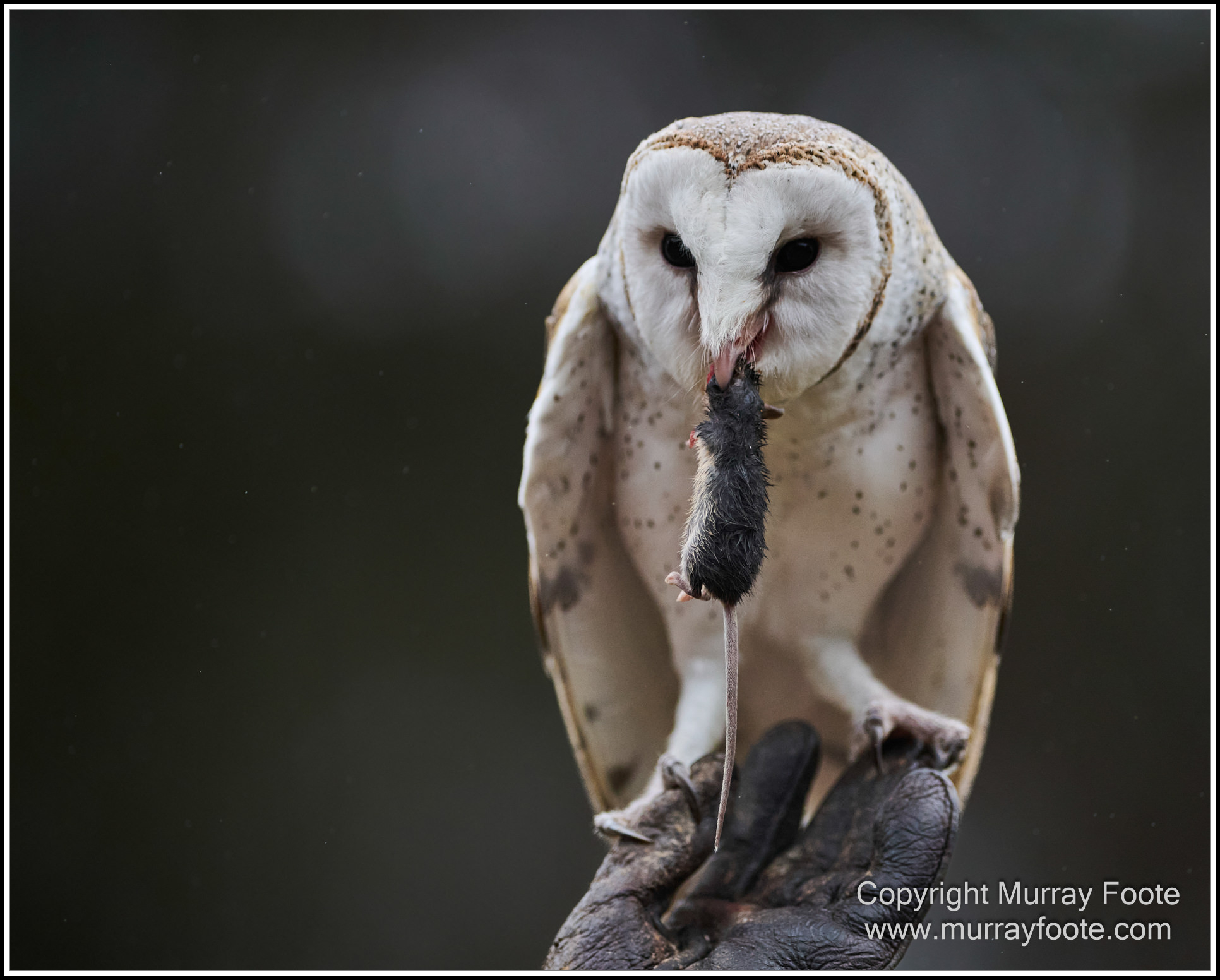
At the end, the reward.
An early name from 1821 for this owl was the mouse owl. You might be able to guess why.
.
.
. 
Down the hatch….
.
.
.
. 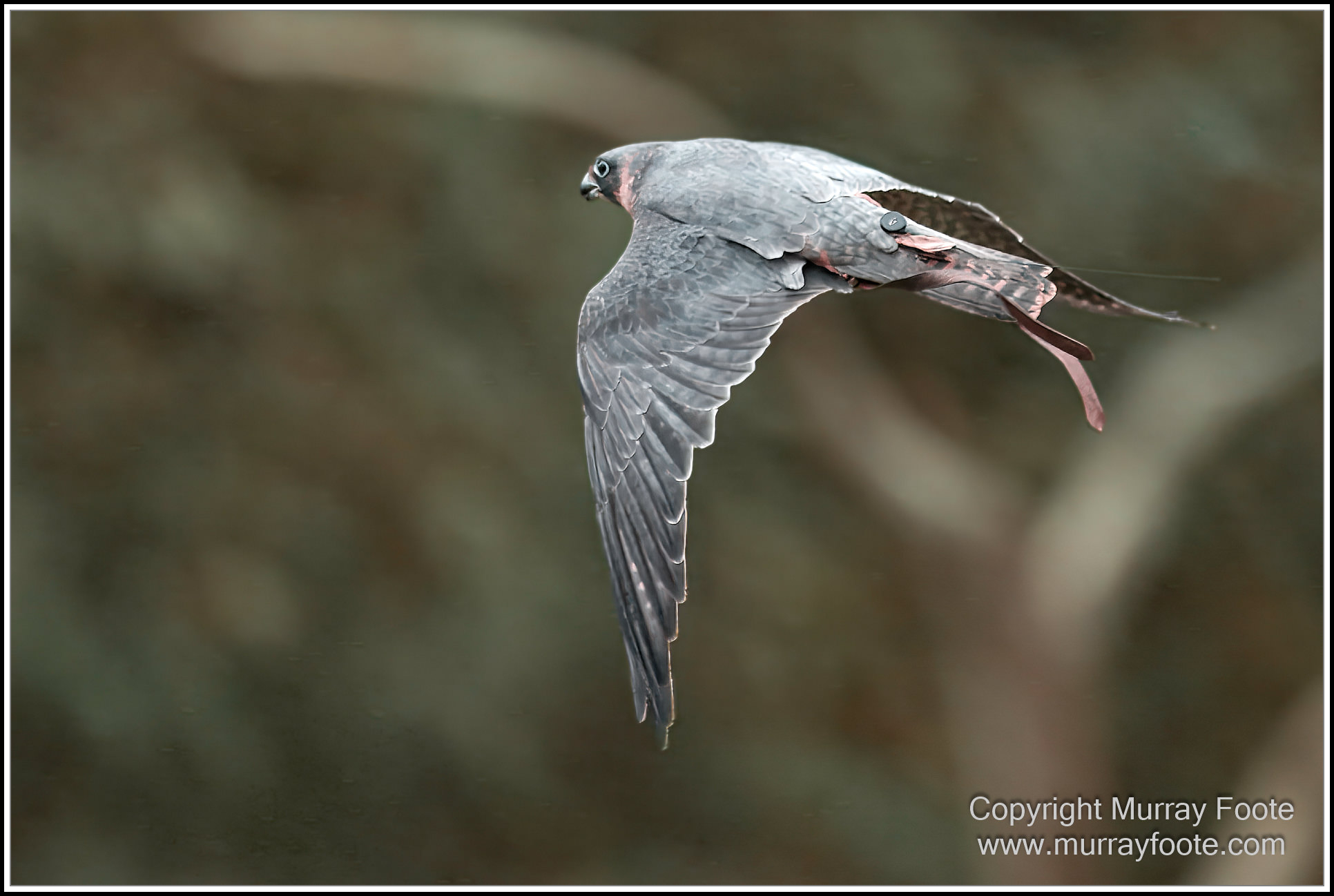
Australian Peregrine Falcon (falco peregrinus macropus).
Peregrine falcons are the world’s most widespread raptor and often said to be the world’s fastest bird.
.
For all these images I was using a Nikon Z6iii and a 300mm f2.8 lens. The camera was newly released with greatly improved but quite complex autofocus capabilities. Guides for the camera were not yet available and I didn’t always use the best methods. I was able to fix focus for the masked owl and then nail flight sequences. I didn’t find it so easy with this falcon and the cockatoos which were zooming around overhead without warning, and later found there would have been better settings.
.
.
.
. 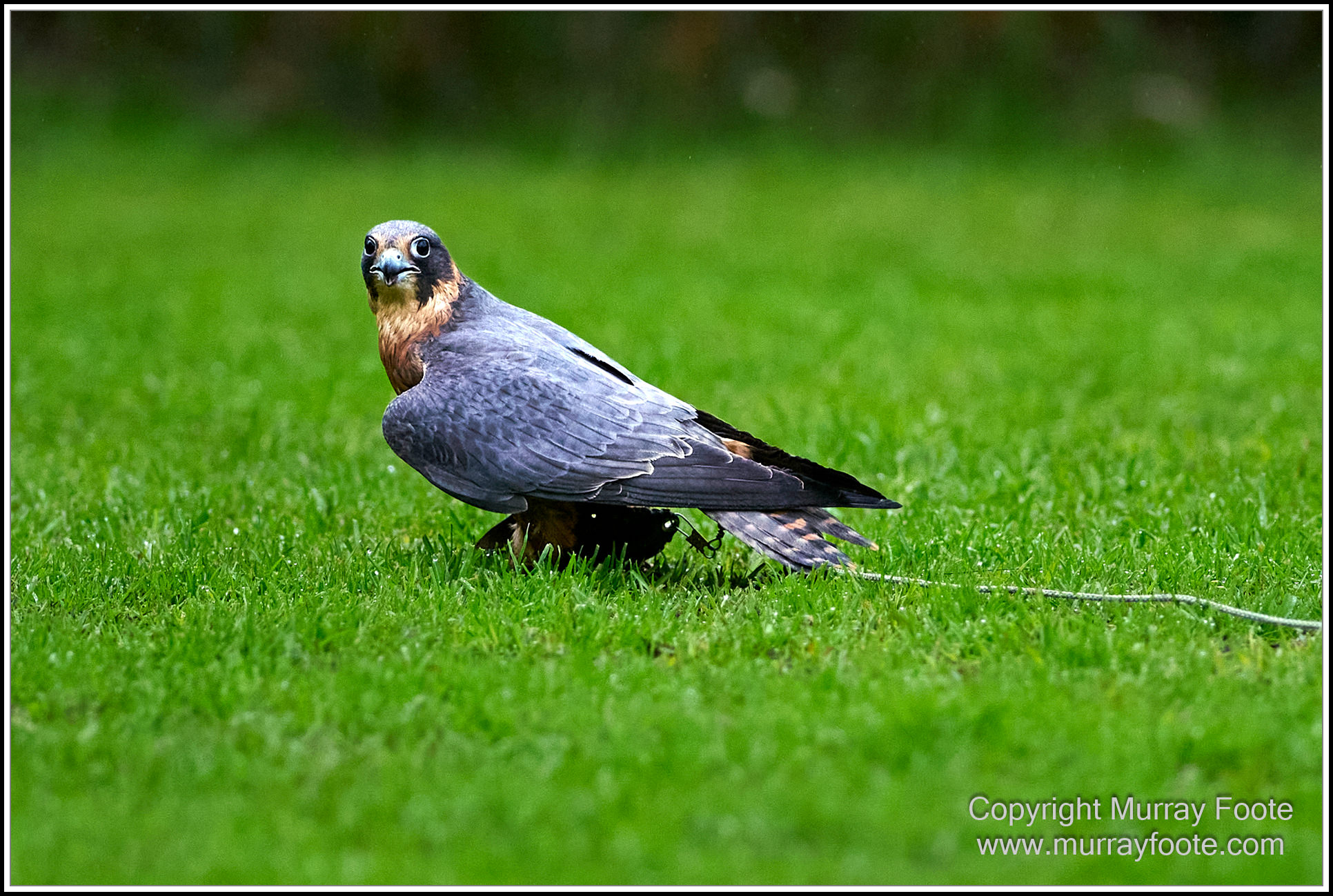
The falcon must be sitting on a lure which has a rope attached.
.
.
.
. 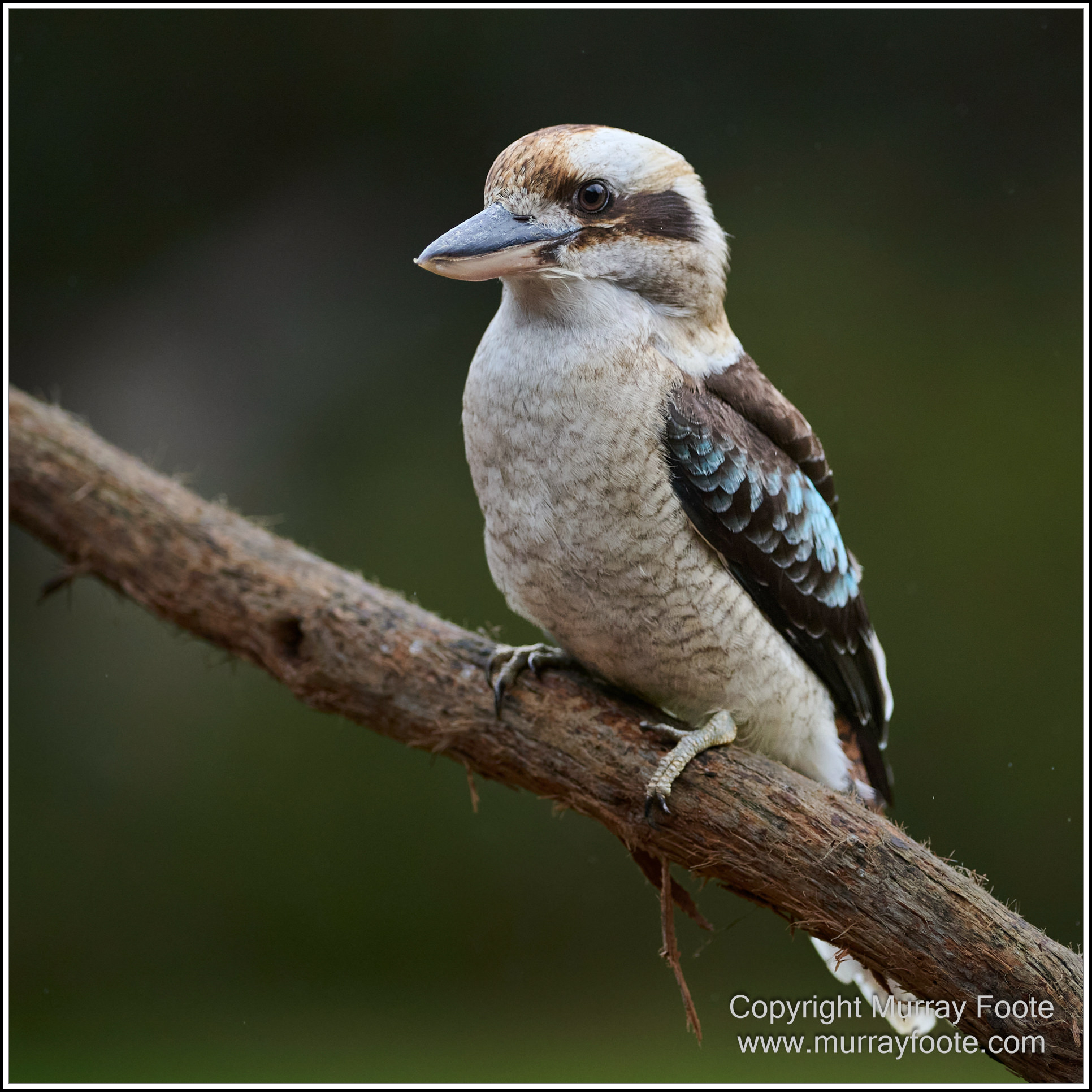
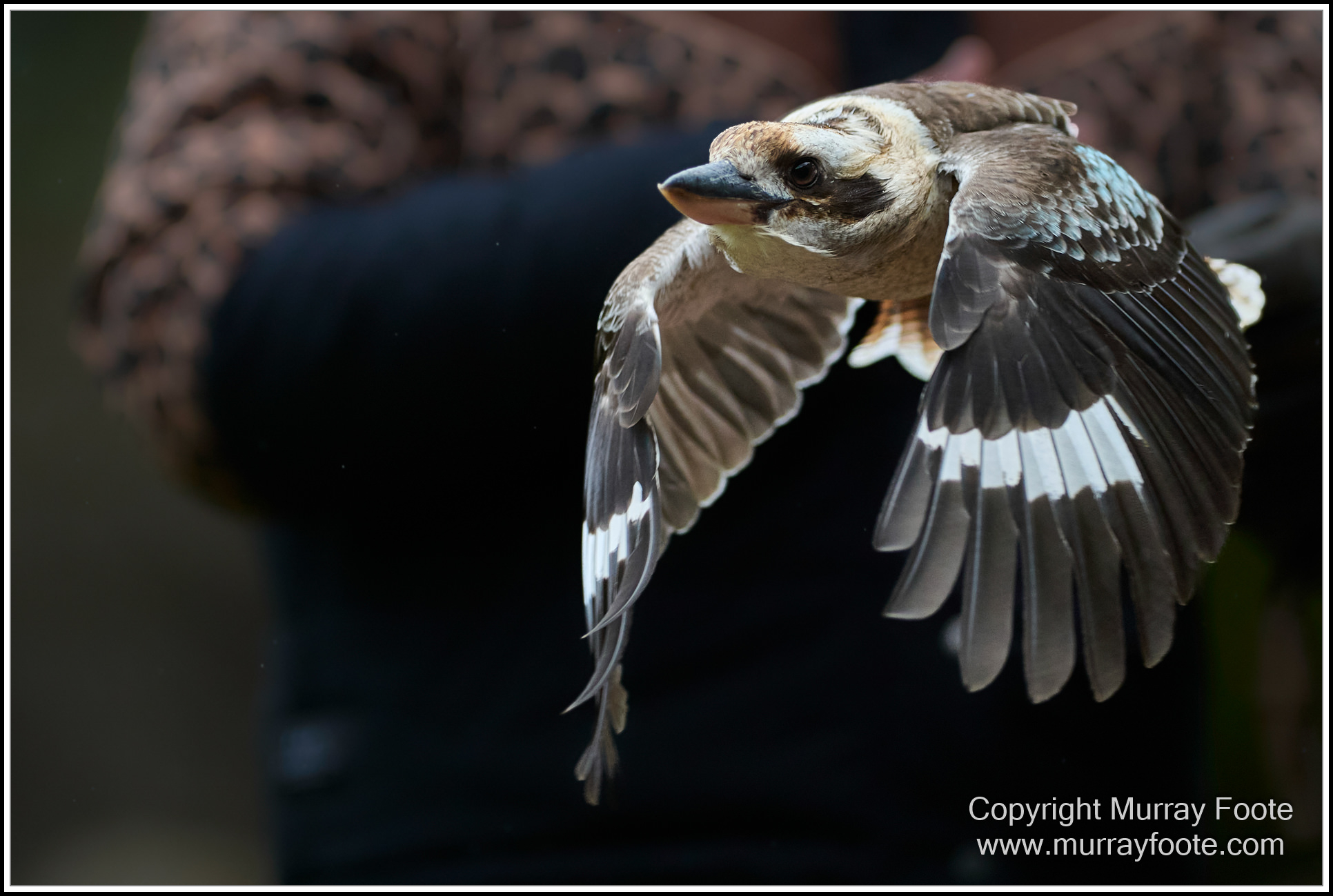
Laughing Kookaburra (dacelo novaeguineae).
Kookaburra are the largest kingfisher, larger than the giant kingfisher of Africa. They are endemic to eastern mainland Australia but were introduced to Kangaroo Island.
.
.
.
.  .
.
.
.
.  .
.
.
.
. 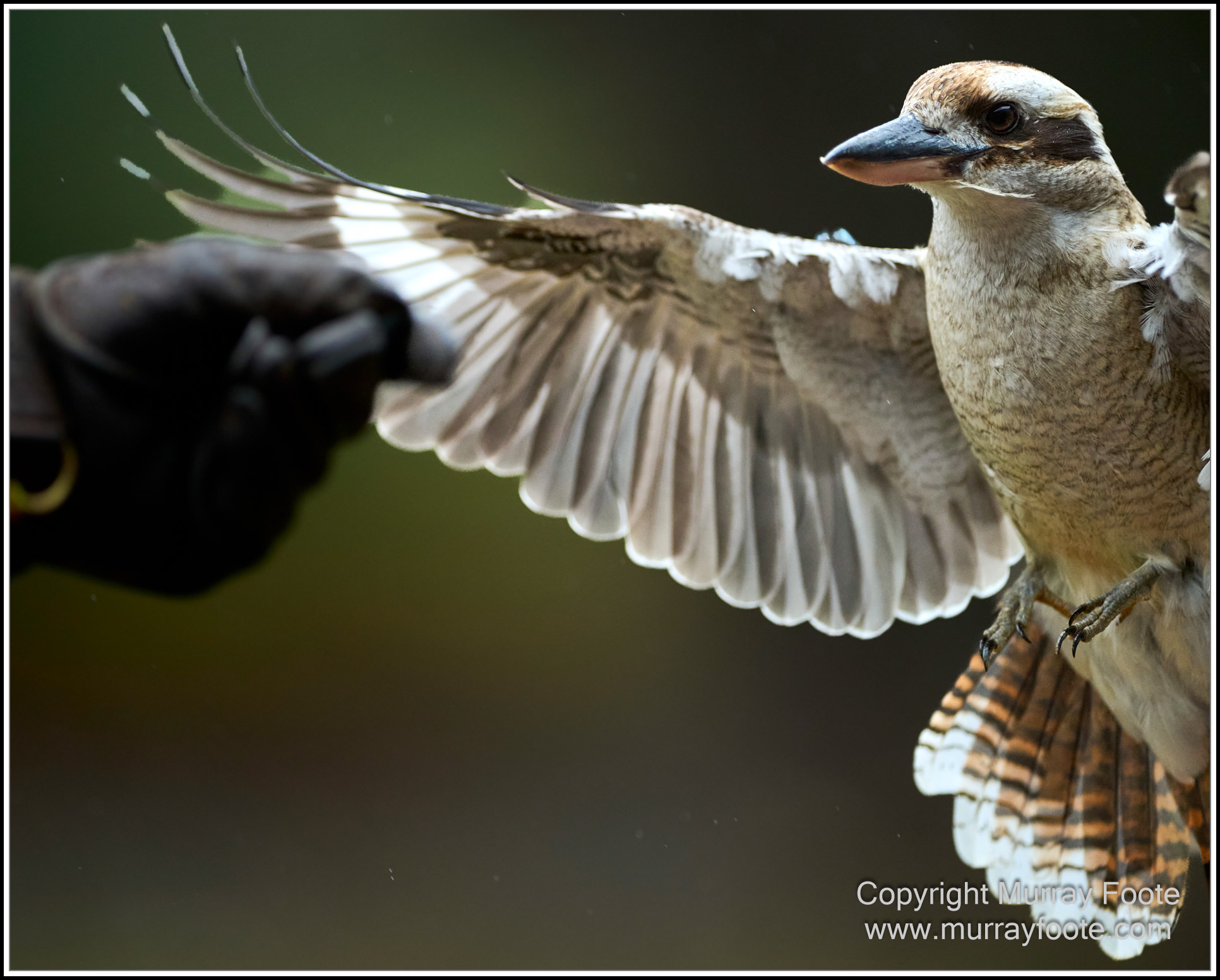
Coming in to the glove.
.
.
.
. 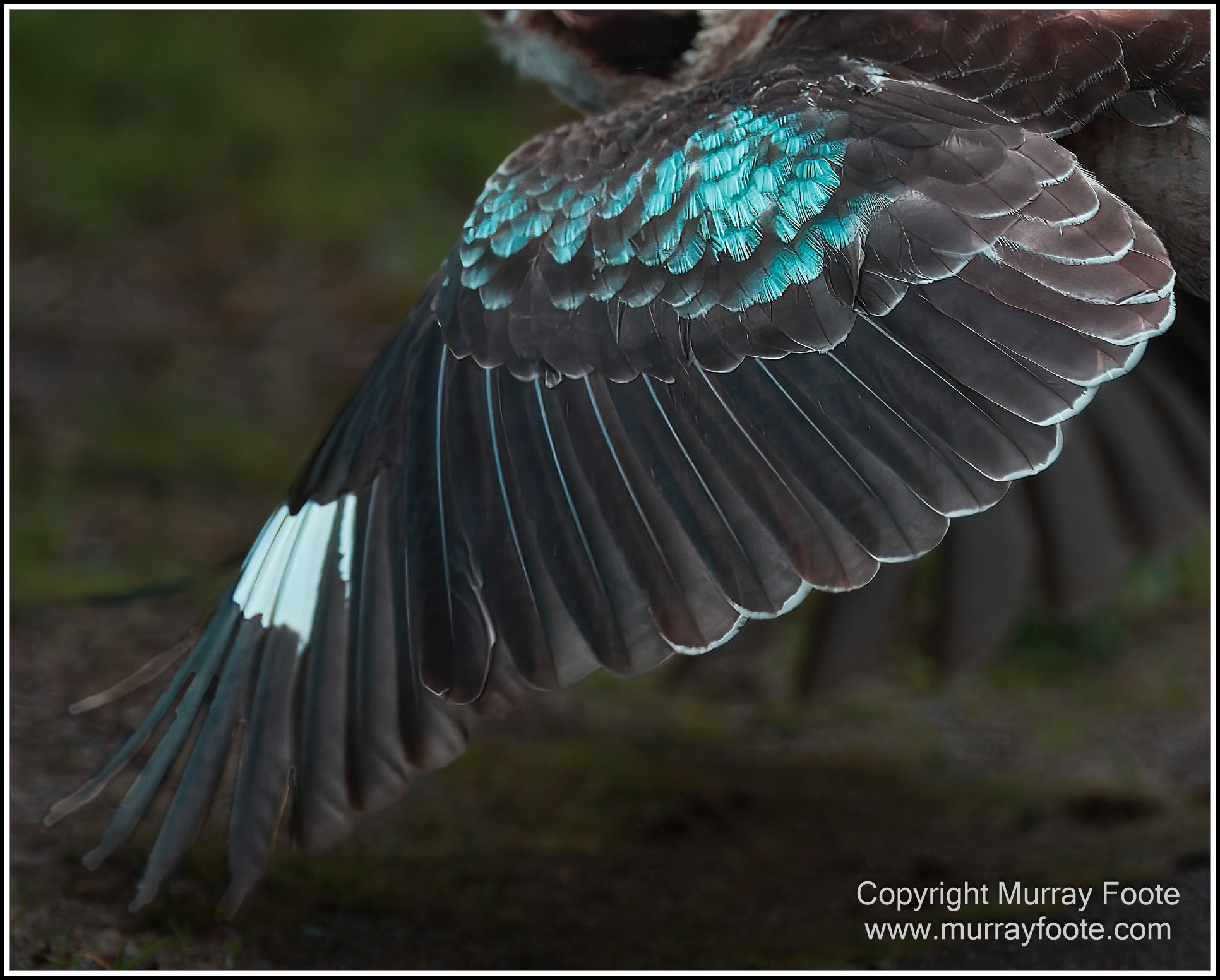
Kookaburra wing.
.
.
.
. 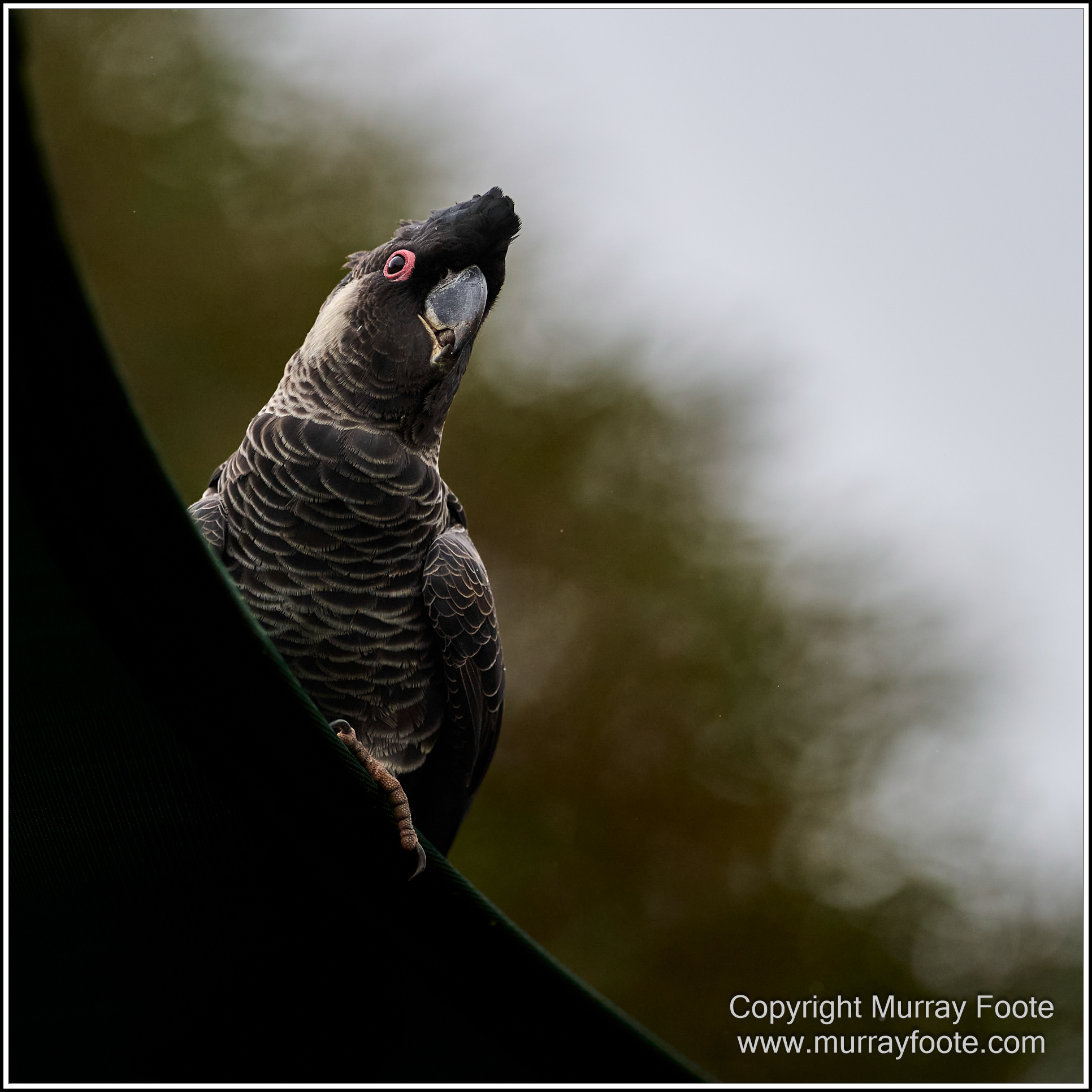
Carnaby’s Black Cockatoo.
The two cockatoos here are not the glossy black cockatoo found on Kangaroo Island. I would guess they were probably purchased from domesticated stock or were from a wildlife refuge.
Carnaby’s Black Cockatoo is listed as endangered and comes from the south west corner of Western Australia.
.
. 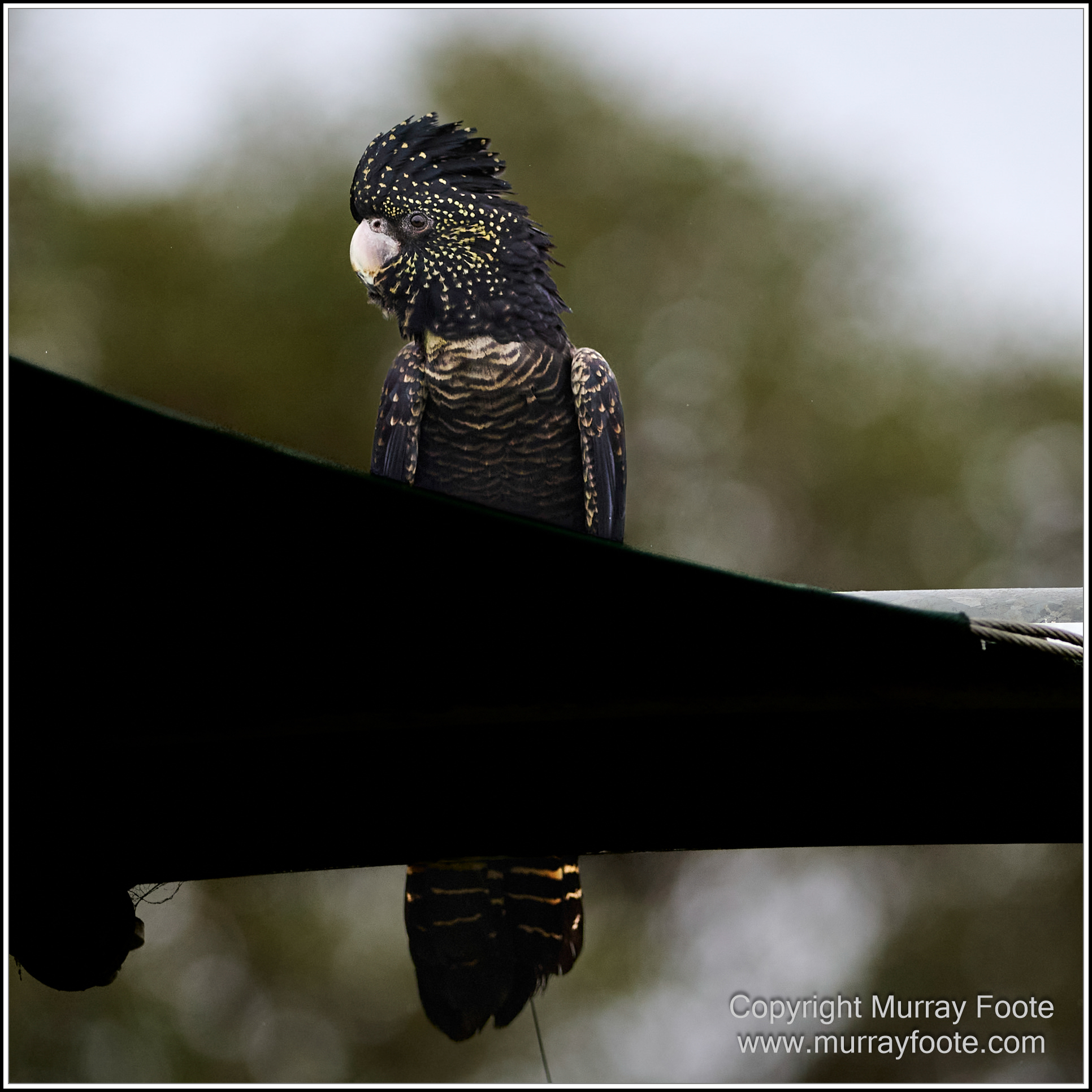
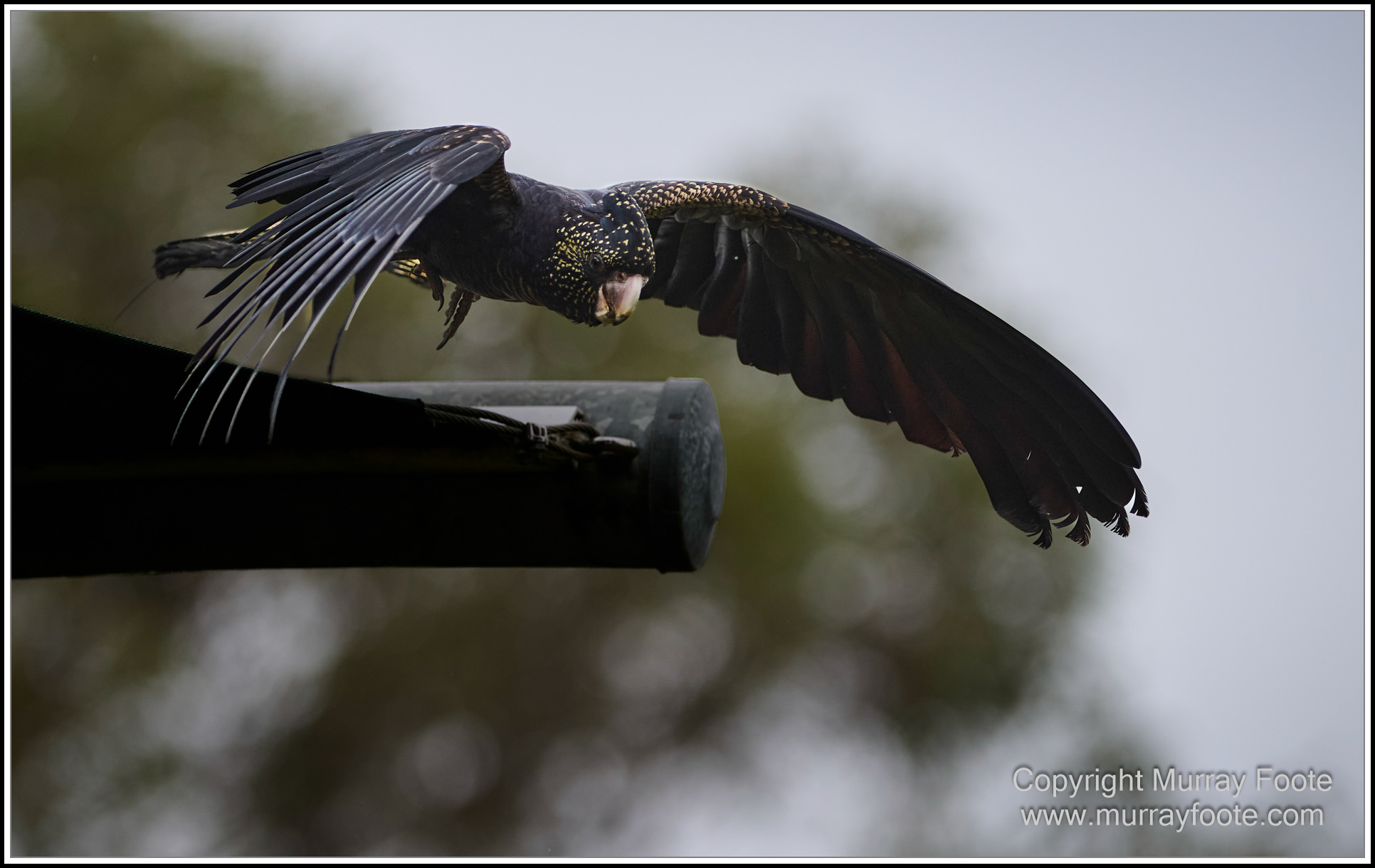
Red-tailed Black Cockatoo.
The Red-tailed Black Cockatoo is listed as of least concern, with a widespread range, mainly in Queensland, Northern Territory and Western Australia. It is closely related to the Glossy Black Cockatoo of Kangaroo Island. This one is probably a female as there is little red in the tail.
.
.
.
. 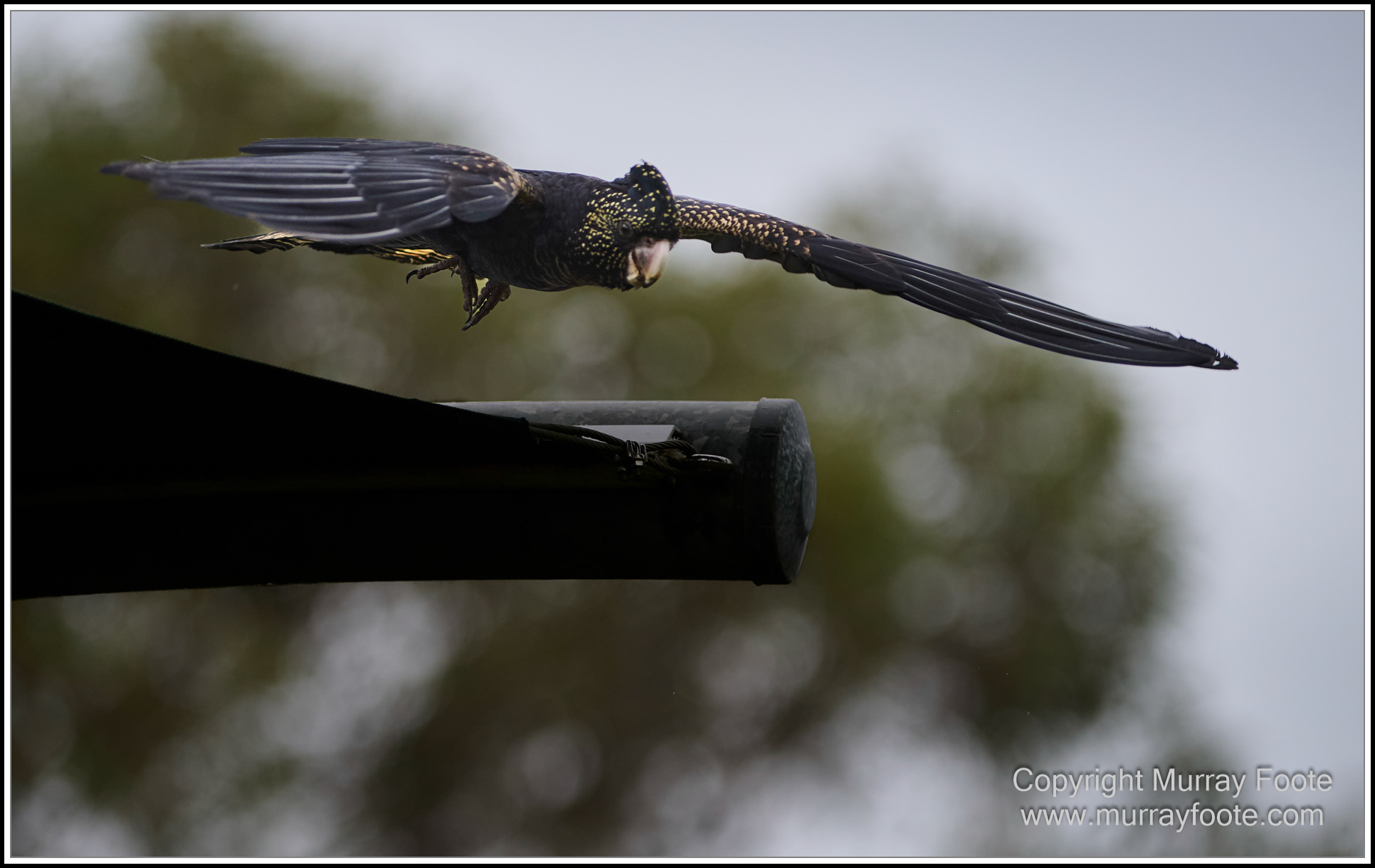
And away it goes….
.
.
.
.  .
.
.
.
. 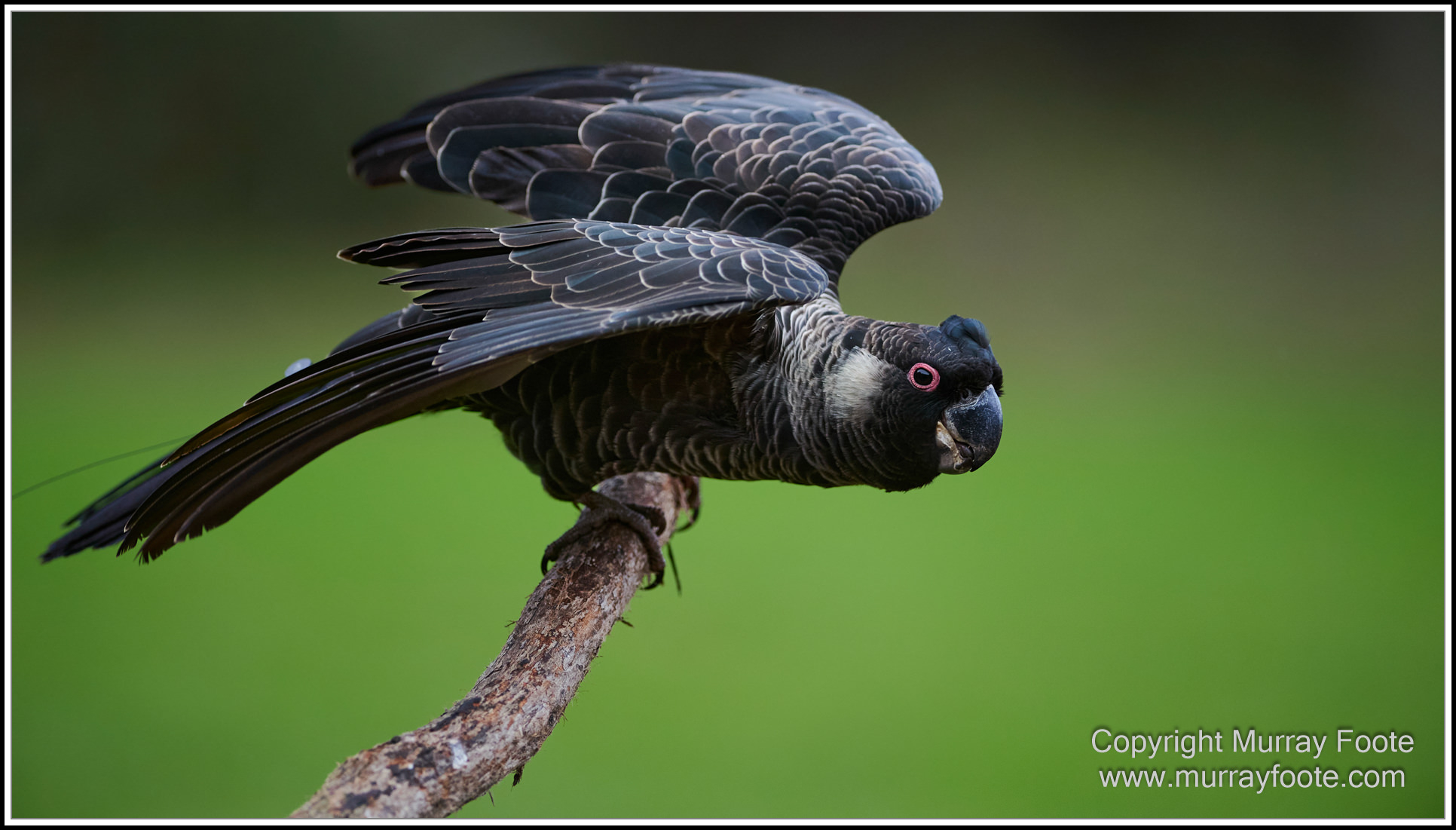
Carnaby’s Black Cockatoo, about to take off.
.
.
.
.  .
.
.
.
.  .
.
.
.
.  .
.
.
.
.  .
.
.
.
. 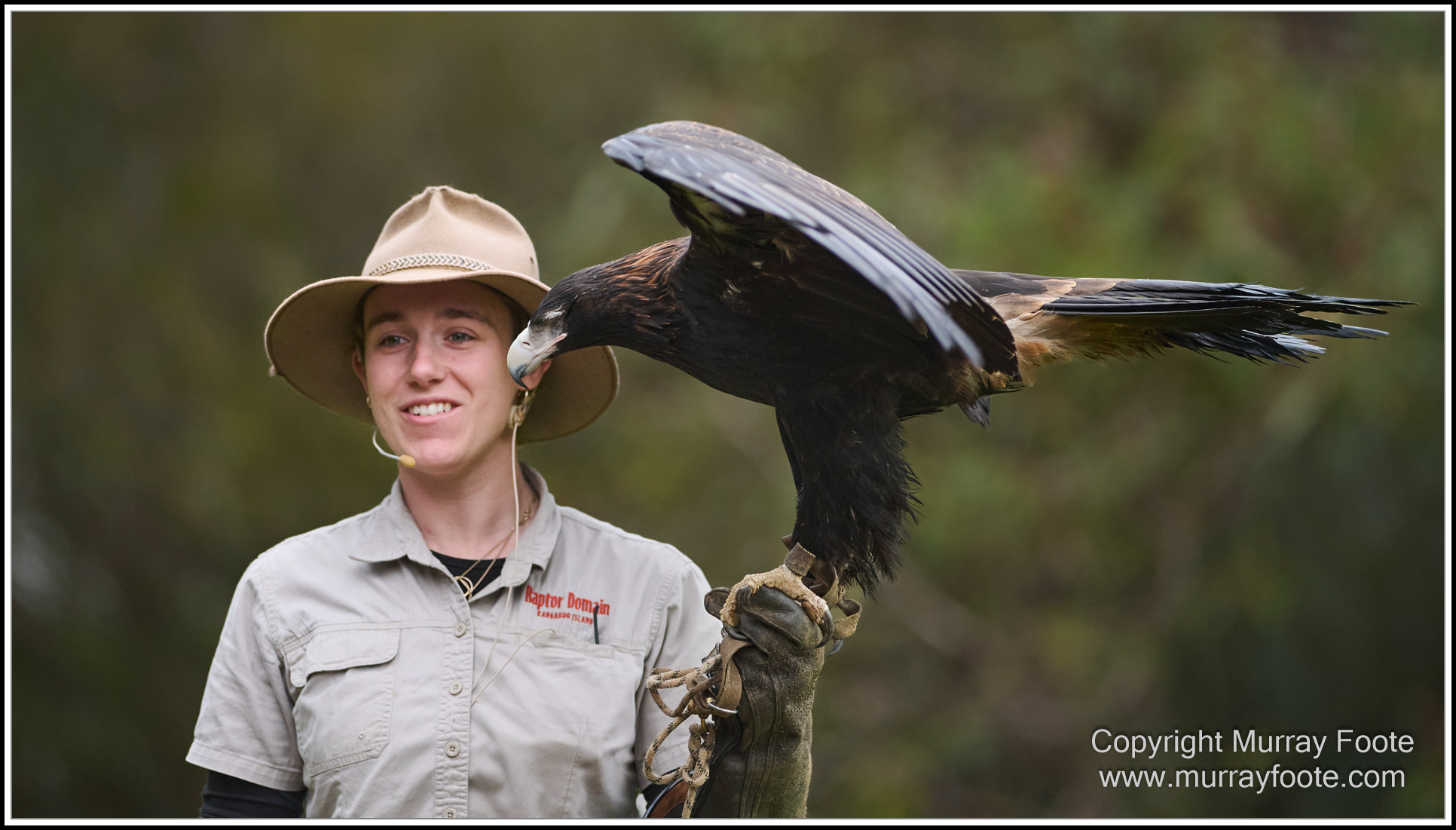
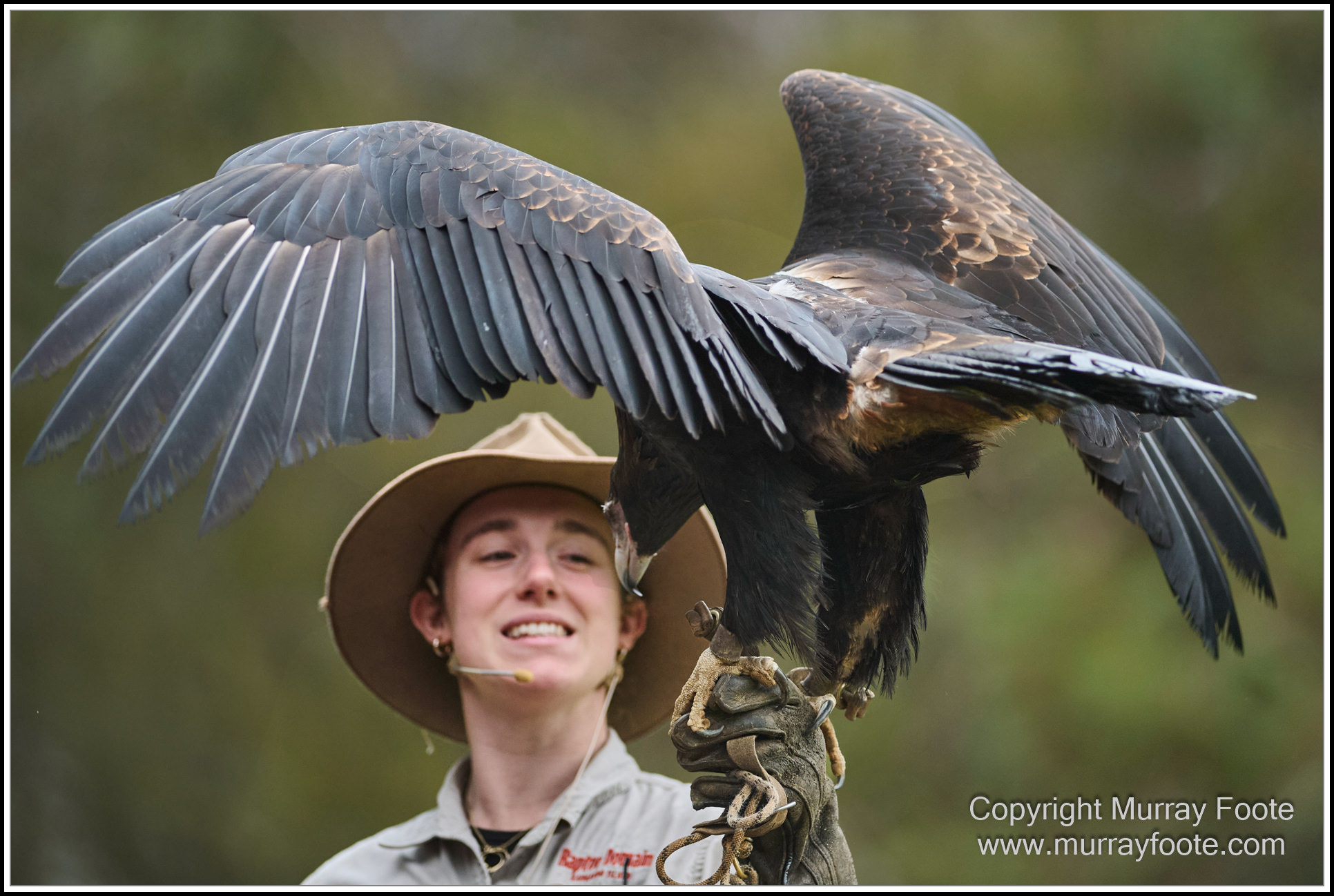
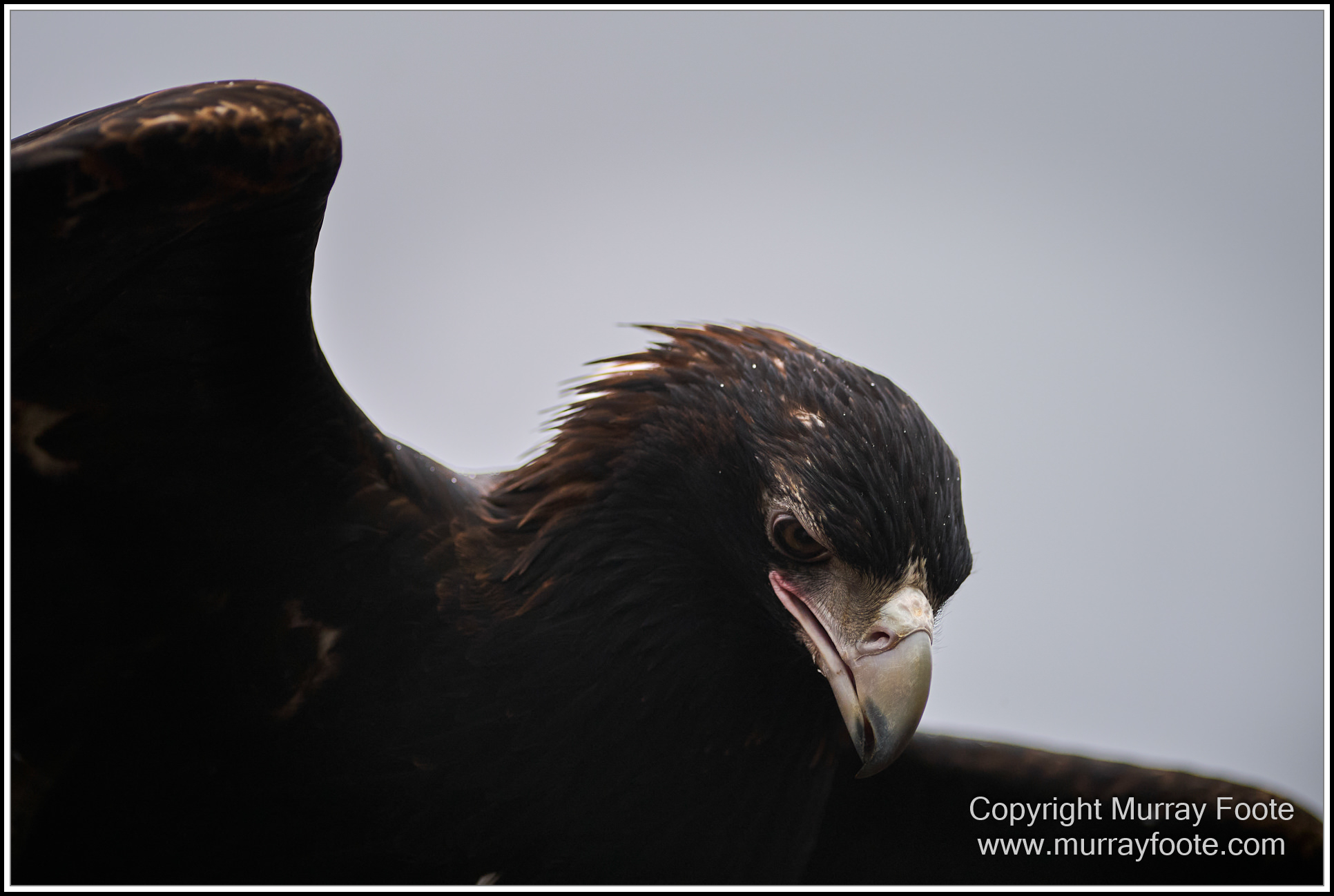
Wedgetail Eagle (aquila audax).
This eagle cannot return to the wild because it only has one eye. It has a surprisingly affectionate relationship with its handler.
.
.
.
.  .
.
.
.
. 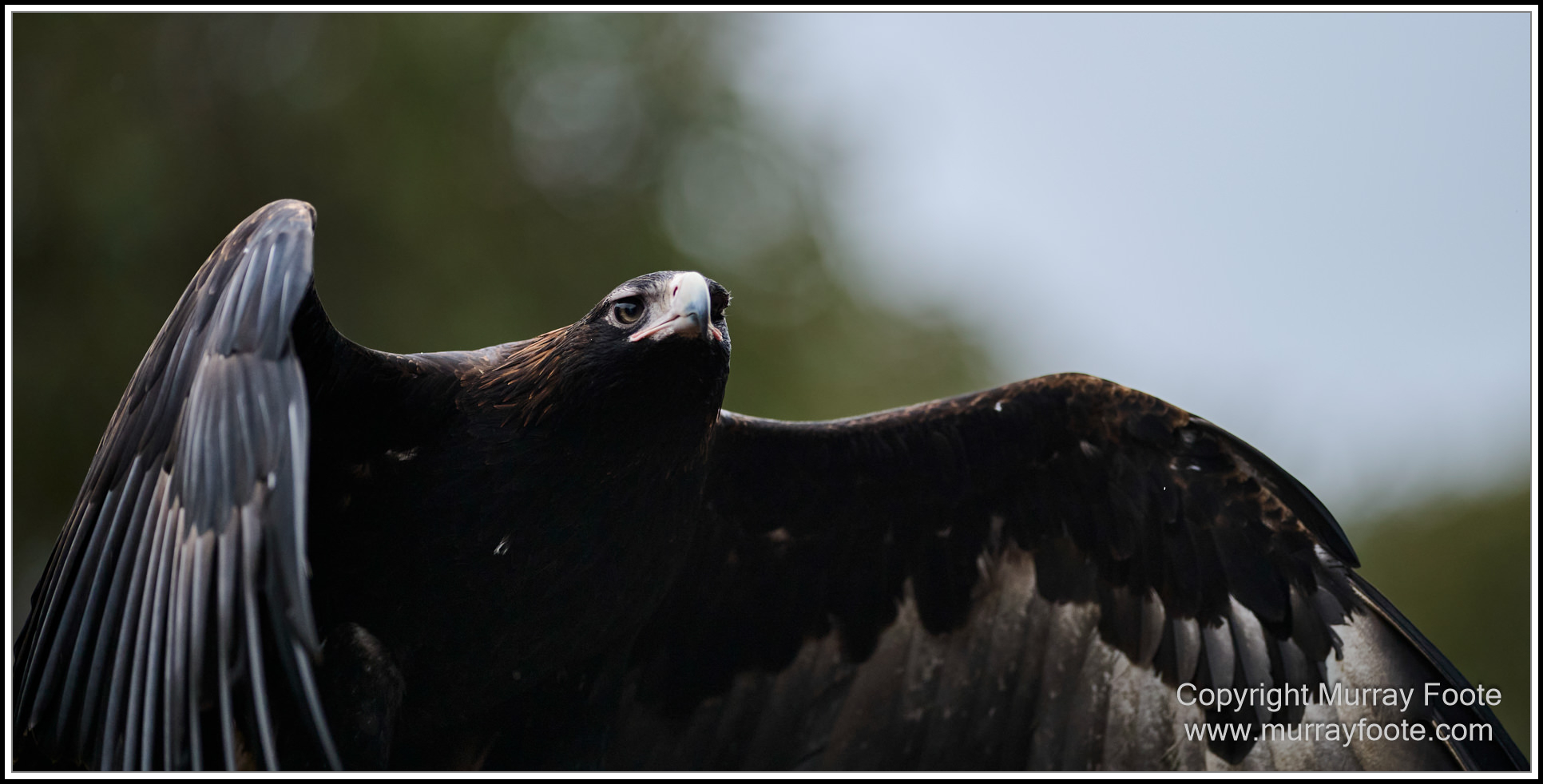
The wedgetail eagle is Australia’s largest bird of prey and ranges all over Australia from desert to rainforest.
.
.
.
.  .
.
.
.
.
 Murray Foote
This is a wonderful page of images! So many gems. The robin and the wrens perfectly spaced on the branch is fantastic. And the owl sequence…breathtaking stuff
LikeLiked by 1 person
Thanks heaps Matt!
LikeLike
Some great action shots Murray – I particularly like the owls.
LikeLiked by 1 person
Thanks heaps Dave. The owls was due to the autofocus capabilities of the new Nikon Z6iii that I had unexpectedly picked up just prior to leaving on the trip. Much better than my Z6ii which is better than my Fuji X-T5 (though that is due to improve with a firmware update). Also, the Nikon F 300mm f2.8 is a stellar lens.
LikeLike
I love birds. The owl plumage is gorgeous.
LikeLiked by 1 person
Yes. There’s so much detail and subtle variation in that plumage.
LikeLiked by 1 person