Scotland. Day 5, 3rd July.
After staying overnight near Thurso, I headed towards Durness. My first point of interest was Dounreay Reactor. However, when I got out of the car with my camera, an employee leaving the plant warned me I could be arrested for taking photographs there. This seemed improbable to me since images are readily available on the web but I decided not to push my luck and moved on.
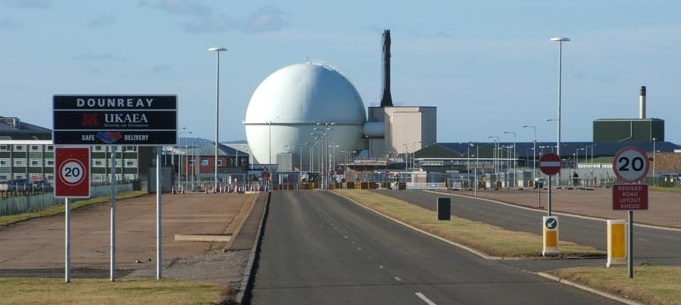
Dounreay Reactor
So here is an image from Wikipedia from where I was looking to take mine. Potentially there might also have been an image of a ruined castle against the reactor but I didn’t have access for that either. The reactor makes a curious contrast to the wild and ancient countryside.
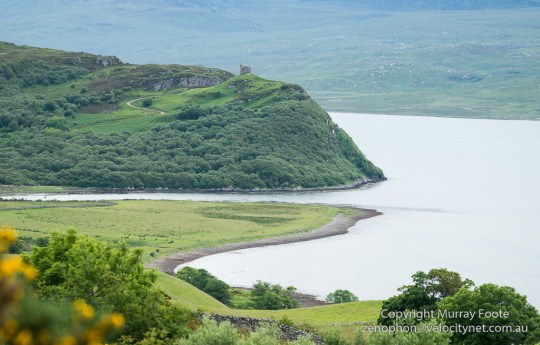
Castle Varrich – Click for greatly expanded image
Further on down the road (as Eric Clapton might have said) is Castle Varrich (Caisteal Barraich), seen from the village of Tongue. This is an ancient simple fort and is somewhere around a thousand years old. This image is assembled from twelve exposures so the underlying file is quite large. Click on it for a much larger image. Then click, use mouse wheel or use icons to zoom into a greater detail of the castle and the surrounding landscape.
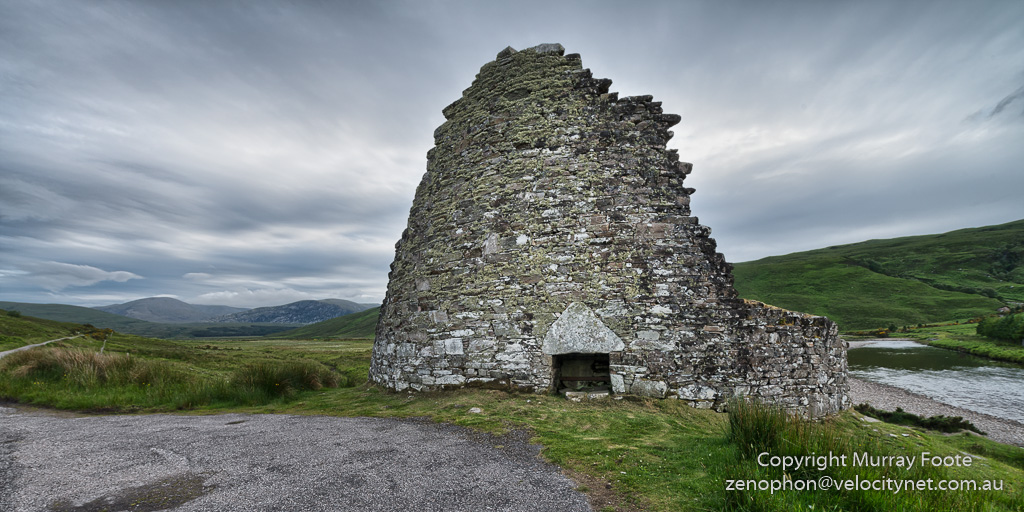
Dun Dornaigil
The broch Dun Dornaigil, roughly two thousand years old or more, is down a remote side road.
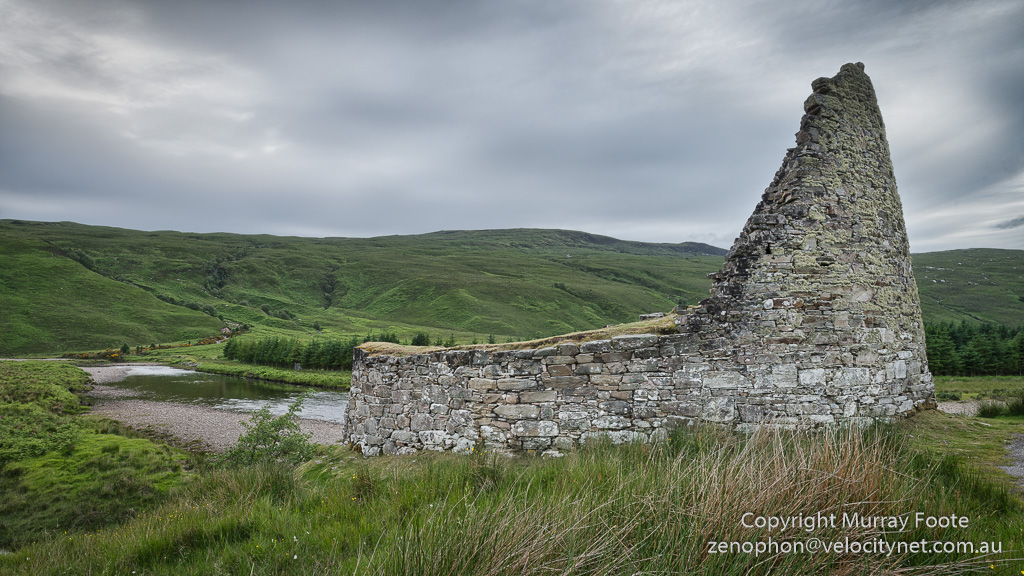
Dun Dornaigil
As with all brochs it has an inner and an outer wall and a stone staircase between them. Although it looks quite sound from the outside, the entrance is blocked off and there is no access since in any case the walls are too high to climb over easily even at the lowest point. The entrance is blocked because the inner wall has collapsed and though the outer wall is buttressed from the inside it is presumably deemed unsafe.
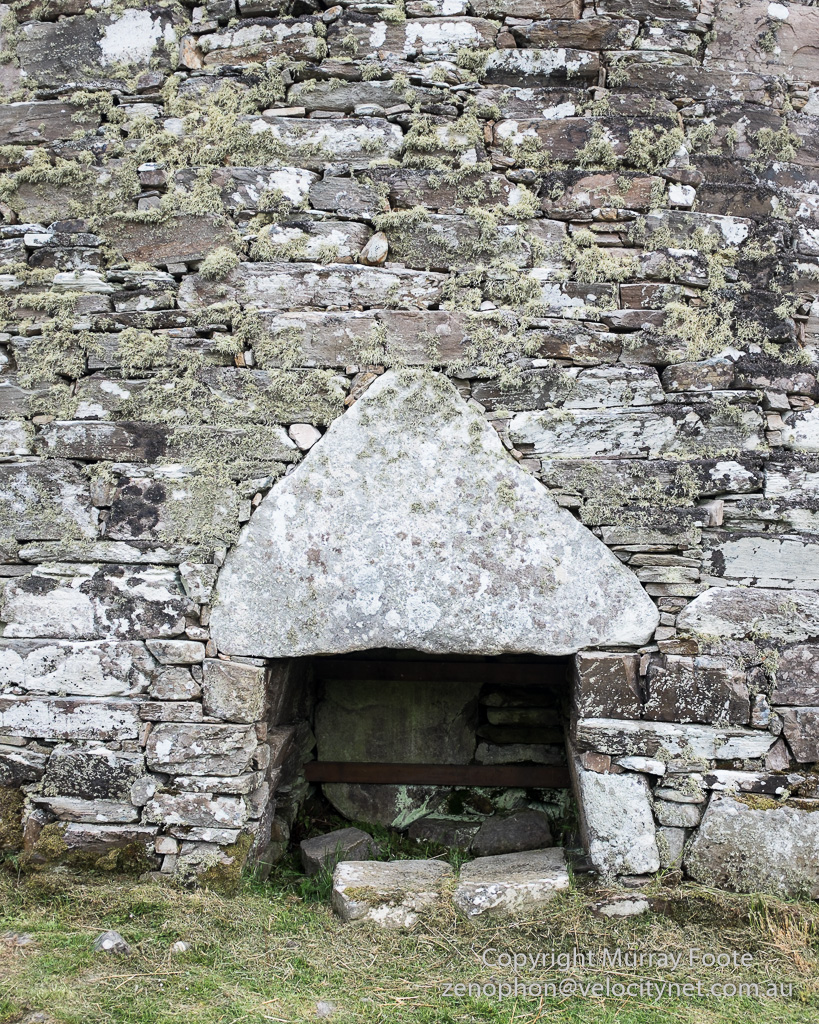
Dun Dornaigil – exterior wall detail
The doorway features the architectural flourish of a large triangular lintel.
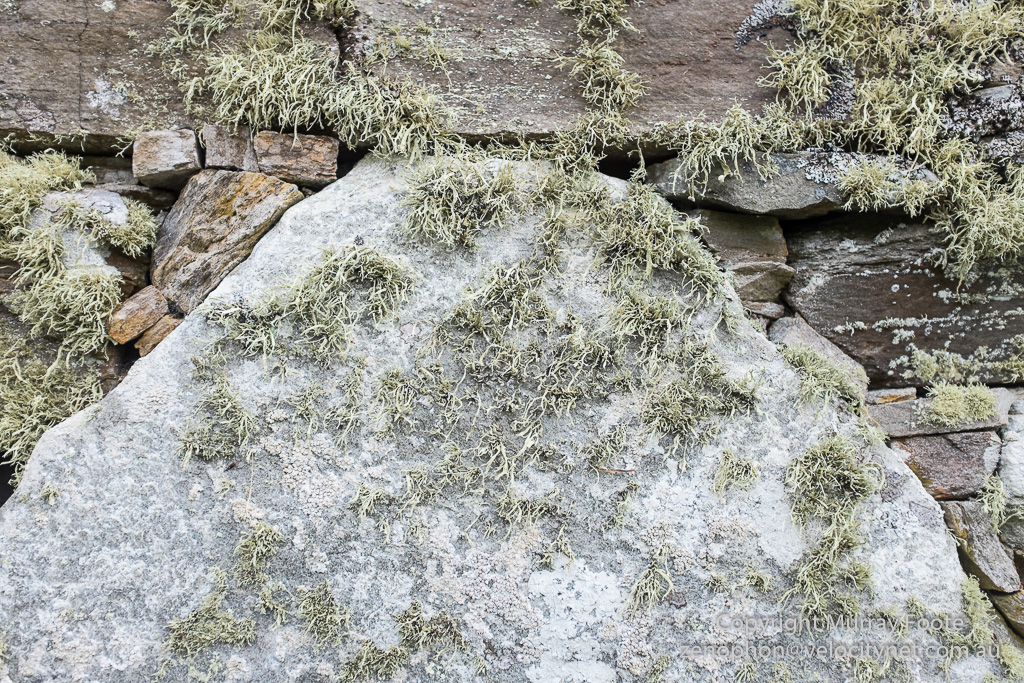
Dun Dornaigil – exterior wall detail
.
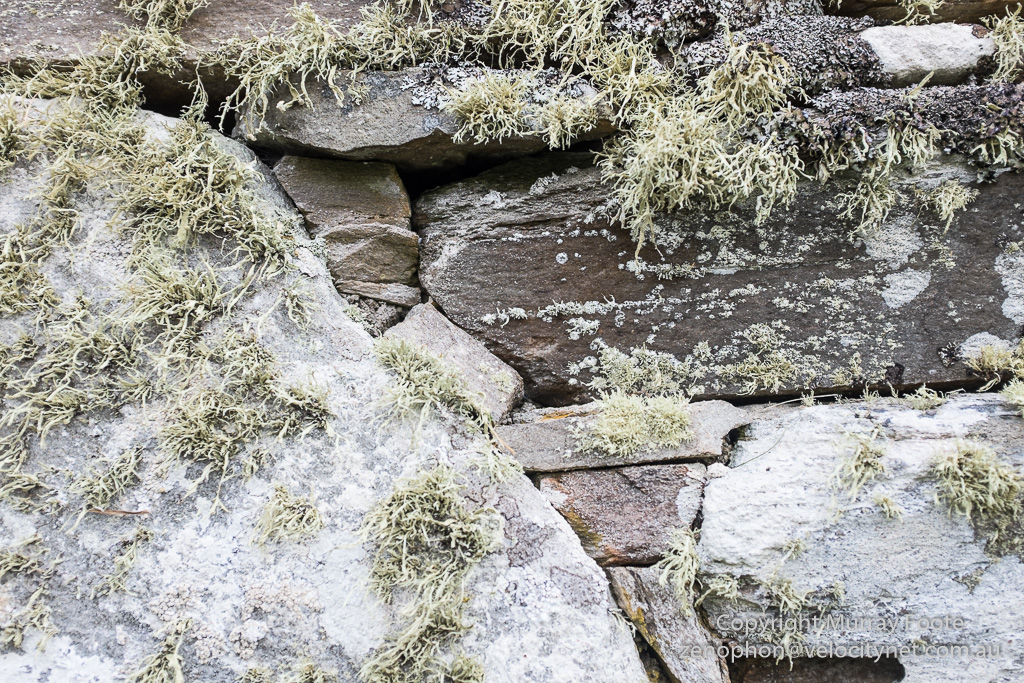
Dun Dornaigil – exterior wall detail
.
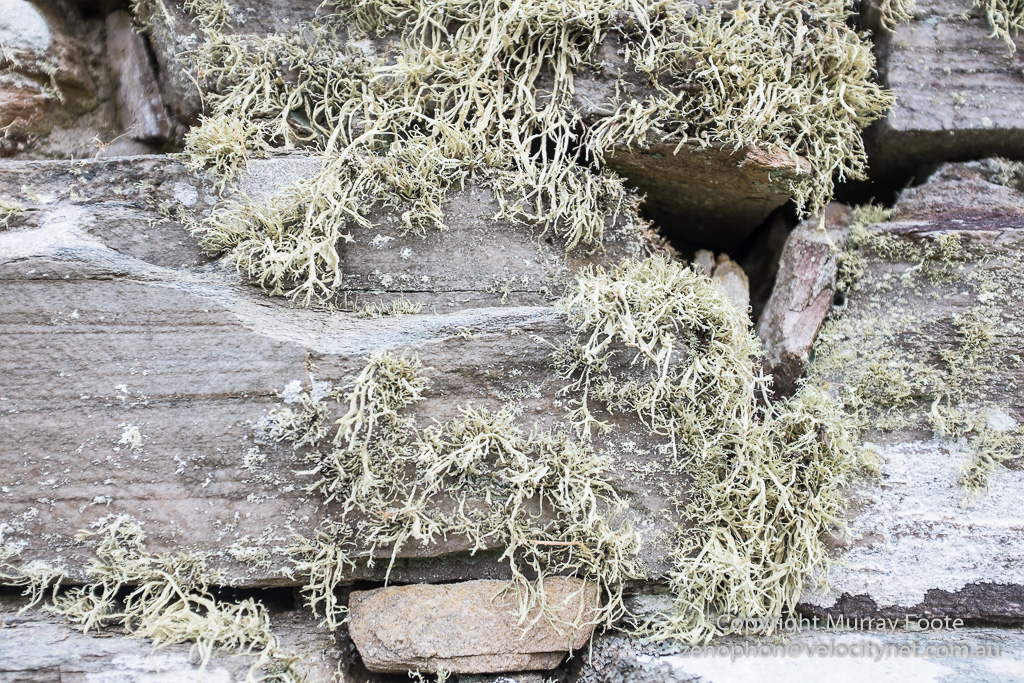
Dun Dornaigil – exterior wall detail
.
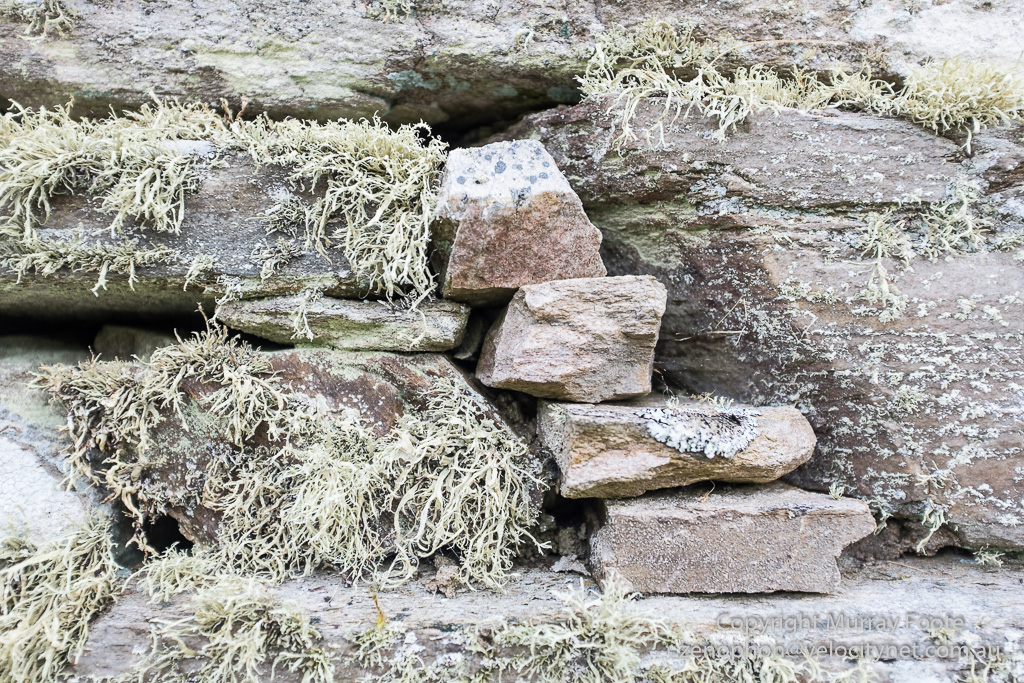
Dun Dornaigil – exterior wall detail
.
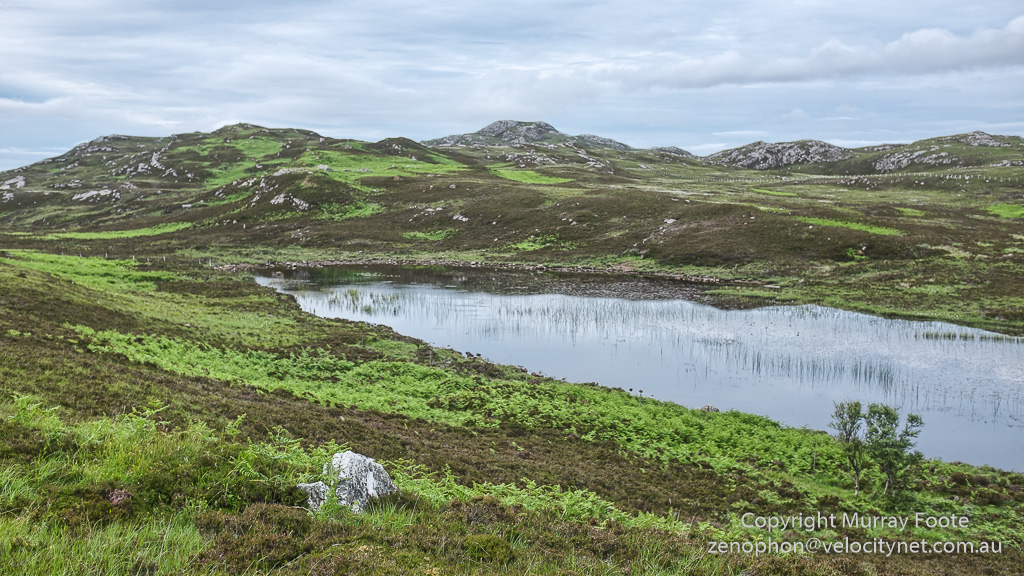
near Dun Dornaigil
This is some of the moorland near the broch. It would have been good farmland in the neolithic age but turned to peat thousands of years ago.
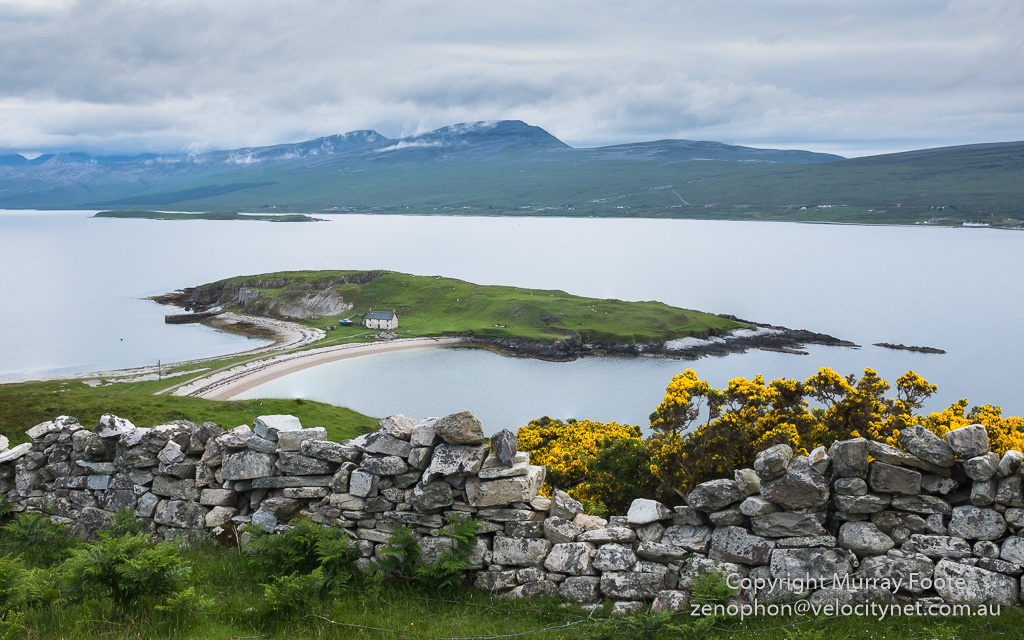
Loch Eriboll and Ard Neakie Headland
Resuming my trip towards Durness, I passed Loch Eribol. The buildings on the headland are the remains of a nineteenth century kiln, where they heated local limestone to produce lime. They used this to improve soil fertility and also for mortar and render in building.
The fossils in this area are different from those of England and Wales because Ireland and Northern Scotland were part of North America until 430 million years ago.
 Murray Foote