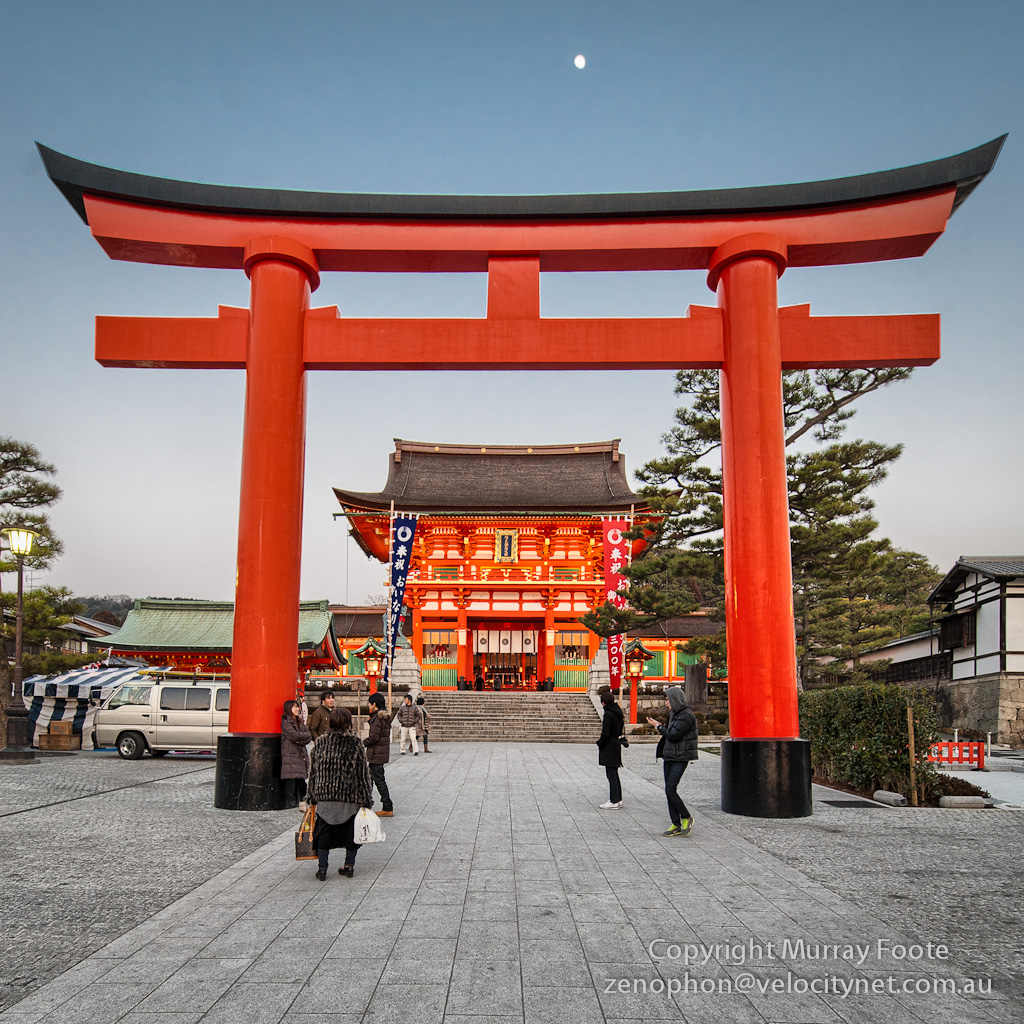
Fushimi Inari-taisha
On the way back from Nijo Castle I stopped in at Fushimi-Inari Taisha, a Shinto shrine just south of Kyoto on the railway line between Kyoto and Nara. It’s very accessible because it’s very close to the railway station.
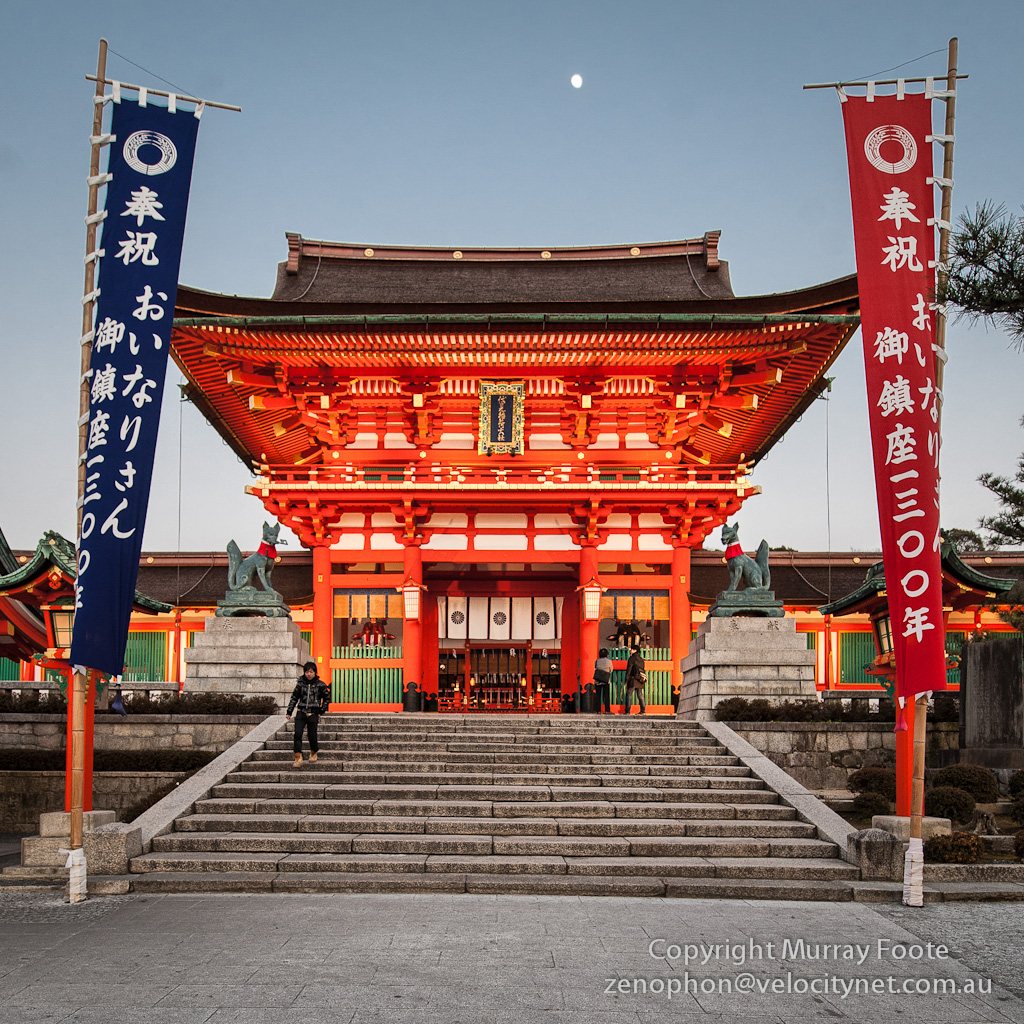
Fushimi Inari-taisha, Romon Gate
This is the main gate, the Romon Gate, donated in 1589 by Toyotomi Hideoshi. As you can see, it is two days off the full moon.
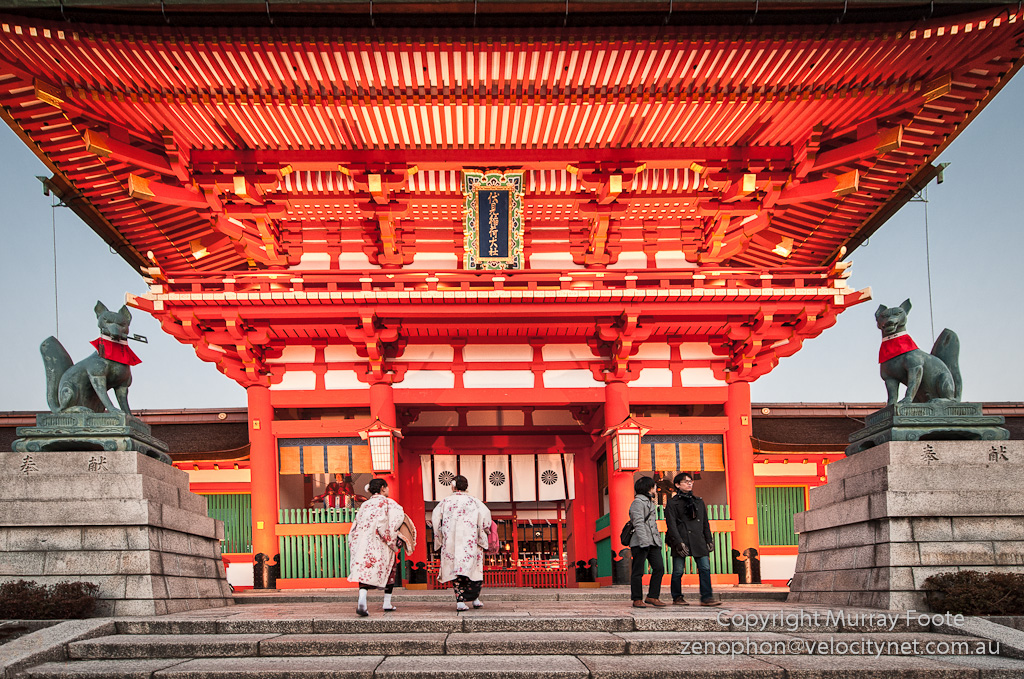
Fushimi Inari-taisha, Romon Gate
Here we see two statues of Inari, guarding the main gate. Inari is a fox and messenger of the god of rice, sake and prosperity. The temple backs up onto the sacred Inari Hill. The inari on the left holds a key in its mouth (symbolically, to the rice granary).
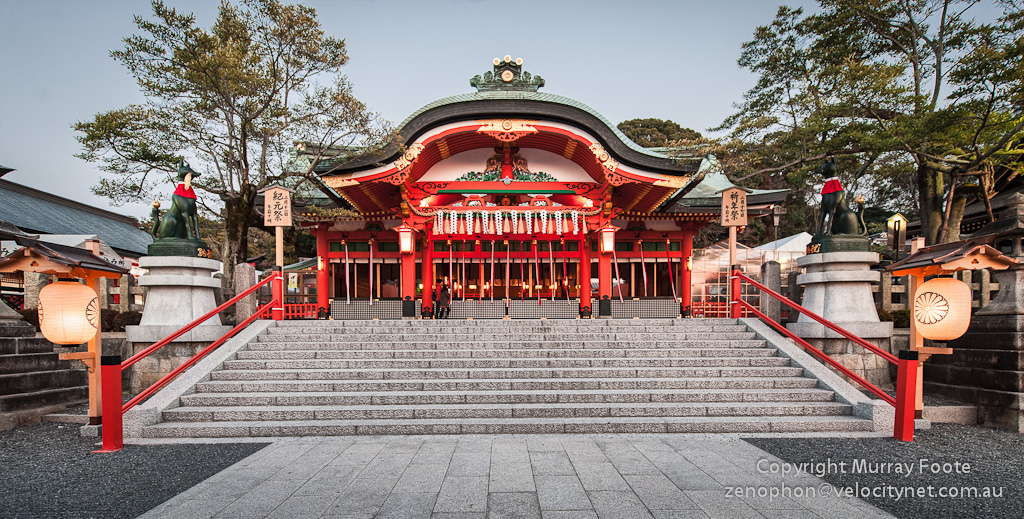
Fushimi-Inari Taisha Honden
This is the Nai-Haiden or Inner Hall of Worship, just in front of the Honden or Main Shrine, which was built in 1499 (not sure whether the Nai-Haiden has the same date). The shrine as a whole dates back to 711 though it was at a different location until 816. It is the head Inari shrine in Japan, with as many as 40,000 sub-shrines (and with as many as that, most of them must be pretty small).
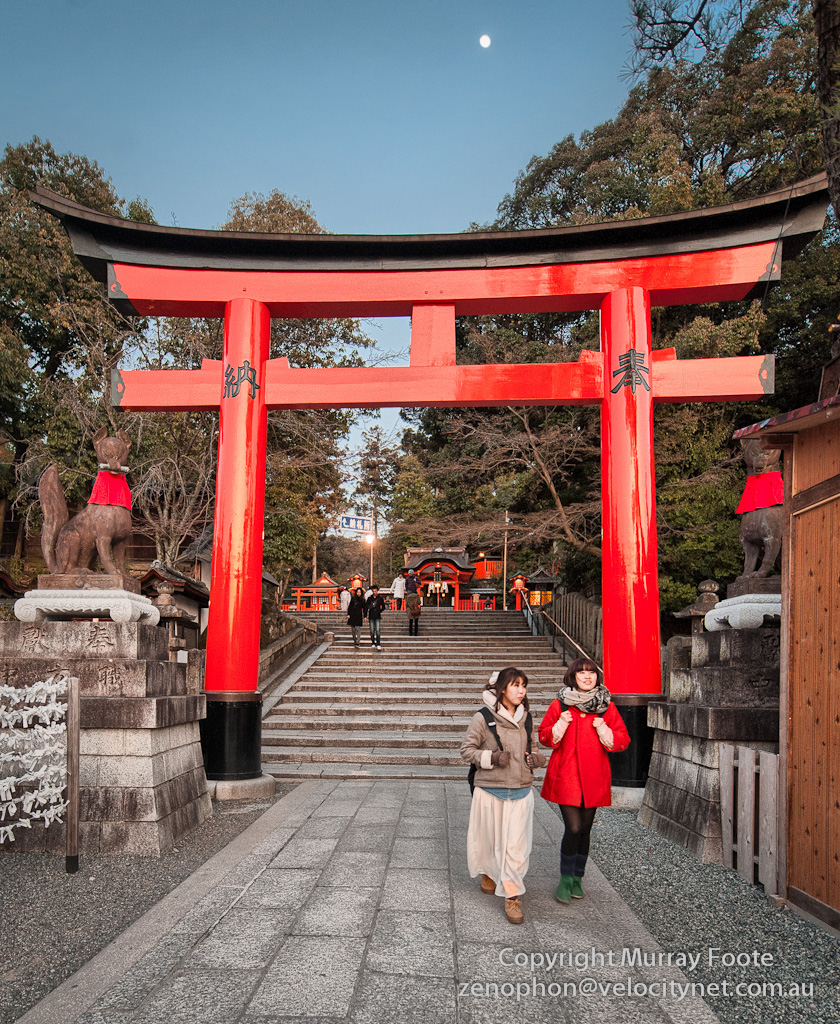
Fushimi-Inari Taisha
I arrived close to sunset and the light was fading fast.
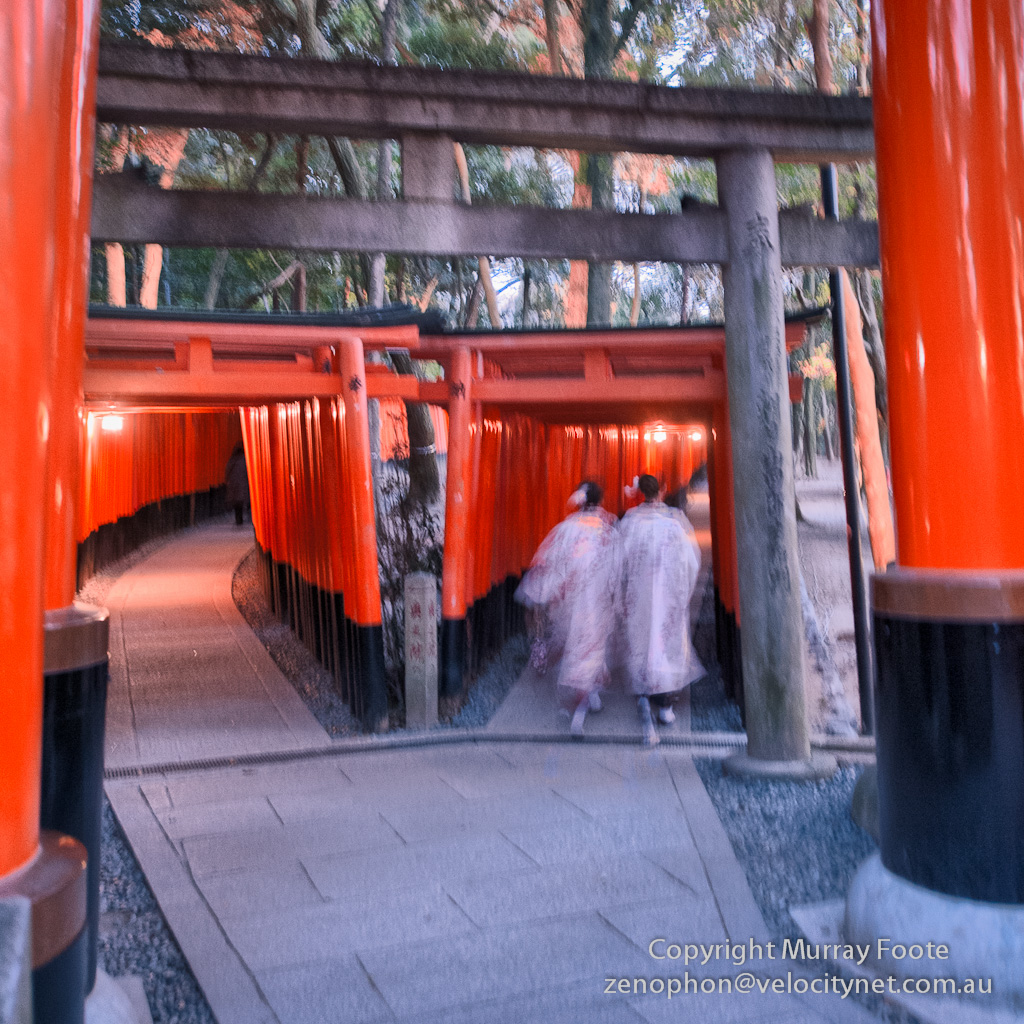
Fushimi-Inari Taisha
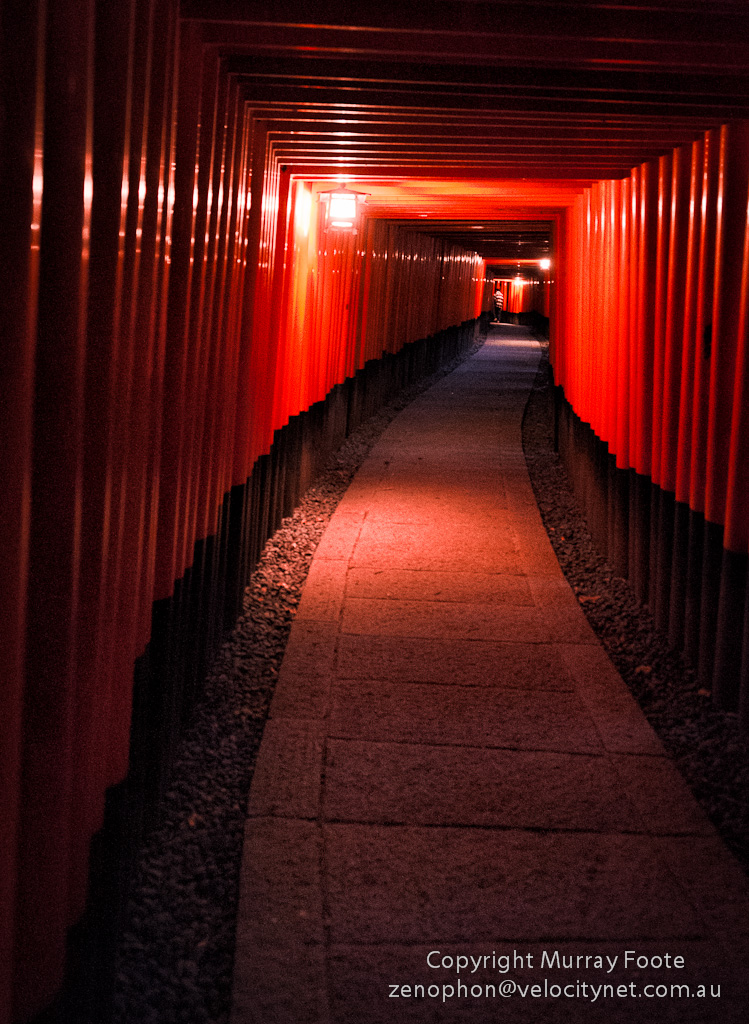
Fushimi-Inari Taisha - Torii Gates
There are thousands of vermillion torii gates, snaking through the hillside. All were donated by a person or company (at a fixed price by size, these days) and their name will be on the back somewhere.
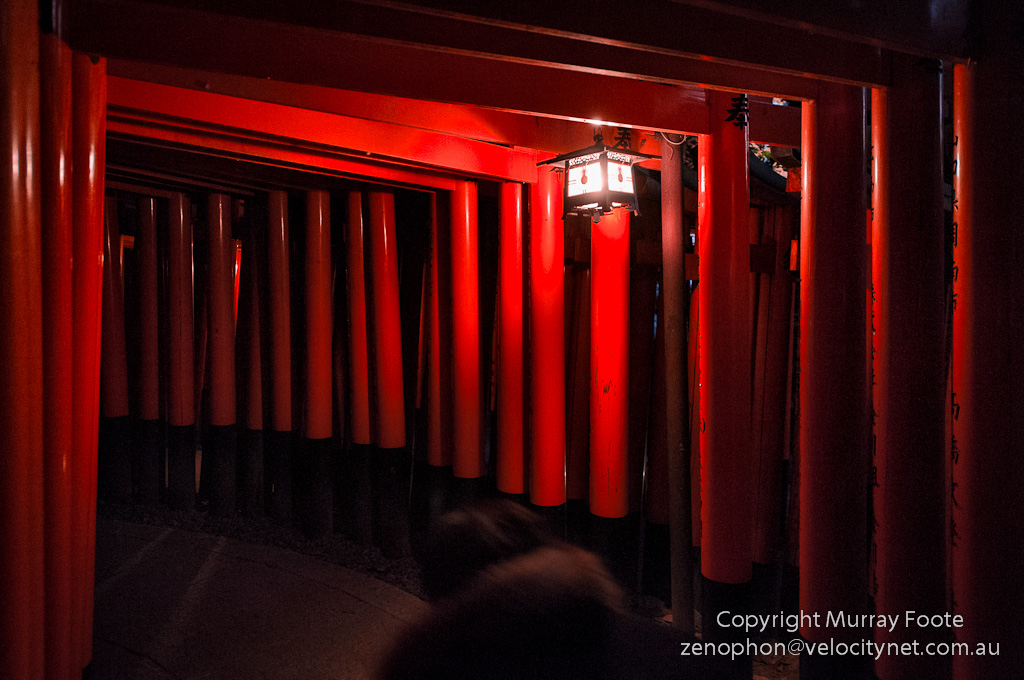
Fushimi-Inari Taisha - Torii Gates
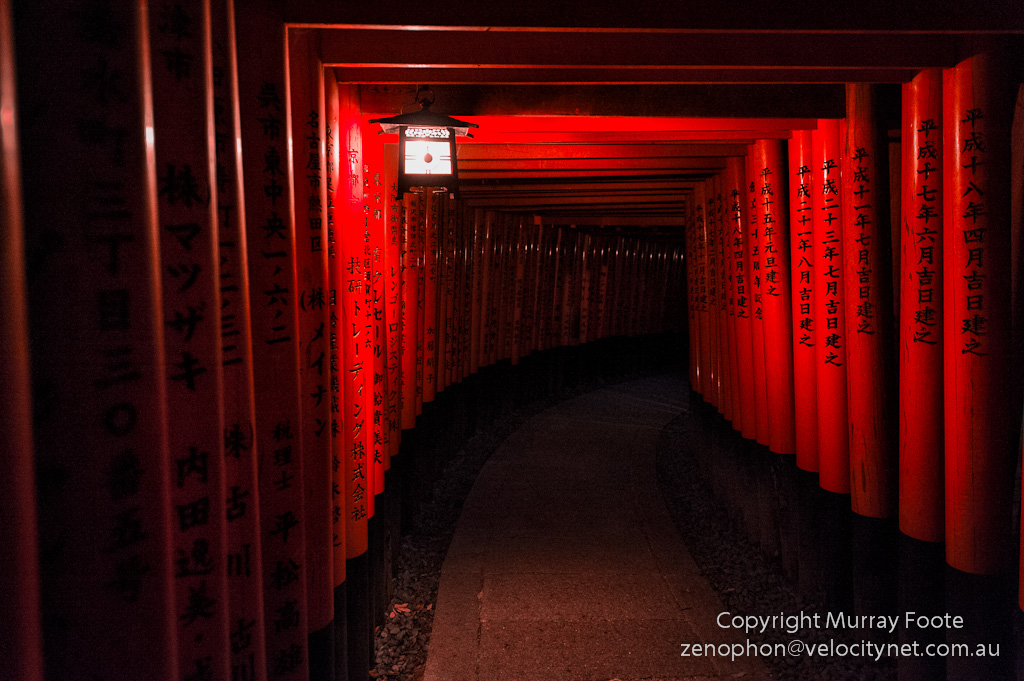
Fushimi-Inari Taisha - Torii Gates
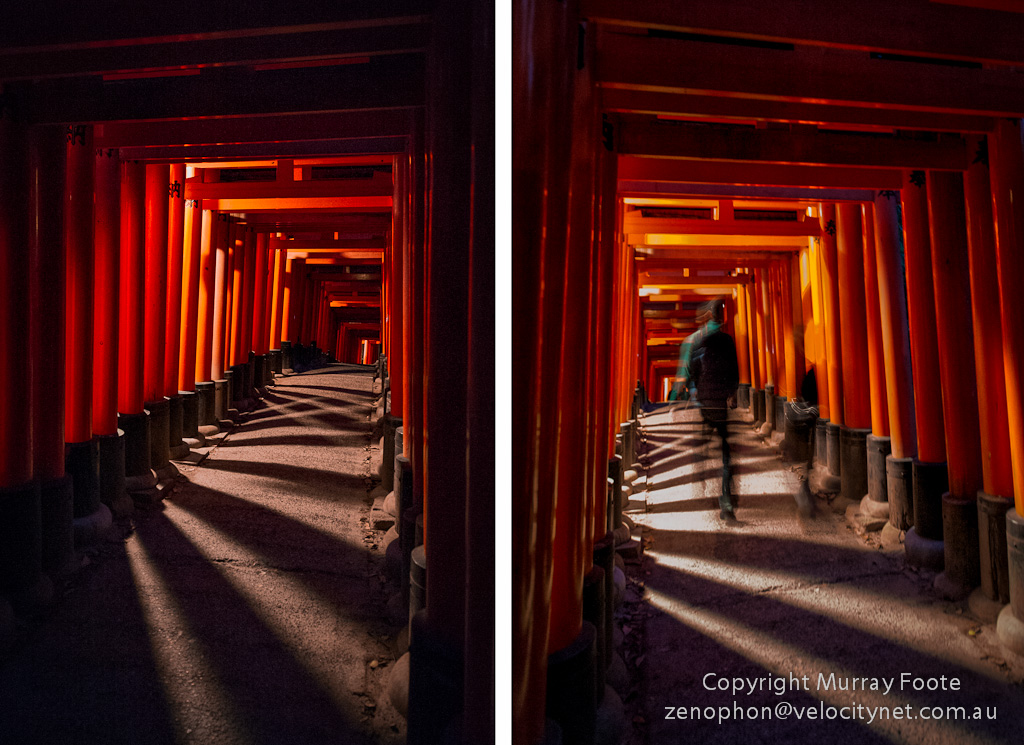
Fushimi-Inari Taisha - Torii Gates
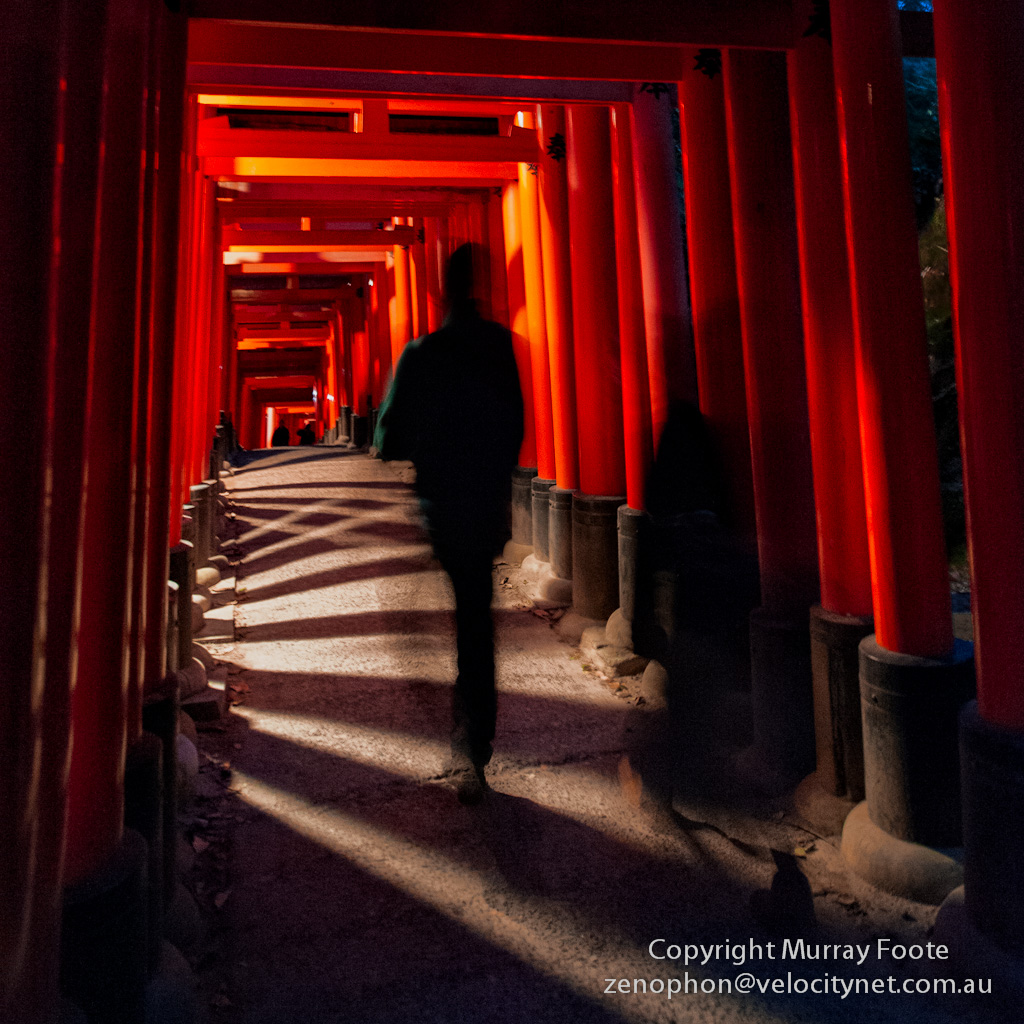
Fushimi-Inari Taisha - Torii Gates
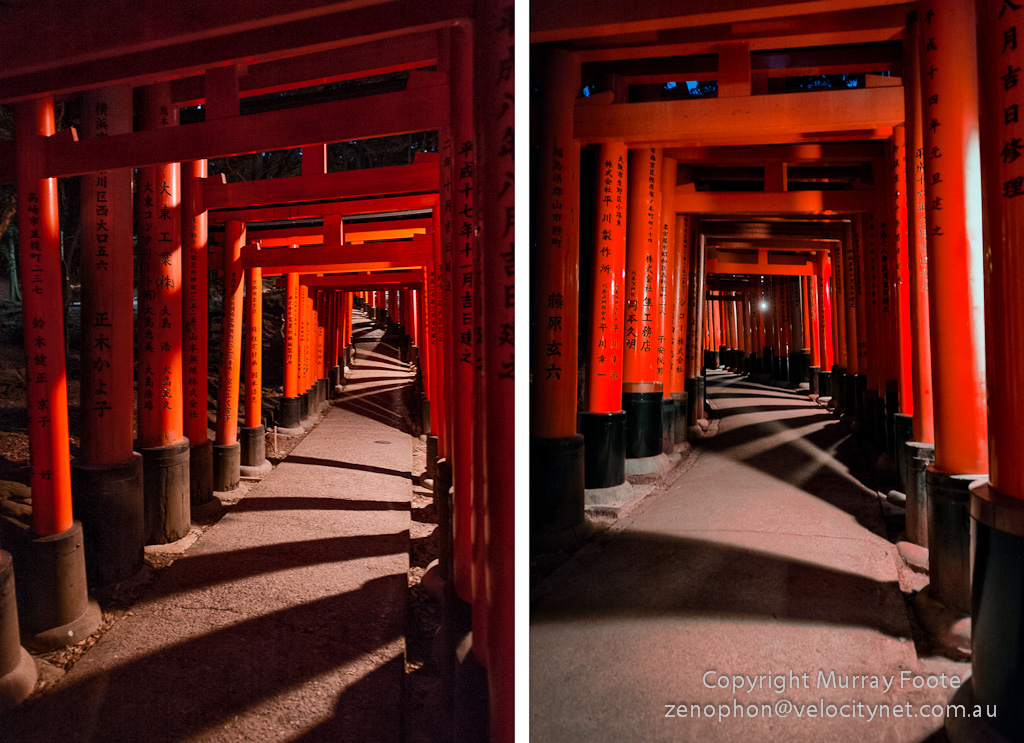
Fushimi-Inari Taisha - Torii Gates
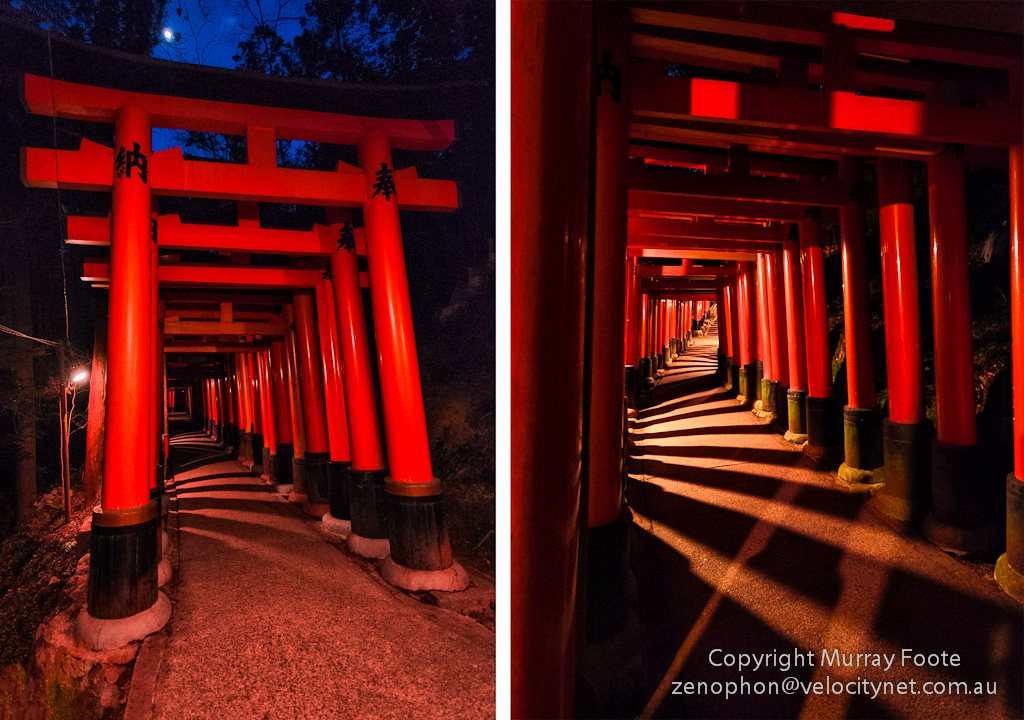
Fushimi-Inari Taisha - Torii Gates

Fushimi-Inari Taisha - Torii Gates
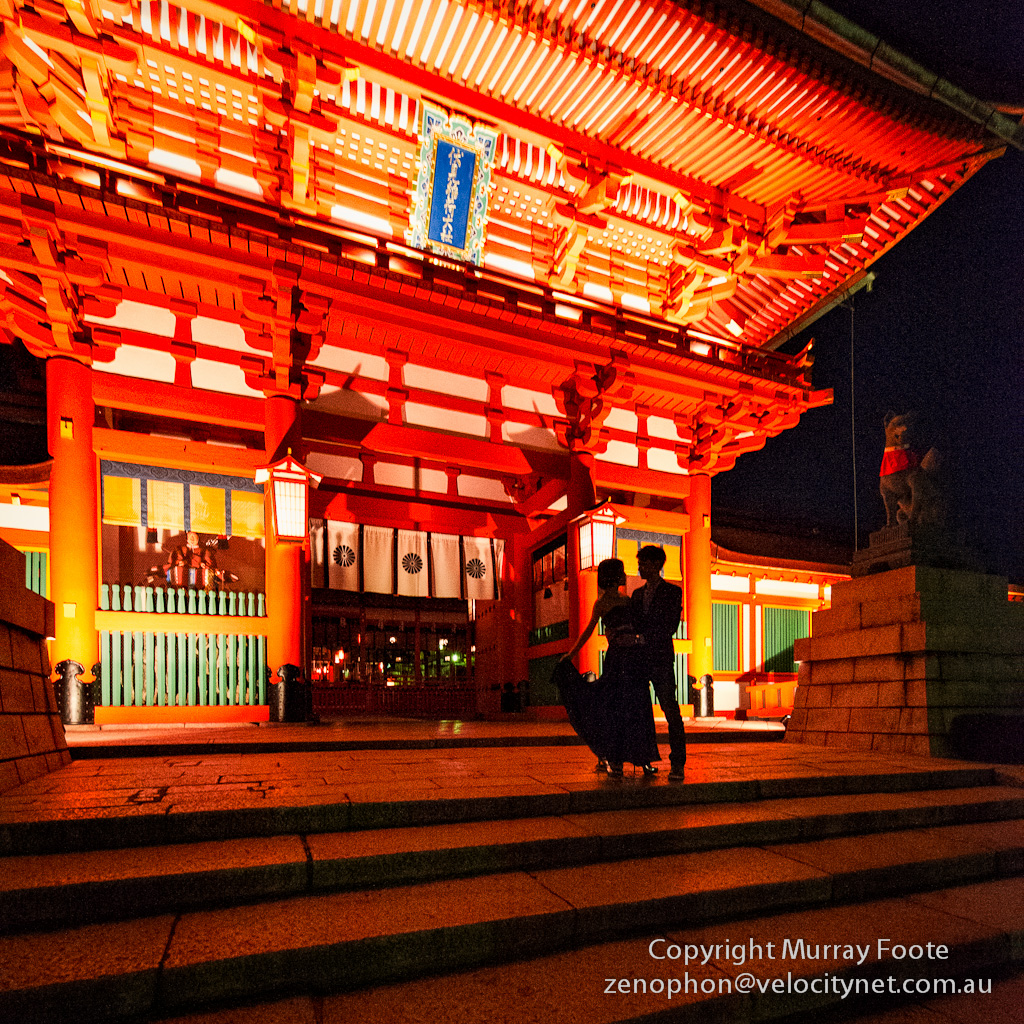
Fushimi-Inari Taisha - Romon Gate
As I was walking out of the Romon Gate, I passed some commercial photographers taking pre-wedding shots of a young couple. They were using a flash and a soft box; this is my quick shot as I passed, with available light.
…
Then I boarded the train and returned to Nara, just in time for a pre-arranged game of Go with Igo, a fifth-dan master. I used to play competition chess at university and I had also played some Go, though not for thirty-five years. Go is a very simple game, over 2,000 years old and yet as complex as chess. Essentially, you play on a board with many intersections and place stones on the intersections in turn. You aim to win territory by surrounding your opponent’s stones and a formation of stones is safe from surrounding if has two “eyes”, or protected holes.
We played three games. Igo gave me at first an eight-stone handicap, then seven. I was improving with each game and got very close in the last. Very stimulating and enjoyable.
 Murray Foote