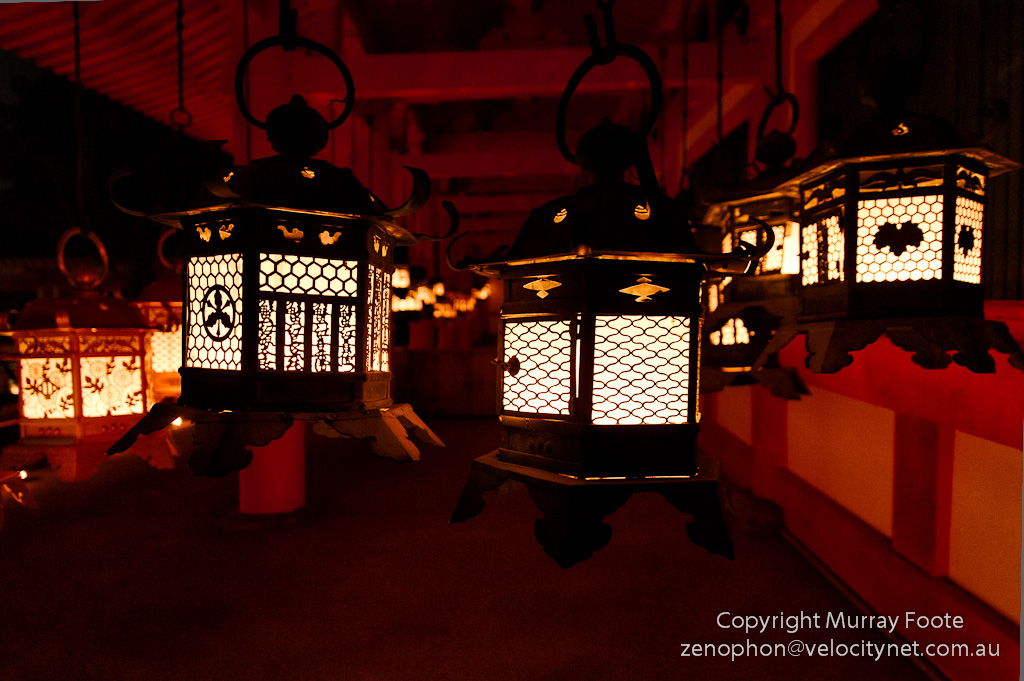
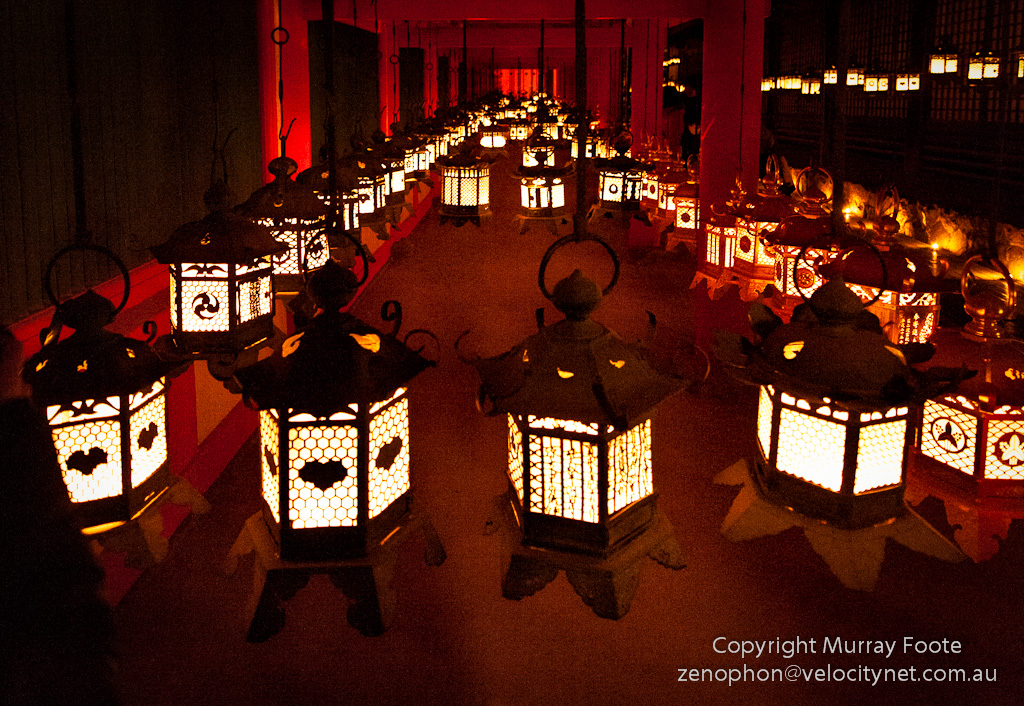
I was able to time my visit to Nara to coincide with the Setsubun Mantoro Festival, where all 3,000 lanterns at the Kasuga Taisha Shrine are lit. This happens twice a year only.
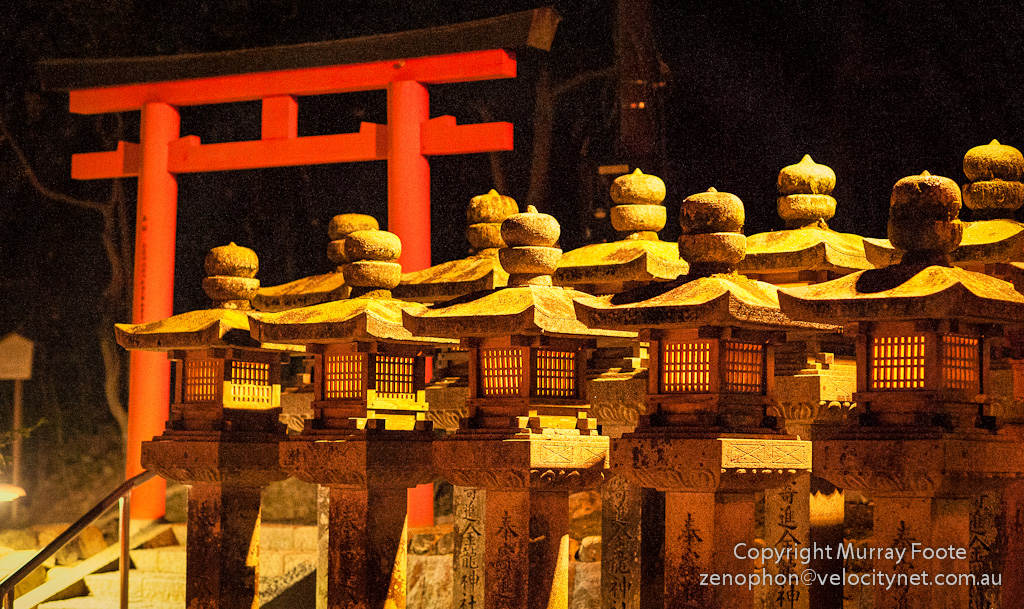
Lanterns in front of Sarake Jinja
I arrived at the Kasuga Taisha Shrine just as it was getting dark and first walked down the rear path where many lanterns were lit. The red structure in the background is the Shinto gate to the small Sarake Jinja (Jinja means shrine).
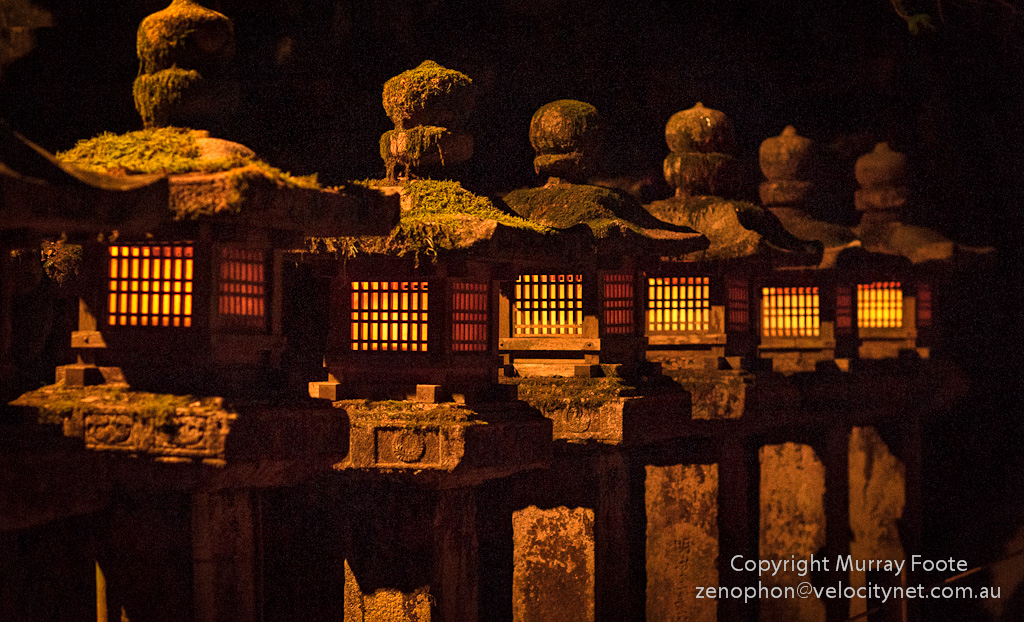
Stone lanterns near Wakamiya Jinja
Heading back towards Kasuga Taisha, here are more stone lanterns near another small shrine. We are on the edge of the Kasugayama Primeval Forest but it’s dark so I can’t show you anything of it.
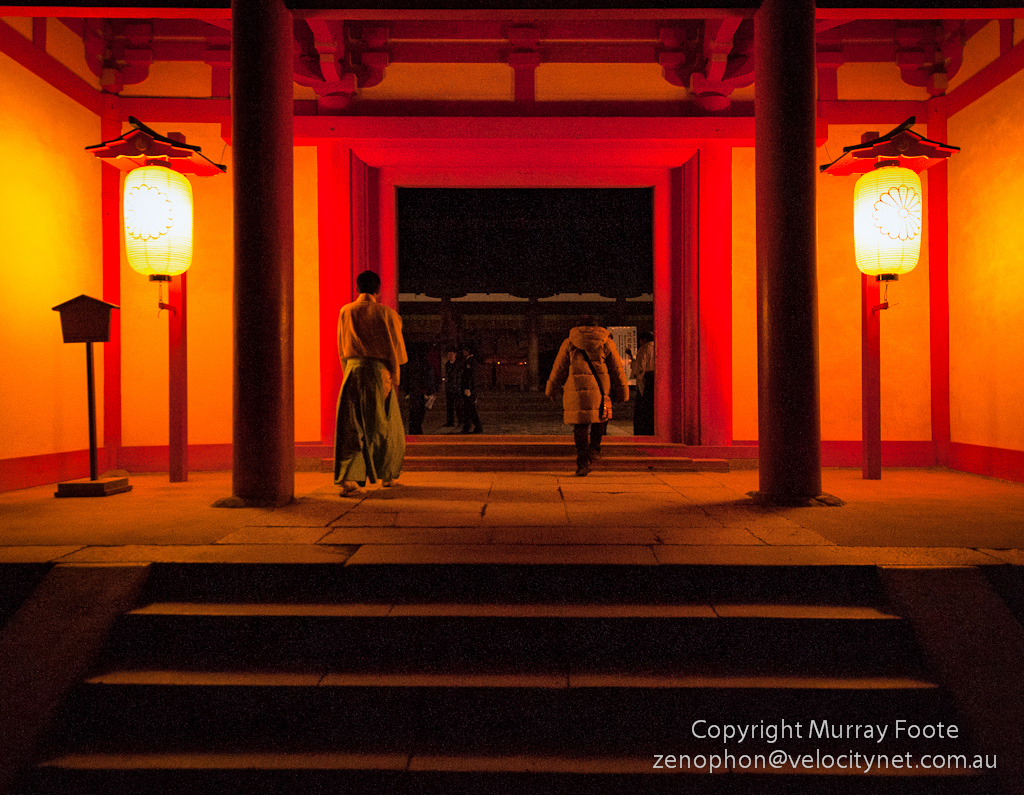
Nanmon
This is the Nanmon, the main gate to the Kasuga Taisha Shrine.
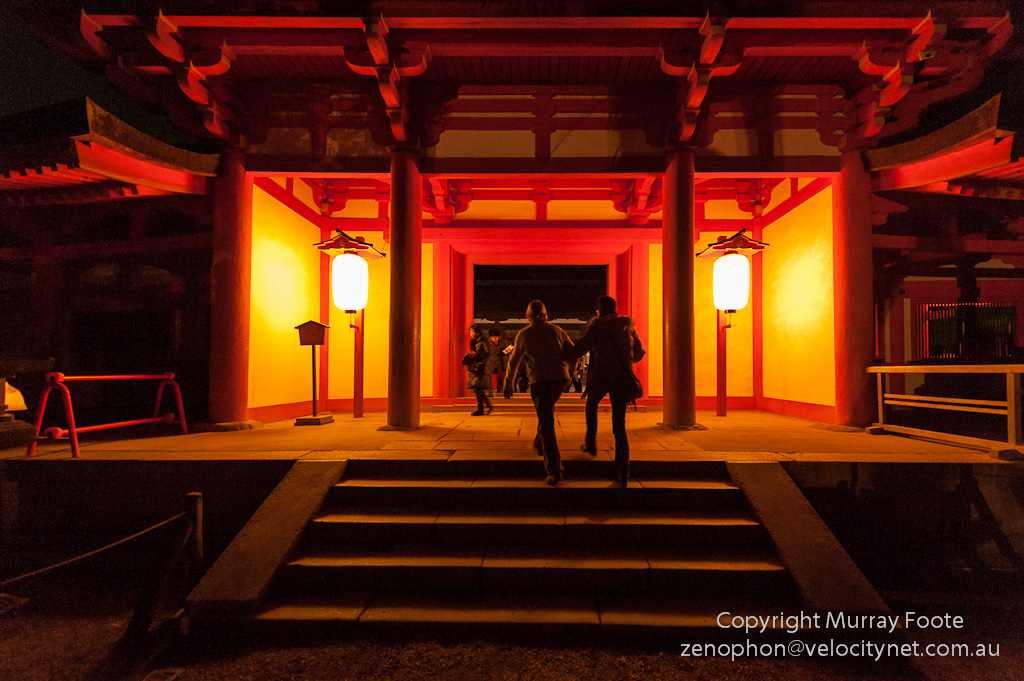
Nanmon
Kasuga Taisha is a Shinto shrine, officially founded in 768 by the Fujiwara clan, though believed to date back to about 710. In the late Heian Period (794-1185), the shrine united with Kofuku-ji in a fusion of Shintoism and Buddhism. This lasted until Shinto and Buddhism were separated shortly after the Meiji Restoration (1868).
Up until 1863, the shrine was dismantled every twenty years and then reconstructed using original materials. This represented the coexistence of impermanence and tradition. The same applied to the Grand Shrine of Ise, one of the oldest in Japan, in the Yamato clan’s ancestral homeland.
Lanterns
GPS location (Green arrow).

A lantern in, I think, the West Cloister
Lanterns
 Murray Foote