Scotland. Day 4, 2nd July.
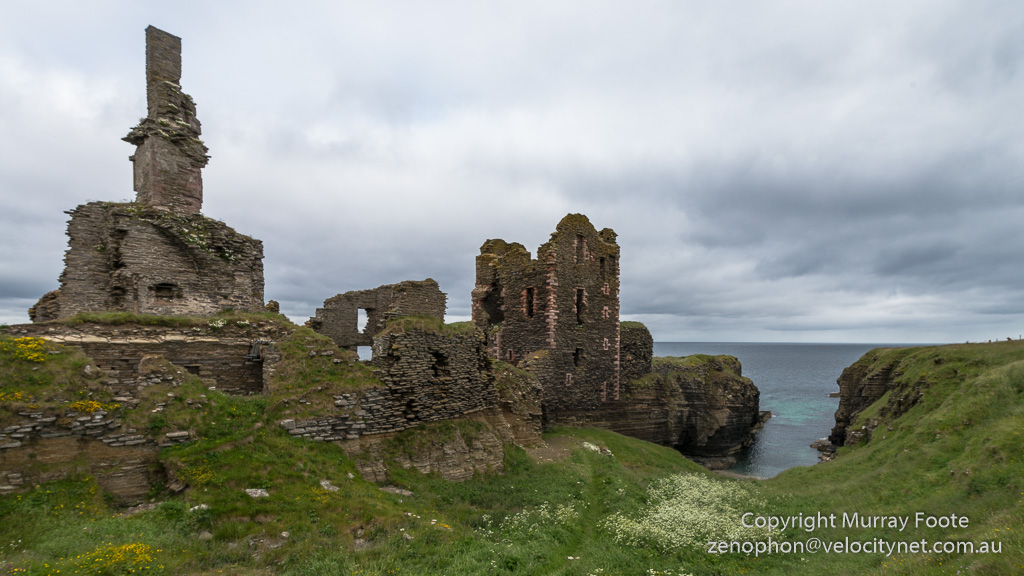
Gatehouse, North Range and Tower House
This is Castle Girnigoe near Wick in the far north-east of Scotland, a particularly charming ruined castle. Officially, its name was changed to Castle Sinclair in 1605 and it is also known as Castle Sinclair Girnigoe.
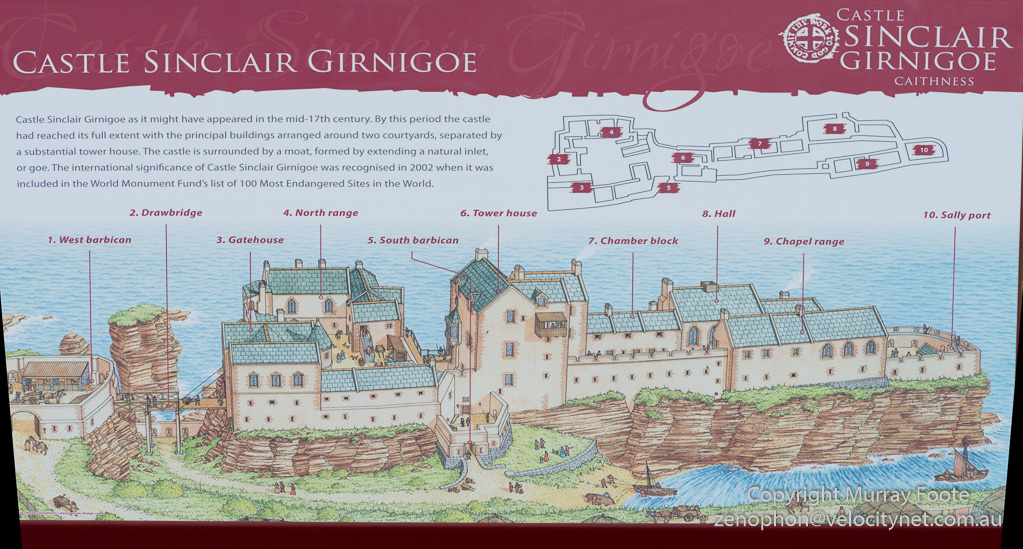 This is a depiction of the overall view of the castle in its final form. As you can see from the preceding image, all of it has not survived.
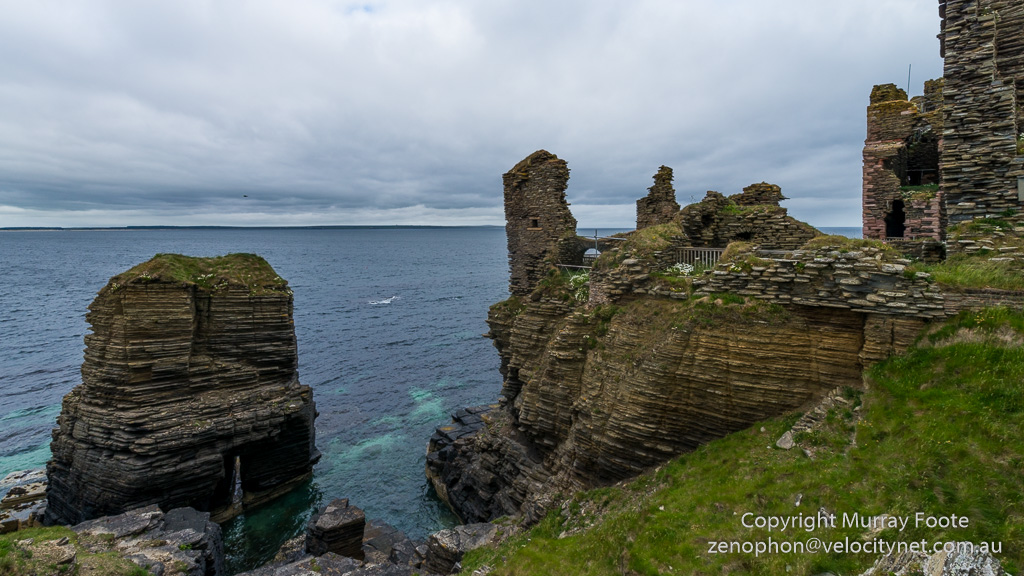
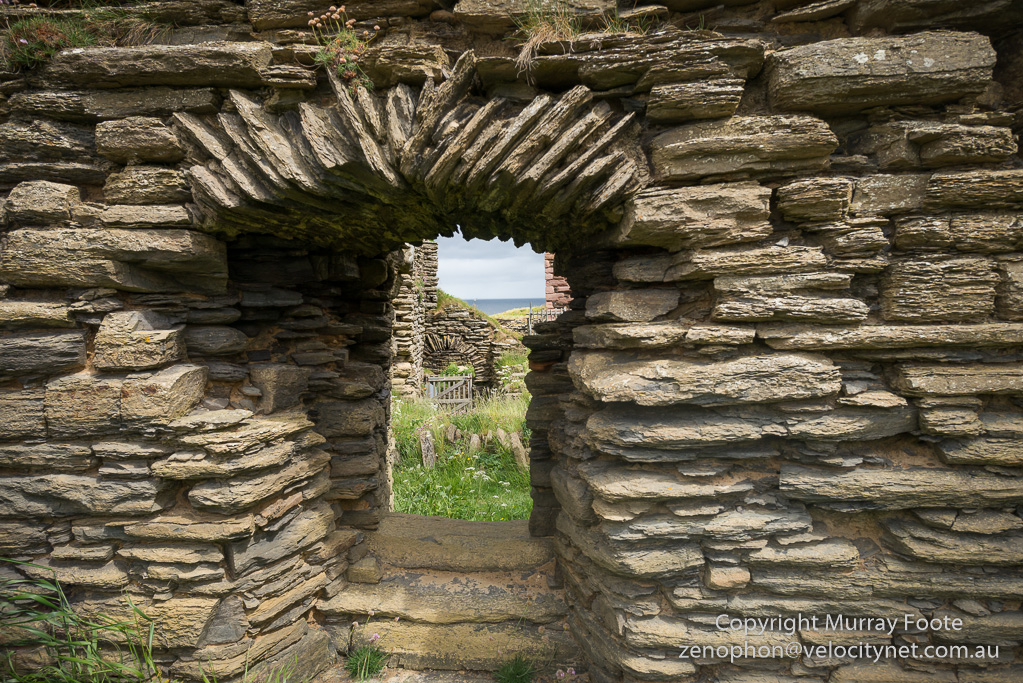
North Range and Gatehouse, probably looking over where the drawbridge would have been.
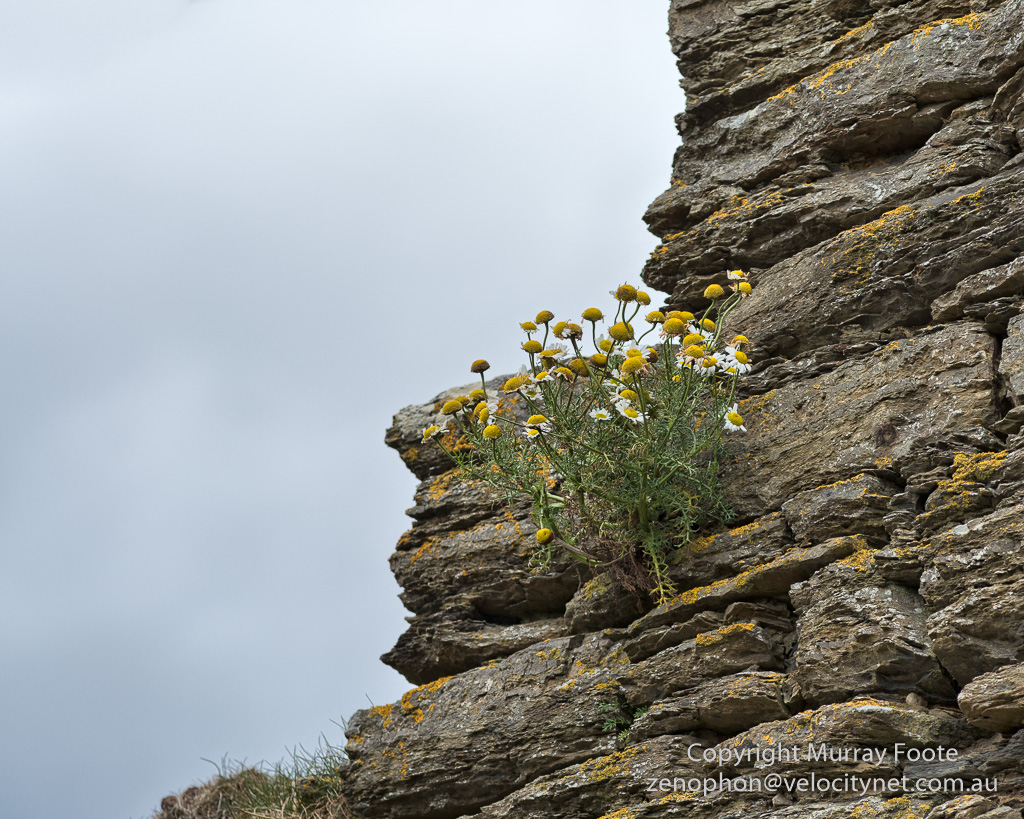
It is particularly intriguing how the castle blends in with the rock and it is sometimes difficult to tell where the rock ends and the castle begins..
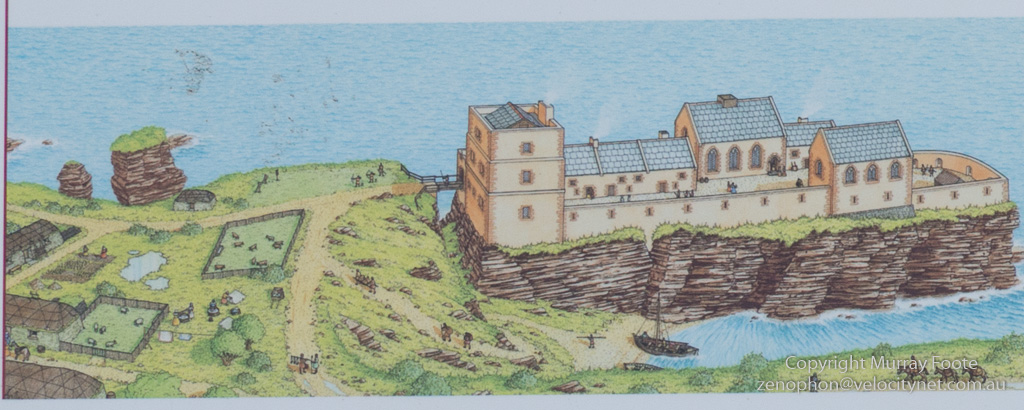
1300-1400
There are no written records for the early history of the castle so it is difficult to be sure when it was first built. However it is a Sinclair castle and it would have been some time after Henry Sinclair, then Earl of Orkney, married the daughter of the last Norse Earl of Caithness in the mid 1300s.
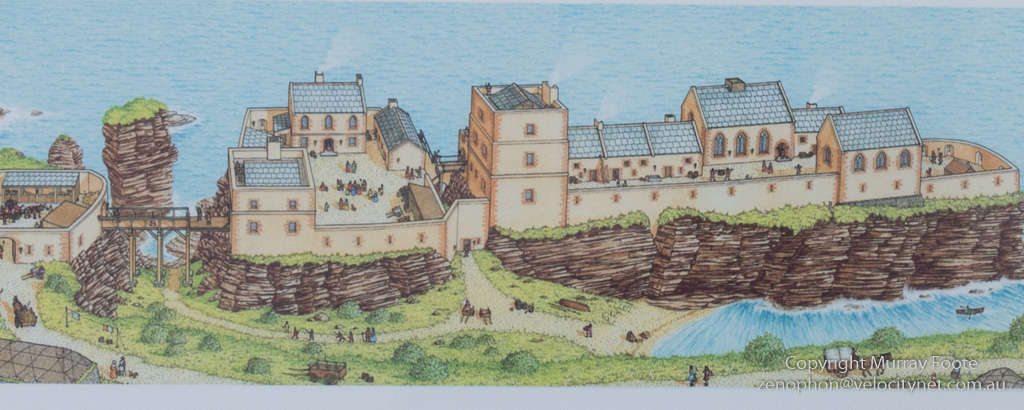
1400-1530
William Sinclair, 3rd Earl of Orkney from 1420 and 1st Earl of Caithness from 1455 probably undertook some building work. He lost the Earldom of Orkney in 1470 when Orkney, previously Norwegian, became part of Scotland as a surety for the dowry of Margaret of Norway in her marriage to James III. This Margaret is not to be confused with Margaret Maid of Norway, heir to the Scottish throne, whose death in 1290 led to invasion by Edward I, resistance by William Wallace and the redemption of Scotland by Robert the Bruce.
After the family had lost the castle in Kirkwall, William’s son William Sinclair 2nd Earl of Caithness 1480-1513 undertook major work to expand Castle Girnigoe. He died in the Battle of Flodden with his king, James IV, who had invaded England in support of France during the early reign of Henry VIII. The Scots had all their aristocrats up at the front and the English had superior military technology.
John Sinclair, 3rd Earl of Caithness 1513-1529 then completed the renovations according to his father’s plans. He died with all his men in Orkney fighting his distant Sinclair cousins on behalf of King James V.
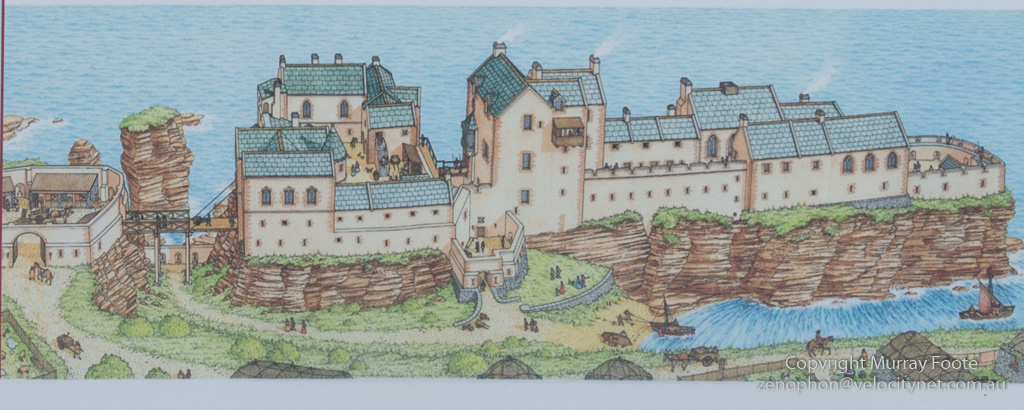
1530-1610
George Sinclair, 4th Earl of Caithness 1529-1582 considerably expanded the Tower House. His son “wicked” Earl George, 5th Earl of Caithness 1582-1643 successfully withstood a siege of the castle in 1588 and later undertook the final building expansion programme. There are many reasons for his bad reputation and one of them is that he imprisoned his son for seven years and caused him to die of hunger and thirst. Eventually, his debts became out of control due to the building activities and he fled to Orkney in 1643, leaving the Earldom to his grandson.
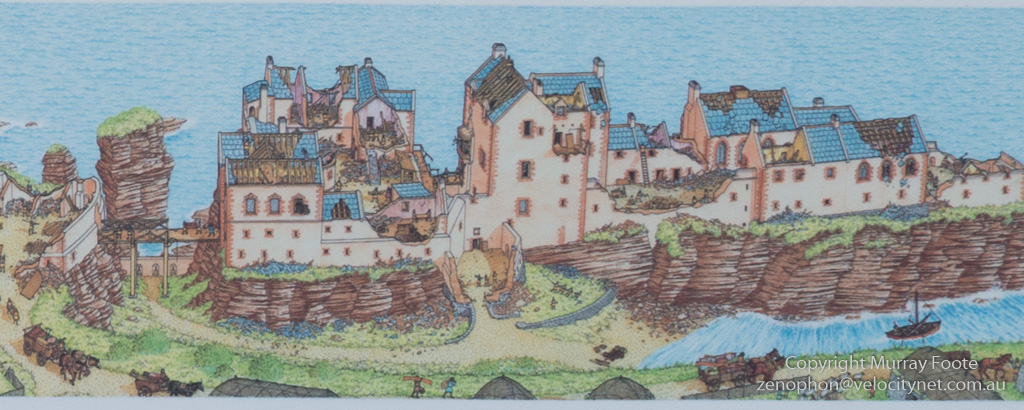
1610-1680
George Sinclair, the 6th Earl, chose to reside at Thurso rather than Girnigoe. Cromwell’s troops took over the castle in 1651 and caused some deterioration in its condition. In 1677 the castle and the Earldom passed to Sir John Campbell of Glenorchy who was the owner of the debts of the 5th and 6th earls. However, George Sinclair of Keiss disputed Campbell’s succession and in 1680 he stripped the castle of furniture, doors, roofs and floors to prevent Campbell taking possession. The two sides fought the Battle of Altimarlach near the castle in 1681. Not long after, the Privy Coucil awarded Sinclair the Earlship and Campbell the land. The Dunbar family took possession of the castle around 1700 but it was never repaired.
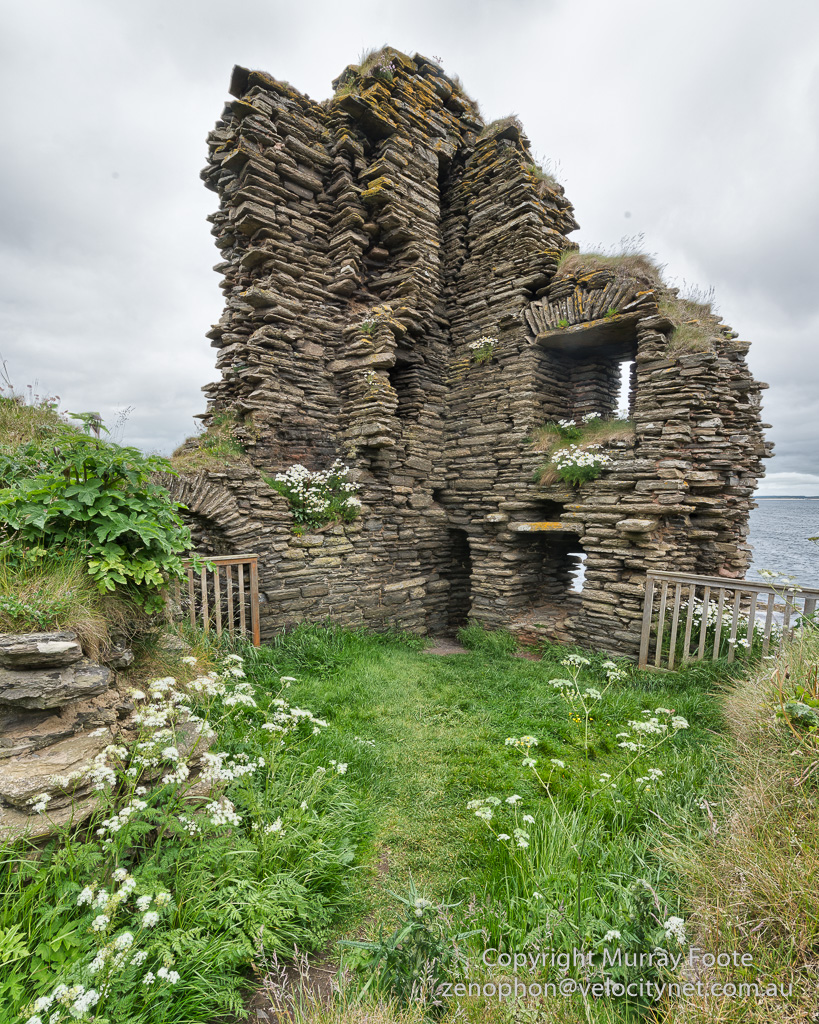
A corner of the North Range, I think.
Prior to the building of the castle there is evidence of neolithic occupation of the site (from 4500BC to 2000BC) and some evidence of earlier mesolithic occupation.
.
.
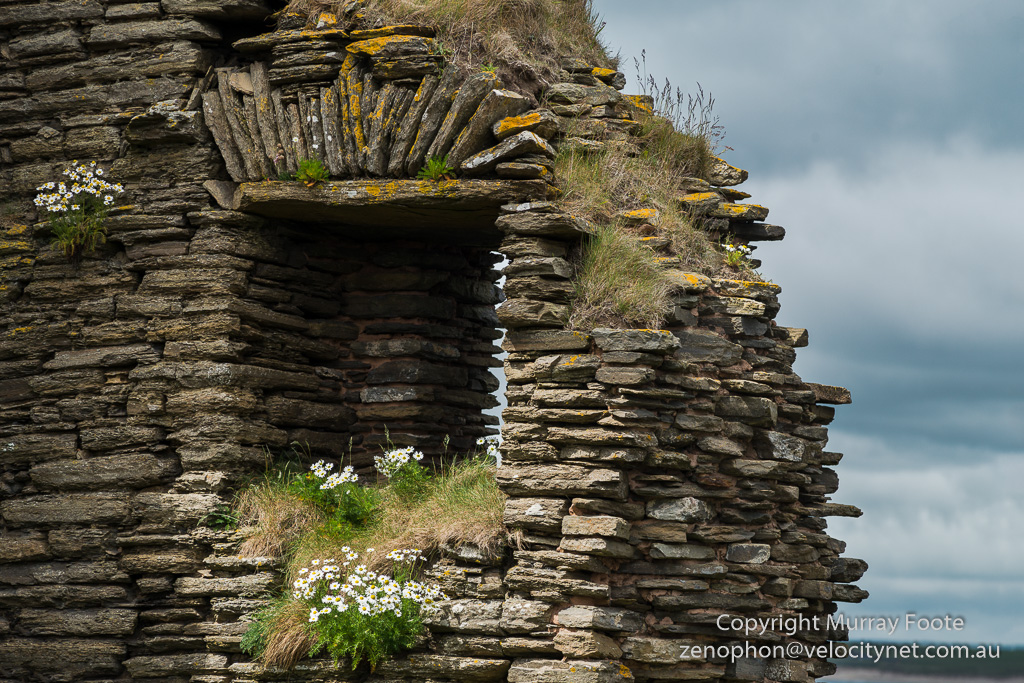
North Range.
.
.
.
.
.
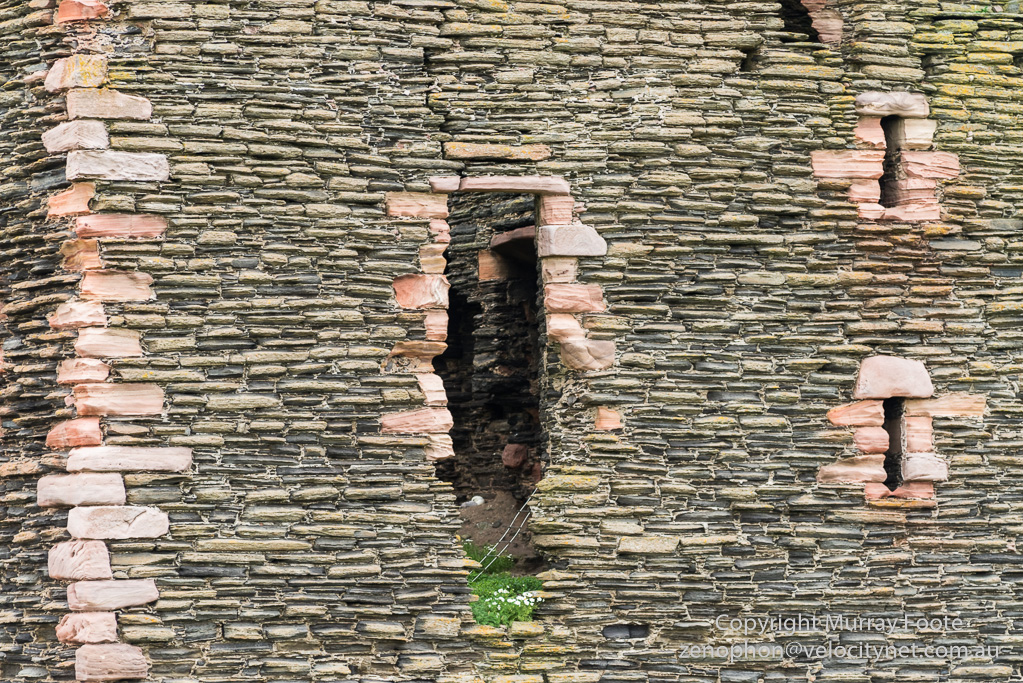
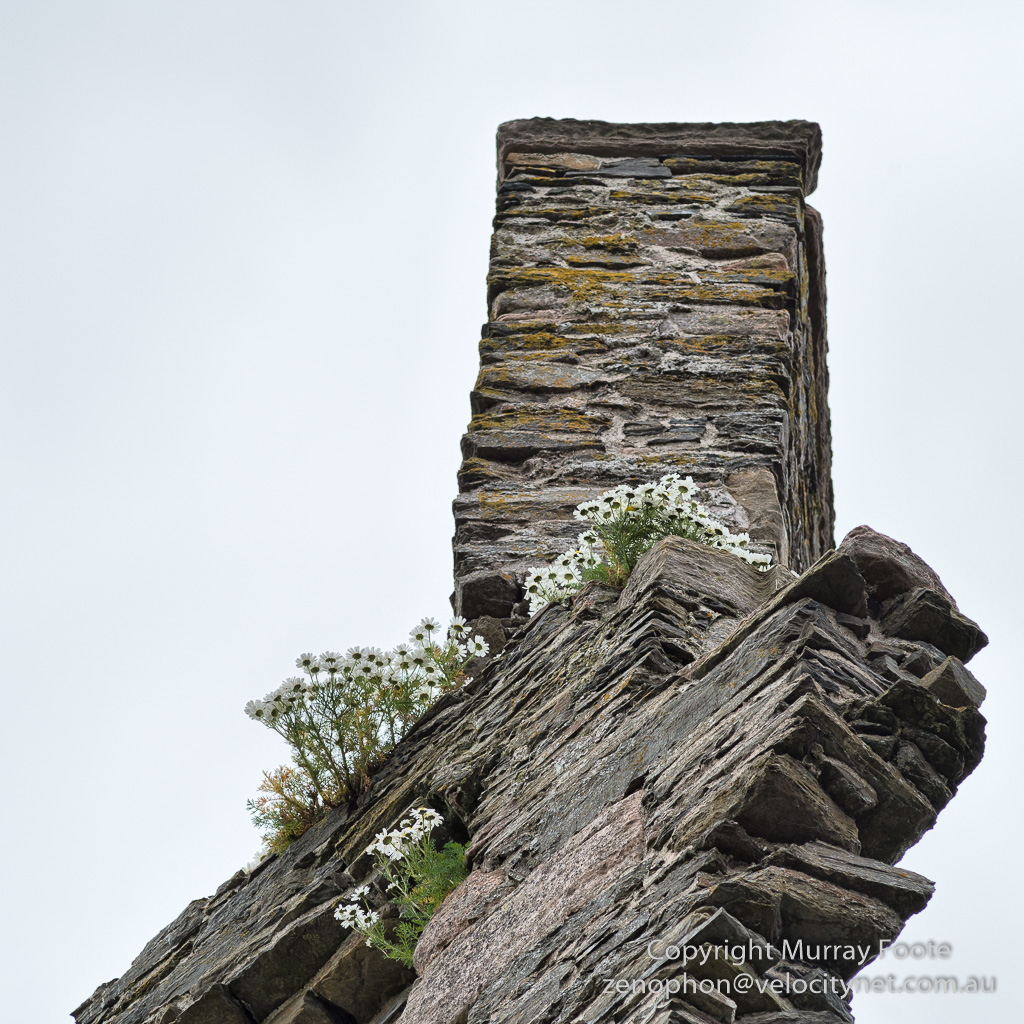
Tower House.
.
.
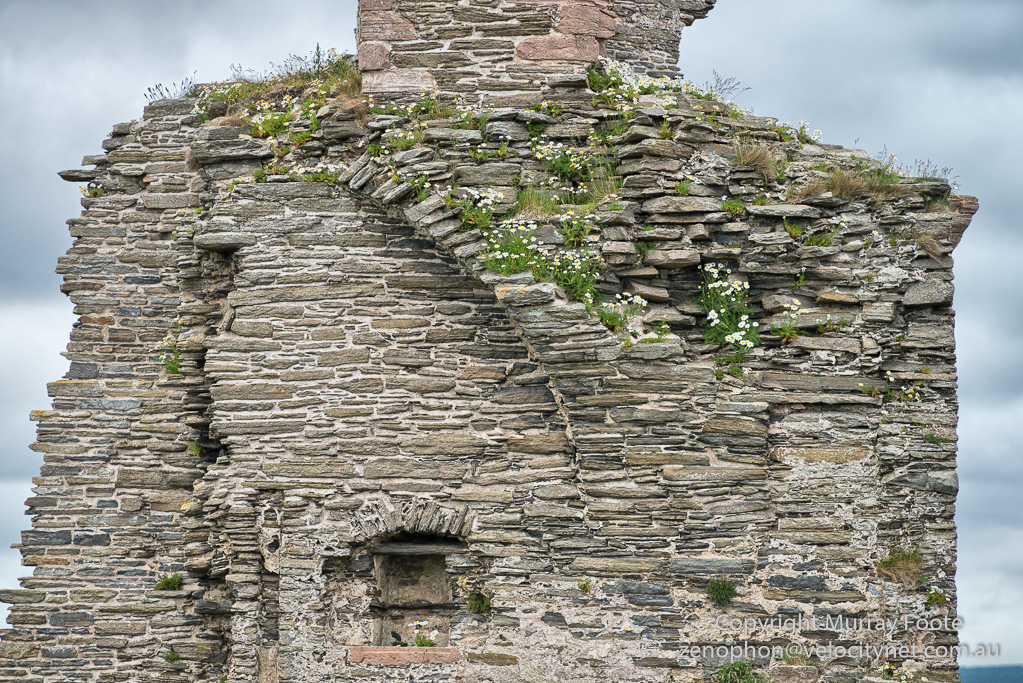
While I was taking these photographs I met a local who had grown up nearby. These days you can only go so far, and not into the tower house. He told that when he was a child access was unrestricted and they used to scamper up and down the grand staircase in the Tower House.
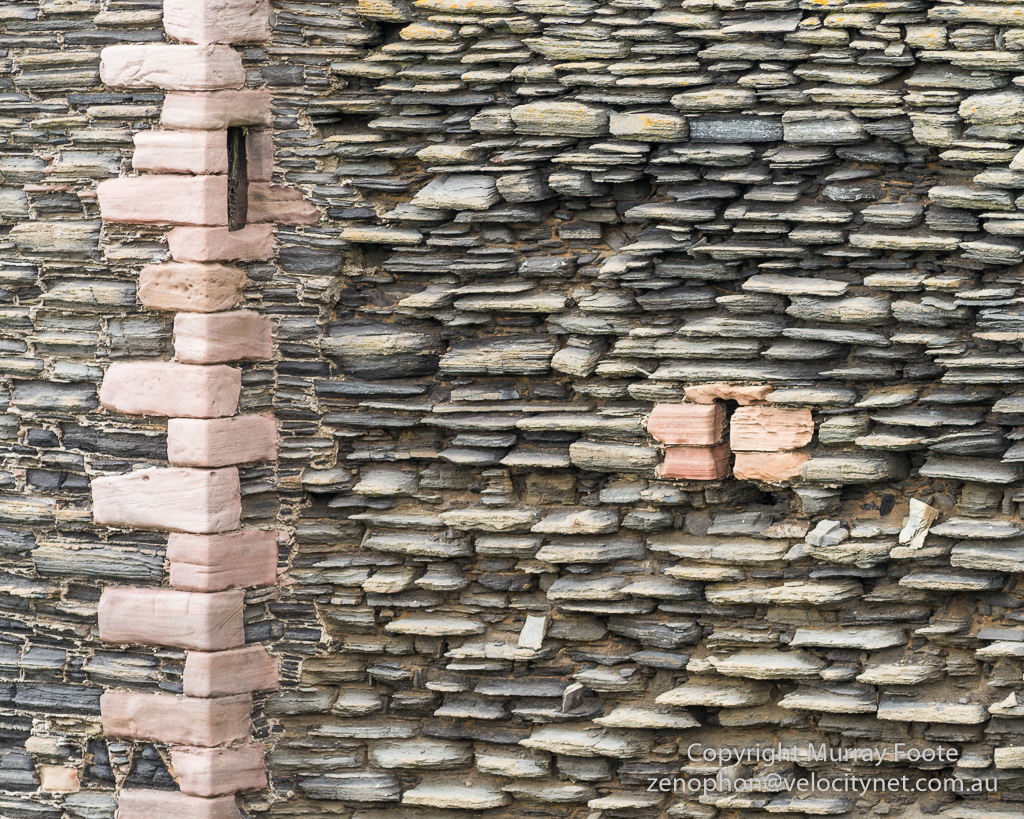
Tower House.
 Murray Foote