Barcelona, Spain. 28th October 2018.
(Bottom of page for Recent Posts, Top Posts, Subscribe and Search. Clicking image doubles size. Trip summary and links to posts.)
.
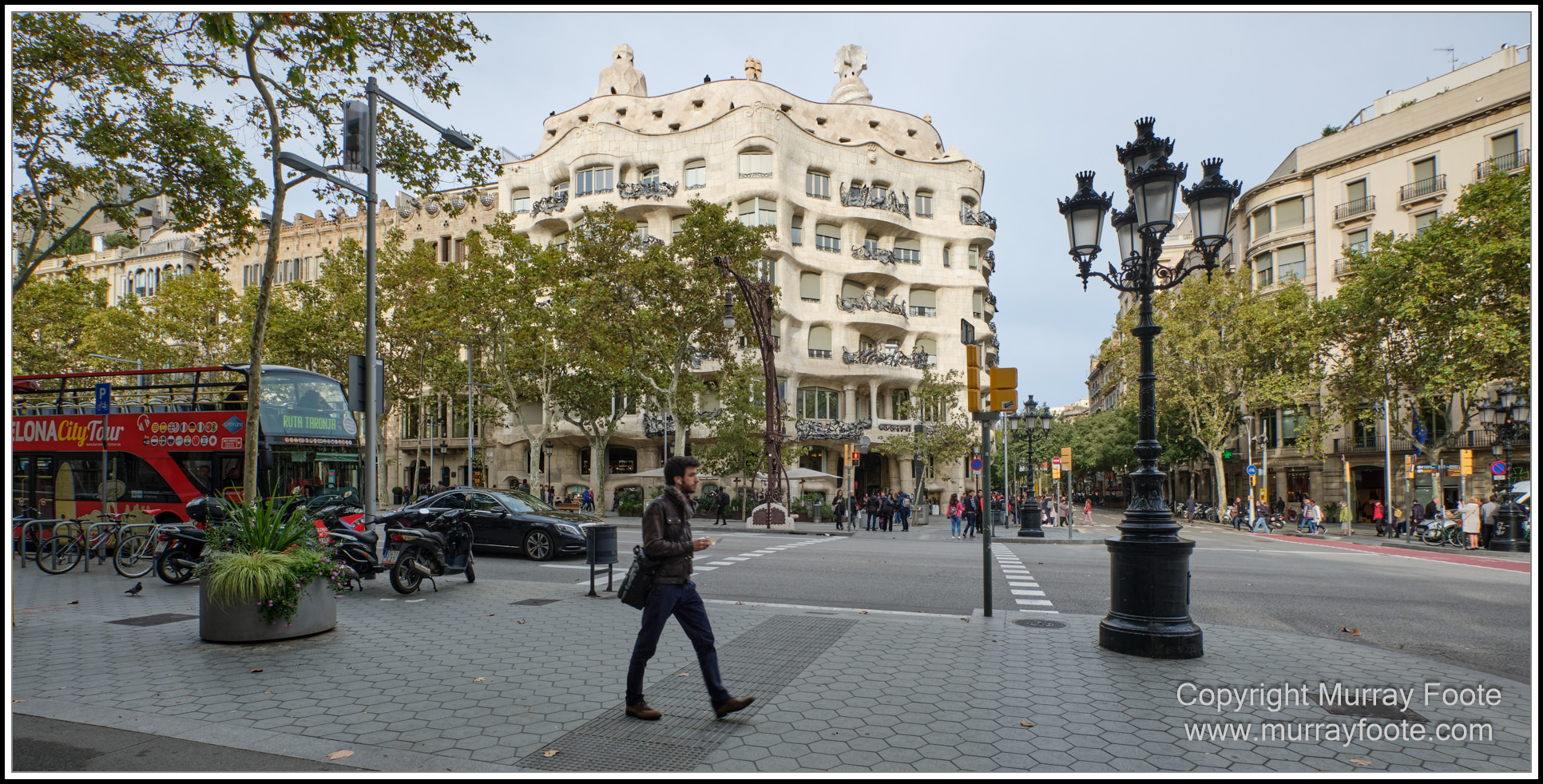
La Pedrera (street view).
The was the last private residence designed by Gaudi, constructed from 1906 to 1912. “La Pedrera” was originally a sarcastic local nickname meaning “the stone quarry”. It is also known as Casa Milà for its original owner. Its self-supporting stone façade meant there were no structural internal walls, so internal layouts could change and they were considerably modified in succeeding years. Upper floors were always intended to be let out as apartments. The whole ground floor was initially a flat as the owner’s residence. It was furnished by Gaudi but much of this was removed after he died.
.
.
.
. 
Looking up at La Pedrera.
Gaudi originally intended to include a number of religious sculptures in the building but Milà abandoned this after la Semana Trágica or Tragic Week. This was a period of violent rioting in opposition to conscription for the Second Melillan Campaign (also called the Second Rif War), primarily in Barcelona, and following on from a general strike. It included anticlerical agitation with dozens of churches burned, because clergymen in the Catholic Church were seen as part of the middle and upper classes who were able to evade conscription by paying 1500 pesetas. Many police stations were also attacked but soldiers were more likely to be neutral. Nine police and 104 civilians died, 2,500 were arrested and five executed.
The conscripts were in many cases sole wage earners for their working class families, and unable to purchase an exemption to service. They had little training and were quite ill-prepared. The war was fought to defend mines near Melilla in Morocco that were threatened by local tribesmen and French incursion. This was not just a minor skirmish. Totals of killed, wounded and missing were 43,000 for the Spanish, 18,000 for the French and 40,000 for the Rif locals.
Spain had expanded their zone of influence in the north of Morocco after the loss of its last main colonies Cuba, Puerto Rico and the Philippines in the Spanish American War of 1898. France had also established a zone of influence over much of Morocco and invaded in 1907. The Second Melillan Campaign was in 1909. The treaty of 1912 gave France a protectorate over most of Morocco, with Spain a protectorate over the north coast (except Tangier International Zone at the north-west tip) and a small strip at the south on the Western Sahara border (then Spanish Sahara). Morocco regained independence in 1965 and the current Alawi dynasty has reigned since 1666. Melilla is still a Spanish enclave in Morocco. Ceuta is the other one. Spain has held Melilla since 1498 and Ceuta since 1668.
.
.
. 
On the roof.
Perhaps a cyberman turned to stone concrete at the top. Most of this post is on the roof; most of the building are flats not accessible to the public and their interiors are not necessarily original.
.
.
.
. 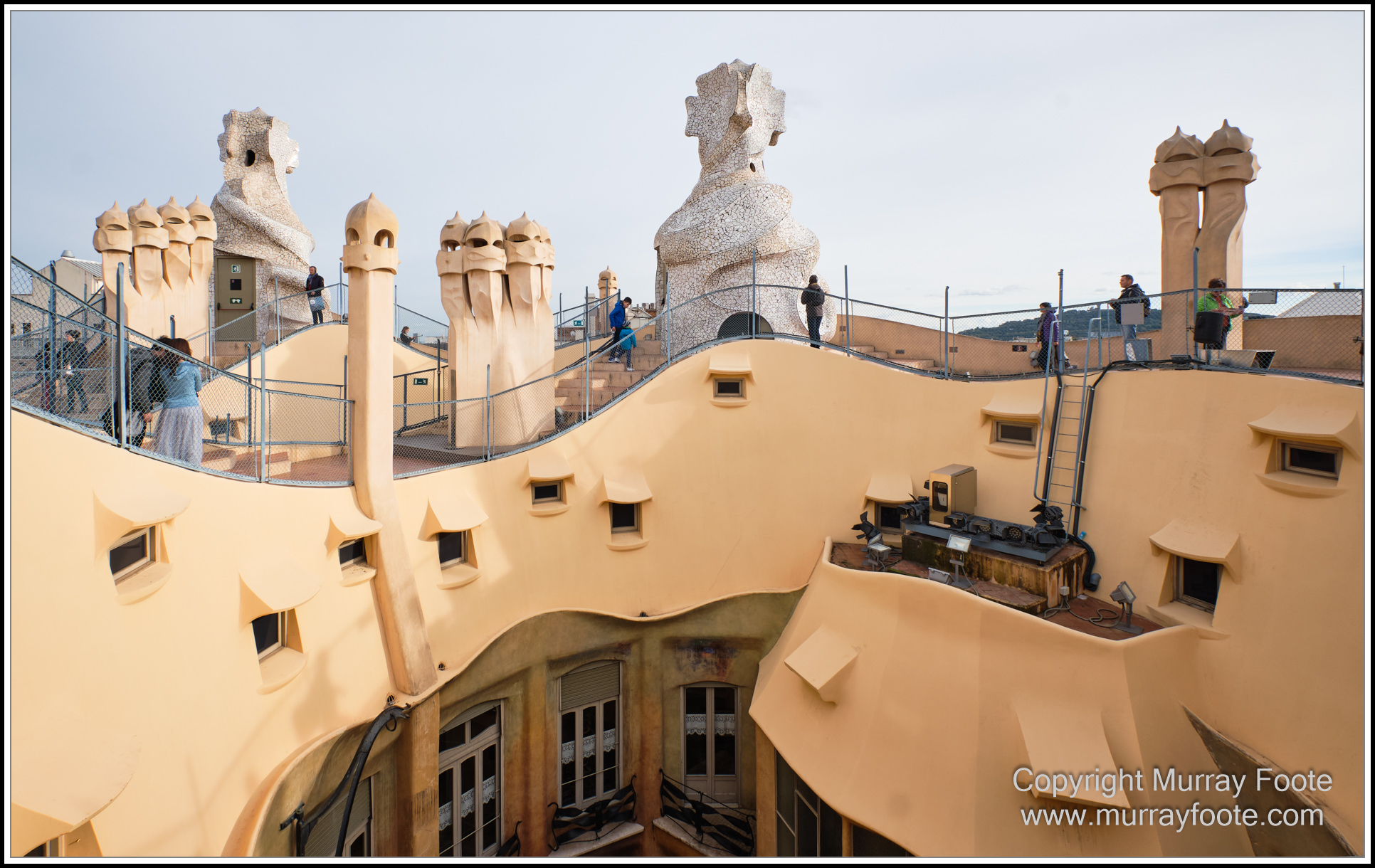
A view of the roof.
The chimneys are espanta bruixes (or witch scarers). The little balcony in the Atrium is used for light installations. The metal fence is obviously not original. Perhaps initially there was nothing there at all.
.
.
.
. 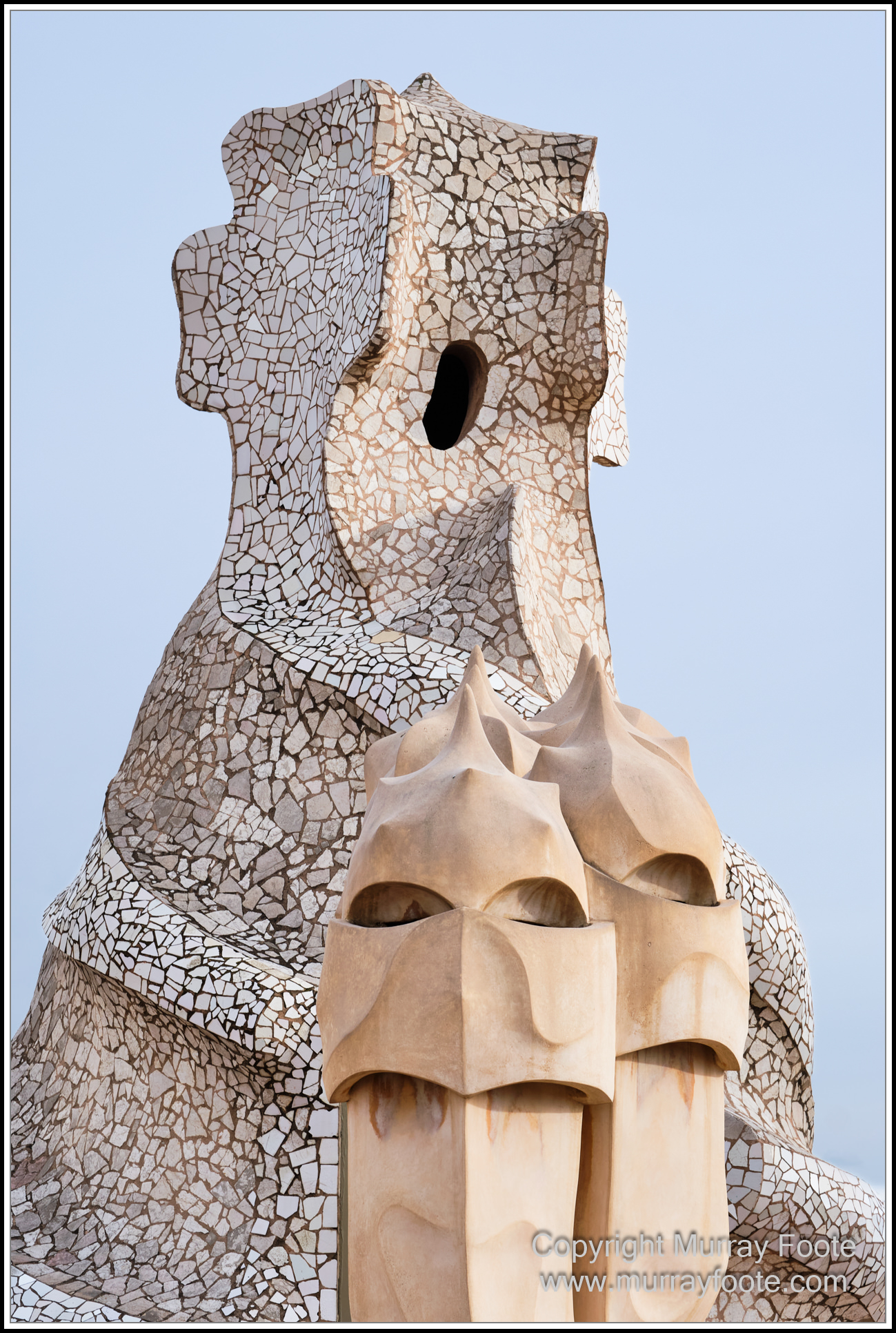
These are not merely sculptures; there is also a functional aspect for ventilation.
The towers in front remind me of hoplites, or some equivalent ancient soldier.
.
.
.
. 
The Atrium.
.
.
.
. 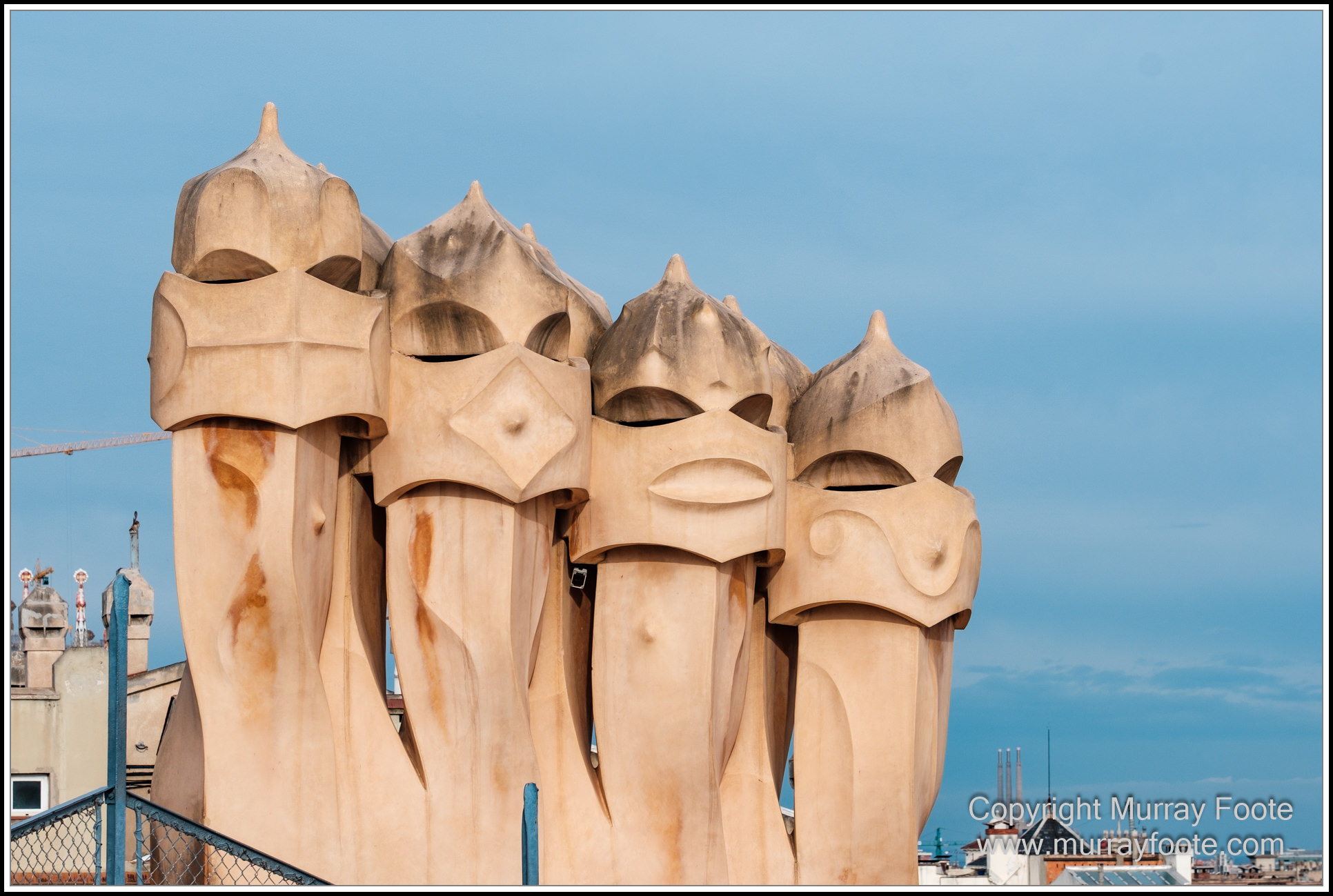
More than just ventilation towers, maybe like models on a runway.
.
.
.
. 
Perspective.
.
.
.
. 
Contemplating the more mundane surroundings.
.
.
.
. 
Roof assemblage and assembly.
.
.
.
. 
Climbing may not be advisable.
.
.
.
. 
The humans show a sense of scale.
.
.
.
. 
Looking down.
I could point out myself down there in the top right quadrant taking the first photo in this post apart from my inability to master spacial and temporal ambiguity. (Helpful suggestions welcome).
.
.
.
. 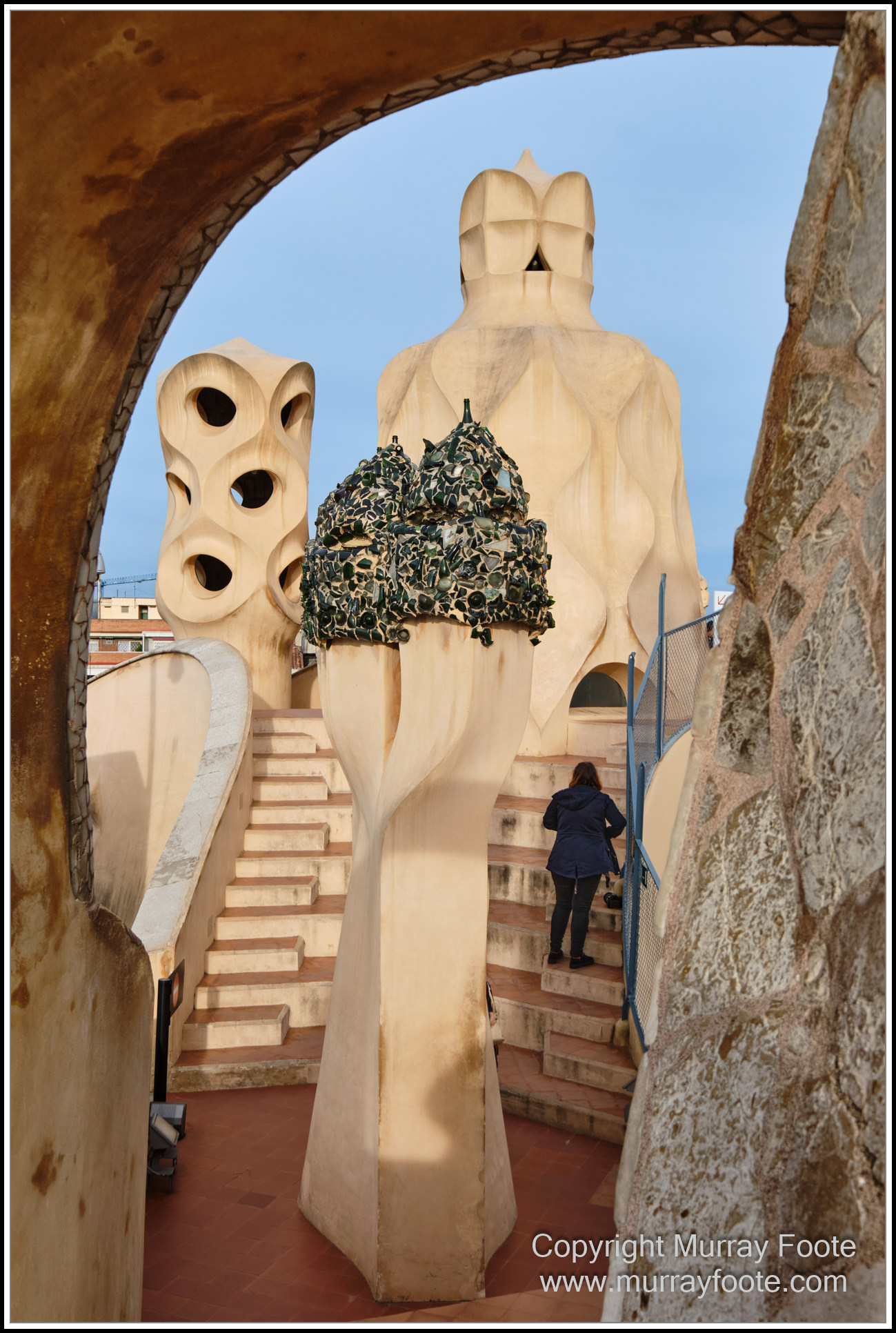
Gaudi is said to have constructed the glass structure after the opening of the building, using bottles left over from the party.
.
.
.
. 
Inside the Attic…
.
.
.
. 
… where there is a scale model of La Pedrera.
.
.
.
. 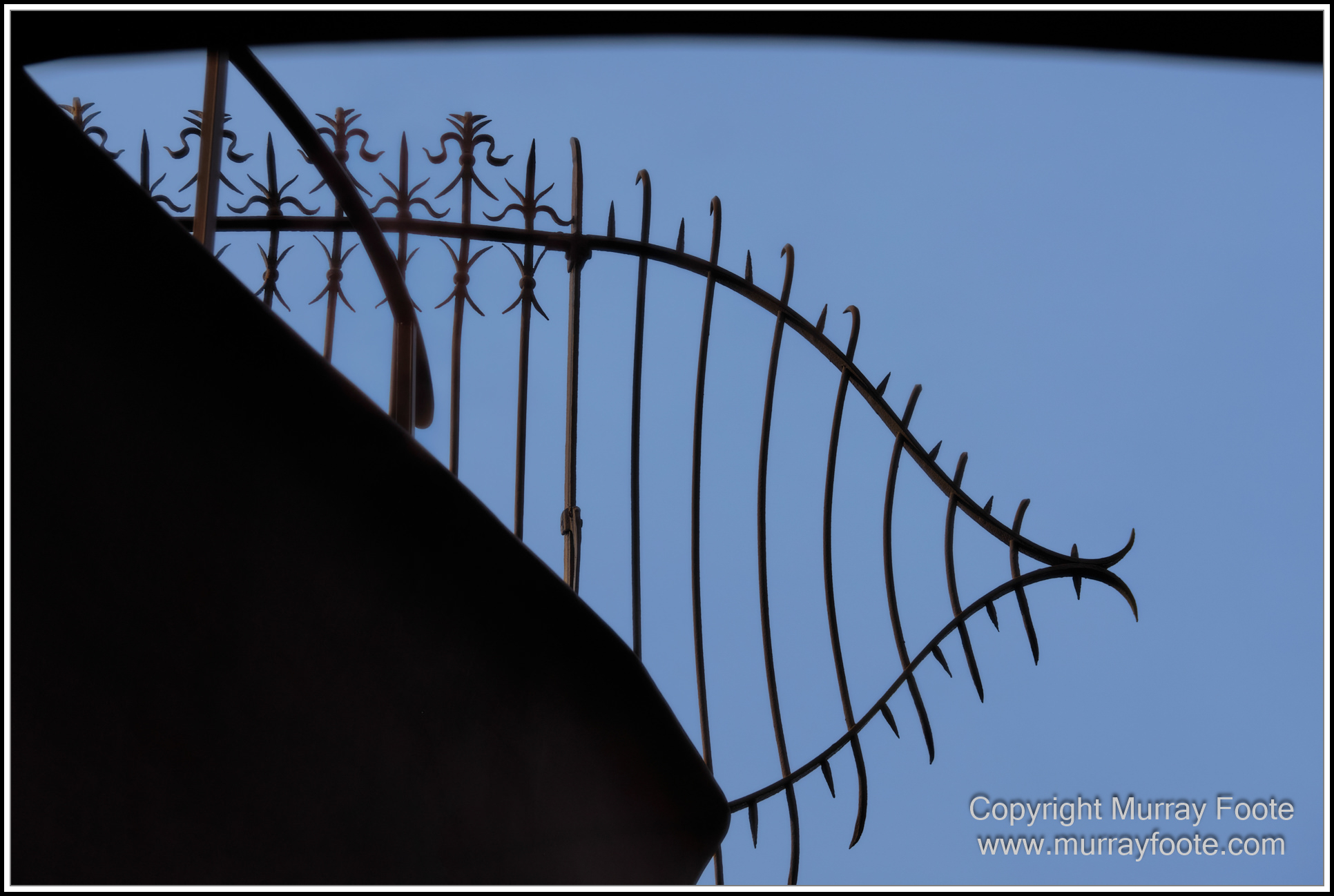
Ironwork detail.
.
.
.
. 
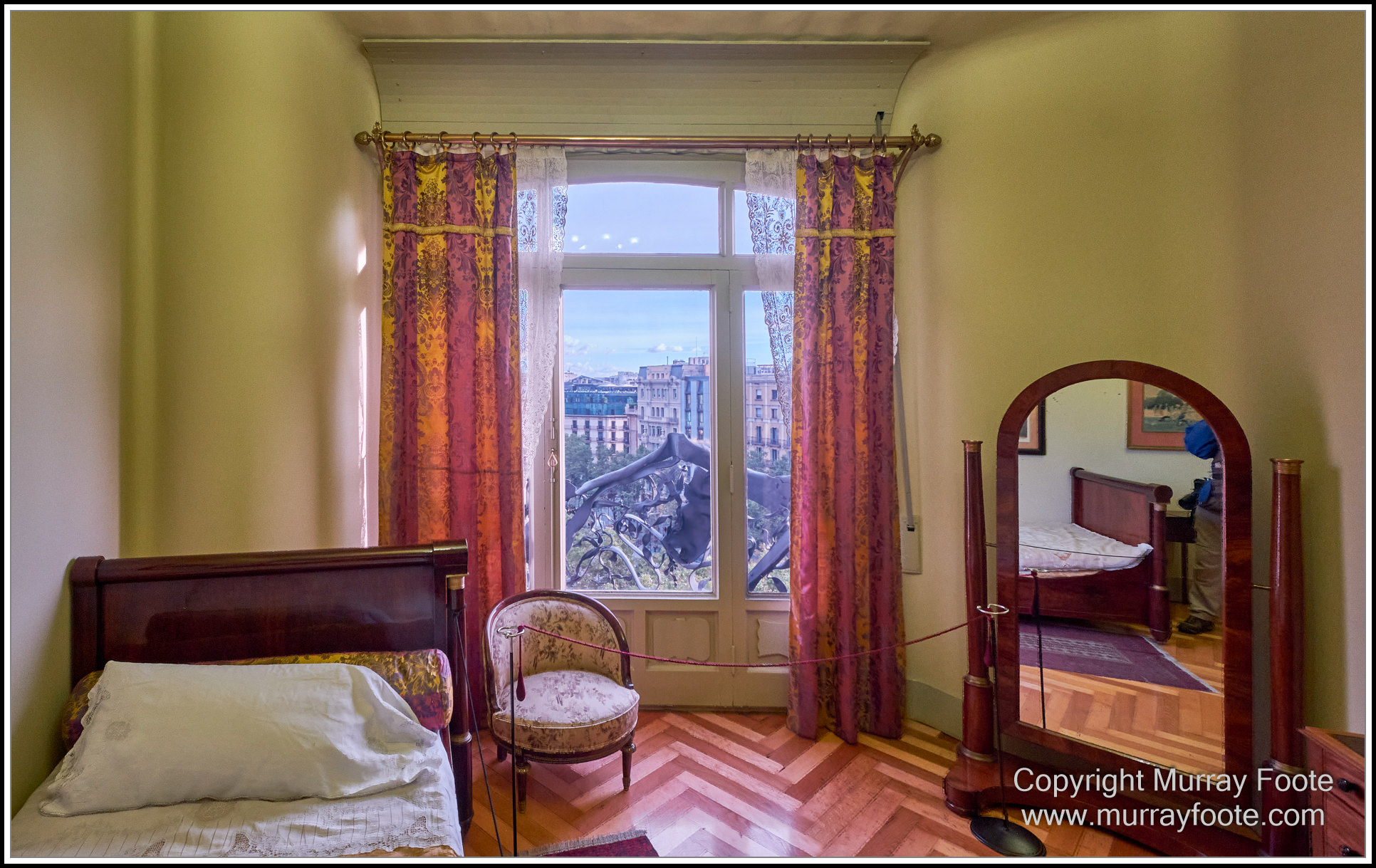
La Pedrera apartments, open for public viewing.
These recreate what the original apartments would have been like in the early twentieth century.
.
.
.
.  .
.
.
.
.  .
.
.
.
. 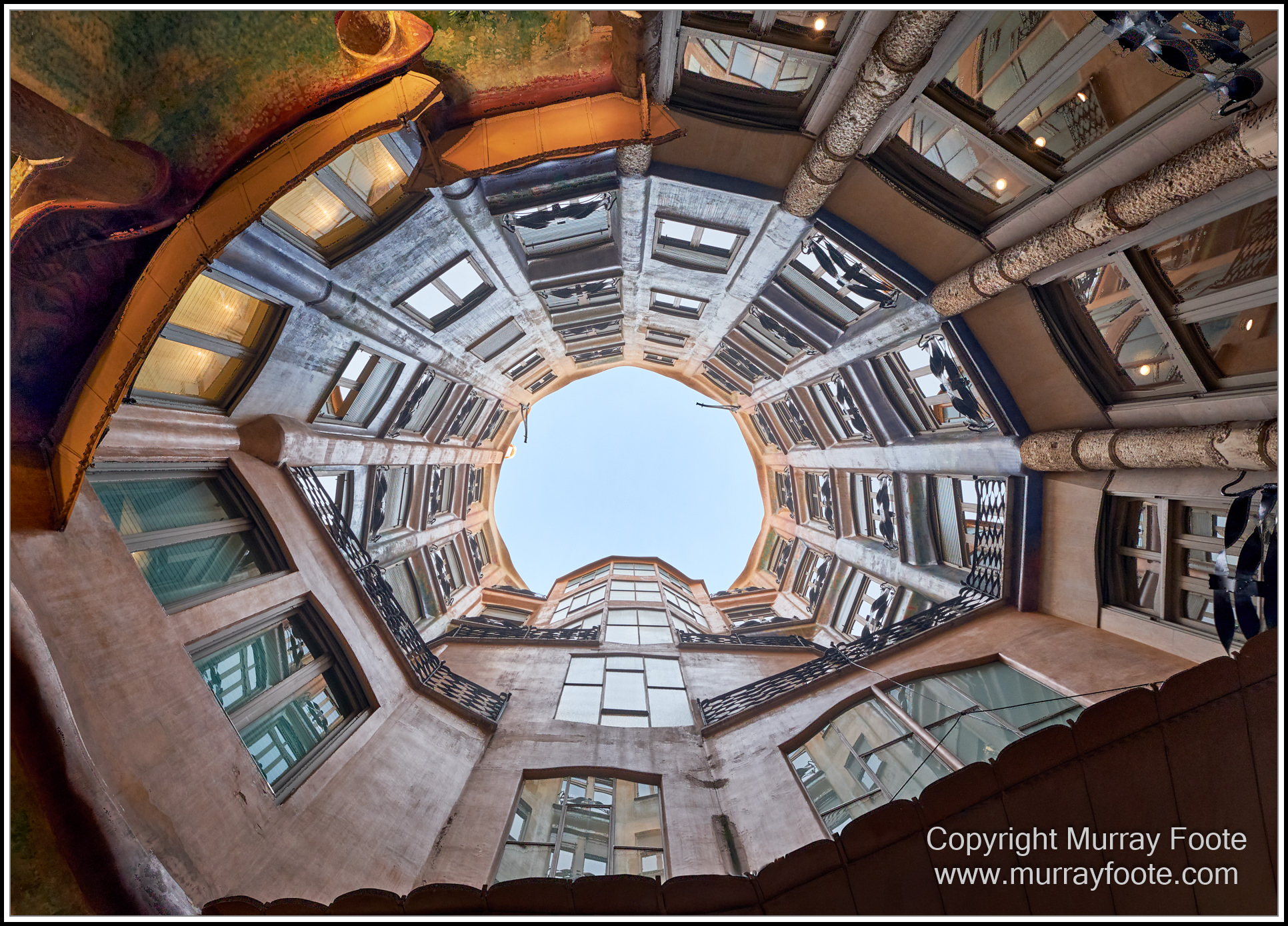
Looking up in the elliptical atrium, providing light and ventilation to the apartments.
.
.
.
.
(The next post on Sagrada Familia is due next Sunday but may be delayed).
.
p.s. When I went to check the draft for this post yesterday, it wasn’t there. I started to recreate it when I realised I’d already written it and must have accidentally deleted it. So I brought it back. Normally the link for this post would include “la_pedrera”. That’s why this one has it as “_trashed” instead. If I were a punk I might delete all my posts and bring them back before publishing so they could all have a link as “_trashed”.
.
 Murray Foote