24th October 2015. Berenty, Madagascar.
.
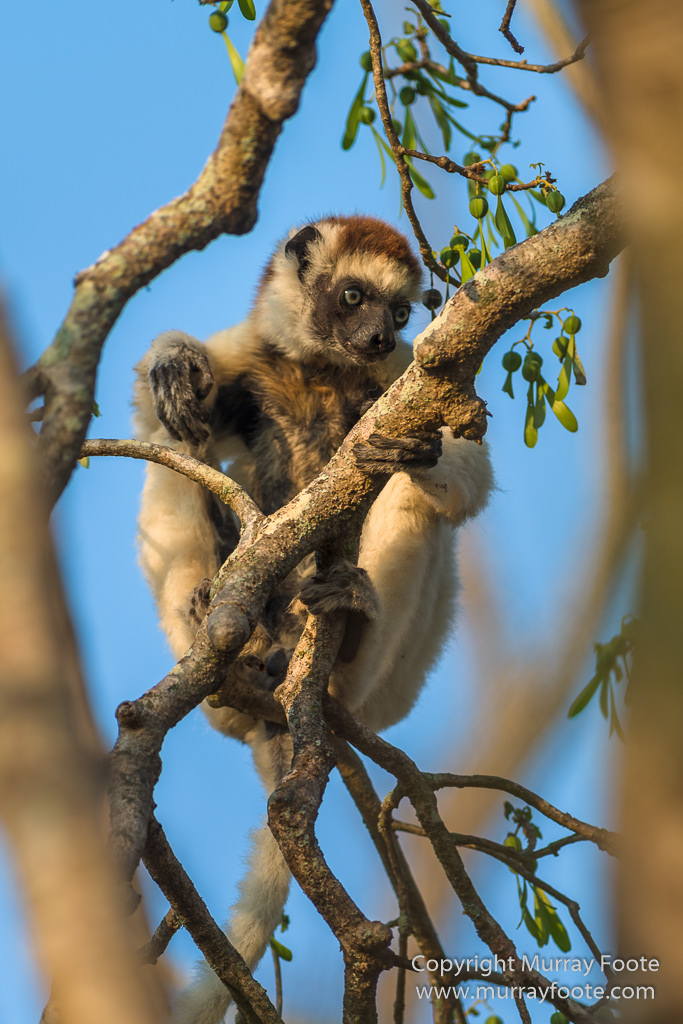
The images in this post are from an early morning walk before breakfast, between 7am and 8am.
.

Verraux’s Sifaka is listed as vulnerable due to habitat loss from land clearing. Its main natural predator is the Fosa, though I presume there are no fosas here.
.
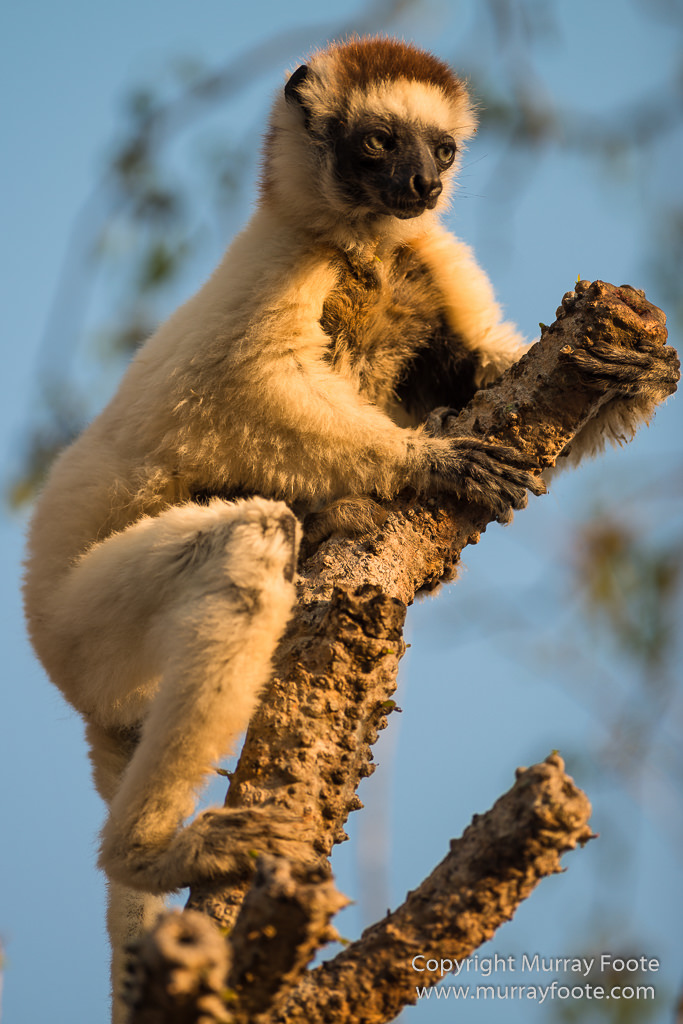
They live in groups of many males and females from 8 to 14 members. Their mating period is January and February, which is the only time they display aggression. They bear single young.
.

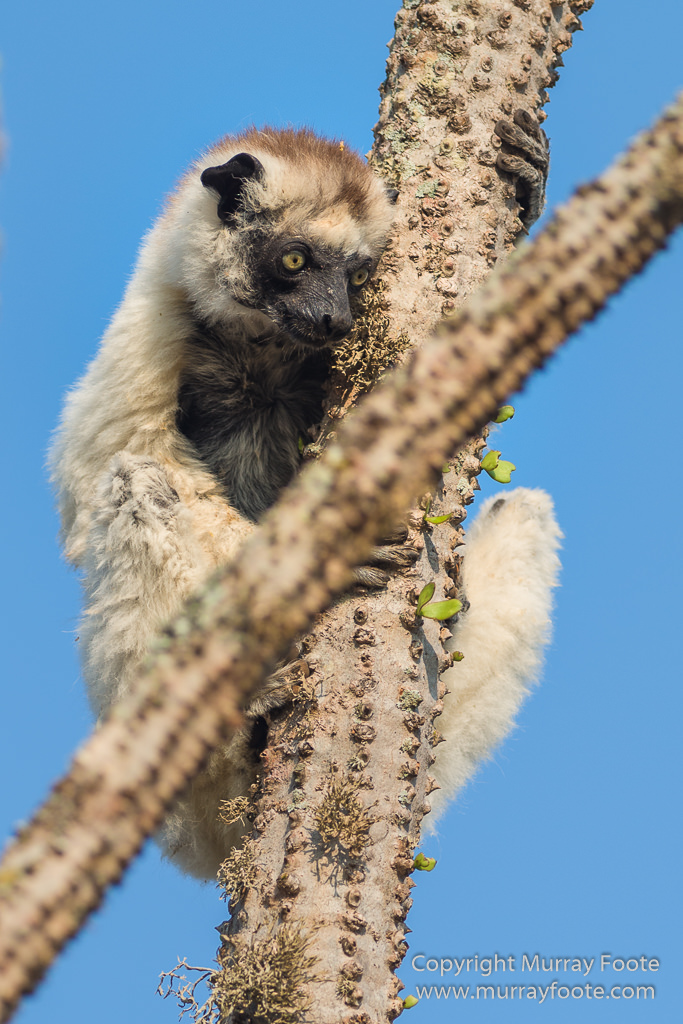
Here we see one feeding off leaves of a very spiky stem of a tree in the spiny forest. The spiny forest covers a large semi-desert area in the south of Madagascar and we are on the edge of it here.
.
 .
.
.

They are well adapted for drought conditions and can if necessary gain sufficient moisture from succulent leaves and dew.
.
 .
.
.
 .
.
.

This is a characteristic early morning poise, sitting back and soaking in the sun.
.
 .
.
.
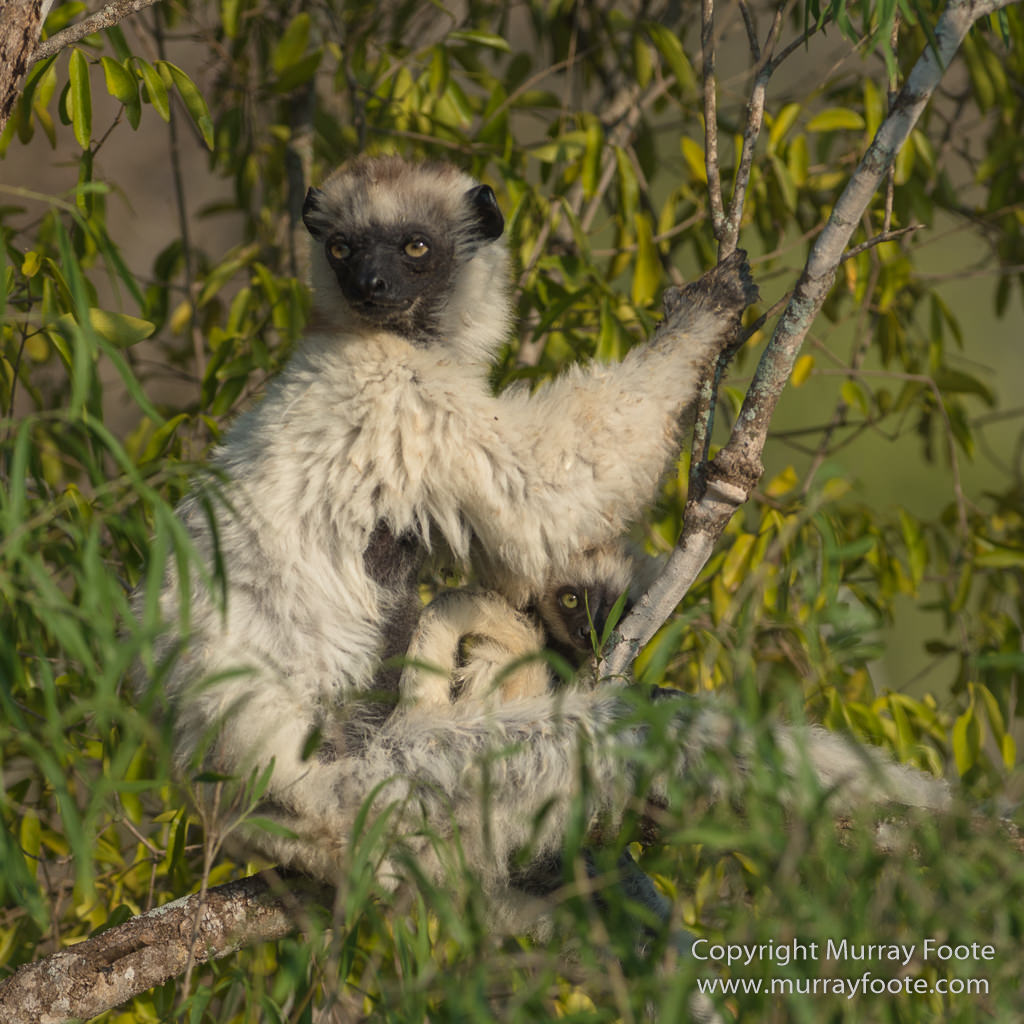
Note the extra eye below.
.
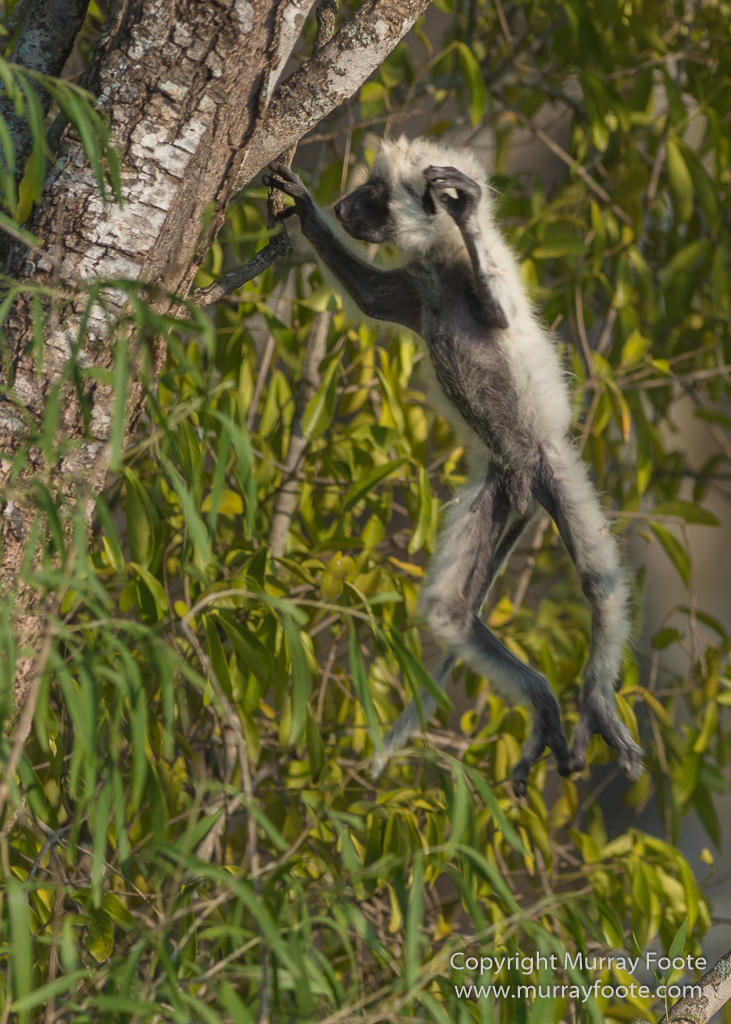
Young one leaping from branch to branch.
.
 .
.
.
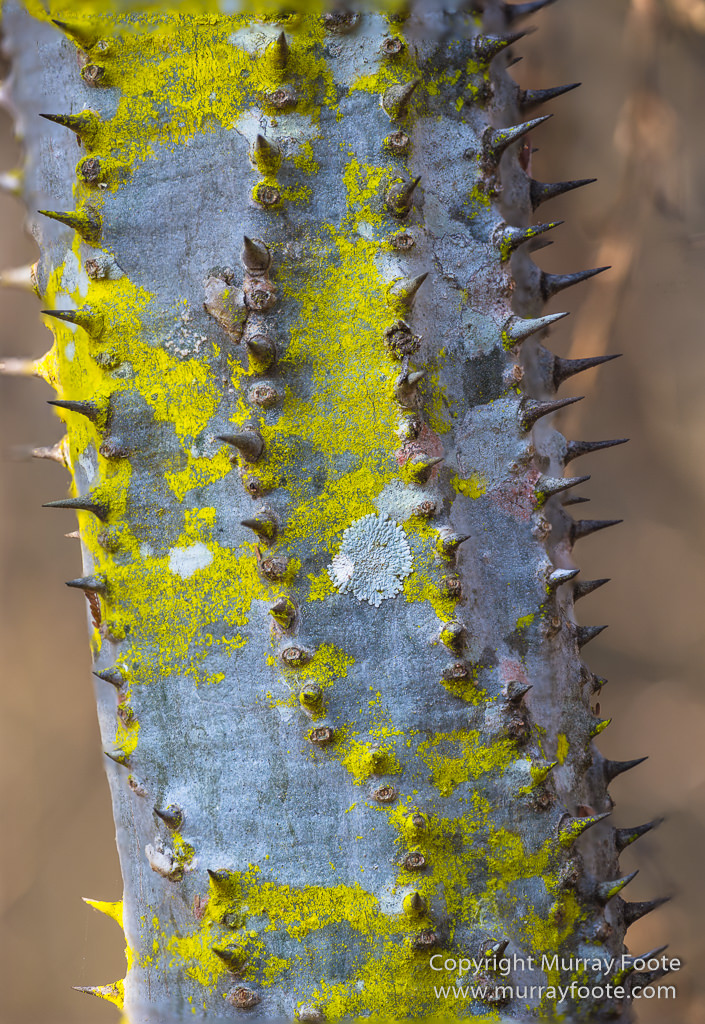
A closeup of one of the spiny trees. Not so easy for a human to climb with bare hands and feet.
.
 A chick of an unknown bird species.
.
 Murray Foote