Canberra, 18 to 25 May 2025.
(Recent Posts, Top Posts, Subscribe and Search at bottom of page. Clicking image doubles size. Trip summary and links to posts ..)
.
Feel free to just look at the images, mainly of birds, and read their names. All images appear larger if you click on them.
The images show birds in wetlands and botanic gardens in Canberra. I test a newly purchased lens and also ended up testing new software for correcting less sharp parts of an image. For some images, I use that software for sharpening and noise reduction. In most of the others, there is no sharpening or noise reduction in the interests of assessing the lens. (Normally I would do at least some regional sharpening, even with a sharp lens). There is a lot of detail here but it is still a photographic post rather than a technical post.
This is a long post (fourth longest in the Blog).
.
Day 1. Images at Jerrabomberra Wetlands.
.
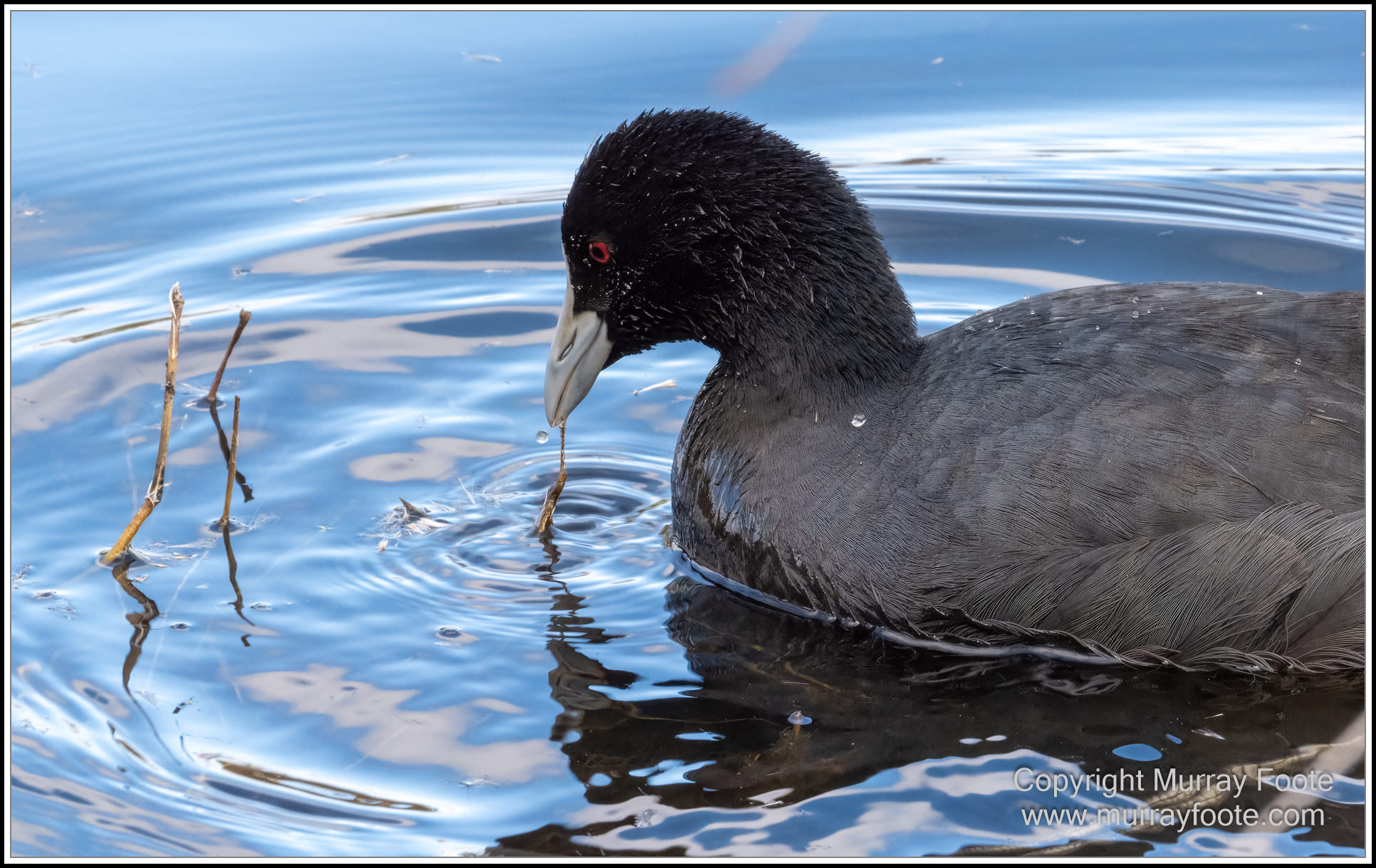
Eurasian Coot.
One problem I had especially on the first day was that I kept moving the aperture ring on the new lens without noticing it. This was probably not a failing in the lens or my technique but because I was wearing a splint for a fractured thumb. Consequently the exposure for this image was 1/250 sec, f16, 1600 ISO, instead of 1/250 sec, f5.6, 200 ISO. The f16 in particular is reducing image quality by about 34% due to diffraction. Consequently, the image you see has noise reduction and sharpening applied to the bird, though the difference is not extreme.
58% crop (ie, cropped to reduce image size by 58%), 40MP crop-sensor camera. Cropping obviously reduces resolution but probably more importantly, it also increases noise.
.
.
.
. 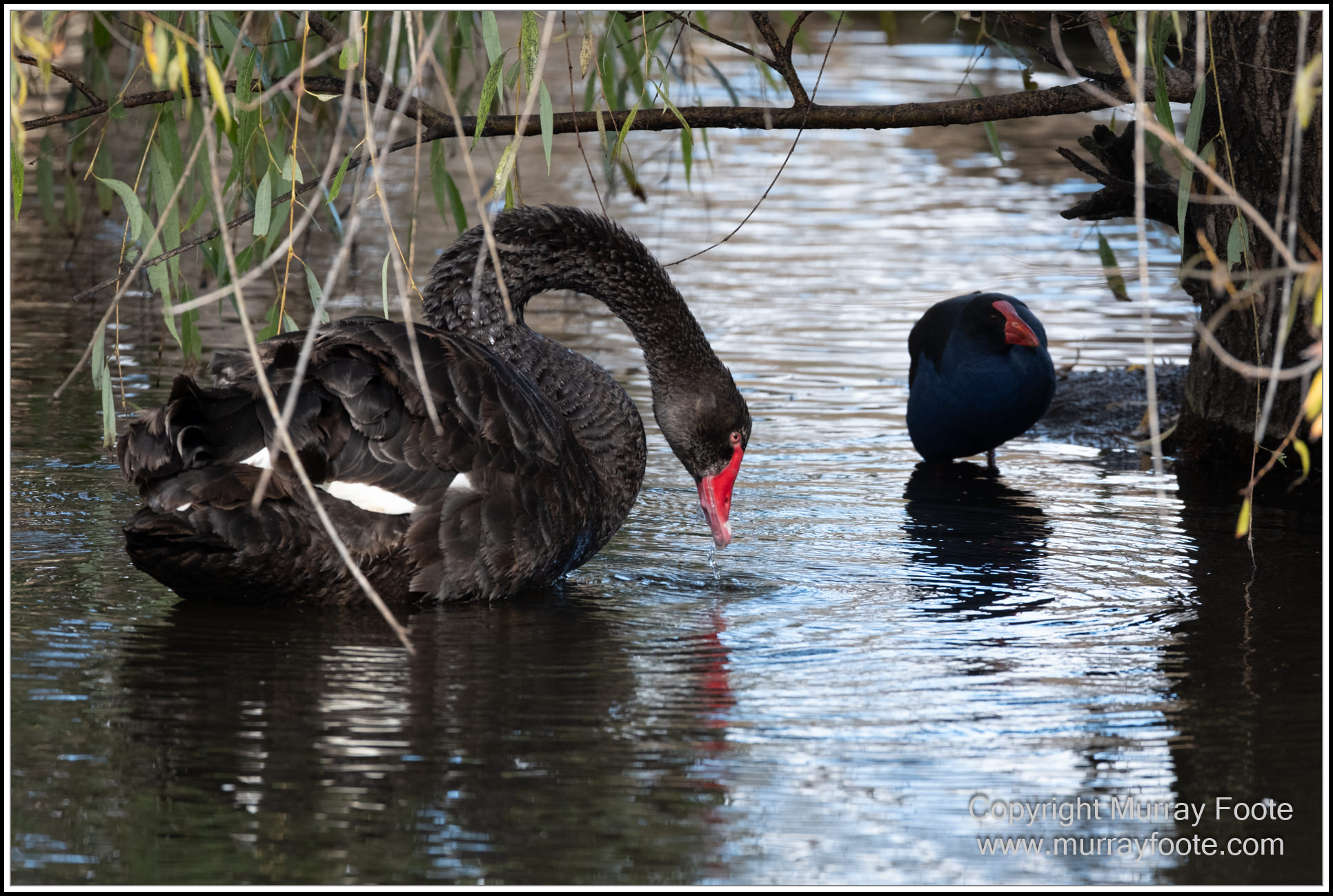
Black swan and Pukeko (purple swamphen) in background.
Straight out of camera (SOOC). No processing though I could have sharpened the swan’s head a bit. 36% crop.
.
.
.
. 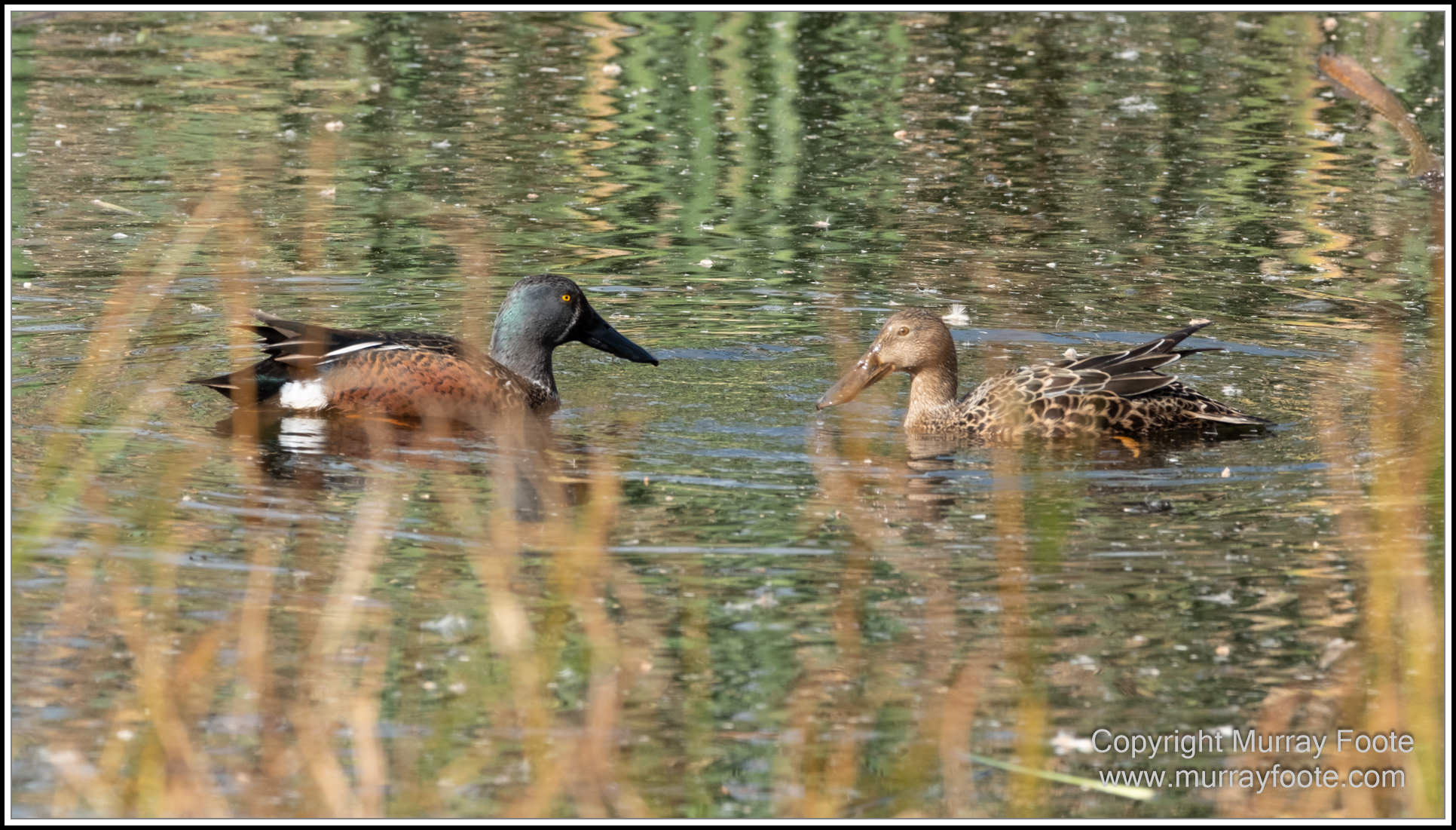
Chestnut Teal. Male (left) and female (right).
SOOC. 59% crop.
.
.
.
. 
Red-browed finch.
Another case where I accidentally moved the aperture ring of the lens, resulting in 1/500 sec, f20, 12,800 ISO instead of 1/500 sec, f5.6, 1000 ISO. So, resolution reduced by around 55% due to diffraction and increased noise. 38% crop. It may not be obvious depending on how you’re viewing this, but it’s not sharp.
.
.
.
. 
Same image, sharpened finch.
I used the new Topaz Photo AI 4 to sharpen the finch. Previous versions haven’t impressed me much but the new one is a big improvement. If you click on the images, you can see them at 2000px rather than 1024 px.
It automatically applies sharpening and denoise when you open the image. There are multiple sharpening methods and you can adjust the strength but I found that in this case when the sharpening was good for the feathers it was too strong for the head. So I deleted the sharpening layer and created three more at different strengths and sharpening methods, one for the bird overall for plausible feathers, another for the head and beak, and another for the legs and tail. No subsequent post-processing. 12,800 ISO is top of the native range for the X-T5 so the denoise worked well too.
.
.
.
. 
Red-browed finch and its food source, an ear of grass.
Sharpened in Topaz with sharpening layers for the bird, the ear of grass and the area round the beak. No problem with the aperture ring here so correct settings, but the focus was a little out. 66% crop.
The missed focus was user error, not the fault of the lens. In general, I shoot Nikon for live music and perhaps astro, and Fuji for travel and wildlife. I’ve been shooting lots of live music using Nikon but I haven’t shot with Fuji since I came back from Kangaroo Island ten months ago and I was out of practice and made some mistakes.
.
I’ll explain how Fuji autofocus works. Here are some relevant settings. (Skip if not interested)
(1) I prefer back-button focus to half-pressing the shutter to focus because there should be less vibration. In this case, there were also buttons for AF on the end of the lens, which is better again.
(2) There is a switch for M (Manual focus), S (Single-point AF) and C (Continuous AF). It is on the front of the camera where you can’t see it while shooting. Though it has always been that way, I think it is a design fault. The new GFX100 RF has it on the back which I think is much better.
(3) Use AF All to select focus points on the fly (older cameras may not have this). You can have a single focus point for static subjects, a box of points or zone for moving subjects, or all points or Wide/ Tracking AF which lets the camera take over.
(4) You can set AF-C Custom Settings to vary how quickly the camera changes focus, how erratically the subject is moving and what part of a focus zone should have priority.
(5) Since we are shooting birds, we turn Face/ Eye Detection Off, and Subject Detection to Bird. (Older cameras may not have this).
(6) You can set Pre Shot ES to on so when you use fast electronic shutter, the camera will save 20 shots in buffer and save them when you press the shutter. For example, if a bird takes off from a branch, it may have already gone when you press the shutter but you might still get it in flight. (Older cameras may not have this).
Personally, I always shot RAW for image quality and flexibility.
Many of these settings you can have in your Q Menu options, Function Button settings or My Menu items. You can have a range of Q Menu screens for different types of photography (landscape, birds, live music etc).
.
I was trying to get these little birds in flight but they were much too fast for me. I was handicapped for Day 1 shots because I was on single point AF instead of continuous, I was on Wide/ Tracking where Zone would have been better and I thought Pre Shot ES was turned on but it was not.
Still, you’re always going to some missed focus shots so it’s useful to consider whether they can still be saved.
As I was writing this, I thought I should see what I could do in regular processing rather than just assuming Topaz Photo AI is a magic solution. So I did some processing of the RAW file for this image in Capture One, which I prefer to Lightroom as an editor.
.
.
.
.
 .
.
I created masks for the overall bird and ear of grass, beak and front feathers, and applied varying amounts of sharpening and clarity, more heavily than I would usually contemplate. To my surprise, it worked better than Topaz Photo AI. It also had the advantage that I could always go back later and modify masks and settings. In Topaz you can save your settings to a preset and go back in again but then you have to re-create any custom masks.
No matter how you do it though, it’s a subjective process and where you end up is up to your own judgement.
.
.
.
. 
That “leaf” of grass shows there’s quite a lot of fluff in these little birds.
The original was pretty close. Some overall sharpening in Topaz to increase sharpness of eye and beak. 33% crop.
.
.
.
. 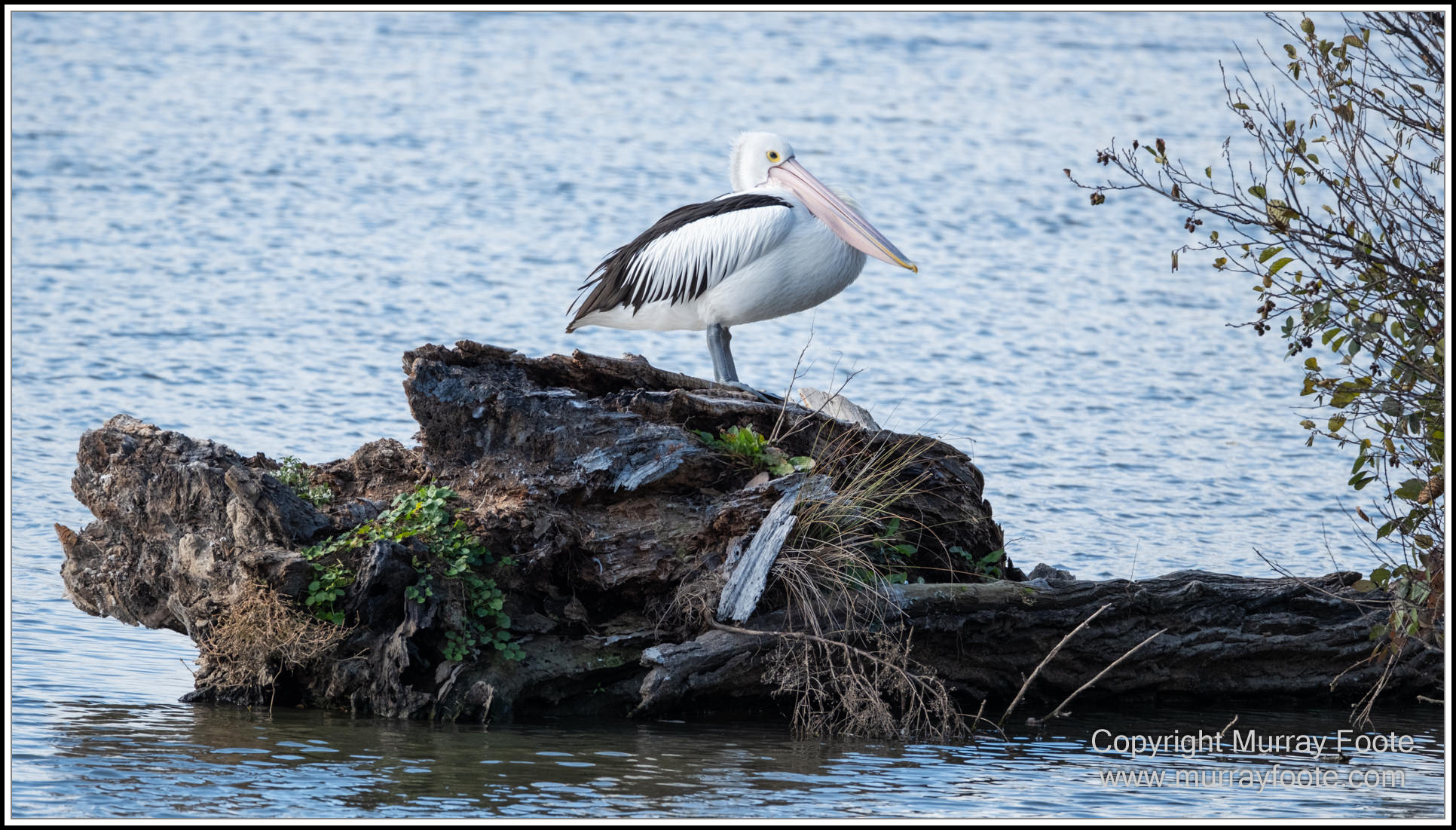
Pelican.
No sharpening or noise reduction. Some adjustment of shadows and highlights. 22% crop.
.
.
.
.
Day 2. Images at Australian National Botanic Gardens.
. 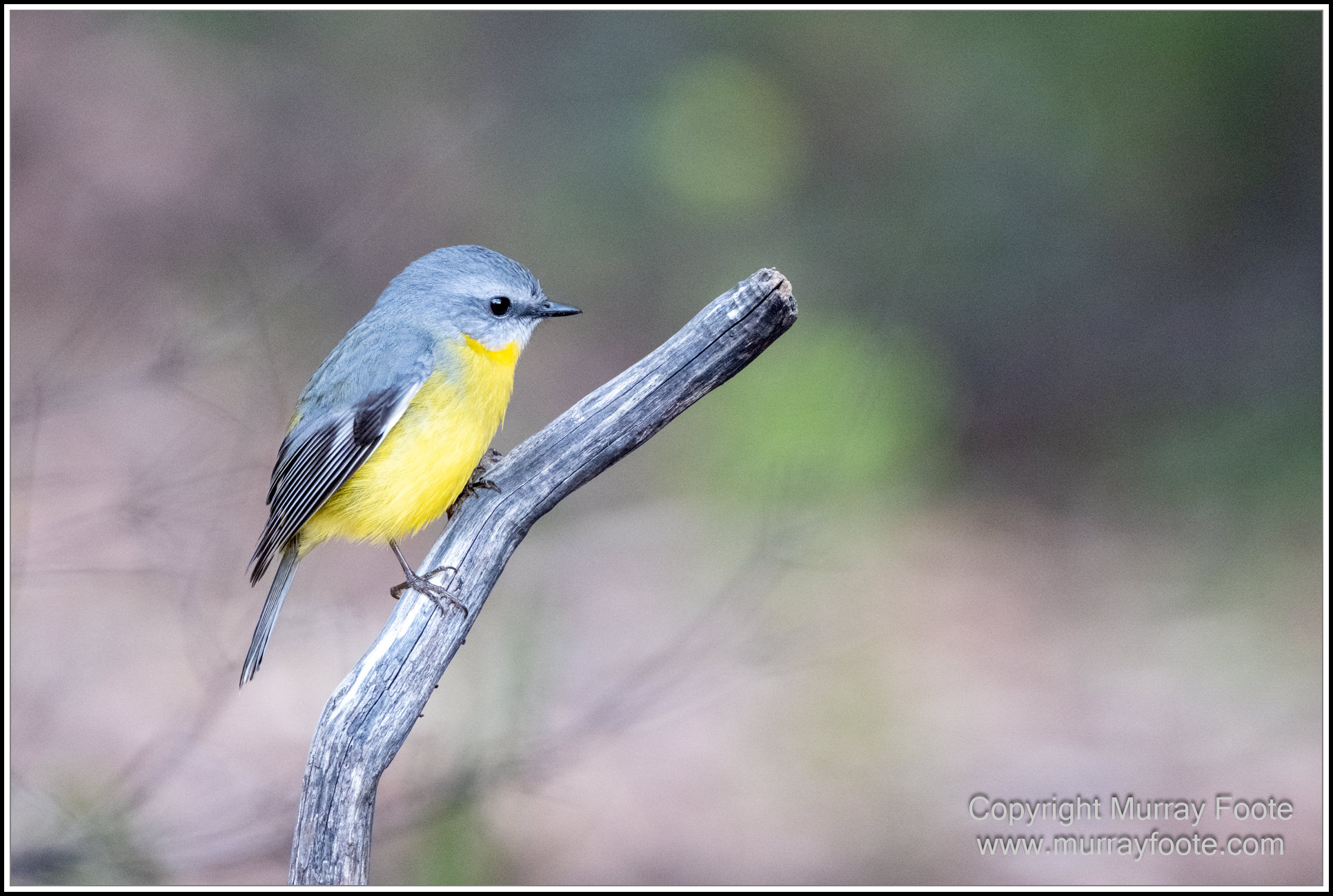
Yellow-Breasted Robin.
Close to SOOC. Some adjustments in Lightroom but no sharpening or noise reduction. 34% crop. Not unsharp but could become sharper with regional sharpening.
On this day I had switched to zone focusing but still hadn’t noticed I was on single point focusing. Most of the images were not quite sharp and I used Topaz Photo AI 4 on them. I had turned on pre-focus ES but with single point focusing I didn’t get any shots of birds moving or flying. These little felllows are so fast they’re hard to catch anyway.
.
.
.
. 
Yellow-breasted Robin.
Initially, the feet and the branch and the rear or the robin were in focus but the body and head was not. Sharpened with Topaz. 61% crop.
.
.
.
. .
.
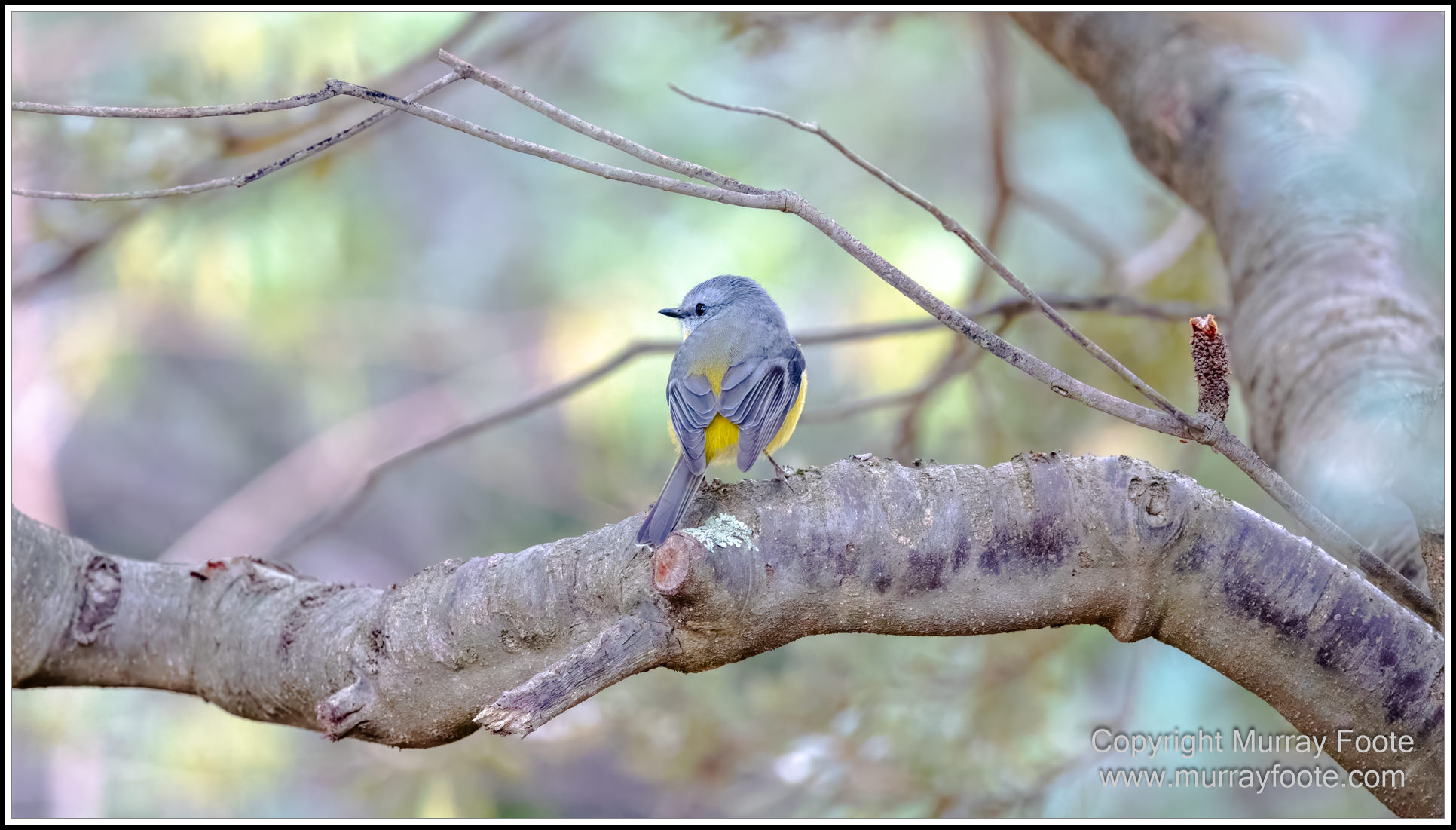
Yellow-breasted Robin.
The camera had focused on the back of the bird and the head was not sharp. In Topaz, I applied a small amount of denoise overall, another small amount of denoise to the background and a small amount of sharpening to the head. I could also have done this in Capture One (or Lightroom for that matter). 17% crop.
.
.
.
.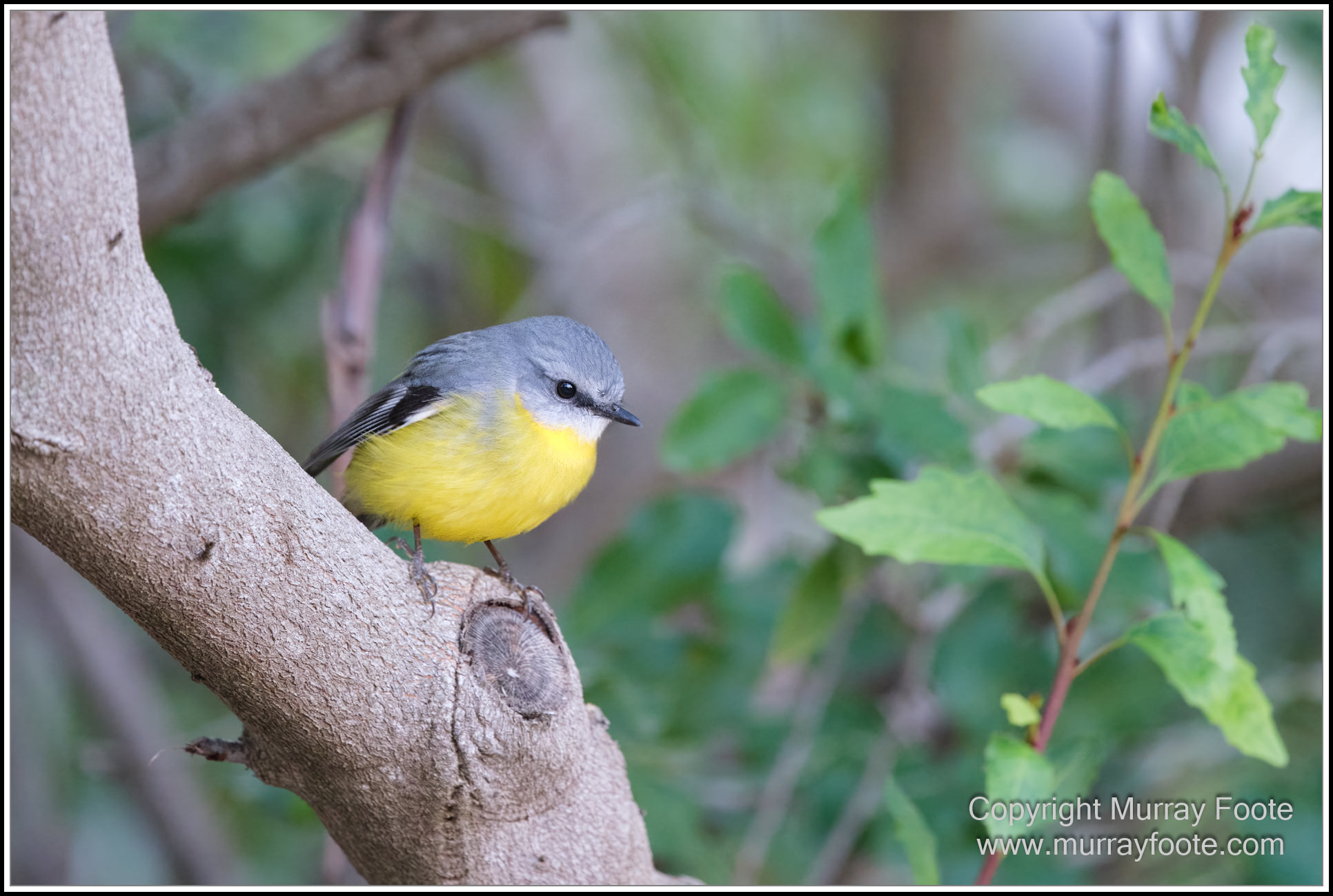
Yellow-breasted Robin.
Bird not in focus. In Topaz, denoise for background, less denoise for bird, sharpening for head and wing, separate sharpening for underbelly. Not perfect but usable. Unable to do it in Capture One. No crop.
.
.
.
. 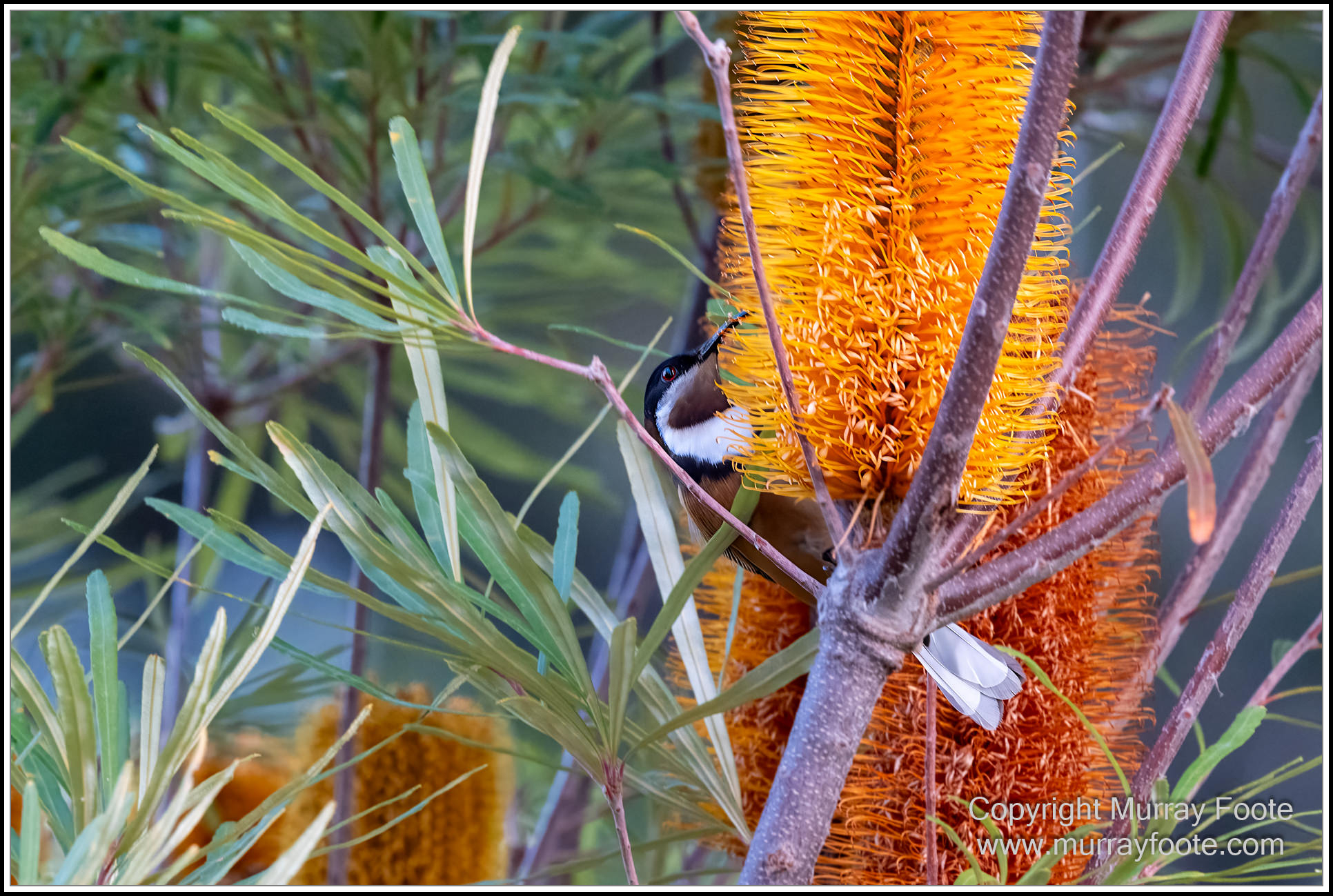
Eastern Spinebill in banksia (perhaps banksia spinulosa).
Spinebill and main banksia cone not in focus. In Topaz, overall denoise and single layer of sharpening for spinebill and banksia cone. (27% crop).
.
.
.
. 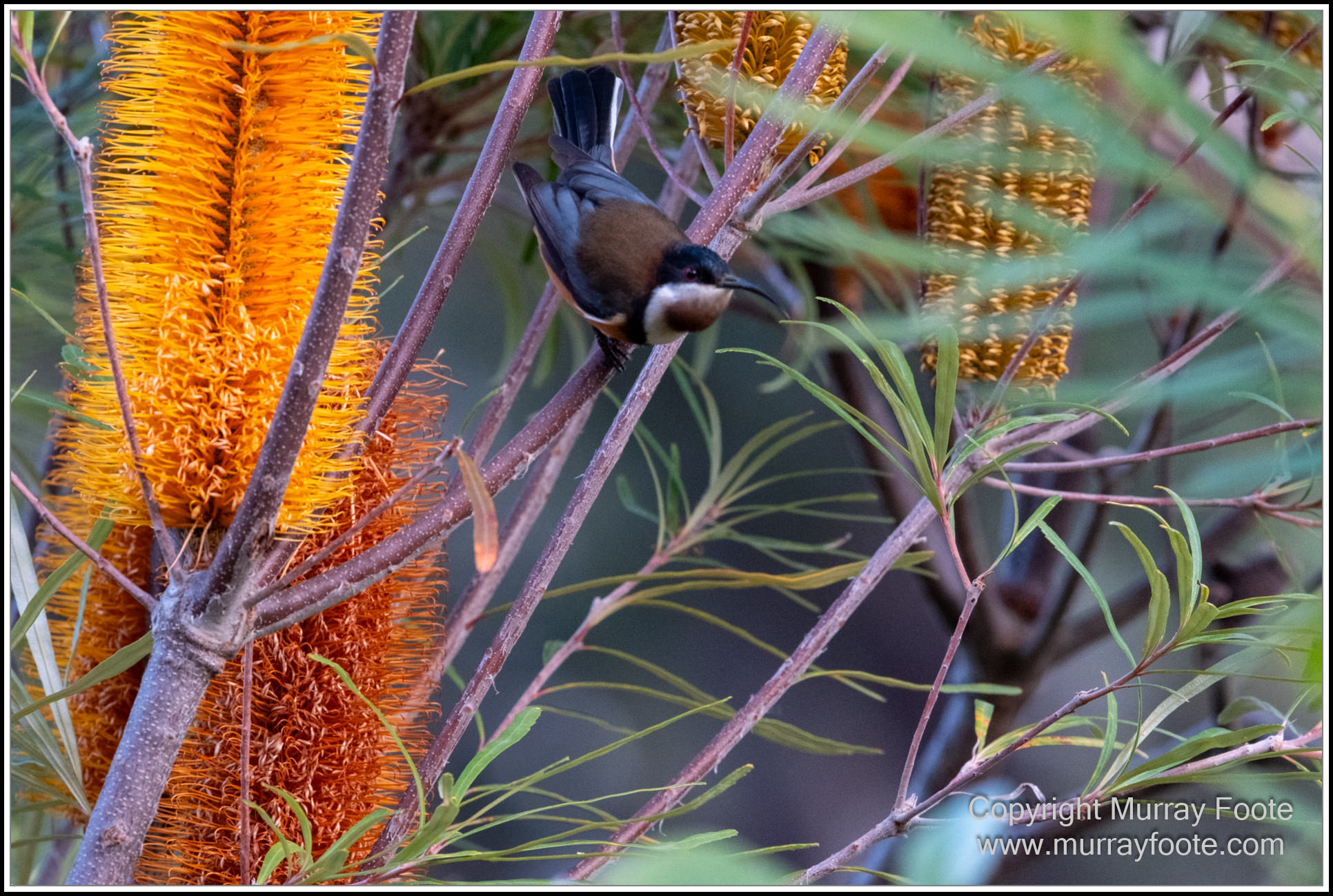
Eastern Spinebill quite out of focus.
.
.
.
. 
Spinebill corrected in Topaz Photo AI using Super Focus (Beta) for bird only, at minimum strength. This only works on very out of focus images. Not perfect but not bad. Needed careful attention to mask edges, which you can adjust only after “rendering” the image. No crop.
Note: You probably need a fast computer for Topaz Photo AI and especially for Super Photo, where you may need an article to read while it’s processing.
One issue I found with Topaz Photo AI is that sometimes when you are creating a mask, the colour of the mask disappears. While this is disconcerting, the brushes are still working and you can see the effects of what you have done by resizing the image and getting it to redraw.
I have not included specific details on settings because they vary from image to image and are in part a matter of personal taste.
.
.
.
.
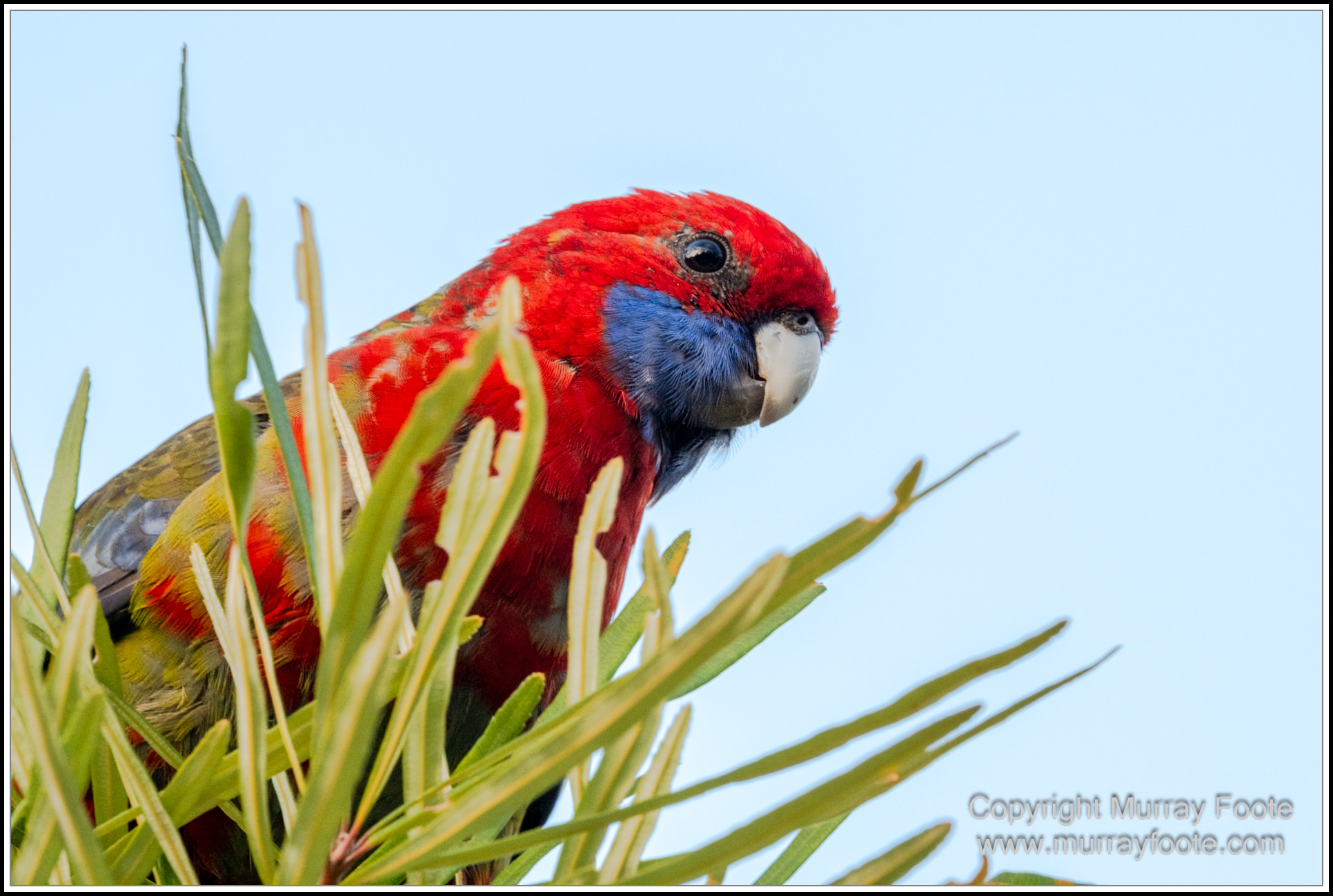
Crimson rosella.
Common bird in Canberra, this one was sitting on a spray column, and drinking water that was dribbling out. I was quite close and couldn’t go further back but he wasn’t concerned about me.
Close to SOOC, Adjustment of shadows and highlights. Would benefit from a little sharpening but no sharpening or denoise. No Crop.
.
.
.
.
Day 3. images at Australian National Botanic Gardens.
.
Juvenile Australian Magpie.
Shadows and highlights adjusted and mild sharpening of the bird in Capture One. No crop.
Finally I turned continuous autofocus on, to go with with zone focusing. Almost all the images on this day are correctly focused.
.
.
.
.
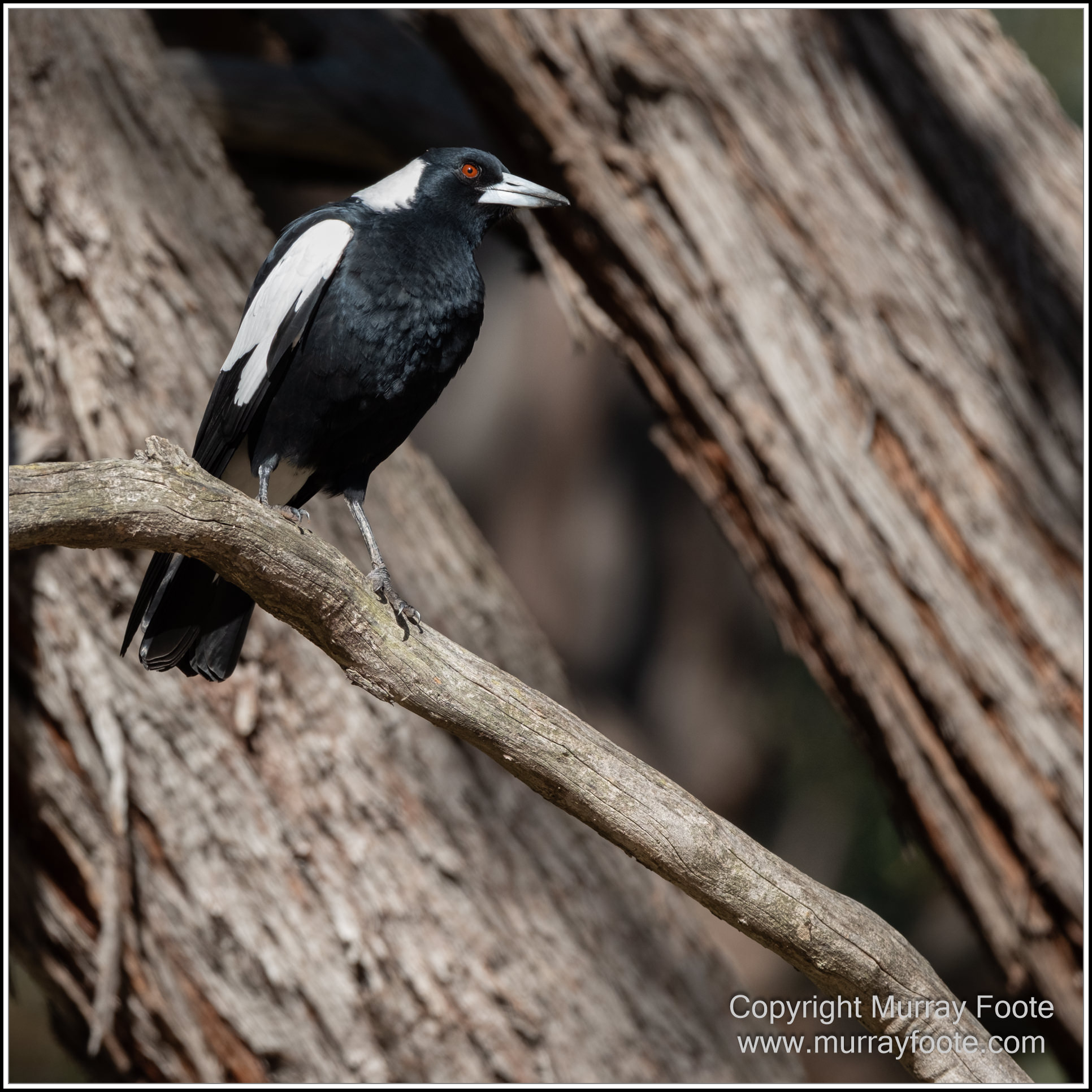
Australian Magpie (adult).
A very common bird in Canberra. Highlights adjusted in Lightroom. No sharpening or denoise. 58% crop. I was waiting for him to launch off so I could capture that using PreFocus ES but he wouldn’t cooperate.
So far I haven’t mentioned what the new lens is that I’m testing here. Photography is really not about who has the best camera and lens. It is about living well, reflecting on the world, reflecting on yourself, reflecting on your aesthetic choices, putting in the time and effort, communicating and interacting. There’s also the aesthetic choices of composition, knowledge of environment and behaviour, cultural context, emotional content and timing of the moment. That said, some lenses can be particularly suited for some specific uses, and this is such a lens.
The lens used on all images in this post is the Fujinon XF 500mm f5.6 R LM OIS WR, to give it its full name, or more commonly the Fujifilm XF 500mm f5.6. All images in the post were taken with a Fujifilm X-T5 (40MP), except the last, on a Fujifilm X-T2 IR (24MP). (In purchasing the lens I traded in a Fujifilm 100-400mm, a Fujifilm 150-600mm and a Sigma 180mm macro (Nikon)).
Clearly the lens is very sharp. You can see that if you click the image above, which has not been sharpened, for a 2000px web image. It is a very long telephoto prime and equivalent in full-frame terms to about 760mm. It is quite expensive and yet it is also cheap compared to the usual cost of such lenses.
It is a little bit lighter than the 150-600mm zoom and not as long. Somehow it sits more easily in the hand than one might expect, so you can hand hold it for longer periods than the 150-600mm. It is a stop faster and the image quality is significantly better.
This is not a lens for everyone. The 70-300mm is likely to be the best choice for most people and it can also take teleconverters. It is small and light and quite sharp. The 150-600mm also has the advantage that you can use it zoomed out to find subjects and then zoom in.
.
.
.
.
Jenny Wren or female Superb Fairy-Wren.
Tonal adjustment in Lightroom. No sharpening or denoise. 76% crop.
.
.
. 
Jenny wren in the air, hopping rather than flying.
I had Pre-Shot ES active but since it was zotting along the ground rather than launching off a branch, I can’t know whether I took it with that or just with a fast shutter speed rate. SOOC. 87% crop.
.
.
.
. 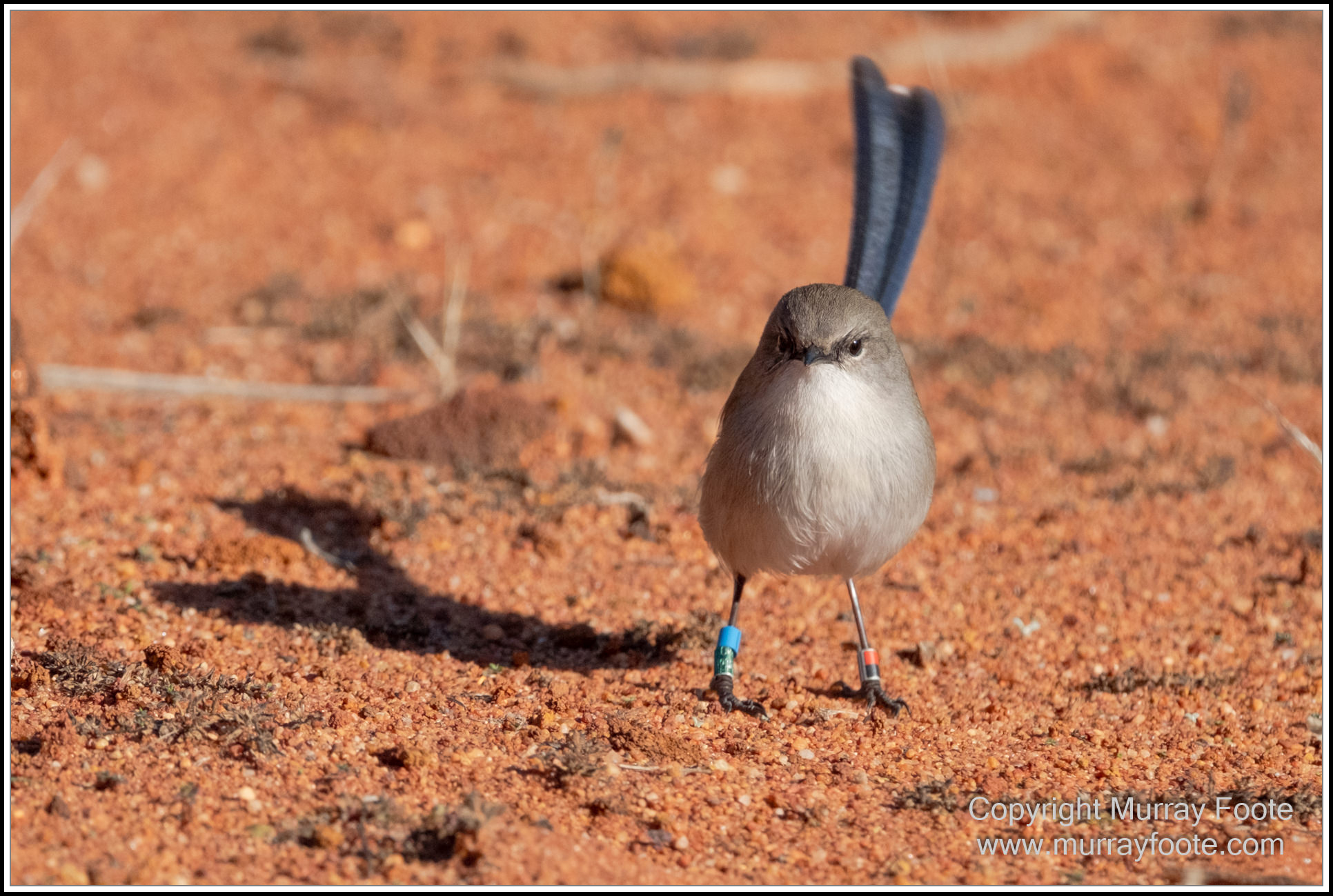
Juvenile male Blue Wren (or Superb Fairy-Wren).
As a juvenile male he has a blue tail. Later he will grow to have spectacular display of blue, cyan and white on his body. Shadows lifted in Lightroom. No sharpening or denoise. 79% crop.
.
.
.
. 
Bee on a Eucalypt flower, or more properly on a Corymbis “Summer Red”..
SOOC. No Crop.
.
.
.
.
Day 3 images at Jerrabomberra Wetlands.
. 
Australian White Ibises
Also unfairly known as “Bin chickens” as they find opportunities in cities after being displaced from their natural environment. Shadows lifted in Lightroom. No sharpening or denoise. 29% crop..
.
.
.
. 
Two Great Cormorants.
Adjustment of shadows and contrast in Lightroom. No sharpening or denoise. 45% crop.
.
.
.
. 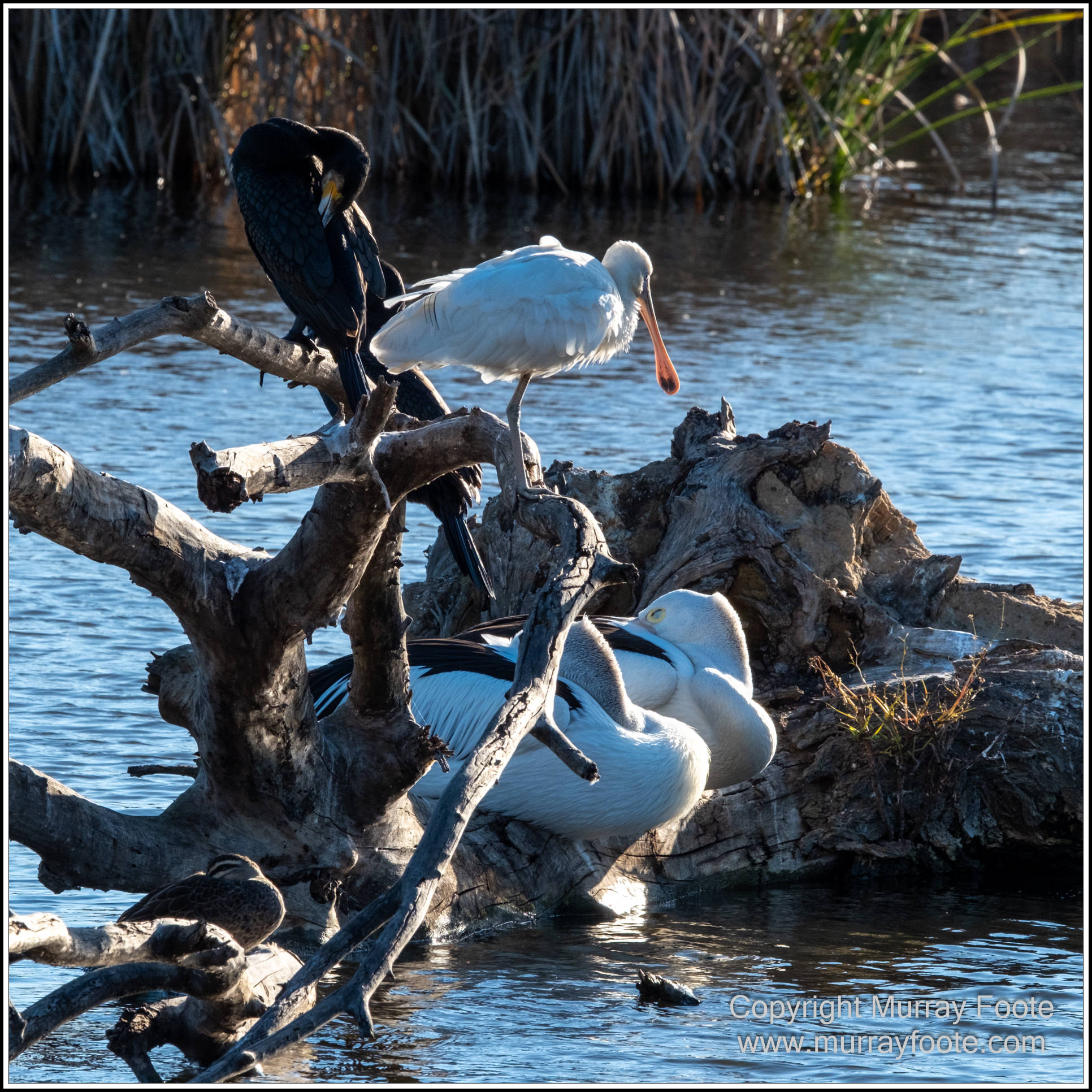
Yellow-Billed Spoonbill, two Australian Pelicans, two Great Cormorants and two Pacific Black Ducks (though only one visible here).
They are all on a partly submerged log. The cormorants of the previous image are the ones on this log too. Adustments in Lightroom for exposure, highlights and shadows. No sharpening or denoise. 65% crop.
.
.
.
. 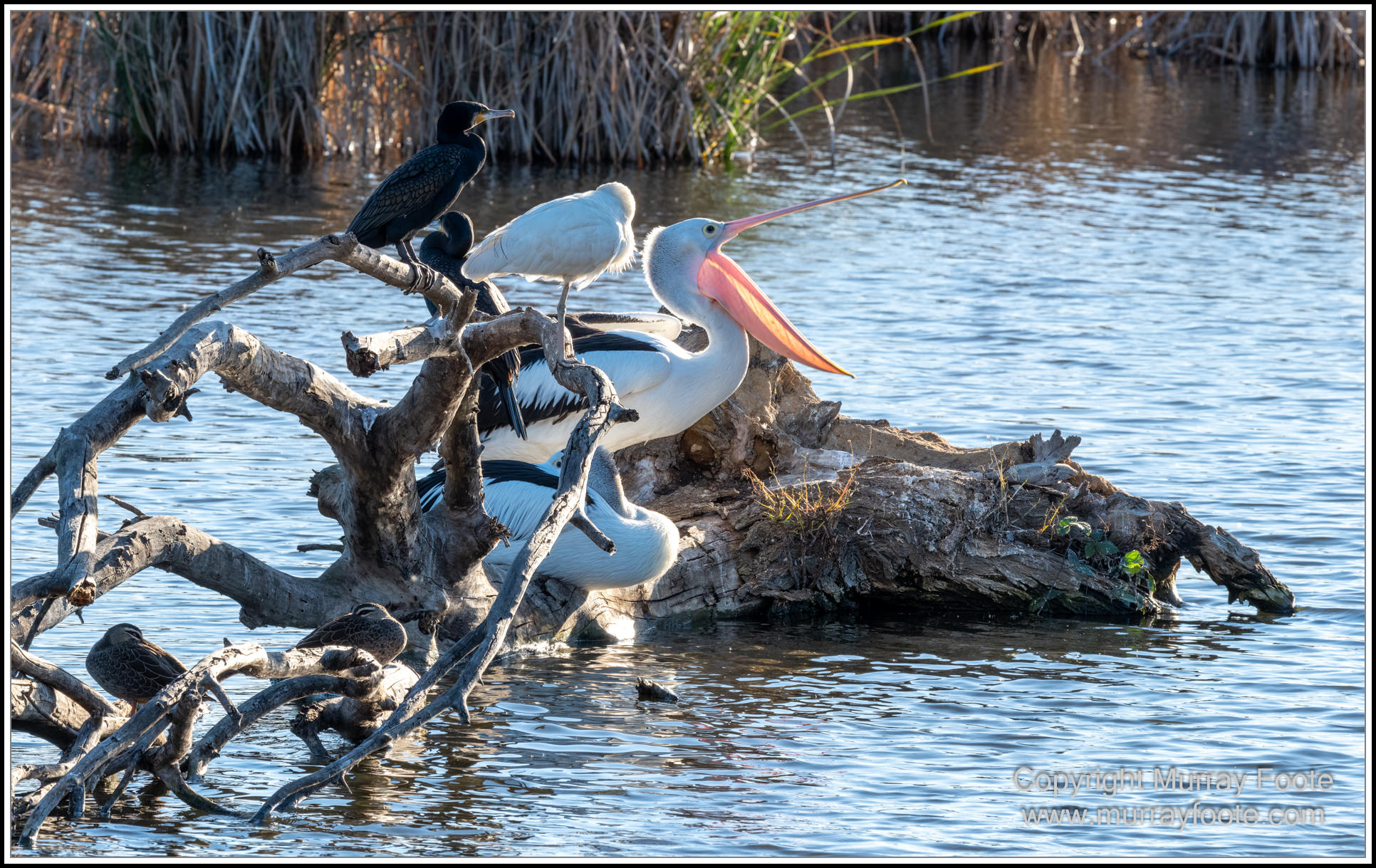
Pelican yawning. You can see both ducks now.
f11 but main focus a touch in front of the pelican so sharpened in Topaz. Adustments in Lightroom for highlights and shadows. 20% crop.
.
.
.
. 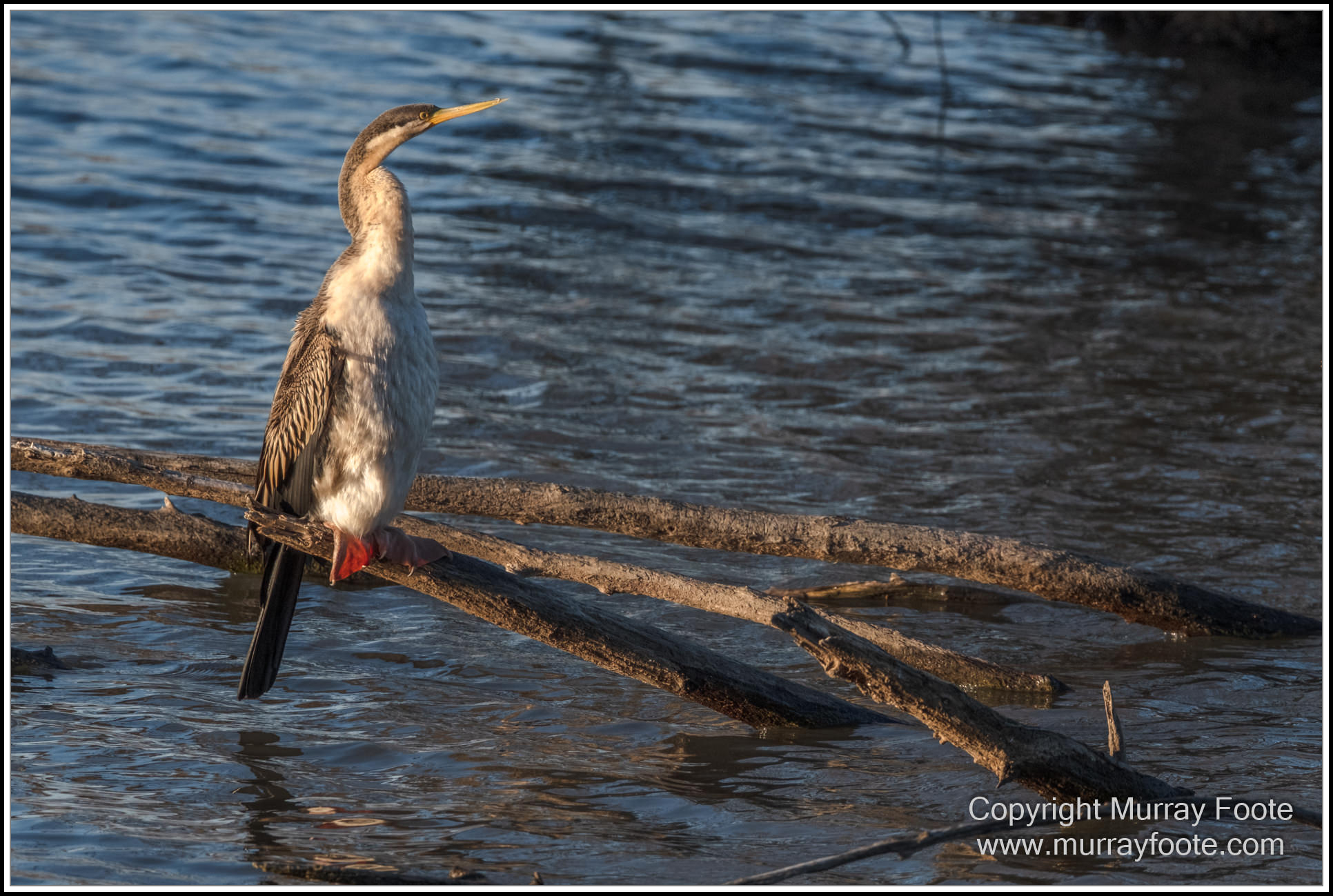
Australasian Darter.
I have wandered some distance away to the other end of the wetlands. Adustments in Lightroom for exposure, highlights and shadows. No sharpening or denoise. 57% crop.
.
.
.
. 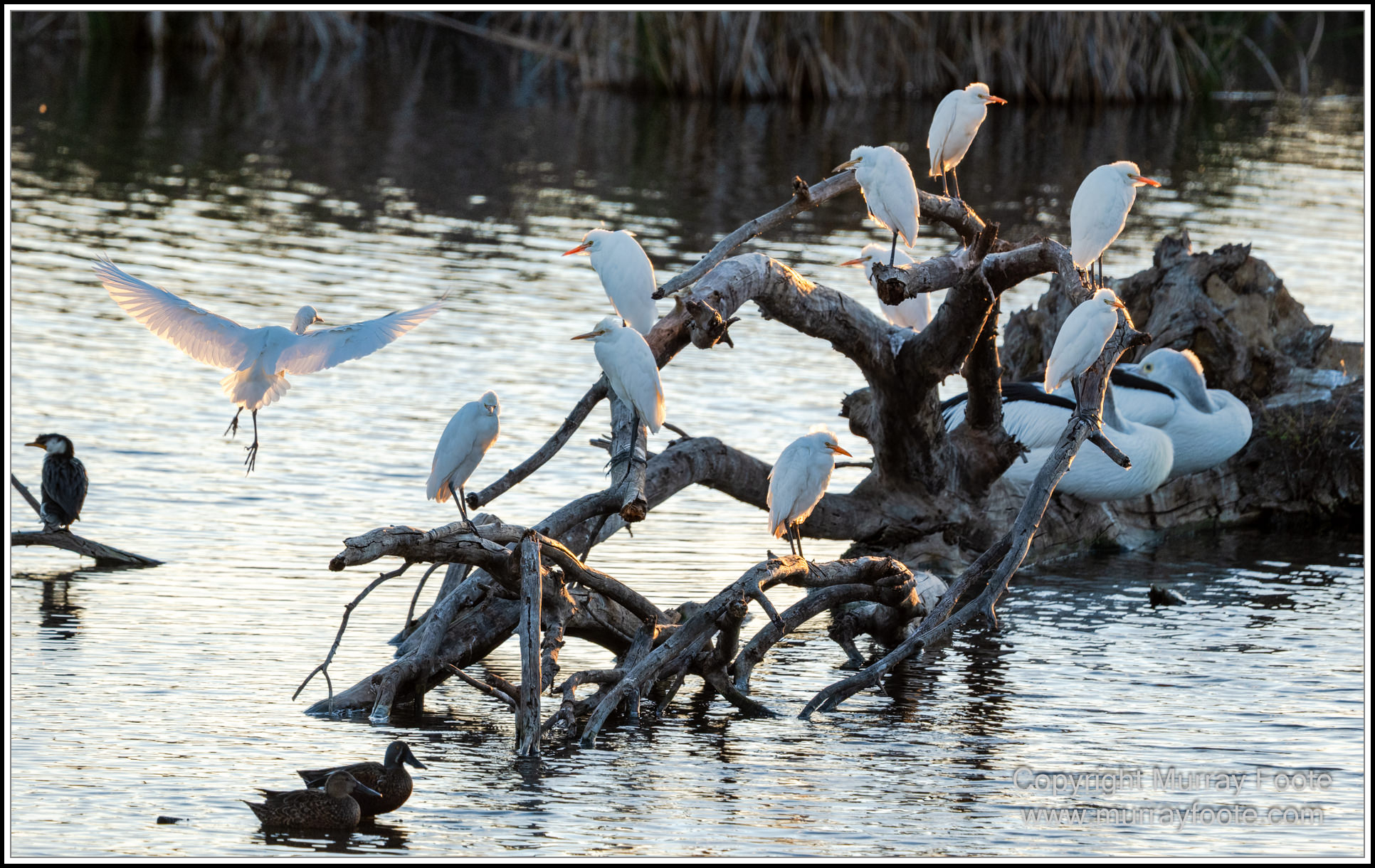
Ten Cattle Egrets, two Pelicans, one Great Cormorant and two Australasian Shovelers.
Back to the log and the population has changed including the type of ducks. f5.6; perhaps should have stopped down further, so sharpened in Topaz. Adustments in Lightroom for exposure, highlights and shadows. 8% crop.
.
.
.
.
Day 4. Images from Black Mountain.
.
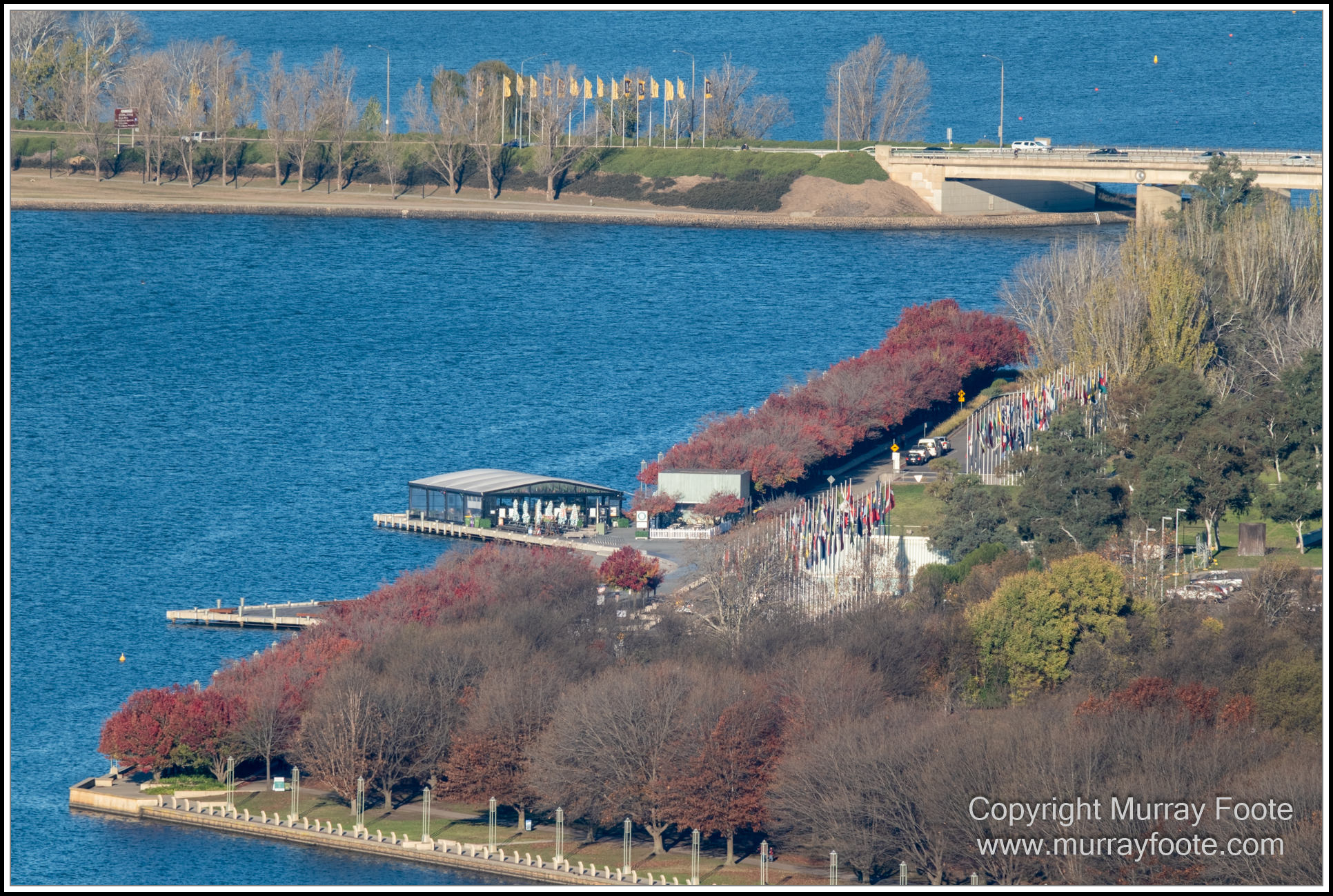
View across Lake Burley Griffin from Black Mountain.
I took this shot to test out using a 1.4x teleconverter and it has a full-frame equivalent focal length of 1060mm. I used 1/500 sec handheld but due to the image stabilisation it probably could have been as low as 1/125 sec.
That building is a restaurant called “The Jetty”. It is four kilometres from the camera. King’s Avenue Bridge in the background is five. What helped is that it had rained the previous day, clearing the air, otherwise haze greatly reduces sharpness. There are three cars parked on the road flanked by flags. Just beyond them is a sign that you won’t quite be able to make out even if you click on the image for a 2000px view; it is a 20kph speed sign for a corner. So the resolution is good.
.
.
.
.
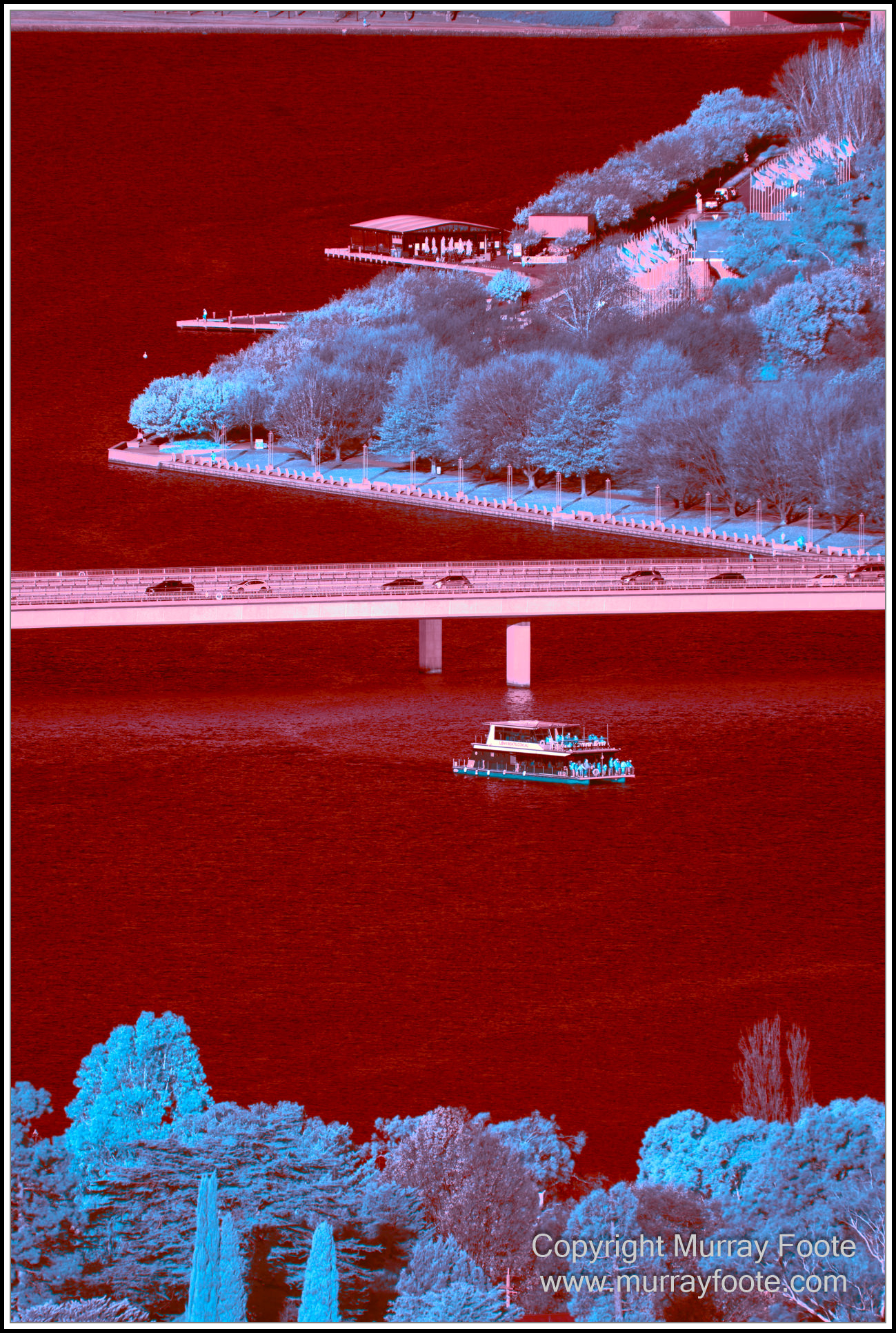
Another view across Lake Burley Grffin.
This one is without the teleconverter and you can see the difference. Maybe the colour isn’t as accurate as the previous one with the teleconverter. I happened to take it during the brief flash of a reality displacement bomb let off at Maralinga far far away. You probably read about that. It was so brief I don’t even remember it being like that.
Processed in Capture One and 3D LUT Creator with no sharpening or denoise. Image taken with 24MP X-T2 IR. No crop.
.
.
.
.
Concluding Comments.
I set out to test the Fujinon XF 500mm 5.6 but I wanted this to be a local wildlife post with a subsidiary aim of testing the lens rather than the other way around. However, I made some basic errors in my camera settings due to having been shooting Nikon (live music) rather than Fuji (travel) for the last ten months and forgetting some of the differences between the cameras. The consequence was that until I corrected this, I missed focus on many images. That led me to reassess ways to subsequently recover focus.
Many of these images would have been difficult or impossible to correct for sharpness in Lightroom or Capture One. For some I might have tried DxO PureRaw 5, which is an excellent noise reducer with useful sharpening but the new modules are not yet available for Fuji. Then I discovered that a new version of Topaz Photo AI was out. I had not been all that impressed with previous versions but the new one is a dramatic improvement and allows some fine tuning as long as you can work out the interface. For many images I could get better sharpness recovery with Topaz than I could with Lightroom or Capture One, though some worked out better in Capture One. It can take some time to get it right in Topaz. Although AutoPilot gives you a quick rendition, it is usually better to explore all the alternatives and trust your aesthetic judgement.
The Fuji XF 500mm f5.6 lens is a specialised lens mainly for wildlife. It is excellent, as one might expect, particularly since it’s essentially the same lens as the medium format 500mm lens. Very sharp corner to corner f5.6 to f11, smooth bokeh and great image quality. And seemingly just as sharp with the 1.4x teleconverter. For most people though, the 70-300mm or maybe the 150-600mm is a more likely choice.
Feel free to comment.
.
Blog Milestone
The first post in this Blog was on 2nd March 2011, when I was in Buenos Aires on my way to Antarctica Since then there have been 1,240 posts from 28 countries containing 21,600 images and there are also links to 19,000 live music images. (That averages out to a post every four days and four images per day, or eight including linked live music images).
With this post, there are now more than 500,000 words in the Blog. Quite some time ago when I was contemplating the number of words, I was reading a biography of Johanna I of Naples. That book had 323 pages and I estimated 456 words per page. At that rate, this Blog now contains the equivalent of 1,100 pages of text, or three and a half books. And there are also the images…. If you printed them all out at A4 and laid them end-to-end, they would stretch for 6.4 kilometres, or 12 kilometres if you included the live music images.
.
 Murray Foote