Granada, Andalusia, Spain. 25th to 26th October 2018.
(Recent Posts, Top Posts, Subscribe and Search at bottom of page. Clicking image doubles size. Trip summary and links to posts.)
.
This is the first of three Alhambra posts, including Alhambra by day (this post), Alhambra gardens and Alhambra by night.
.
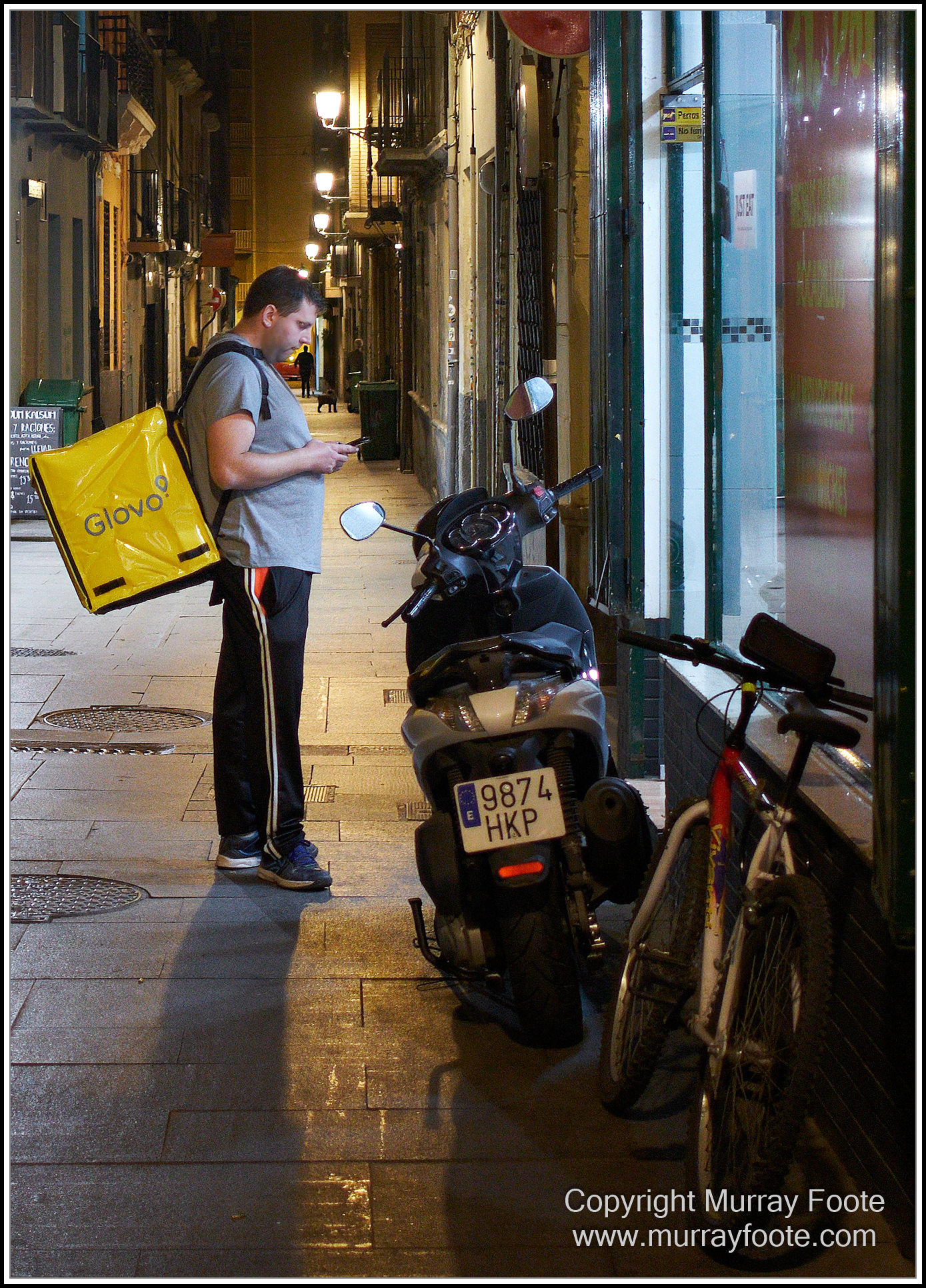
Glovo delivery driver working out where to go next.
Distant figures include a man and a dog.
We are in Granada and this is the night before our Alhambra visits. Our host had directed us to a wonderful tapas bar and we are walking back to our accommodation.
.
.
.
.
Late night street fruiterer.
.
.
.
.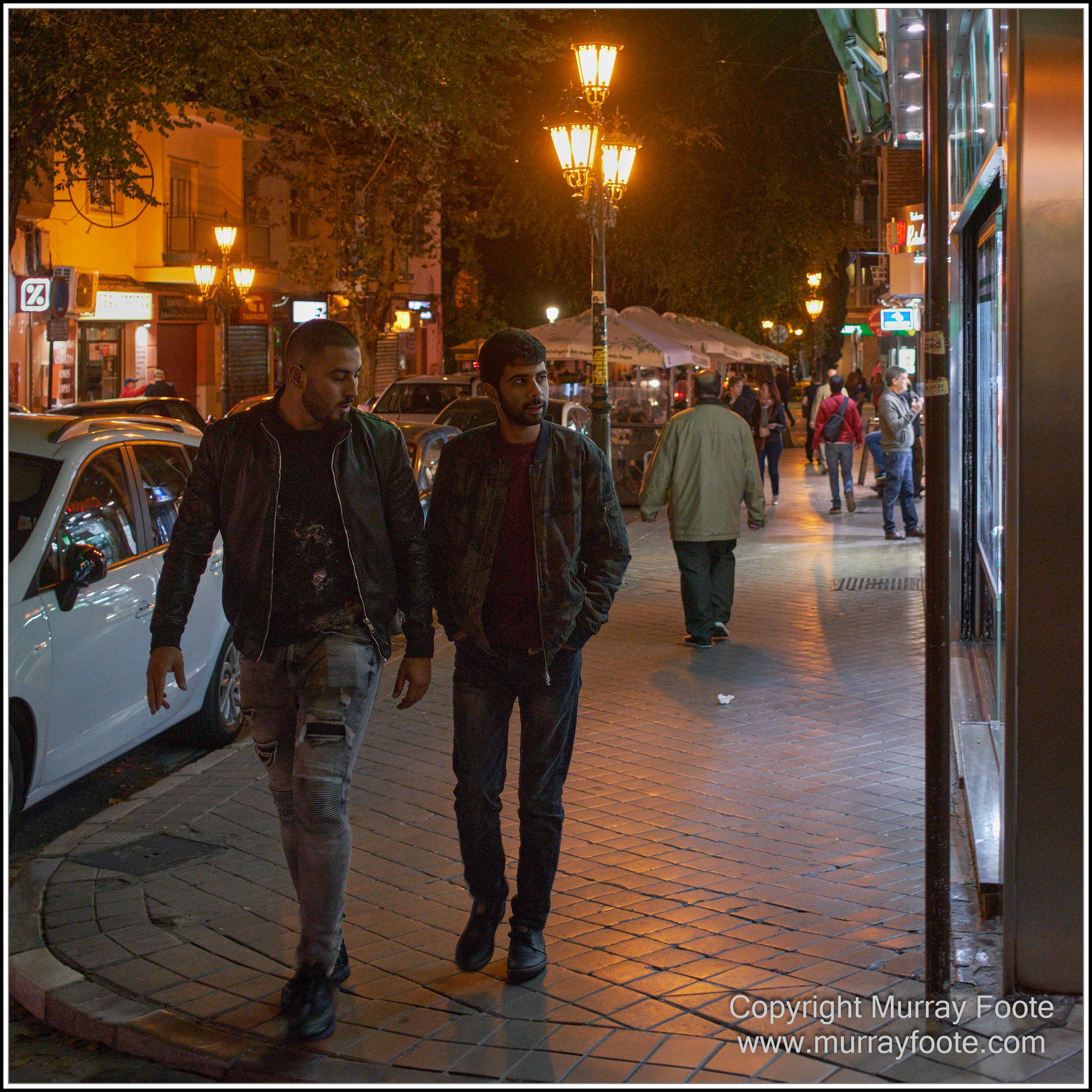
On the street.
Following images are from our visit to the Alhambra the next day.
.
.
.
.
The Renaissance Water Fountain next to the Gate of Justice, main entrance to the Alhambra.
The central text says “IMPERATORI CÆSARI KAROLO QVINTO HISPANIARVM REGI”, or in other words “Emperor Caesar Charles V King of Spain”, which dates it to between 1519 and 1556.
.
.
.
.
Entrance to the Alhambra.
The Alhambra was the capital of the Emirate of Granada and after the conquest, the capital of Spain for a while. Though significantly modified, it has been described as the best example of Moorish architecture in Europe.
.
.
.
.
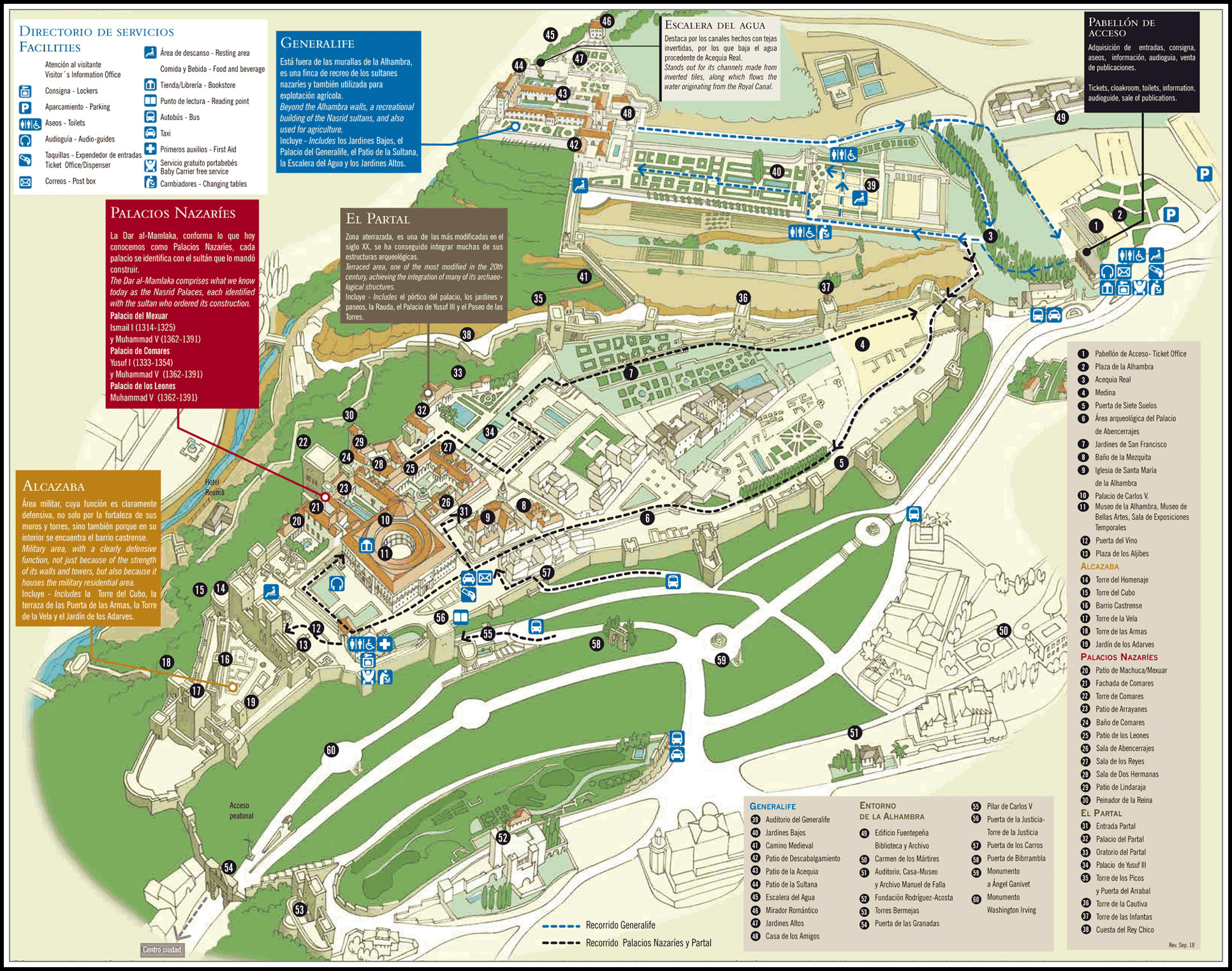
Map of Alhambra. Click for larger more legible view (on PC at least).
The map shows significant places and the route you walk through. Text is in Spanish as well as English; place names are in Spanish.
Within the walls is the alcazaba and the Nazrid palaces. There are also other buildings, probably of lesser influence and not open to the public. Outside the walls is the Generalife Gardens.
There have been many changes over the centuries. At first there was just the alcazaba. There was a Visigoth fortress there in the ninth century and it is not clear whether there were fortifications there in earlier eras, though there are some remains of earlier foundations. The current alcazaba dates from 1238 when Muhammad I established the Emirate of Granada with his capital here. The Spanish much later modified the alcazaba and adapted it to withstand cannon fire though it was never under siege. The Nazrid Palaces were built later, mainly in the fourteenth century under the reigns of Yusuf I and Muhammad V. During the Nazrid era, the Alhambra was a self-contained city separate from the rest of Granada.
.
.
.
.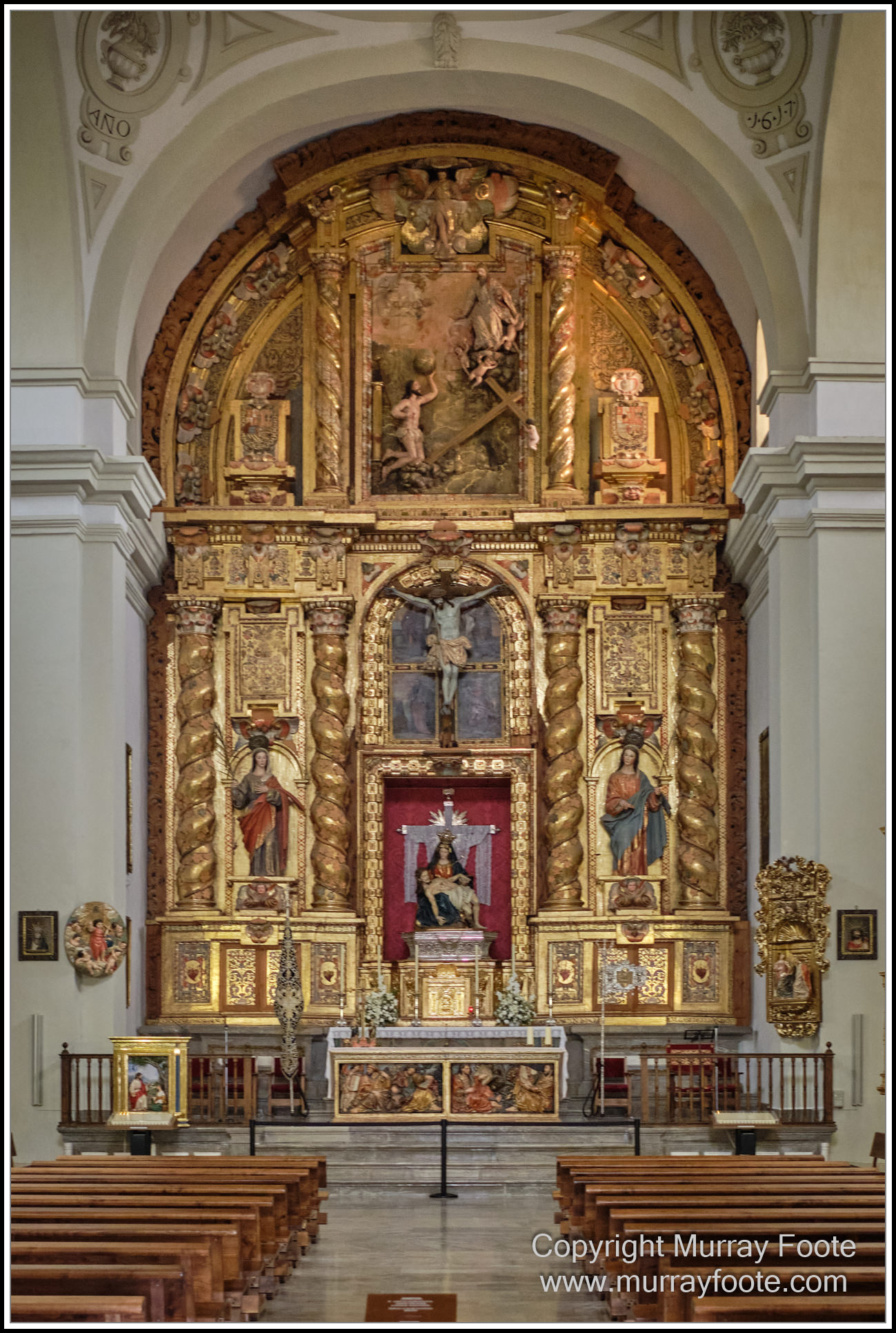
Interior of the Church of Santa Maria of the Alhambra.
Obviously, this was built after the conquest. The Spanish took over in 1492. That date may also have been significant for another reason. I’ll have to look it up.
.
.
.
.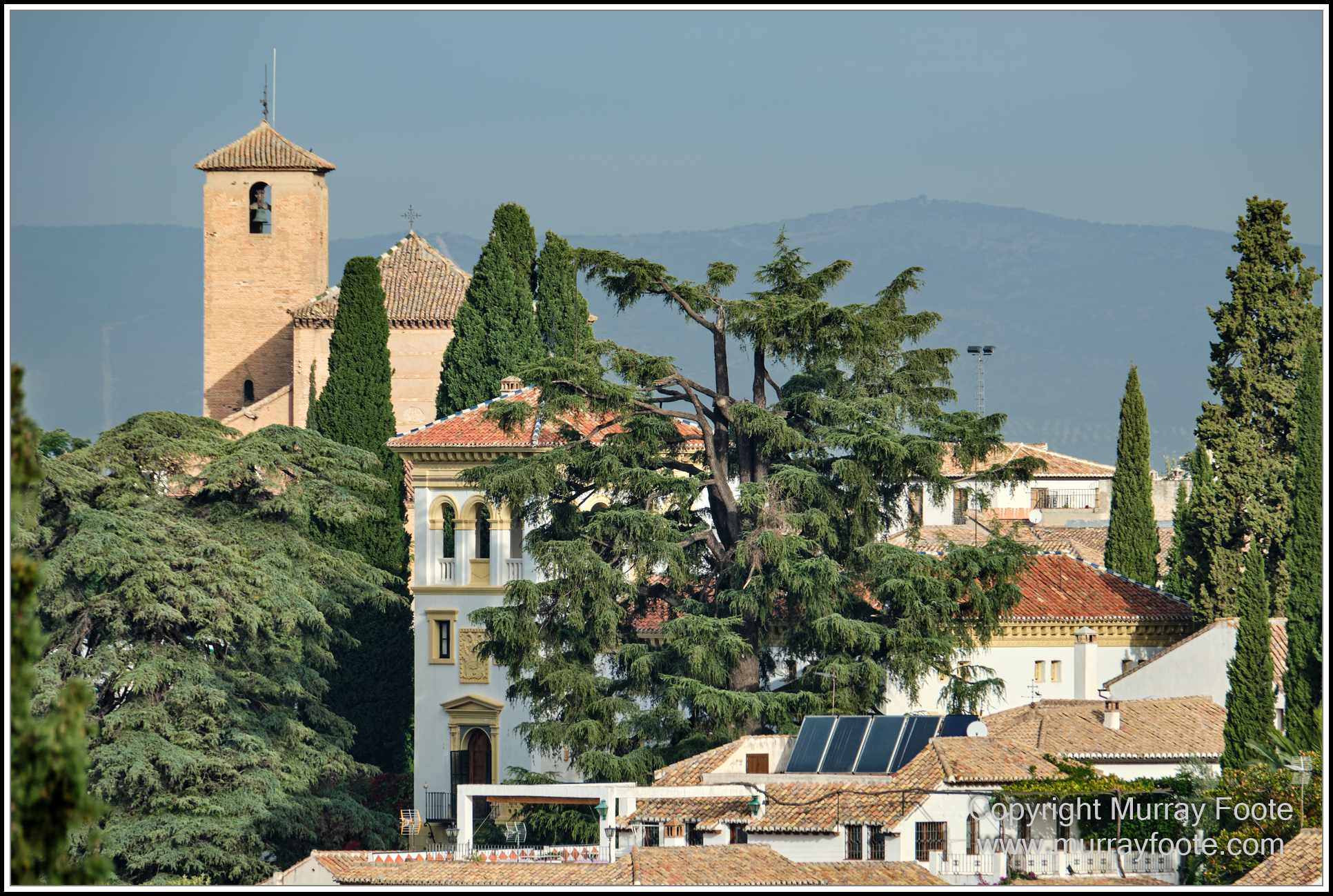
Looking back at Alhambra buildings with the church in the distance.
We are near the alcazaba (fortress) but did not visit it. There was also a residential area within it that was cleared out in (from memory) the nineteenth century but the foundations of the houses remain.
.
.
.
Mainly opaque window (outside view), Palacio de Mexuar.
The inscription at the top is the Nasrid motto “And there is no victor but God”, repeated three times.
.
.
.
.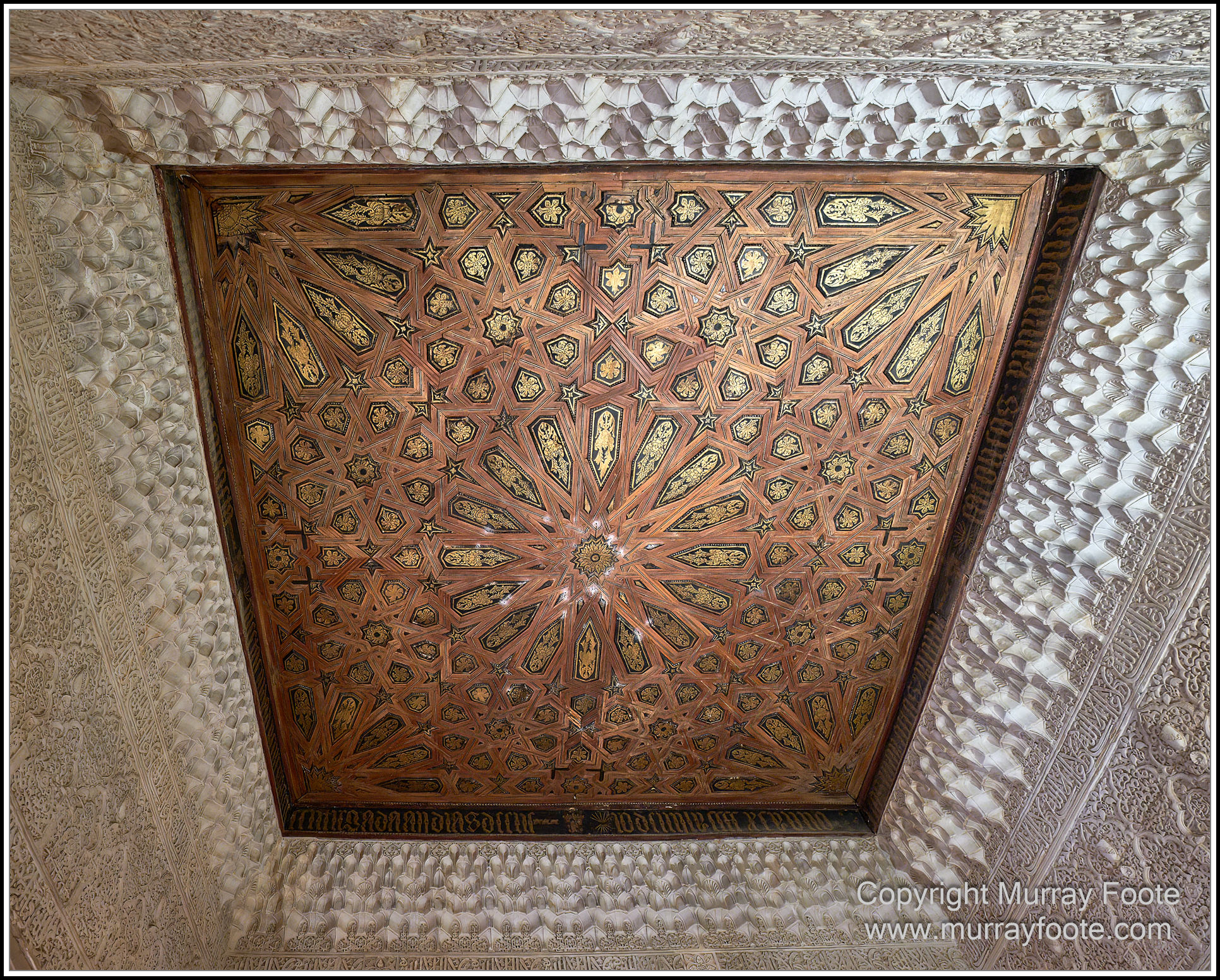
Ceiling, Palacio de Mexuar.
The Palacio de Mexuar was the Nasrid administrative area. The Nasrid were the royal family of Granada after the collapse of the Almohads in 1228.
.
.
.
Wall recess, Palacio de Mexuar.
.
.
.
.
Courtyard of the Myrtles. Large background building is the Hall of the Ambassadors.
.
.
.
.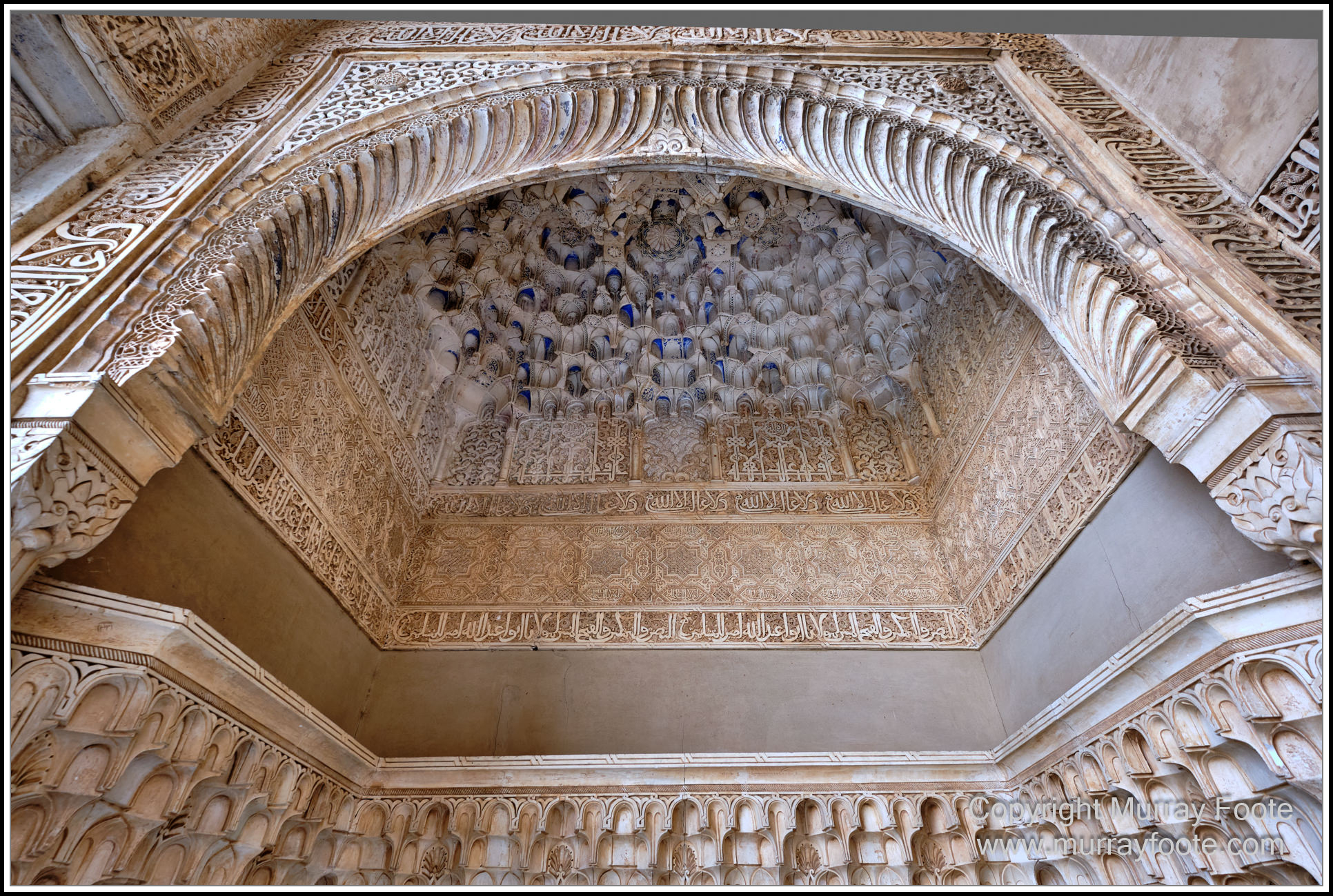
Looking up.
I’m not sure where this and the next four images are, though somewhere around the Hall of the Ambassadors and the Palace of the Lions. It wasn’t a guided tour and we appear in part to have been wandering back and forward.
.
.
.
.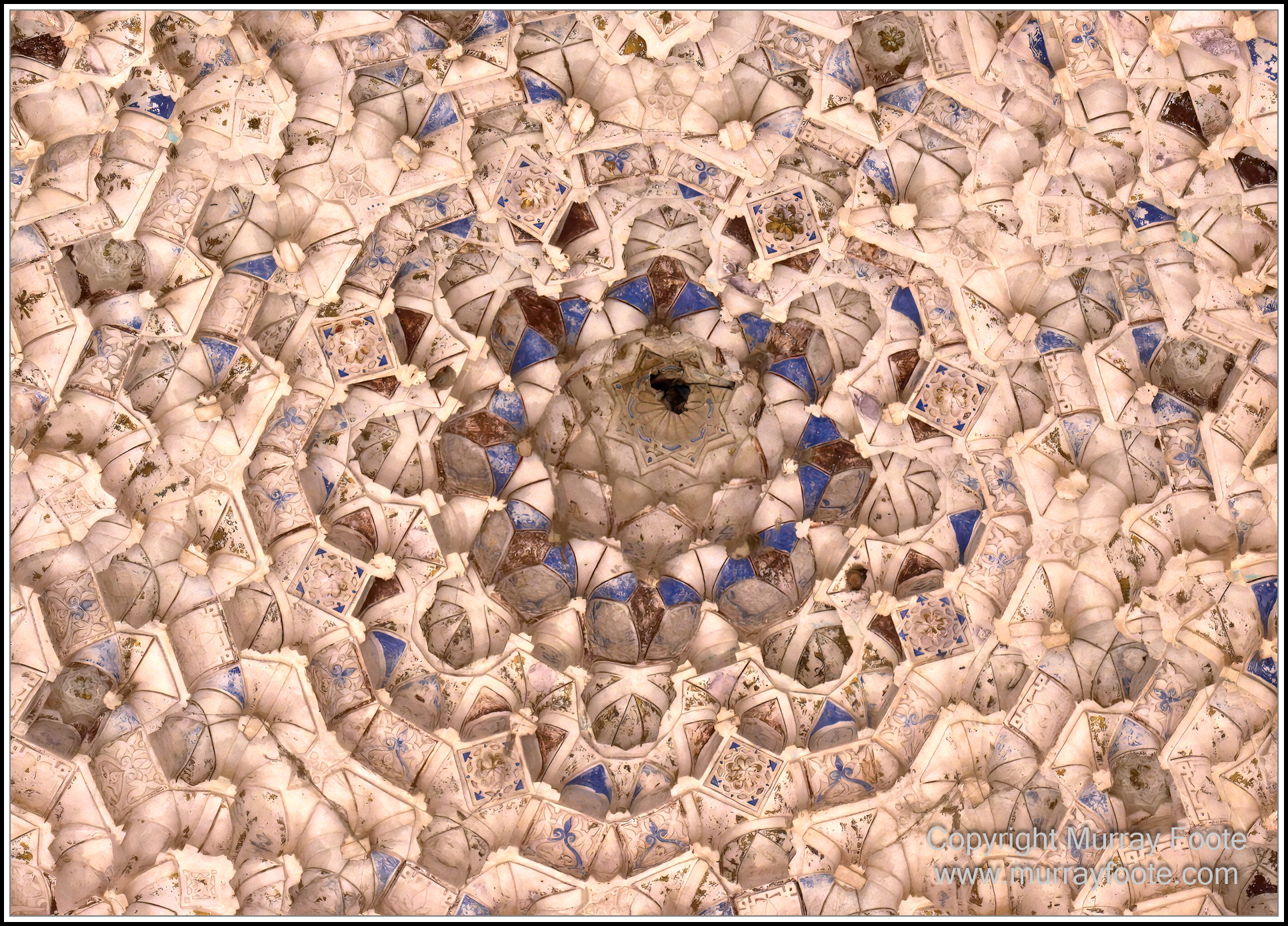
Central ceiling detail.
.
.
.
.
High window detail.
.
.
.
.
Door detail.
.
.
.
.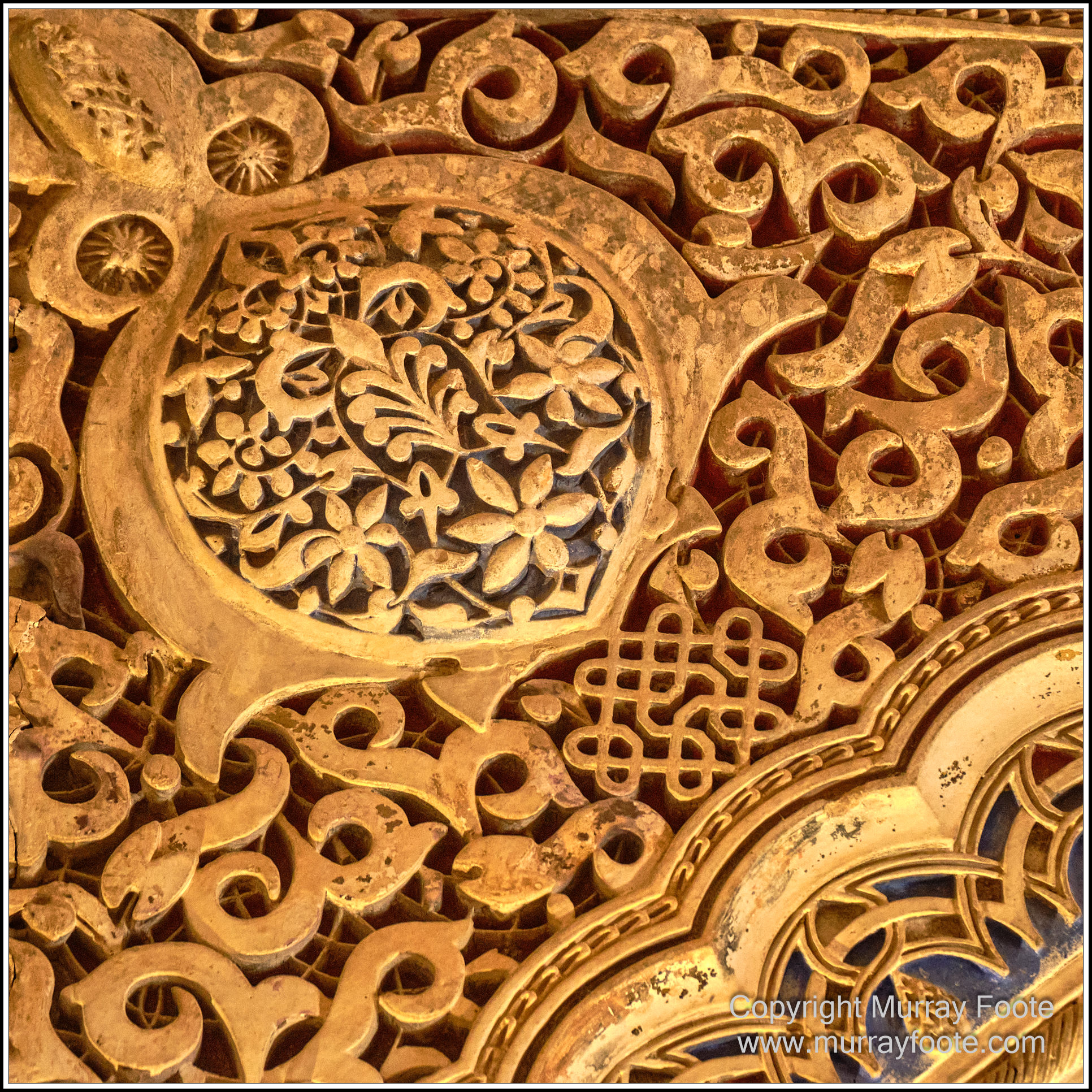
Probably high on a ceiling.
.
.
.
.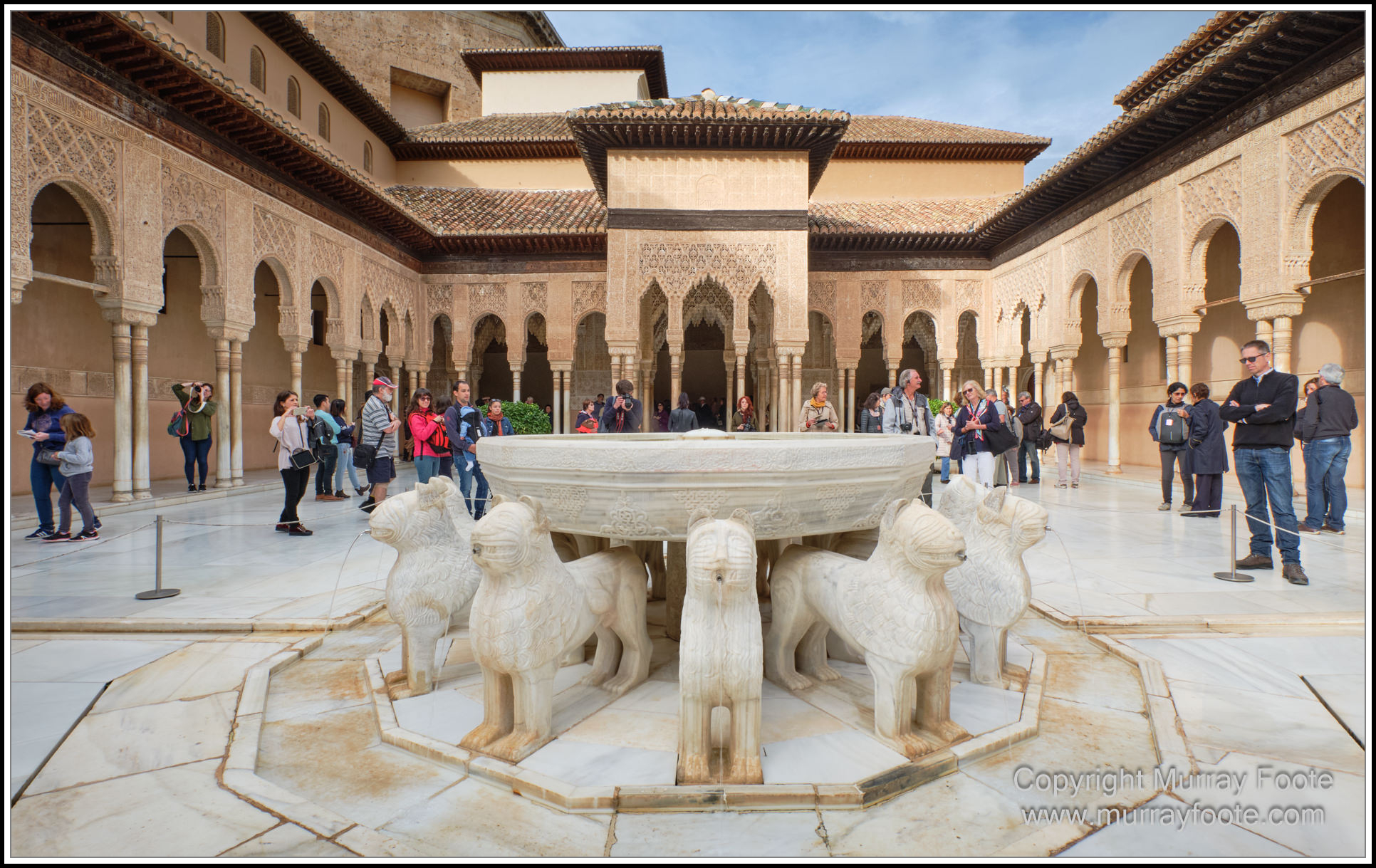
Courtyard of the Lions, Palace of the Lions.
The lions’ fountain was built by Muhammad V in 1360.
.
.
.
.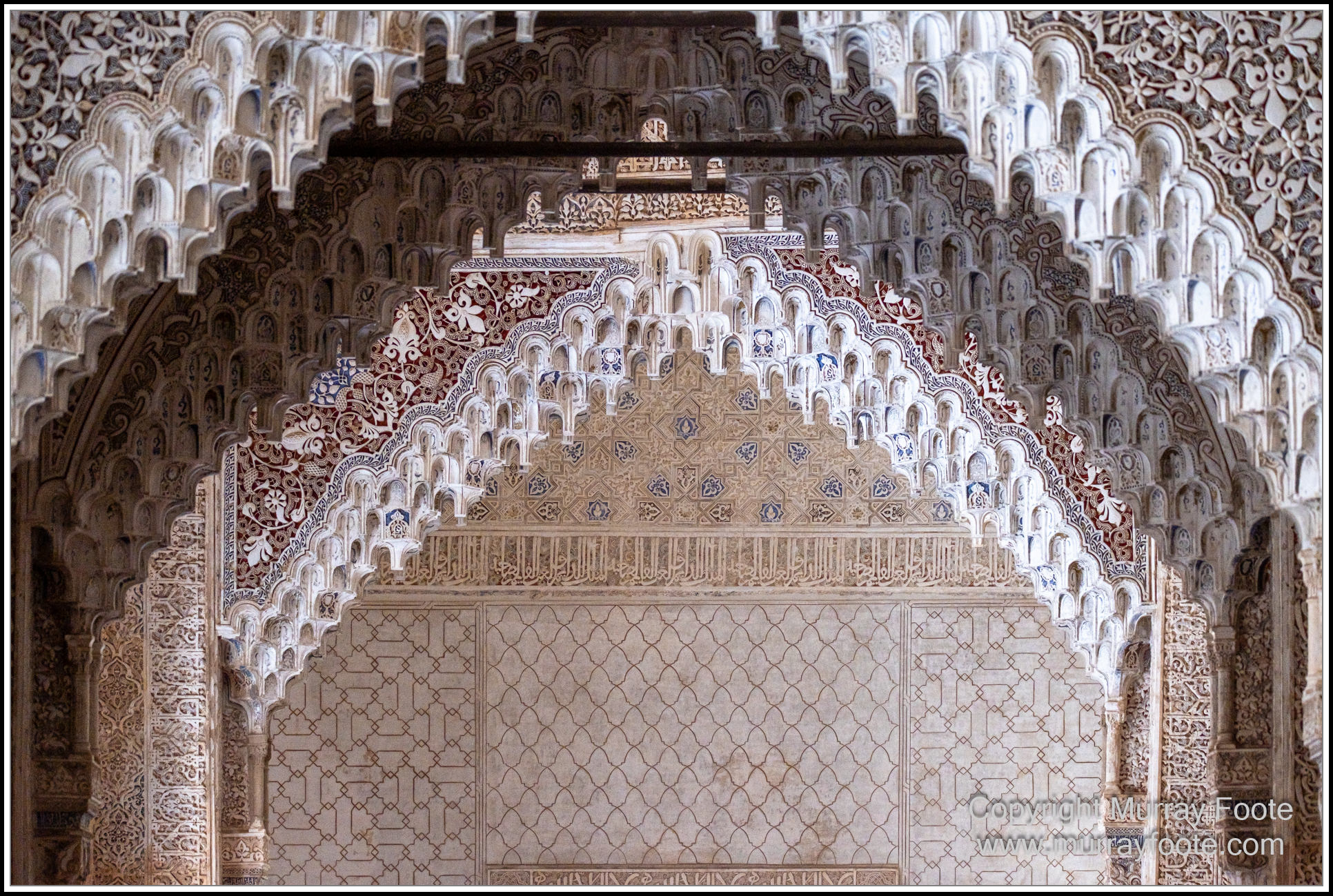
Probably in the Hall of the Ambassadors.
.
.
.
.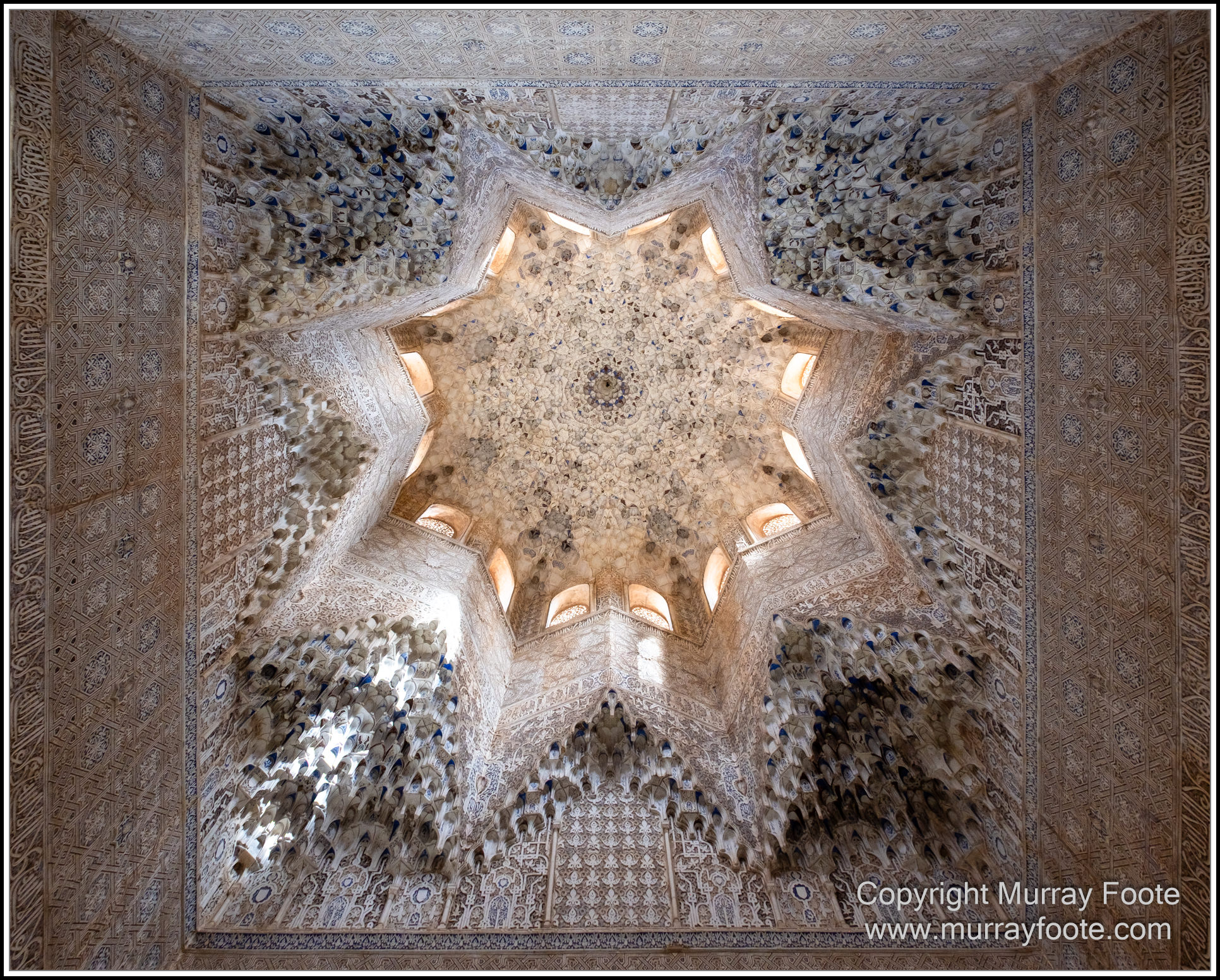
Ceiling of the Hall of the Ambassadors.
The largest room in the Nasrid Palaces at 75 feet tall, this was the throne room of the Sultans.
This was where Sultan Boabdil surrendered to Ferdinand and Isabella in 1492. It was also, later in the same year, where Genoese explorer Christopher Columbus made his successful application to finance a voyage to China.
.
.
.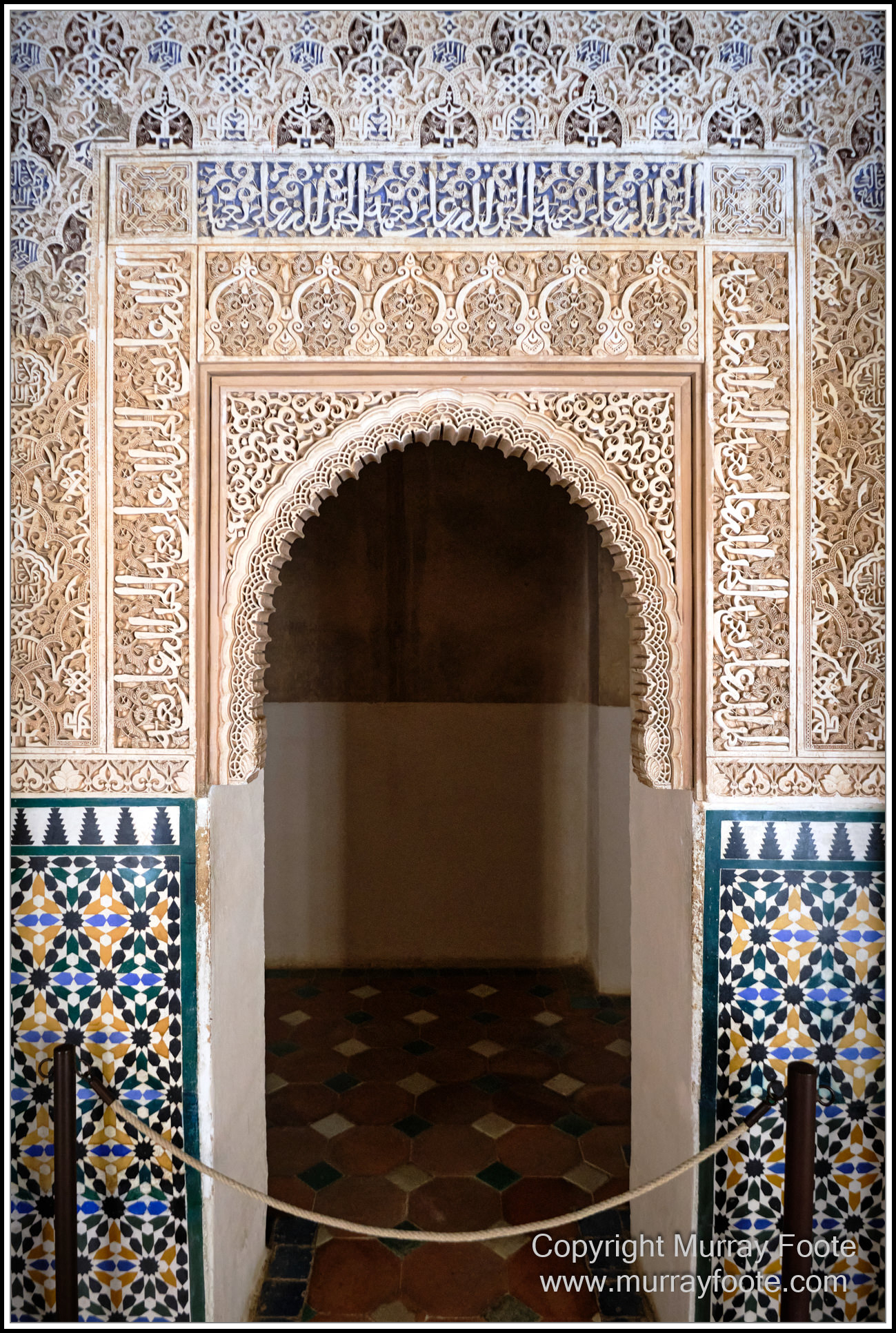
A mysterious though intricate portal, perhaps to the Comares Bath.
.
.
.
.
.
Ceiling of the Palace of the Lions.
The Palace of the Lions was built by Muhammad V to be the residence of the royal family.
.
.
.
Elaborate symbolism.
Again, I can’t be sure where this and the next five images are but very likely in the Palace of the Lions.
.
.
.
.
View through to a corner of the city.
.
.
.
.
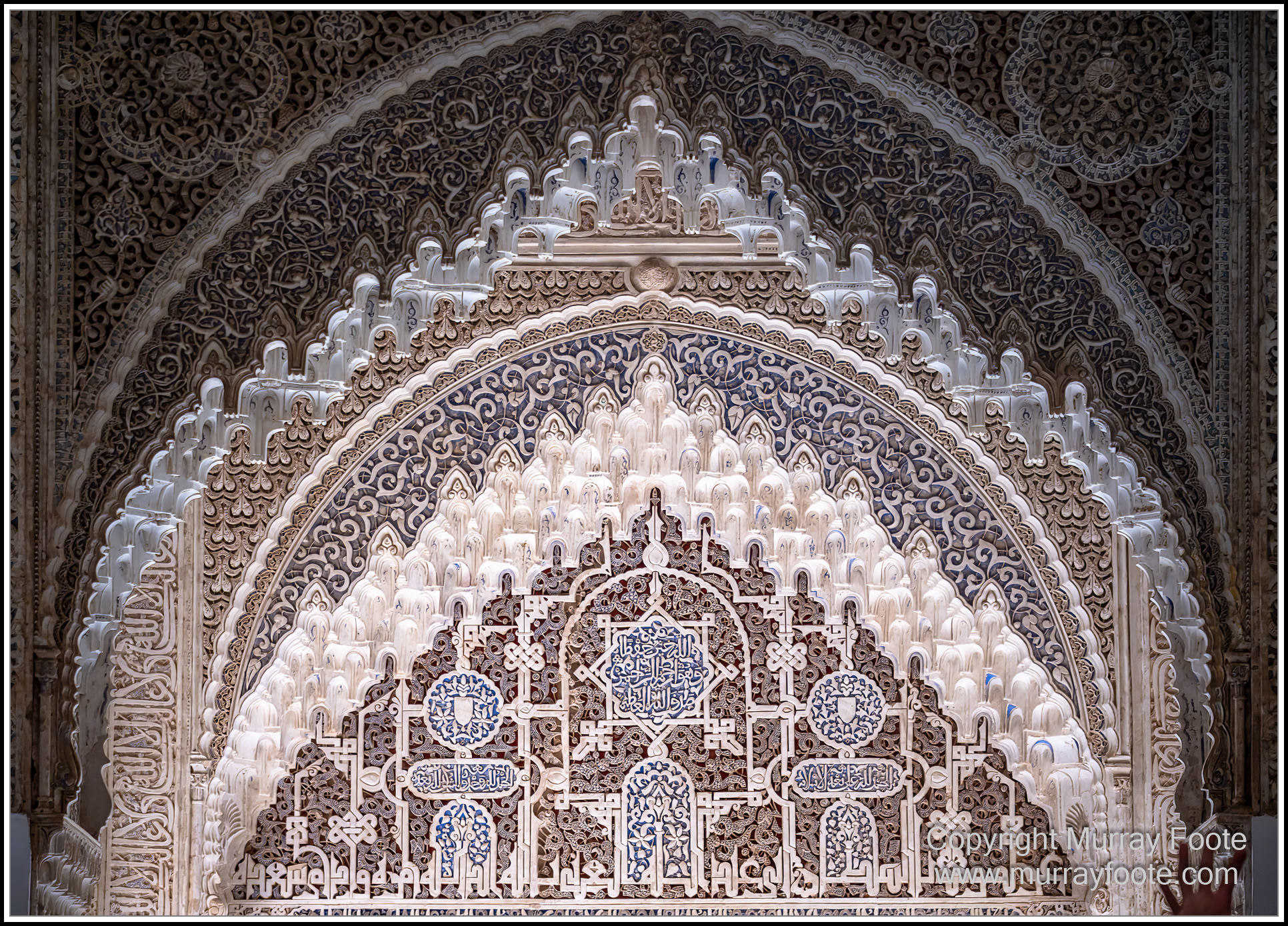
Fine detail and a message.
.
.
.
.
Impressively elegant arches.
.
.
.
.
Detail of arches like the workings of some gigantic clock.
.
.
.
.
Central ceiling detail.
.
.
.
.
The climax of an arch.
.
.
.
.
 .
.
Interior and view through bay window of a royal bedroom, Palace of the Two Sisters.
.
.
.
.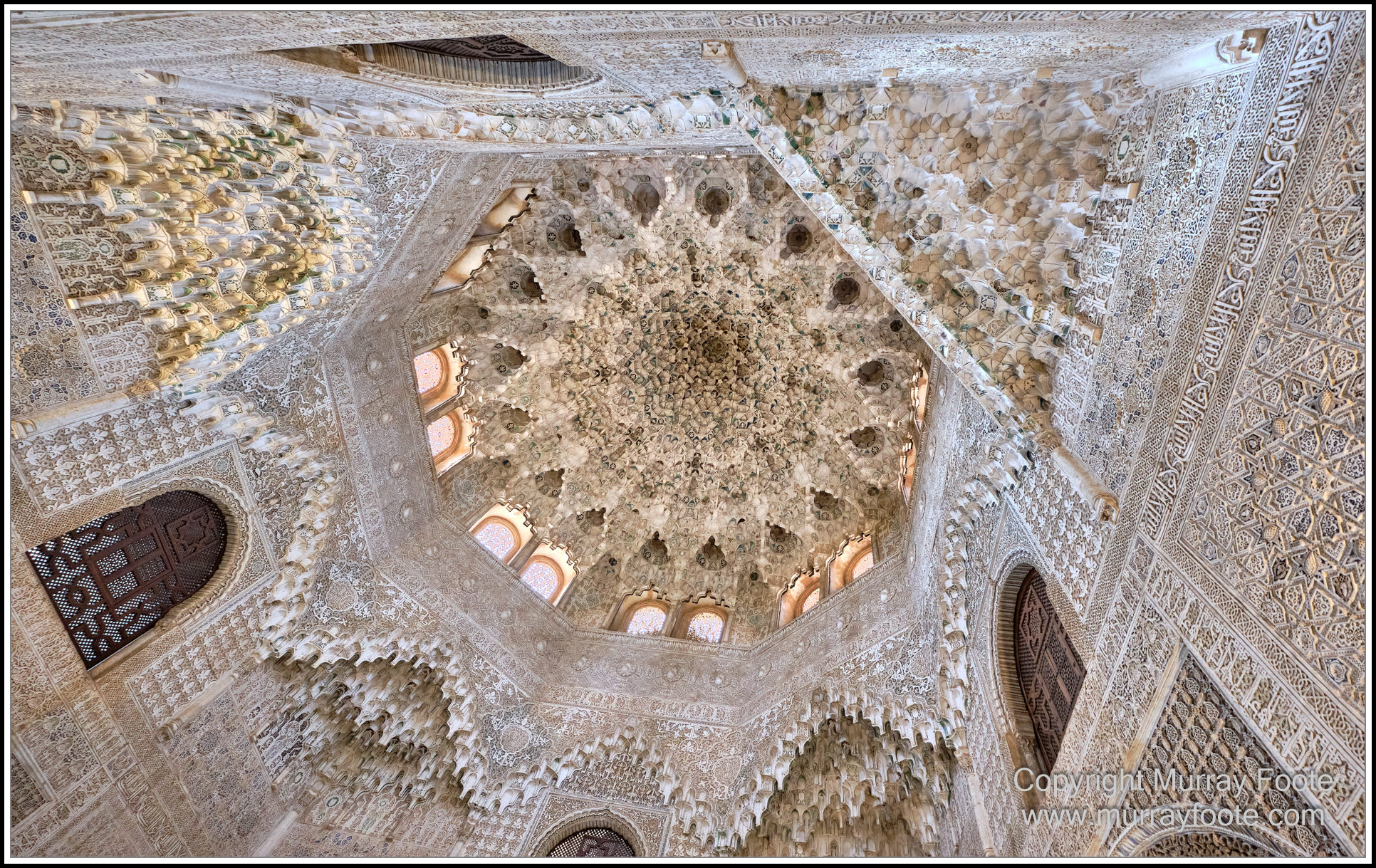
Ceiling of the Hall of the Abencerrajes (the living room of the Sultan).
.
.
.
.
 Murray Foote