Granada, Andalusia, Spain. 26th October 2018.
(Subscribe, Search, Recent Posts, Top Posts: bottom of page. Click image doubles size. Trip summary and links to posts.)
.
This is the second of three Alhambra posts, including Alhambra by day, Generalife Gardens (this post) and Alhambra by night. We walk on from El Partal in the Alhambra to the Generalife Gardens. Refer map in previous post or access it here.
.
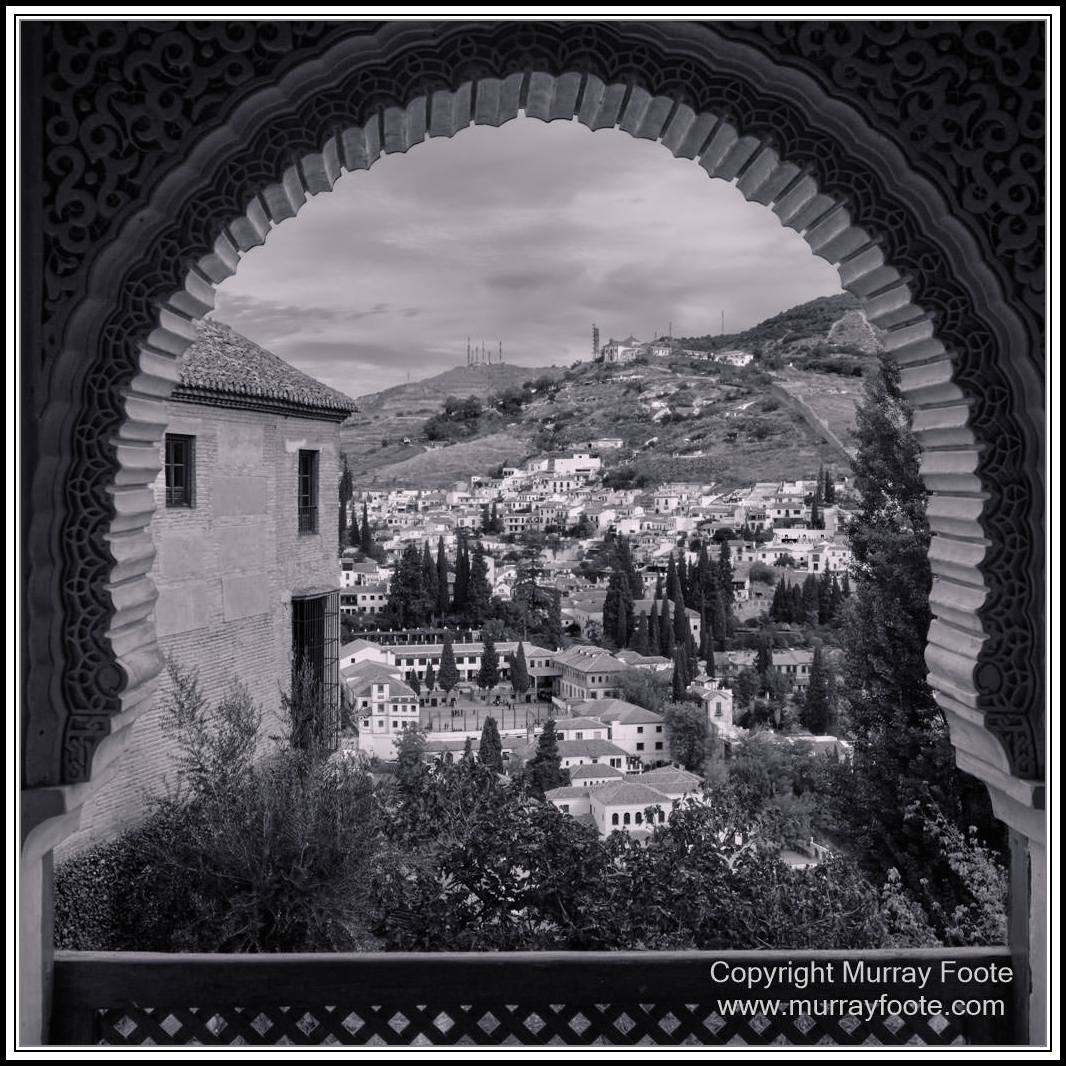
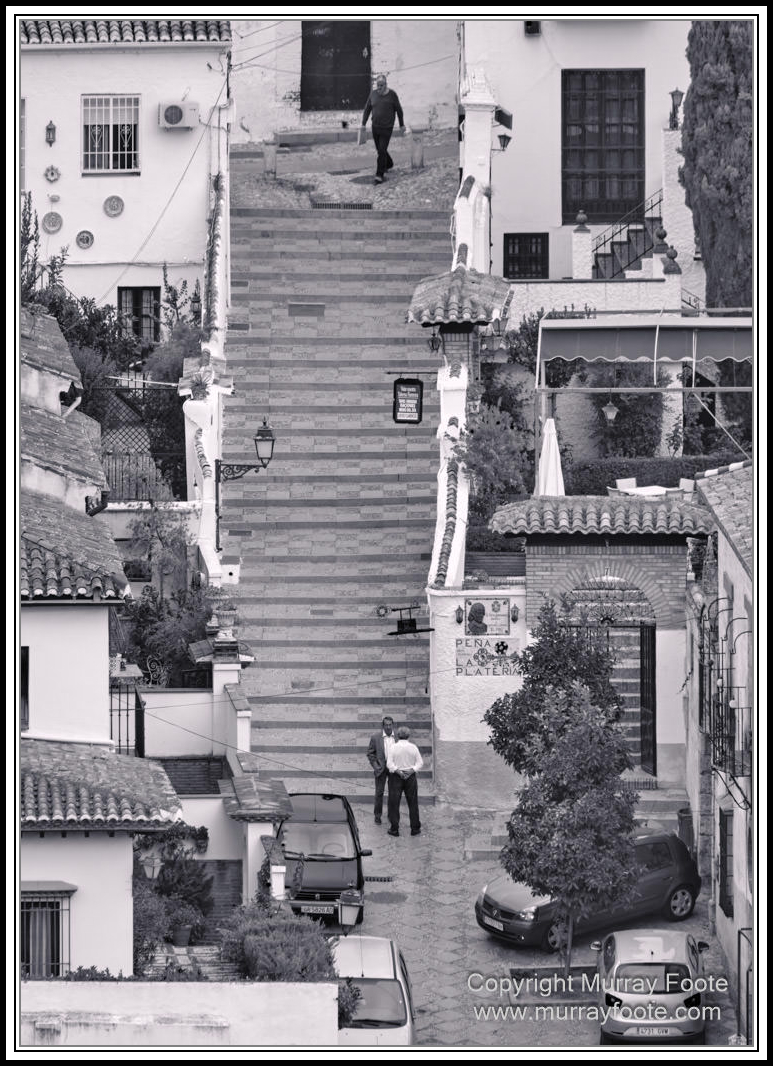
View from Alhambra into Granada, probably from the Partal Palace Mirador.
A wonderful cityscape microcosm. From the sign Pena la Plateria I can identify that it is about 400 metres away, in the suburb of San Pedro, and the street is Pcta. de Toqueros (which the translation AI tells me translates to Pcta. de Toqueros). Above that sign is a memorial plaque for Antonio Cuevas “El Piki”, a famous flamenco singer who died in unexplained circumstances in 1980, murdered or perhaps hit by a car (Article in Spanish with a video showing him performing). The green sign halfway up the stairs says something like “Visit our flamenco tavern. Tapas, assorted portions, menu of the day. Flamenco Thursdays.”.
.
.
.
Another view from the Alhambra walls, showing a woman feeding pigeons from her roof terrace.
.
.
.
The Lindaraja Courtyard, formed in the 16th century. It is next to the Courtyard of the Lions..
.
.
.
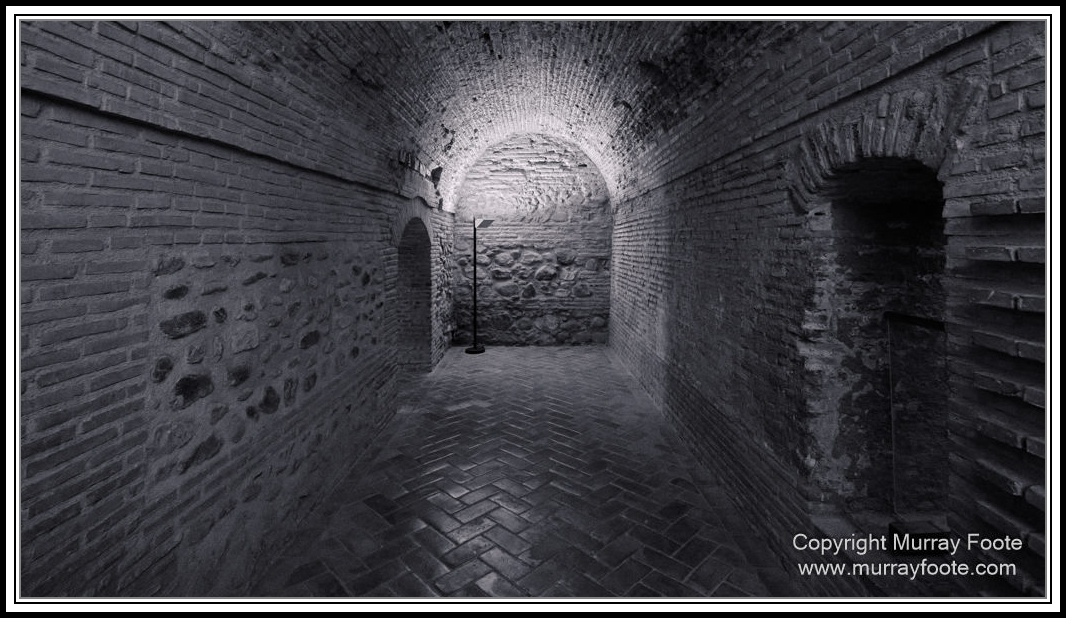
An underground corridor in the Partal Palace or the Palace of the Lions.
.
.
.
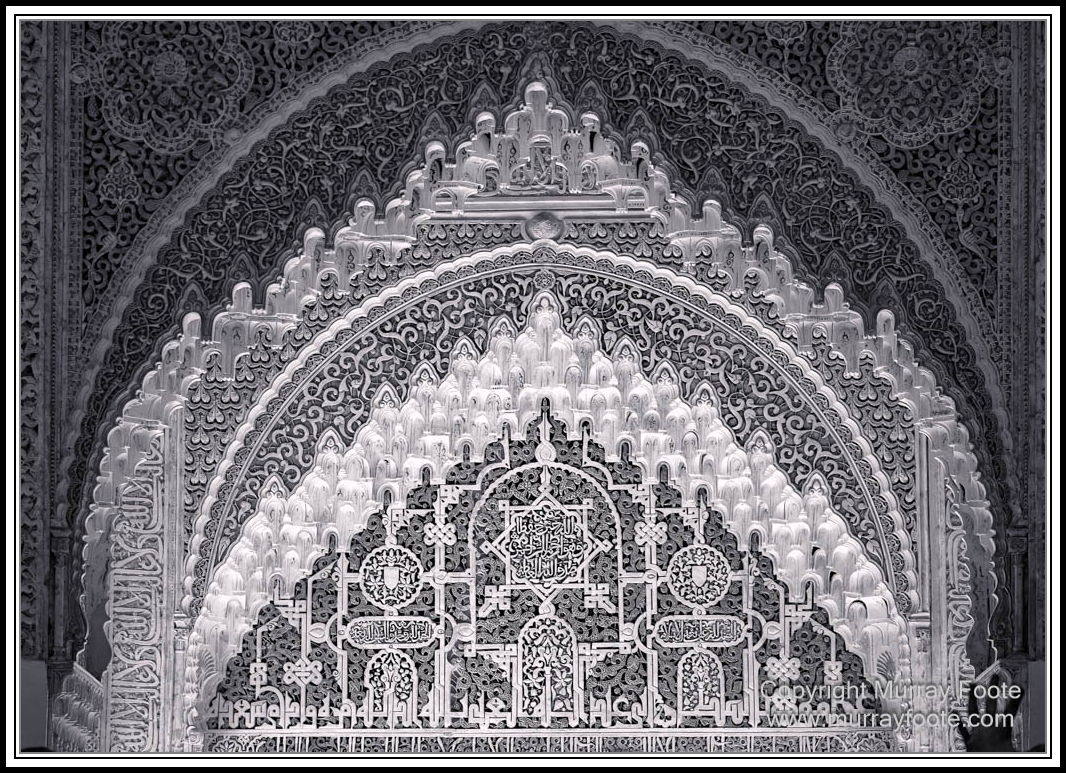
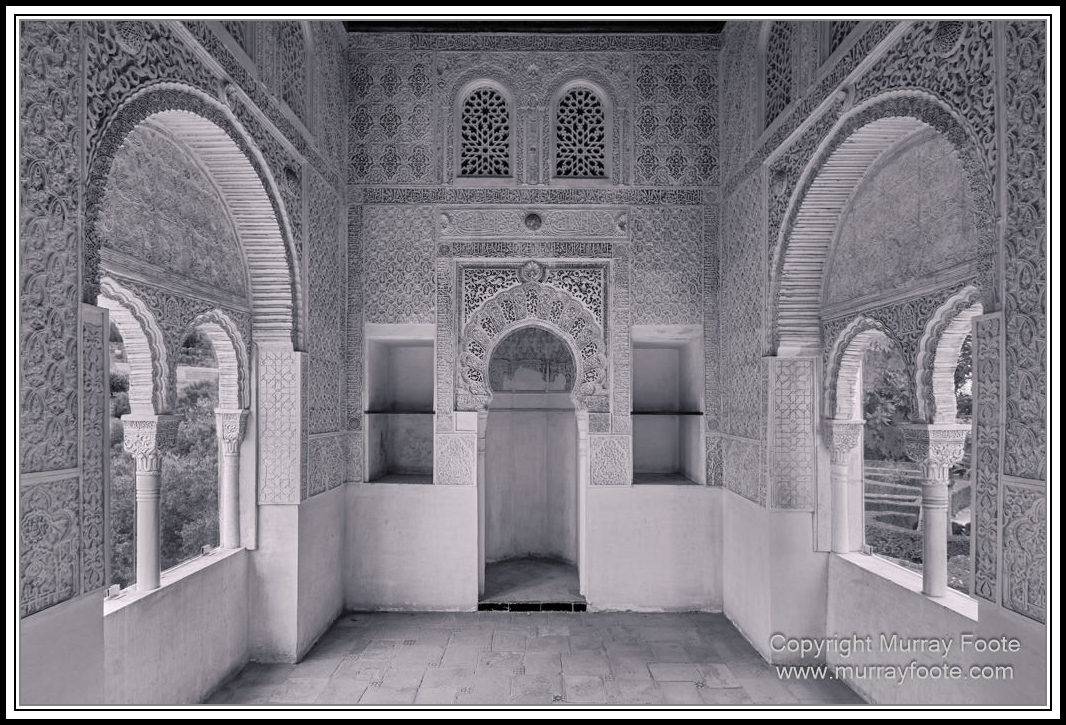
Interior of the Oratory, with the Mihrab.
Built in the early 14th century, this served as a private mosque for the Nasrid elite.
.
.
.
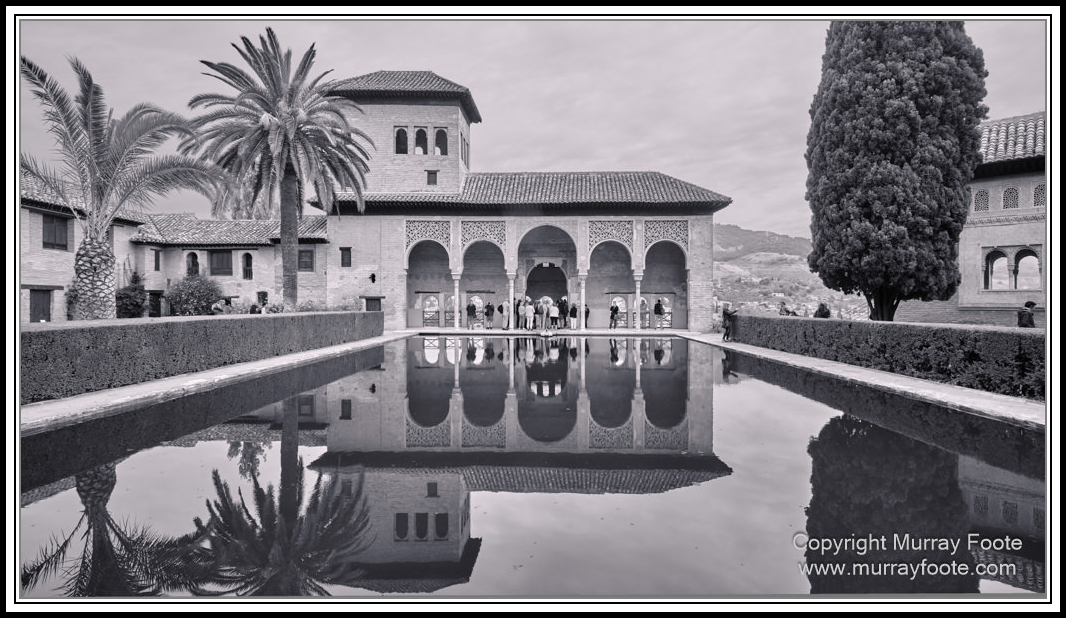
Partal Palace.
The Partal Palace was built by Sultan Muhammad II who ruled between 1302 and 1307. It has been extensively modified and renovated over the years and the gardens here date from the early 20th century.
.
.
In the Partal Gardens, showing the gravity-fed irrigation system. The water comes from aqueducts in the mountains many miles away.
.
.
.
More distant view of Partal Palace.
.
.
.
Hibiscus.
.
.
.
Autumn tree and orange trees with Church of Santa Maria of the Alhambra in the background.
.
.
.
Pumpkins.
The gardens were not just for aesthetics; they also fed a small town.
.
.
.
Pomegranate.
.
.
.
Tower of the princesses and an irrigation canal.
.
.
.
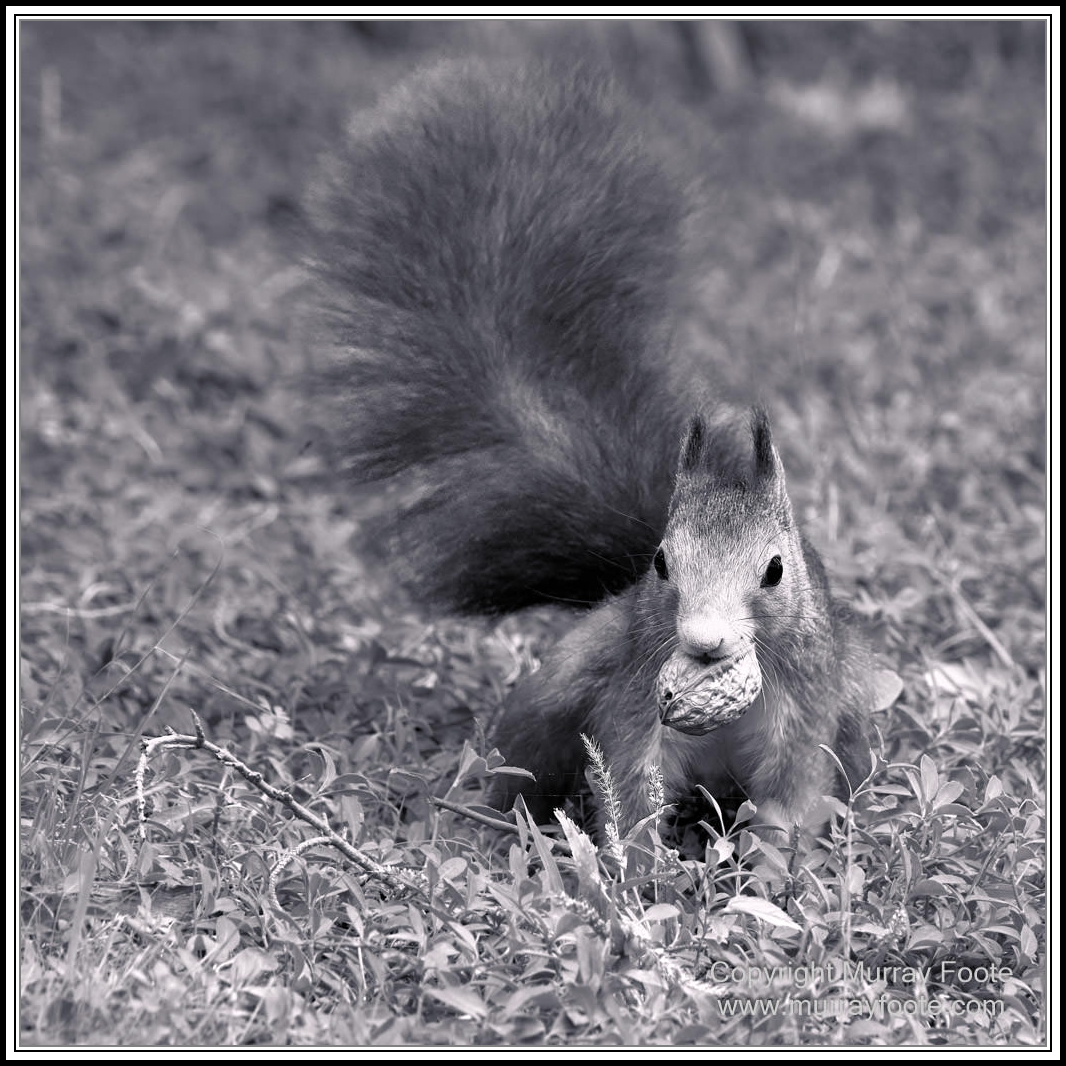
European Red Squirrel, scuirus vulgaris.
.
.
.
Marigold.
.
.
.
White rose.
.
.
.
.
Pink rose.
I took both rose images using focus stacking. That means taking multiple images at slightly different points of focus and combining them for a greater depth of field. The hibiscus, the pomegranate and the marigold were single images.
.
.
.
Spanish water fountain in the Generalife, probably replaces a Moorish one.
For some time I thought the year was 1030 which made no sense, but looking very closely it is 1630. The inscription says “PRCO.ANO.IHS.1630.IVA.” I infer the bits at each end refer to Philip IV (ruled 1621-1665), ano 1630 is the year 1630, and IHS is a reference for the Greek name of Jesus. Who if anyone the faces represent may be a matter of conjecture. Clearly not Philip IV. Perhaps they celebrate the reign of Umberto I, who would be king of Italy 250 years later.
.
.
.
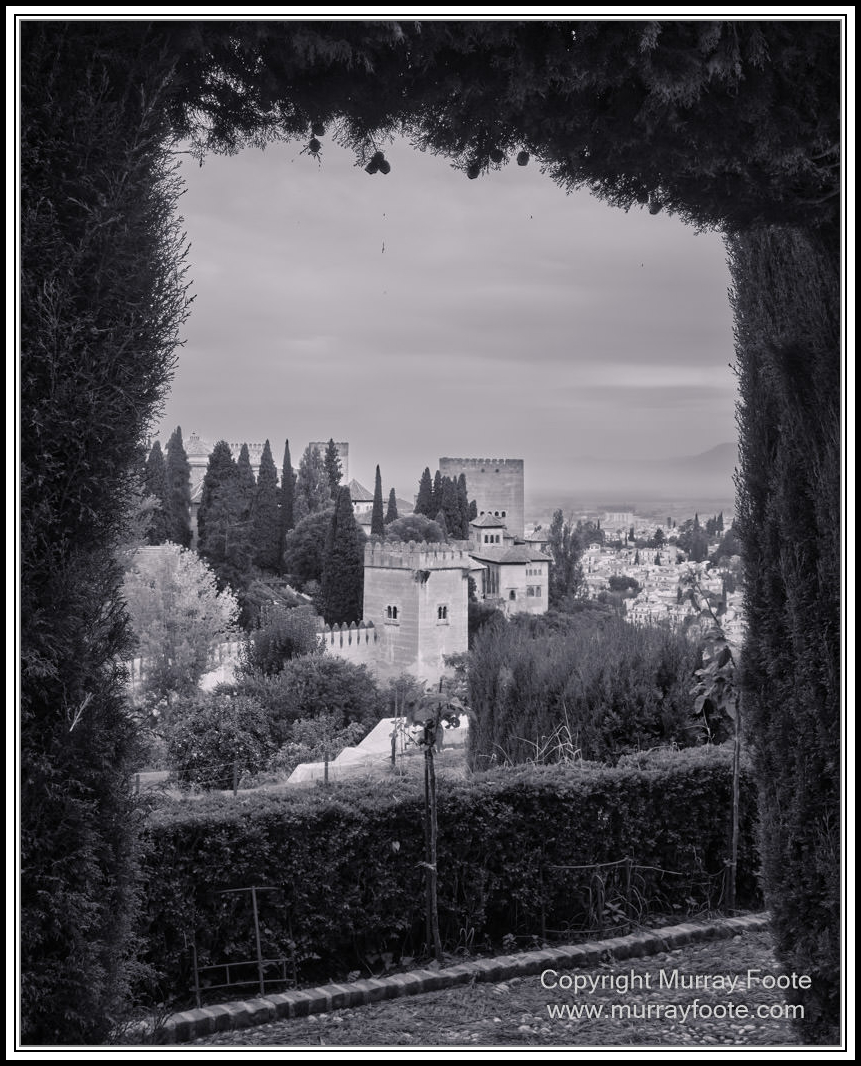
Looking towards the Alhambra.
.
.
.
Three images showing roses (one also with marigolds), the Alhambra, and Las Huertas (market gardens) in between.
.
.
.
.
.
.
.
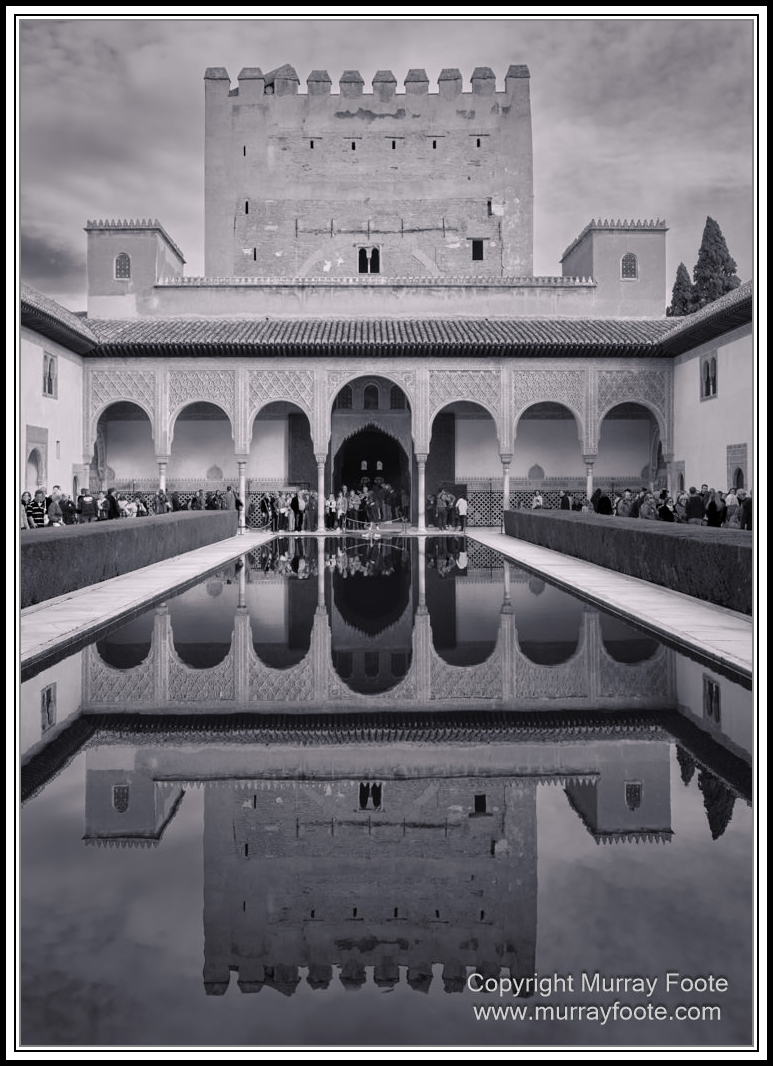
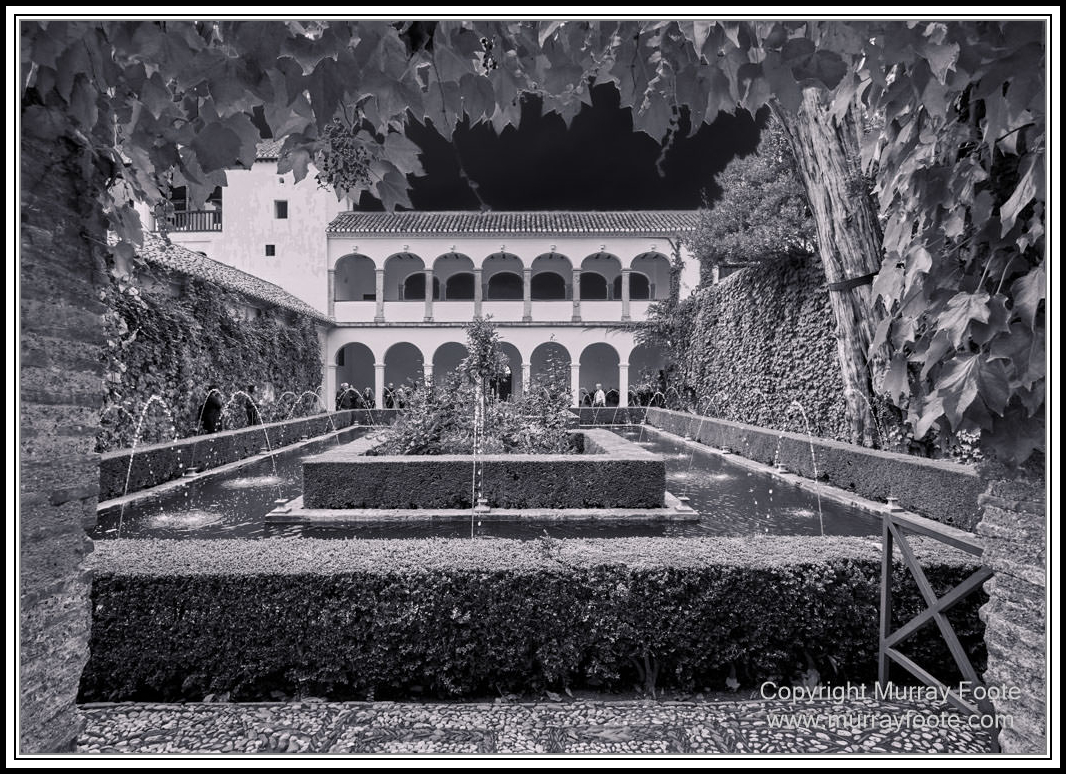
The Patio de la Acequia (Courtyard of the Canal), looking north.
.
.
.
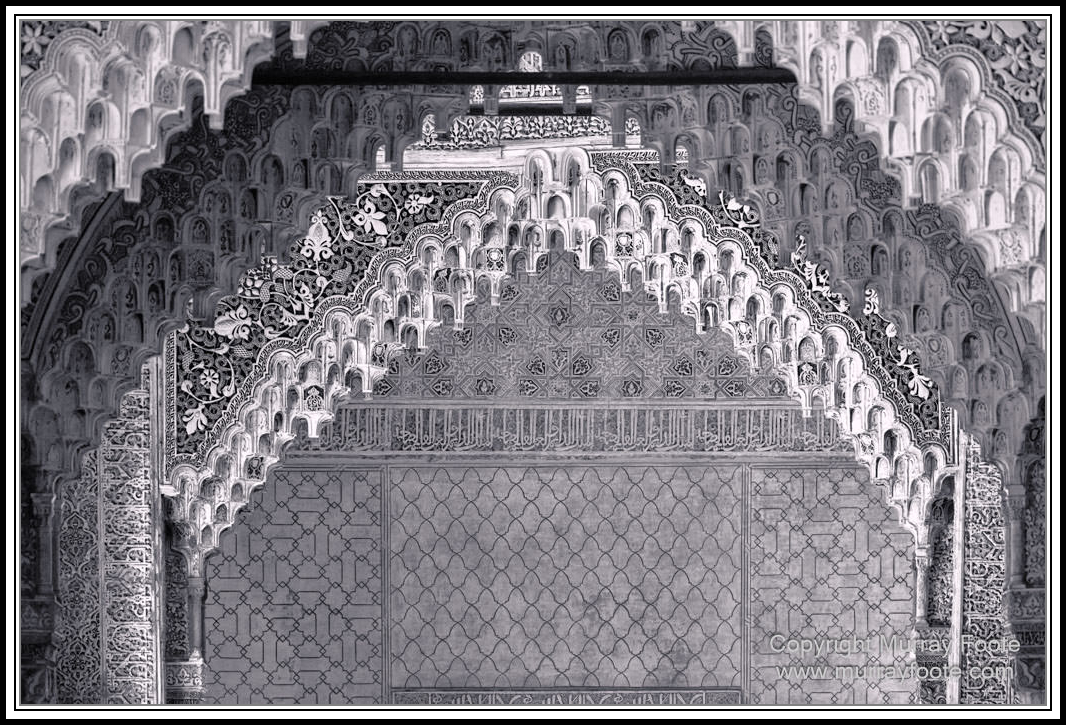
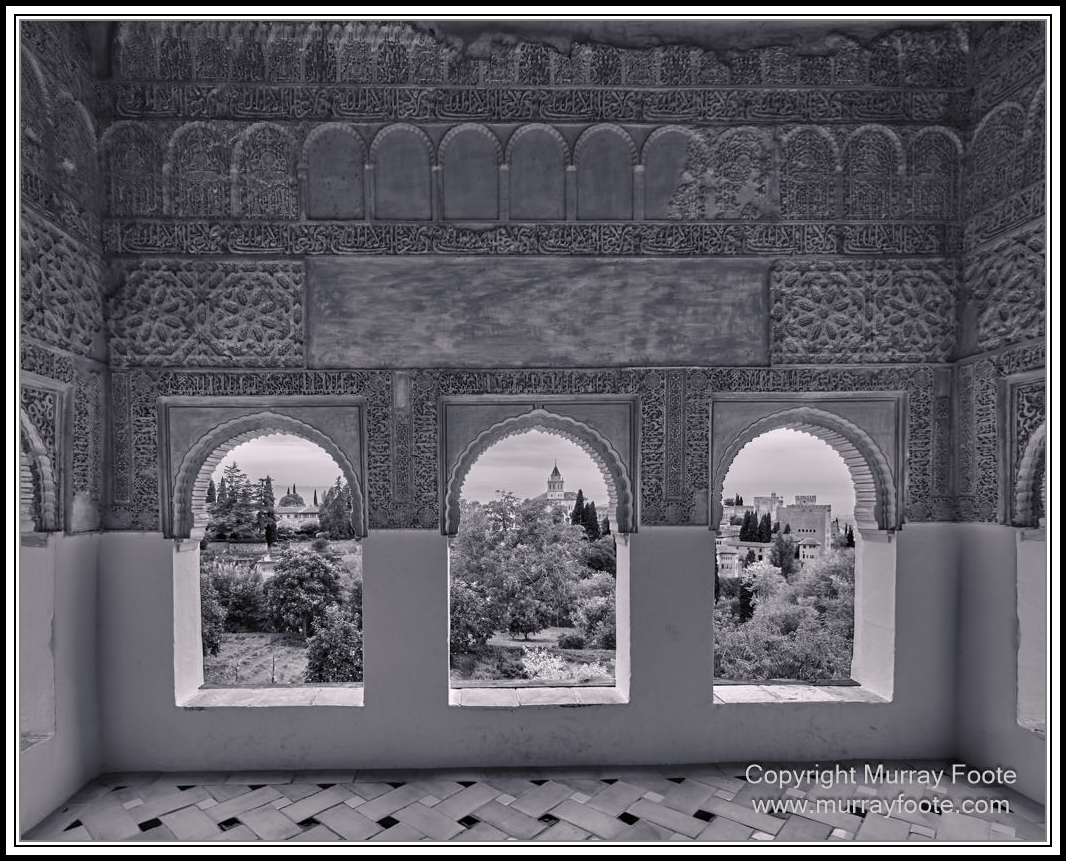
Looking through one of the arches to the Patio de la Acequia.
.
.
.
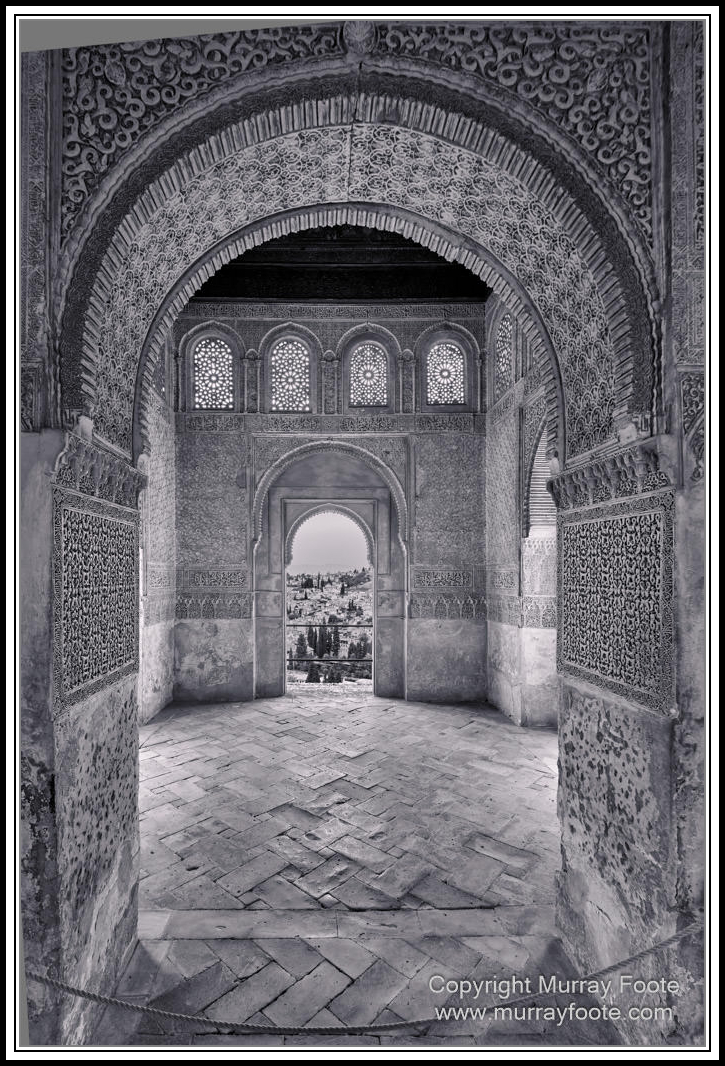
Inside the mirador (lookout) of the courtyard.
.
.
.
The Patio de la Acequia (Courtyard of the Canal), looking south.
.
.
.
Part of the the mirador of the courtyard.
.
.
.
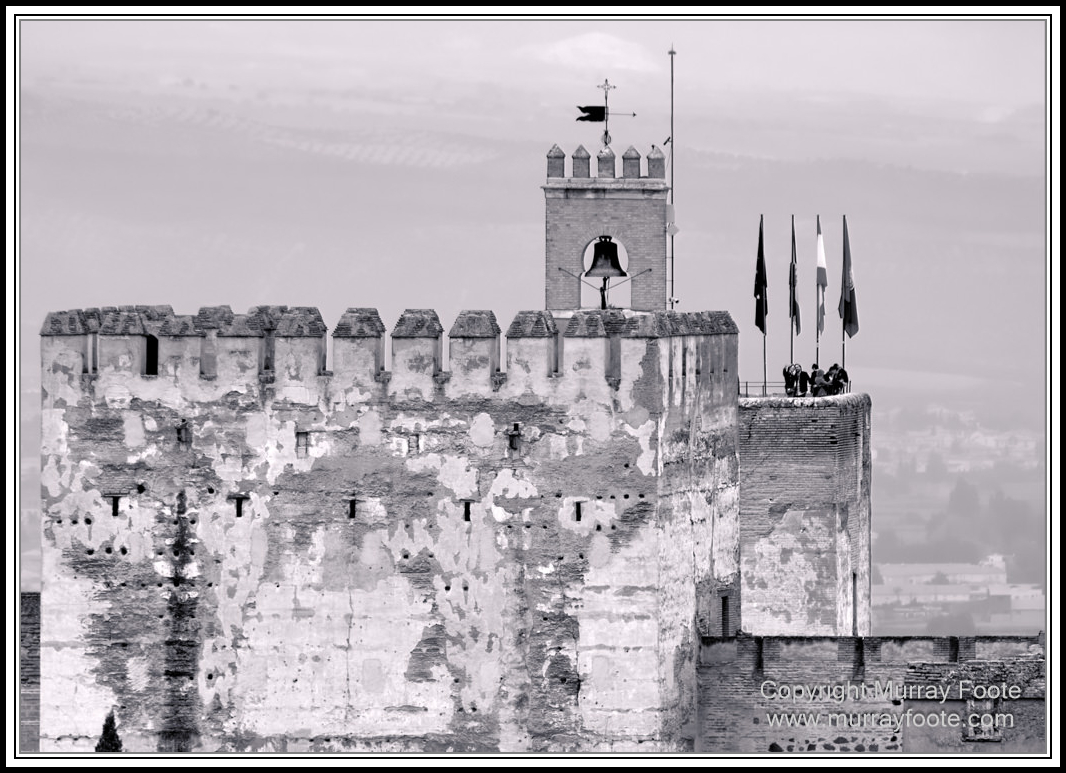
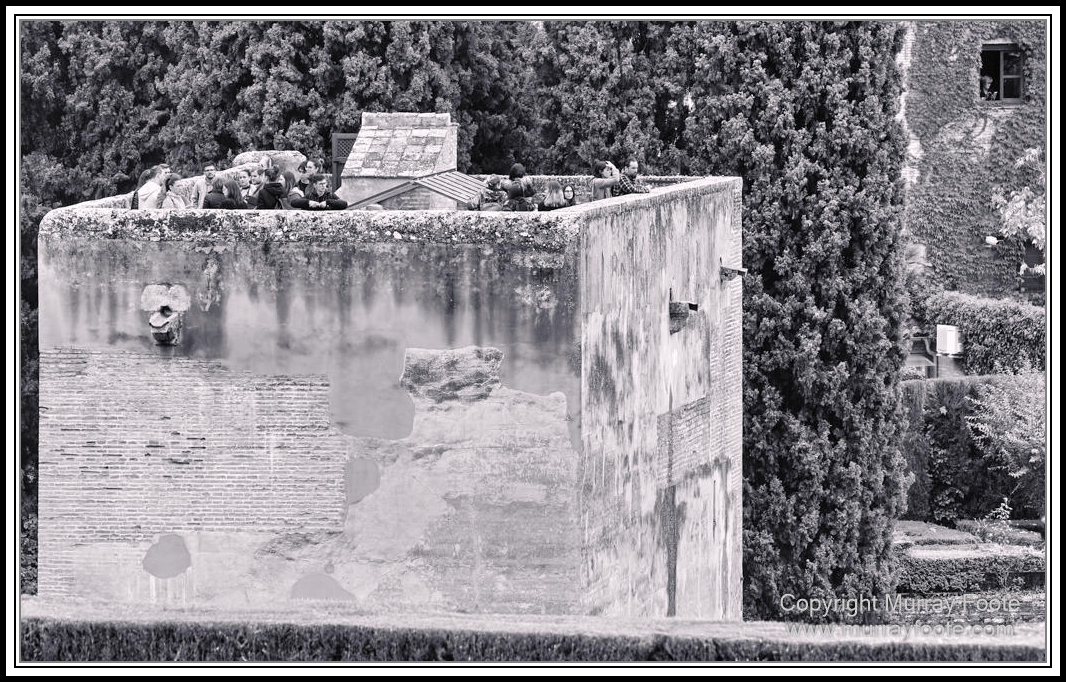
The people are standing on the top of the Torre de la Vela, at the far end of the alcazaba, about 300 metres away. The big tower in front of them is probably Torre de Comares.
.
.
.
Pussy cat. Paused in thought. Playing with a ball. Perhaps looking for red squirrels.
.
.
.
Court of the Sultana’s Cypress Tree.
.
.
.
Court of the Sultana’s Cypress Tree.
The dead trunk of the cypress tree is at the right. It is said to have been planted during the Nasrid era and to have lived for 600 years.
.
.
View towards the Alhambra from behind the Patio de la Acequia.
.
.
.
Tower of the princesses.
(The fifteen young women on top of the tower are not the princesses the name refers to. It also doesn’t apply to the young person with rubber gloves and a phone, probably female, looking out of a window in the background. Important to be clear about these things.).
.
.
.
Catedral de Granada, central foreground, from the Alhambra.
.
.
.
.
.