Kauai, Hawaii, 1 March 2015

All the images in this post are of Waimea Canyon from viewpoints near the Waimea Canyon Road. This first image is a multi-image panorama.
.
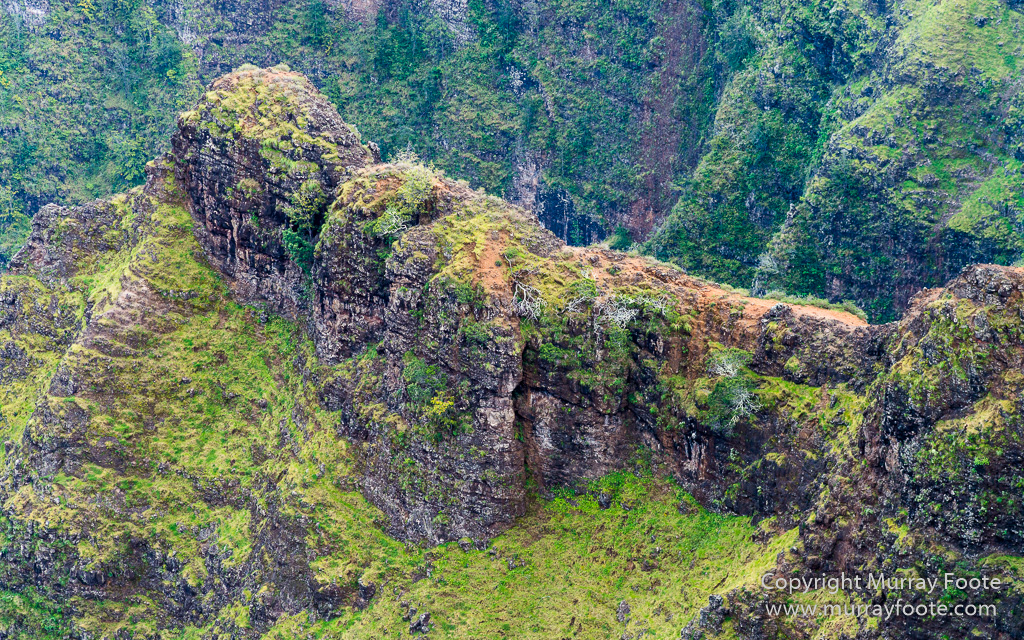
Both this and the first image are from the Waimea Canyon Lookout, the first you encounter going up the road.
.

Now we have driven on and are at the Pu’u O Kila Lookout, at the end of the road, overlooking the Kalalau Valley. Down there is the end of the Kalalau Trail. This is a spectacular 18 kilometre (11 miles) walk that you enter from Ke’e Beach, as we did for a kilometre or two the previous day. If you do the full trail, you walk out again the same way. It can be quite dangerous especially after rain and people do die there, particularly in swollen creek crossings and precarious cliff tracks.
.
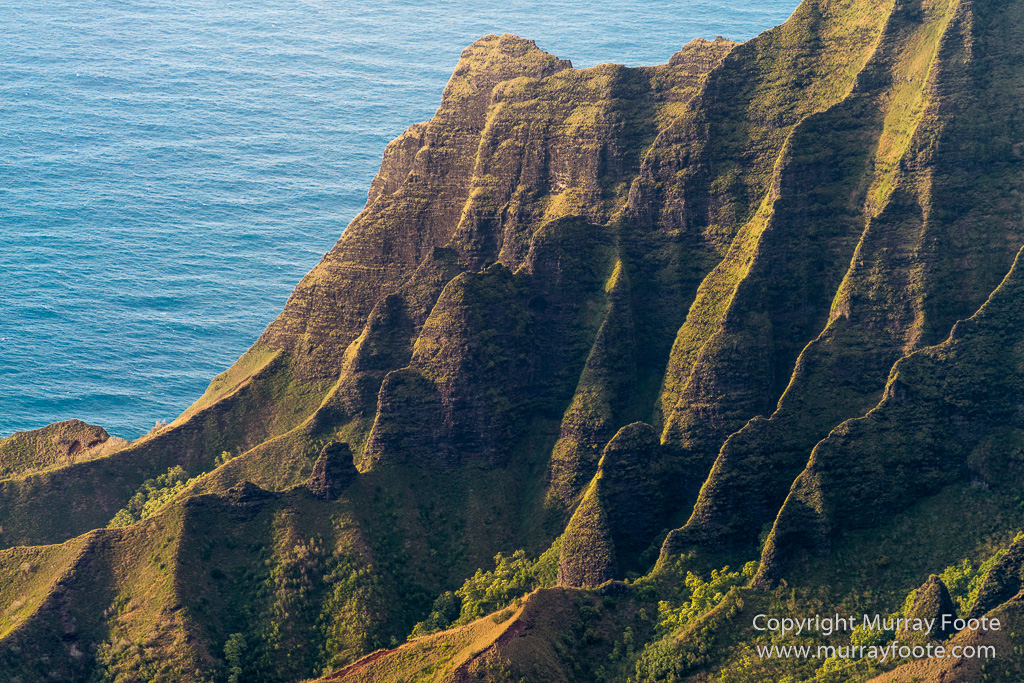
Two more images of the hills overlooking the valley, which would be a ridge of (Mt) Kilohana, 4,000 feet high (1,220 metres).
.
 .
.
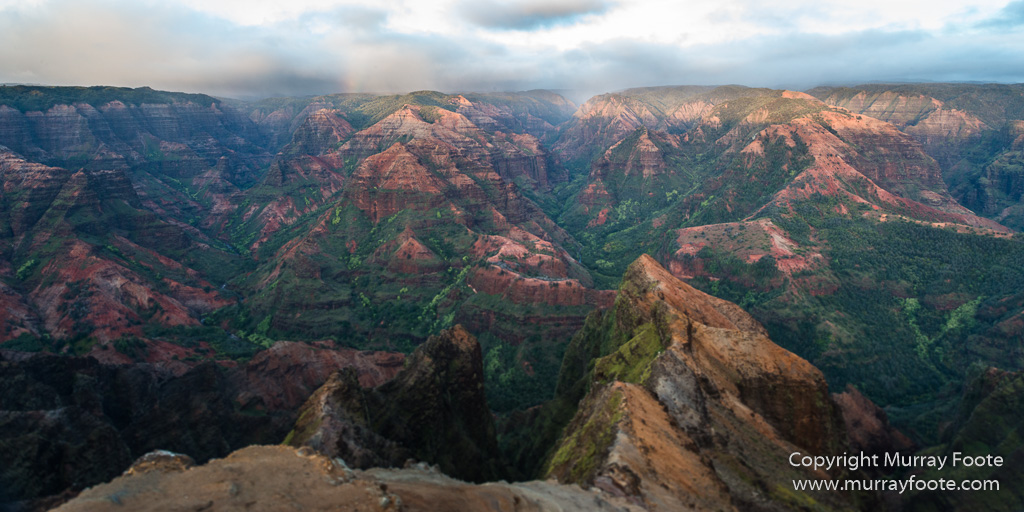
Back down to the Waimea Valley Lookout for the sunset, such as it was.
.
The road along the ridges above the valley is narrow and winding and has what seemed to me an absurdly low speed limit of 25mph or 40kph. Mind you, the other thing I couldn’t understand was that all the rental cars have automatic transmission. On winding roads and on steep downhill inclines you have so much more control with a manual transmission and also you aren’t so reliant on the brakes.
.

Kauai is the oldest island in the Hawaiian group and thus has had more time to erode. This was accentuated by rifts and collapse of the central volcano.
.

In the centre of the island is the highest mountain in Kauai, the inactive shield volcano Waialeala. Its peak, Kawaikini, is at 5,200 feet or 1,600 metres. It is also a place of particularly high rainfall, averaging around 11.5 metres per year, another factor in the spectacularly eroded valleys.
.
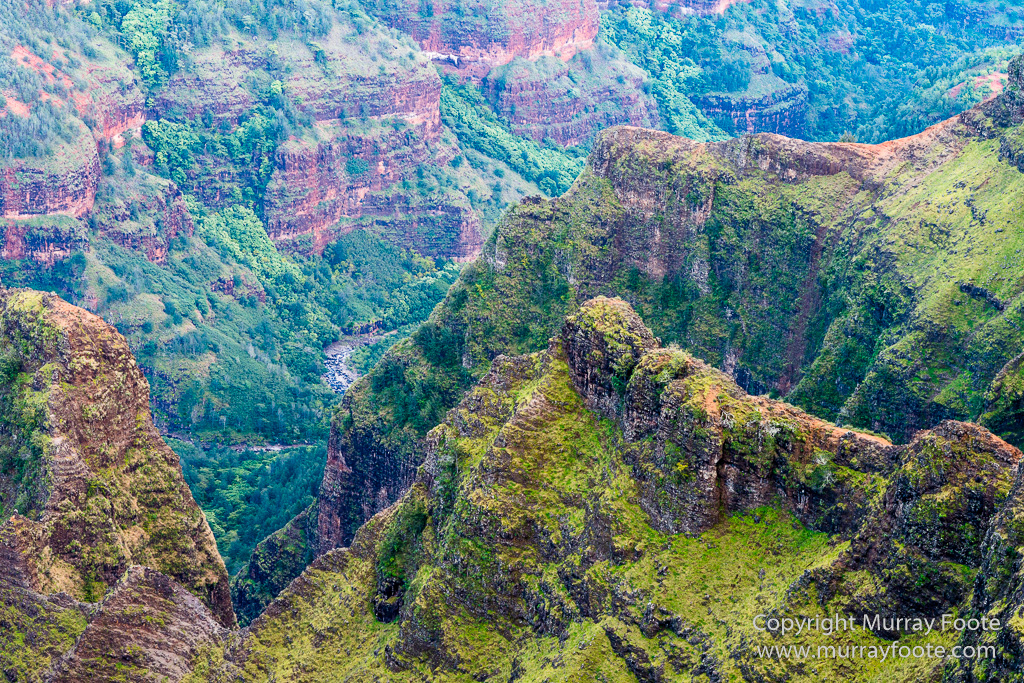
Waimea Canyon is also known as “the Grand Canyon of the Pacific”.
.

The waterfall that you can see in the distance we will see a closer view of in a couple of posts time.
.
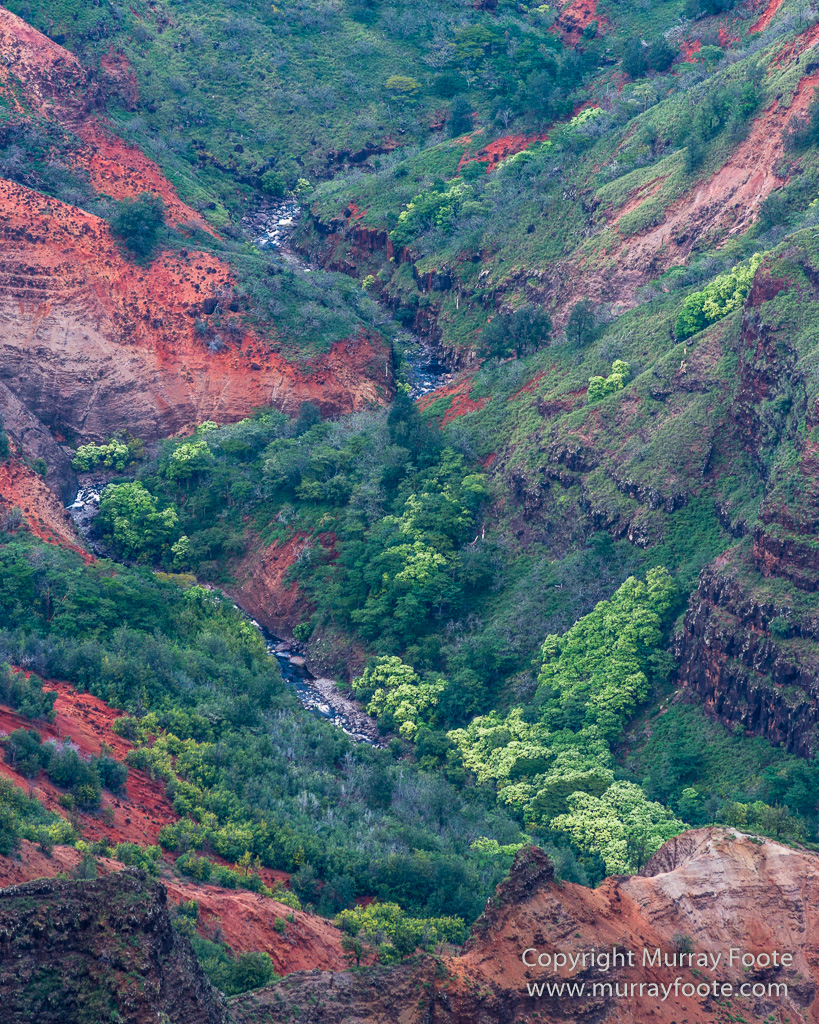
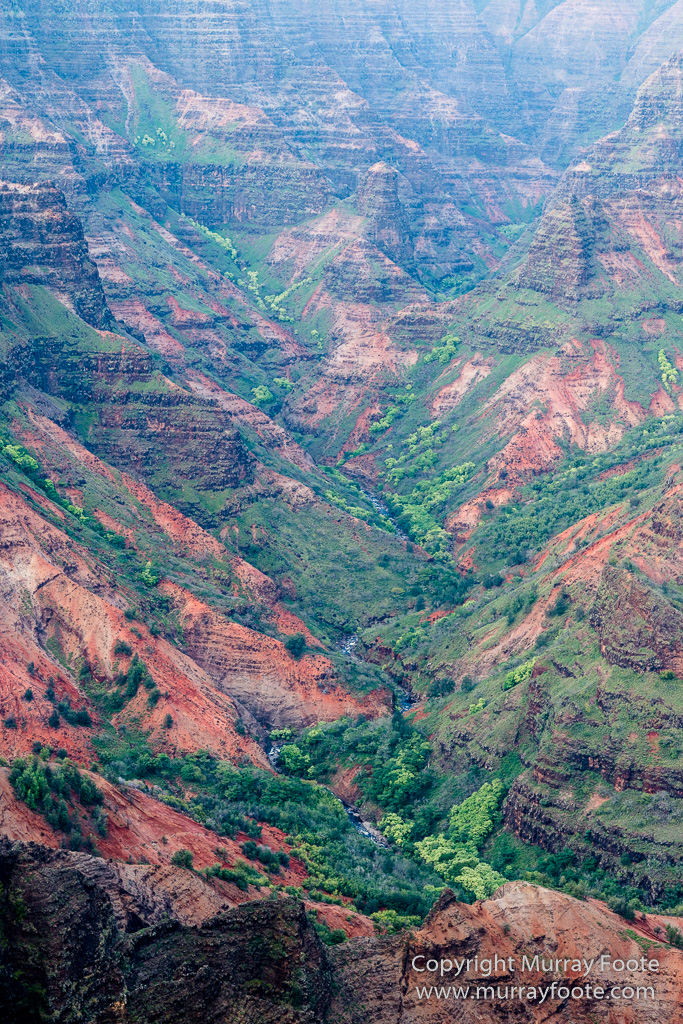
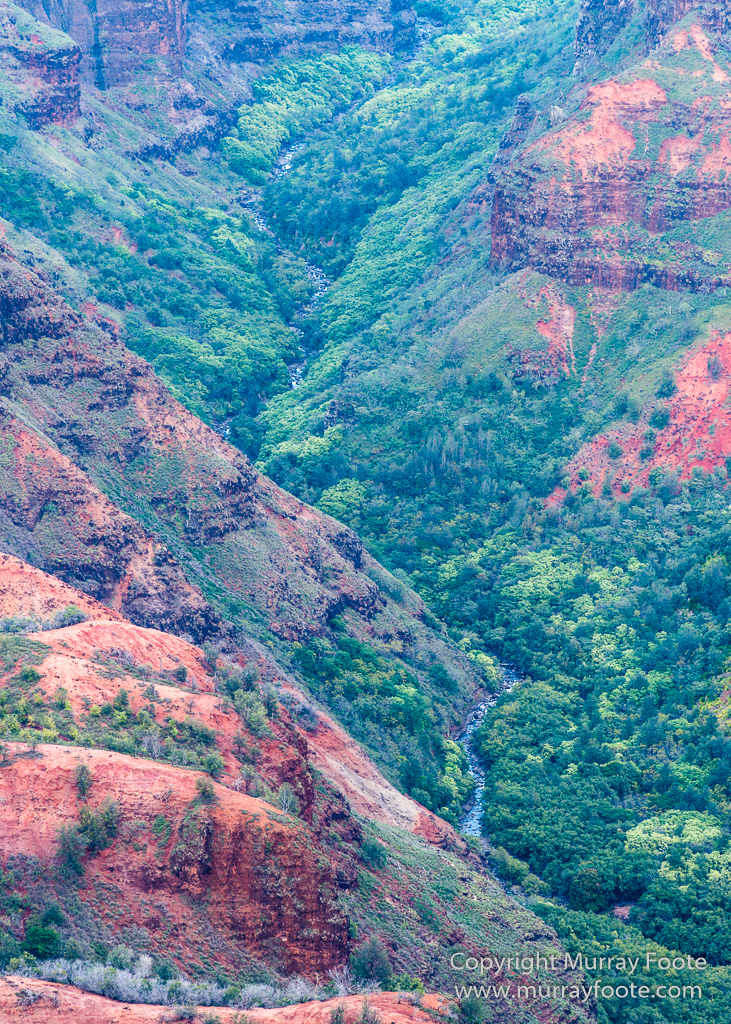
Waimea means “red water”, in consequence of the red soil of the canyon.
.

The many bare patches is no doubt a reference to a high level of erosion.
.
 .
.
.
 .
.
.
 .
.
.
 .
.
.
 .
.
.

.
.
 Murray Foote