Barcelona, Spain. 27th to 29th October 2018.
(Bottom of page for Recent Posts, Top Posts, Subscribe and Search. Clicking image doubles size. Trip summary and links to posts.)
.
While in Barcelona, we stayed as close as possible to the Sagrada Familia so we could walk around and I could photograph at different times. There are three sections here, outside at night, outside by day and inside (during daytime).
.
Sagrada Familia from the outside at night.
.
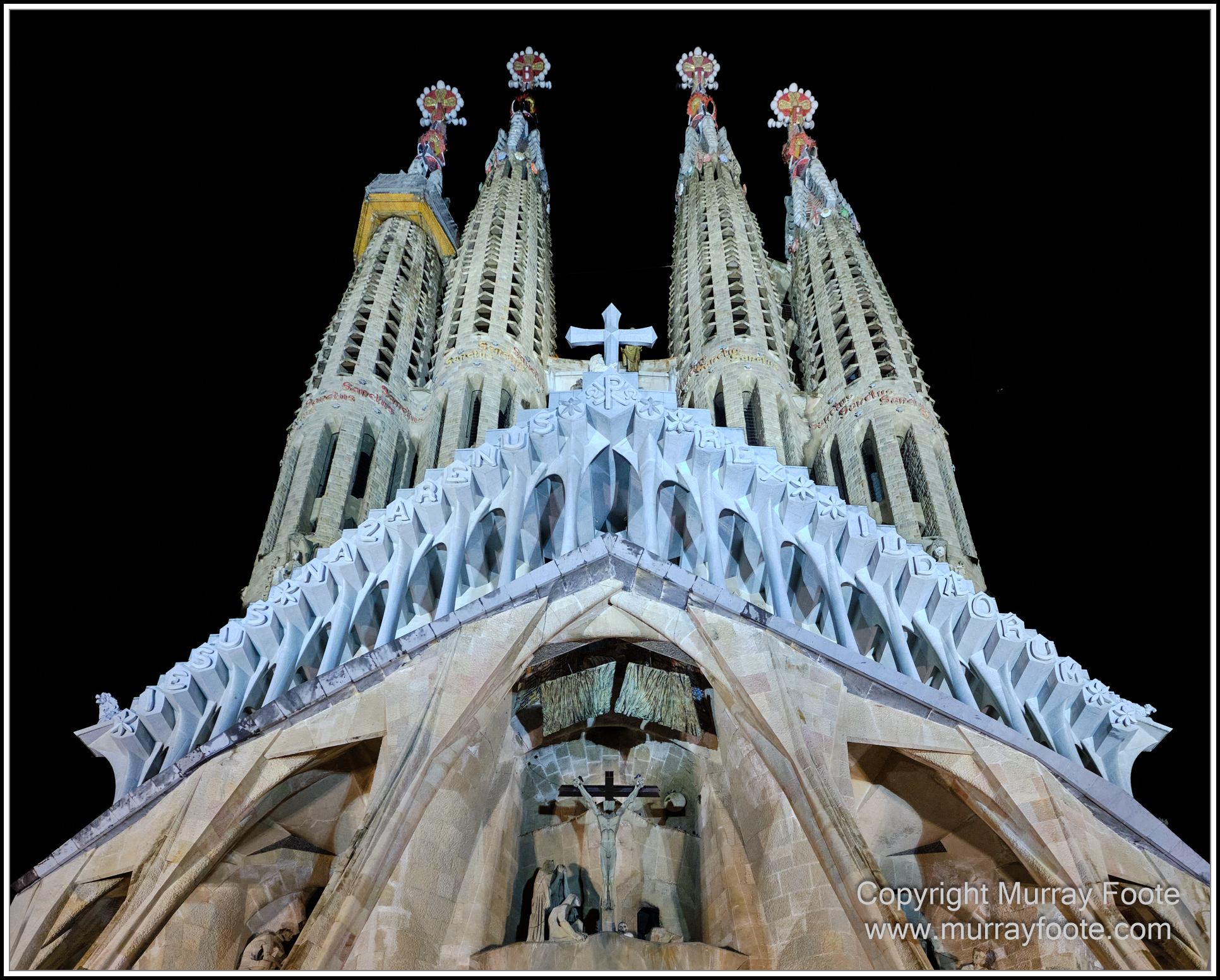
Looking up at Sagrada Familia at the Passion Façade.
If you look carefully you can see the words Iesus nazarenus rex iudæorum or Jesus of Nazarus, King of the Jews.
There are three façades, the Nativity Façade, the Passion Façade and the Gloria Façade. Everything about the Sagrada Familia is symbolic and a reference to Christian doctrine and to Nature. It is also an artistic triumph, independent of that.
.
.
. 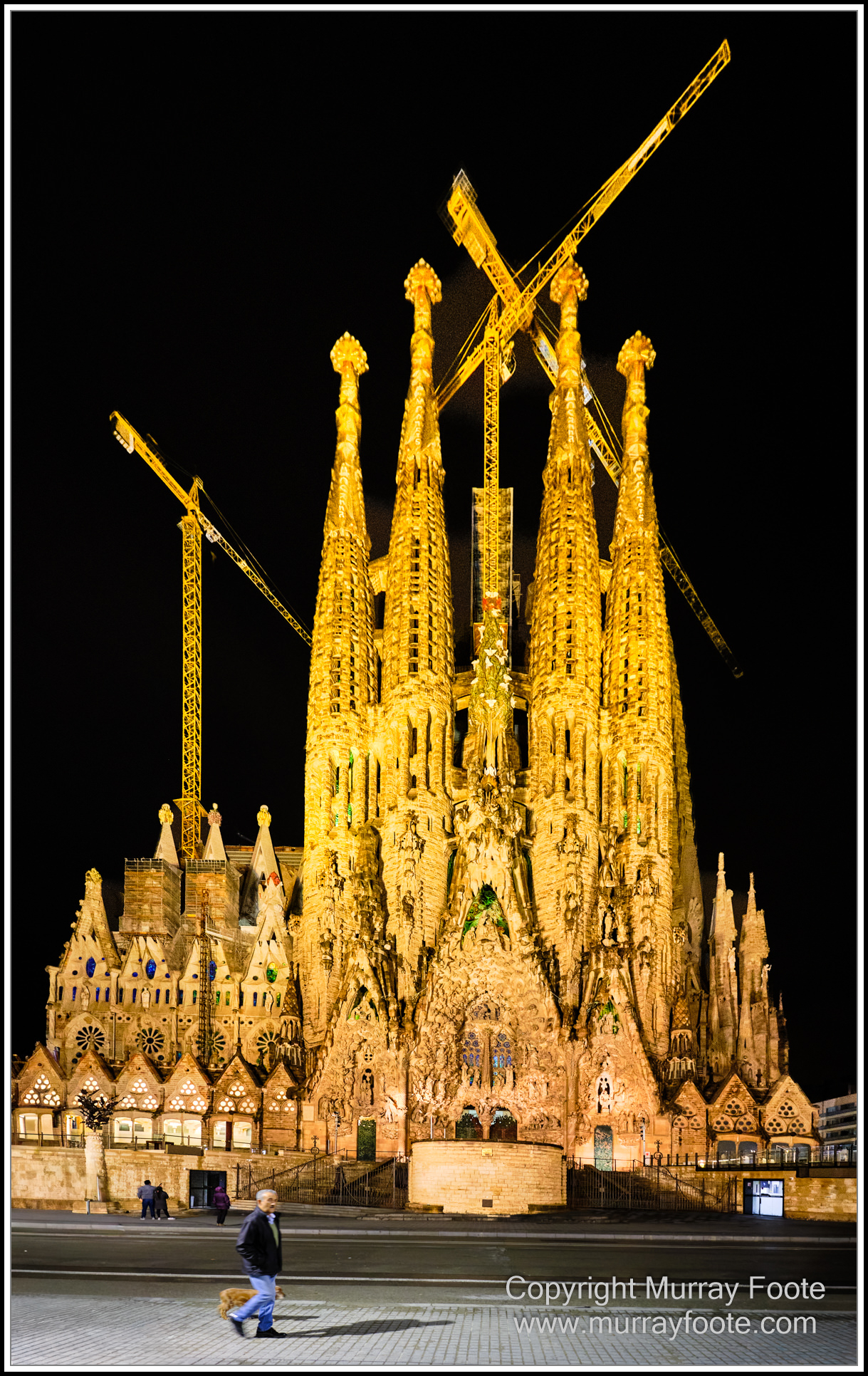
Sagrada Familia showing the Nativity Façade.
This was the first façade to be completed, constructed between 1893 and 1936. I am reliably informed that the cranes are not part of the original design.
.
.
.
. 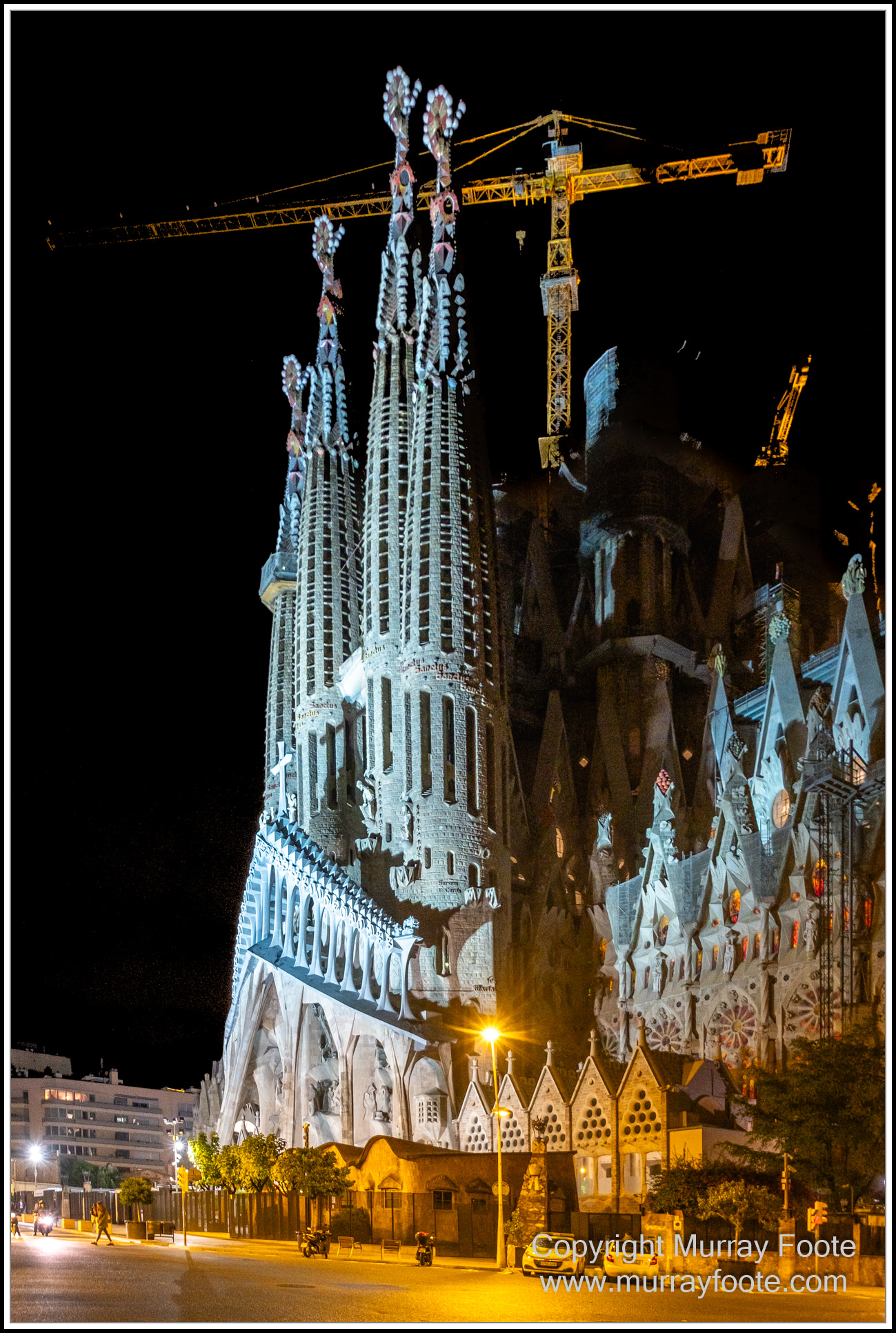
Sagrada Familia, Passion Façade.
Construction on Sagrada Familia started in 1882. After only a year, the original architect, Francisco de Paulo del Villa, resigned and Antoni Gaudi took over. The original design was Gothic and Gaudi’s approach combined Gothic and Art Nouveau. He uniquely designed it upside-down using hanging weights. He did not use computer-aided design although Babbage defined his Analytical engine in the 1830s and Ada Lovelace described how to program it. Perhaps the reason for this may be that computers did not exist until after the Second World War.
It is not a cathedral; it is a minor basilica. After Gaudi was run over by a tram in 1926, there have been many people in charge of its construction. One hundred and thirty-three years later, it is nearing completion.
.
.
.
. 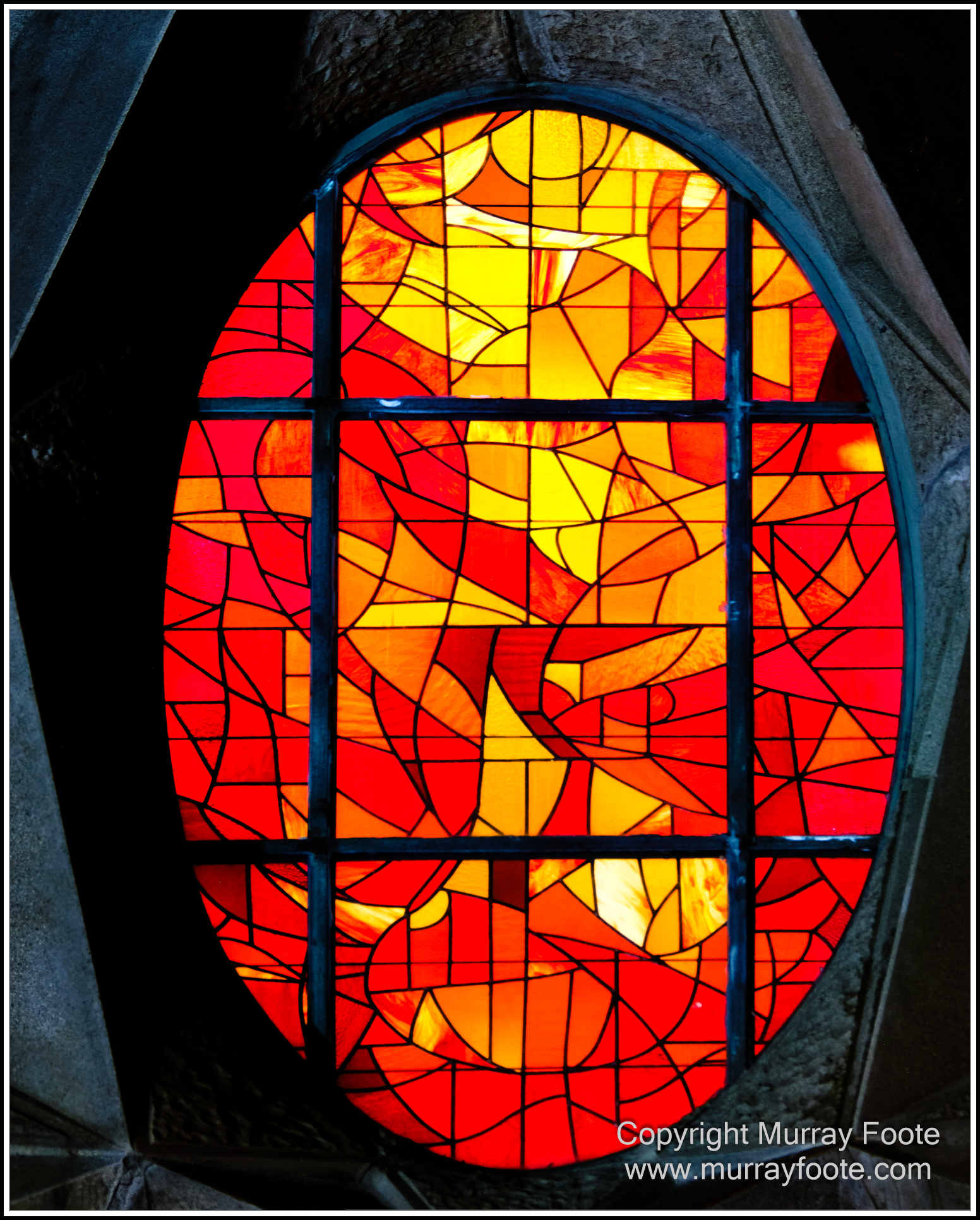
Stained-glass window, illuminated at night from inside.
.
.
.
. 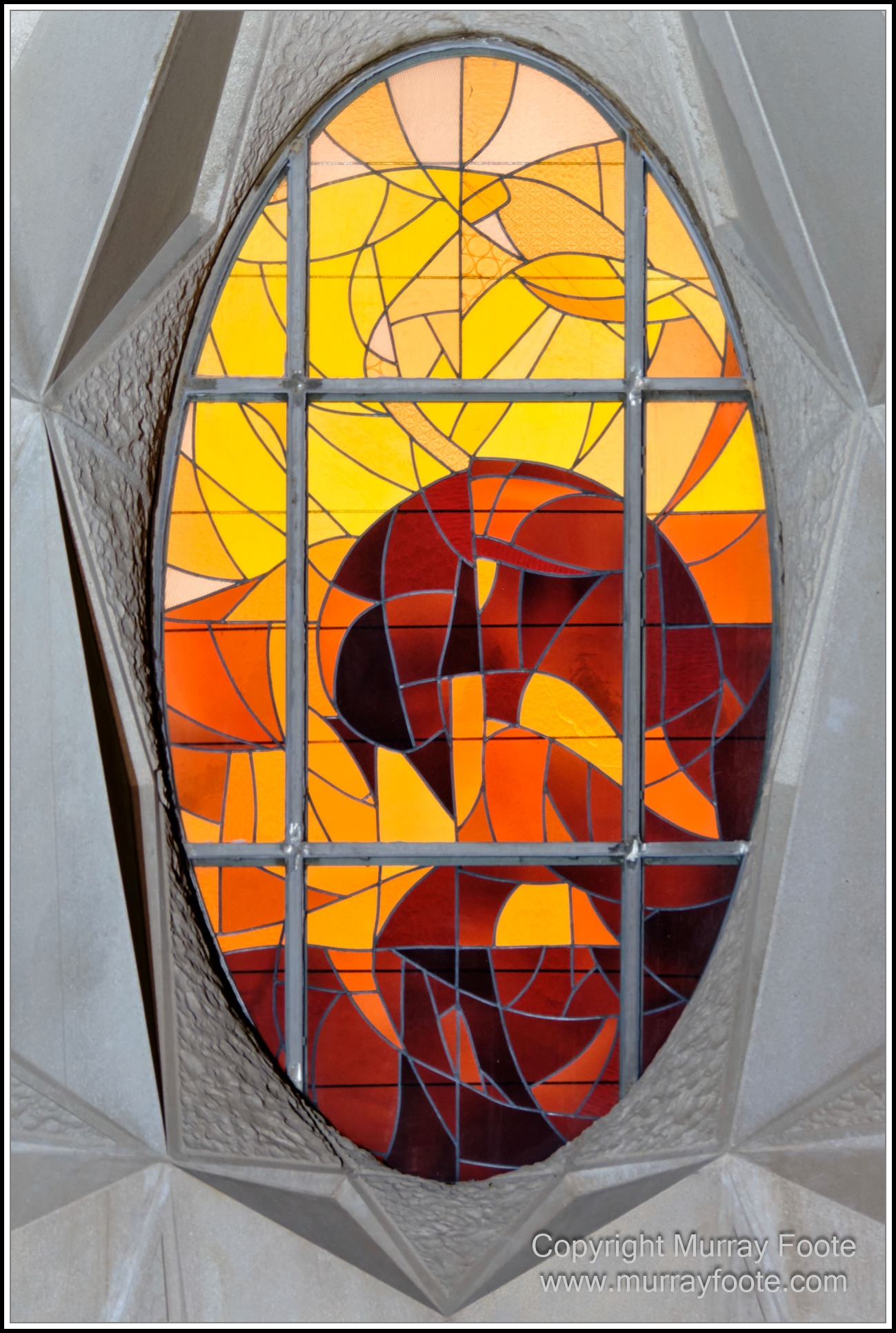
I don’t know when this window was completed but there could be cubist influences here.
.
.
.
. 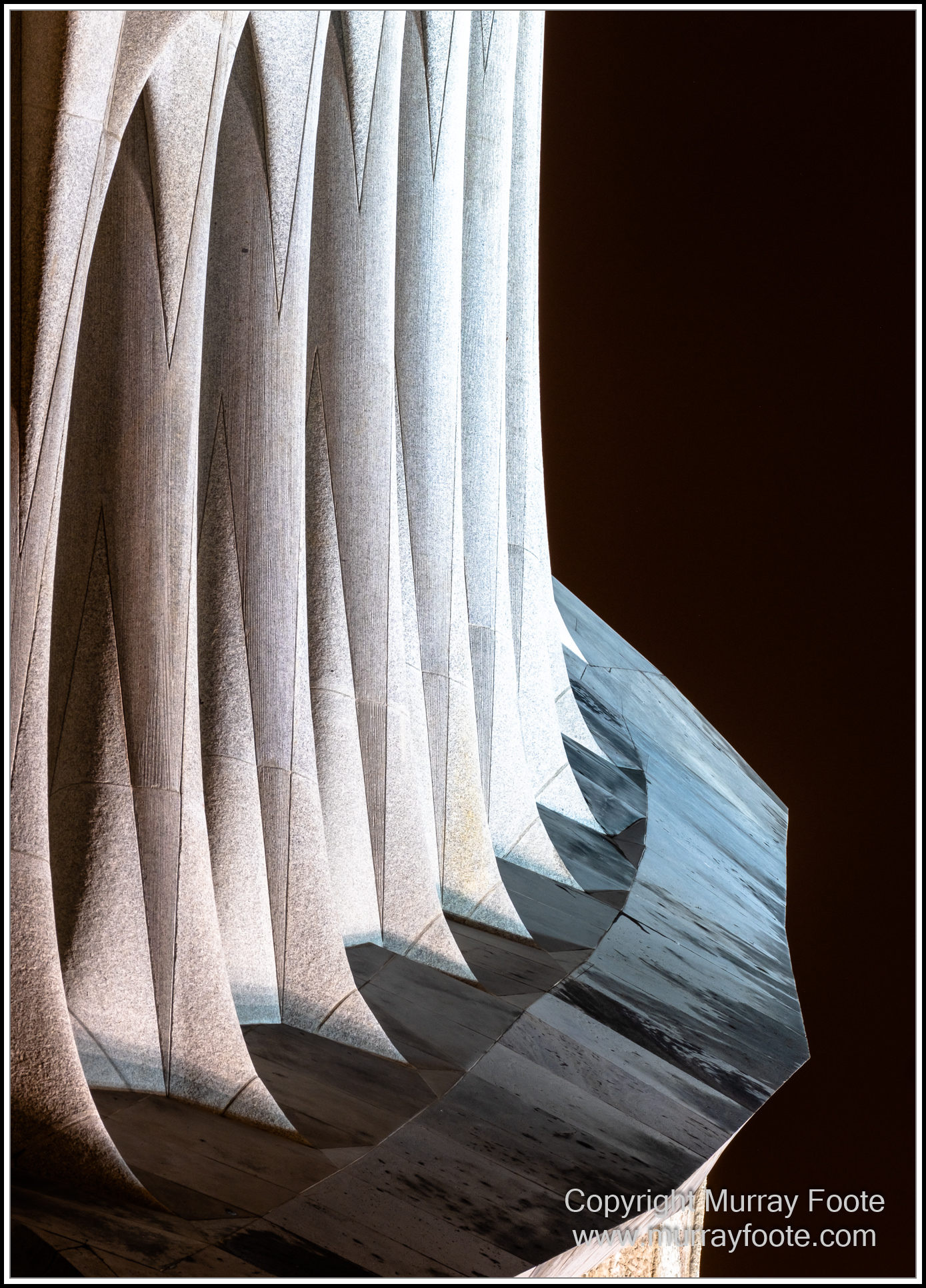
Façade detail.
It took me some time to work out the context of this image, but it must be the columns and their base under the lettering of the Passion Façade. Refer three images ago, but taken at a more acute angle and from the other side.
.
.
.
. 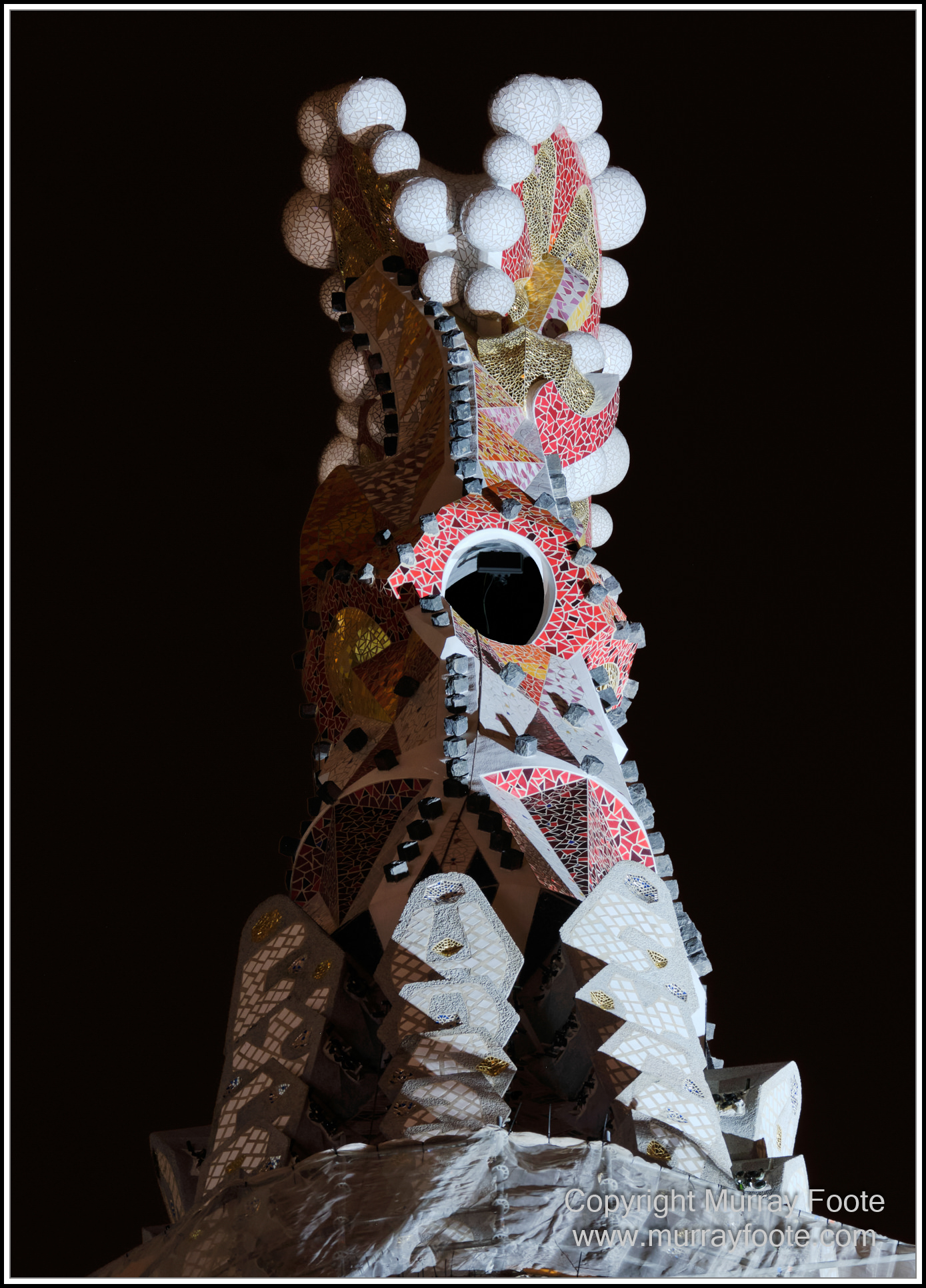
Not actually a surreal rabbit.
I think this is the top of one of the Apostle spires, probably atop the Nativity Façade, taken from the side. I can’t tell which one and it is larger than it may appear.
.
.
.
. 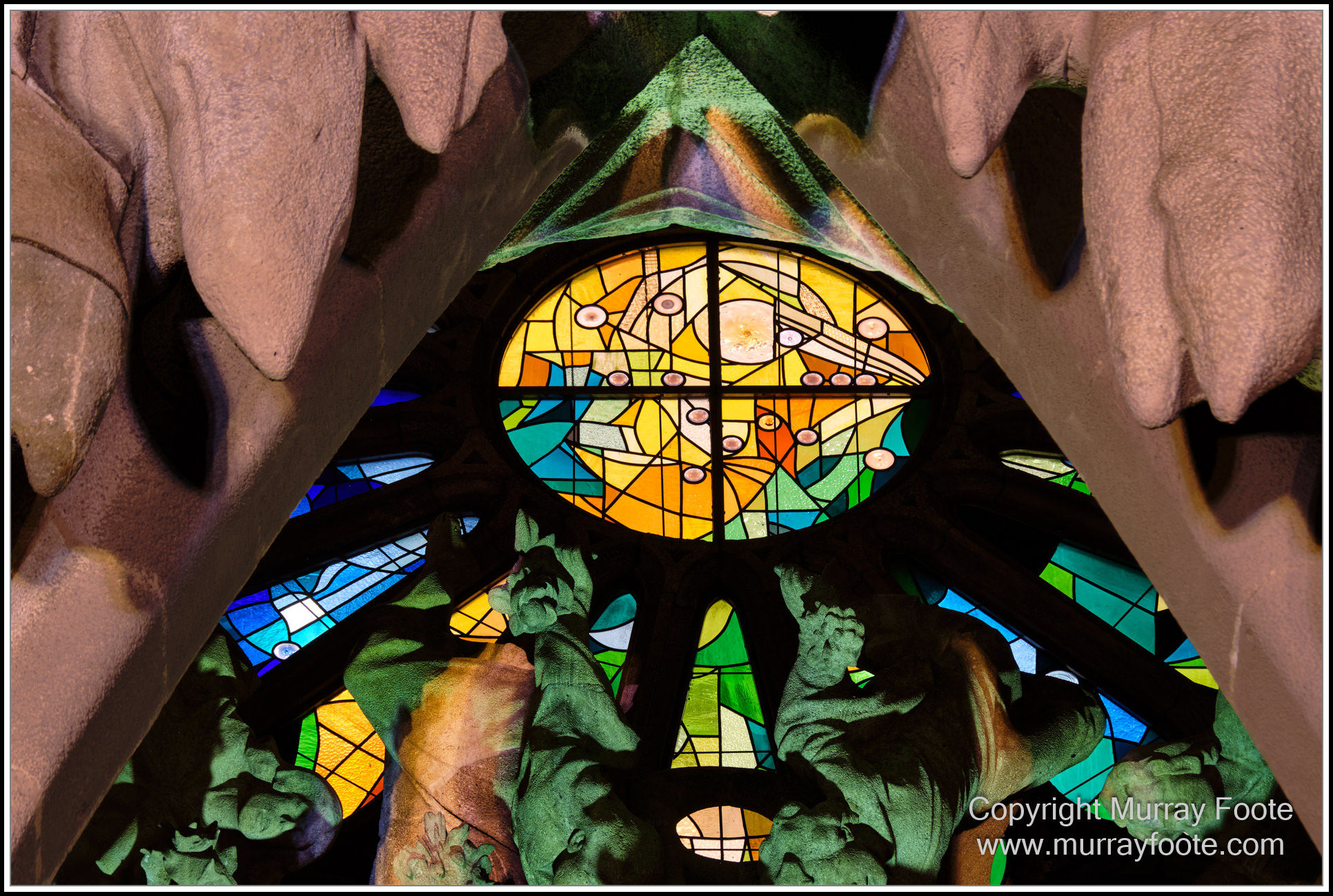
A detail above the Nativity scene in the Nativity Façade.
.
.
.
. 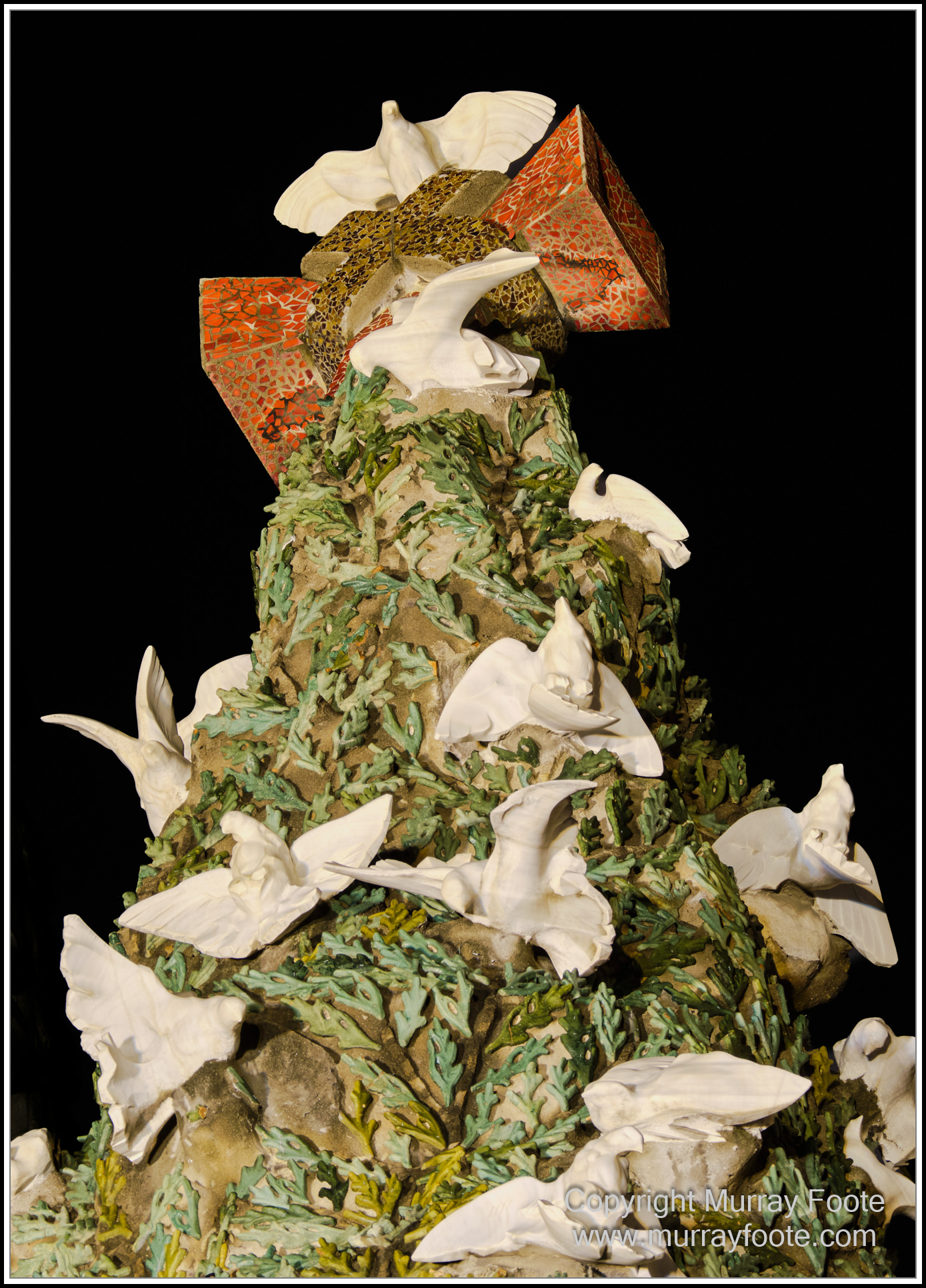
Doves in the Nativity Façade.
.
.
.
. 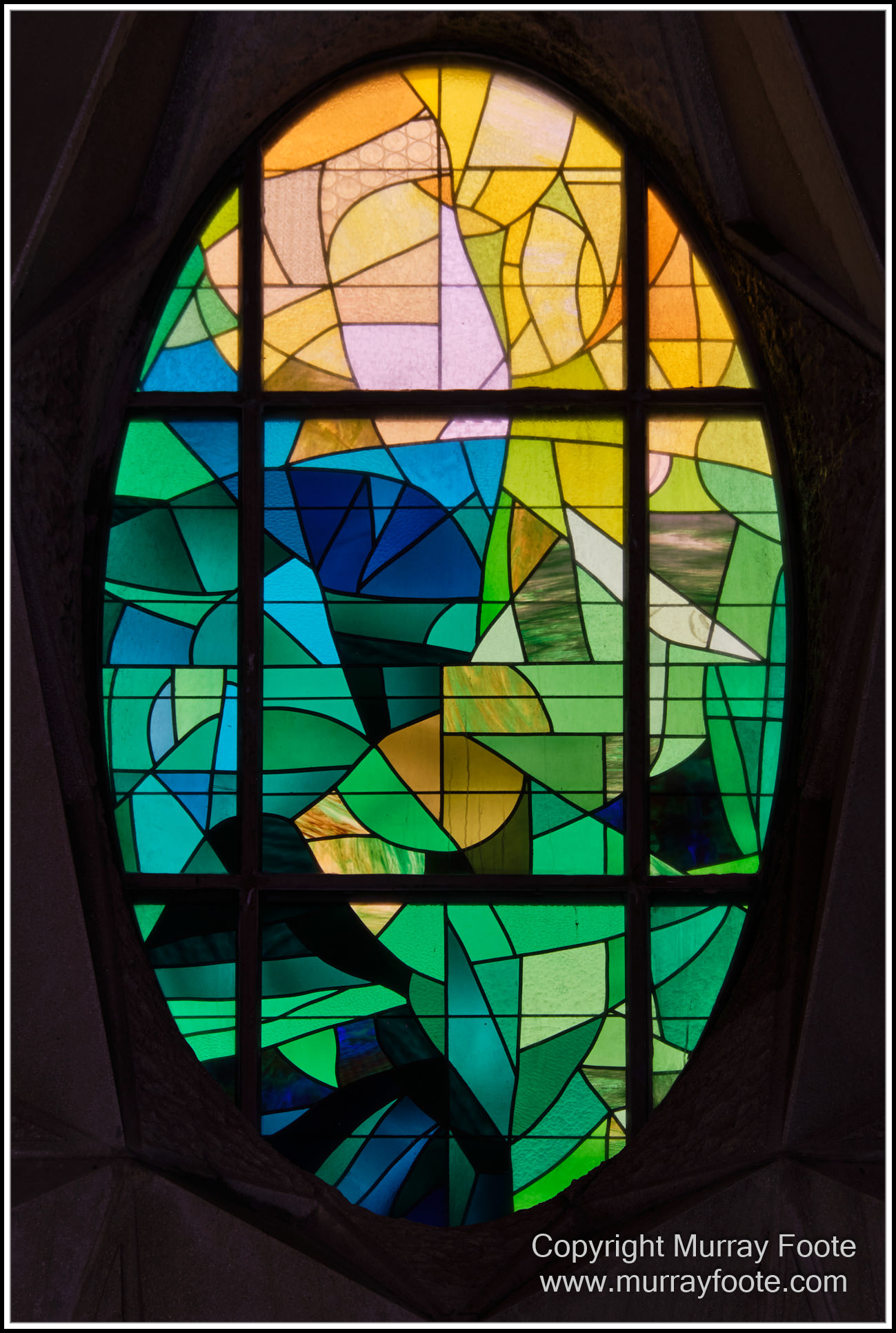
Another remarkable stained-glass window.
.
.
.
. 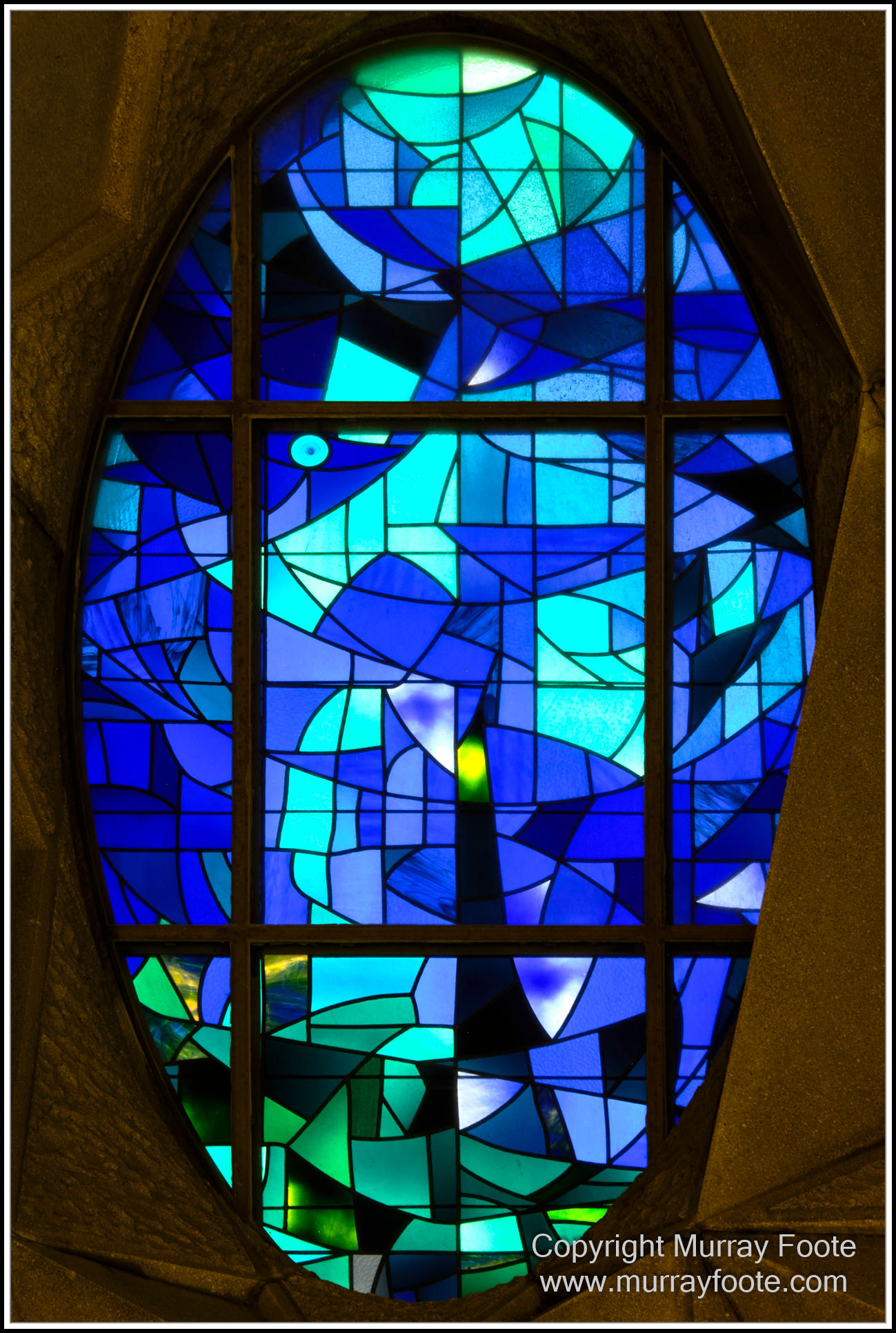
My partner Jools suggests this represents a lighthouse on a stormy night.
.
.
.
‘
Sagrada Familia from the outside by day.
. 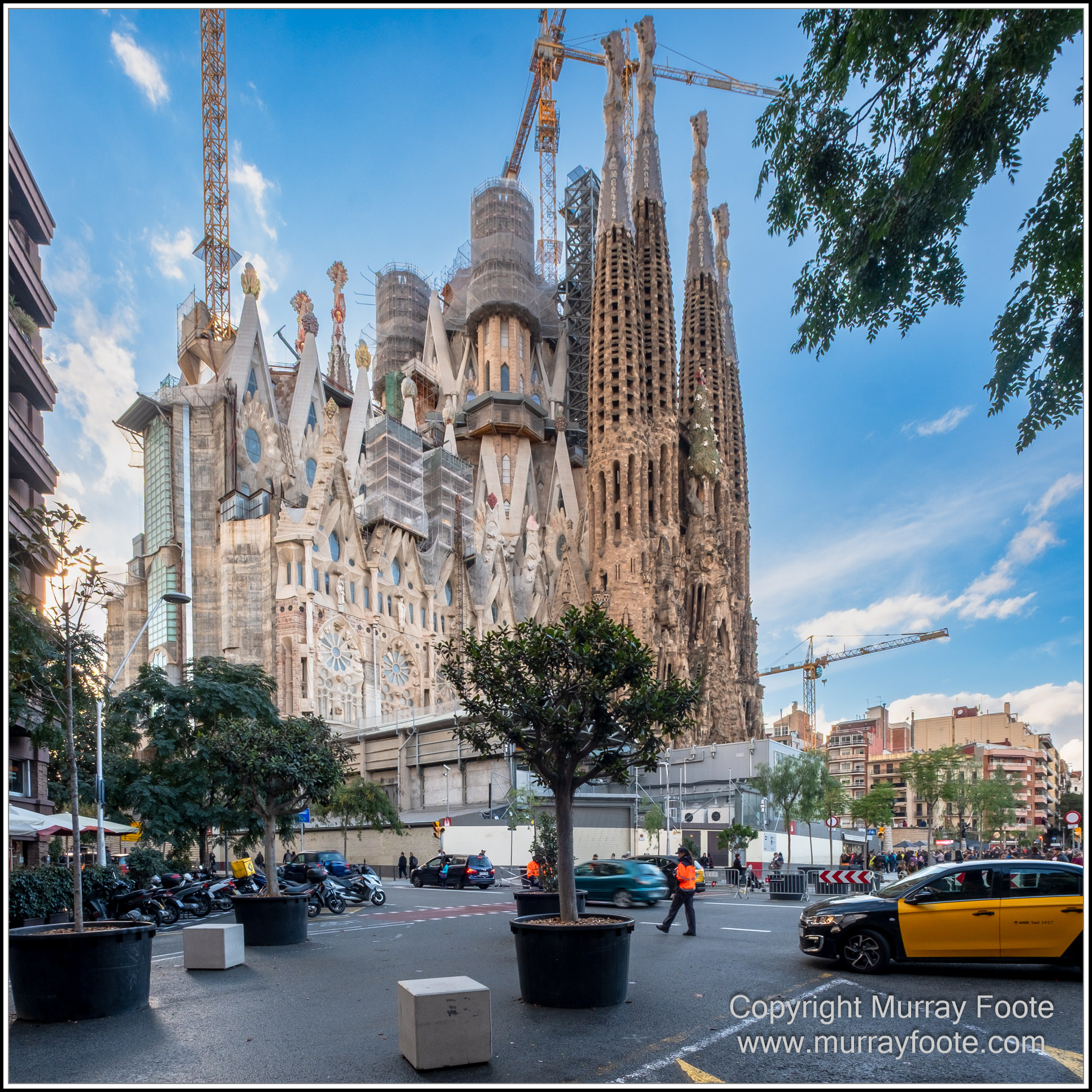
Sagrada Familia still under construction, as it continues to be.
The Nativity Façade is at the right side, the unfinished Gloria Façade at the left.
It is designed to have eighteen spires, twelve for the disciples, four for prophets, one for Mary and the central one for Jesus. (The disciples’ spires don’t include Judas for some reason. They do include Thomas even though when the Portuguese encountered the Thomasites of Kerala in the sixteenth century, they branded them as heretics and burned their literature. The Thomasites had been there for up to one thousand five hundred years.)
Only one spire was built during Gaudi’s lifetime. Here in 2018 there are eight of the twelve apostles’ spires. The ones for prophets, Mary and Jesus are still under construction.
.
.
.
.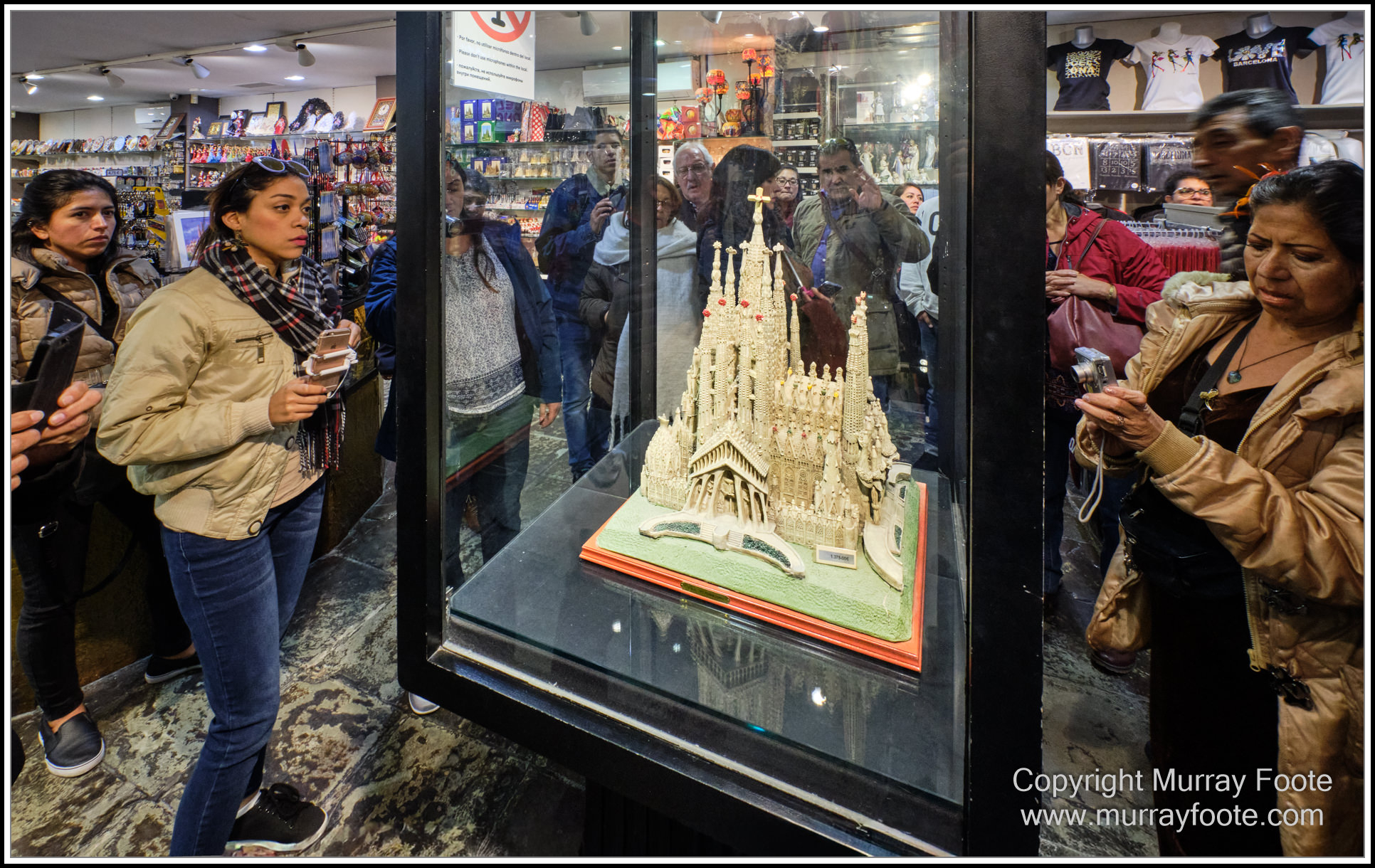
A model of the Sagrada Familia, as it will be when complete, in a nearby souvenir shop.
The towers with the little red pom-poms are the twelve disciples’ towers. Further up are the four prophets’ towers, Mary’s tower is at far left and Jesus’ tower rises above the others.
As of November 2025, eight of the twelve disciples’ towers are up (as they were in 2018), the prophets’ towers are completed with a dove on top of each, and Mary’s tower completed with a star on top of it. On 31 October 2025, nine days before publication of this article, the base for the cross was erected on Jesus’ tower, making Sagrada Familia the highest church in the world. It is 163 metres tall now and when the cross is dropped in, it will be 172 metres tall (564 feet or 94 fathoms).
The building is due to be finished in 2026, though construction of the grand staircase and further external ornaments is expected to take until 2035. There is a touch of controversy surrounding the current plan for the grand staircase in front of the as yet unfinished Gloria Façade which is to be the main entrance. The design requires clearing several blocks and relocating a thousand families and businesses. (I have so far resisted any temptation to ask local government to erect such a staircase for my own home. The thousands of visitors would be inconvenient anyway.)
.
.
.
.. 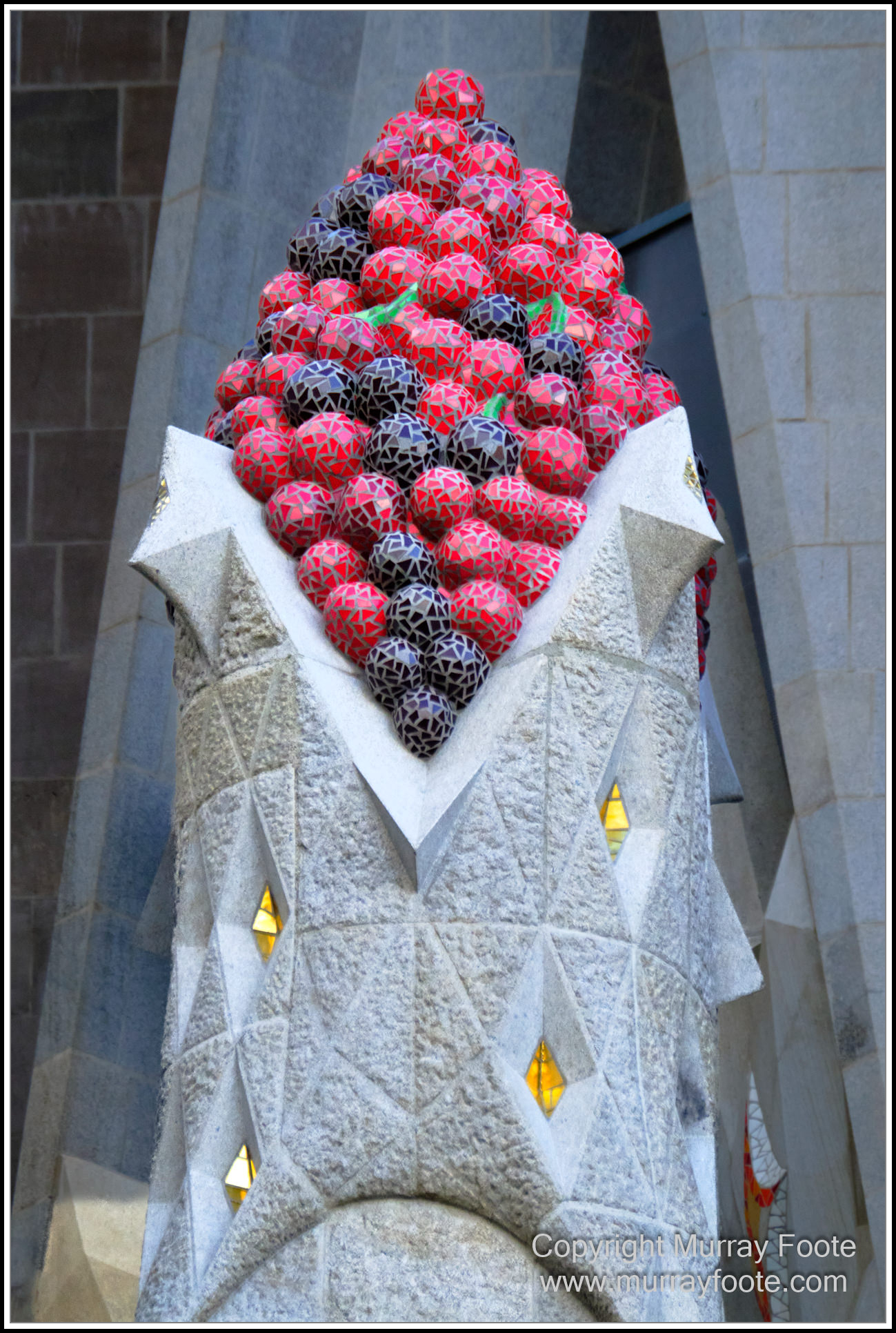
A tower of fruits.
.
.
.
. 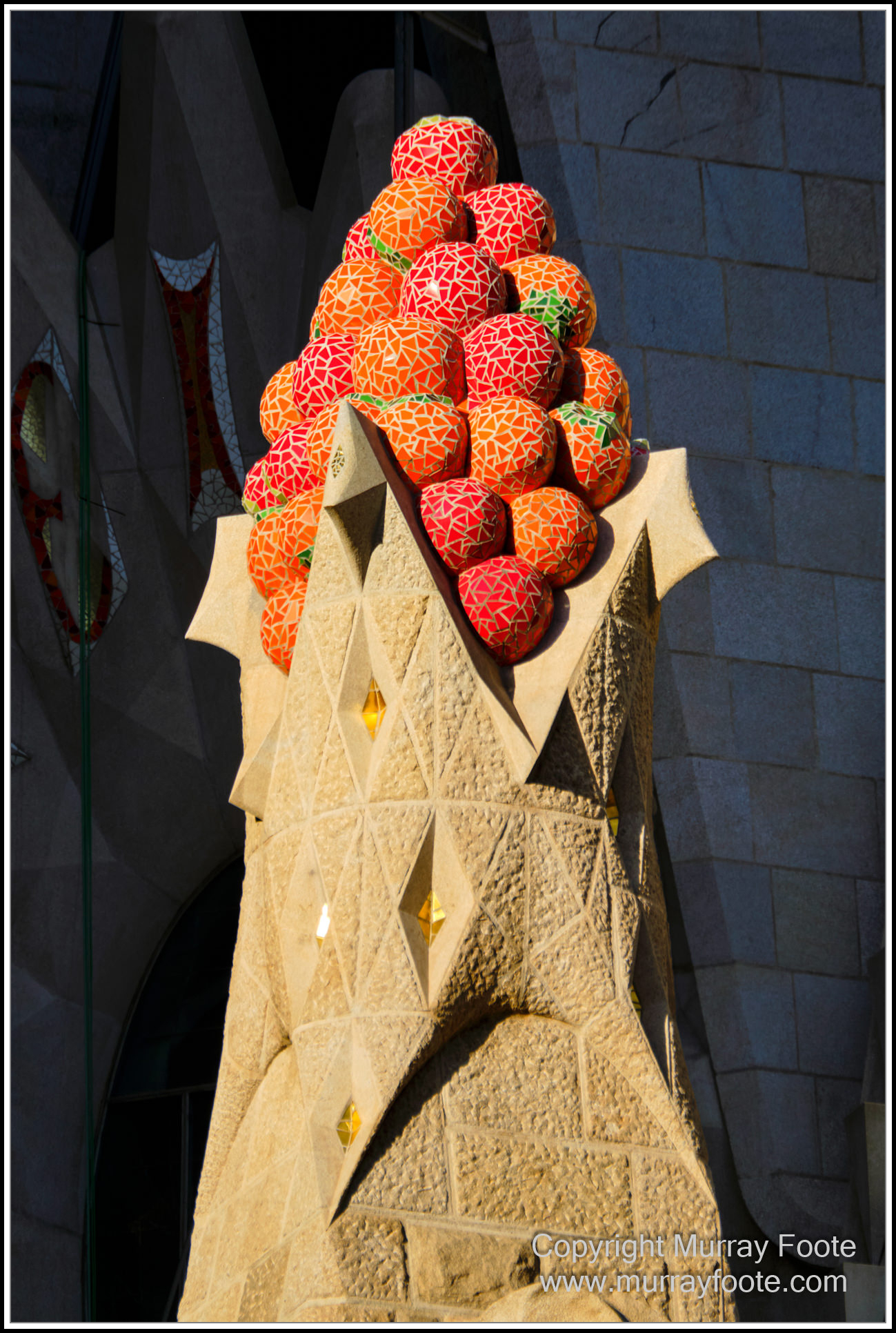
You can see these towers at lower levels in the street photo, three above (not the model).
.
.
.
. 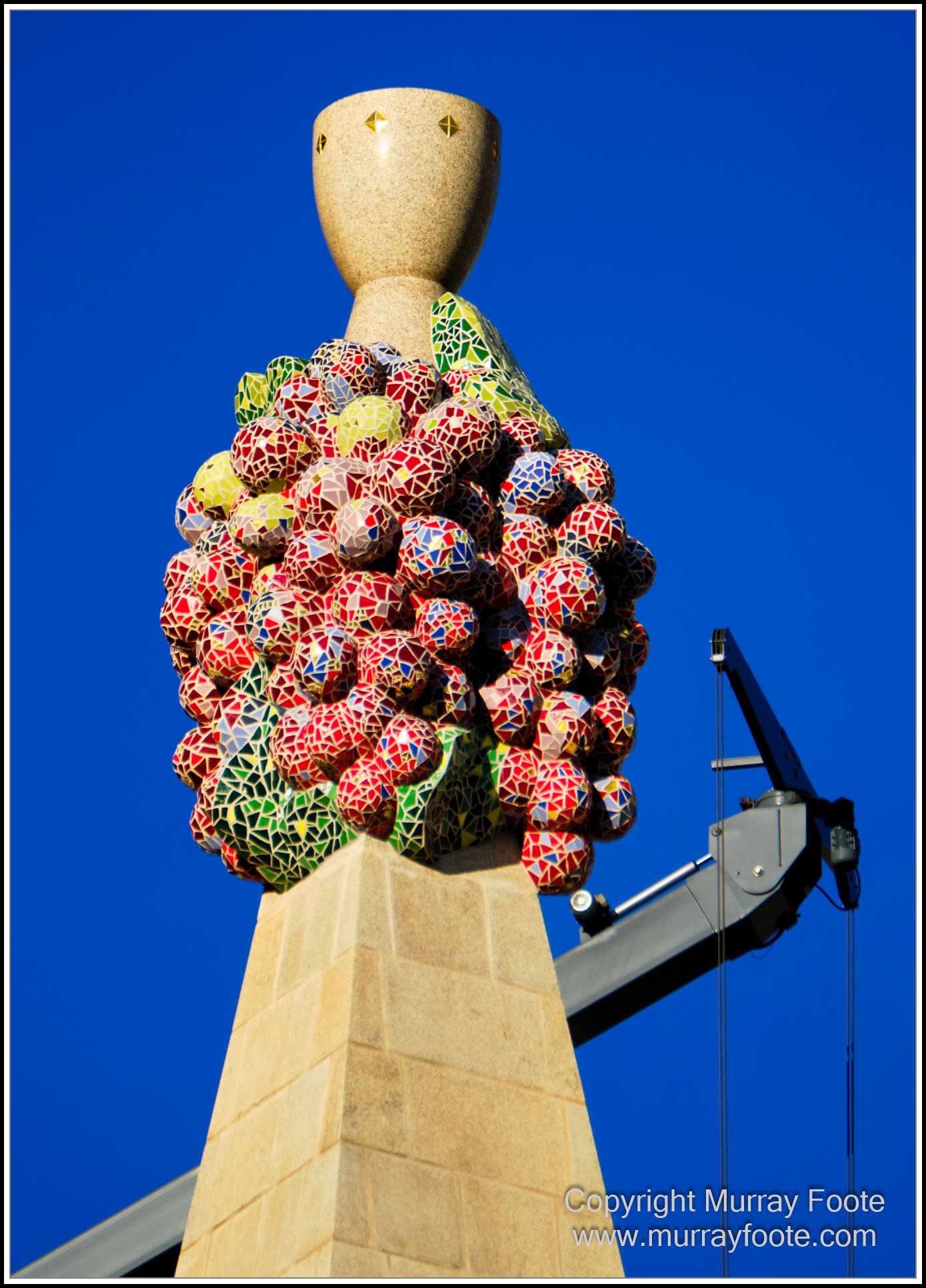
My theory is that the crane in the background is not part of the original design for the basilica.
.
.
.
. 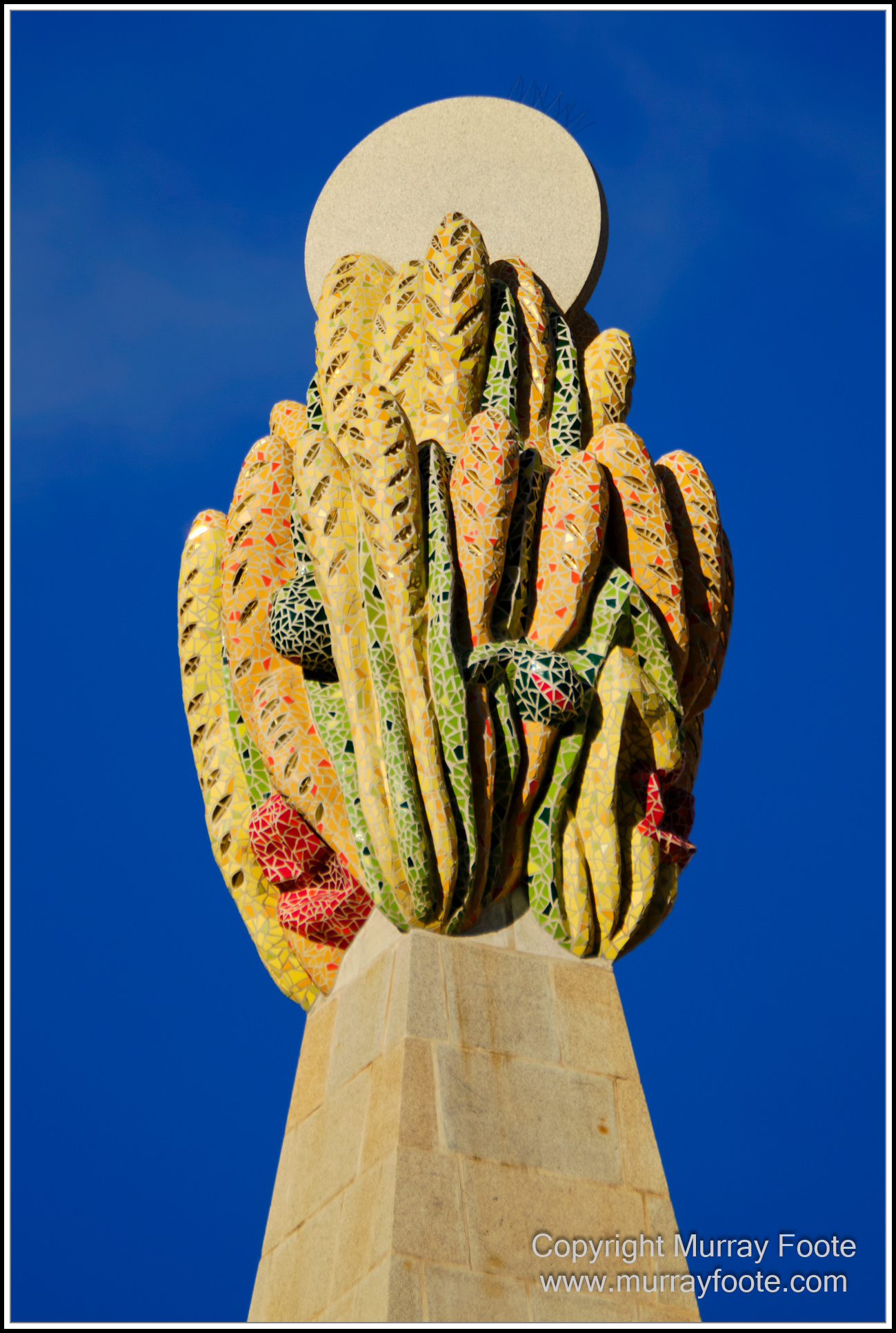
Bananas, perhaps.
.
.
.
. 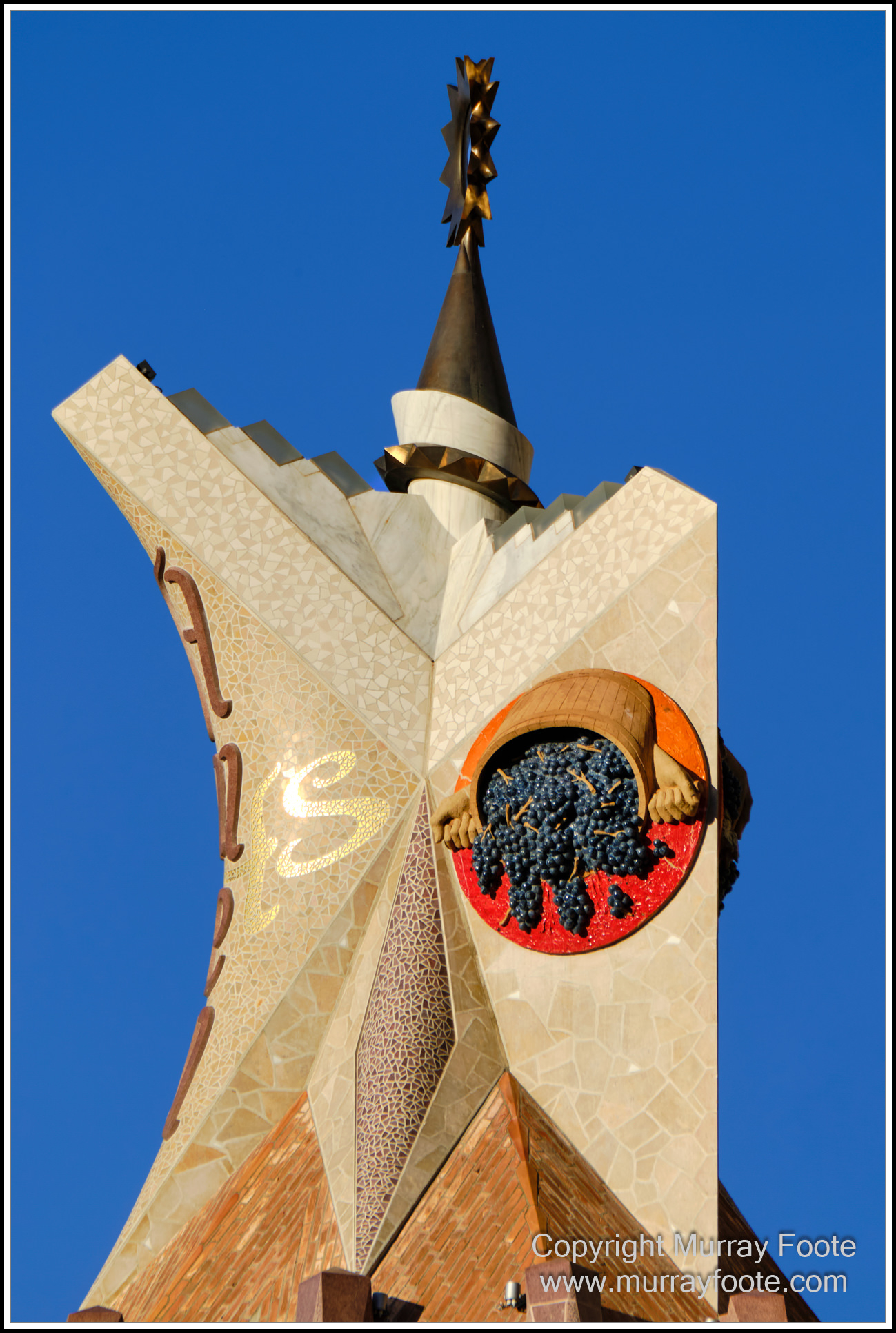
Grapes.
.
.
.
. 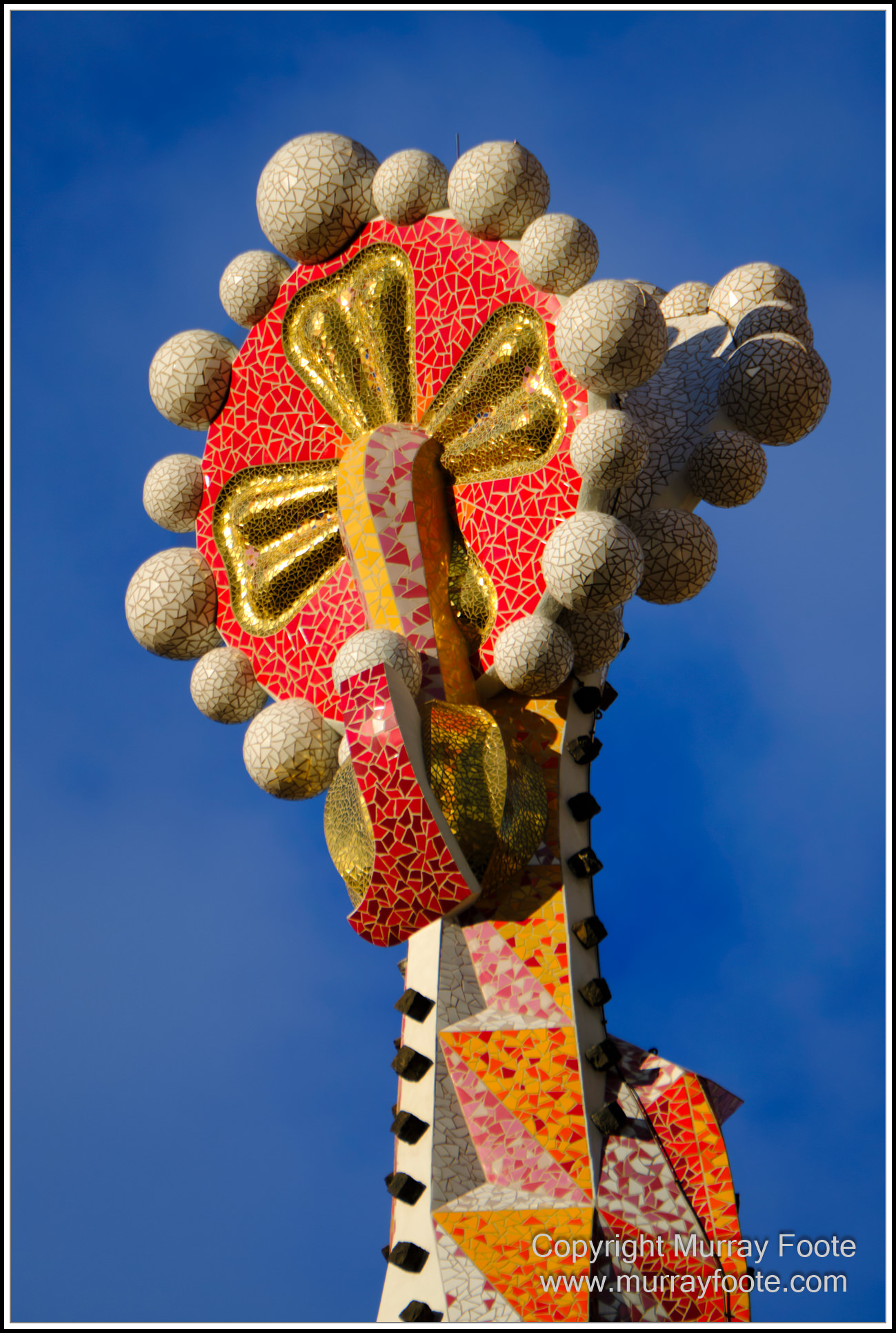
An apostle’s tower, this one for James, son of Alphaeus.
.
.
.
. 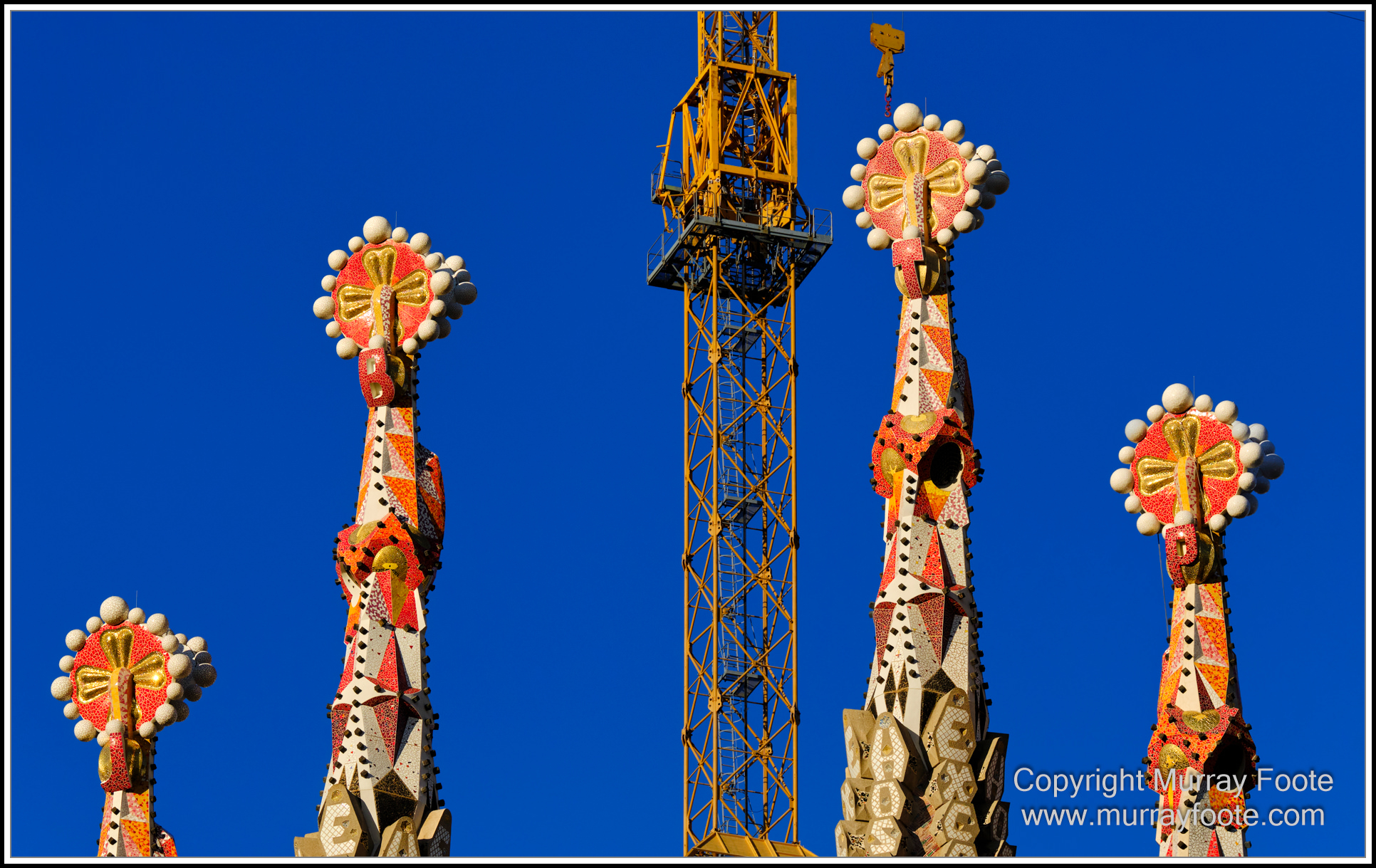
The four towers of the Passion Façade.
The letters indicate who the towers represent: James (son of Alphaeus), Bartholomew, Thomas and Philip. The crane represents an unknown commercial entity.
.
.
.
.
Inside Sagrada Familia (by day).
. 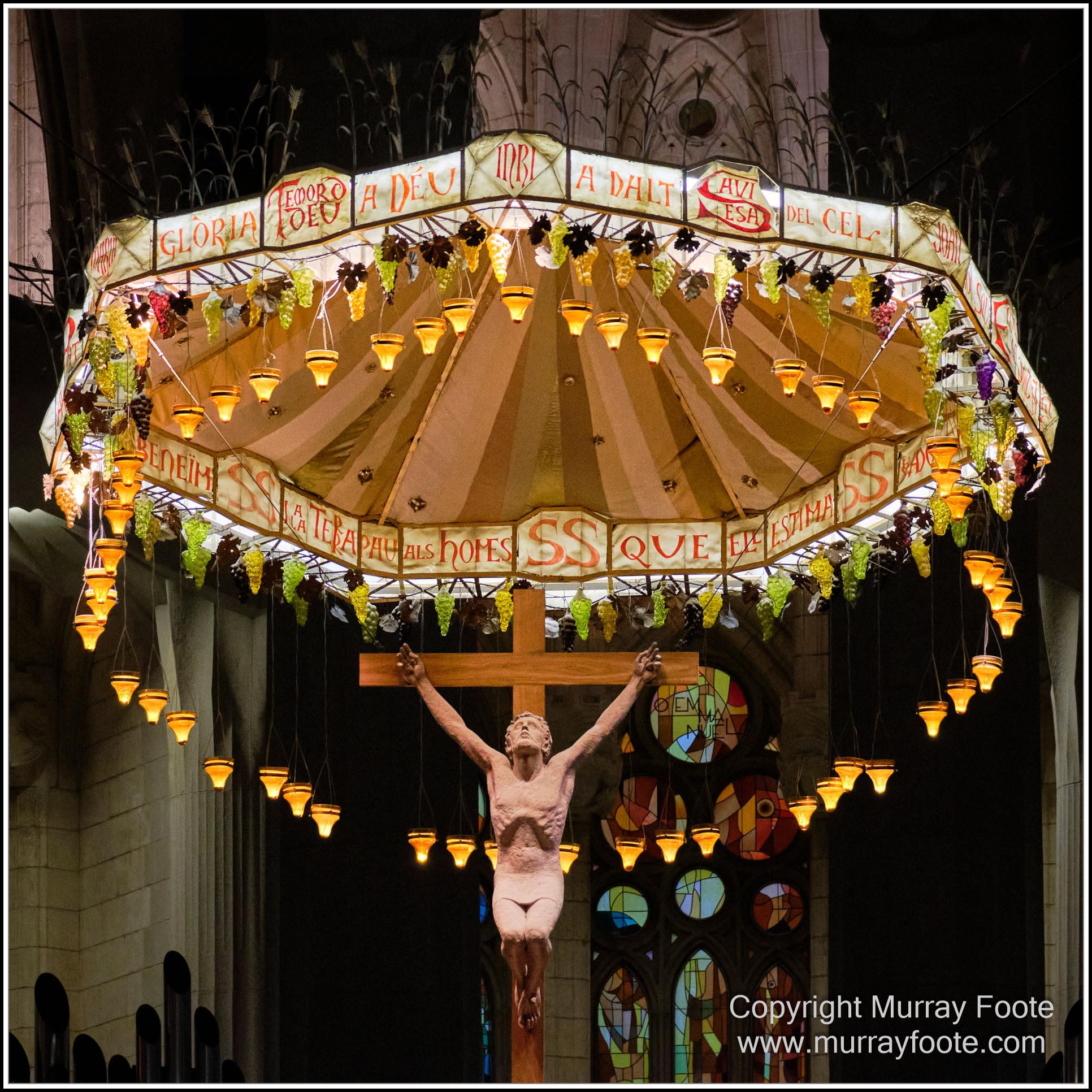
You know what this is, though the representation is most remarkable.
I’ll leave you to work out what the letters are saying. There are many inscriptions inside and outside the basilica.
.
.
.
. 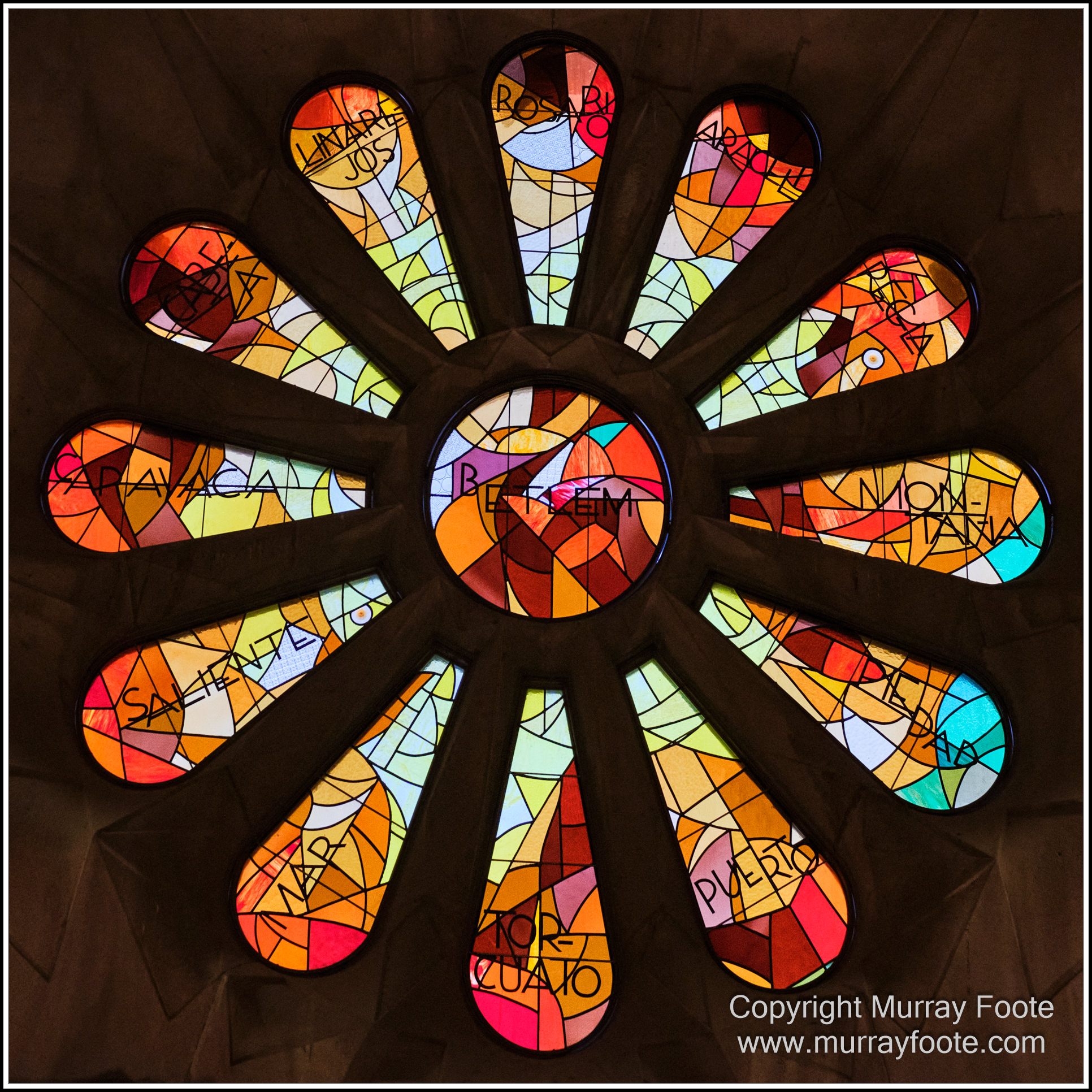
Stained glass window array in petal formation.
.
.
.
. 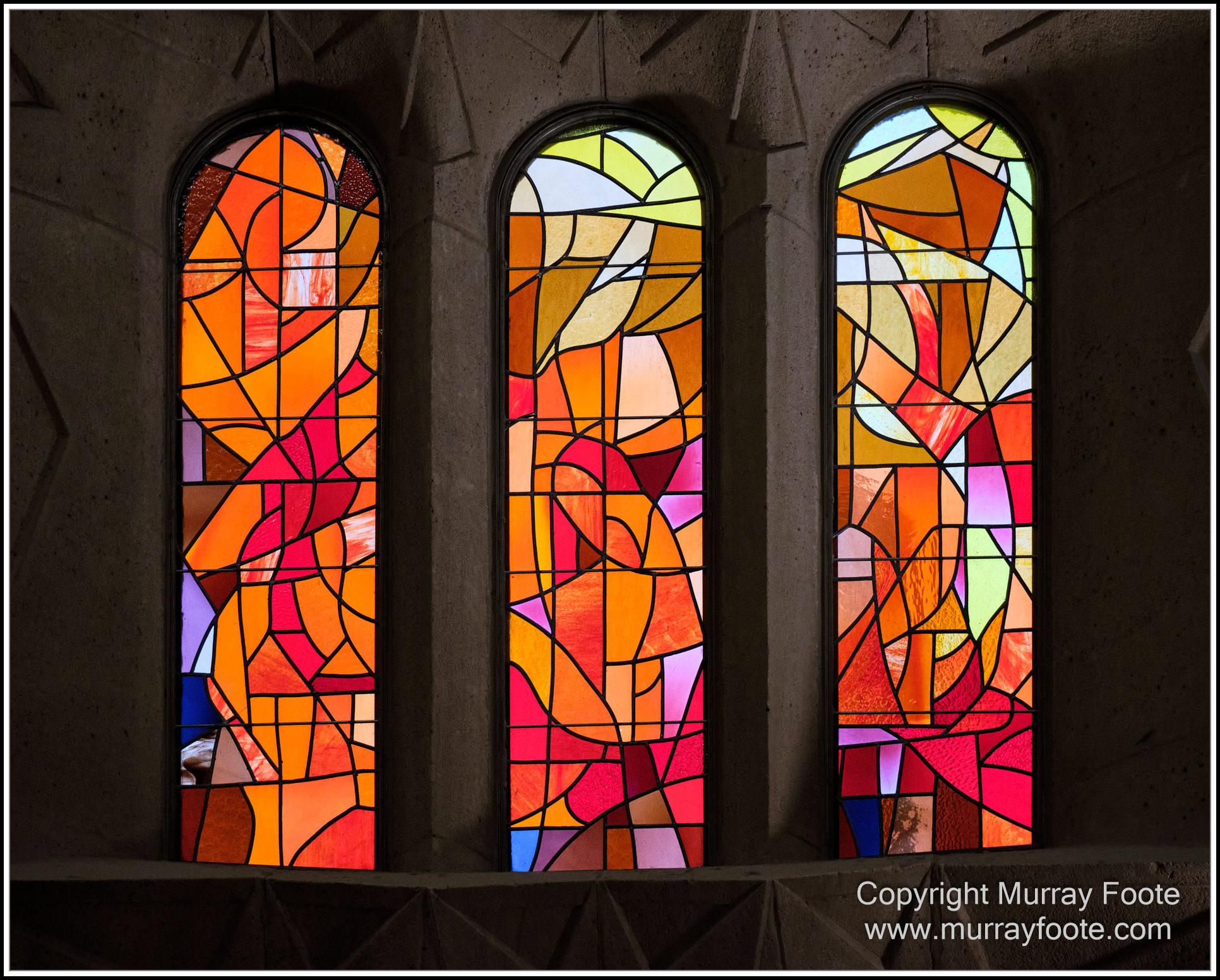
Stained glass triptych.
.
.
.
. 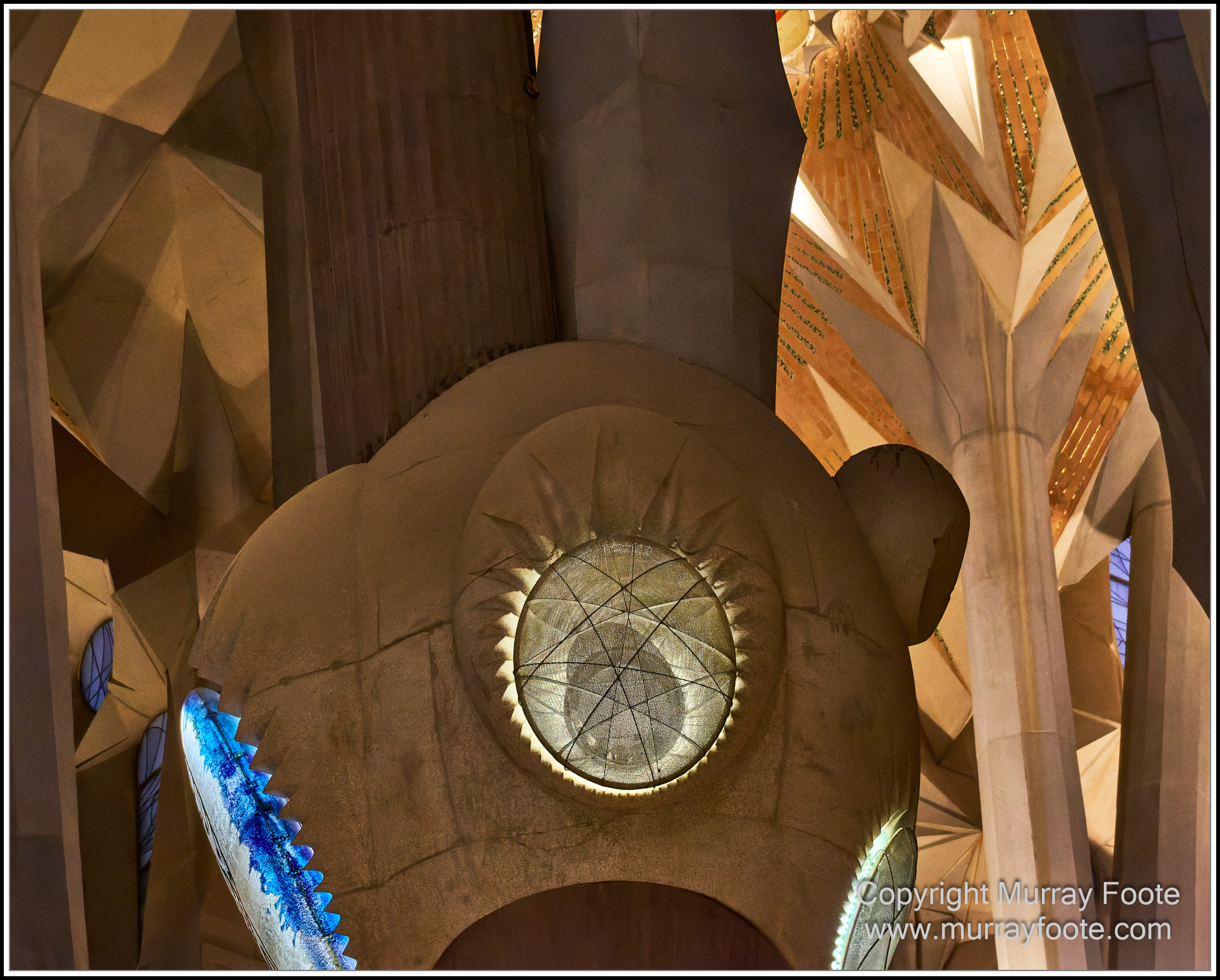
Angles and curves.
.
.
.
. 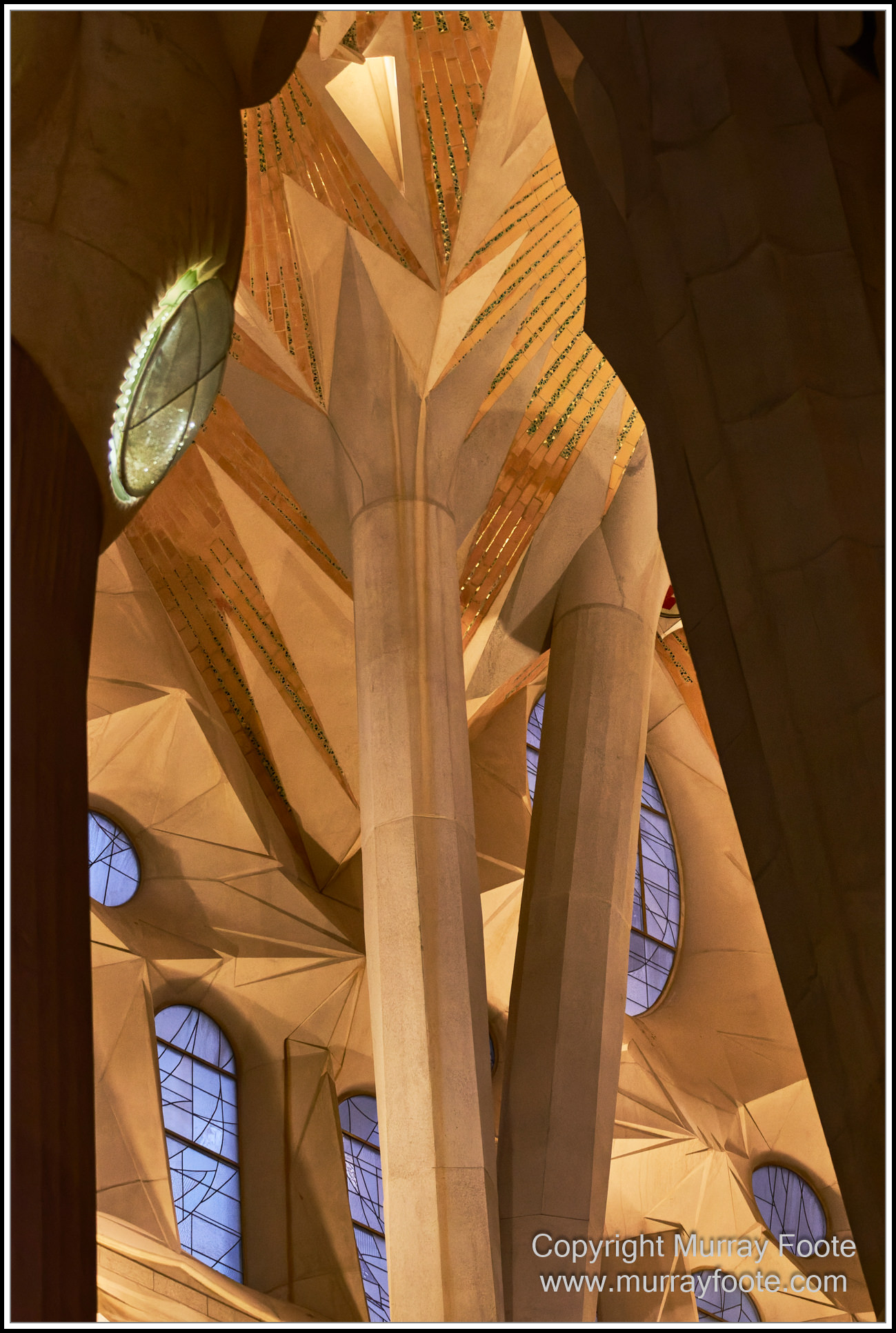
Majesty in space.
.
.
.
. 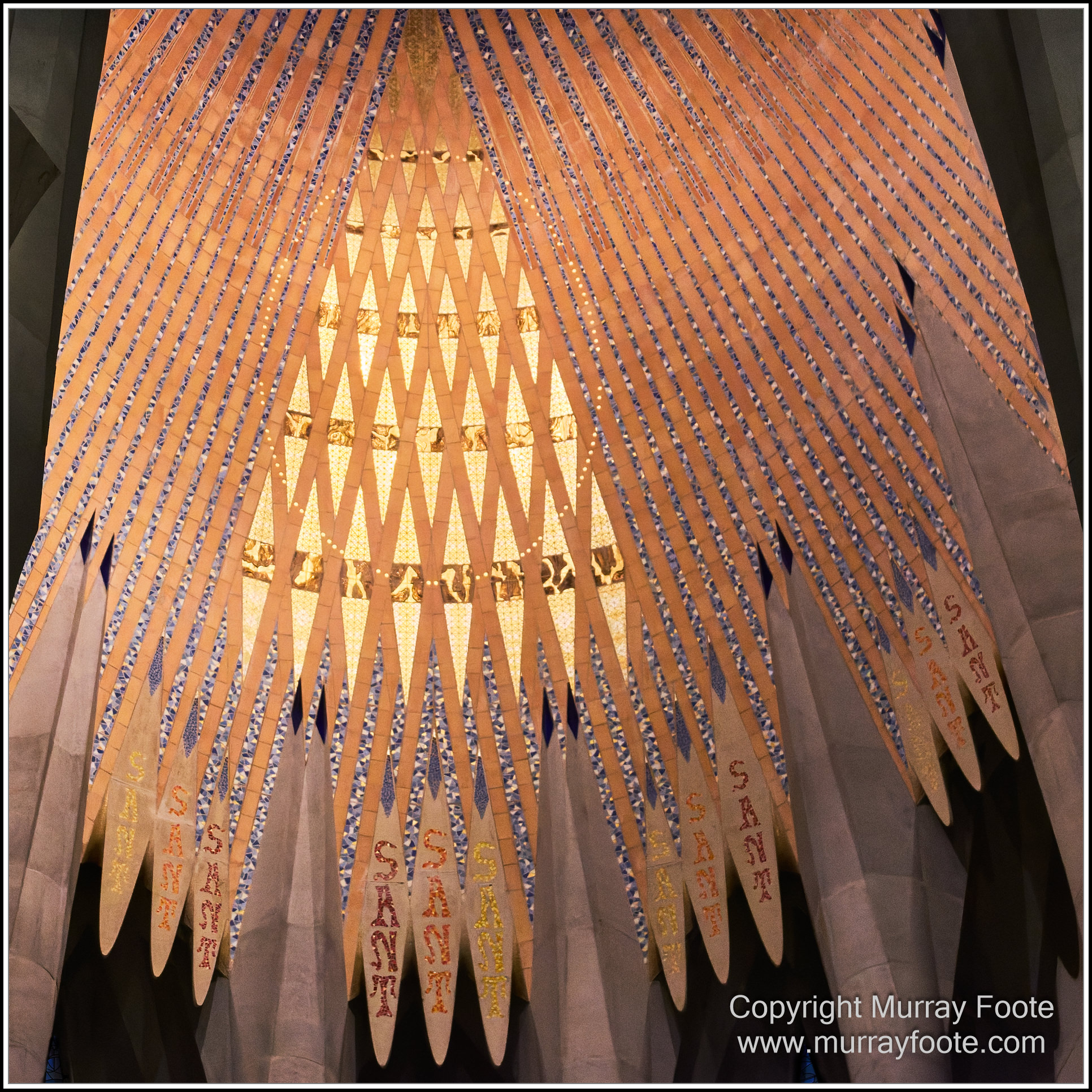
A section at the top of the Nave.
(This is a small part of the third following image. You can also see it in the second following image).
.
.
.
. 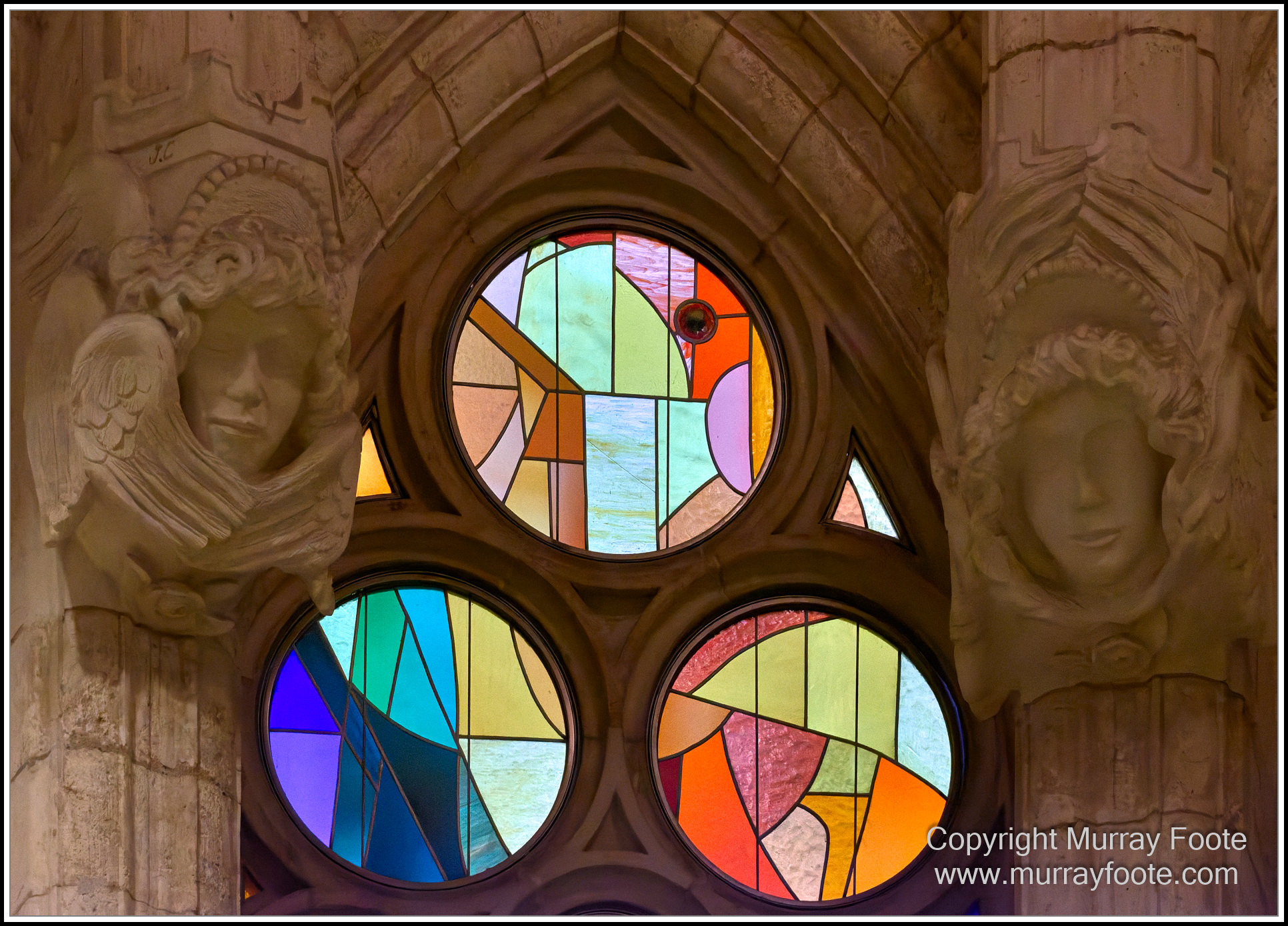
Faces and stained glass windows.
.
.
.
. 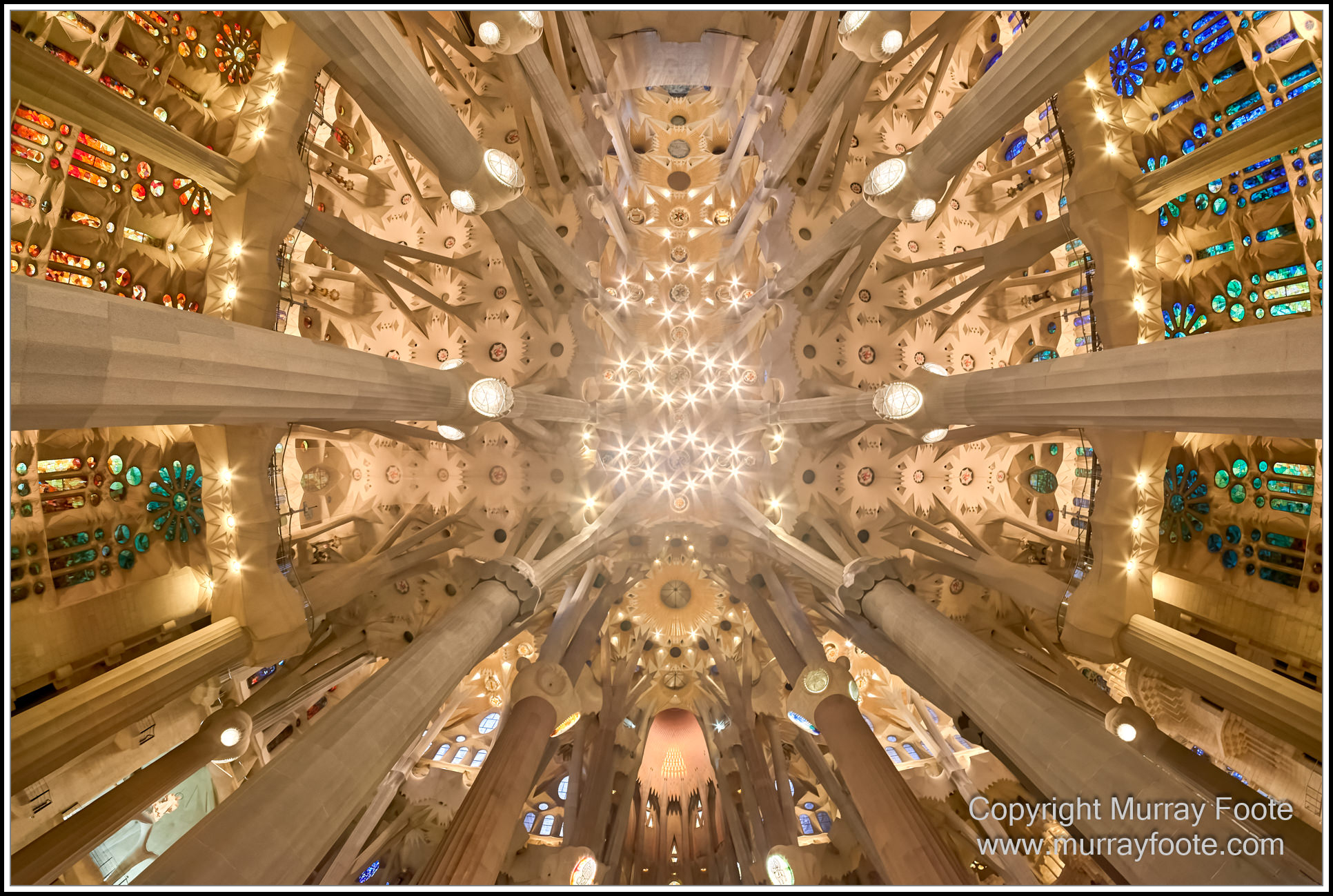
Looking up.
.
.
.
. 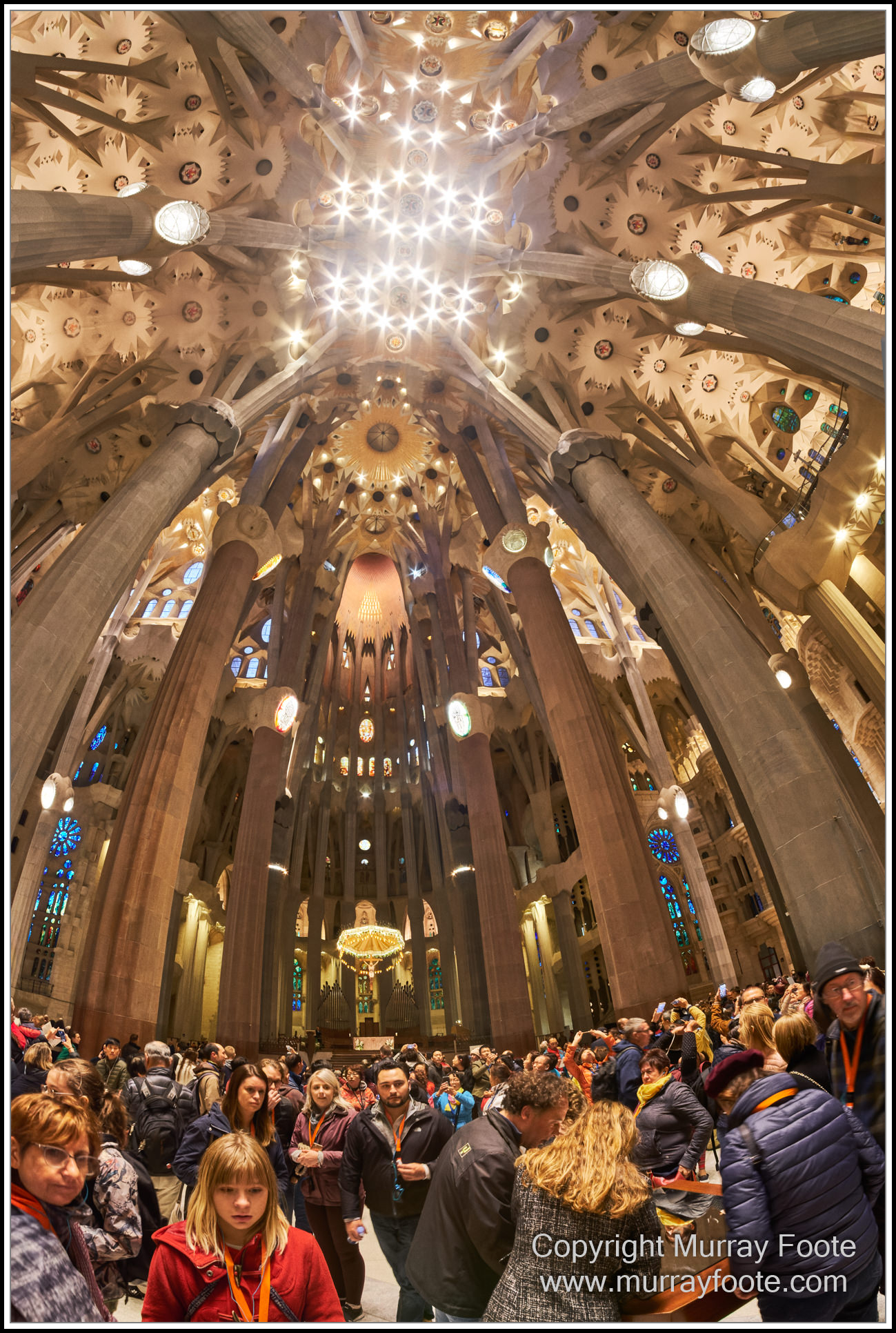
The Nave.
.
.
.
. 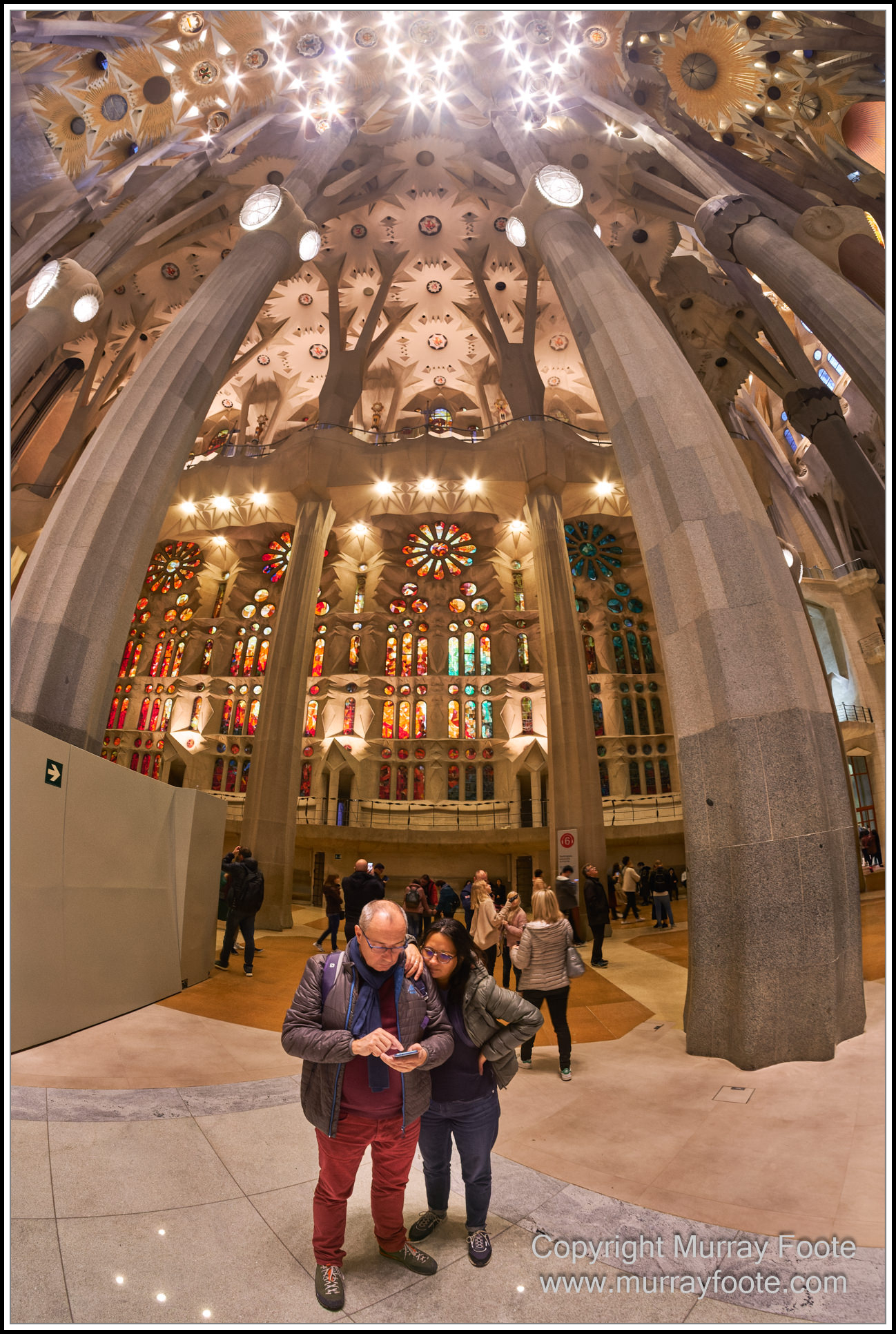
The appearance of this and the previous two images may be a consequence of the curvature of space. Either that, or I was using a fish-eye lens.
.
.
.
. 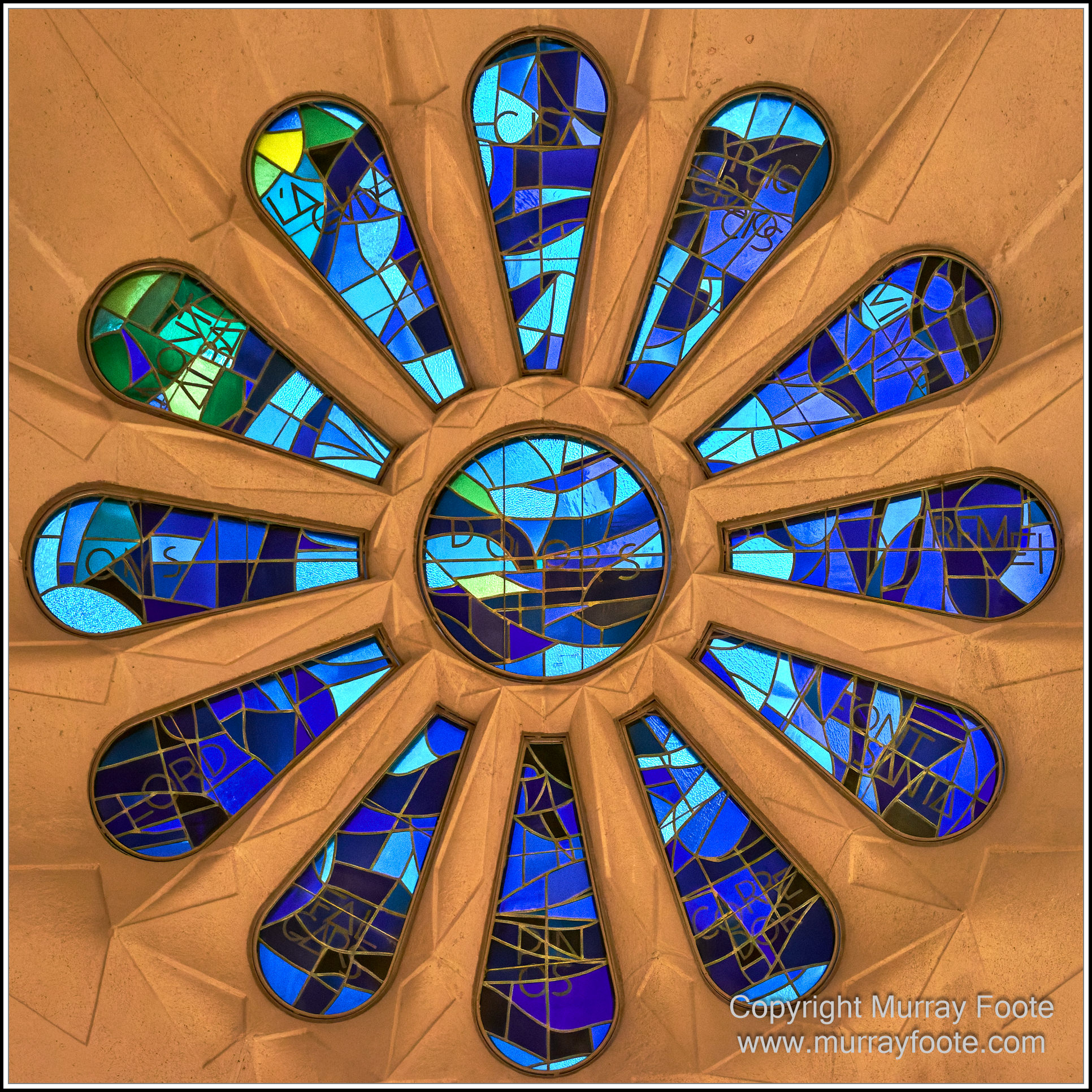
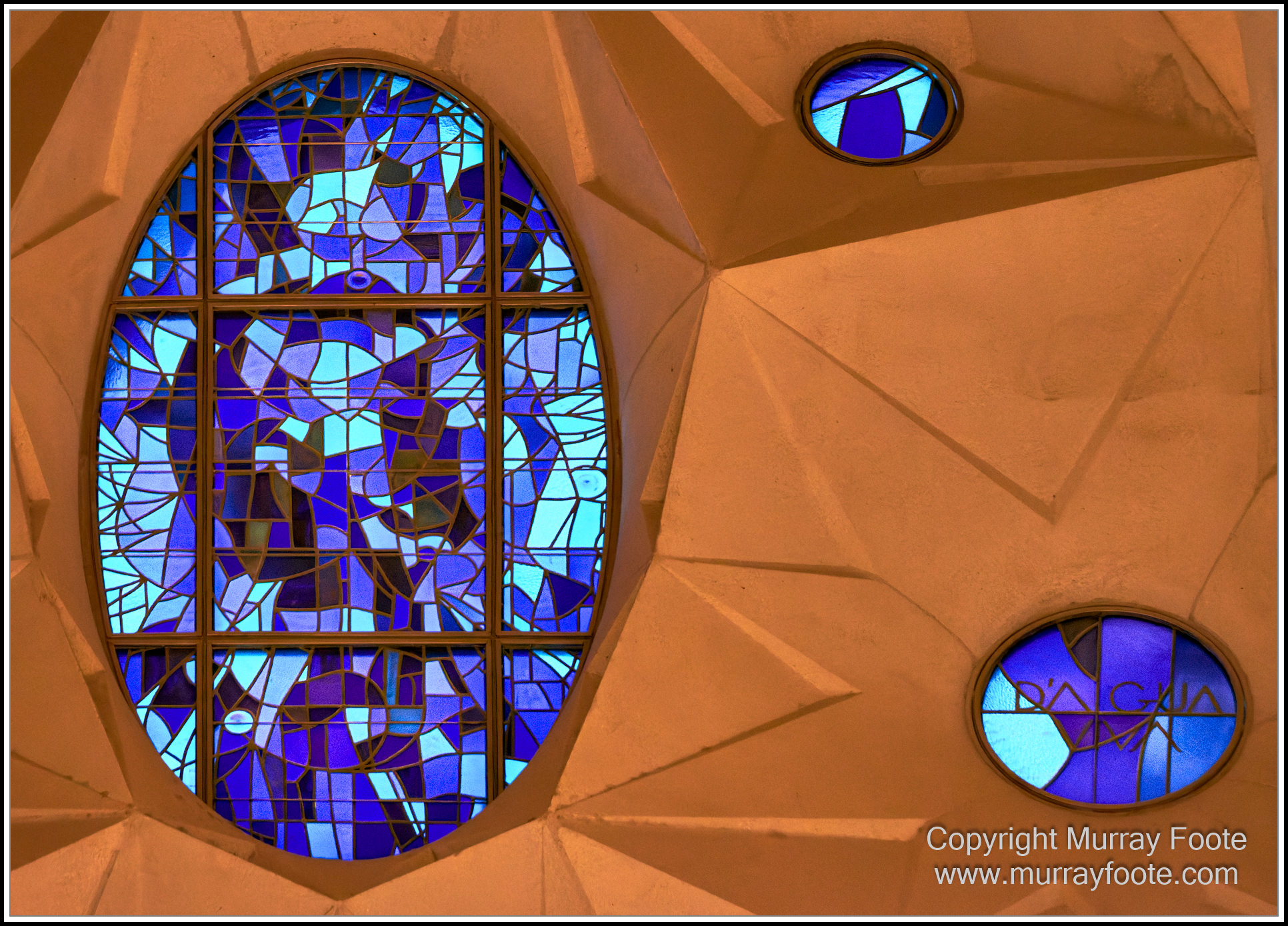
Arrays of stained glass windows.
.
.
.
.  .
.
.
.
. 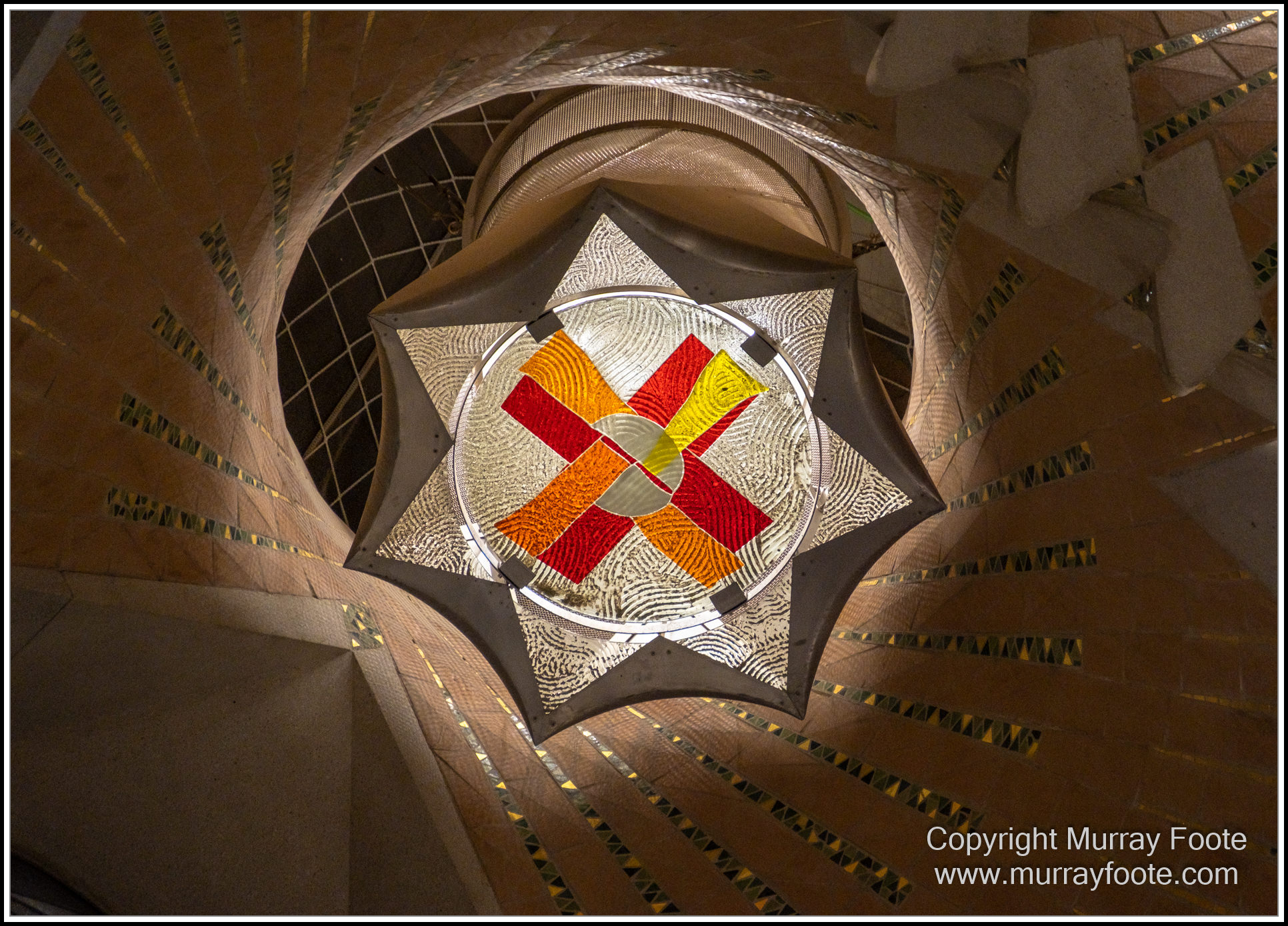
There were a number of these (each different) arrayed in a pattern near the ceiling.
.
.
.
. 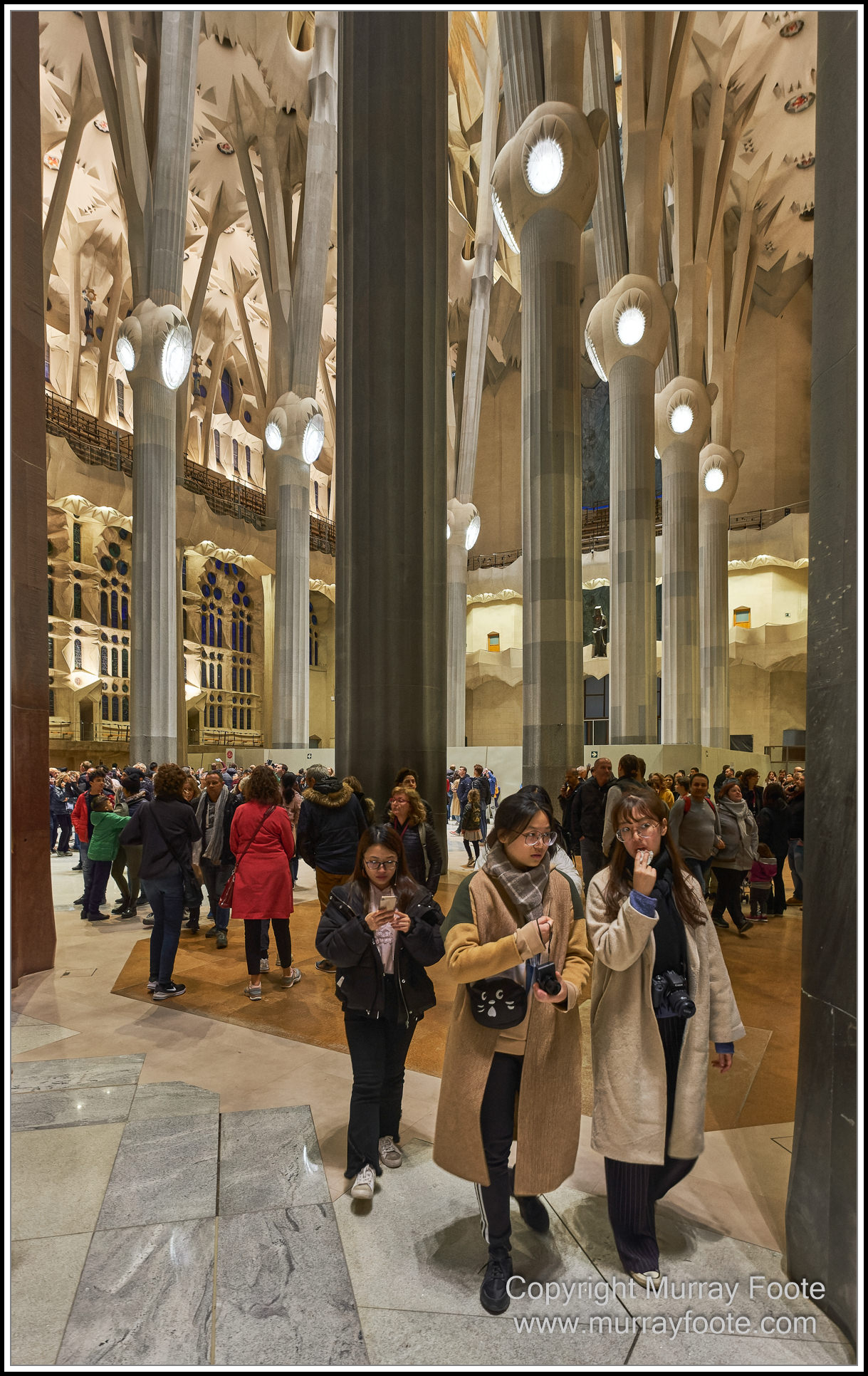
The wall in the right distance is the inside of the the unfinished Gloria Façade.
It is at that time (and likely still) closed off due to the continuing construction.
.
.
.
. 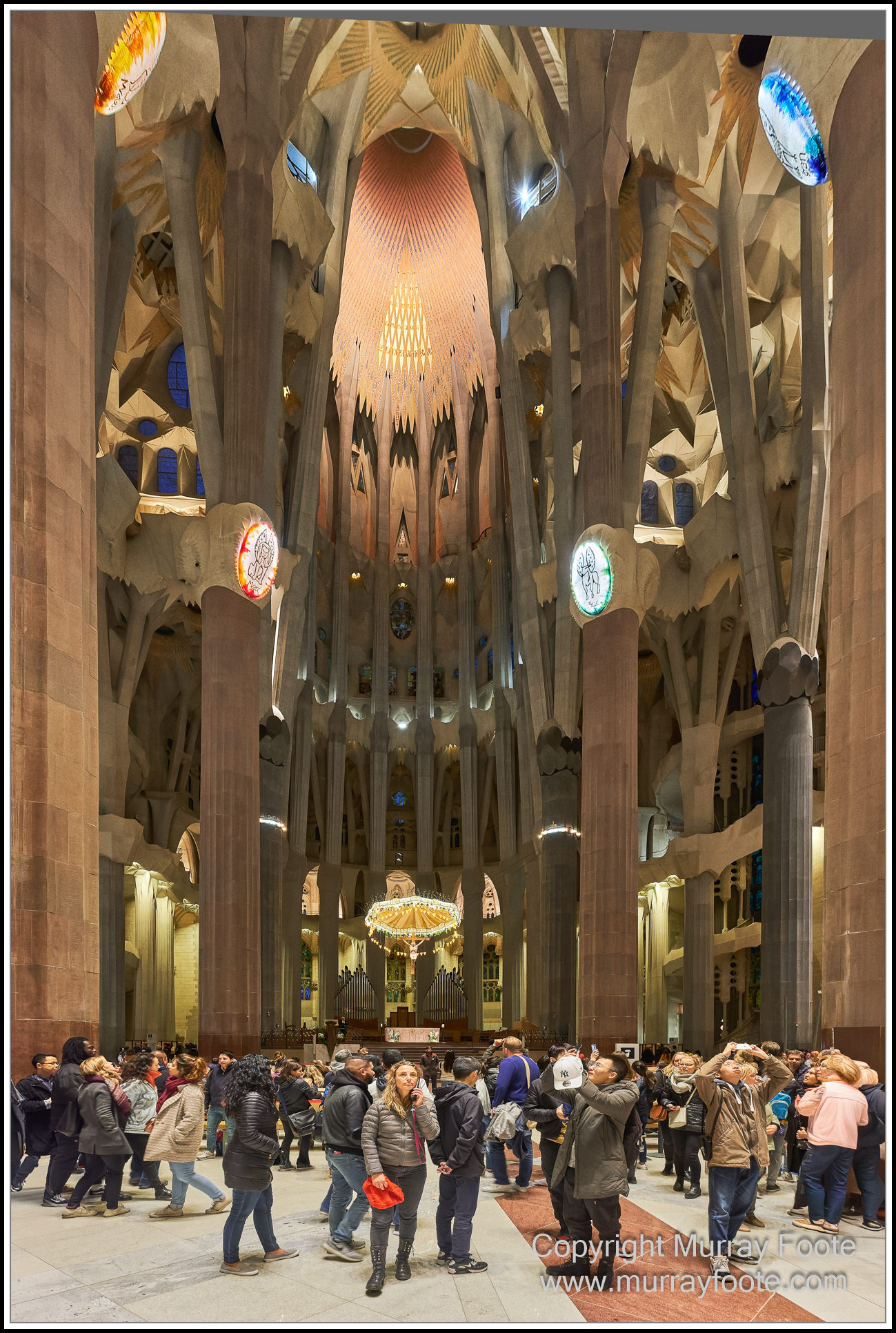
Looking towards the Apse, and the organ installed in 2010.
.
.
.
. 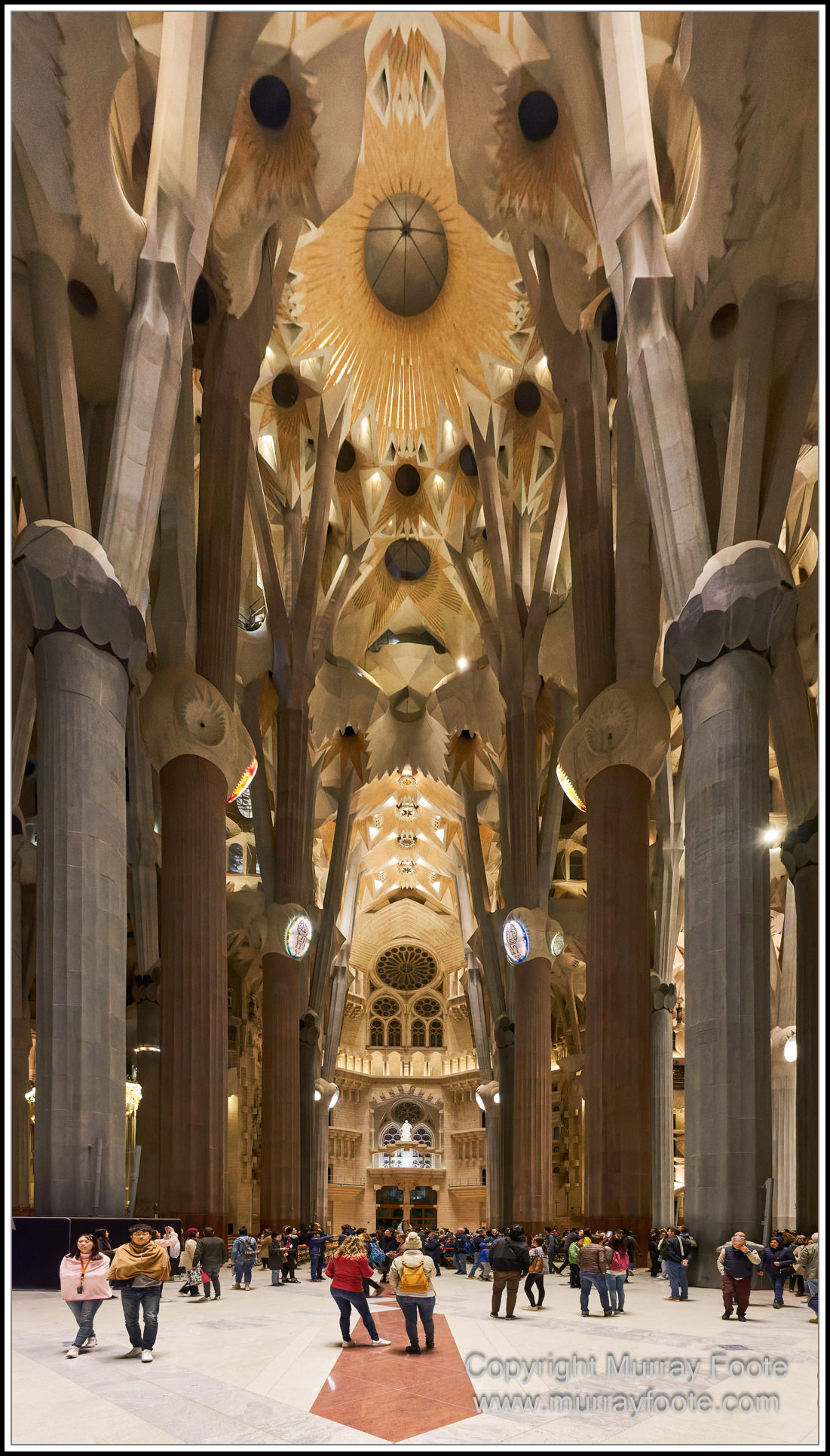
The scale of the structure is quite remarkable.
.
.
.
. 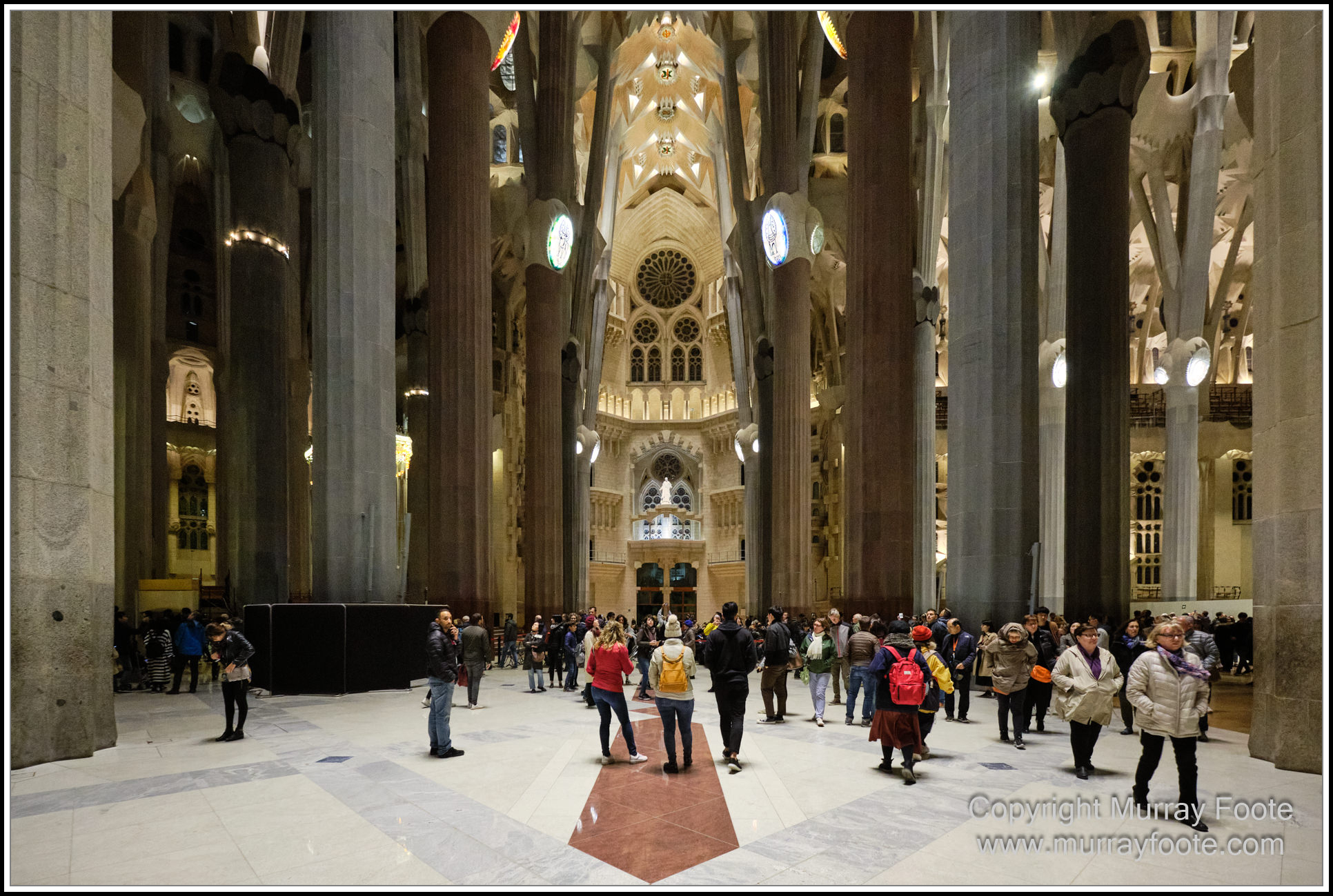
It is all a monument to Nature as God’s creation, with columns like tree trunks and windows letting light through as in a forest.
There are also extensive mathematical references to Divinity.
.
.
.
. 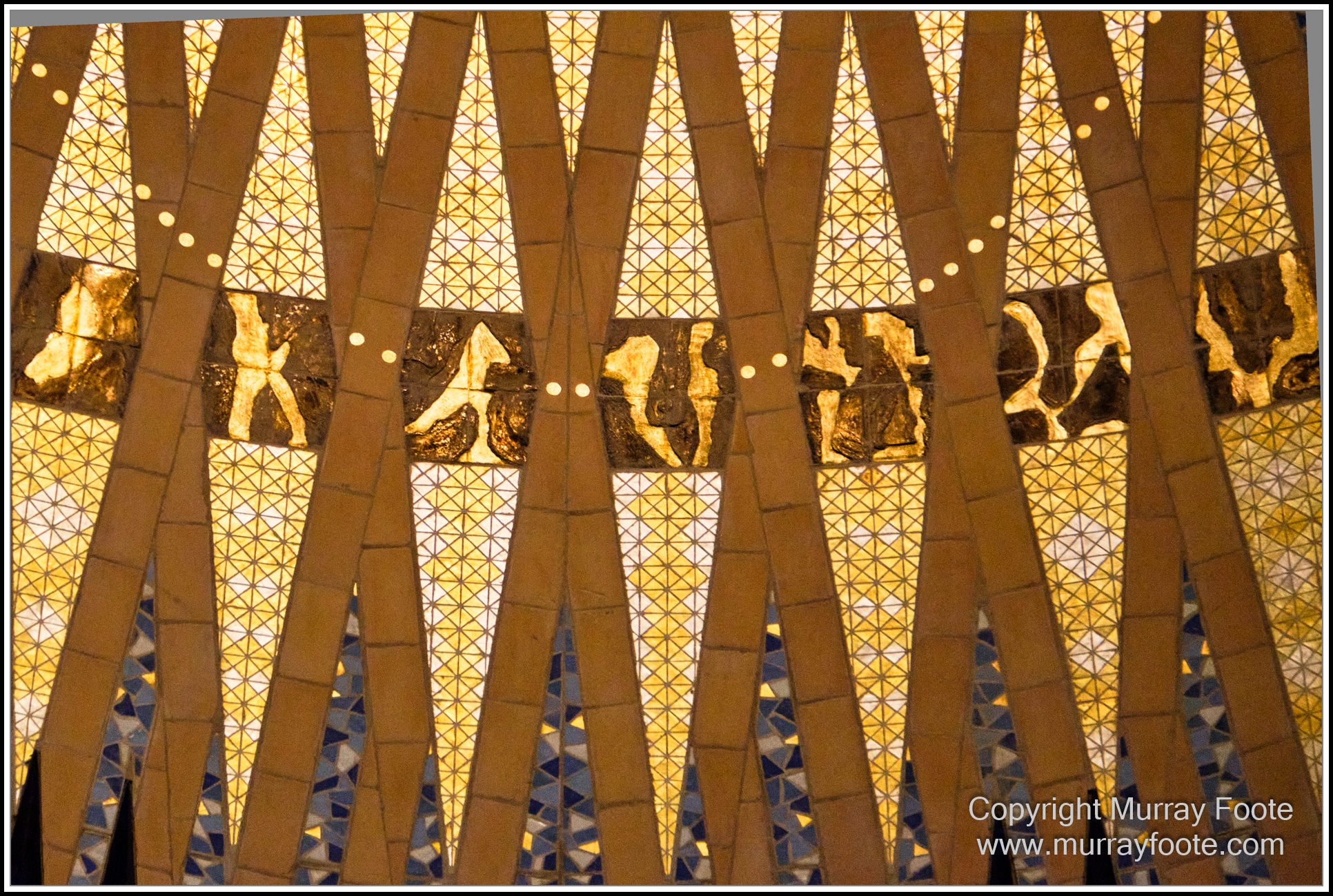
A detail probably high on a wall.
.
.
.
. 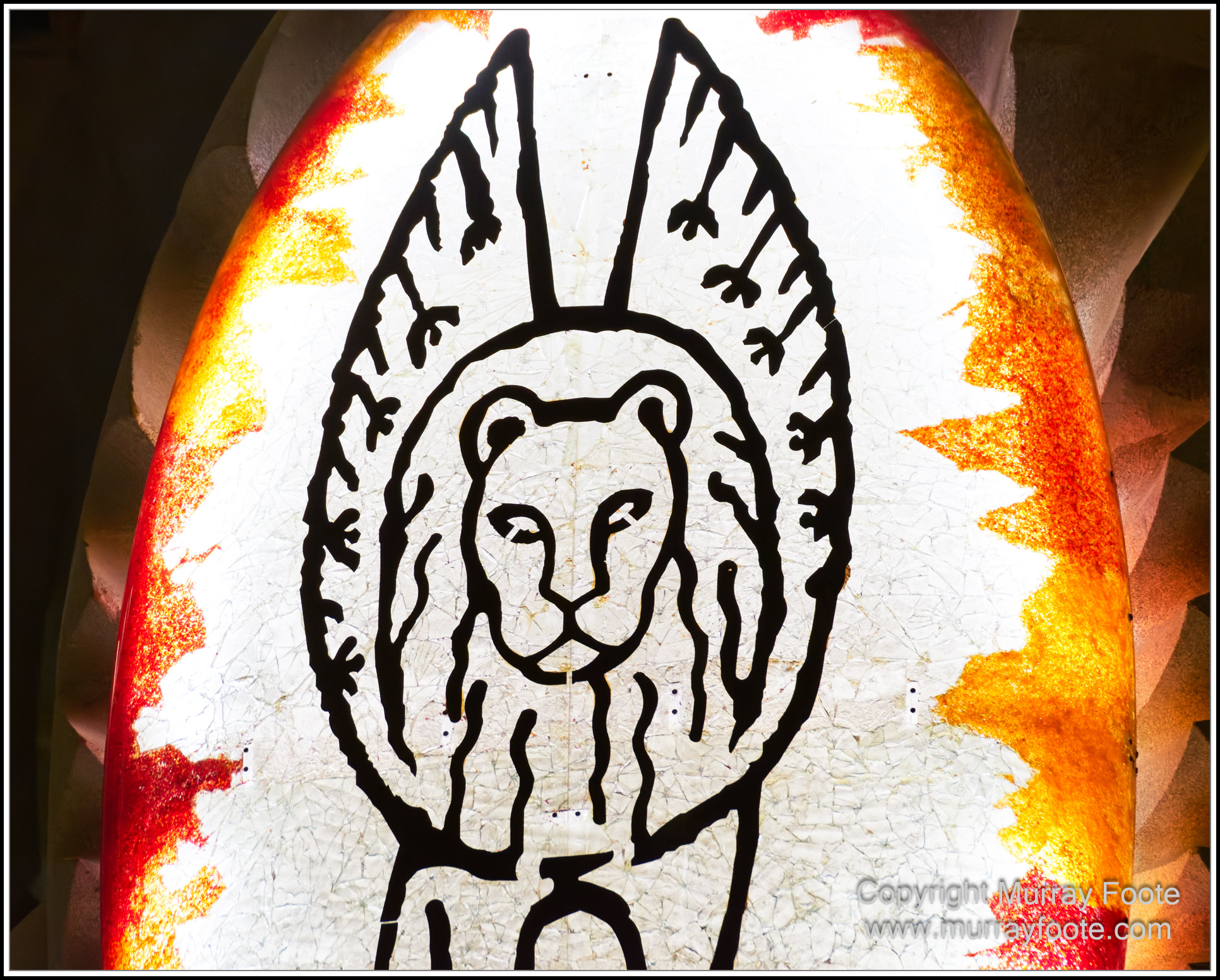
I think this is a symbol for one of the disciples.
.
.
.
.
That was the final regular post for Andalusia and Barcelona. Monochromes to come.
.
 Murray Foote