Dhilba Guuranda–Innes National Park, South Australia, 14 July 2024.
(Recent Posts, Top Posts, Subscribe and Search at bottom of page. Clicking image doubles size. Trip summary and links to posts.)
.
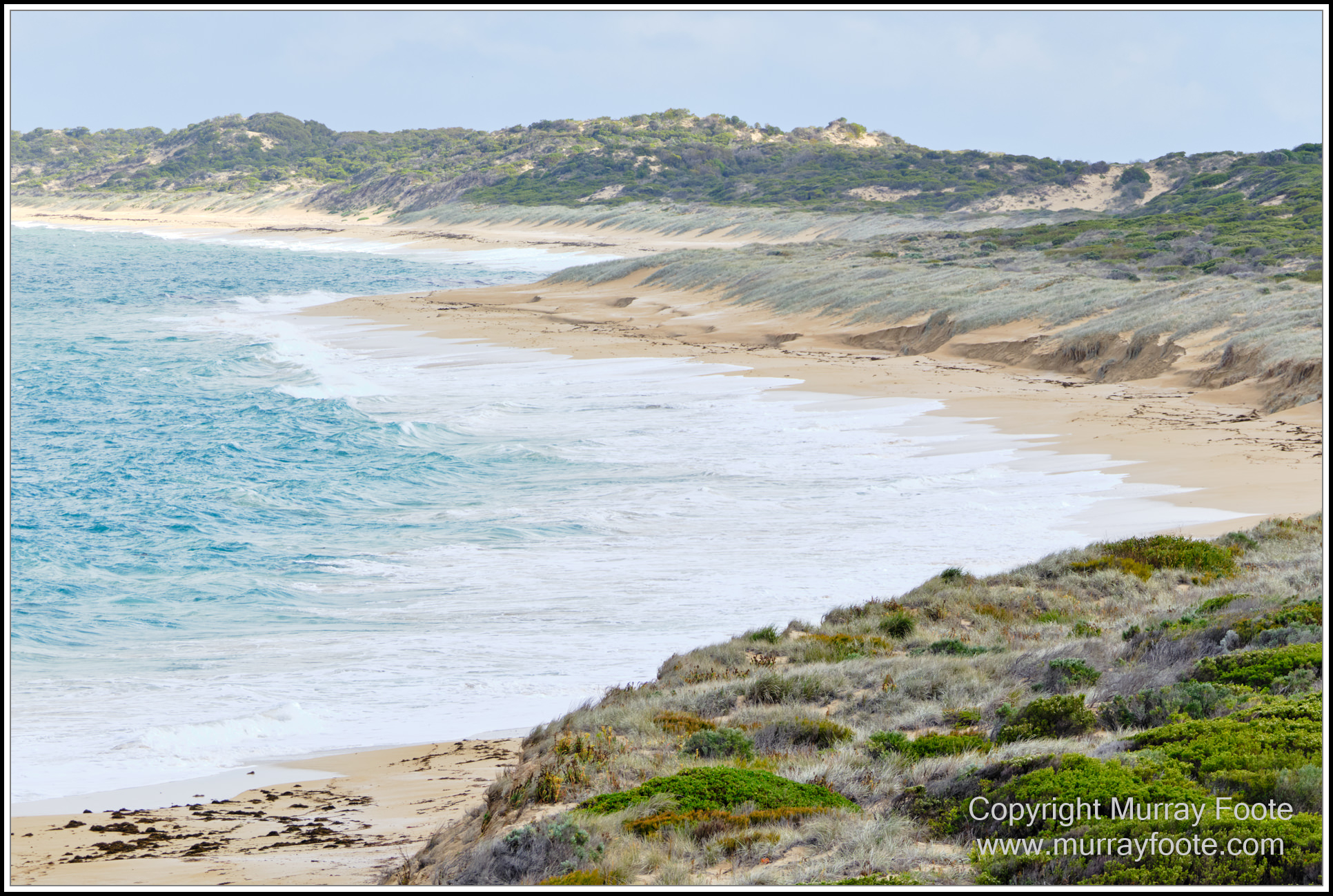
Little Emu Beach, near the Visitor’s Centre.
We were staying at Inneston, in the national park at the tip of the Yorke Peninsula, west of Adelaide. First thing though, we headed back to Marion Bay to get something from the supermarket (don’t remember what).
.
.
.
. 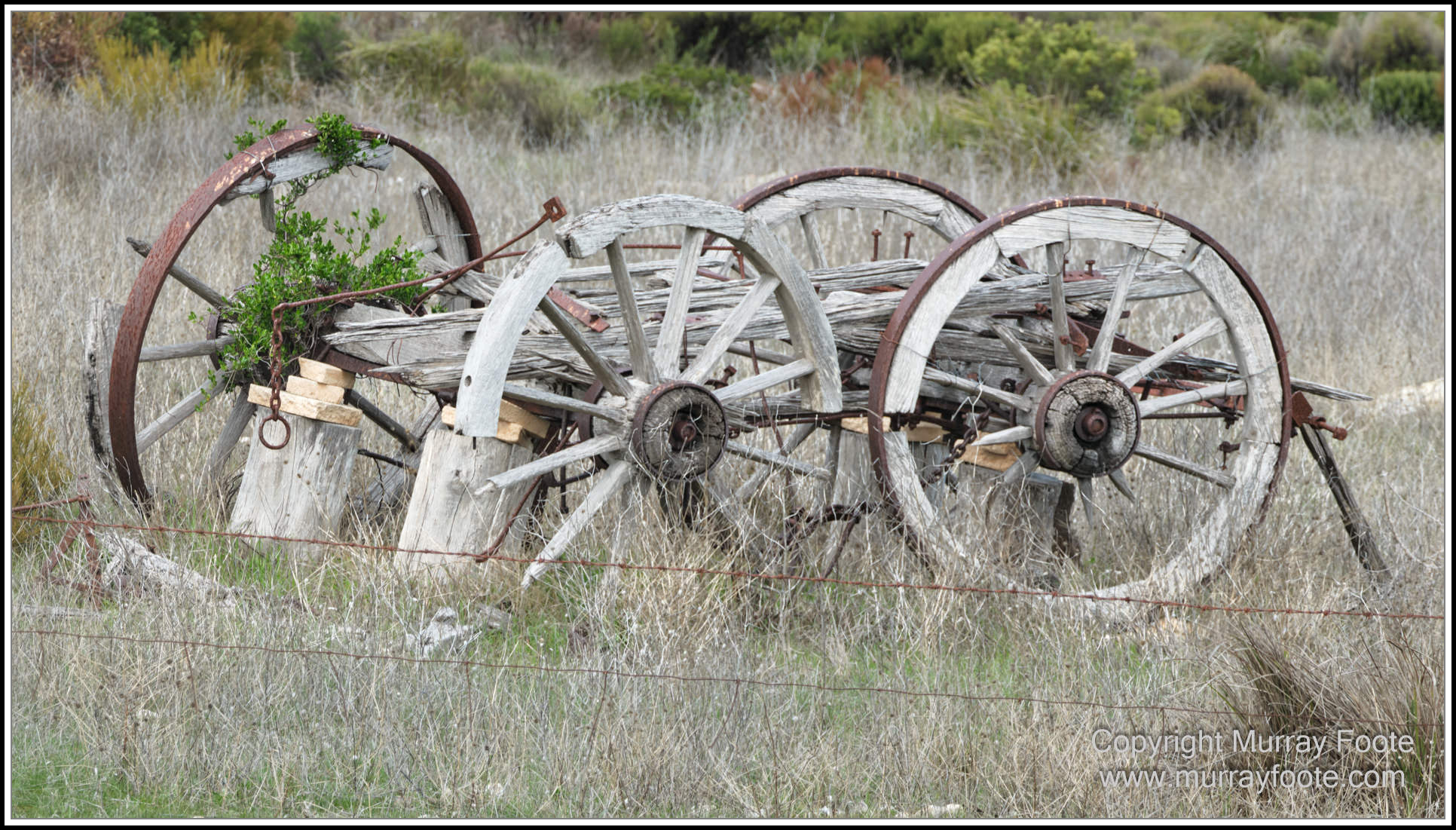
Remains of old cart propped beside the road near Marion Bay.
.
.
.
. 
Fishing at Marion Bay Wharf.
.
.
.
. 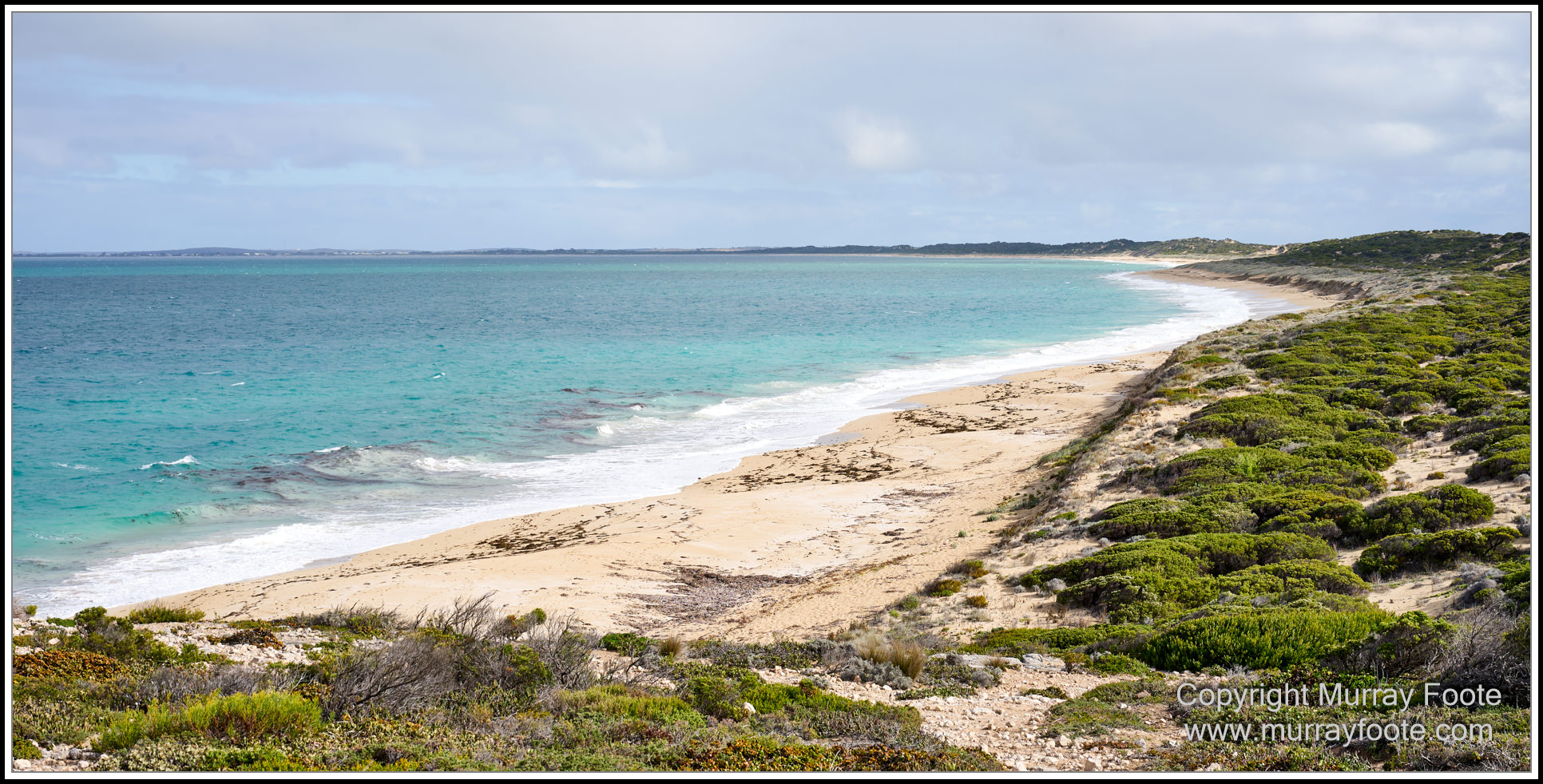
The beach at Marion Bay.
.
.
.
. 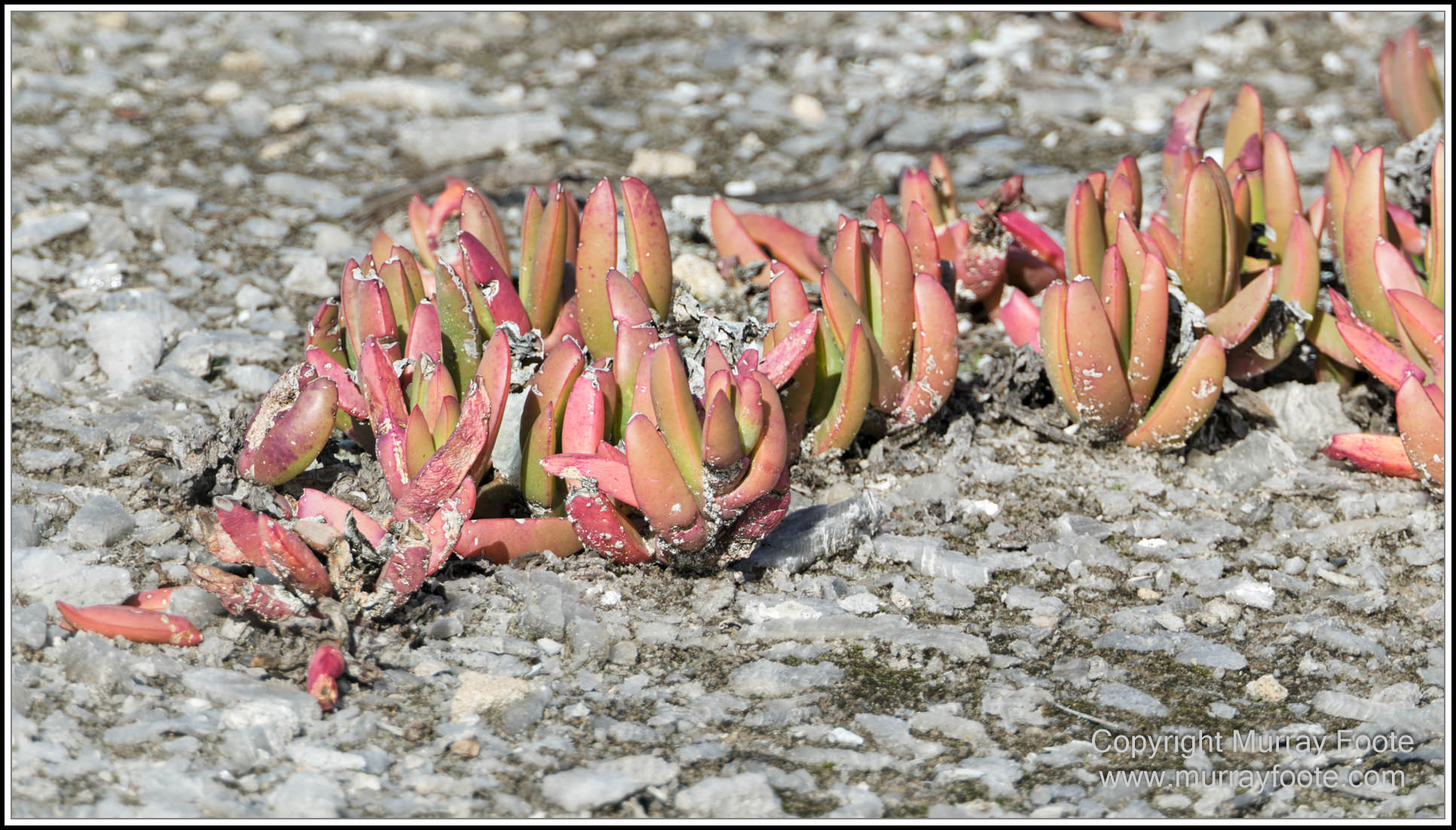
Succulents beside the sea.
.
.
.
.
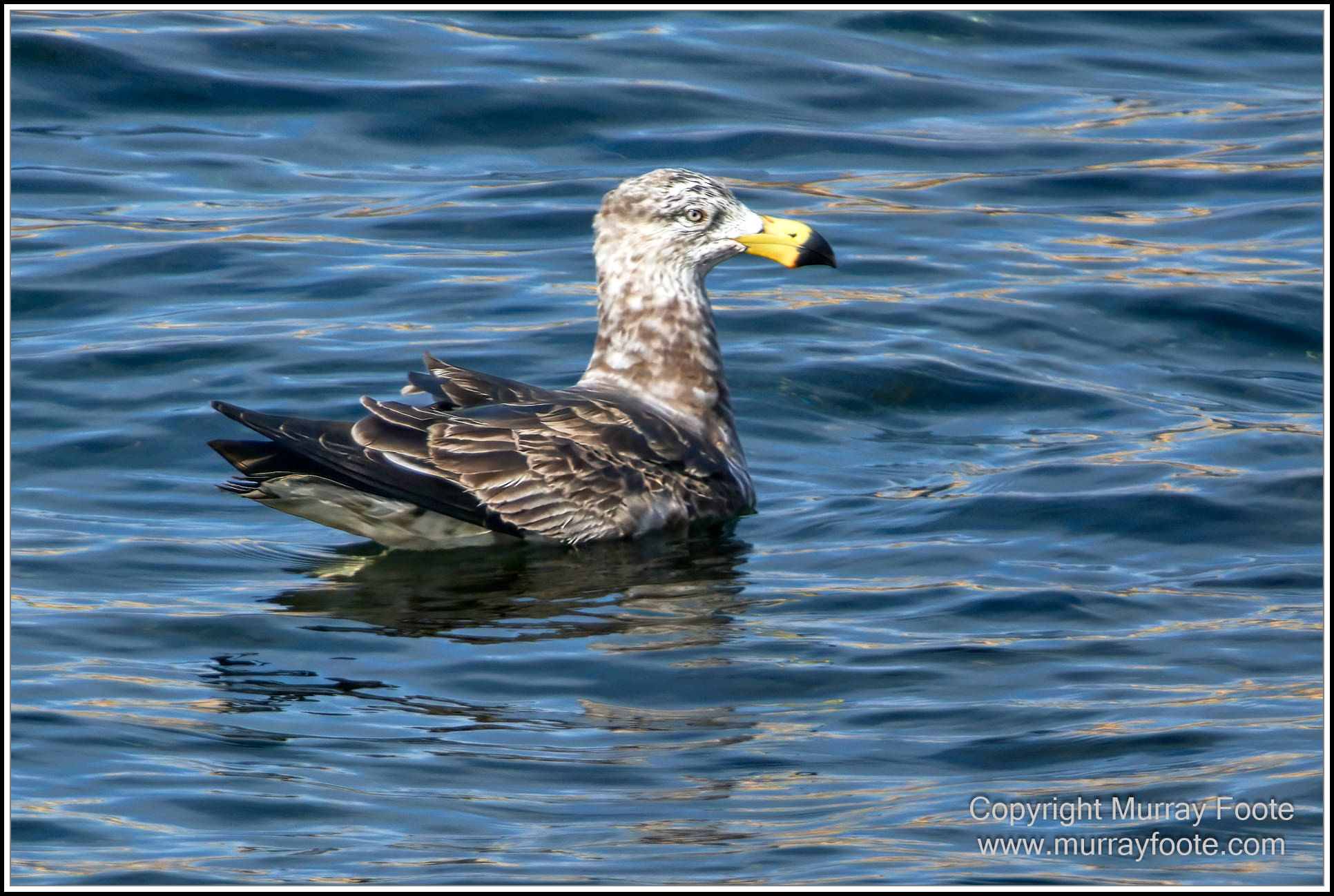
Large seabird in the water. Juvenile albatross, perhaps?
.
.
.
.
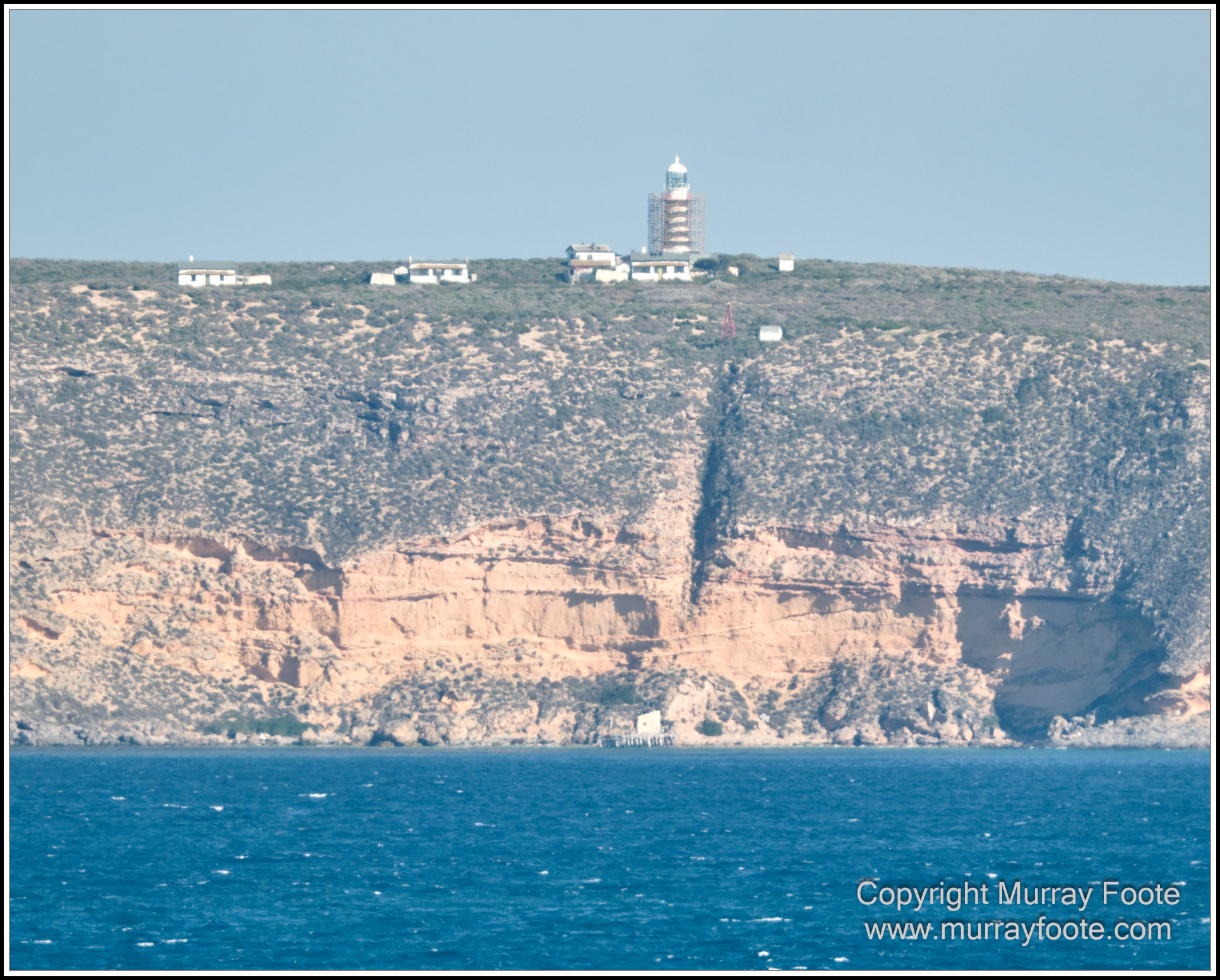
Althorpe Island lighthouse and cottages.
Taken with a very long telephoto lens (full-frame equivalent 1260mm). Lines on the buildings are a bit distorted due to distance haze. Note the groove in the cliff above the wharf. Until the arrival of air transport, everything and everyone would have been hauled up or down there. I visited there on my lighthouses trip in 1987. There are some images and an interesting story in this post.
.
.
.
.
. 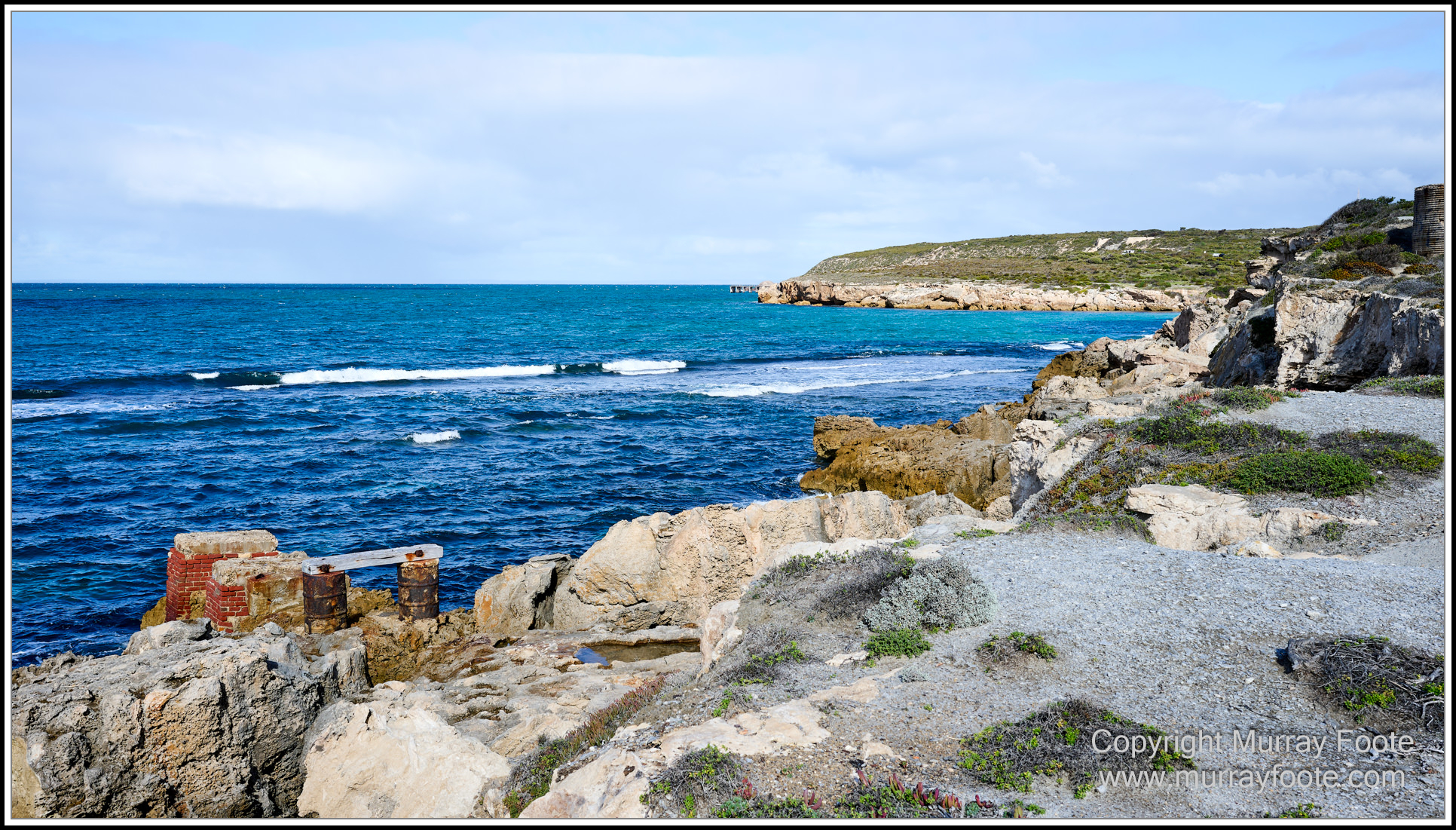
Remains of a wharf and the end of an intact one in the distance.
(Probably taken near Little Emu Beach).
.
.
.
. 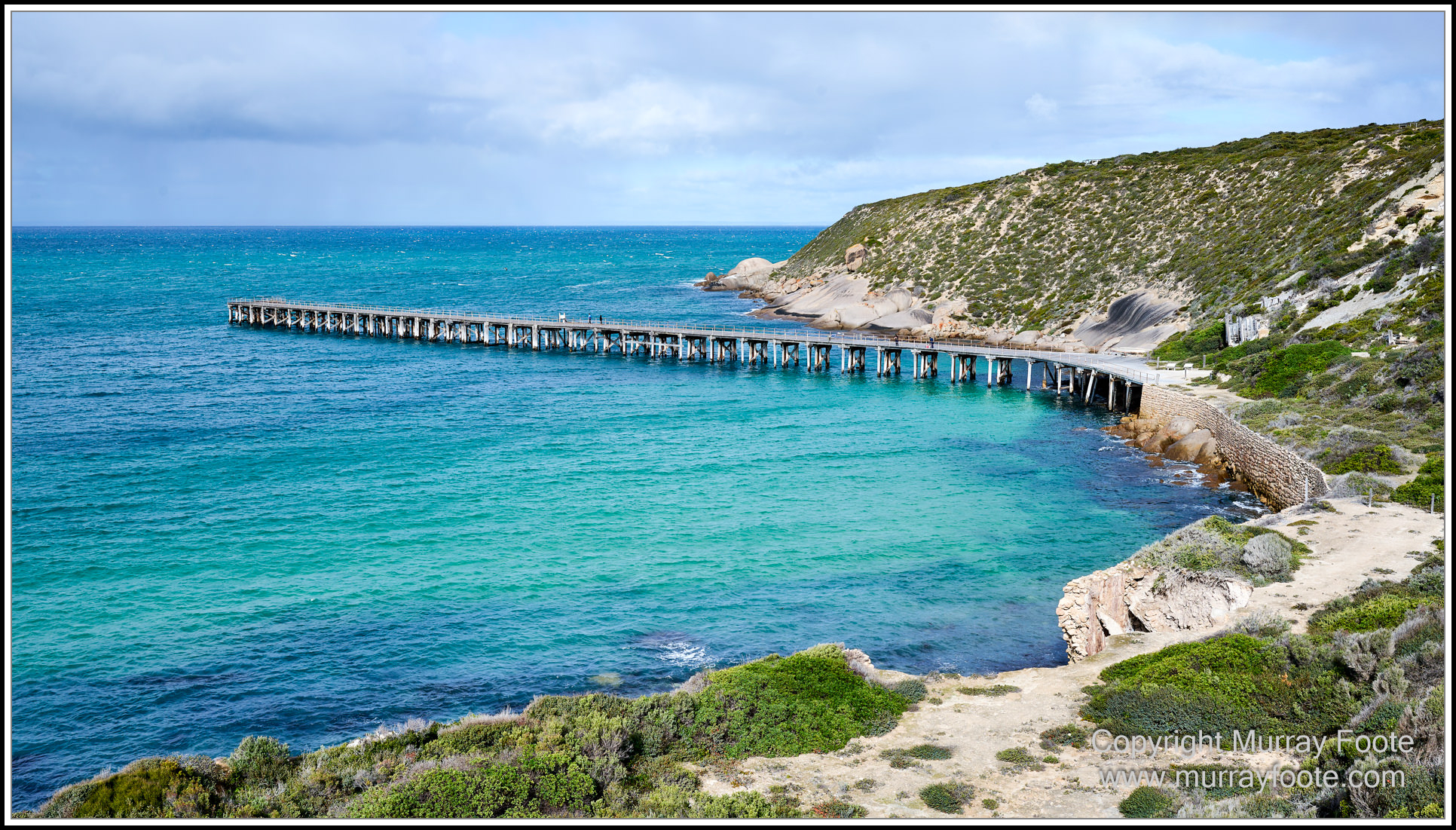
Stenhouse Bay Jetty from Stenhouse Lookout.
Near this jetty in nine metres of water is the remains of the Houghomont, a four-masted barque 89 metres long. In 1932 it was caught in a savage storm off Kangaroo Island and lost the main mast and another mast. It made it to Semaphore (now a suburb of Adelaide) under jury rig but the owners decided it was cheaper to buy another ship than to repair her. Consequently it was brought here and sunk, becoming a feature for divers and sea life.
.
.
.
. 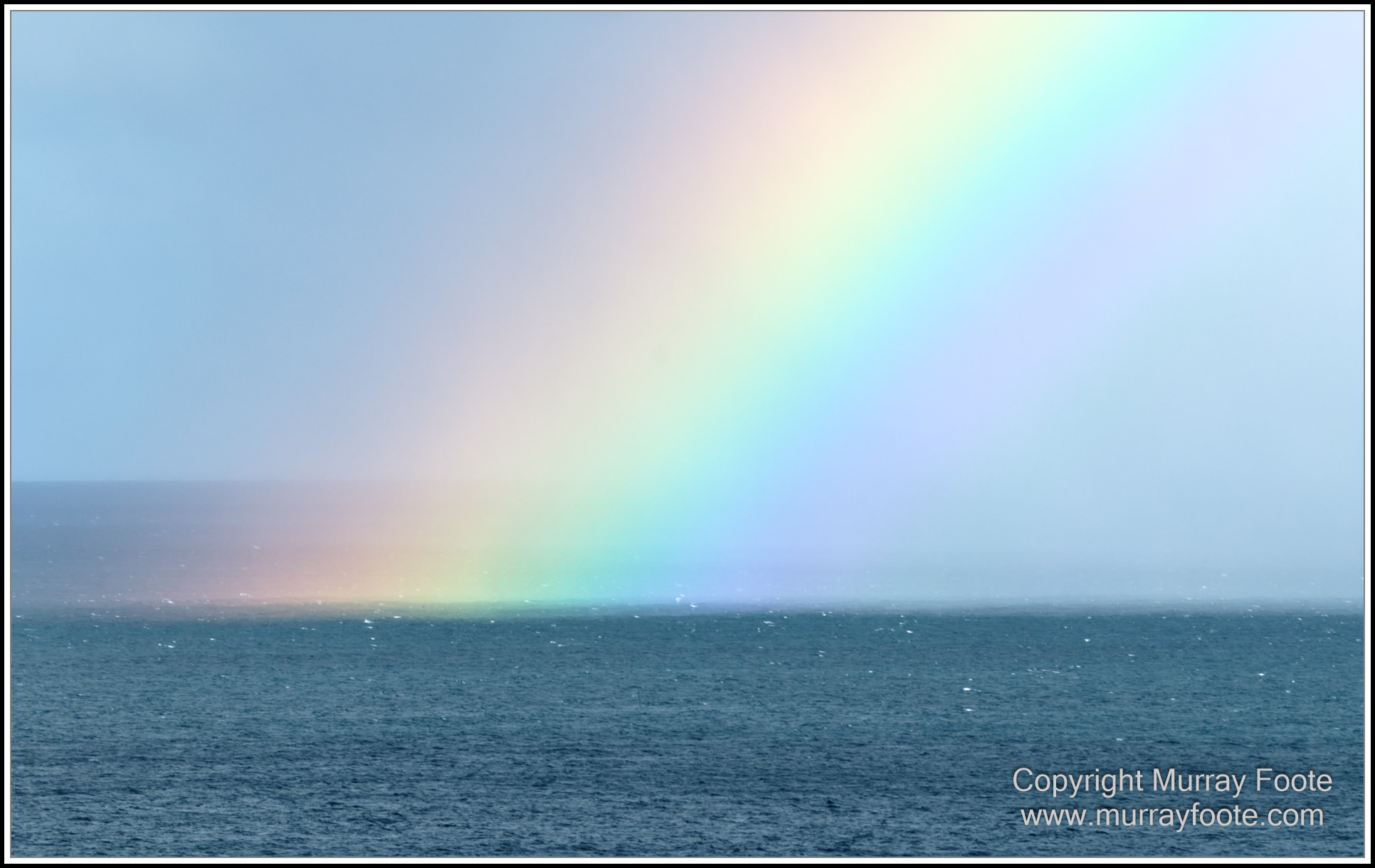
There’s a pot of gold in the sea somewhere….
.
.
.
. 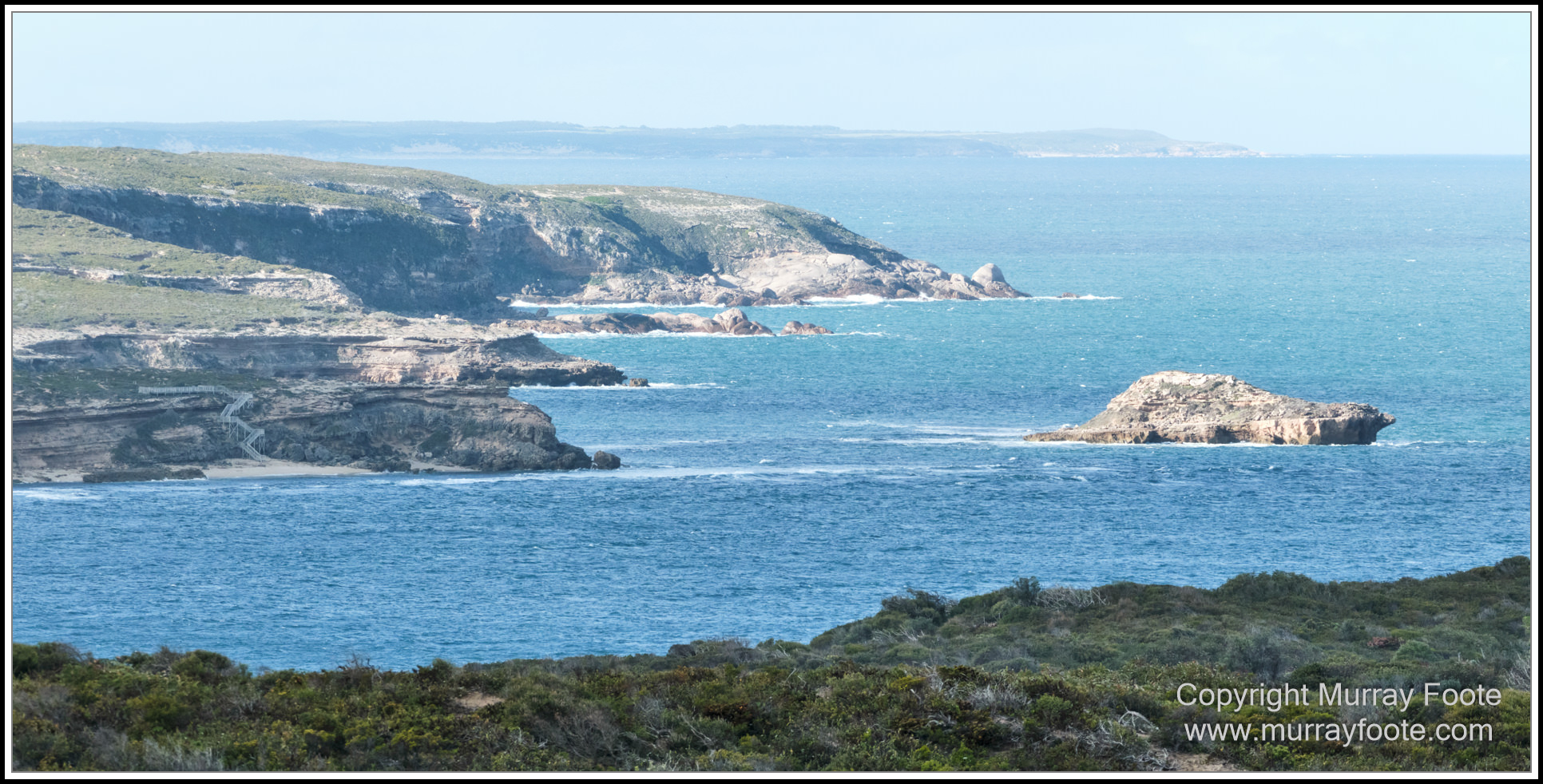
Further down the coast, looking north-east.
.
.
.
. 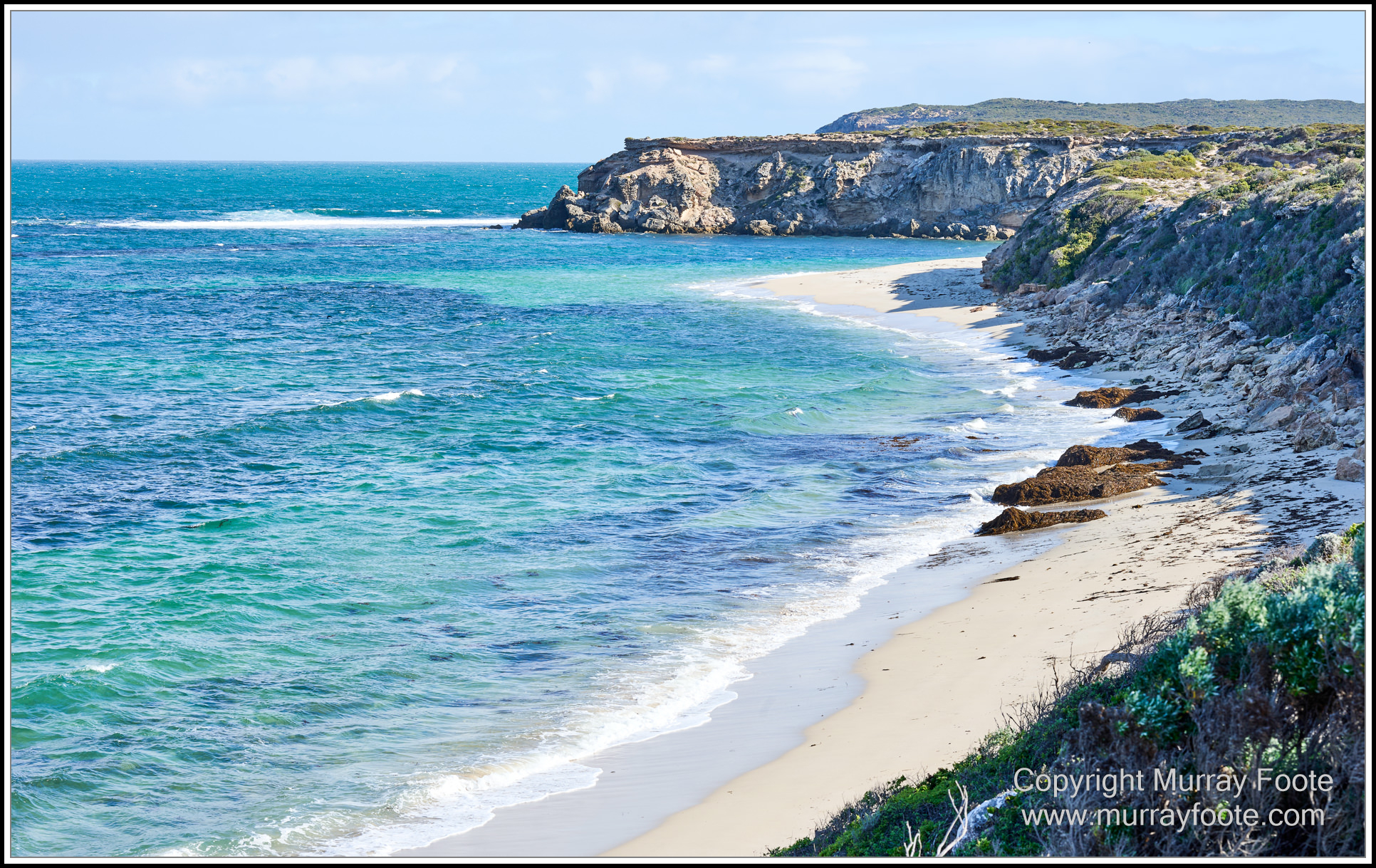
The bay of Chinaman’s Hat Island, looking west.
.
.
.
. 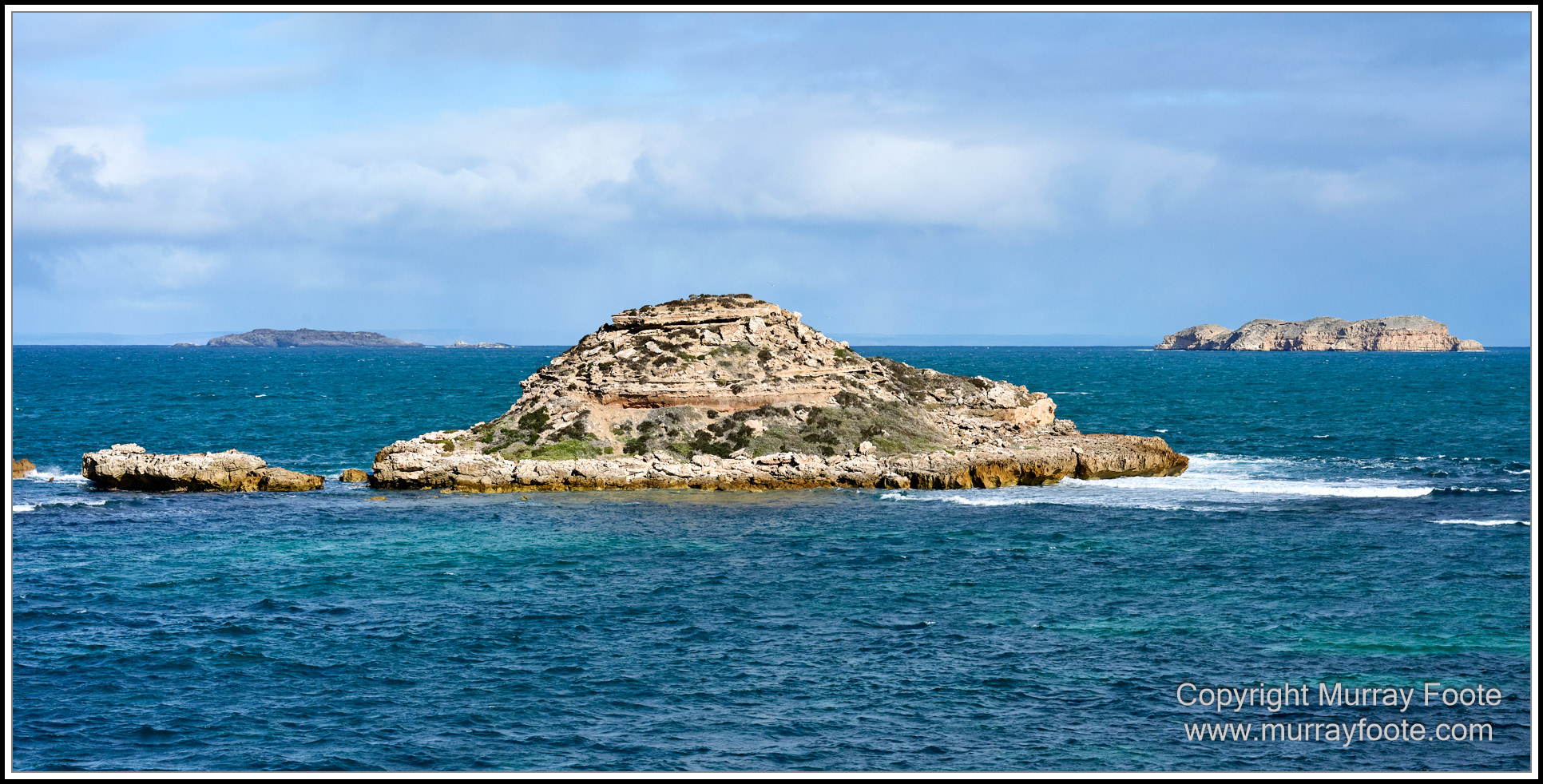
Chinaman’s Hat Island. Haystack Island and Seal Island in the background.
We are also looking out at Chinaman’s Hat Sanctuary Zone, protecting marine species in their reef and island habitats.
.
.
.. 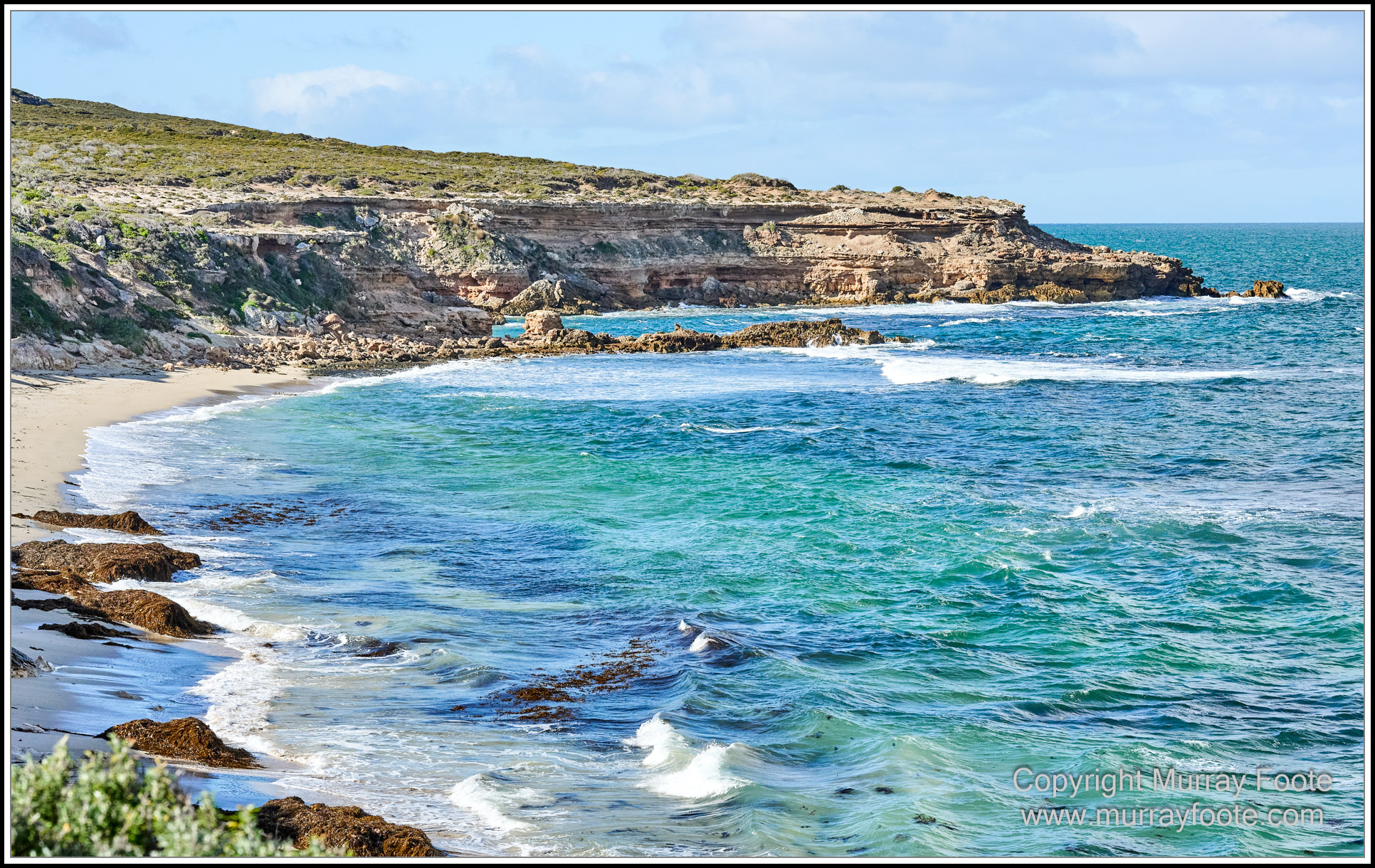
The bay of Chinaman’s Hat Island, looking east.
.
.
.
.
. 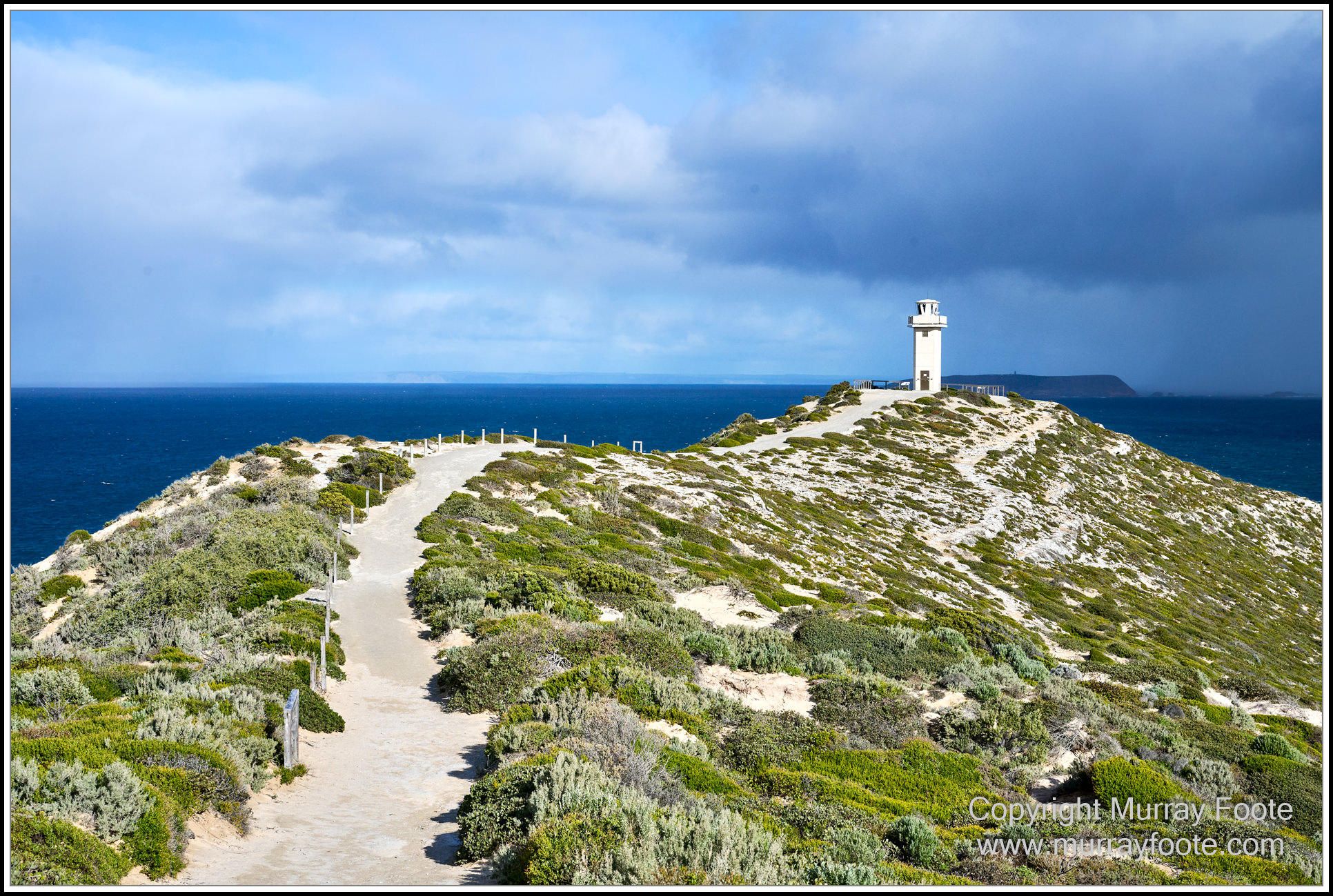
Cape Spencer Lighthouse.
You can see the storm coming from the right of Althorpe Island, behind the lighthouse. Five or ten minutes later it had arrived and I had to shelter the camera from heavy rain.
.
In 1886, a very expensive submarine cable was laid from near Cape Spencer to Althorpe Island Lighthouse. There was a concern at a time that there might be a Russian invasion and Althorpe Island was the best place to be able to give advance warning. This would have involved Morse Code.
I have not been able to find any reports of a Russian invasion fleet being sighted at Althorpe Island. Perhaps this was censorship. If you have been reading how following that success in the distant past, Putin is contemplating an invasion of Tonga from his headquarters near Alice Springs, then you are living in an alternate reality and are probably not supposed to be reading this Blog.
The cable connection proved unreliable due to an uneven seabed and in 1911, another was laid on a sandy route from Marion Bay, much further away, from somewhere near the third and fourth images in this post.
.
.
. 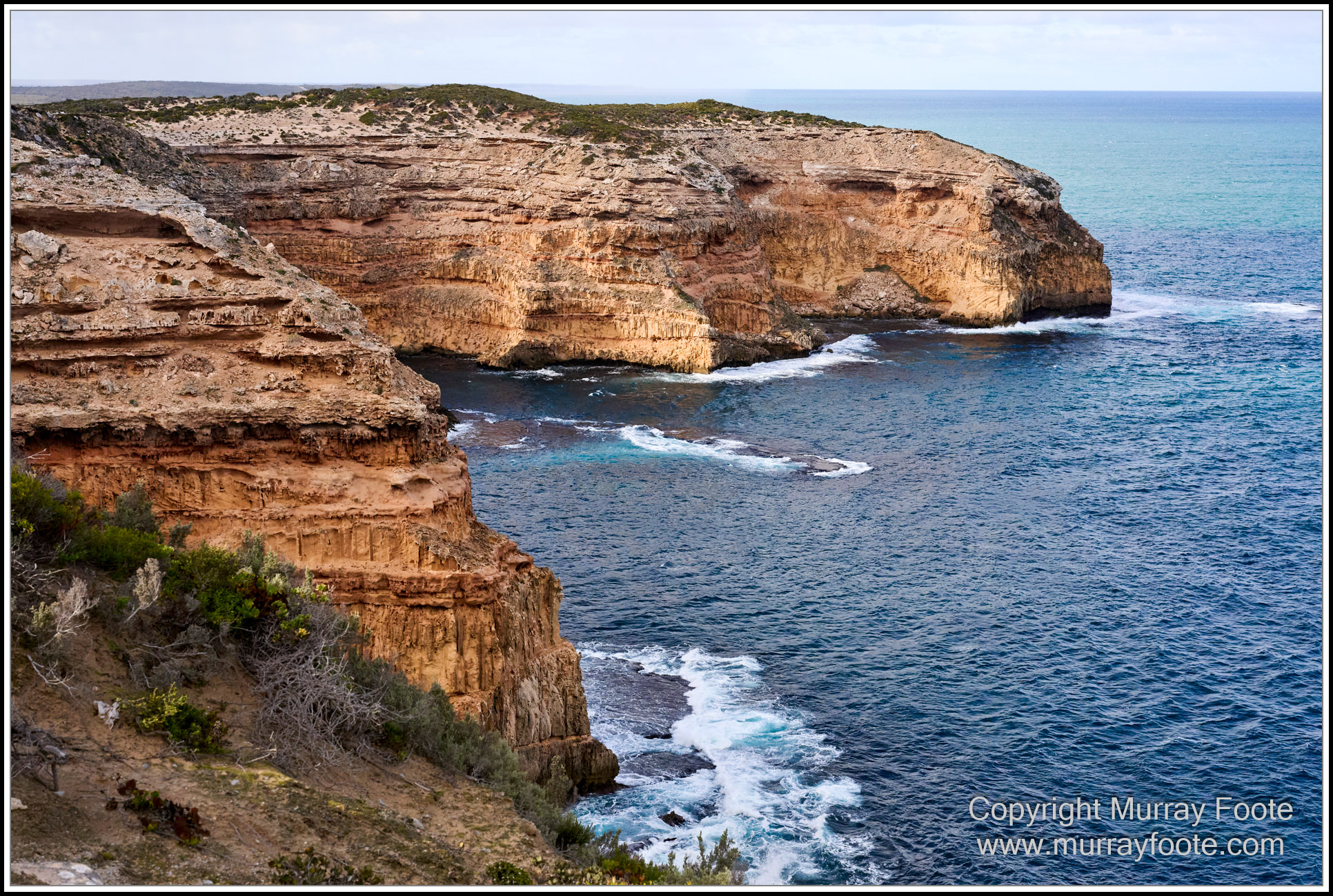
View looking east from the path to Spencer Lighthouse.
These must be the cliffs where the steamer Marion went down in 1862. All passengers and crew were evacuated in lifeboats and taken on board a passing ship, the steamer Lubra.
.
.
.
.  .
.
.
.
. 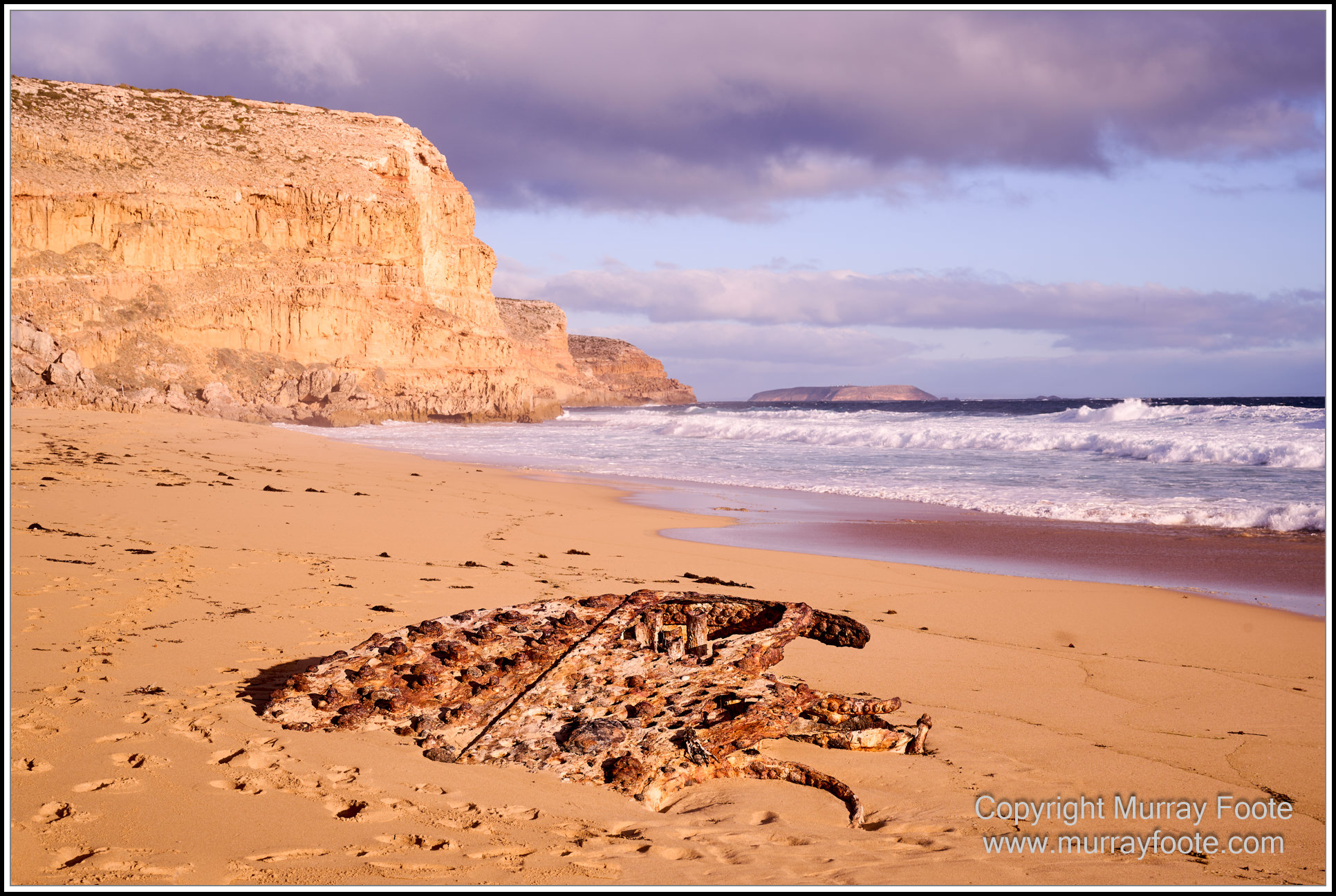
We’re now at Ethel Beach.
This looks like the launch pad of a UFO. Very careless of them to leave it behind.
.
.
. 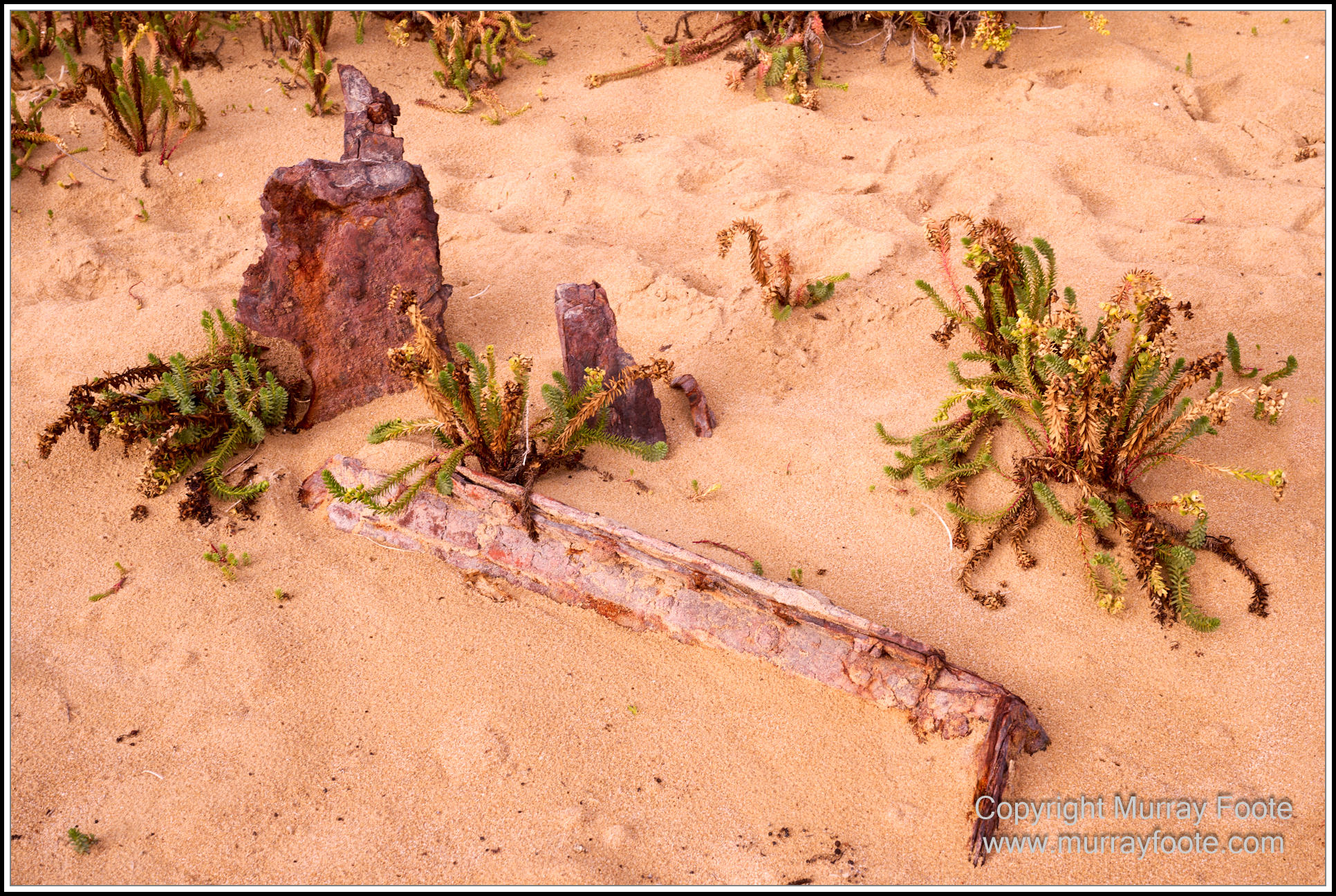
More items left behind.
.
.
.
. 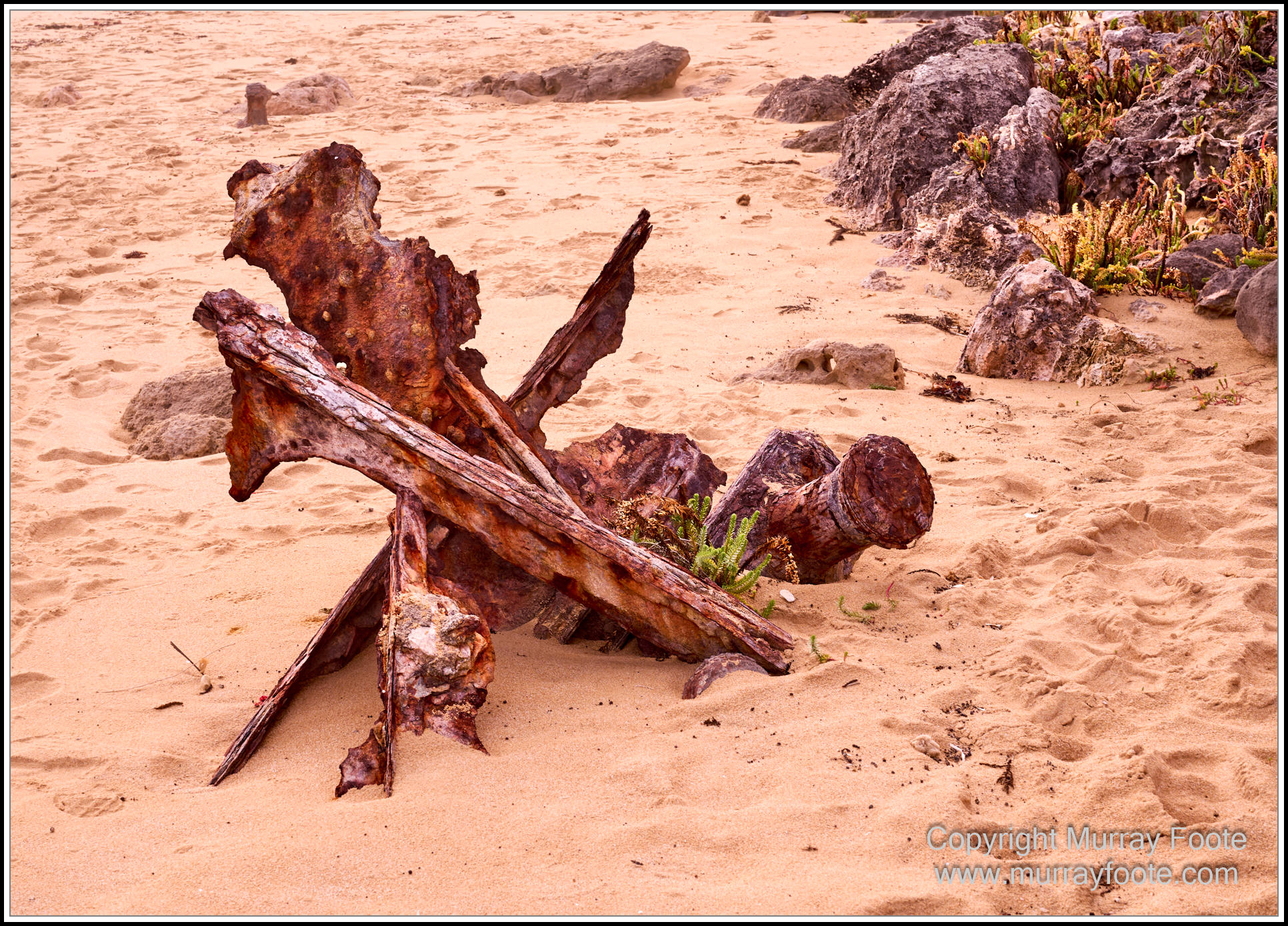
You’d think they would have noticed.
.
.
.
. 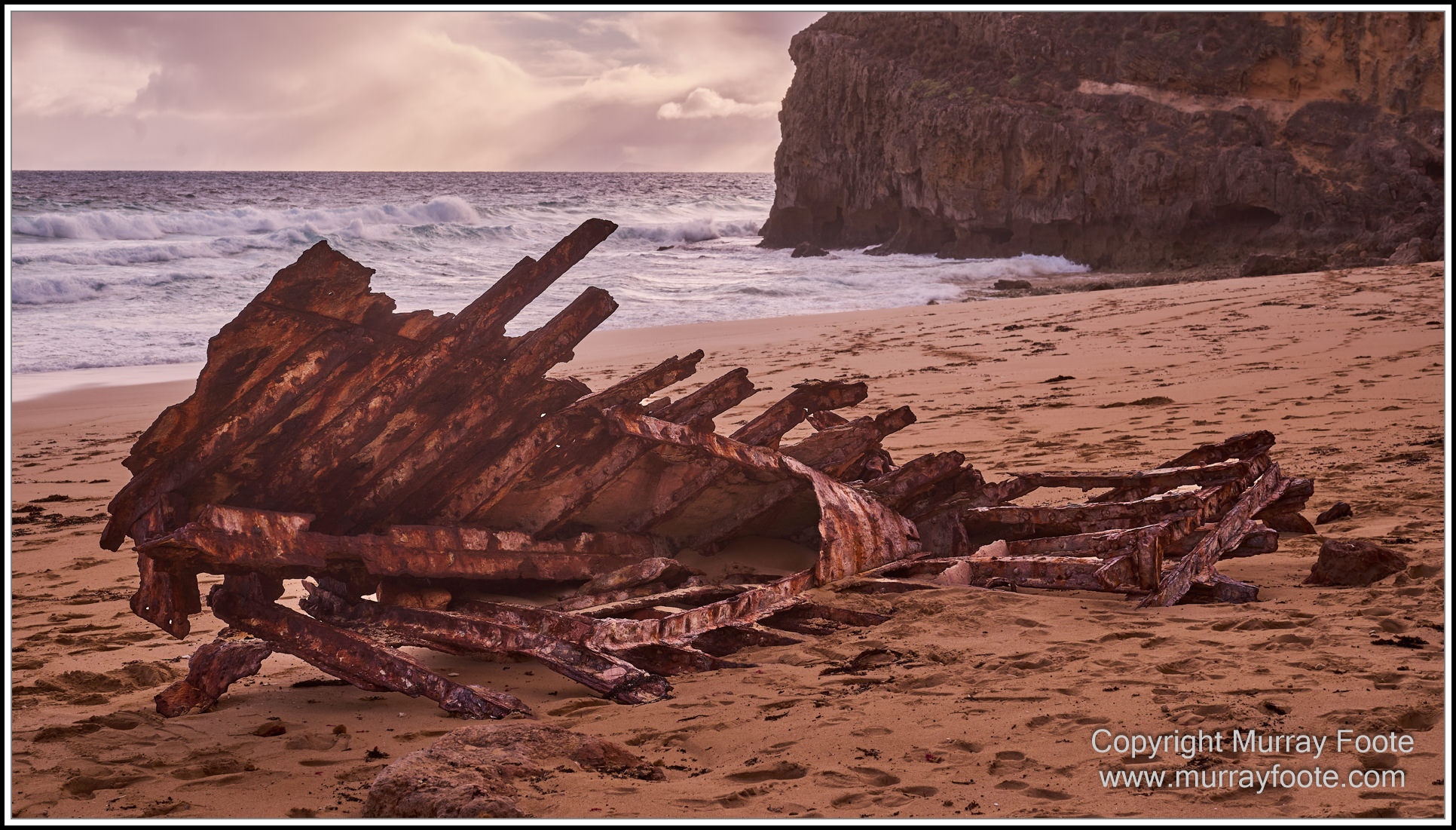
And then there’s the skeleton of a whale as well.
.
.
.
. 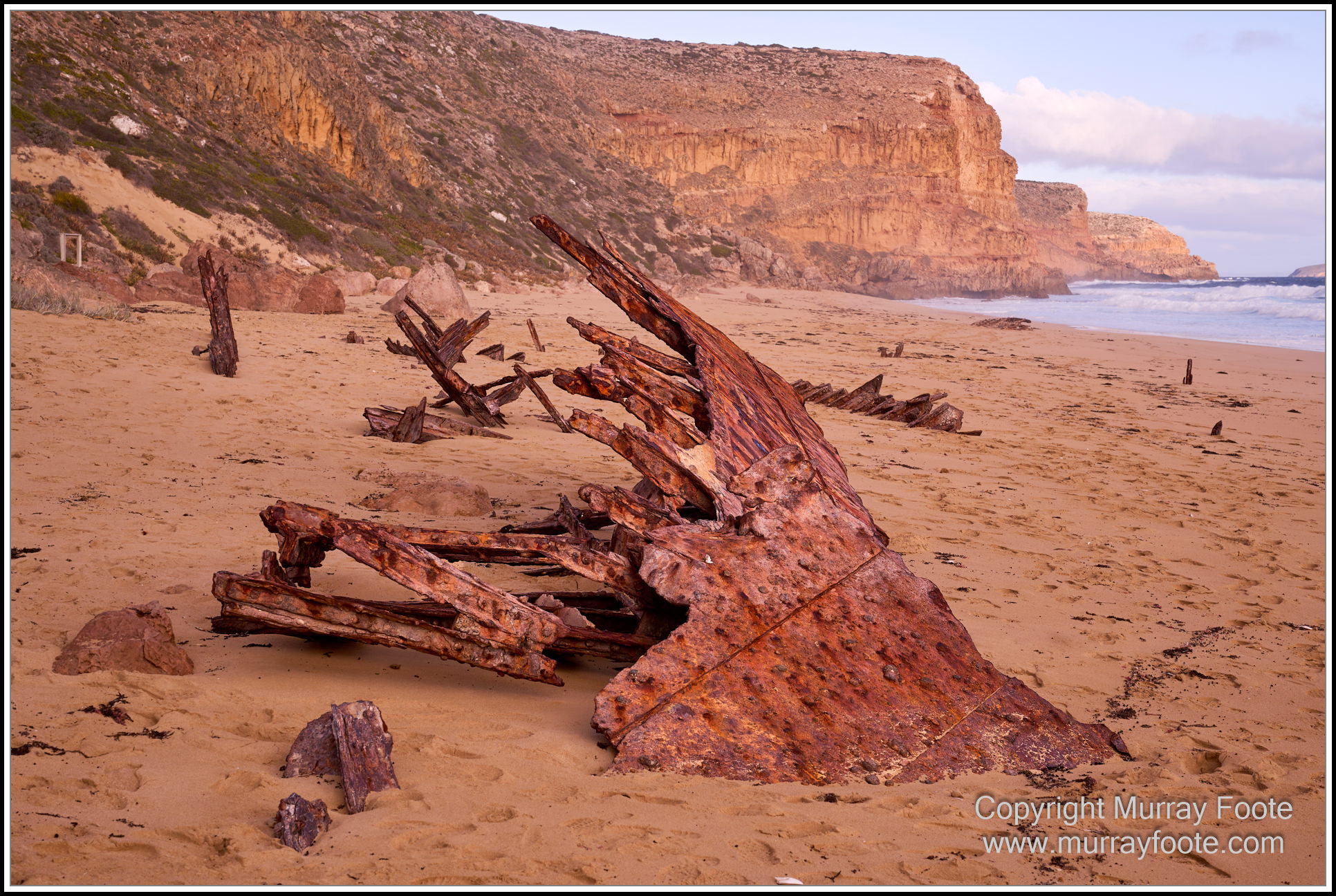
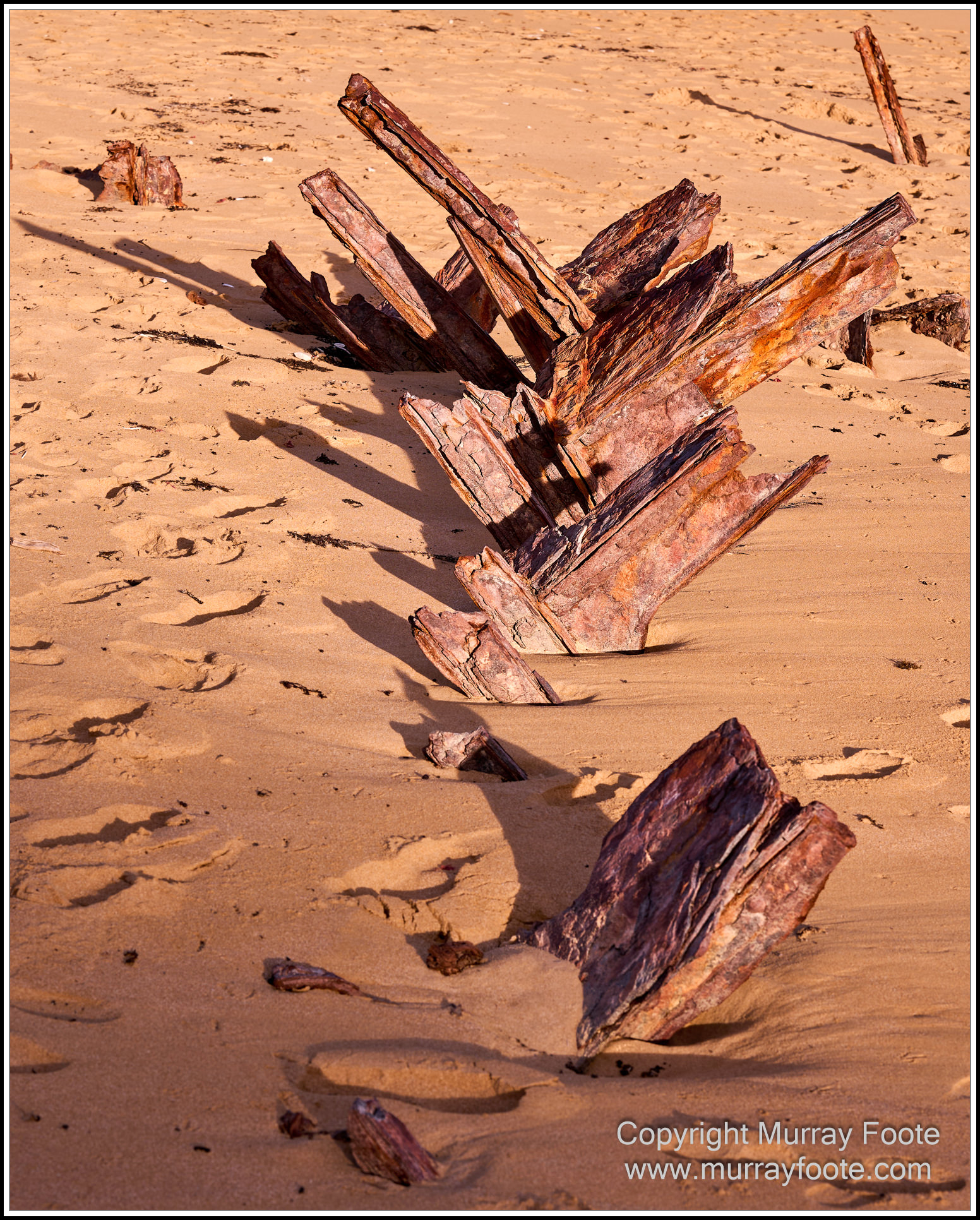
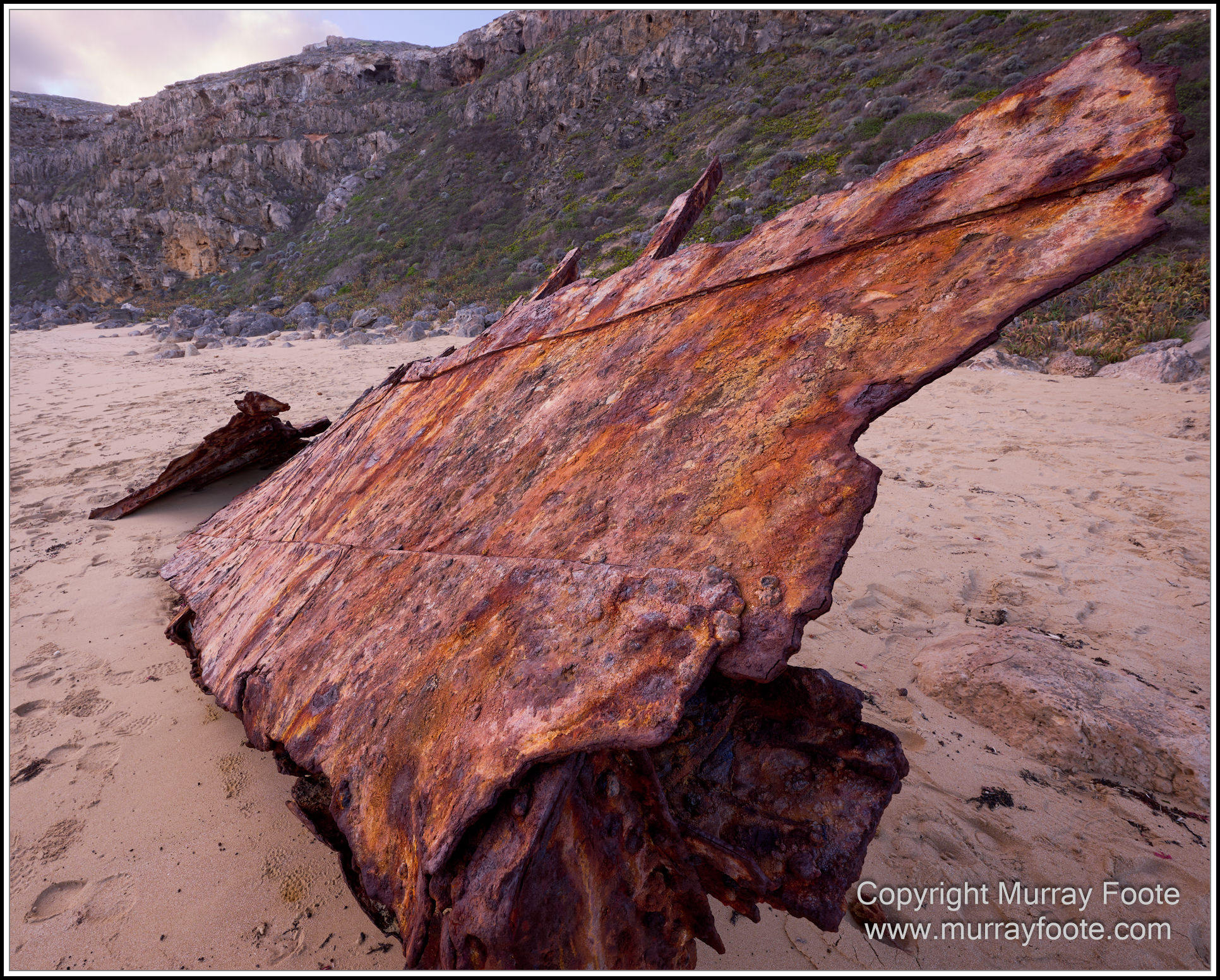
Ah, now I remember. It’s the wreck of the Ethel.
The Ethel was a Norwegian ship wrecked there in 1904. There was also a second ship The Ferret wrecked there in 1920.
.
.
.
. 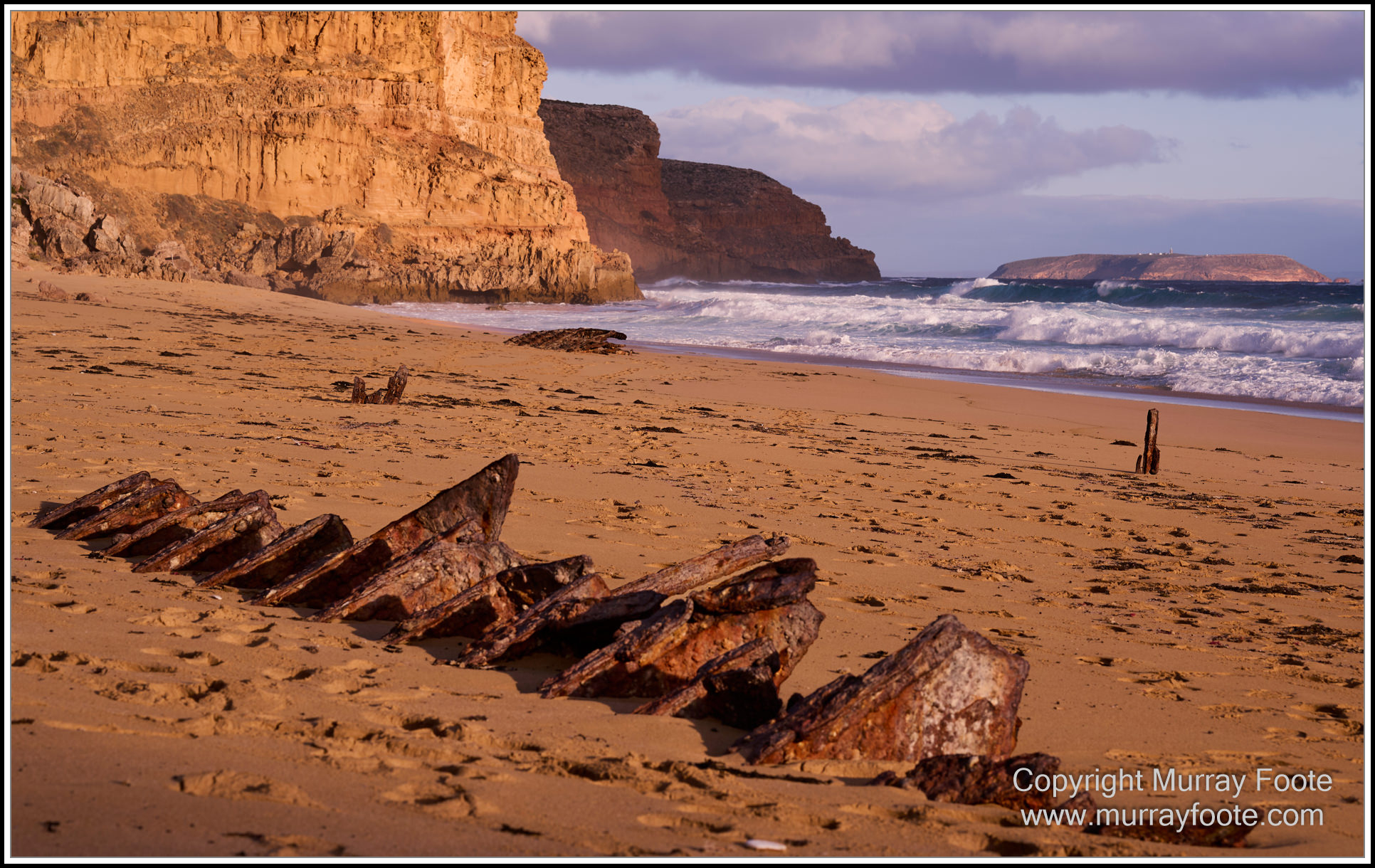
Althorpe Island in the distance. Lighthouse and cottages just visible.
.
.
.
.  .
.
.
.
. 
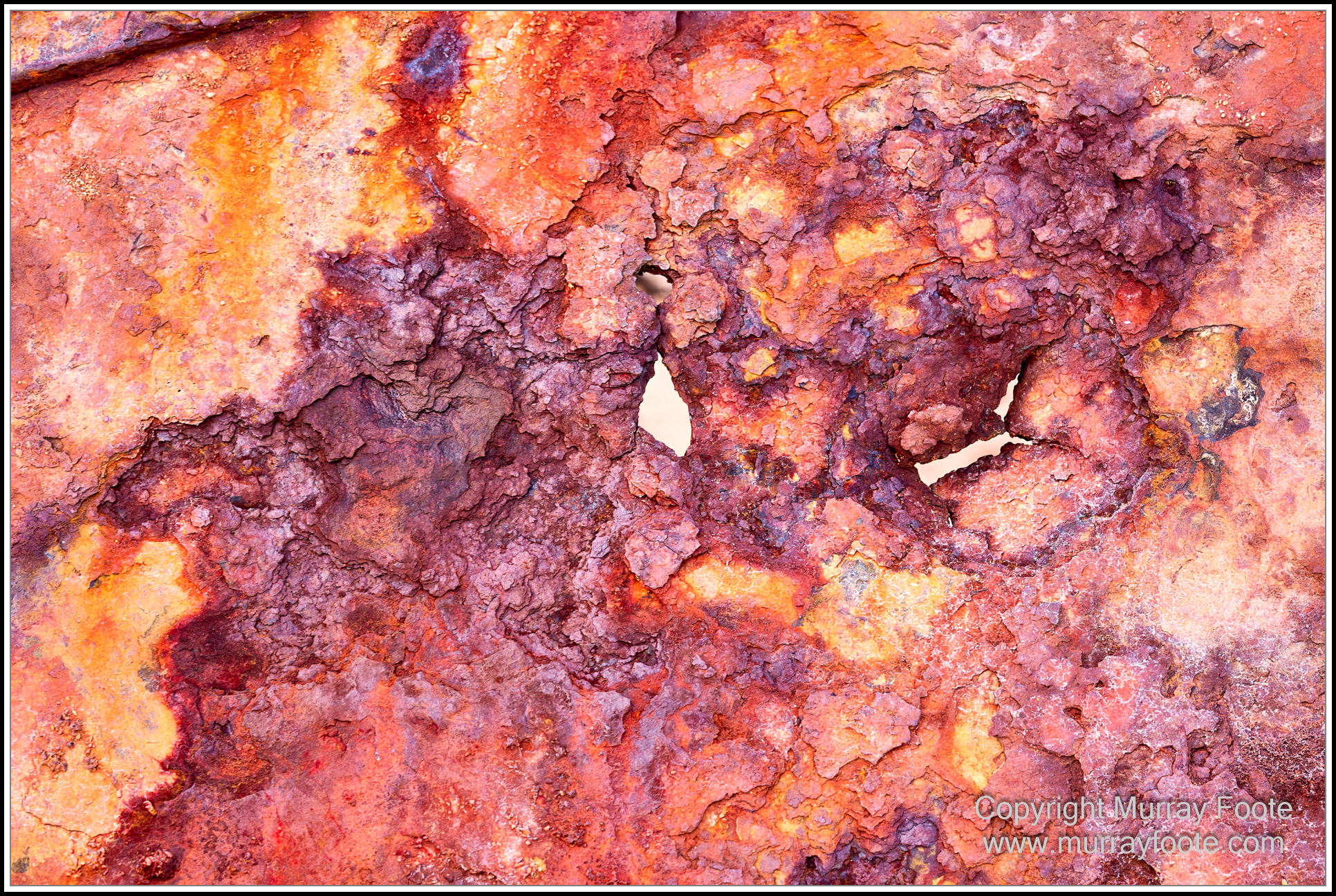
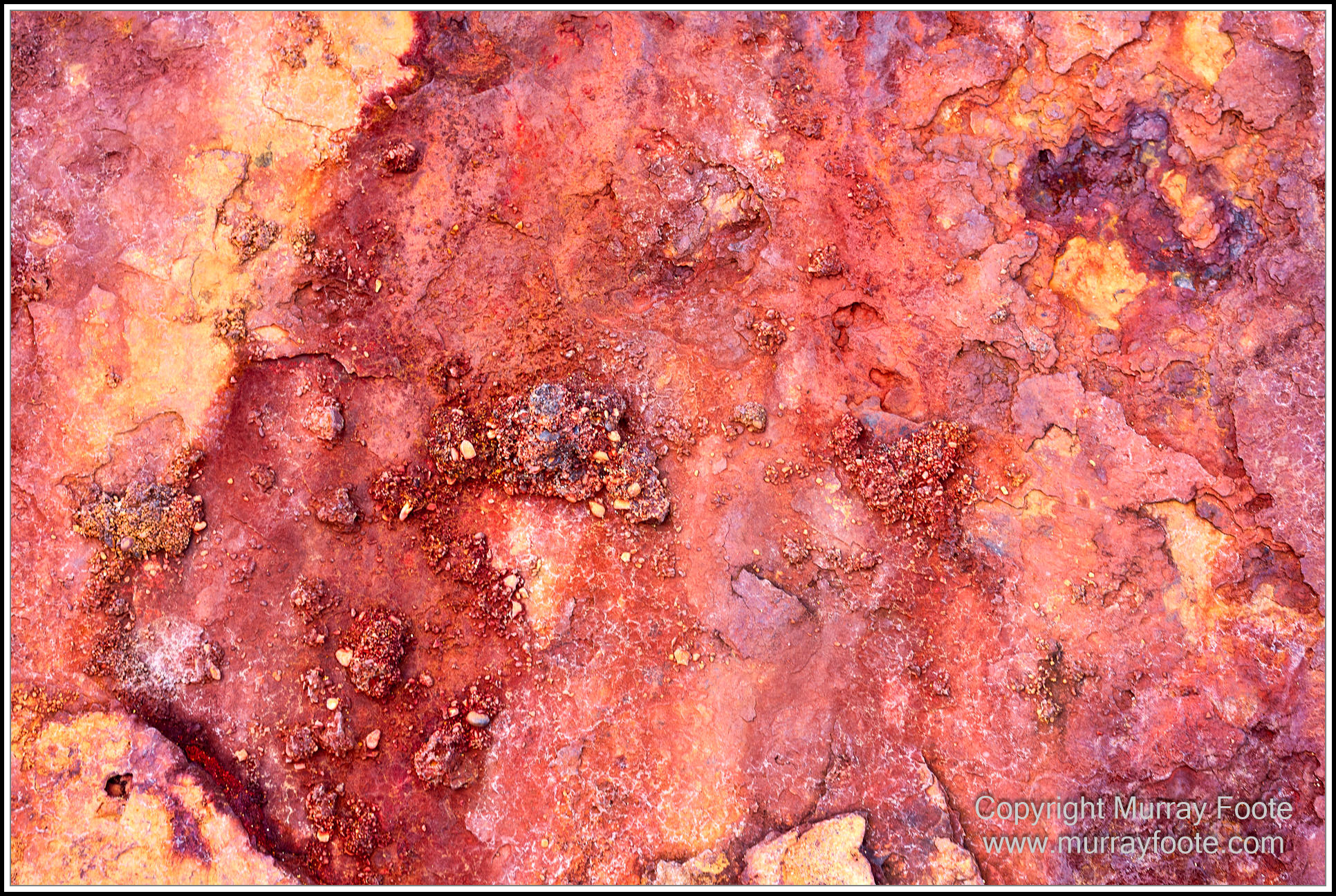
I decided to stop for a while at the local art gallery.
.
.
.
.  .
.
.
.
.  .
.
.
.
. 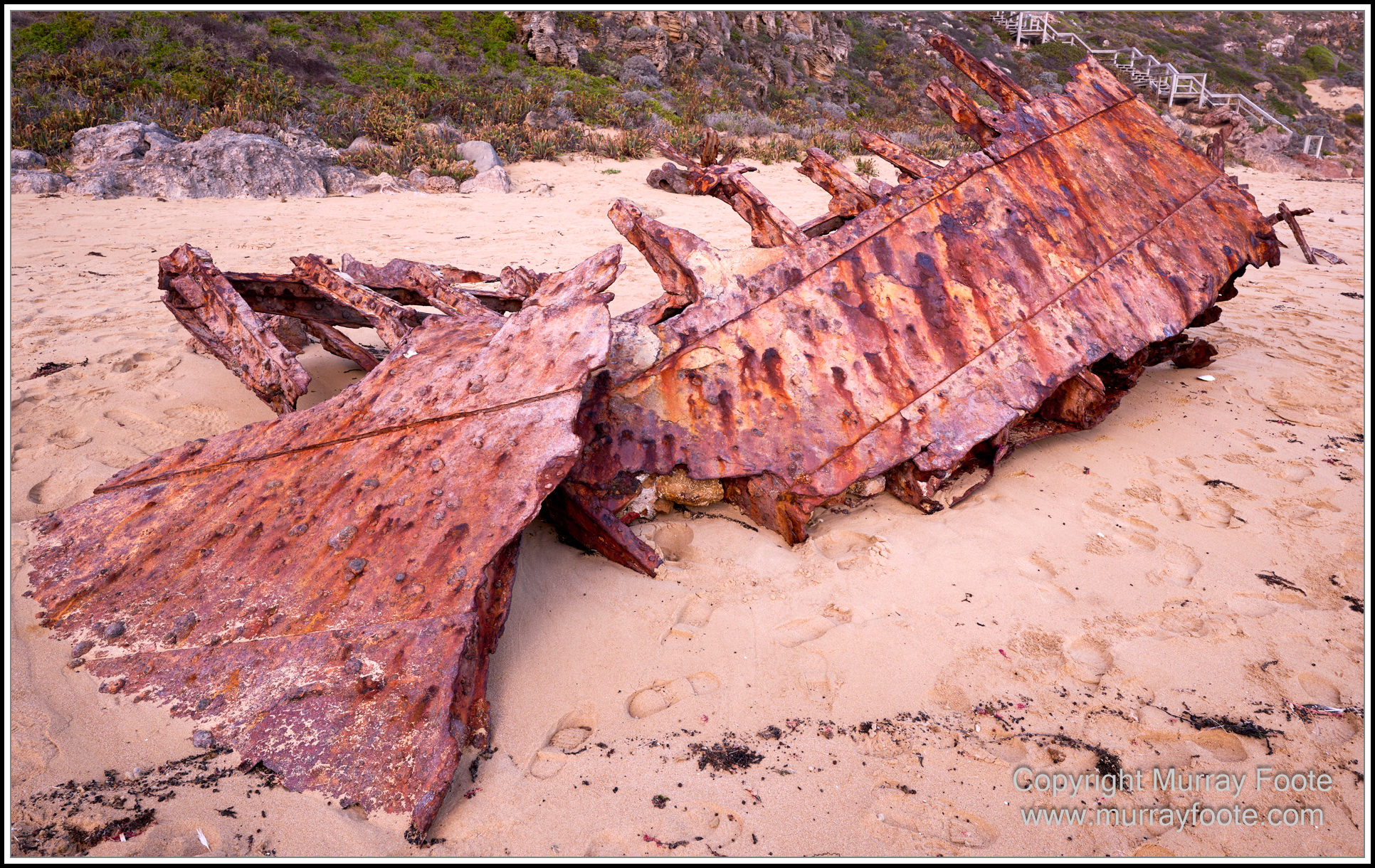
The Ethel was a three-masted barque, 55 metres long. In January 1904 it was caught in a violent storm off the end of Yorke Peninsula. It nearly got thrown onto a reef but managed to avoid that and was instead driven up onto the beach. A steamer the Ferret was passing by but the weather was too rough for her to assist so she sailed on. A seaman volunteered to swim to shore from the Ethel but was unable to quite make it and signalled to be pulled back on board. Just as he was about to get back on the ship, he slipped out of the harness and was never seen again. However, the next morning the storm had abated, the ship was in one piece, and the remainder of the crew were able to wade to shore. A later salvage attempt was unsuccessful.
.
.
. 
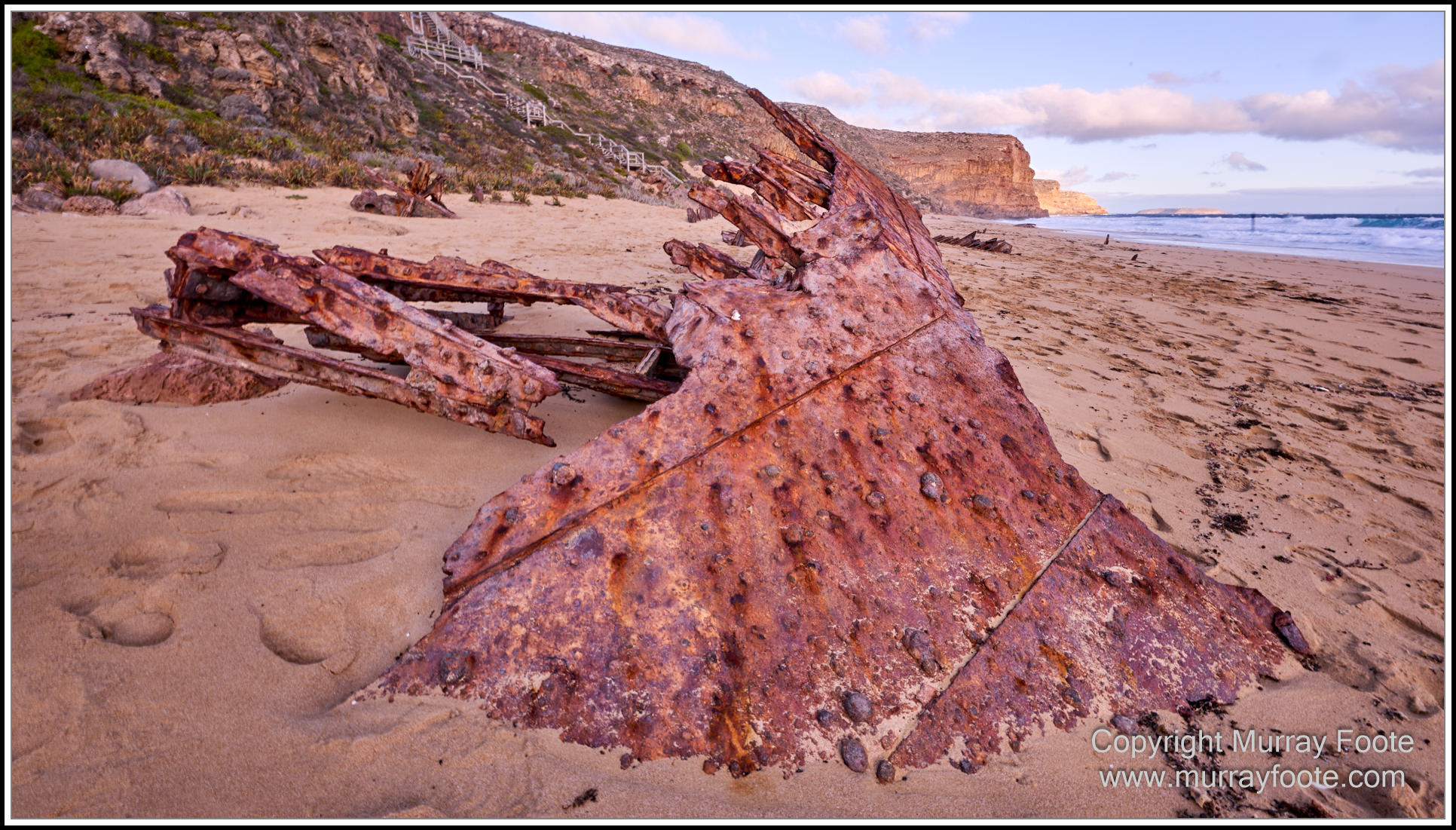
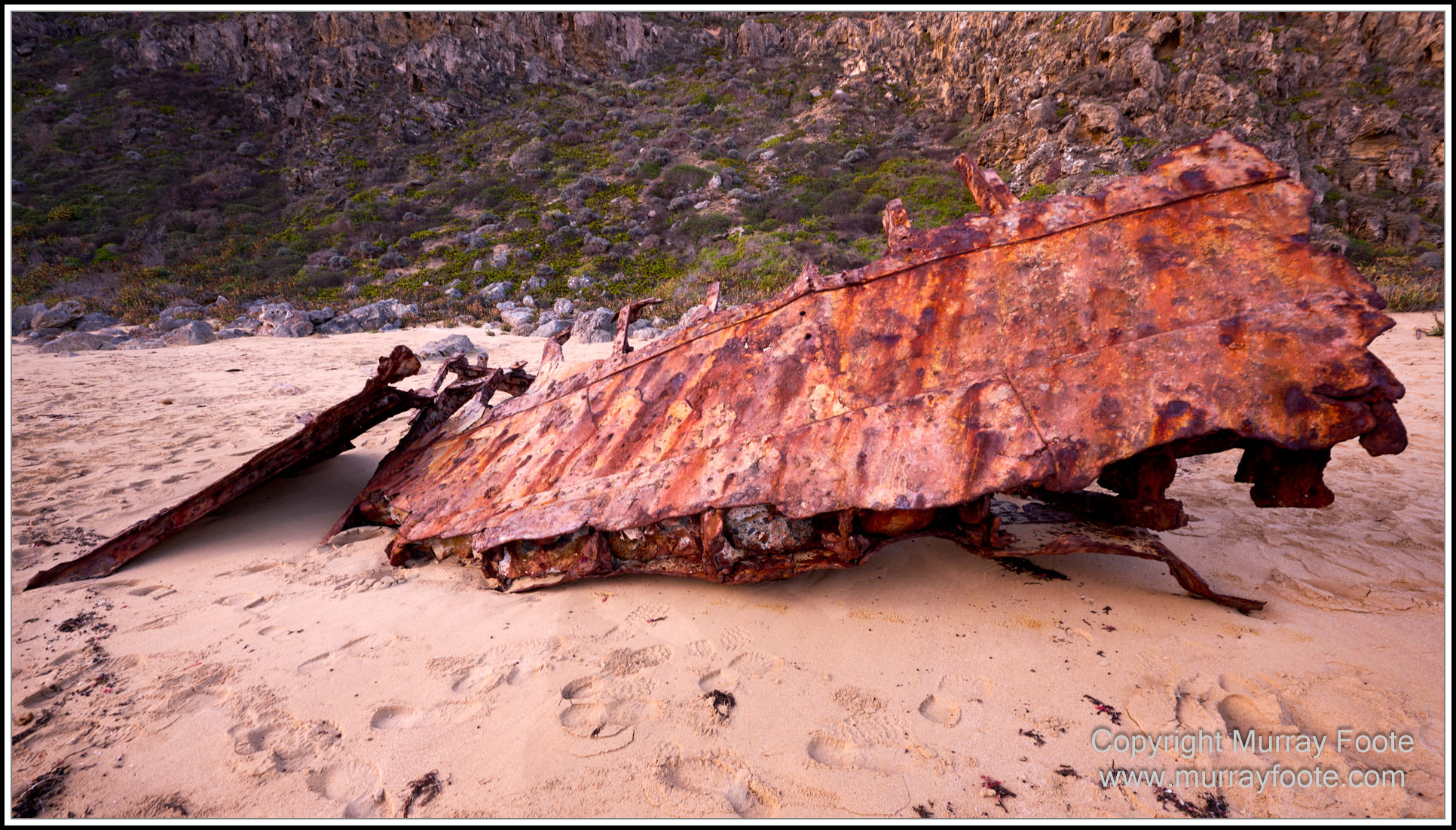
The Ferret, the ship that sailed on when the Ethel sunk in 1904, was also driven up on the beach in a storm in 1920. All twenty-one crew safely left it and walked five kilometres overland to Stenhouse Bay.
For weeks afterwards, the ship’s cargo of wines and spirits washed up on the local beaches, causing a significant growth of local interest in beach combing and increased absenteeism from the Inneston gypsum works.
Its only trace is the ships boiler we saw in the first image and that aliens may or may not have used as a launch platform. Just the top of it shows. If all of it were uncovered, it would be two meters high.
.
.
.
. 
There is more to the story of the Ferret though. It was a screw steamer built in Scotland in 1873 and 53 metres long. In 1880 at a time when it was laid up, two convincing men with impeccable references hired it for six months.
One of them, James Henderson (alias Ian Smith) sailed it to the Mediterranean with a hired crew and then gave the crew a choice of throwing everything with the name of the Ferret on it overboard and going along with him, or receiving a bullet in the head. For some reason, they all chose the first option. The ship was then repainted, the name changed to Benton, and they sailed to the port of Santos, near Sao Paulo, where Henderson tried to sell it but failed.
They then picked up a cargo of coffee and sailed for Cape Town (though having declared they were heading for Marseilles), using some of the coffee to supplement the coal as fuel. Another attempt to sell the ship was unsuccessful but they did sell the remaining coffee for £30,000. They changed the name of the ship again to SS India.
.
.
.
. 
Around this time the ship’s owners in Scotland discovered that the two they had leased the ship to had bogus identities and the money pledged had disappeared. Lloyds then sent out a notice for all their agents to look for the ship.
It then sailed to Albany in Western Australia and then to Melbourne for another attempt to sell it. However, a police officer noticed the similarity to the Ferret. The ship was boarded and though Henderson escaped for a few days, he ended up in prison for seven years.
.
.
.
. 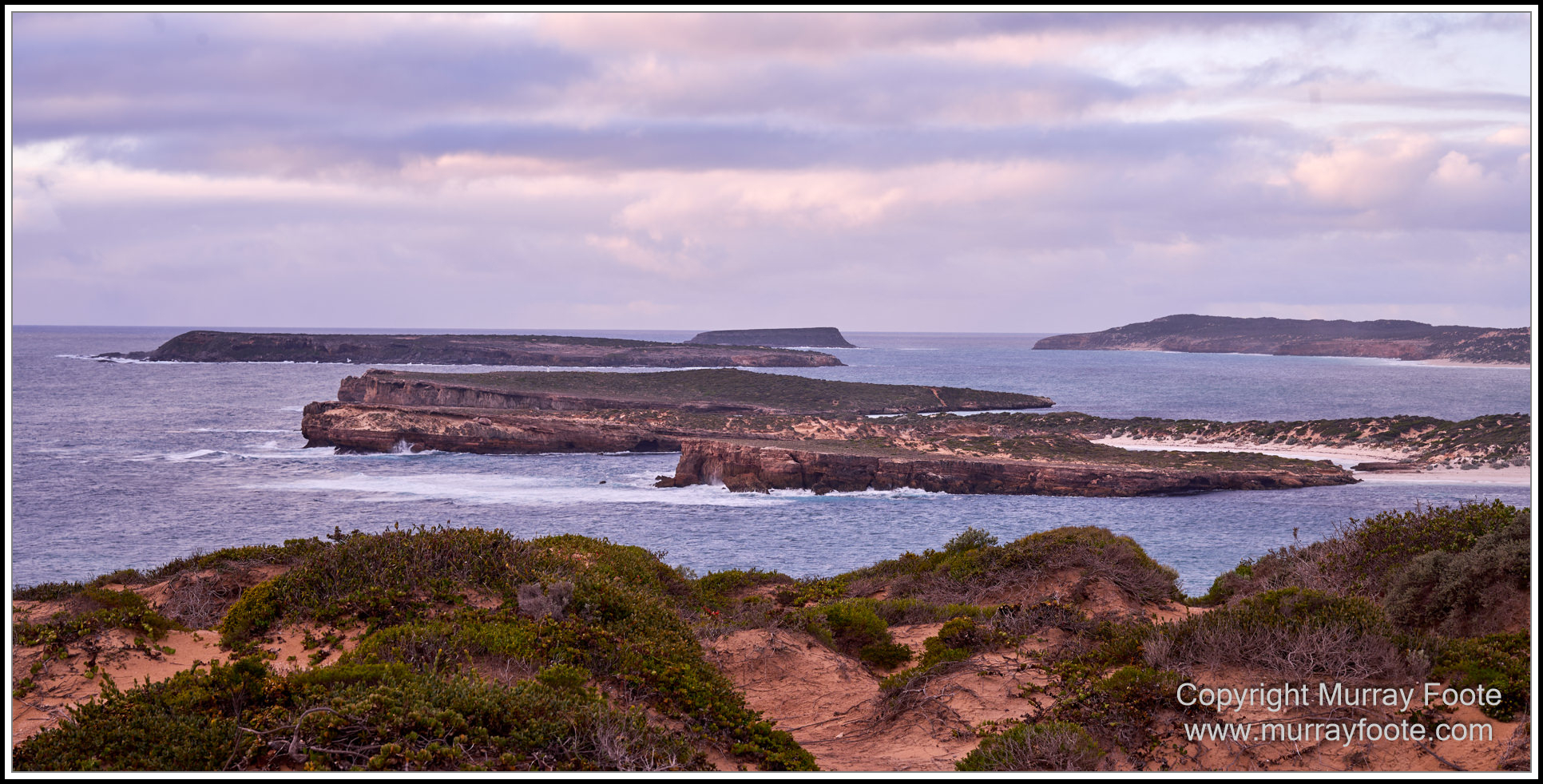
West Cape Lookout, looking north.
.
.
.
.
. 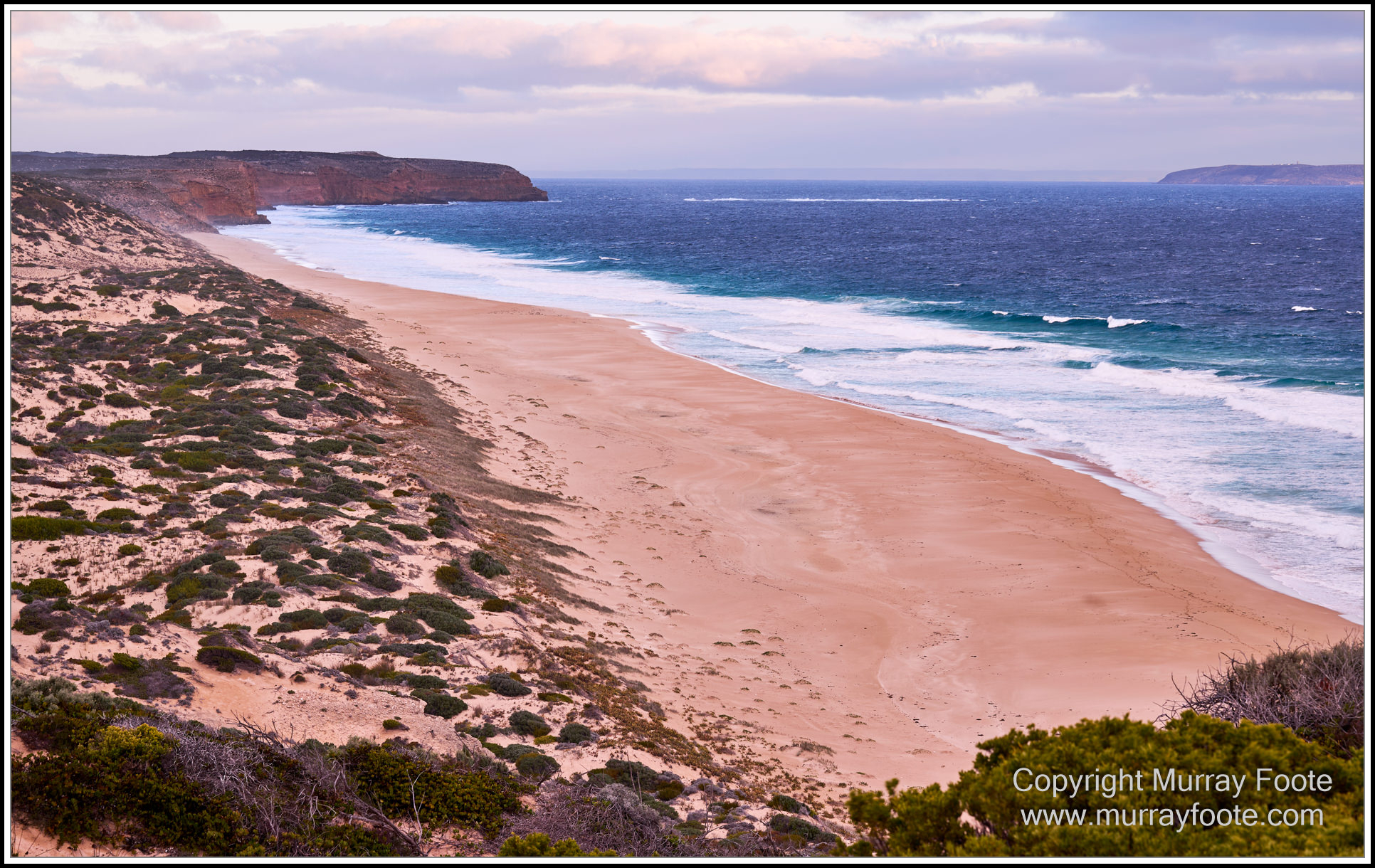
West Cape Lookout, looking south.
.
.
. .
.
 Murray Foote